
 Tiếng Việt
 한국어
한국어 日本語
日本語Article
A 50m² Apartment Remains Spacious with the Right Storage Solutions
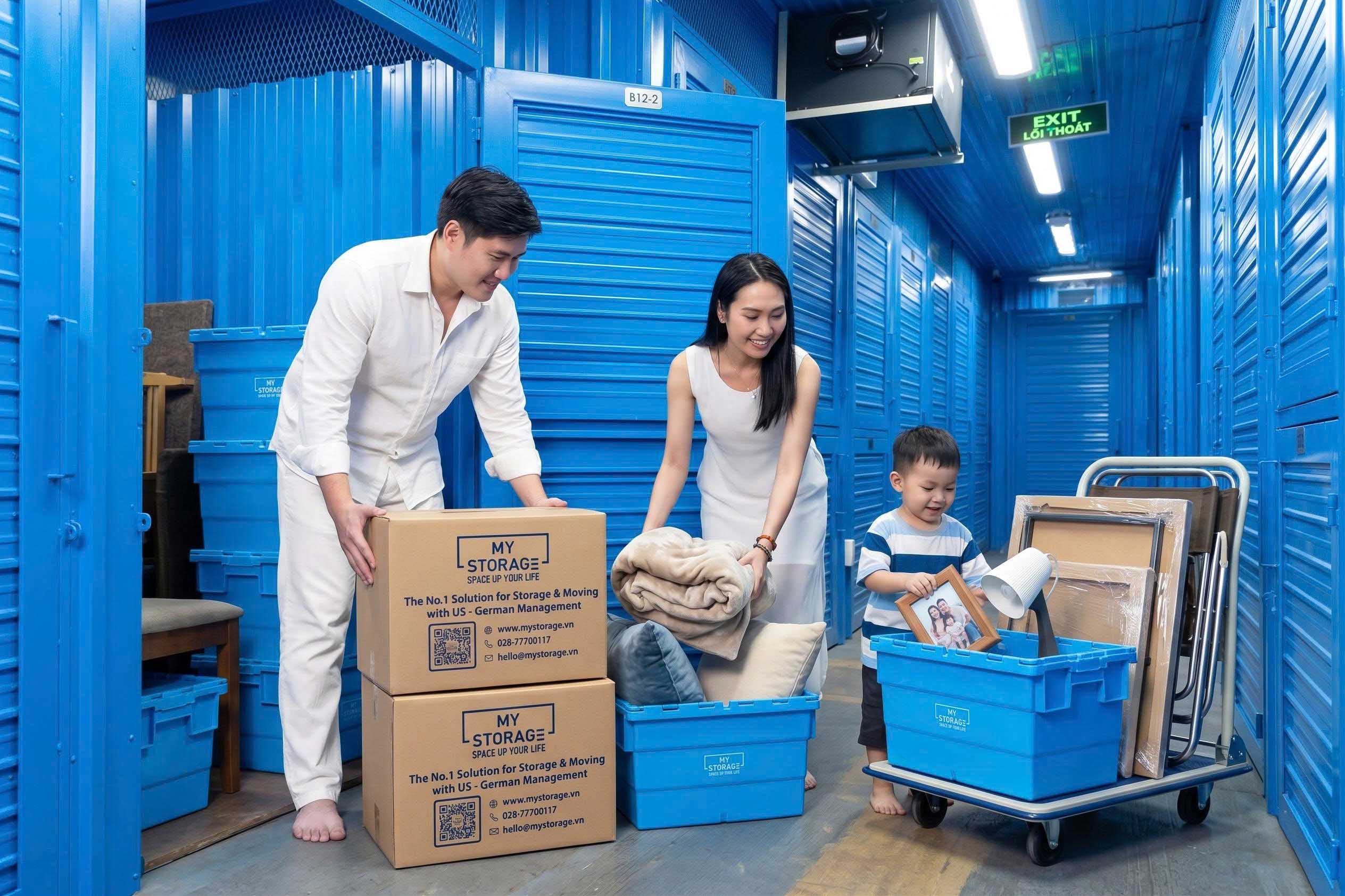
A 50m² apartment can fully meet the living needs of a small family or a single person if the space is organized reasonably. Instead of trying to cram everything into the house, utilizing smart storage solutions, multi-functional furniture, and storing rarely used items in a mini storage will help the apartment stay tidy, airy, and more comfortable to live in.
Why Do 50m² Apartments Often Quickly Become Cramped?
A 50m² apartment is not cramped because it is too small, but because belongings accumulate faster than the available storage space can handle. Continuous shopping, seasonal items, rapidly increasing baby gear, and hard-to-discard gifts are the four main reasons why living space gradually shrinks, which many families don’t realize until every corner of the house is filled with stuff.
Shopping Beyond Actual Needs
Modern shopping behavior is driven by promotions, flash sales, and social media content, causing many families to buy items at a significantly faster rate than they can use or dispose of them. A UCLA survey on family life in the US showed that the average woman feels stressed when looking at cluttered spaces in the home, and this stress correlates directly with the density of objects in the living space.
In Vietnam, major sales events like 11.11 or Black Friday often lead to a surge in incoming goods without a corresponding storage plan, creating space pressure in the very weeks that follow.
Seasonal Items Occupy Space All Year Round
Thick blankets, heaters, swimwear, camping gear, and festive decorations are items used for only a few weeks to a few months each year but occupy storage space for 365 days. A family of four might have 2–4 sets of thick winter blankets, 1–2 sets of camping gear, Tet and Christmas decorations, along with swimwear and summer accessories, totaling 2–4 large cardboard boxes or equivalent to 1–2 m² of storage area. In a 50m² apartment without a dedicated storage room, all these items are usually scattered in wardrobes, under beds, and in balcony corners, taking up space meant for daily essentials.
Baby Gear Increases Rapidly Through Each Stage
Children change in size and needs very quickly, creating an accumulation of items through each developmental stage. Clothes for 0–3 months, 3–6 months, 6–12 months, age-appropriate toys, strollers, high chairs, cribs, and walkers are things used for only a short time but take up a lot of space and are hard to discard because they are still in good condition or have sentimental value.
Families with children under 6 often find that baby gear occupies 20–30% of the total storage area in the house, equivalent to 10–15 m² in a 50m² apartment.
Gifts and Souvenirs That Are Hard to Let Go
Gifts from relatives, souvenirs from trips, and items associated with memories create psychological pressure that prevents many people from disposing of them even when they are no longer used. Psychological research on the endowment effect shows that people value objects they own 2–3 times higher than their actual market price, making the act of letting go much more difficult emotionally.
In Vietnamese culture, discarding gifts from relatives carries even more complex social implications, causing this group of items to accumulate year by year with almost no natural reduction.
Lack of a Scientific Storage System from the Start
Many families start with an empty apartment and design their own storage systems based on current needs without considering the rate of item accumulation over the next 3–5 years. A wardrobe designed for two people must accommodate the belongings of 3–4 people after having children. A bookshelf that was initially wide enough overflows onto the floor after just 2–3 years.
Without a separate storage room, every space in the house must double as storage: under tables become warehouses, balconies become drying and storage areas, and even the space under the stairs is maximized but still remains insufficient.
What many families lack is not living space, but storage space. The solution is not necessarily moving to a larger apartment but separating rarely used items from the daily living space.

The Areas That Take Up the Most Space in an Apartment
The four areas where belongings accumulate the most in an apartment are the wardrobe, balcony, under-bed space, and bookshelves. Identifying these bottlenecks correctly helps families free up space more effectively instead of cleaning constantly without seeing clear results.
Overloaded Wardrobes
The wardrobe is the fastest area to become overloaded in an apartment because it holds daily items, seasonal clothes, spare items, and sentimental belongings. Most of the wardrobe space is often occupied by clothes that are rarely worn rather than frequently used items.
| Item group | Frequency of use | Occupied area | Suitable solution |
|---|---|---|---|
| Seasonal clothing | 2–3 months per year | 20–30% of wardrobe space | Store in vacuum bags or lidded boxes, send to storage if in large quantities |
| Old office wear | Almost never used but not yet liquidated | 15–20% of wardrobe space | Review every 6 months, liquidate items not worn for over 1 year |
| Wedding dresses & suits | Very rare or never worn again | 10–15% of wardrobe space | Preserve in specialized fabric bags and send to climate-controlled self-storage |
| Baby clothes by stage | Outgrown but not yet discarded | 15–25% of wardrobe space | Sort by size, keep items for siblings or donation, send the rest to storage |
Research on clothing habits shows that most people only wear 20% of the clothes they own 80% of the time. The remaining 80% takes up wardrobe space but creates almost no daily utility value. For wedding dresses and evening suits, these are high-sentimental-value items that are rarely worn again, making them suitable for climate-controlled self-storage for long-term preservation without taking up wardrobe space.
The Balcony Turning Into a Storage Room
Balconies in Vietnamese apartments are often utilized as a place for drying clothes combined with storage, gradually losing their original function for relaxation and outdoor living. When the balcony is full of items, the actual living space of the entire apartment is significantly narrowed.
An average balcony in a 50m² apartment has an area of 4–6 m², accounting for 8–12% of the total apartment area. When filled with washing machines, old cabinets, bicycles, sports equipment, and miscellaneous containers, the balcony completely loses its living function and becomes an area no one wants to look at. Items left on the balcony are also directly affected by sunlight, rain, and humidity, leading to faster deterioration compared to being kept indoors. Freeing up the balcony by moving rarely used items to self-storage is often the fastest way to improve quality of life without needing renovation or buying more furniture.
Under-Bed Space and Dead Corners in the House
The space under the bed and hidden corners in the house are often gathering spots for items with no designated place, creating unsystematic accumulation areas that are very difficult to manage over time.
| Location | Commonly accumulated items | Arising issues | Solution |
|---|---|---|---|
| Under the bed | Suitcases, old boxes, children’s toys, seasonal clothes | Dust accumulation, difficult to clean, not knowing exactly what is stored | Use boxes with wheels and clear labels, only store well-packed seasonal items |
| Bedroom corners | Old handbags, sports equipment, old electronic devices | Clutter, affecting bedroom aesthetics, difficult to find items when needed | Liquidate unused items, send valuable items to storage |
| Under the stairs | Tools, bicycles, cleaning supplies, cardboard boxes | Mold due to poor ventilation, risk of termites | Only store non-moisture-sensitive items, use shelves to lift off the floor |
| Balcony corners | Gardening tools, cleaning equipment, surplus construction materials | Direct exposure to weather, rapid deterioration | Move to storage or liquidate if there is no specific plan for use |
Bookshelves and Documents
Books and documents are the most silent group of accumulated items because they do not take up space suddenly but increase steadily year by year. By the time you realize it, the bookshelves are full, and books have spilled onto the floor and other surfaces in the house.
A regular reader accumulates an average of 30–50 books per year. After 5 years, the number of books in the house can easily exceed 200, equivalent to 2–3 standard bookshelves occupying about 3–5 m² of wall space. Besides books, work documents, personal records, old textbooks, and magazines accumulated year by year create significant storage pressure. Digitizing documents solves part of the problem, but many types of legal papers still need to be kept as originals according to regulations. Mini storage with a climate-controlled environment is a suitable solution for storing rarely read books and documents that need long-term preservation without taking up daily living space.
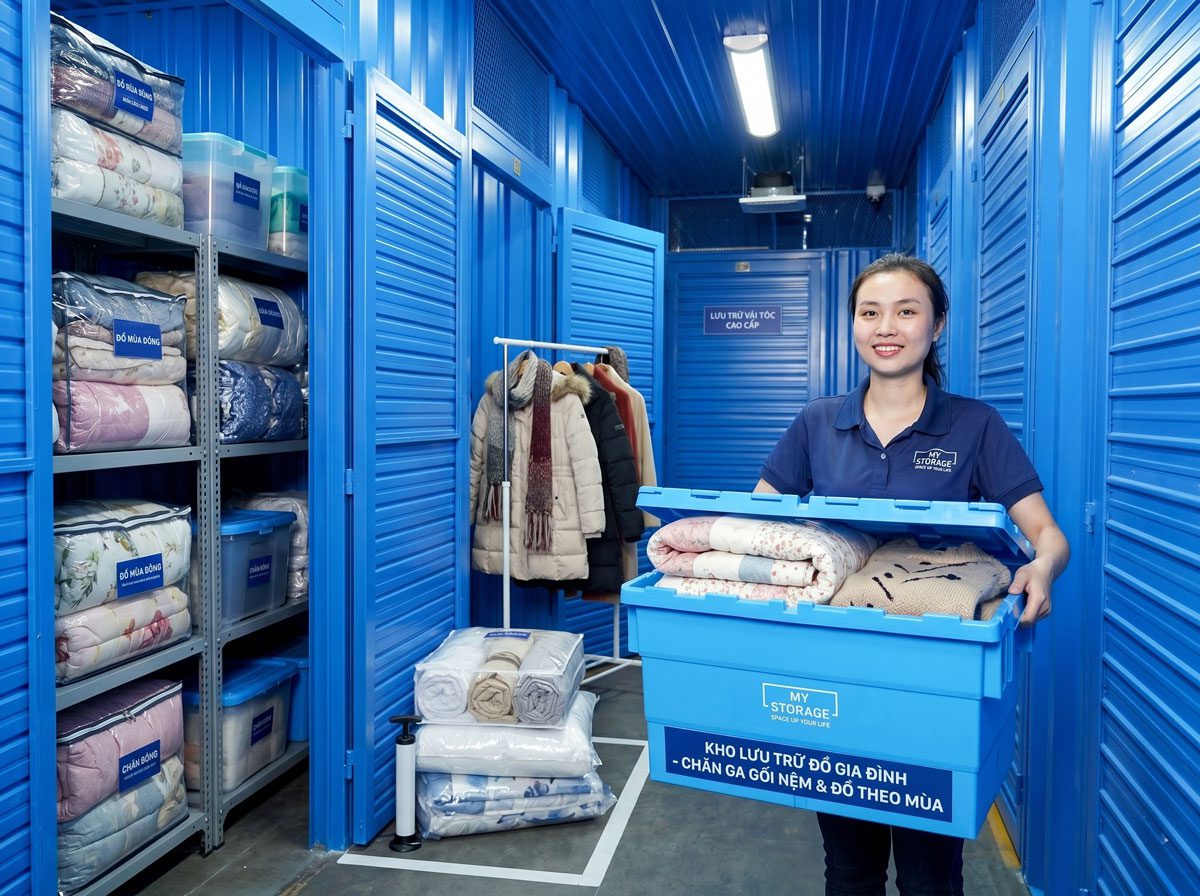
How to Make a 50m² Apartment Look Larger Instantly
A 50m² apartment can look larger without renovations or buying more furniture. Eight simple changes in layout, storage, and clutter control can make a noticeable difference within the first week of implementation.
Keep Only Frequently Used Items
The core principle for keeping a small apartment airy: only things used in the last 30 days deserve a place in your living space. Seasonal items, backups, and rarely used mementos should be kept out of daily sight. Start by going through each room and asking a question for every item: when was it last used? If the answer is more than 3 months ago, it is a candidate for moving to storage or liquidation.
Utilize Vertical Space
Most wall space from 1.8m and above in an apartment is often left empty. Installing floating shelves up to the ceiling significantly increases capacity without taking up additional floor space. Floor-to-ceiling wardrobes utilize the full height of the room instead of stopping at 2m like conventional cabinets.
Hooks and hanging rails behind kitchen cabinet doors, bedroom doors, and in the bathroom are often overlooked locations that can significantly increase storage space without consuming extra floor area.
Use Multi-functional Furniture
Multi-functional furniture allows one item to serve multiple purposes, reducing the total number of items needed in the home.
| Furniture | Primary Function | Additional Storage Function |
|---|---|---|
| Sofa bed | Seating and bed | Storage compartment for blankets/pillows underneath |
| Lidded ottoman | Coffee table or seat | Stores blankets, toys, or magazines |
| Wall-mounted folding table | Desk | Occupies no space when not in use |
| Bed with drawers | Bed | Completely replaces a separate dresser |
| Lidded stool | Seating | Stores shoes, accessories, or small items |
Storage Under the Bed
The space under the bed is one of the most wasted storage areas in a small apartment. A bed with a clearance height of 25cm or more can hold 4–6 standard storage boxes, equivalent to the area of a small cabinet. Principles for effective use: only store items packed tightly in boxes with lids and wheels for easy access, label the outside clearly, and prioritize seasonal groups such as thick blankets, swimwear, and holiday decorations.
Utilize the Back of Doors
The back of a door is an area often completely ignored in interior design but can contribute significantly to the apartment’s total storage capacity.
| Location | Solution | Suitable for |
|---|---|---|
| Behind bedroom door | Multi-tier hooks | Handbags, coats, belts |
| Behind bathroom door | Hanging shelves or pouches | Toiletries, hair dryer |
| Behind kitchen cabinet door | Pot lid racks, hanging bags | Pot lids, plastic bags, small kitchen tools |
| Behind wardrobe door | Shoe or fabric organizers | Shoes, accessories, underwear |
Use Uniform Storage Boxes
Storage boxes that are inconsistent in color and size create a sense of clutter even if items are tucked away. Investing in a set of uniform boxes of the same color and standard size creates an instant sense of neatness and utilizes shelf space more effectively because square boxes fit tightly together without wasting gaps. Prioritize neutral colors like white, gray, or beige to make the space look airier compared to multi-colored boxes. Label the outside of each box with clear text to find items quickly without opening every box.
Categorize Items by Frequency of Use
Categorizing by frequency of use instead of by type helps arrange items more logically and saves time during daily searches.
| Frequency Group | Definition | Suitable Storage Location |
|---|---|---|
| Daily use | Items used at least 3–4 times per week | Within reach, most accessible shelves and drawers |
| Weekly use | Items used 1–2 times per week | Eye-level shelves, no need for central priority |
| Monthly use | Items used less than 4 times per month | High shelves, under the bed, back of cabinets |
| Seasonal use | Items used less than 3 months per year | External mini storage or high storage boxes |
| Rarely used | Mementos, records, backups | Self-storage, does not occupy apartment space |
Eliminate Broken or Valueless Items
Broken items waiting for repair and items that no longer have utility value are two groups that occupy space without creating any value. Broken items often wait forever because the repair cost is not worth the remaining value of the item. Set a hard rule: broken items must be fixed within 2 weeks or liquidated; do not keep them in an infinite waiting state. For items with no value, such as unusable old electronics, broken children’s toys, and torn clothes that cannot be worn, schedule a cleanup every 3 months to handle this entire group before they accumulate into a larger problem.
When Should You Rent Mini Storage Instead of Cramming More Items at Home?
When belongings start occupying actual living space instead of just storage space, it is the clearest sign to consider renting mini storage. The cost of storage is often much lower than the opportunity cost of lost living space and the psychological stress of living in a constant cluttered environment.
| Sign | Specific Manifestation | Why Action is Needed Now |
|---|---|---|
| Balcony becomes storage | No standing room on the balcony, full of cartons and old items | Loss of 4–6 m² of outdoor living space, affects ventilation and natural light for the whole apartment |
| Overloaded wardrobe | Cannot close cabinet doors neatly, items fall out every time they are opened | Time wasted searching for clothes every morning, clothes get wrinkled and damaged from being stuffed too tightly |
| No room for suitcases | Suitcases left in the middle of the bedroom or blocking paths | Suitcases occupy 0.3–0.5 m² of floor space, affecting movement and space aesthetics |
| New baby in the house | Baby gear overflowing everywhere, no space left for adults | Baby items increase rapidly month by month; if not handled early, the situation only gets worse |
| Preparing to move | Need a place to store items during the transition period | Short-term mini storage (1–3 months) is much cheaper than hiring multiple moving trips |
| Need to keep but not ready to sell | Items still have value but are not used frequently, not ready to discard | Mini storage allows keeping them without sacrificing daily living space |
How Mini Storage Makes a 50m² Apartment Feel Larger
Mini storage acts as an extended storage room outside the apartment, helping to move the entire group of rarely used items out of the main living space. As a result, each area in the apartment is returned to its original design function instead of having to double as storage.
- Free Up Wardrobe Space: Moving seasonal clothes, wedding dresses, evening suits, and outgrown baby clothes to mini storage frees up 30–40% of wardrobe space. The freed-up area allows daily clothes to have space for proper hanging and folding, reducing wrinkles and making them easier to find every morning. A wardrobe that is no longer overloaded also means no more scenes of clothes falling out when opened or spending 10 minutes looking for a specific shirt.
- Store Suitcases and Travel Gear: A family suitcase set usually consists of 3–5 pieces of different sizes, occupying a total of 1–2 m² when stacked. Sending them all to a small unit at a self-storage facility, taking them out only before each trip and returning them afterward, completely frees up this space for other purposes. Travel gear such as beach bags, camping sets, and flight accessories also belong to this group—rarely used but taking up significant space in cabinets or under the bed.
- Store Books and Records: Books that have been read but kept, old textbooks, and records that need long-term storage are the most suitable items to send to storage because they rarely need frequent access. Moving 5–10 boxes of books and documents to mini storage frees up 1–2 bookshelves, equivalent to 2–4 m² of wall area. This space can be reused for other purposes or left empty to create a more airy feel for the room.
- Preserve Family Mementos: Mementos such as printed photo albums, emotionally valuable gifts, handicrafts, and heirlooms are usually not used daily but cannot be discarded. Mini storage with a humidity-controlled environment preserves this group significantly better than keeping them in cabinets or under the bed where they are exposed to seasonal temperature and humidity fluctuations. This is a solution that helps families keep what is valuable without sacrificing living space.
- Store Seasonal Clothing: Thick blankets, heaters, swimwear, and holiday decorations are only used 2–3 months a year but occupy storage space for 365 days. Sending this entire group to mini storage and taking them out according to the seasonal schedule frees up 2–4 large cartons, equivalent to 0.5–1 m² in cabinets or under the bed. The storage cost for this group of items is usually only a few hundred thousand VND per month, much lower than letting them occupy high-value living space.

Case Study: A Family of Three in a 52m² Apartment
Pre-storage status: A family consisting of a couple and a 2-year-old child was living in a 52m² apartment in Ho Chi Minh City. The items needing management included 4 travel suitcases of various sizes, 12 boxes of baby supplies ranging from newborn to 18 months old, and 6 boxes of books and study materials belonging to the couple. All of these items occupied the balcony, under-bed space, and a corner of the bedroom, significantly shrinking their living space.
Applied solution: Renting a 4 m² storage unit at MyStorage for approximately 800,000 VND per month. All suitcases, baby boxes, and book boxes were moved to the storage facility in a single afternoon. The family kept baby items for the current stage and books they were currently reading, while the rest was stored and retrieved as needed.
| Area | Before renting storage | After renting storage |
|---|---|---|
| Balcony | Held 4 suitcases and 3 baby boxes, no standing room | Functionality restored, with space for evening relaxation |
| Wardrobe | Baby clothes mixed with adult clothes, doors hard to close | 30% more empty space, easier to find items, and clothes are less wrinkled |
| Living room | Corner had 2 book boxes and 1 suitcase waiting to be handled | Completely tidy, the baby has a larger play area |
| Under the bed | 6 book boxes and 9 baby boxes packed tight | Only 2 boxes of winter clothes remain, easier to clean |
| Monthly cost | No storage cost but low quality of life | 800,000 VND per month, living space significantly improved |
After one month, the family commented that 800,000 VND per month was the most worthwhile expense they had ever made for the apartment, not just because it solved the space issue, but because it improved the daily quality of life for all three members.
Mini Storage vs. Apartment Upgrades & Who Is This Solution For?
Renting mini storage is typically 90% more cost-effective than moving to a larger apartment just for extra storage space. This solution is suitable for most urban residents, from singles to families with young children, especially as apartment prices in HCMC and Hanoi continue to rise.
Cost Comparison: Solutions for Handling Cramped Spaces
| Solution | Estimated cost | Impact on living space | Implementation time | Suitable when |
|---|---|---|---|---|
| Moving to a larger apartment | Rent difference of 3–8 million VND/month, moving costs of 5–15 million VND, new deposit of 2–3 months’ rent | Increases living area, but accumulation issues remain if habits don’t change | 1–3 months of preparation and moving | You truly need more living space, not just storage space |
| Renting mini storage | 300,000–1,500,000 VND/month depending on size, no hidden costs | Living space is freed up without changing residence | Starts immediately on the day of contract signing | Rarely used items occupy living space, and you want to keep them rather than sell them |
| Buying more cabinets and shelves | 2–10 million VND for furniture, consumes an extra 1–3 m² of floor space | Increases capacity but simultaneously makes the apartment more cramped as furniture takes up space | 1–2 weeks for purchase and installation | You have empty floor space and only need a small amount of extra capacity |
| Integrated interior renovation | 20–80 million VND, requires temporary accommodation for 2–4 weeks during construction | Significantly increases capacity but involves high costs and long-term living disruption | 1–3 months from design to completion | You have a large budget and plan to stay long-term in the current apartment |
| Decluttering unnecessary items | Almost zero cost, can even recoup some money | Frees up space immediately but permanently loses discarded items | 1–2 weekend days | You are ready to let go and items truly have no remaining value |
Who Is Mini Storage Suitable For?
| Target Audience | Common Situations | Items typically stored | Suitable size | Key benefits |
|---|---|---|---|---|
| Singles | Boarding rooms or 25–35m² studios without private storage, items accumulated from years of living away from home | Suitcases, sports gear, textbooks, old electronics | 1–2 m² | Tidier living space, allowing for more effective work and lifestyle |
| Young couples | 45–55m² apartments becoming cramped after merging belongings and preparing for a child | Wedding items, seasonal clothes, sports gear, books, and documents | 2–4 m² | More comfortable living space during the stage where moving is not yet desired |
| Families with young children | 50–70m² apartments occupied by baby gear from various developmental stages | Outgrown baby items, strollers, cribs, large toys, children’s books | 3–6 m² | Keep baby items for the next child or to give to relatives without cluttering the home |
| Minimalism enthusiasts | Want a tidy living space but don’t want to completely give up items with sentimental value | Memorabilia, book collections, crafts, heirlooms | 1–3 m² | Live minimally at home without losing meaningful items |
| Frequent business travelers | Apartments with few residents but still full of stuff, needing a tidy space when returning home | Large suitcases, business gear, backup work equipment, seasonal items | 2–4 m² | Relax immediately upon returning home, no need to clean or find storage space |
| People preparing to move | Need storage during the waiting period between two apartments or during renovation | All or part of belongings during a 1–3 month transition | 5–15 m² | Move step-by-step, without rushing or losing items in the process |
Transportation Support When Needed Moving items from your apartment to storage doesn’t have to be a solo effort. MyStorage assists in connecting you with transportation services, provides free trolleys on-site, and offers truck parking right at the storage door to make loading and unloading fast and convenient.
A 50m² apartment can absolutely feel more spacious without the need to move. By simply moving rarely used items to the right place, the remaining space will naturally return to its intended function.
FAQ
Yes, when belongings start occupying actual living space like balconies, under-bed areas, and walkways. Storage costs of 300,000–800,000 VND per month are usually far lower than the cost of upgrading to a larger apartment or the ongoing quality-of-life impact of living in a cluttered environment.
Significantly cheaper. The rental difference between a 50m² and 65m² apartment in Ho Chi Minh City typically runs 3–8 million VND per month, excluding moving costs and deposits. A 3–5 m² unit at MyStorage starts from just 600,000–1,200,000 VND monthly, solving the storage problem at 80–90% lower cost.
Sort by age stage before packing and clearly label boxes with size and item type on the outside. Fabric items like clothes and blankets must be fully washed and dried before storing. Place silica gel in each box to control humidity, especially important for fabric items and soft-material toys.
Very suitable. A family set of 3–5 suitcases takes up 1–2 m² of floor space but is only needed a few times a year. Storing them and retrieving before each trip completely frees this space without affecting travel plans.
Yes, if the facility maintains stable humidity and temperature control. Pack in rigid boxes with protective padding, avoid direct floor contact, and include moisture absorbers. MyStorage maintains 50–65% RH and 20–26°C, preserving sentimental items far better than storing in closets or under beds at home.
Ideally 1–2 months before birth to allow time to move rarely used items out and create space for baby essentials. Start with a small 2–3 m² unit and expand as baby items accumulate through developmental stages. Storage costs are usually far lower than the stress of living in a cramped apartment with a newborn.
Yes for moderate quantities. MyStorage provides complimentary trolleys on site and parking near the unit entrance for convenient unloading. For larger volumes like a full home move, connecting with a transport service saves significant time and effort.
Start with the smallest unit that fits the planned list of items, typically 2–3 m² for households. After 1–2 months the actual need becomes clear and adjustments can be made. MyStorage allows size changes from the following month with no penalty fees.
Yes, if there are sentimental items, family heirlooms, or collections worth keeping but not displaying daily. Mini storage allows living minimally in the home without surrendering meaningful possessions, balancing a minimalist lifestyle with the emotional value of certain belongings.
Contact MyStorage for unit size consultation based on the list of items to store. Sign the agreement and receive the access PIN on the same day. Belongings can be moved in immediately after signing with no waiting period or additional preparation required.
Related articles
Article
Onshore vs Offshore: Which Manufacturing Model Should Businesses Choose?
Onshore manufacturing refers to production within a company’s home country, helping to control quality, shorten delivery times, and ensure easier regulatory compliance. Offshore…
Read article
Article
How to Organize Your Home Storage Room Neatly | 10 Space Optimization Tips
To organize your home storage neatly, categorize items by purpose, discard unnecessary belongings, utilize vertical shelving to optimize height, and label every container. If your home…
Read article
Article
Secrets to Profitable Online Selling: 10 Ways to Save Costs
To sell online profitably, you not only need to increase sales but also maintain good control over operating costs. Items such as inventory, premises, packaging, shipping, and order…
Read article
