
 Tiếng Việt
 한국어
한국어 日本語
日本語Article· Updated October 12, 2026
How To Organize Your Home Storage Room | 10 Space-Saving Tips
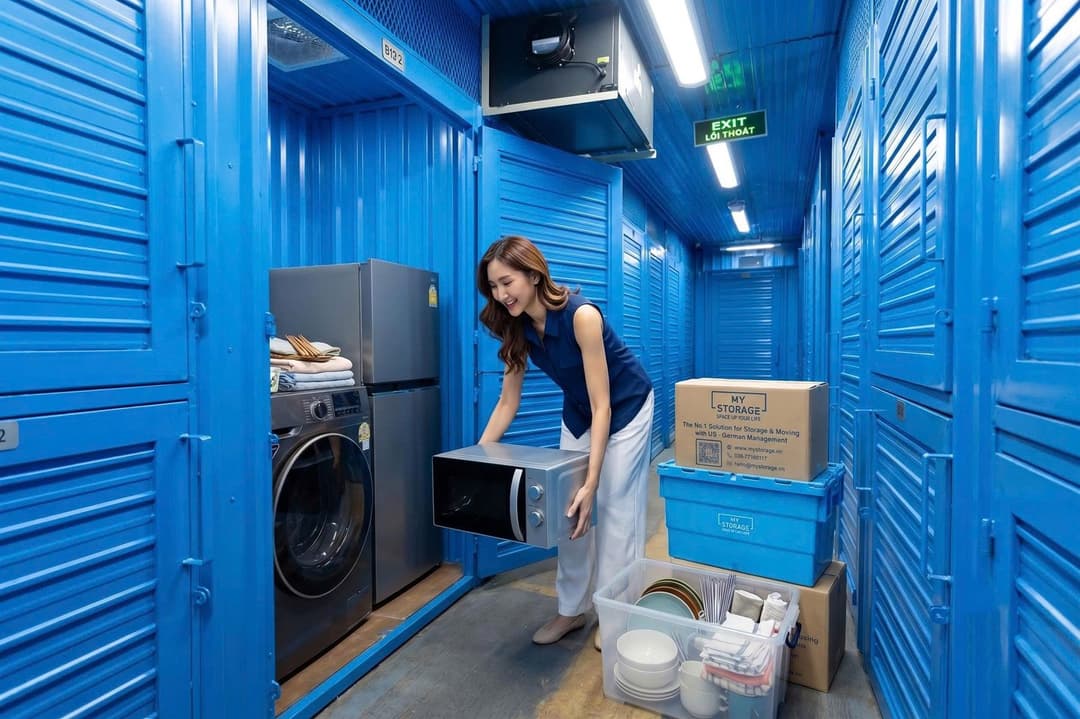
To organize your home storage room neatly, sort belongings by purpose, remove items you no longer need, use vertical shelving to make the most of height and label every container. If storage at home is overloaded or holds many seldom-used items, move seasonal or bulky belongings into external storage to free living space.
10 Tips To Optimize Your Home Storage Space
Tip 1: Sort Before Organizing
The first and most important step before buying shelves or boxes is to take everything out and divide it into three clear groups: keep and use frequently, keep but seldom use and store neatly, and discard or donate. How much you remove depends on your situation; the aim is to know exactly what needs keeping before buying storage equipment.
A simple decision rule: if you have not used an item in the past 12 months and have no specific plan to use it in the next 12, it is a candidate for disposal or donation rather than continuing to occupy storage space.
Tip 2: Use Height With Vertical Shelving
Measure the usable height and floor area before choosing shelves. Suitable shelving uses vertical space without expanding the footprint; height, load capacity, anchoring and safe clearances should follow the product's installation instructions.
Place heavy, seldom-used items on the lowest shelf, frequently used belongings within the user's reach and the lightest, least-used items higher up. This arrangement improves safety and saves retrieval time.
Tip 3: Standardize Box Sizes
Containers in many different sizes do not fit together neatly and leave wasted gaps. Choose one or two standard sizes and use them consistently throughout the storage room for closer stacking, greater usable capacity and a much tidier appearance.
Transparent plastic boxes let you see contents without opening them, saving search time. Lidded fabric boxes suit light items such as clothes and bedding. Sturdy cardboard is inexpensive but can become damp over time, so avoid using it for valuables.
Tip 4: Label Every Box And Area
Labeling takes little effort but has a major effect on keeping storage organized over time. Clear labels remove the need to open boxes to check, help locate belongings quickly and, importantly, help everyone return things to the correct place.
The most useful labels name the category and list three to five main items. Instead of just “Electronics,” write “Electronics: old charging cables, adapters, spare headphones.” Laminated or clearly printed labels last longer than handwriting in easily faded ink.

Tip 5: Give Each Category Its Own Zone
Clearly defined categories help everyone know where to find and return belongings without asking. Repair tools, sports equipment, children's items, documents and seasonal belongings are five common zones in a household storage room.
Put a simple layout diagram on the door so everyone can understand the system without memorizing it. This is especially useful during the first months before the arrangement becomes a habit.
Tip 6: Keep Frequently Used Items Most Accessible
Not every stored item is used equally often. Repair tools used monthly need a different location from Tet decorations taken out once a year. Arranging locations by actual frequency saves time and effort each time you retrieve something.
Keep weekly-use items on an accessible shelf near the entrance, monthly-use items in the middle and seldom-used belongings farther inside. Only light items should go on high shelves that can be reached safely. This naturally creates a sensible movement pattern.
Tip 7: Use Doors And Walls
The back of the door and walls are often left empty despite offering useful storage space. Over-door hooks suit small tools, sports accessories and bags. Wall shelves use the area above standing shelves. A wall-mounted pegboard suits repair tools and frees floor and shelf surfaces.
Tip 8: Review The Storage Room Every Six Months
A well-organized room needs regular upkeep to avoid reverting to its original state. Twice a year, before summer and before Tet, is a useful time to review everything, deal with six months of accumulation and update labels when box contents have changed.
Each review should answer three questions: have new items arrived without a proper place, do any labels no longer match their contents, and are any belongings ready to be discarded or donated?
Tip 9: Manage Humidity To Protect Belongings
Monitor actual humidity and inspect sources of dampness or leaks before selecting a remedy. Suitable limits depend on materials and care instructions; there is no single number that guarantees safety for all belongings. Choose a dehumidifier according to room volume, conditions and manufacturer specifications. Desiccant packets in boxes do not replace treatment of room-wide humidity. Check and replace them according to condition and product instructions.
Keep belongings on shelves or plastic pallets rather than directly on concrete, especially where dampness is visible. Leave suitable gaps for inspection and cleaning, without concealing leaks or blocking ventilation.
Tip 10: Recognize When External Storage Is Needed
Sometimes the best solution is not another rearrangement but recognizing that home storage cannot hold everything worth keeping. If proper organization still leaves too little room for useful belongings, external self-storage is a sensible next step.
| Situation | Solution |
|---|---|
| Storage is cramped but everything needs keeping | Rent an additional self-storage unit for the least-used items |
| Storage is cramped because of unused belongings | Declutter and donate before considering more rental space |
| Renovation requires temporarily clearing storage | Consider short-term storage during construction |
| Valuable items need better preservation | Compare facility conditions with each item’s requirements |
Inventory Template And Post-Organization Checklist
The example below illustrates how to record items; it is not survey data. Use paper or a spreadsheet and update it whenever belongings move.
| Box code | Contents | Location | Last inspection | Notes |
|---|---|---|---|---|
| A01 | Tet decorations | Shelf A, lower level | Enter date | Check fragile items |
| B01 | Spare charging cables and accessories | Shelf B, within reach | Enter date | Record compatible devices |
| C01 | Books to keep | Shelf C, lower level | Enter date | Do not overload boxes |
- Walkways and door openings are clear; electrical equipment and exits are not blocked.
- Heavy items are low, shelving is stable and stated load limits are not exceeded.
- Each box has a label matching the inventory, facing a visible direction.
- Belongings are clean and dry before storage; leaks and damp areas have been addressed.
- Everyone knows where to return items and when the next review is scheduled.
If space is still insufficient after these steps, read the comparison of rented storage and home storage before deciding to expand.
Why Does Household Storage Keep Getting Cluttered?
A cluttered storage room can result from too little space, too little organization or both. Items accumulated without categories, fixed places or clear removal rules create a mess that becomes harder to solve each year.
- Old belongings accumulate for years: Household storage often follows an unwritten rule: anything without a place goes there. Over time it fills with unresolved old electronics, children's clothes, abandoned sports gear and miscellaneous items without a clear inventory. Things leave more slowly than they arrive, creating continuing pressure year after year.
- No classification from the start: A basic problem is the lack of a classification system from the beginning. Without categories and fixed positions, finding something requires searching the whole room. Each search creates more disorder because items are taken out but not returned properly.
| Storage condition | Problem when searching | Remedy |
|---|---|---|
| Classified and labeled | Still difficult if labels are out of date | Update the inventory whenever items are removed or added |
| Roughly classified, without labels | Many boxes must be opened | Label the group, main items and location |
| Unsorted and jumbled | Many objects must be moved | Group first and assign fixed places |
- No shelving system: Without shelves, everything spreads across the floor and forms layers that are hard to access. Bottom items may remain untouched for years because reaching them means moving everything above. Vertical shelving uses height, reduces stacked layers and gives each item a place visible from outside.
- No labels: Unlabeled boxes make belongings psychologically invisible. When people do not know what a box contains, they often buy replacements instead of checking, leaving duplicates scattered across several boxes. Clear labeling takes little work but makes a major difference to practical usability.
- Keeping too much “just in case”: Keeping things for a possible future need is a fundamental reason storage never truly clears. Everything has an excuse: broken items could be repaired, old things might be needed again, extras could go to someone. Space is then occupied by items with no actual use while genuinely needed belongings become harder to find.
Clutter is not only a space problem; it also concerns decisions about keeping or discarding. Every undecided item stays and occupies room until someone deals with it. Deciding when an item enters storage is far more effective than occasional superficial tidying.
Benefits Of A Well-Organized Storage Room
A systematically organized room is not only tidier; it saves search time, protects belongings from damage and makes the same area much more useful than when cluttered.
Easier searching: Fixed zones and clear box labels reduce searching. Results depend on the quantity and household habits; record how long it takes to find several items before and after organizing rather than relying on an unmeasured general savings percentage.
An effective finding system also means fewer duplicate purchases. Families often buy things already in storage because they do not know or cannot find them. Clear labels and a clear system help avoid that waste.
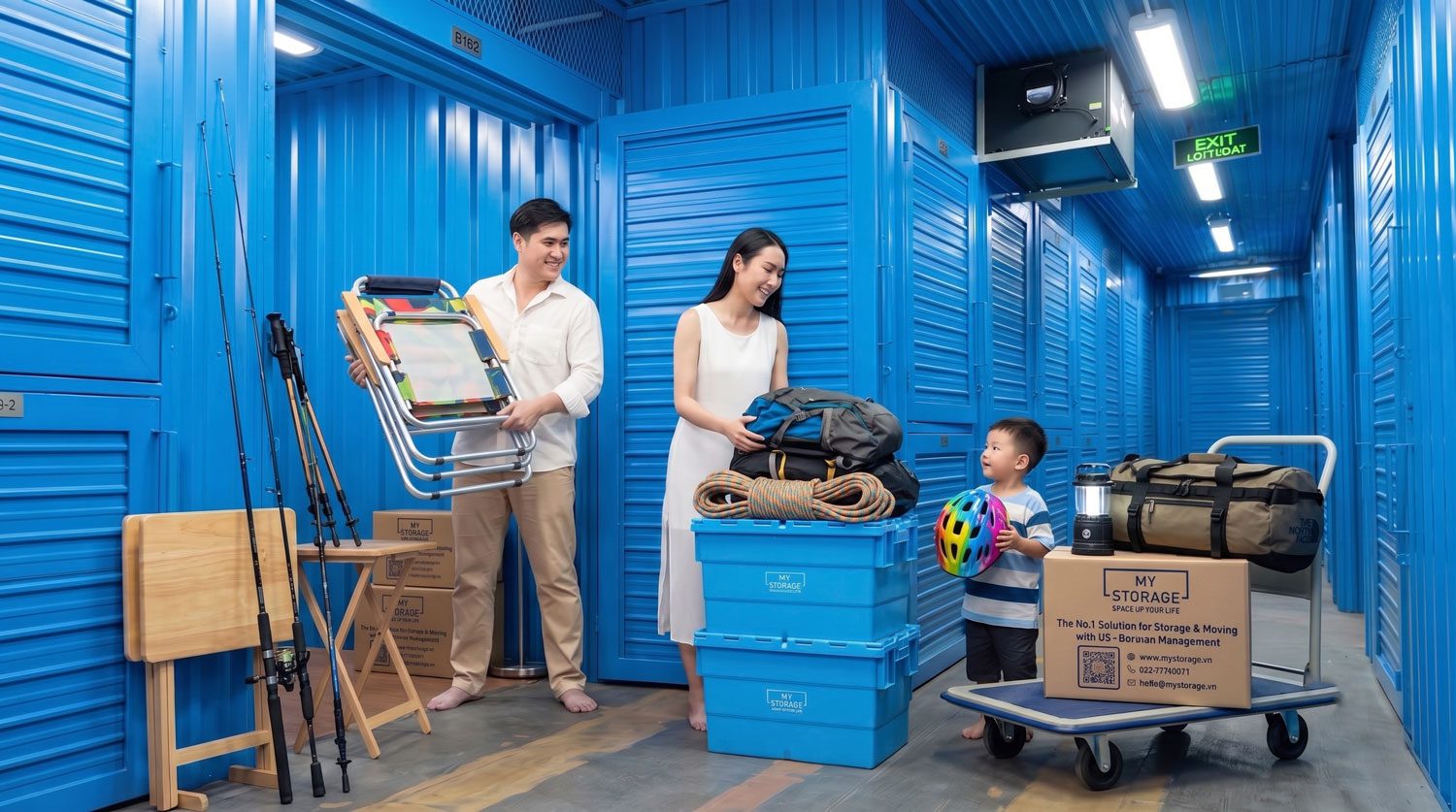
Make better use of space: Suitable shelves, consistent boxes and zoning use space better than random stacking. Capacity still depends on item dimensions, load limits, walkways and safe usable height; floor area alone does not justify promises of multiplying capacity.
| Arrangement | What to watch for | Accessibility |
|---|---|---|
| Random stacking on the floor | Can block walkways and hide items behind | Items often need moving |
| Shelves without zones | Unclear which shelf holds each item | Needs an inventory and labels |
| Shelves with matching boxes and groups | Check box dimensions and shelf load limits | Easy to find by category and box code |
| High shelves | Light items only; check anchoring and retrieval equipment | Do not climb shelving or unsuitable chairs |
Reduce damage risk: Properly arranged belongings are less likely to be damaged than randomly piled items. Fragile pieces go into padded boxes rather than under heavy objects, leather items are hung or positioned correctly rather than folded and crushed, and electronics sit on dry shelving rather than damp-prone floors. Storage damage often remains unnoticed until an item is needed, when restoration may be too late.
Limit mold: Organized storage leaves ventilation gaps between belongings, helping air circulate and reducing local moisture accumulation. Items close to floors and walls are particularly vulnerable to moisture from those surfaces. Shelves separate belongings from damp floors; leave room for inspection, cleaning and airflow. Raising items does not replace fixing the moisture source.
If you use desiccant packets, choose them according to the materials and product instructions and inspect regularly. Close boxes only after contents are dry.
Improve safety: Unstable high stacks can fall and cause injuries, especially to children and older people. Blocked walkways create real trip hazards and can become particularly dangerous during an emergency evacuation.
Clear walkways suited to users and carrying items, heavy belongings low down, light ones higher up and correctly secured boxes and shelves create a substantially safer environment for the whole family.
Investing a weekend in proper organization brings benefits for years: less time searching, fewer duplicate purchases and longer life for correctly stored possessions. It is one of the most rewarding investments of time in managing living space.
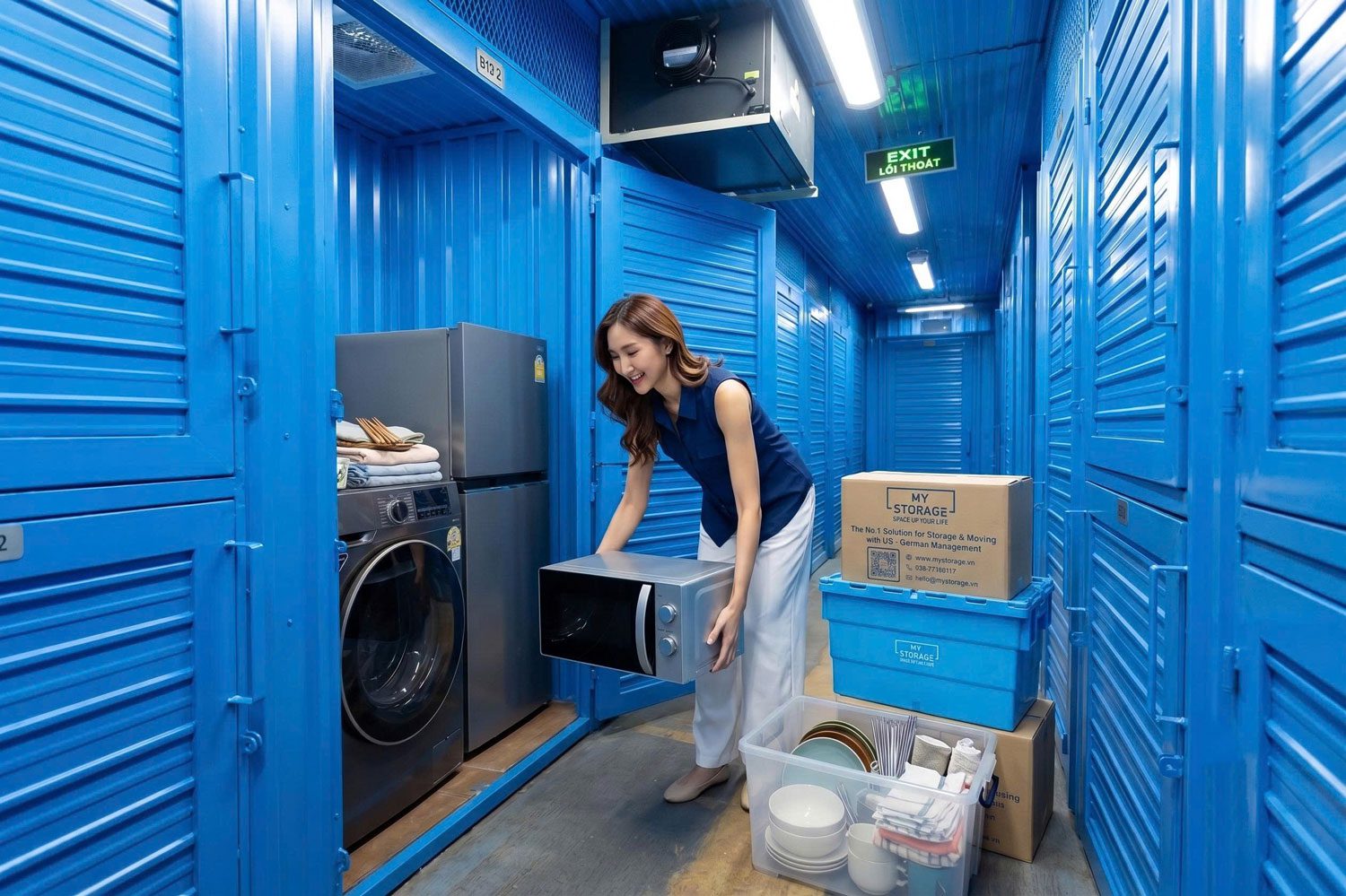
MyStorage: Extending Your Household Storage Space
If home storage remains full after sorting, review household items worth storing and ask MyStorage about suitable options. Confirm the specific location, size, preservation conditions and total cost before renting.
How To Determine Size And Cost
| Need | What to measure or list | What to ask |
|---|---|---|
| Clothes, suitcases, books and records | Number of boxes, packed dimensions and weight | Sufficient space and a convenient arrangement |
| Small furniture, children’s items and sports equipment | Largest dimensions and whether items can be dismantled | Door sizes, transport route and acceptance conditions |
| Sofas, dining tables, cabinets and many boxes | Each item and clearance needed for retrieval | Proposed layout, transport and handling charges |
| Several rooms of belongings during renovation or travel | Full inventory, storage period and collection date | Whole-period quote, deposit, extras and termination conditions |
m² measures floor area and m³ measures volume; they are not interchangeable. Do not infer capacity from household size alone. Measure packed belongings and confirm the unit of measurement in the quote; this article does not use unverified price tables to promise current costs.
Item Groups And Requirements To Check
| Item type | Reason to consider storage | Conditions to check |
|---|---|---|
| Seasonal clothing | Seldom used but takes up wardrobe space | Clean, dry and packed for the fabric |
| Furniture: keep or sell? | Keep only with a reuse plan | Dimensions, assembly and surface protection |
| Children’s belongings not yet reused | Kept for a later stage | Condition and safety requirements before reuse |
| Suitcases and travel gear | Bulky and used only for trips | Collection hours and appointments, if required |
| Storing books and personal documents | Need keeping but are rarely retrieved | Inventory, manageable box weights and suitable conditions |
| Sports equipment | Bulky and used occasionally | Door dimensions, cleaning and drying |
| Keepsakes and heirlooms | Retain sentimental value | Special preservation needs and liability limits |
Information To Confirm With The Facility
| Topic | Questions to confirm | Why it matters |
|---|---|---|
| Humidity | Is it measured and monitored? How are abnormalities handled? | Compare with each material’s requirements |
| Temperature | Ordinary or controlled storage? What parameters are promised? | Do not assume every unit is air-conditioned |
| Cameras | Coverage and data retention period? | Understand incident traceability |
| Locks and access rights | Who may enter? What are authorization and emergency procedures? | Understand responsibility and privacy limits |
| Access hours | Access hours, staffed hours and appointment requirements? | Plan realistic collection trips |
| Contract | Minimum period, size changes, termination and deposit refund? | Avoid underestimating costs |
Donation Cabinet: When Items Are No Longer Needed
While clearing and reorganizing storage, many families find usable belongings they no longer need. Instead of discarding them, the MyStorage donation cabinet at 375 Vo Nguyen Giap, Ho Chi Minh City accepts clean, usable clothing and household items for people who need them. Wash, dry thoroughly and pack neatly before bringing donations, and check current opening times and accepted items.
An effective clear-out often ends at MyStorage in two ways: things worth keeping but seldom used go into storage, while unwanted items go to the donation cabinet. The home gains space without sacrificing what the family truly needs to keep.
An orderly home storage room does not demand more space as much as a clearer system. Correct sorting, placement by usage frequency and regular checks keep it usable rather than turning it into a room no one wants to enter.
When belongings exceed reasonable home capacity or need better conditions than the home can provide, MyStorage self-storage is a natural extension. Keep seldom-used but wanted items in storage and take unwanted ones to the donation cabinet at 375 Vo Nguyen Giap. The home gains room and important belongings receive appropriate care.
Frequently Asked Questions
How do I start clearing a very cluttered storage room?
Work one area at a time if you cannot remove everything at once. Separate items to keep, sell or give away, and dispose of; count what remains before buying shelves or boxes. There is no universal removal percentage for every household.
Should I choose metal or wooden shelves?
Choose according to stated load capacity, dimensions, room conditions and installation method. Do not judge only by material. Shelves must be stable, anchored if the manufacturer requires it and never used as ladders.
Are plastic or cardboard boxes better?
It depends on the item, environment and storage duration. Boxes must be strong enough, suit the load and accept labels easily; a sealed box cannot fix damp contents.
How often should I review storage?
Start with a six-month schedule and adjust to usage and actual conditions. Inspect sooner if you see moisture, leaks, insects or changes in the amount stored.
How can I manage humidity without air conditioning?
Monitor it with a meter, locate and repair moisture sources and choose a dehumidification solution suited to the room. Requirements vary by material; do not use one target for everything or assume a mini dehumidifier handles the whole room.
How much fits in 4–6 m²?
Floor area alone cannot tell you. Measure usable height, each item, arrangement, load limits and walkway space. Try a layout before renting or buying more shelves.
When should I rent external storage?
When sorting and organizing still leave too little room for things worth keeping, or home conditions are unsuitable. Compare total costs and actual conditions before choosing.
What precautions apply to old electronics?
Follow manufacturer instructions for environment, batteries and packing. Do not remove built-in batteries without instructions. Check device condition and facility acceptance rules before storing.
Can children help organize storage?
Give them light, age-appropriate tasks with adult supervision, such as sorting toys or labeling. Do not let them lift heavy objects, climb shelves, use tools or access chemicals.
How does MyStorage support household storage needs?
Send an inventory and expected period for advice. Confirm size and measurement units, location, access hours, preservation conditions, total charges and contract terms for your specific needs.
Related articles

Article
Onshore vs Offshore: Which Manufacturing Model Should Businesses Choose?
Onshore manufacturing refers to production within a company’s home country, helping to control quality, shorten delivery times, and ensure easier regulatory compliance. Offshore…
Read article

Article
Secrets to Profitable Online Selling: 10 Ways to Save Costs
To sell online profitably, you not only need to increase sales but also maintain good control over operating costs. Items such as inventory, premises, packaging, shipping, and order…
Read article

Article
How to Properly Care for Luxury Handbags to Keep Them Looking New
To properly store luxury handbags, you should clean the bag before putting it away, stuff it with paper to maintain its shape, use a dust bag, place it in a dry spot, avoid direct sunlight…
Read article
