
 Tiếng Việt
 한국어
한국어 日本語
日本語Article· Updated October 15, 2026
Guide to Storage Services in HCMC: Secrets from Real Estate Experts

Guide to Storage Services in HCMC: Secrets from Real Estate Experts
Vietnam’s logistics market is growing impressively at 14-16% annually, making storage services one of the hottest sectors in Ho Chi Minh City’s (HCMC) real estate and logistics market.
However, finding the right storage space in this bustling metropolis can be overwhelming. From varying price points across different districts to complex legal requirements, businesses face numerous challenges when seeking suitable storage solutions.
This comprehensive guide specifically addresses everything you need to know about storage services in Ho Chi Minh City. From understanding different types of storage facilities and their locations to navigating legal requirements and negotiating better rates, we’ll cover the essential aspects of securing the perfect storage space for your business needs.
Whether you’re a small business owner looking for a mini storage unit or a large corporation seeking logistics facilities, this expert guide will help you make informed decisions about your storage service journey in Ho Chi Minh City.
Popular Storage Service Types in HCMC
Ho Chi Minh City offers a diverse range of storage service options to meet various business needs. Each type has distinct characteristics and applications, helping businesses optimize storage and goods management.
General Warehouse Storage The general warehouse is the most basic type of storage facility, commonly found in many HCMC districts such as District 8, District 12, Binh Tan, and Hoc Mon. It’s an ideal solution for storing standard goods that do not require strict temperature and humidity control. Traditional warehouses help businesses save significant costs compared to specialized types. In HCMC, the sizes of general warehouses vary widely, from 50m² to thousands of square meters, suitable for businesses of all scales. Many general warehouses are equipped with advanced Selective or Drive-in racking systems, facilitating efficient arrangement, management, and retrieval of goods.
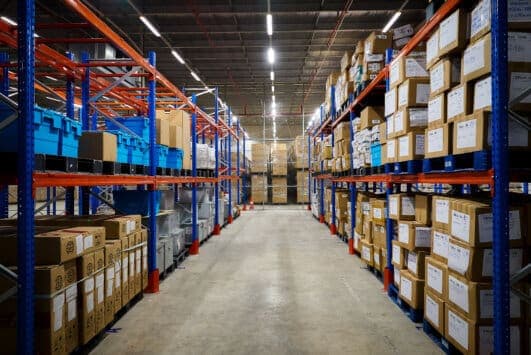
Cold Storage Services Cold storage facilities in HCMC are categorized by different temperature ranges:
- Freezer Storage: -20°C to -18°C, suitable for seafood, frozen fruits.
- Cooler Storage: 5°C to 10°C, ideal for vegetables, fresh fruits, cheese, butter, milk.
- Room Temperature Storage: 18°C to 20°C, suitable for wine.
Additionally, there are specialized cold storage types like deep freeze (-18°C to -50°C) and ultra-low temperature storage (-40°C to -86°C) for vaccines and special pharmaceuticals. Leading cold storage companies in HCMC, such as Eimskip, MyStorage, and SEC Warehouse, offer storage services in strategic locations with modern technology to maintain stable temperatures and ensure optimal goods preservation.
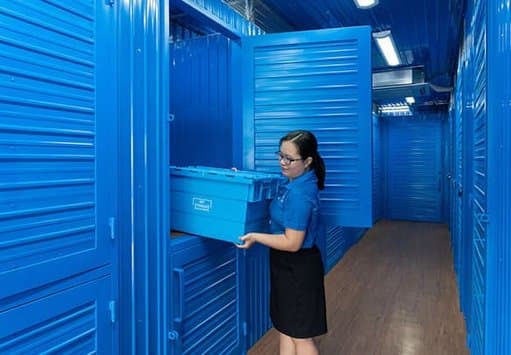
Logistics Warehouse Services Logistics warehouses provide comprehensive supply chain solutions, not only for storage but also for optimizing operational processes. Types of logistics warehouses in HCMC include: Bonded warehouses designed for storing imported or exported goods. CFS (Container Freight Station) warehouses specializing in LCL (Less than Container Load) cargo. Tax-suspension warehouses for goods that have cleared customs but haven’t had duties paid yet. Many top logistics companies in HCMC, like Nhat Viet Logistics, Freight Mark Vietnam, and SEC Warehouse, offer high-quality logistics storage services, situated in convenient locations with easy access to ports and airports.
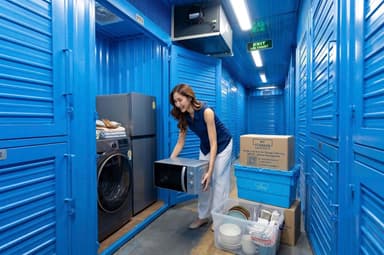
Mini Warehouse (Self-Storage) Services Mini storage is an emerging trend in HCMC, particularly suitable for individuals, small traders, and small businesses. Mini warehouses come in various sizes, such as 5m², 8m², 10m², 16m², 20m², and larger. Self-storage units offer outstanding advantages:
- Reasonable costs, potentially saving on transportation fees with bundled services.
- Private locks, ensuring security with 24/7 camera surveillance.
- Flexible terms (monthly, quarterly, or yearly).
- Convenient locations near residential areas, markets, and commercial centers.
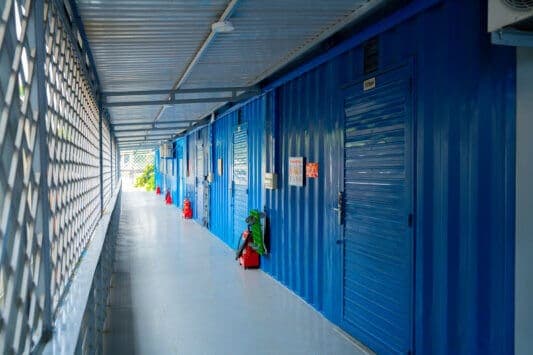
Notably, many providers also offer climate-controlled mini storage (18°C to 25°C), suitable for cosmetics, pharmaceuticals, medical equipment, electronic components, and high-end furniture. The diversity of storage service types in HCMC allows businesses to choose the solution that best fits their storage needs and budget, thereby optimizing business operations.
Storage Service Process and Procedures
Securing storage services in HCMC requires a systematic process to ensure businesses find the most suitable storage space. Mastering these basic steps will help the process go smoothly and effectively.
Search and Survey The search process begins with clearly defining needs and creating a list of potential providers. Common search sources include:
- Seeking recommendations from friends or relatives with experience using storage services.
- Using search engines with keywords like “storage service,” “business storage solutions.”
- Searching through real estate and logistics websites like thuematbang.com.vn, batdongsan.com, Alonhadat.com.vn.

After shortlisting potential storage service providers, prepare specific questions before contacting them. Conducting an on-site survey of the storage facility is crucial. Pay special attention to access roads, potential flooding in the area, and existing facilities.
Contract Negotiation Before negotiating, clearly identify the important elements of the contract:
- Storage area and service price suitable for the business scale.
- Service term and flexible renewal options.
- Deposit amount (typically 1-3 months’ fees, depending on cargo volume and term).
- Annual price escalation rate (often fixed for the first 2 years, then potentially fluctuating).
Additionally, negotiate compensation policies for damaged or lost goods, as well as regulations regarding the deposit if the contract is terminated prematurely.
Necessary Documents If a business sets up a storage location at a different address from its registered business address, it needs to:
- Register a branch or business location with the Department of Planning and Investment where the facility is located.
- Submit a notification of branch/business location establishment signed by the legal representative.
- Prepare copies of legal identification documents for the head of the branch/business location.
If simply using storage services from a licensed business, the two parties only need to execute a contract and issue invoices according to regulations.
Signing and Payment After agreeing on the terms, both parties sign the contract. The storage service contract should clearly state:
- Full legal information of the service provider (lessor) and the client (lessee).
- Service term and renewal method.
- Price and related service fees.
- Payment method.
- Rights and obligations of both parties.
Notably, the deposit serves as a guarantee of responsibility for both parties during contract execution. Supporting documents for deductible expenses include the storage service contract and payment vouchers; invoices are not necessarily required for the deposit amount itself.
Factors to Consider When Choosing a Storage Service Location
The location of the storage facility is a key factor determining operational efficiency and logistics costs. When considering storage services in HCMC, the following four geographical factors play a decisive role in supply chain success.
Transportation Connectivity Convenient transportation infrastructure is the most critical criterion when selecting a storage location. The facility should be near major roads with smooth traffic flow to avoid congestion and facilitate rapid goods movement. Ideal locations are often near highways or national roads, particularly suitable for businesses distributing goods across provinces. For retail distribution businesses, prioritize facilities near main roads for easy distribution to agents and stores. Conversely, manufacturing companies should choose facilities near factories or industrial parks for convenient storage of raw materials and finished products.
Proximity to Ports and Airports Transit storage facilities are often strategically located near ports and airports to best facilitate goods flow. For import/export businesses, prioritizing facilities near seaports and airports is essential to optimize customs clearance times and reduce international transportation costs. In HCMC, air cargo storage facilities are typically located near Tan Son Nhat Airport, with main facilities situated in Ward 4, Tan Binh District.

Location within Industrial Parks Industrial parks (IPs) in HCMC usually have comprehensive infrastructure, maximally supporting warehousing and transportation activities. Tan Binh Industrial Park is a prime example, located near Tan Son Nhat Airport, Hoa Hung railway station, and the Saigon port center. Many storage service options are located in key industrial parks such as Song Than 1 and Song Than 2 in Binh Duong province (bordering HCMC) and the Cat Lai industrial cluster in HCMC. These locations offer extremely favorable conditions regarding transportation connectivity and access to crucial hubs.
Market Access Using storage services in strategic locations helps businesses access the market more quickly. A convenient location saves transportation costs and delivery times. Facilities close to suppliers and customers facilitate smoother and faster transportation of raw materials or delivery of goods. Areas near the city center or major transport routes often have a large potential customer base.
Reference Storage Service Price List
Storage service prices in HCMC vary significantly based on numerous factors, requiring businesses to consider carefully before making a decision.
Price by Area The HCMC storage service market shows clear price differentiation by area. Prices in central districts are generally higher than in suburban areas. District 7 sees significant price variation for prime locations. Meanwhile, districts further from the center, like District 9 or Tan Phu, often offer more competitive rates for larger spaces. For self-storage, rates range from 90,000-150,000 VND/m²/month depending on size and location. Mini storage is increasingly popular, with prices ranging from a few hundred thousand to under two million VND per month for small units.
Additional Costs Besides the main service cost, businesses need to account for ancillary fees when seeking storage services:
- Electricity, water, and facility maintenance fees (especially crucial for cold storage).
- Management and security service fees.
- Internal transport and goods handling costs.
Importantly, expenses with complete invoices and supporting documents related to production and business activities are deductible when determining corporate income tax.
Current Storage Service Price Trends According to market reports, industrial storage service prices show a slight upward trend compared to previous years. Average rates in both Southern and Northern Vietnam have seen upward adjustments. Furthermore, storage service prices are projected to continue increasing slightly in the coming years, primarily driven by the strong growth of e-commerce and the logistics industry.
Price Negotiation Strategies To secure a reasonable storage service price, businesses should employ the following strategies: First, clearly define actual needs to avoid unnecessary costs. Next, conduct market research to get an overview of prices and available incentives. Additionally, long-term contracts often come with discounts. Finally, flexible negotiation skills regarding service term, usable area, and service fees within the contract are also crucial.
Legal Regulations for Storage Services
Legal compliance is a significant factor for businesses participating in the HCMC storage service market. Understanding these regulations helps ensure transparent business operations and prevent legal risks.
Business Licenses Providing storage services in HCMC is classified as a conditional business line within the real estate and logistics sector. Service providers need to meet strict requirements:
- Establishment as an enterprise or cooperative with legally stipulated minimum capital.
- The storage facility must have legally registered ownership or usage rights.
- No disputes over usage rights or ownership, and not subject to seizure.
- The facility must be within its usable lifespan.
For clients setting up a dedicated storage location at a different address from their main office, they need to register it as a branch or business location with the local Department of Planning and Investment.
Fire Prevention and Fighting (PCCC) Regulations Storage facilities are classified as high-risk facilities for fire and explosion, thus must comply with PCCC regulations:
- Installation of warning signs, prohibition signs, internal rules, and PCCC diagrams.
- Specific assignment of PCCC responsibilities within the facility.
- Ensuring safety of electrical systems, lightning protection, and anti-static measures.
- Having a PCCC team trained in professional skills ready to respond.
- Development of a firefighting plan approved by competent authorities.
Environmental Regulations Environmental responsibility depends on the facility’s characteristics: If the storage project has independent environmental protection facilities, the provider typically handles the main environmental procedures. If the project shares environmental facilities and generates waste exceeding treatment capacity, relevant parties must coordinate upgrades and necessary environmental procedures.
Occupational Safety Regulations Both the storage service provider and the client need to cooperate to ensure occupational safety:
- Regular occupational safety training for employees working at the facility.
- Provision of adequate personal protective equipment (PPE) such as helmets, gloves, safety glasses.
- Periodic inspection of equipment and tools, especially lifting equipment.
- Strict management of chemicals and hazardous materials.
- Regular risk assessments and implementation of corrective action plans.
Advice for Choosing a Suitable Storage Service
Choosing the right storage service requires careful consideration of many important factors. An unsuitable choice can lead to budget waste or negatively impact business operations. Here is practical advice to help you make informed decisions when seeking storage services.

Assess Actual Needs Before starting the search, the first step is to clearly define the business’s actual usage needs. This includes the appropriate space for the inventory volume, the type of storage needed (general, cold, logistics, self-storage, etc.), and the required service term (short-term or long-term). Too much space wastes costs, while too little cannot meet storage demands. Also, determine the frequency of goods dispatch and receipt. If goods move frequently, choose a facility near the city center or major transport routes to save time and transportation costs. For specialized items like food, pharmaceuticals, or medical equipment, select a storage service with suitable preservation conditions.
Consider Security Factors Security is an indispensable factor when choosing a storage service. The facility should be equipped with 24/7 surveillance cameras, have security guards on duty, and implement strict access control. This system not only ensures the safety of goods but also prevents risks like theft or fire. Additionally, check if the storage service provider offers cargo insurance – especially important if the business stores high-value or perishable goods. A complete fire safety system with extinguishers, hoses, automatic fire alarms, and clear escape routes is mandatory.
Inspect Facilities Before signing the contract, conducting an on-site inspection to assess the facility structure and accompanying utilities is essential. Some points to note when viewing a potential storage service location:
- High, sturdy floor with good load-bearing capacity.
- Roofing system resistant to extreme weather, without leaks.
- Dock system (automatic or fixed) facilitating easy forklift movement (if needed).
- Sufficient number of entrance/exit doors for convenient goods flow.
- Adequate lighting, ventilation, and temperature control systems (if required).
Research Provider Reputation Choosing a reputable storage service provider is equally important. Prioritize well-known companies that have partnered with large businesses to ensure reliability and service quality. Businesses can check reviews from previous clients. Simultaneously, verify the provider’s operating license and related legal documents. A reputable provider must have clear information about their legal entity, tax code, legal representative, and operational history. This not only ensures securing a standard-compliant storage service but also helps resolve issues quickly during the service term.

Conclusion
Securing storage services in Ho Chi Minh City demands careful consideration of multiple factors – from selecting appropriate storage types and locations to navigating legal requirements and pricing negotiations. Success depends on thorough research, proper documentation, and partnerships with reputable providers.
Businesses must evaluate their actual storage needs, assess security measures, verify facility conditions, and scrutinize provider credentials before signing storage service agreements. Understanding market rates, location advantages, and regulatory compliance also proves essential for optimal storage selection.
The storage service market continues evolving with new solutions, stricter safety standards, and changing price dynamics. Companies that follow proper due diligence, maintain legal compliance, and choose facilities aligned with their operational needs position themselves for efficient supply chain management and business growth.
Related articles
Article
Onshore vs Offshore: Which Manufacturing Model Should Businesses Choose?
Onshore manufacturing refers to production within a company’s home country, helping to control quality, shorten delivery times, and ensure easier regulatory compliance. Offshore…
Read article
Article
How To Organize Your Home Storage Room | 10 Space-Saving Tips
Organize household storage with ten practical tips, an inventory template, safety checks and guidance on when external storage is worth considering.
Read article

Article
Secrets to Profitable Online Selling: 10 Ways to Save Costs
To sell online profitably, you not only need to increase sales but also maintain good control over operating costs. Items such as inventory, premises, packaging, shipping, and order…
Read article
