
 Tiếng Việt
 한국어
한국어 日本語
日本語Article· Updated October 15, 2026
Smart Packing Tips for Clothes – Neat Luggage & Maximum Capacity
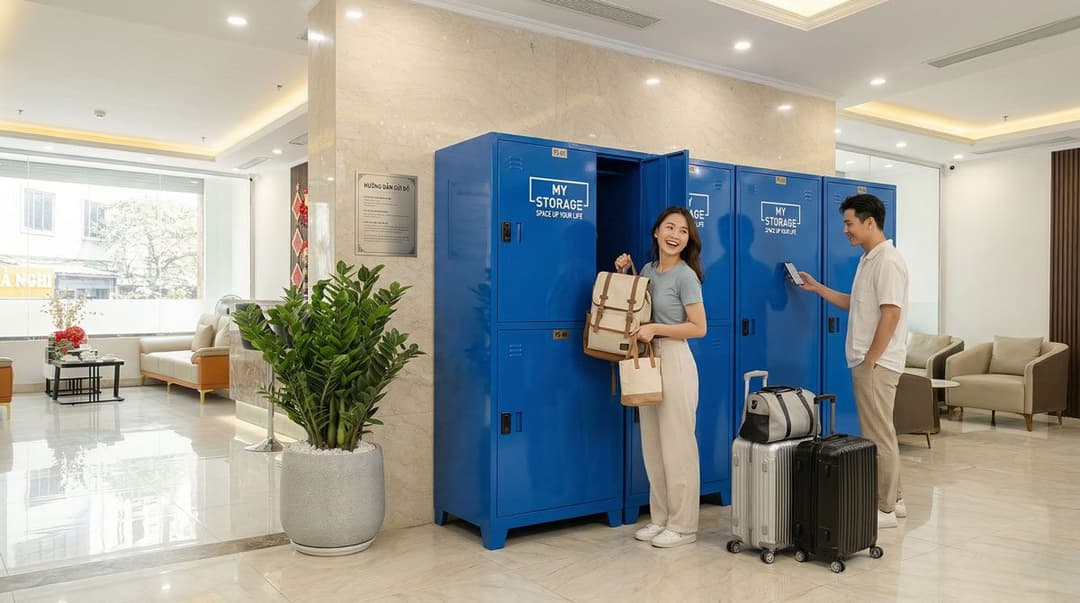
To organize items and clothes in your suitcase neatly, you should categorize your luggage into groups, roll clothes instead of folding them, and utilize compression bags or packing cubes to optimize space. Scientific organization not only helps the suitcase hold more items but also reduces wrinkles, makes things easier to find, and ensures convenience during travel or business trips.
Why is your suitcase always full and messy?
A suitcase that fills up quickly and becomes messy is usually due to three main reasons: folding clothes incorrectly which wastes volume, failing to categorize items making them hard to find, and bringing things you don’t actually need. Changing your packing method can save 30–40% of space without needing a larger suitcase.
- Folding clothes incorrectly – the biggest waste of space: Traditional flat folding creates overlapping layers that take up height but don’t utilize the suitcase’s depth. The rolling technique (roll packing) or the KonMari method helps clothes stand upright, making them easy to see and saving up to 30% more space compared to standard flat folding.
- Failing to categorize items: When clothes, accessories, toiletries, and electronics are mixed together, you have to rummage through the entire suitcase every time you look for an item. This not only wastes time but also causes clutter and wrinkles. Small sorting bags (packing cubes) are the simplest and most effective solution to this problem.
- Bringing unnecessary items: Most people carry an average of 30–40% of items in their suitcase that they never use during the trip. This is often due to a “just in case” mentality or failing to make a list before packing. By spending just 10 minutes creating a checklist based on specific days and activities, the amount of gear you bring will decrease significantly.
Golden rules for organizing your suitcase
Efficient suitcase organization is based on three principles: only bring what is truly necessary, fully utilize every internal gap, and arrange items in order of use so you don’t have to overturn the suitcase every time you need something.
- Prioritize essentials — make a list before packing: Create a list of items to bring by day and activity type: casual, evening, and outdoor activities. Every item should answer the question “On which specific day will I use this?” If there isn’t a clear answer, don’t bring it.
- Utilize the gaps inside the suitcase: Stuff socks and underwear inside shoes to take advantage of the hollow space. Place heavy items like shoes and bottles near the wheels to maintain a stable center of gravity. Rolled clothes fill the gaps between hard items. With a 20-inch suitcase, proper organization can hold as much as a 24-inch one.
- Arrange by order of use: Place items for the end of the trip or those used least at the bottom. Daily essentials like pajamas, toiletries, and the first day’s outfit should be on top or in the outer lid compartment. Documents, chargers, and items needed quickly at the airport should always be in your carry-on, not in checked luggage.
Should you roll or fold your clothes?
Rolling clothes saves more space than traditional flat folding and reduces wrinkles for soft fabrics like cotton and jersey. However, no single method is perfect; combining both depending on the garment type is the most optimal approach.
| Method | Pros | Cons | Best for |
|---|---|---|---|
| Rolling | Saves 20–30% space, easy to see items | Takes more time | T-shirts, jeans, sportswear |
| Flat folding | Fast, maintains shape well | Takes up more space, prone to wrinkling | Dress shirts, suits, structured dresses |
| KonMari | Items stand upright, saves space | Requires learning the technique | Soft clothing, everyday wear |
When should you roll, and when should you fold? Rolling is suitable for soft, elastic fabrics like T-shirts, jeans, and sportswear. Flat folding or using garment bags is better for office shirts, blazers, and structured dresses to avoid unwanted creases. In practice, most travelers should roll about 70% of their items and fold the remaining 30% depending on the fabric.
How to categorize items before packing your suitcase
Categorizing items into separate groups before packing helps you find things faster, avoids clutter during the trip, and makes it easier to manage luggage weight. The simplest way is to use packing cubes or color-coded zip bags for each group.
Clothing
Group items by day of wear or by type: daytime outfits, evening wear, pajamas, and spares. Roll and stack them vertically in packing cubes to see everything at a glance without rummaging. A simple rule: one outfit per day maximum, plus one spare set for the entire trip.
Toiletries
Place everything in a transparent zip-lock bag for quick airport security checks. Liquid containers over 100ml must be checked in, while only those under 100ml are allowed in the cabin. Instead of bringing full-sized bottles, use travel-sized containers to significantly save weight and space.
Electronic accessories
Gather charging cables, adapters, headphones, and power banks into a separate zippered pouch. Neatly wrap cables with ties or velcro to prevent tangling. This pouch should be placed in the outer compartment of your suitcase or carry-on backpack for quick access at airport security.
Footwear
Put each pair of shoes in a separate fabric or plastic bag to prevent dirt from getting on your clothes. Place shoes near the suitcase wheels to create a stable base. Utilize the empty space inside the shoes to tuck in socks, belts, or small items, saving a significant amount of extra space.
Tips to Help Your Suitcase Hold More Items
Increasing suitcase capacity doesn’t require buying a larger one. Simple tips like using compression bags, utilizing space inside shoes, and wearing bulky clothes while traveling can help fit 30–40% more items in the same suitcase.
| Tip | Instructions | Details |
|---|---|---|
| Use packing cubes | Packing cubes help organize luggage scientifically, keeping items from shifting and saving space compared to loose packing. | Divide the suitcase into distinct zones: one cube for clothes, one for underwear and socks, and one for accessories. When you need an item, you won’t have to rummage through the entire suitcase. Compression packing cubes also help reduce volume by an additional 15–20% compared to regular cubes. |
| Utilize space inside shoes | The hollow space inside shoes is the most common wasted space in a suitcase, which can hold socks, accessories, or charging cables. | Roll each pair of socks and stuff them into the toes of your shoes. Charging cables, lipsticks, small adapters, or jewelry all fit perfectly inside. Then, wrap each pair of shoes in a separate cloth bag before packing them into the suitcase to avoid getting other items dirty. |
| Use vacuum bags | Vacuum bags remove excess air, reducing the volume of thick clothing to 50–70% of its original size. | Best suited for jackets, thick sweaters, thin blankets, and swimwear. Use a vacuum pump or hand-roll them to expel air. Note that clothes wrinkle easily after compression, so only apply this to items that don’t need to be crisp upon arrival. |
| Wear bulky items while traveling | Wearing your bulkiest items when boarding the plane helps free up significant space in your suitcase. | Jackets, thick sweaters, boots, or large sneakers should be worn directly instead of packed. Combined with stuffing small items into jacket pockets, you can save 3–5 liters of suitcase volume just by changing your travel outfit. |
How to Pack Your Suitcase for Every Type of Trip
Each type of trip has different luggage needs. Short trips prioritize compactness, business trips require professional attire, while studying abroad or long-term travel demands maximum space optimization and preparation for various social and meeting situations.
| Short Trip | Business Trip | Study Abroad / Long-term | |
|---|---|---|---|
| A 2–4 day trip only needs a cabin suitcase; prioritize versatile items that can be worn multiple times to avoid overpacking. | Business luggage requires neat, professional, and easy-to-coordinate outfits. Prioritize wrinkle-resistant and easy-to-maintain items. | Long-term trips require detailed luggage planning, optimizing every cm³, and knowing what items can be purchased at the destination. | |
| Suitcase type | 20-inch cabin, carry-on | 24-inch suitcase or hard-shell duffel bag | 28–30 inch suitcase combined with a backpack |
| Clothing | 2–3 versatile sets to mix and match, 1 spare set | At least 1 set per business day, plus 1 evening outfit for events | Calculated by week: 7 casual sets, 2 formal sets, separate sportswear |
| Shoes | 1 pair worn, 1 pair packed | Dress shoes + 1 pair of comfortable walking shoes | 3 pairs maximum: athletic, professional, casual |
| Toiletries | Mini travel bottles, only bring essentials | Basic skincare set, mini perfume | Bring a 1–2 week supply, buy refills at the destination |
| Electronics | Power bank, 1 charging cable, headphones | Laptop, charger, universal adapter, mini projector if needed | Universal power strip, hard drive, full set of adapters for the country |
| Specific tips | Wear thick clothes and large shoes when boarding to save space | Hang suits on the plane’s coat hooks immediately upon boarding to avoid wrinkles | Leave 20–30% of suitcase space for items purchased at the destination |
| Items to avoid | Thick paper books, bulky jewelry | Sportswear if there is no specific workout schedule | Disposable items, things that can be bought cheaply at the destination |
What to Do When You Have Too Much Luggage?
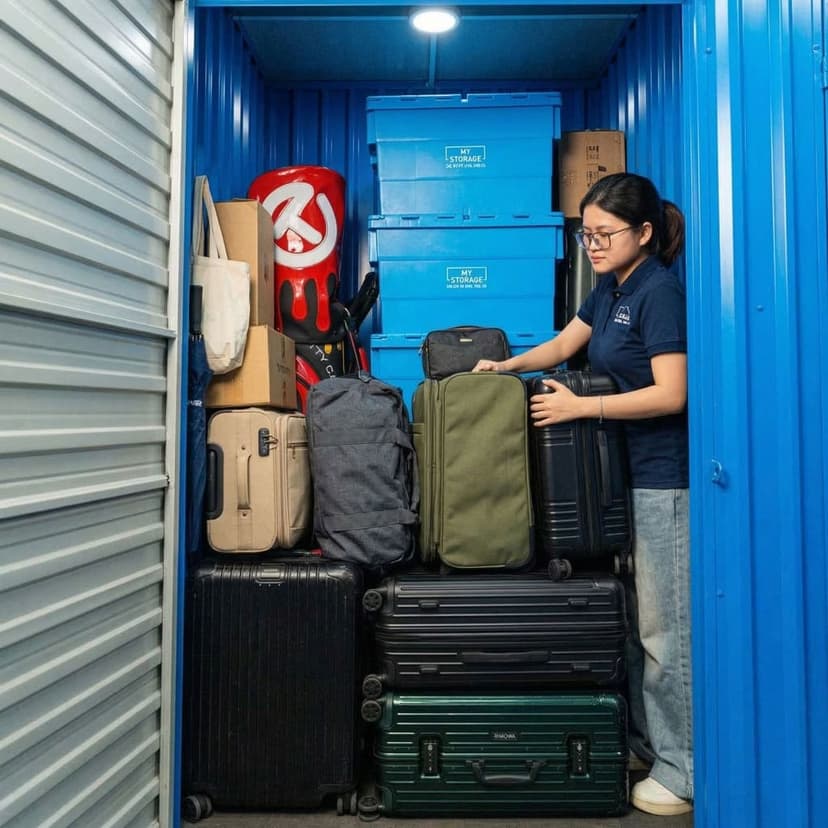
When luggage exceeds limits or is too bulky to move, there are three practical solutions: daily luggage storage at airports or stations, monthly self-managed mini-storage, or hourly luggage lockers at tourist spots. Each solution fits a different situation and budget.
- Daily luggage storage: Most international airports and major stations in Vietnam offer daily luggage storage services with costs ranging from 50,000–150,000 VND per item depending on size. This is a suitable choice when you have a long layover, need to explore the city for the day before checking into a hotel, or have a late flight but must check out early. Services like Stasher and LuggageHero also allow booking via apps at over 10,000 locations worldwide with prices starting from 1–2 USD per hour.
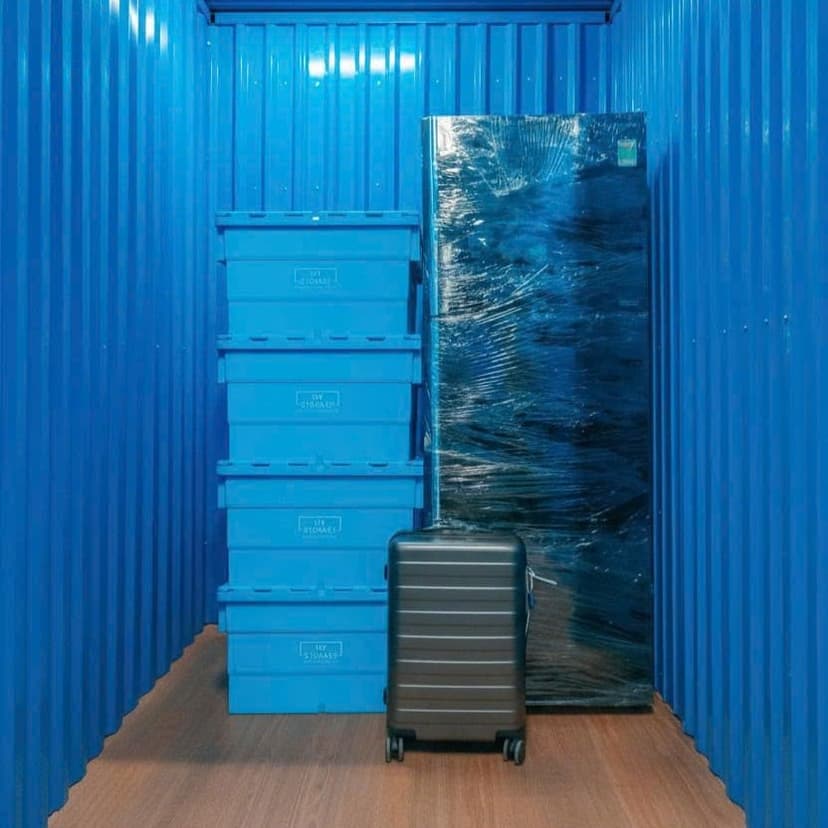
- Self-managed mini-storage: Self-storage is the optimal solution for long-term travelers, international students returning home temporarily, or people in a moving phase without a fixed residence. Rental areas are flexible from 1–3 m², paid monthly, with no long-term commitment. The cost of renting a mini-warehouse in Ho Chi Minh City ranges from 400,000–800,000 VND per month for a small unit, including 24/7 security cameras, humidity control, and access at any time. Compared to paying excess baggage fees on a plane (usually 500,000–1,500,000 VND per way), renting a storage unit for a month is often significantly cheaper.
- Luggage lockers: Hourly luggage lockers are rapidly becoming popular at tourist spots, shopping malls, and station areas in Vietnam. Rental prices range from 20,000–50,000 VND per hour or 100,000–200,000 VND for the whole day. This is suitable when you want to sightsee freely without dragging a suitcase, or need to leave items for a few hours between two travel points. In Hanoi and Ho Chi Minh City, many hotels also allow free luggage storage even if you are not a staying guest if you have booked with them before.
Storage Solutions for Frequent Travelers
Frequent travelers don’t need to carry everything on every trip. Combining self-storage for infrequent items, flexible lockers at destinations, and a minimalist luggage strategy makes traveling significantly lighter without missing essentials.
Separate frequent items from long-term storage
Frequent travelers often make the mistake of bringing everything “just in case.” A practical solution is to divide belongings into two clear groups: the “on-the-go” group (clothes, work equipment, toiletries) and the “storage” group (seasonal items, documents, backup equipment, mementos).
The second group is sent to self-storage, only retrieved when truly needed. This method keeps your main suitcase at 60–70% capacity, creating space for items purchased during the trip.
Self-storage as a permanent storage address
For those without a fixed home or who frequently change locations such as digital nomads, freelancers, or multi-location employees self-storage acts as a stable “belongings address.”
You can leave at any time without worrying about important items getting lost or having to store them with relatives. Many storage providers like MyStorage in Vietnam offer flexible monthly contracts that can be extended or canceled at any time without incurring penalties.
Comparing costs of storage solutions
| Solution | Cost | Duration | Best Suited For |
|---|---|---|---|
| Airport / station lockers | 50,000–150,000 VND/day | Hourly or daily | Layovers, short visits |
| Tourist attraction lockers | 20,000–50,000 VND/hour | Hourly | Day-long city exploration |
| Hotel luggage storage | Usually free | A few hours to 1 day | Before check-in or after check-out |
| Mini self-storage 1–2 m² | 400,000–800,000 VND/month | Monthly, flexible | Long-term travel, studying abroad, moving house |
| Excess airline baggage fees | 50,000–1,500,000 VND/way | One-time | Not recommended if alternatives exist |
Minimalist luggage strategy for frequent travelers
Invest once in a quality 20–22 inch cabin suitcase, which is sufficient for 90% of trips under 2 weeks. Maintain a pre-packed toiletry bag with enough personal items for 2 weeks so you don’t have to start from scratch for every trip. Combined with a self-storage unit for the rest of your belongings, the total monthly cost is usually significantly lower than constantly paying excess baggage fees or shipping items via post.
FAQ
Move heavy items into your carry-on, wear bulky clothing, or ship items via postal service 1–2 days ahead. Shipping costs are usually lower than excess baggage fees at the check-in counter.
Tan Son Nhat and Noi Bai airports both have luggage storage counters. Many hotels also offer free storage for past guests, even after check-out.
Luggage lockers charge by the hour, suitable for a few hours during the day. Self-storage charges monthly, better for long-term storage with more space and higher security.
A 1–2 m² unit ranges from 400,000–800,000 VND per month, including 24/7 cameras and humidity control. Significantly cheaper than paying excess baggage fees on each flight.
Very suitable. Instead of carrying everything on each trip, frequent travelers only bring essentials and store the rest, accessing the unit whenever needed.
Yes. Renting a 1–2 m² unit for 2–3 summer months is far cheaper than hauling heavy luggage back to Vietnam and paying two-way excess baggage fees.
Yes. Self-storage requires no long-term contract, billed monthly with flexible cancellation. It is a common solution during moving or renovation periods.
Yes, if the facility maintains humidity control at 50–65% RH. Electronics avoid oxidation and clothing avoids monsoon-season mould common in Vietnam.
For layovers under one day, an airport locker is sufficient. If you plan to explore the city for 2–3 days before the next flight, daily self-storage or LuggageHero is more cost-effective.
Keep your suitcase at 70% capacity before each trip, store rarely used items in self-storage, and apply the one-in-one-out rule for anything bought during the trip.
Related articles
Article
Onshore vs Offshore: Which Manufacturing Model Should Businesses Choose?
Onshore manufacturing refers to production within a company’s home country, helping to control quality, shorten delivery times, and ensure easier regulatory compliance. Offshore…
Read article
Article
How To Organize Your Home Storage Room | 10 Space-Saving Tips
Organize household storage with ten practical tips, an inventory template, safety checks and guidance on when external storage is worth considering.
Read article
Article
Secrets to Profitable Online Selling: 10 Ways to Save Costs
To sell online profitably, you not only need to increase sales but also maintain good control over operating costs. Items such as inventory, premises, packaging, shipping, and order…
Read article
