
 Tiếng Việt
 한국어
한국어 日本語
日本語Article· Updated October 15, 2026
Renting Film Accessory & Equipment Storage for Production Houses
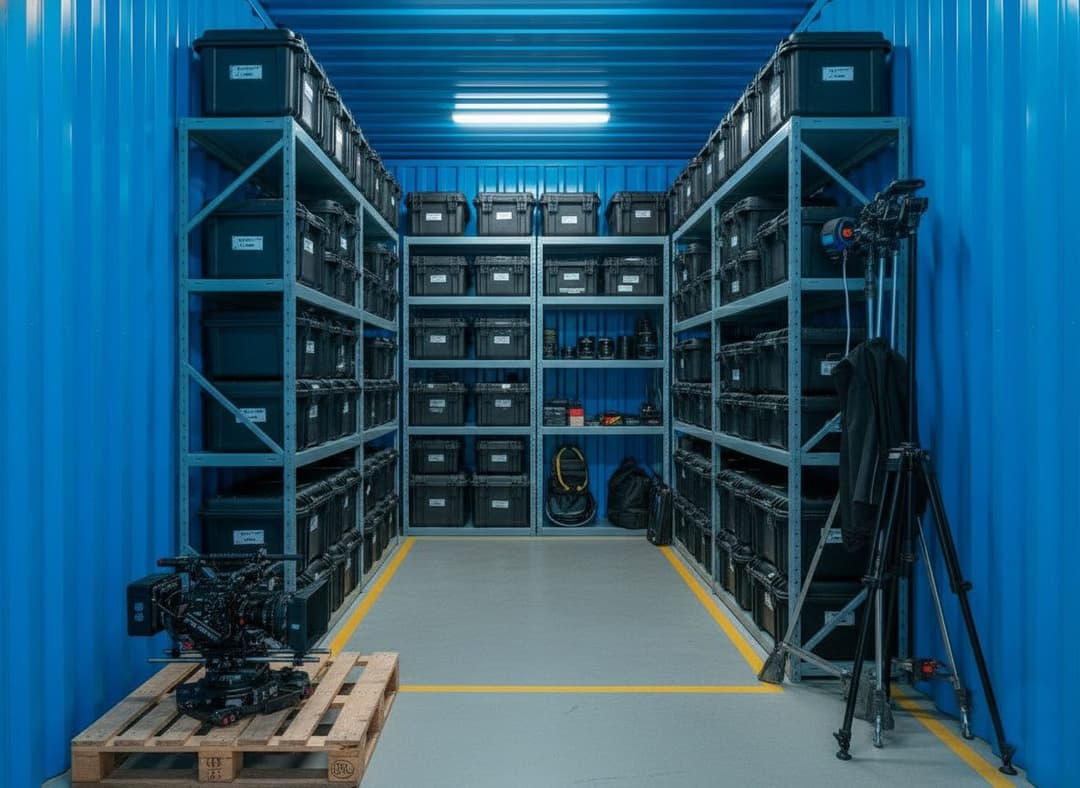
Renting film accessory storage helps production houses and creative teams store props, costumes, and filming equipment safely, organized, and more cost-effectively than using studios or offices as warehouses. Modern storage facilities also support humidity control, 24/7 security, and flexible areas, suitable for both short-term projects and long-term operations.
Why Do Production Houses Need Private Storage?
Production houses often accumulate large amounts of props, costumes, and filming equipment after each project. Without private storage, studios become cluttered, equipment is hard to inventory, and assets are easily damaged due to improper storage, directly affecting operational efficiency.
- Props increase with each project: Every film project, TVC, or MV requires specific props ranging from furniture, fake signs, and vehicles to context-specific items. After completion, most props are not liquidated immediately because they can be reused in future projects. A production house operating for 3–5 years can easily accumulate hundreds of props with a total value of up to several hundred million VND. Without private storage, all of these will fill up the studio or must be kept in temporary yards without environmental control, significantly reducing the lifespan of the assets.
- Studios are occupied: A studio is the direct profit-generating space of a production house; every day it is not used is a real opportunity cost. When props, backdrops, lighting equipment, and costumes overflow into the studio due to a lack of dedicated storage, the filming area shrinks, setups become more complex, and set preparation time increases. Many production houses in HCMC report losing 20–30% of useful studio space just due to a lack of separate storage. Renting an additional 5–10 m² self-storage unit near the studio is often much cheaper than expanding the premises or renting a larger studio.
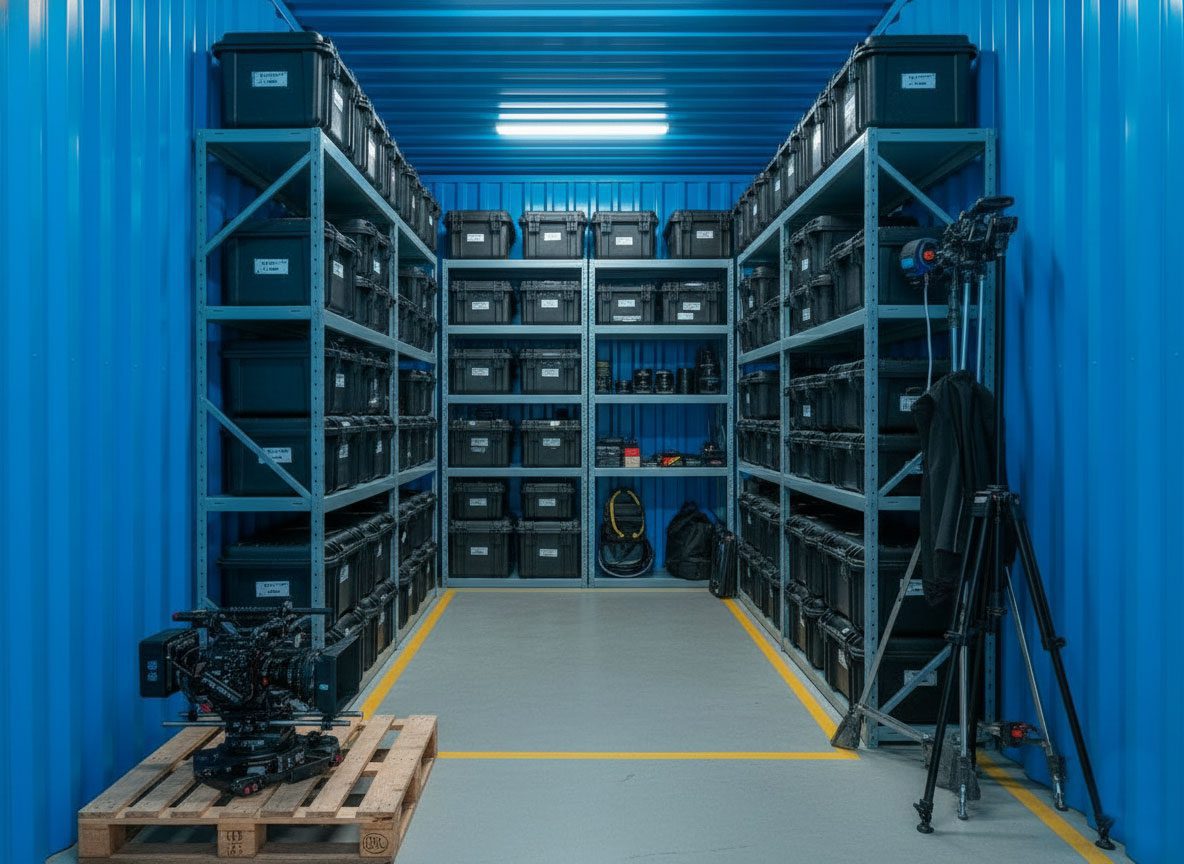
- Difficulty in inventory and equipment management: Production house equipment includes many high-value items such as cameras, lenses, gimbals, studio lights, and audio gear, with total values easily exceeding 500 million to several billion VND. When everything is mixed together without a system, inventorying before each project takes hours, and equipment is easily lost or lent out without records. Private storage with a clear shelving system and inventory list helps production houses know exactly where each asset is, its condition, and when maintenance is needed, minimizing the risk of loss and damage before every shoot.
Types of Film Accessories That Often Need Storage
Storage for production houses needs to accommodate various asset groups: bulky props, humidity-sensitive costumes, high-value electronics, and large set design materials. Each group has its own preservation requirements, requiring a warehouse with clear zoning instead of mixing everything together.
Filming Props (Props)
Props are often large, made of diverse materials, and increase rapidly in number after each project. Organized storage by category helps with quick searching and efficient reuse instead of repurchasing for every new project.
Props include fake furniture, signs, decorative vehicles, kitchenware, antiques, and specific items for each film setting. An active production house can accumulate 200–500 props after 3–4 years.
The most effective storage method is zoning by material: separate metal and wood, protect fragile items with padding, and store small items in clearly labeled boxes. Industrial shelving with flexible height adjustment is the most popular solution for this group because it is easy to customize as prop sizes constantly change.
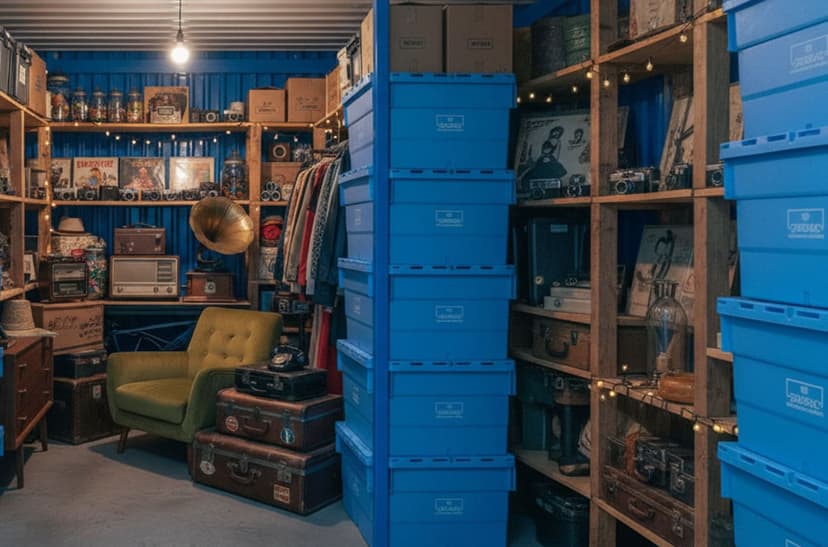
Costume & Actor Clothing
Costumes need a dry, well-ventilated environment away from direct light to maintain color, shape, and material. Humidity above 70% in Vietnam’s climate is the main cause of mold and fabric damage.
Film costumes often include period clothing, character uniforms, brand outfits, and accompanying accessories like hats, shoes, and jewelry. The value of each professional costume ranges from a few million to tens of millions of VND, especially for historical or fantasy films.
Preservation requirements include hanging straight on racks to maintain shape, using breathable fabric bags instead of plastic bags, and maintaining warehouse humidity at 50–60% RH. Air-conditioned storage with humidity control for clothing is the most important criterion when a production house chooses a storage provider for this asset group.
Filming Equipment & Lighting
Cameras, lenses, gimbals, and studio lights are the highest-value assets in a production house, easily damaged by humidity, dust, and sudden temperature changes. Storage for this group needs to prioritize security and environmental control.
The total value of filming equipment for a medium-sized production house typically ranges from 500 million to 2–3 billion VND. High-end lenses are particularly sensitive to humidity, prone to optical fungus if stored in environments above 65% RH for long periods. Studio lights and electrical equipment face the risk of circuit oxidation if kept in damp places.
Electronic equipment storage requirements include specialized dry cabinets for lenses and cameras, sturdy shelves with anti-vibration padding for lights and gimbals, an inventory system based on equipment codes, and a regular maintenance schedule. The warehouse needs security cameras and separate access control locks to restrict entry for those taking equipment without records.
Backgrounds, Set Materials & POSM
Backdrops, set design materials, and POSM are often large, difficult to fold, and easily damaged if damp or under heavy weight. This group requires flexible storage with high ceilings and a large area for proper preservation.
Backgrounds include fabric backdrops, rolled paper backdrops, foam panels, reflectors, and portable LED screens. POSM from brand TVC projects such as standees, banners, and display frames are often kept by production houses for handover or reuse. Set design materials like wooden boards, iron frames, models, and artificial plants occupy the largest area among all production house assets.
An effective preservation method is to stand backdrops and panels upright instead of laying them flat to avoid warping, roll paper backdrops in protective tubes, and keep them in a dry place. Self-storage units for POSM with ceilings 3–4m high and doors wide enough for trolleys are the most practical criteria when production houses look for storage providers for this asset group.
Why Production Houses Need Private Storage
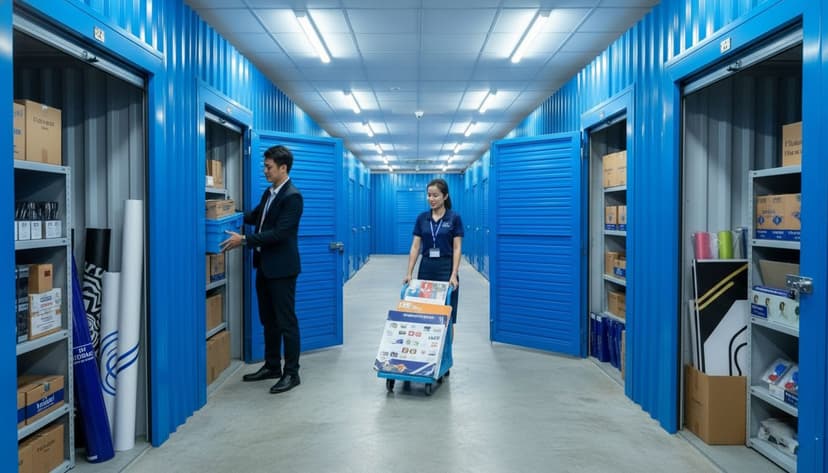
Not having private storage leads to studio overcrowding, lost props, and damaged equipment due to improper storage. Many production houses, after switching to renting their own self-storage units, have seen marked improvements in setup speed, inventory management capabilities, and overall operational efficiency between projects.
| Issues without a warehouse | Changes after having a warehouse |
|---|---|
| Props: Frequently lost after each project, having to repurchase items already owned but not found. Repurchasing costs for props can reach 10–30 million VND per year just due to poor management. | Props are zoned by category, with labels and inventory lists. Find exactly what you need in minutes instead of tearing the studio apart before every shoot. |
| Filming equipment: Lenses and cameras mixed with props in an environment without humidity control, prone to optical fungus or circuit oxidation. Repair or replacement costs for damaged equipment range from 20–200 million VND per incident. | Equipment is stored in a warehouse with humidity control at 50–65% RH, with a regular maintenance schedule and a code-based inventory system. Significantly reduces the risk of environmental damage. |
| Studio: Backdrops, props, and equipment occupy 20–30% of the usable studio area. Setting up each shoot takes an extra 1–2 hours just to clear and move irrelevant items out of the frame. | Studio is completely freed up for filming. Setup is faster by an average of 40–60 minutes per session, equivalent to significant savings in personnel costs and hourly venue rental. |
| Premises costs: Many crews rent studios larger than actually needed just to have storage space, or rent additional office space that is not optimized, costing 15–40 million VND per month. | Renting a 5–10 m² self-storage unit near the studio for 1.5–3 million VND per month, saving 80–90% compared to renting additional commercial space of the same area. |
| Inventory management: No clear asset list, the crew spends 30–60 minutes checking inventory before each project. Loaned equipment has no records, leading to loss and internal disputes. | Category-based inventory system with the status of each item: in use, in storage, needs maintenance. Check-in/check-out records help the production house know exactly where assets are. |
| Crew performance: The crew’s time and energy are drained by finding items, cleaning, and dealing with damaged assets instead of focusing on production. Directly affects output quality and morale. | The crew only needs to focus on creative work. The preparation and cleanup process after each project is significantly shortened, creating conditions to take on more projects without increasing staff. |
Comparison: Using a Studio as Storage vs. Renting Professional Warehousing
Many production houses use their studio as a storage space for immediate convenience, but in the long run, this approach reduces production efficiency and increases operating costs. Renting professional storage helps separate creative space from storage space, ensures better asset preservation, and optimizes overall costs.
| Criteria | Studio Storage | Professional Warehouse |
|---|---|---|
| Workspace | 20–30% of the area is occupied by unused props, backdrops, and equipment | Completely separate; the studio is always production-ready |
| Equipment Preservation | No control over humidity and temperature; lenses and cameras are prone to mold or oxidation | Maintains 50–65% RH and stable temperature, reducing the risk of damage to high-value equipment |
| Security | General building security; no distinction on who can access specific assets | 24/7 cameras, individual access control for each unit, clear entry/exit logs |
| Long-term Costs | Must rent a larger studio than actually needed; costs 15–40 million VND per month for wasted space | 5–10 m² units from 1.5–3 million VND per month, saving 80–90% compared to expanding premises |
| Setup Time | Takes an extra 1–2 hours per shoot to clear and move irrelevant items out of the frame | 40–60 minutes faster setup because the studio is always tidy; the crew picks up exactly what they need from storage beforehand |
| Inventory Management | No system; props and equipment are mixed together, making it hard to inventory and easy to lose items | Categorized zones with labels and inventory lists; know exactly where every asset is located |
| Scalability | The more projects, the more cramped it gets; no quick expansion solution other than renting more floor space | Increase or decrease storage area monthly depending on project volume; no long-term commitment required |
| Best Fit | Newly established production houses with few projects and limited assets | Growing production houses with multiple concurrent projects and assets accumulated over time |
What Standards Are Needed for Film Prop Storage?
Storage for a production house doesn’t just need to be spacious; it must meet four core standards: stable environmental control, strict security, flexible area based on project phases, and convenient logistics support. Lacking any of these criteria directly impacts assets and operational efficiency.
Humidity & Temperature Control
The hot and humid climate in Vietnam, with an average humidity of 75–85%, is an ideal environment for mold, oxidation, and material deformation. Storage with active humidity control maintaining 50–65% RH helps protect all production house assets more effectively than any other solution.
| Asset Type | Risks without environmental control | Preservation standards |
|---|---|---|
| Lenses & cameras | Optical mold, contact oxidation | Humidity 40–50% RH, temperature 18–22°C |
| Costumes & fabrics | Mildew, fading, fabric rot during rainy seasons | Humidity 50–60% RH, well-ventilated |
| Wood & paper props | Warping, termites, yellowing | Humidity below 60% RH, avoid direct light |
| Lights & electrical equipment | Circuit oxidation, contact failure | Stable temperature, avoid sudden changes |
| Backdrops & printed materials | Fading, curling, surface sticking | Dry, stored upright or rolled in protective tubes |
24/7 Cameras & Security
The total equipment value of a medium-sized production house can easily exceed 1–2 billion VND. A security system with continuous cameras and individual access control for each storage unit is the minimum standard to protect these high-value assets.
| Security Criteria | Basic Level | Professional Level |
|---|---|---|
| Surveillance cameras | General area cameras | Private cameras for each hallway and unit entrance |
| Access control | Standard key locks | PIN codes or personalized RFID cards for each client |
| Footage storage | None or short-term | 30–90 days storage, retrievable when needed |
| Physical security | None | Permanent security guards or periodic patrols |
| Access logs | No records | Recorded time and identity for every access |
Flexible Area Based on Projects
The volume of production house assets fluctuates significantly by stage: increasing sharply when taking on large projects and decreasing after liquidation or returning props. Storage that allows monthly area adjustments ensures production houses don’t pay for unused space.
| Project Phase | Storage Area Needs | Flexible Solution |
|---|---|---|
| Pre-production preparation | Average 5–10 m² for basic props and costumes | Small unit, low cost |
| Peak production | Increases to 15–30 m² when taking on concurrent projects | Expand to adjacent units on a monthly basis |
| Post-production | Decreases to 3–5 m² after returning props and liquidation | Downsize the following month with no penalties |
| Off-peak phase | Minimum 2–3 m² for core equipment | Keep the smallest unit at minimum cost |
Shipping & Receiving Support
Storage near the city center with truck parking and parcel receiving support helps the crew save significant time and transportation costs between the warehouse, studio, and filming locations.
| Logistics Criteria | Why it matters to production houses |
|---|---|
| Central location | Reduces travel time between storage and locations, especially for urgent shoots or last-minute location changes |
| Wide doors and clear paths | Bulky props like sofas, large sets, and lighting equipment need trolleys and space to maneuver |
| Truck and van parking | Crews often transport via small trucks or 7-seater vans; need parking near the door for quick loading/unloading |
| Receiving on behalf of crew | Props ordered from suppliers or rented from other units can be delivered straight to storage without the crew being present |
| 24/7 access | Shooting schedules often start early or end late; crews need to pick up and return gear outside of office hours |
Who is Suitable for Production House Storage Services?
Specialized storage services are suitable for any entity owning equipment, props, or production materials accumulated over time: production houses, advertising agencies, creator studios, event teams, and professional freelancers.
| Target Audience | Assets to be stored | Specific needs | Suitable area |
|---|---|---|---|
| Production House | Props, costumes, filming gear, backdrops, studio lights | 24/7 access, humidity control for electronics, flexible area by project | 10–30 m² |
| Advertising Agency | POSM, display materials, standees, banners, product samples | Parcel receiving from suppliers, short-term storage by campaign, easy loading | 5–15 m² |
| Creator Studio | Ring lights, gimbals, backdrops, filming accessories, photo props | Compact storage near studio, low cost, monthly flexibility | 2–8 m² |
| Event Team | LED screens, audio, event furniture, decor materials, lighting gear | Wide doors for trucks, parking, access outside office hours | 15–50 m² |
| Freelancer & Individual | Cameras, lenses, lights, tripods, personal accessories | Small storage unit at minimum cost, safer equipment preservation than at home | 1–3 m² |
- Production House: The entity that needs storage the most in this group. Props and costumes accumulate quickly after each project, and high-value filming equipment requires a humidity-controlled environment. Private storage keeps the studio production-ready instead of doubling as a warehouse.
- Advertising Agency: Each campaign generates a large volume of POSM and display materials that need temporary storage before deployment or after retrieval. Storage needs fluctuate with campaign schedules, making monthly flexible contracts ideal.
- Creator Studio: YouTubers, photographers, and professional content creators often have more equipment and props than their home or small studio can accommodate. A 2–5 m² unit is enough to house the entire setup and free up creative workspace.
- Event Team: This group has the largest area requirements due to bulky event equipment. Priority is given to storage with wide truck access, parking near the entrance, and the ability to access early or late according to event setup schedules.
- Freelancer: Independent camera operators, photographers, or lighting technicians often lack an office or studio. A small 1–3 m² unit costing 400,000–700,000 VND per month is a safer and more professional equipment preservation solution than keeping it at home.
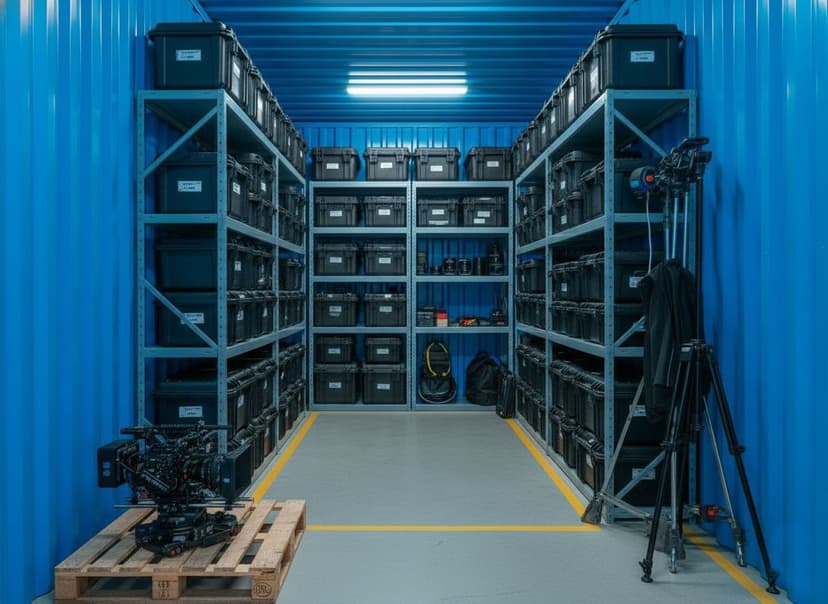
Efficient production asset management is the factor that differentiates a professional crew from one that constantly wastes time on logistics. Lost props, damaged equipment, or cramped studios are not unsolvable problems but signs that the storage system hasn’t been properly invested in.
Specialized self-storage doesn’t require long-term commitments, costs much less than expanding premises, and allows for flexible area adjustments based on project stages. For production houses, agencies, or creator studios in a growth phase, this is an investment that generates real operational efficiency from the very first month.
FAQ
Yes, even for teams of 3–5 people. Once equipment and props exceed studio or office capacity, a 2–5 m² unit at 400,000–800,000 VND per month effectively separates workspace from storage and offers significantly better asset protection.
Yes, if the facility maintains humidity control at 40–60% RH. Prolonged exposure above this level is the primary cause of fungal growth on lenses and contact oxidation on cameras, especially during Vietnam’s rainy season.
Many professional self-storage providers offer parcel and delivery acceptance on behalf of clients. This is especially useful for agencies and production houses that regularly receive props, POSM, or rented equipment from external suppliers.
Renting a larger studio than needed just for storage typically costs 15–40 million VND per month. A 5–10 m² self-storage unit runs just 1.5–3 million VND monthly, saving 80–90% compared to equivalent commercial floor space.
Yes. Most self-storage facilities offer month-to-month rentals with flexible cancellation. Event teams can scale up to a larger unit during peak event season and downsize or vacate after the project ends without penalty fees.
No, provided the facility maintains 50–60% RH with adequate ventilation. Costumes should hang in breathable fabric bags rather than sealed plastic, which traps moisture inside. These conditions preserve costumes far better than uncontrolled studio environments.
Renting is recommended when total equipment value exceeds 50 million VND. Self-storage provides better security and preservation conditions than home storage, particularly for lenses, cameras, and professional lighting sensitive to humidity and daily living conditions.
Professional self-storage facilities typically provide wide access for small trucks and vans, along with complimentary trolleys on site. This is an important criterion to confirm before signing, especially for event teams and production houses transporting bulky equipment.
Most professional self-storage facilities offer 24/7 access via personal PIN or key card. This matters for production teams with early call times or late wrap schedules who need to retrieve or return equipment outside standard business hours.
List all assets to be stored and estimate total volume to choose the right unit size. Once rented, immediately set up a zoning and labeling system for each asset category so future inventory checks and retrieval remain fast and hassle-free.
Related articles
Article
Onshore vs Offshore: Which Manufacturing Model Should Businesses Choose?
Onshore manufacturing refers to production within a company’s home country, helping to control quality, shorten delivery times, and ensure easier regulatory compliance. Offshore…
Read article
Article
How To Organize Your Home Storage Room | 10 Space-Saving Tips
Organize household storage with ten practical tips, an inventory template, safety checks and guidance on when external storage is worth considering.
Read article

Article
Secrets to Profitable Online Selling: 10 Ways to Save Costs
To sell online profitably, you not only need to increase sales but also maintain good control over operating costs. Items such as inventory, premises, packaging, shipping, and order…
Read article
