
 Tiếng Việt
 한국어
한국어 日本語
日本語Article· Updated October 15, 2026
What is Warehouse Classification? How to Classify Grade A, B, and C Warehouses in Logistics

Warehousing is often classified into different levels such as Grade A, Grade B, or Grade C based on location, construction quality, operating technology, security systems, and logistics fulfillment capabilities. Understanding warehouse rating standards helps businesses choose storage solutions that fit their budget and operational requirements.
What Is Warehouse Rating?
Warehouse rating is a system for classifying warehouse quality based on technical and operational criteria such as infrastructure, location, management technology, and security. This system helps tenants evaluate and select suitable warehouses while creating a common benchmark for the rapidly growing warehousing market in Vietnam.
Infrastructure Quality
Infrastructure is the first and most important criterion in warehouse rating because it directly affects cargo preservation capabilities and operational efficiency. Evaluated factors include clear height from floor to ceiling, floor load capacity in tons per m², warehouse fire protection systems, roof and wall quality, drainage systems, and surrounding yard conditions.
Grade A warehouses typically have a clear height of 10–12m or more, a floor load of 3–5 tons/m², and automatic sprinkler systems, while Grade C warehouses may only reach 5–6m in height and 1–2 tons/m² in load capacity.
Location And Logistics Connectivity
Warehouse location directly impacts the transportation costs and delivery times of tenants. Evaluation criteria include distance to seaports, airports, and main roads, accessibility for large trucks, position within the region’s overall logistics planning, and travel time to major consumption centers. High-grade warehouses are usually located in well-planned industrial zones with wide internal roads and synchronized transport infrastructure.
Management Technology
The level of technology application in warehouse operations is increasingly becoming an important classification criterion, especially when tenants are businesses with system integration requirements.
Evaluation factors include Warehouse Management Systems (WMS), the ability to integrate with the tenant’s ERP system, real-time cargo tracking, automation of inbound/outbound processes, and data reporting upon request. Modern Grade A warehouses typically operate with fully integrated WMS, while lower-grade warehouses still manage manually using spreadsheets.
Security Systems
Warehouse security is evaluated through multiple layers of protection rather than just relying on standard cameras and guards. Criteria include electronic access control systems, HD cameras covering the entire area, alarm systems, 24/7 security, standard fencing and walls, adequate lighting for all outdoor areas, and recorded vehicle entry/exit control procedures. The level of security directly affects the cargo insurance premiums that tenants must pay.
Operational Standards
In addition to facilities, the actual operational quality of the warehouse management unit is also a key rating criterion. Evaluation factors include the capacity and experience of the operations team, standardized inbound/outbound processes, quality certifications such as ISO 9001, operational error rates, response time during incidents, and transparency in reporting to tenants.
Purpose Of The Warehouse Rating System
| Purpose | Practical benefits |
|---|---|
| Helping tenants evaluate easily | Compare different warehouses based on the same set of criteria instead of subjective assessment, saving survey time and reducing the risk of choosing the wrong partner |
| Standardizing the warehousing market | Create a common language between warehouse owners and tenants, encouraging warehouse units to invest in upgrades to achieve higher ratings and attract better tenants |
| Supporting investment decision-making | Investors and real estate funds use warehouse ratings to value assets and assess rental potential; Grade A warehouses typically have significantly higher rental rates and occupancy levels |
| Meeting insurance requirements | Insurance companies use warehouse ratings to calculate cargo insurance premiums; high-grade warehouses are usually applied lower rates due to lower risks |
| Creating a basis for contract negotiation | Clear ratings provide both parties with a transparent basis to negotiate rental prices, insurance terms, and compensation liabilities when incidents occur |
Why Should Businesses Care About Warehouse Ratings?
Warehouse rating is not just a number on paper but a practical indicator reflecting the ability to protect goods, operational performance, and the risk level of the entire supply chain. Choosing the right warehouse grade helps businesses optimize costs while still meeting customer requirements and industry standards.
Protecting Goods From Environmental And Physical Risks
Damaged goods in the warehouse are a direct loss that many businesses underestimate when choosing a warehouse based solely on rental price. Low-grade warehouses with weak floor loads lead to floor cracking and shelf tilting over time. Substandard roofs and walls allow water leakage and moisture to damage goods during the rainy season.
Substandard fire protection systems increase the risk of total cargo loss during an incident. An electronics shipment worth 2 billion VND damaged by water leakage from a degraded warehouse roof can cause losses far exceeding the savings from choosing a cheaper warehouse.
Increasing Total Chain Logistics Efficiency
High-grade warehouses with synchronized infrastructure and good management technology generate significantly higher operational efficiency than low-grade ones. Large clear heights allow for more multi-level racking, increasing storage density on the same floor area.
Integrated WMS systems reduce searching and dispatching time. Large yards with multiple loading dock doors allow many trucks to enter and exit simultaneously, reducing waiting times and accelerating order processing speeds. These factors combined create a real competitive advantage in delivery times and overall logistics costs.
Reducing Losses and Operational Errors
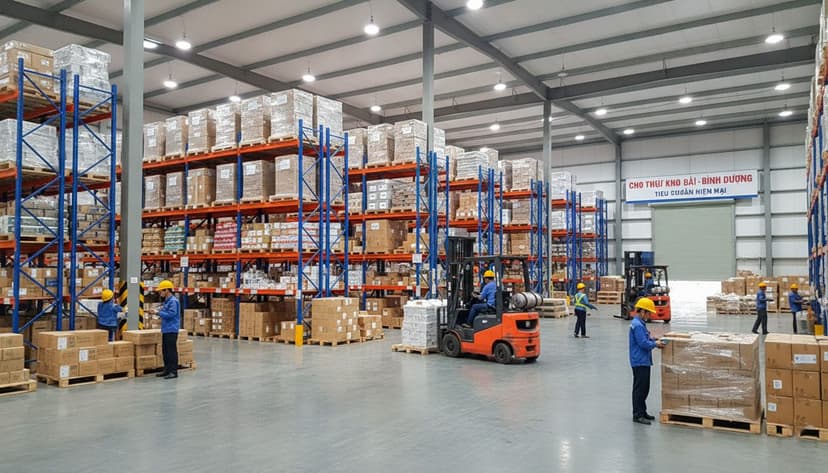
Cargo loss in warehouses occurs through many channels: theft, errors in inbound and outbound processes, damage due to improper storage, and inventory discrepancies. High-grade warehouses with multi-layered security systems and standardized operating procedures minimize all four causes simultaneously.
HD cameras covering the entire area prevent theft and provide evidence in case of disputes. WMS tracks every unit of goods, reducing errors in inbound and outbound processes. Periodic inventory procedures detect discrepancies early before they accumulate into significant losses.
Meeting Increasing Customer Demands
Corporate clients, especially multinational corporations and modern retailers, are increasingly including warehousing standards in their requirement lists when evaluating suppliers. Some specific requirements businesses encounter in practice: the warehouse must be Grade A or B according to CBRE standards, the warehouse must have ISO or HACCP certification depending on the type of goods, the warehouse must provide real-time inventory reports, and the warehouse must be located within a certain radius of the delivery point. Failing to meet these requirements means disqualifying oneself from the list of potential suppliers, even if production capacity is fully met.
Supporting Sustainable Scaling
Growing businesses need warehouses capable of expanding at the same pace as their development. Low-grade warehouses often have small areas, limited load capacity, and lack flexibility in layout, creating bottlenecks when businesses suddenly increase cargo volume.
Grade A warehouses in large industrial parks often provide modular expansion capabilities, technical systems sufficient to support future automation, and favorable locations to serve broader markets as businesses expand their territory.
| Criteria | Low-grade warehouse | Medium-grade warehouse | High-grade warehouse |
|---|---|---|---|
| Cargo protection | High risk of water leakage and mold | Meets basic standards, low environmental risk | Comprehensive environmental control, lowest risk |
| Operational efficiency | Manual, slow, many errors | Partially automated, stable processes | Integrated WMS, high processing speed, low error rate |
| Security | Basic cameras, permanent security guards | Standard security systems | Multi-layered protection, electronic access control |
| Rental cost | Lowest | Average | 20–50% higher than low-grade warehouses |
| Suitable for | Non-sensitive goods, limited budget | Most common goods | High-value goods, international clients, complex supply chains |
Criteria Used for Warehouse Grading
Warehouse grading is based on five main groups of criteria: location and transport connectivity, construction quality, fire prevention and fighting systems, security, and management technology. Each group contributes to the overall capacity of the warehouse and directly affects the operational costs and risks of the tenants.
Location and Transport Connectivity
Warehouse location determines transportation costs and delivery times throughout the entire supply chain. A warehouse in a good location saves more in daily logistics costs than the difference in warehouse rental price compared to a warehouse in a less favorable location.
| Location criteria | Grade A Warehouse | Grade B Warehouse | Grade C Warehouse |
|---|---|---|---|
| Distance to seaports | Under 10 km | 10–25 km | Over 25 km |
| Distance to airports | Under 15 km | 15–30 km | Over 30 km |
| Highway connectivity | Direct or under 5 km | 5–15 km | Over 15 km or small roads |
| Proximity to consumption centers | Within major urban areas | Suburban areas | Areas far from the center |
| Internal roads | 12m or wider for container trucks | 8–12m for large trucks | Under 8m, restricted for large vehicles |
Construction Quality
Construction quality determines the ability to protect goods from environmental factors and the actual operational limits of the warehouse. This is a criterion that is difficult to upgrade after construction, unlike technology or security which can be added later.
| Construction criteria | Grade A Warehouse | Grade B Warehouse | Grade C Warehouse |
|---|---|---|---|
| Clear height | 10–12m or more | 7–10m | Under 7m |
| Floor load capacity | 3–5 tons/m² or more | 2–3 tons/m² | Under 2 tons/m² |
| Roof quality | Insulated roof, standard waterproofing, lifespan of 20 years or more | Basic standard roof, periodic maintenance | Simple roof, prone to leakage over time |
| Flood resistance | Warehouse floor 0.5–1m higher than road level, synchronized drainage system | Floor higher than road level, basic drainage | Prone to flooding during heavy rain or high tides |
| Loading dock doors | Multiple doors with automatic levelers, suitable for containers | Standard doors with levelers | Ordinary doors, no levelers |
| Yards | Wide container turning yards, asphalt internal roads | Sufficient yard for large trucks | Narrow yard, difficult for large vehicles to maneuver |
Fire Prevention and Fighting Systems
Fire prevention and fighting (FPF) systems are mandatory safety criteria and directly affect the cargo insurance premiums of tenants. Warehouses meeting high FPF standards help tenants reduce insurance premiums and minimize damage when incidents occur.
| FPF components | Grade A warehouse standards | Minimum standards |
|---|---|---|
| Sprinkler system | Automatic sprinklers covering the entire warehouse area, spray density meeting NFPA standards or equivalent | Basic sprinklers in key areas |
| Fire detectors | Automatic smoke and heat detectors throughout the area, directly connected to the monitoring center | Fire detectors at regulated positions |
| Fire extinguishers | CO2 and ABC powder extinguishers distributed at correct distances according to regulations, periodic inspections | Minimum quantity of fire extinguishers met |
| Emergency exits | Multiple emergency exits with illuminated signs, standard fire-resistant doors | Minimum required emergency exits |
| Fire water tank | Dedicated water storage tank for firefighting, automatic backup pumps | Firefighting water source connected to the public system |
| Fire partitions | Fire-resistant zoning according to regulated areas | Basic partitions in some areas |
Security Systems
Warehouse security is evaluated based on the coverage and reliability of monitoring systems, access control, and security personnel. High-grade warehouses have multiple independent layers of protection instead of relying on a single control point.
| Security components | Grade A Warehouse | Grade B Warehouse | Grade C Warehouse |
|---|---|---|---|
| Surveillance cameras | HD cameras covering 100% of the warehouse and yard area, footage storage for 90 days or more | Cameras covering key areas, 30–60 days storage | Basic cameras, short-term storage |
| Access control | Magnetic card or biometric systems at all entrances, automatic access logs | Electronic access control at the main gate | Manual control by security guards |
| Security guards | 24/7 professionally trained security, periodic scheduled patrols | 24/7 security at the main gate | Office hours or non-permanent security |
| Fencing and walls | Walls 3m or higher with barbed wire or intrusion sensor systems | Fencing meeting regulated height | Basic fencing |
| Outdoor lighting | LED lights covering the entire yard and corridors, no dark spots | Sufficient lighting in main activity areas | Basic lighting |
Warehouse Management Technology
The level of technology application in warehouse management is increasingly becoming an important grading criterion because it directly affects inventory accuracy, order processing speed, and the ability to integrate with the tenant’s systems.
| Technology | Description | Grade A Warehouse | Grade B Warehouse | Grade C Warehouse |
|---|---|---|---|---|
| WMS | Integrated warehouse management system tracking all real-time inbound, outbound, and inventory | Full WMS, API integration with tenant’s ERP | Basic WMS, periodic reports | Manual management using spreadsheets |
| RFID | Remote identification of goods without direct scanning, increasing inventory speed | Implemented throughout or in key areas | Piloted in some areas | Not yet implemented |
| Barcode & QR | Scanning codes to confirm inbound/outbound and track cargo location | Entire inbound/outbound process is code-scanned | Code scanning at main control points | Code scanning at certain locations, not synchronized |
| IoT | Sensors for continuous monitoring of temperature, humidity, and warehouse environmental conditions | Full IoT sensor coverage, automatic alerts | Sensors in key areas | None or manual monitoring |
| System integration | Ability to connect with the tenant’s ERP, TMS, and e-commerce systems | Full API integration as requested | Integration with some popular systems | No integration support |
What is a Grade A Warehouse?
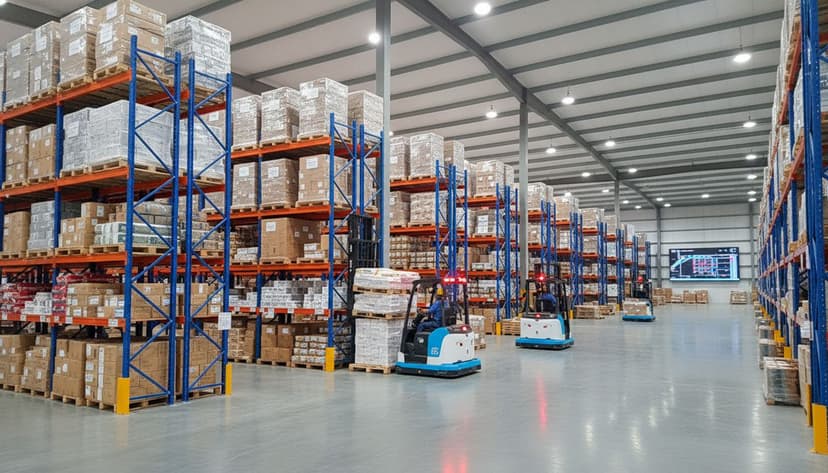
A Grade A warehouse is the most premium segment in the warehousing market, built to international standards with strategic locations, modern infrastructure, and advanced management technology. This is the top choice for businesses with high requirements for processing speed, inventory accuracy, and supply chain integration capabilities.
Key Characteristics of Grade A Warehouses
| Criteria | Grade A Standards |
|---|---|
| Location | Within or adjacent to major industrial zones, under 10 km to ports or airports, direct highway access |
| Clear height | 10–12m or more, allowing for 4–6 tier racking to optimize storage density |
| Floor load capacity | 3–5 tons/m², accommodating heavy goods and large-capacity forklifts |
| Firefighting system | Fully automated Sprinklers, smoke and heat detectors, dedicated backup water tanks |
| Loading docks | Multiple doors with automatic levelers, suitable for 40-foot containers |
| Management technology | Integrated WMS, RFID, IoT for environmental monitoring, API connection with tenant systems |
| Security | 24/7 HD Cameras covering 100% of the area, biometric access control, professional security |
Who is it Suitable For?
| Industry | Reasons for needing Grade A |
|---|---|
| FMCG | Handling high volumes of fast-moving consumer goods with high speed requirements and strict shelf-life management |
| E-commerce | Needs platform-integrated WMS, fast order processing speed, and sufficient space for seasonal inventory fluctuations |
| 3PL | Serving multiple clients simultaneously requires flexible zoning systems and transparent reporting for each client |
| International Logistics | Requires supply chain security certification, traceability, and integration with customs systems |
Grade A warehouses have rental prices 20–50% higher than Grade B and C, but operational costs are lower thanks to automation technology and significantly lower error rates. For high-value goods or complex supply chains, the rental price difference is often much lower than the potential losses from errors and damage in lower-grade warehouses.
What is a Grade B Warehouse?
A Grade B warehouse is the mid-range segment in the warehousing market, effectively meeting standard storage and distribution needs at a more reasonable cost than Grade A. This is the most popular choice in Vietnam, suitable for small and medium enterprises (SMEs), distributors, and large-scale online shops that do not need all the features of Grade A but still require reliable infrastructure.
Key Characteristics of Grade B Warehouses
| Criteria | Grade B Standards |
|---|---|
| Location | Suburban areas or secondary industrial zones, 10–25 km from ports and airports, connected to major roads but not directly to highways |
| Clear height | 7–10m, allowing for 3–4 tier racking |
| Floor load capacity | 2–3 tons/m², meeting the needs of most general cargo |
| Firefighting system | Sprinklers in key areas, basic standard fire detectors, fire extinguishers distributed per regulations |
| Loading docks | Standard doors with levelers, suitable for large trucks and 20-foot containers |
| Management technology | Basic WMS or warehouse management software, barcode scanning at main checkpoints |
| Security | Cameras covering key areas, main gate access control, 24/7 security |
Who is it Suitable For?
| Target Audience | Reasons Grade B is suitable |
|---|---|
| SMEs | Reasonable rental costs, infrastructure sufficient for domestic storage and distribution without paying for unnecessary features |
| Distributors | Flexible area, loading docks sufficient for large trucks, basic systems meeting frequent import/export needs |
| Large-scale online shops | Basic WMS is enough to manage multi-SKU inventory, order processing speed is adequate without full automation |
Grade B warehouses represent the best balance between cost and quality for the majority of businesses in Vietnam. When to upgrade to Grade A: when international clients demand higher standards, when cargo volume increases to the point of needing automation, or when current error rates cause losses exceeding the price gap between the two grades.
What is a Grade C Warehouse?
A Grade C warehouse is the most basic segment in the warehousing market, often consisting of old warehouses, renovated workshops, or new builds with minimal standards. Rental costs are the lowest but come with significant limitations in infrastructure, technology, and cargo protection capabilities.
Key Characteristics of Grade C Warehouses
| Criteria | Grade C Standards |
|---|---|
| Location | Far from the center, in suburban or rural areas, limited transport connectivity for large trucks |
| Clear height | Under 7m, limiting high racking and the use of large forklifts |
| Floor load capacity | Under 2 tons/m², not suitable for heavy goods or multi-tier pallet stacking |
| Firefighting system | Basic fire extinguishers, minimal fire detectors, usually no automatic sprinklers |
| Loading docks | Regular doors without levelers, restricted for large container trucks |
| Management technology | Manual management using spreadsheets or logbooks, no integrated WMS |
| Security | Basic cameras at the main gate, security during office hours or not permanently stationed |
Suitable and Unsuitable Goods
| Type of Goods | Suitable for Grade C | Should NOT use Grade C |
|---|---|---|
| General Cargo | Construction materials, bulky non-sensitive items | Electronics, cosmetics, pharmaceuticals |
| Seasonal Goods | Decorations, short-term seasonal accessories | Goods requiring temperature and humidity control |
| Low-value Goods | Auxiliary supplies, packaging, wrapping materials | Luxury goods, high-tech equipment |
| Short-term Storage | Transshipment goods for 1–4 weeks | Goods requiring long-term storage over 3 months |
Grade C warehouses are best suited as temporary solutions or for goods that truly have no special preservation requirements. Businesses should fully account for hidden costs from damage and loss risks before deciding on a Grade C warehouse solely due to the lower rent.
Properly understanding the warehouse grading system helps businesses make warehouse rental decisions based on actual data rather than just comparing prices. Grade A is suitable for complex supply chains and high-value goods, Grade B is a balanced choice for most SMEs, while Grade C is only appropriate for non-sensitive items and short-term needs.
The higher rental costs of Grade A or B are often much lower than the cumulative losses from cargo damage, operational errors, and loss of reputation with customers when choosing an unsuitable warehouse. Investing correctly in warehousing is not an extra cost but a foundation for operating a sustainable supply chain and scaling effectively.

FAQ
Grade A meets international standards with ceiling height above 10m, floor load capacity of 3–5 tonnes/m², and fully integrated WMS. Grade B achieves good standards with 7–10m height and basic WMS, suitable for most SMEs. Grade C is basic storage with under 7m height, manual management, and limited security.
Grade B is most suitable for the majority of Vietnamese SMEs. Costs are 20–35% lower than Grade A while still meeting adequate infrastructure, security, and basic inventory management requirements. Only upgrade to Grade A when international clients require it or when volume demands full automation.
Not suitable. Electronics require humidity control below 65% RH and stable temperature at 20–26°C, while Grade C facilities typically lack environmental control systems. The risk of circuit oxidation and component damage at Grade C is usually far greater than the rental cost difference compared to Grade B.
Floor load capacity and clear ceiling height are the two criteria hardest to change after construction and most impactful on space utilisation efficiency. Fire safety systems rank second as they directly affect asset protection and insurance costs. Technology and security can be upgraded later but the first two cannot.
It depends on specific requirements. Many international clients accept Grade B if it holds ISO 9001 certification and demonstrates strong management systems. However, some multinationals and large retailers require a minimum of Grade A with industry-specific certifications like GDP for pharmaceuticals or HACCP for food.
Typically 20–50% higher depending on location and market. In Ho Chi Minh City and Hanoi, Grade A ranges from 120,000–180,000 VND/m²/month while Grade B runs 80,000–120,000 VND/m²/month. This difference is often offset by lower operating costs and fewer errors associated with Grade A facilities.
Self-storage serving individuals and small businesses does not fall within the A, B, C grading system, which applies to large-scale commercial warehouses. Self-storage is evaluated by its own criteria including security, environmental control, flexible unit sizing, and customer service quality, suited to individual and small-to-medium business storage needs.
Some criteria can be improved such as upgrading fire safety systems, adding cameras, and implementing WMS. However, ceiling height and floor load capacity are two criteria that are economically impossible to upgrade without rebuilding the entire structure. In most cases, investing in a new Grade B facility is more cost-effective than renovating Grade C.
Necessary when inventory exceeds 500 SKUs or when processing over 100 orders daily. Below this threshold spreadsheets remain manageable but errors increase proportionally with volume. Basic WMS at Grade B reduces incorrect delivery rates, shortens inventory counting time, and provides real-time stock data for multi-channel sales synchronisation.
Conduct a site visit and check five basic criteria: measure clear ceiling height and ask about floor load capacity, verify that fire safety systems are operational, test access control and camera systems, request a WMS demonstration if available, and ask about incident history and response procedures. Seek feedback from current tenants before making a final decision.
Related articles
Article
Onshore vs Offshore: Which Manufacturing Model Should Businesses Choose?
Onshore manufacturing refers to production within a company’s home country, helping to control quality, shorten delivery times, and ensure easier regulatory compliance. Offshore…
Read article
Article
How To Organize Your Home Storage Room | 10 Space-Saving Tips
Organize household storage with ten practical tips, an inventory template, safety checks and guidance on when external storage is worth considering.
Read article

Article
Secrets to Profitable Online Selling: 10 Ways to Save Costs
To sell online profitably, you not only need to increase sales but also maintain good control over operating costs. Items such as inventory, premises, packaging, shipping, and order…
Read article
