
 Tiếng Việt
 한국어
한국어 日本語
日本語Article· Updated September 29, 2026
Apartment Storage Lockers – A New Amenity for 2026
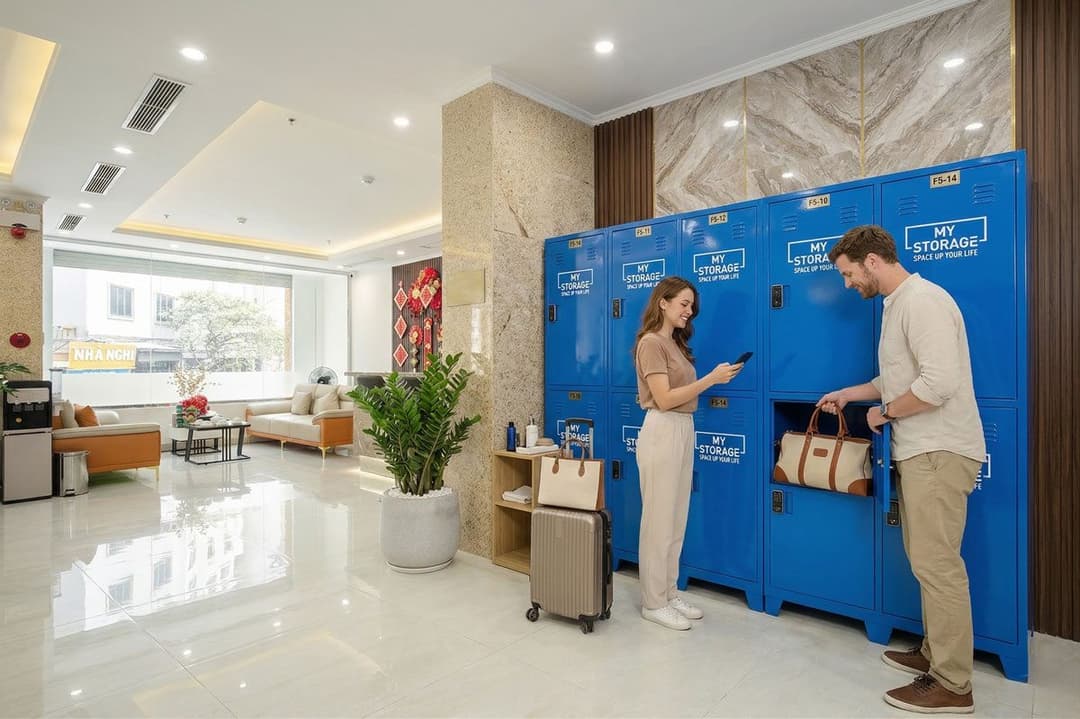
MyStorage Smart Locker Offer: 20% Off
All locker sizes · All rental durations · All smart locker locations
Locker rental from just VND 40,000/hour. Discount applied automatically when booking · 28 September–20 October 2026.
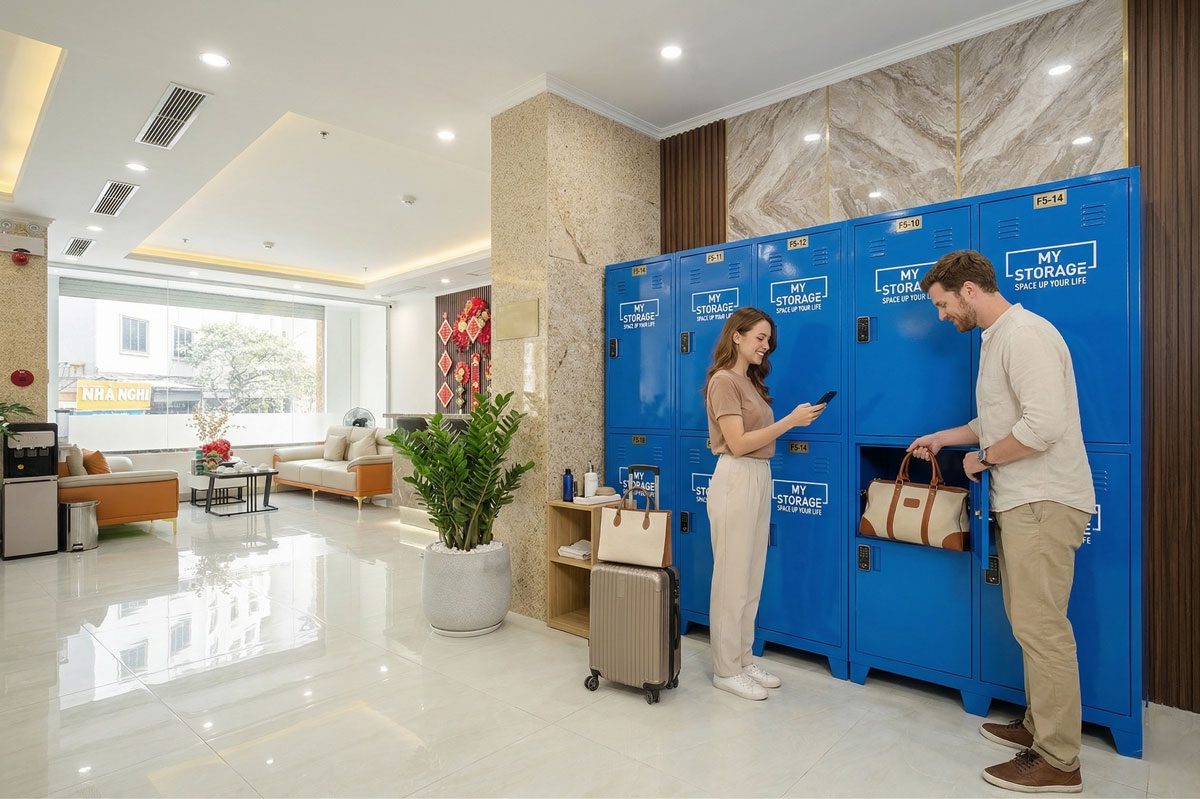
Apartment storage lockers are becoming a new amenity standard in luxury residences, enabling efficient parcel management, reducing courier congestion and keeping lobbies tidy. This solution not only improves the resident experience but also helps building management optimize operations and maintain the property’s image.
How Are Luxury Apartment Amenities Changing?
Amenities in luxury apartment buildings are shifting rapidly from traditional showcase features toward smart, convenient living experiences and genuinely efficient operations. A decade ago, a swimming pool and gym were enough for a development to be called “luxury”. Today, apartment buyers are asking a different question: does this amenity actually solve a problem in my daily life?
This change is more than an aesthetic trend. It also reflects the growing maturity of Vietnam’s luxury property buyers—high-income millennials and Gen Z consumers who are comfortable with technology and value meaningful experiences over appearances.
Before: Showcase Amenities—Designed to Sell, Rarely Used
From 2010–2018, the standard for a “luxury apartment building” in Vietnam was largely defined by a long, impressive list of amenities: a rooftop infinity pool, fully equipped gym, spa, five-star reception lobby, outdoor BBQ area and community room. These amenities played an important role in sales marketing, creating a strong visual impression in showrooms and brochures.
The problem with the showcase-amenity model: Most of these facilities have very low actual usage rates. Research by JLL Vietnam (2022) found that an average apartment swimming pool is used by only 15–25% of residents at least once a month. Gyms have higher usage but are often overcrowded at peak times and empty for the rest of the day. Their operating and maintenance costs are divided among all residents through monthly management fees, including those who never use them.
The result: buyers pay high fees for amenities they do not use, while genuine everyday problems such as receiving parcels, parking and managing small belongings receive no properly designed solutions.
Now: Smart Living and Automation—Technology with Practical Value
Since 2019, technology and real operational data have been rewriting the definition of a “luxury amenity”. Market-leading developers are investing in technology infrastructure rather than focusing solely on the physical floor area devoted to amenities.
- Smart home integration: Systems for controlling lighting, air conditioning, security and household appliances through a mobile app are becoming a minimum standard in the luxury segment. This is not simply because the technology is novel; users have grown accustomed to this level of control through their smartphones and expect their homes to offer the same convenience.
- Digital building management systems: Apartment management applications, or super apps, allow residents to reserve amenities, report problems, pay management fees, track maintenance and contact building management on a single platform instead of calling or visiting the management office. Adoption of apartment management apps at luxury developments in Hồ Chí Minh City reached 60–75% within the first 6 months after implementation (according to a Savills Vietnam survey, 2023).
- Storage lockers: For frequent online shoppers—the average urban user in Vietnam makes e-commerce purchases 4,5 times/week (VECOM, 2024)—being unable to receive an order while away from home is a genuine quality-of-life issue. Smart lockers in apartment buildings solve this problem completely and have become one of the highest-rated amenities in recent satisfaction surveys among residents of luxury developments.
- Electric vehicles and energy management: With electric vehicle adoption growing in Vietnam, EV charging infrastructure in apartment parking areas is shifting from a “future amenity” to a “minimum standard” for developments launched from 2024 onward.
According to JLL Vietnam (2023), 68% of luxury apartment buyers in Hồ Chí Minh City and Hà Nội ranked “technology and smart home systems” among their top 3 criteria when choosing a development, ahead of “swimming pools” (42%) and “gyms” (38%).
The Next Trend: Amenities That Solve Real Problems
The next generation of apartment amenities is defined by one question: “What specific problem in residents’ daily lives does this amenity solve?” If that question cannot be answered, the amenity is merely an operating expense that creates no value.
- Amenities that solve storage problems: Apartments are becoming smaller while people’s need to own belongings is not declining. Personal lockers inside the building, monthly mini storage units within the residential complex and smart bicycle storage systems are being incorporated into new development designs as solutions to shrinking living space.
- Amenities that solve mobility problems: Internal shuttle services to metro stations and public transport connections, personal EV charging stations, smart parking with app-based reservations and bicycle-sharing systems within the development.
- Amenities that support health and wellbeing: Rather than adding more gym equipment or another swimming pool, developments are integrating health data through systems that monitor air quality in apartments and shared areas, meditation and mindfulness spaces with flexible reservations, and rooftop organic gardens with plots available to rent.
Amenities that address security and privacy: Facial-recognition systems replacing access cards at every controlled entry point, AI cameras analyzing unusual behavior instead of merely recording footage, and guest access controlled through temporary QR codes issued by residents through an app.
| Amenity generation | Typical examples | Value created | Actual usage rate |
|---|---|---|---|
| Traditional (before 2018) | Swimming pool, gym, BBQ | Marketing image | 15–30% of residents/month |
| Transitional (2018–2022) | Basic smart home features, management app | Operational convenience | 45–60% of residents/month |
| Modern (2022–present) | Lockers, EV charging, flexible storage | Solving real problems | 65–80% of residents/month |
| Future (2025–2030) | AI wellbeing, internal marketplaces, smart shared spaces | Creating community value | Forecast: 80%+ of residents/month |
Next-generation luxury amenities do not require large spaces or high construction costs. A 2 m² smart locker used by 80% of residents every week creates far more practical value than a 200 m² BBQ area used only 10 times a year. The measure is shifting from “what does it have?” to “can residents actually use it?”—the most fundamental change in luxury apartment standards this decade.
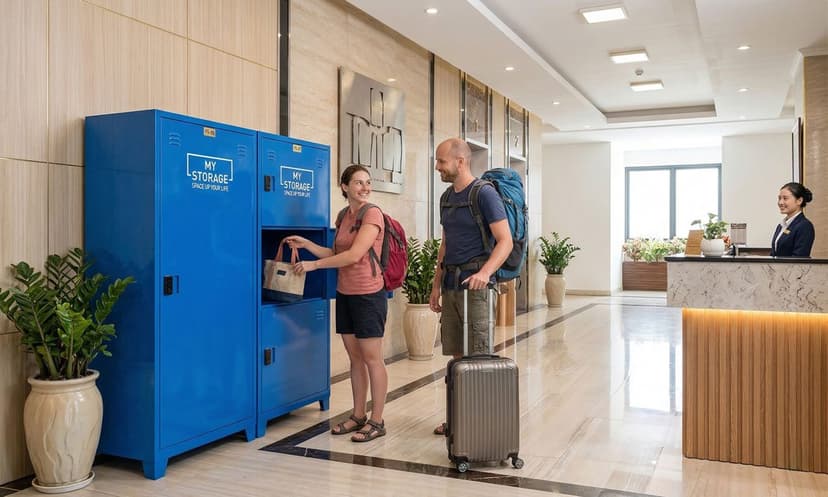
Apartment Lobbies Are Being “Overrun” by Parcels
The e-commerce boom is creating a very real physical problem in apartment lobbies across Vietnam: parcels pile up, couriers wait around, reception staff become overwhelmed and the building’s image deteriorates every day. This is neither a minor nor a temporary problem. It is the direct consequence of e-commerce growth at 25%/year (VECOM, 2024) overwhelming goods-receiving infrastructure that was never designed to handle this volume.
While residents endure the inconvenience, building management faces unending operational pressure. Every day repeats the same cycle of receiving parcels, calling residents, waiting for them to come downstairs, handling disputes and cleaning up. There is no system, no tracking and no way out.
The Reality in Vietnamese Apartment Lobbies in 2024
Consider what actually happens in the lobby of a 500-unit apartment building in Hồ Chí Minh City on a Friday afternoon, during the peak period for e-commerce deliveries:
Vietnamese consumers place online orders an average of 4,5 times/week (VECOM, 2024). In a 500-household development, an average of 100–150 parcels arrive every day, concentrated between 14–19 hours. Most residents are not home during business hours. As a result, couriers arrive continuously, receptionists must sign for every parcel, packages are stacked on a “first delivered, first placed” basis, residents spend 5–10 minutes searching because there is no sorting system, and the next courier must wait for reception to finish the previous transaction.
On major sale days (11/11, Black Friday and holidays), volume increases 3–5 times. The building lobby becomes an uncontrolled temporary warehouse.
An average apartment receptionist spends 2–3 hours every day solely on accepting parcels from couriers, calling residents, supervising collection and tidying the area. That consumes 25–37% of total working time on a task that was never part of the receptionist’s original job description and creates no operational value for the building.
4 Real Problems Affecting Both Residents and Building Management
- Waiting couriers—peak-hour lobby congestion: Couriers cannot simply leave parcels and go because delivery rules require confirmation. If reception is handling another task or helping another resident, the courier must wait. When several couriers wait at once, the lobby becomes a bottleneck both physically and for the movement of residents and visitors. The building’s luxury image is directly eroded every time this happens.
- Piles of parcels—visible disorder: Without a sorting system, parcels are arranged by delivery order rather than by name or apartment number. Residents must turn over individual packages to find their own. Parcels awaiting collection for hours or days consume even more space. The lobby was designed to make a strong first impression on visitors, yet dozens of packages stacked in a corner completely undermine that design investment.
- Mix-ups and losses—the risk of disputes: There is no tracking system once a parcel enters the building. Receptionists sign manually or take photographs without a consistent standard. When residents report missing parcels, there is no clear evidence showing who received them, when and where they were received, or who collected them. Every dispute consumes the time of both management and residents and leaves dissatisfaction that cannot be fully resolved.
- Overloaded reception staff—declining operational performance: Receptionists are hired to assist residents, coordinate operations and respond to incidents. When manual parcel handling consumes 25–37% of their working time, genuinely important duties are delayed, handled poorly or overlooked. Management cannot keep hiring more employees to compensate; that is not a sustainable solution to a problem caused by the absence of a system.
Why Manual Parcel Management Is No Longer Sustainable
The issue is not merely today’s inconvenience—it is a trend that will continue to worsen without a systematic solution.
- Parcel volumes will keep rising, not falling: Vietnam’s e-commerce market reached 20,5 billion USD in 2023 and is forecast to grow 20–25%/year through 2030. The number of parcels delivered to apartment buildings rises accordingly each year. Today’s manual process is already operating at its limit; another 25% in volume will push it past breaking point.
- Resident expectations are increasing: Residents of luxury developments are accustomed to real-time tracking from Shopee, Lazada and GHN. They know exactly where their parcel is throughout the delivery chain—until it enters the building and everything becomes an information black hole. This break in the experience creates dissatisfaction even when the parcel is not lost.
- Hidden operating costs keep growing: Staff time spent handling parcels manually, disputes requiring resolution, damage to the building’s image and resident dissatisfaction that makes lease renewals more difficult are all real costs, but they never appear in a “parcel costs” report. They remain hidden in staffing expenses, dispute-resolution costs and lost revenue when residents do not renew their leases because of poor service quality.
And the solution already exists—it simply has not been adopted: Smart parcel lockers inside buildings are neither new nor expensive technology. They have been deployed successfully in thousands of apartment buildings in Singapore, Japan and South Korea and are expanding rapidly in Vietnam. Couriers place deliveries in a locker, the system automatically notifies residents, and residents collect their parcels whenever it suits their schedule—without reception staff, waiting or disputes.
| Metric | Manual management | Smart parcel lockers |
|---|---|---|
| Reception time spent handling parcels | 2–3 hours/day | Under 15 minutes/day |
| Mix-up/loss rate | 1–3%/month | Nearly 0% (with complete logs) |
| Resident experience | Collect during reception opening hours | Collect 24/7 at a convenient time |
| Building lobby appearance | Parcels piled up | Open, tidy lobby |
| Scalability as e-commerce grows | Requires more staff | Only requires more locker compartments |
| Additional operating costs | Proportional to volume | Almost unchanged |
Why Do Luxury Apartment Buildings Choose Lockers?
Luxury developments choose lockers not only to solve parcel-handling problems, but also to raise overall living standards, optimize operations and protect the prestigious image that developers have invested hundreds of billions of đồng to create. In the luxury segment, a cluttered lobby filled with parcels negates the development’s entire brand value, regardless of how beautiful its architecture or premium its materials may be.
That is why developments with the highest standards are often the first to introduce parcel locker solutions—not because they have more problems, but because they refuse to compromise on the resident experience.
Why Luxury Apartment Buildings Prioritize Lockers over Other Solutions
- Aligned with brand positioning: Smart self-service lockers convey the same message as the building’s other luxury amenities: technology, convenience and respect for residents’ time. Residents do not need to speak to reception, wait or adjust their schedules to the management office’s opening hours. This experience matches the expectations of people living in the luxury segment.
- Freeing staff to provide genuine service: When parcels are handled automatically by a locker system, receptionists and management staff are free to focus on what genuinely creates value: assisting residents, handling incidents and maintaining service standards. This is a meaningful operational upgrade, not merely another amenity.
- Clear, measurable ROI: Unlike many luxury amenities whose value is difficult to quantify, parcel lockers generate concrete figures: the percentage reduction in reception time spent handling parcels, the increase in resident satisfaction scores for delivery services and the monthly reduction in parcel disputes. Management can report performance to the developer using real data.
- Unlimited scalability: As parcel volume grows with e-commerce, the only sustainable solution is to add locker compartments rather than employees. A locker system can scale linearly with demand without a proportional increase in operating costs.
Case Study 1—The Nassim: When Five-Star Standards Allow No Compromise
- About the development: The Nassim is a luxury apartment development in Thảo Điền, district 2 (now Hồ Chí Minh City’s Thủ Đức City), one of the city’s most prestigious property locations. It has a large international community and service standards comparable to a five-star hotel. With apartment prices among the highest in the market, residents have exceptionally high expectations for every aspect of its operations.
- The problem: The Nassim’s international residents shop online more frequently than average, combining busy people’s need for convenience with consumer habits developed in advanced economies. High parcel volumes, multiple communication languages and elevated privacy expectations create unique pressures that a traditional reception sign-off model cannot effectively address.
- Solution and results: The Nassim installed MyStorage’s smart locker system in the building’s parcel-receiving area. The system provides automated multilingual notifications, allowing residents to collect deliveries at any time without interacting with staff. Couriers place parcels directly in a locker and scan a delivery confirmation code, after which the system immediately sends a notification and personal unlocking code to the resident’s phone.
Recorded operational results show that the lobby remains consistently orderly and attractive, staff time spent handling parcels has fallen significantly, and resident satisfaction with parcel-receiving services has risen noticeably in management’s regular surveys.
In the luxury segment, a locker’s value lies not only in convenience but also in consistency of experience. The Nassim’s residents will not accept “reception is busy today, so you must wait” or “your parcel is here, but we do not know where”. The locker system ensures that every transaction follows the same process, regardless of the shift on duty or staff workload.
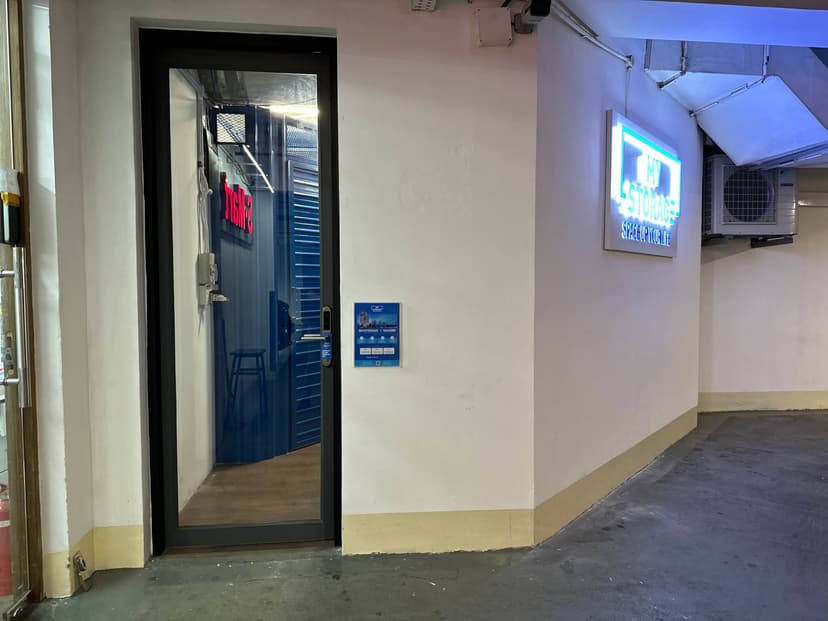
Case Study 2—Q2 Thảo Điền: Optimizing Operations for a Dynamic Urban Community
- About the development: Q2 Thảo Điền is a luxury apartment development in Thảo Điền, Thủ Đức City, serving a young and dynamic community with a high proportion of professionals and expats working for multinational companies. These residents shop online most frequently, have the most flexible working hours and also have the least time to wait for parcel collection during business hours.
- The problem: Q2 Thảo Điền residents are often away from home during standard delivery hours. Parcels accumulate at reception, cluttering the lobby in the afternoon and evening—precisely when residents return home and the lobby needs to make its best impression. Management received resident feedback about the untidy appearance and several cases involving mixed-up parcels or delayed notifications.
- Solution and results: Q2 Thảo Điền installed MyStorage’s parcel locker system with a design integrated into the building lobby, avoiding the appearance of an arbitrary add-on. The system connects to the apartment management app already in use, allowing residents to receive notifications and track their collection history in the same app.
Key results after implementation: parcels no longer pile up in the lobby, receptionists no longer spend time sending notifications or supervising collections, and residents can collect their deliveries whenever it suits their schedule, including outside management’s working hours.
For a dynamic resident community, flexibility in timing matters more than any other feature. A 24/7 parcel locker that does not depend on staff schedules fits these residents’ lifestyles, which is also why locker adoption at Q2 Thảo Điền was high from the first weeks of operation.
Shared Lessons from the Two Case Studies
The two developments in Thảo Điền represent different challenges: The Nassim prioritizes a consistent experience and brand image, while Q2 Thảo Điền prioritizes flexibility and operational efficiency. Yet both lead to the same solution and outcome: the lobby is freed from parcels, staff are freed from manual tasks, and residents are freed from dependence on other people’s working hours.
| Criterion | The Nassim | Q2 Thảo Điền |
|---|---|---|
| Resident profile | International expats, five-star standards | Young, dynamic professionals |
| Main pain point | Brand image and privacy | Flexible work schedules and missed deliveries |
| Priority value | Consistent experience, multilingual support | 24/7 flexibility, app integration |
| Key result | Maintaining five-star service standards | Completely eliminating lobby clutter |
| Shared lesson | Lockers are a minimum luxury standard | Lockers are an operational tool, not merely an amenity |
Factors to Consider When Installing Lockers
Choose a location with suitable foot traffic, determine the right number of compartments, ensure reliable operation and design a genuinely easy-to-use experience. These four factors are interdependent: a good location with too few compartments will frequently run out of space and frustrate users; a strong system with complicated UX will go unused; and good UX in the wrong location will remain unnoticed.
A successful locker deployment is not a matter of placing a unit in a corner and waiting for results. It requires designing a small, coordinated system spanning the physical installation, technology and user experience.
Factor 1—Lobby Location: The Right Placement Determines 70% of Success
Locker location is the one factor that cannot be easily changed after installation. A poorly placed locker will have low usage even when every other factor is strong—and people often reach the mistaken conclusion that “lockers are unsuitable for this building” when location is the real problem.
Criteria for an ideal parcel locker location:
- Directly visible from the main entrance or elevators
- Within 10m of the point where couriers usually stop to deliver parcels
- Does not obstruct the main flow of residents and visitors
- Enough space in front for 2–3 people to stand at once without getting in one another’s way
- Close to a stable power supply rather than a secondary or temporary electrical connection
- Stable WiFi or 4G connectivity—smart lockers require a continuous connection □ Enough light for users to read the screen and operate it comfortably
- Not in a hidden corner, narrow corridor or area that feels unsafe
Best locations in order of priority:
The ground-floor elevator waiting area is ideal because users naturally stop there and have 30–90 seconds to operate the locker while waiting. The next-best location is the reception area near the entrance, where both couriers and residents have a natural reason to stop. A wide corridor between the entrance and elevators ranks third—it has high traffic, but people move more quickly than in an elevator waiting area.
Test the location before deciding: Stand at the proposed location during the evening peak (17–19 hours) and count how many people pass in 15 minutes. If fewer than 20 people pass, reconsider the location. If more than 50 pass, the location has strong potential.
Factor 2—Number of Compartments: Neither Too Few nor Wastefully Many
Determining the right number of locker compartments requires balancing real demand against deployment costs. Errors in either direction cause problems: too few compartments repeatedly leaves the system full, frustrates residents and prevents couriers from making deliveries; too many results in low occupancy and wastes space and operating costs without delivering corresponding benefits.
Formula for the minimum number of locker compartments:
Required compartments = (Number of households × average parcel frequency/day) ÷ average turnovers per compartment/day
For a 300-household development receiving 0,3 parcels/household/day = 90 parcels/day, with each compartment turning over 3 times/day: Minimum compartments = 90 ÷ 3 = 30 compartments
Recommendation: install capacity equal to 110–120% of calculated demand to provide a buffer for peak days and future growth. In the example above, 33–36 compartments is a suitable range for the initial deployment.
Sensible compartment-size distribution:
| Compartment size | Recommended share | Suitable for |
|---|---|---|
| Small compartment (under 30cm high) | 35% | Envelopes, small boxes, food bags |
| Medium compartment (30–50cm high) | 45% | Clothing boxes, books, household items |
| Large compartment (50–80cm high) | 20% | Large boxes, small appliances |
Signs that capacity needs adjustment: A “locker full” rate, when users cannot find an empty compartment, exceeding 15% of access attempts is a clear sign that more compartments are needed. Average usage below 35% after 60 days of operation indicates that the location or internal communication strategy should be reviewed—not that more compartments should be added.
Factor 3—Operating System: The Technology Must Work at All Times
Smart lockers depend on three layers of technology infrastructure: hardware (cabinet, electronic locks and screen), software (management system, app and notifications) and connectivity (power and internet). A failure in any layer affects the entire user experience. A single breakdown when a resident needs to collect an important parcel can negate weeks of positive experiences.
Technical infrastructure checklist:
- Power supply: connected to the building’s main power supply, not a temporary outlet
- UPS/power backup: the locker has a backup battery or UPS connection to operate during short outages
- Internet connectivity: stable WiFi or an integrated 4G SIM as backup
- Remote monitoring system: the provider can detect and resolve issues remotely 24/7
- Clear incident-response procedure: whom should management contact if the locker fails, and what response time is guaranteed?
- Manual backup: a contingency process for lost connectivity (master key code, support contact)
- Scheduled maintenance: locker inspection and servicing at least once every 3 months
Questions to ask the provider before signing a contract: “What percentage uptime did the system achieve over the past 12 months? What is the average response time for a technical incident?” A minimum uptime commitment of 99% and an incident response time under 4 hours are acceptable thresholds for residential buildings.
Factor 4—Resident Experience: If It Is Difficult, Residents Will Not Use It
The locker system’s UX (User Experience) determines its adoption rate—the percentage of residents who actually use the system rather than continuing to ask reception to accept deliveries. A system can work perfectly from a technical perspective yet still fail if residents find it complicated or do not trust it.
The most important UX considerations:
- Clear, timely notifications: Residents receive a notification as soon as a parcel is placed in the locker. It must include the specific compartment number, rather than merely saying “your parcel has arrived”, an unlocking code or authentication link, and a clear collection deadline. Parallel notifications through the app + SMS ensure that no one misses them.
- A collection process under 60 seconds: No more than 60 seconds should pass between reaching the locker and collecting the parcel. If more steps are required—logging in to an app, entering a long code or completing further authentication—users are more likely to give up and return to reception. The locker screen must be large and clear enough and should work even if the user has not installed the app.
- Multilingual support for buildings with international residents: Developments such as The Nassim with expat residents require English interfaces and notifications. This is not an optional feature; it is essential to achieving high adoption among these residents.
- First-time user guidance: The first month after deployment is decisive for adoption. Management should proactively guide residents through introductory emails, lobby posters, apartment management app notifications and even in-person instructions at reception. Residents who use the system successfully once are very likely to return.
Signs that UX needs improvement: If, after 30 days of operation, more than 10% of parcels are “overdue”—remaining in the locker beyond the permitted period—the usual cause is a missing or delayed notification, and the notification flow should be reviewed. If many residents say they “do not know how to use it”, the onboarding process needs to be reconsidered.
Locker Deployment Checklist Summary
| # | Factor | Key question | Warning sign |
|---|---|---|---|
| 1 | Lobby location | Does the proposed location receive over 50 people/day? | Under 20 people/day, hidden corner |
| 2 | Visibility | Can residents see the locker immediately upon entering the lobby? | Hidden behind a column or plants |
| 3 | Power supply | Main power connection or temporary outlet? Is there a UPS? | Temporary outlet, no backup |
| 4 | Internet connection | Stable WiFi or a backup 4G SIM? | Frequent loss of connection |
| 5 | Number of compartments | Was capacity calculated using households × delivery frequency? | Frequently full at peak times |
| 6 | Size distribution | Are there enough large compartments for bulky parcels? | Couriers frequently cannot find a suitable compartment |
| 7 | Notifications | Are residents notified immediately when a parcel enters the locker? | Over 10% of parcels overdue |
| 8 | Collection speed | Does collection take under 60 seconds from arrival at the locker? | Residents give up and return to reception |
| 9 | Uptime commitment | What uptime percentage does the provider guarantee? | Commitment below 99% or no commitment |
| 10 | Onboarding | Is there a plan to guide residents during the first month? | Adoption below 40% after 60 days |
FAQ
Before installation, confirm these 4 conditions:
- The proposed location receives over 50 people/day (based on an actual count during the evening peak)
- A stable power supply and WiFi/4G connectivity are available at the locker location
- The required number of compartments has been estimated using the formula: households × 0,3 parcels/day ÷ 3 turnovers/day
- A resident onboarding plan is in place for the first month (email, posters and app notifications)
Under MyStorage’s partnership model, the lockers are installed and operational within 1–2 weeks after the site survey is completed.
The entire process takes under 60 seconds, with no staff intervention:
- The courier arrives in the lobby → selects a compartment suitable for the parcel’s size
- Places the parcel in the locker → scans the code to confirm successful delivery
- The system automatically sends a notification → the resident receives an SMS/app message with a personal unlocking code
- The resident collects the parcel → enters the code or authenticates through the app, and the compartment opens automatically
- The compartment returns to available status → immediately ready for the next transaction
Under MyStorage’s partnership model, building management pays no upfront installation cost. MyStorage invests in the lockers and the entire technology system. The only cost borne by management is the electricity required to operate the locker—approximately 150.000–200.000 VNĐ/month for a 10-compartment unit. Revenue from storage fees is shared at an agreed ratio. If the developer purchases the locker outright, a 10-compartment unit costs 30–60 million VNĐ and pays for itself within 6–12 months at a location with average or higher traffic.
Revenue depends on traffic and actual usage. For reference:
| Development size | Recommended compartments | Estimated revenue/month |
|---|---|---|
| 100–200 households | 10–15 compartments | 2–4 million VNĐ |
| 200–400 households | 20–30 compartments | 4–8 million VNĐ |
| 400–600 households | 30–45 compartments | 8–15 million VNĐ |
| Over 600 households | 45+ compartments | 15–25 million VNĐ or more |
Developments with many frequent online shoppers or a large expat population are likely to reach the upper end of these revenue ranges.
Smart lockers have backup systems for these situations:
- Backup battery (UPS): the locker operates normally for 2–4 hours during short power outages
- Emergency master code: building management has a backup code for manual opening when required
- 24/7 remote monitoring: the provider detects incidents and responds within 4 hours
- Complete transaction logs: every parcel has a digital record if a dispute occurs
Before signing a contract, confirm that the provider guarantees minimum uptime of 99% and provides a written incident-response commitment.
On the contrary—properly designed and positioned lockers improve the lobby’s appearance compared with the current piles of parcels. Modern lockers feature minimalist designs and neutral colors and can be customized to match the building’s interior style. Conditions for maintaining an attractive appearance:
- Choose a locker design that suits the interior style (white/black/wood, depending on the development)
- Place the locker in a well-lit location, not a dark hidden corner
- Keep at least 1,5m of clear space in front of the locker
- Do not place the locker beside the main reception area if it does not suit the lobby design
Smart lockers are being installed at many luxury developments in Thảo Điền and central Hồ Chí Minh City, including The Nassim and Q2 Thảo Điền—two prominent developments with international resident communities that demand high service standards. The trend is spreading to developments in district 1, district 3, Bình Thạnh and Phú Mỹ Hưng, home to many expats and professionals with Vietnam’s highest online-shopping frequency.
Urban consumers in Vietnam place online orders an average of 4,5 times/week (VECOM, 2024). In a 300-household apartment building, an average of 100–150 parcels are delivered every day, concentrated between 14–19 hours. Vietnam’s e-commerce market reached 20,5 billion USD in 2023 and is forecast to grow 20–25%/year through 2030—meaning parcel volume at each apartment building will rise accordingly every year. Goods-receiving infrastructure will become increasingly overloaded if it is not upgraded.
Lockers deliver the clearest ROI at developments with 100 households or more. Below this threshold, parcel volume is generally insufficient to generate enough revenue to cover operating costs. Ideal deployment conditions:
- 100 households or more—enough traffic to generate stable revenue
- Residents who shop online frequently (expats and young professionals)
- Lobby space for a locker with traffic exceeding 50 people/day
- Management wants to reduce reception workload and raise service standards
For developments with fewer than 50 households, lockers can still solve operational problems, but passive revenue will be lower—installation should be prioritized for service value rather than revenue.
Three major trends will shape apartment lockers through 2030:
- Full integration into apartment management super apps—lockers will no longer be standalone systems, but a feature within management apps, connected to fee payments, amenity reservations and incident reporting
- AI-based automatic pricing and compartment allocation—systems will learn from usage patterns to optimize occupancy and revenue by time of day
- Parcel lockers becoming a mandatory standard—new developers will incorporate lockers into building designs from the outset rather than retrofitting them after handover, driven by buyer demand and development-rating standards
Related articles
Article
Rent a Ready-Built Warehouse or Build Your Own? Comparing Costs and Timelines
When expanding storage and distribution capacity, business leaders often face a critical strategic decision: should they rent a ready-built warehouse or invest their own capital in building…
Read article
Article
Can You Use an Apartment as a Warehouse or Office? Space Solutions for Online Shops and Small Businesses
Is it legal to rent an apartment as a warehouse or office? Explore the rules, risks, and suitable storage solutions for online shops and small businesses.
Read article
Article
Combining Storage Rental and Livestreaming for Online Shops: An Efficient Operating Model
Combining storage rental with a livestreaming space is a modern operating solution that allows online sellers to integrate product storage, sample preparation, live sales sessions, and…
Read article
