
 Tiếng Việt
 한국어
한국어 日本語
日本語Article· Updated October 22, 2026
Can You Use an Apartment as a Warehouse or Office? Space Solutions for Online Shops and Small Businesses

On this page
A residential apartment cannot automatically be used as a warehouse or office: the law tightly controls how apartment buildings are used, so running a business from a flat can bring administrative fines, suspension and disputes with the building management board. Online shops and startups in Ho Chi Minh City should keep where they live separate from where they store stock, for example with a mini storage or self-storage unit.
To make the right decision, business owners need to clearly understand the legal distinction between residential apartments and approved commercial space, while also conducting a comprehensive cost analysis to identify flexible space solution that is safer.
1. Is It Legally Permissible to Rent an Apartment for Use as a Warehouse or Office?
The definitive answer under the current legal framework is that it is not permitted to use an apartment intended for residential purposes as a warehouse or actual office space.
Can a residential apartment be used as a warehouse?
Storing large quantities of goods and packaging inside a residential apartment directly violates the prohibitions set forth in housing laws.
Specifically, Clause 11 of Article 3 of the 2023 Housing Law strictly prohibits the use of condominium units for purposes other than residential use. The key factor lies in the nature of the actual operations taking place within the unit:
- Frequent stockpiling of commercial goods: Converting bedrooms and living rooms into storage spaces for cardboard boxes, pallets of goods, and sales equipment completely alters the building’s original design function.
- High frequency of goods turnover: Continuous loading, unloading, and the constant flow of delivery personnel have transformed the residential living space into a hub for commercial cargo handling.
- Floor load standards: Residential apartments are designed with floor load capacities intended only for standard household items; overloading them with heavy goods can negatively impact the building’s structural integrity over time.
Can a condominium unit be used as an office?
Many small businesses mistakenly believe that as long as their office work does not generate smoke or dust, they can establish their headquarters and have employees work in an apartment.
However, government regulatory agencies draw a very clear distinction between a mailing address and the actual location of business operations:
- It is prohibited to operate an office in a residential apartment: According to the guidelines in Official Letter No. 6463/BXD-QLN from the Ministry of Construction, businesses are not permitted to use residential apartments intended for living as workplaces for employees, client reception areas, or venues for commercial activities.
- Strict administrative penalties: According to Decree 16/2022/NĐ-CP, the use of a condominium unit for purposes other than residential use may result in an administrative fine ranging from 20,000,000 VND to 40,000,000 VND, as well as a requirement to restore the unit to its original intended use.
Commenting on this risk in the Ho Chi Minh City Law Newspaper, a lawyer specializing in corporate real estate consulting shared:
"Many shop owners naively believe that as long as they pay their rent in full, they can store as much inventory or set up as many workstations as they want. But when nearby residents complain about noise or strangers constantly coming and going, the authorities will inspect the premises, fine the tenant, and demand an immediate cessation of business operations—leaving the business owner in a difficult position and causing them to lose their security deposit entirely."
The functional differences between residential units and commercial spaces in mixed-use apartment buildings
Not every area inside an apartment building is off-limits for business; the key is for tenants to correctly identify the type of space.
The summary table below helps business owners clearly identify the legal status of each area within the building:
|
Space Classification |
Approved Design Documents |
Potential for Use as a Warehouse or Office |
Level of Legal Risk |
|---|---|---|---|
|
Standard Condominium Unit |
Intended solely for residential use |
Absolutely cannot be used as a warehouse or office |
Very high; subject to fines and forced to cease operations |
|
Residential office apartments (Officetel) |
Used for both residential and office purposes |
Office space is permitted, but storage of heavy goods is restricted |
Low risk for office use; moderate risk if converted into a warehouse |
|
Commercial and Service Area (Shophouses on the Base Level) |
Commercial Use |
Permitted to operate retail stores, business offices, and auxiliary warehouses |
Safe and in compliance with legal regulations provided fire safety regulations are followed |
|
Basement and apartment complex parking lot |
For parking and shared technical facilities |
Strictly prohibited from arbitrarily partitioning off storage areas for goods |
Extremely high risk of violating fire safety regulations |
2. Why Do Online Stores and Small Businesses Often Choose Apartment Buildings as Warehouses and Offices?
Despite legal barriers, the apartment-cum-warehouse model remains very popular among online sellers due to its immediate short-term benefits.
5 common reasons why sellers choose apartment units
In the early stages of starting a business with limited capital, apartment units offer a clear sense of convenience and cost savings:
- Optimizing initial space costs: By paying rent for just one apartment, sellers can both secure housing for themselves and have a place to store goods without needing to rent two separate spaces.
- Location near the city center and densely populated residential areas: Apartment buildings are typically located in prime locations, making it faster to deliver goods to customers within the city.
- A clean environment and built-in security: The building features security guards at the lobby, hallway cameras, and card-access elevators, providing greater peace of mind compared to renting a damp, run-down room.
- Convenient for packing orders at any time: Store owners can use their free time in the evening or early morning to apply labels and pack boxes right in their living room without having to go outside.
- No need for costly long-term contracts: Residential lease agreements are typically flexible, ranging from 6 months to 1 year, with a security deposit of just 1 to 2 months’ rent.
Signs that an apartment is no longer suitable for business
This hybrid model can only be sustained when the business scale is very small—under 20 orders per day; as order volume increases, overload will occur immediately.
Sellers should compare their situation with the list of practical warning signs below:
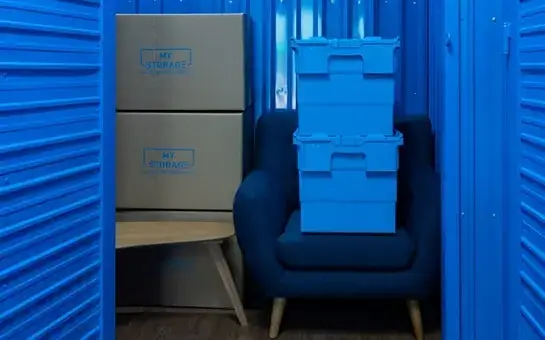
- Boxes take over the entire living space: Cardboard boxes and burlap sacks are stacked high, reaching the ceiling—from the living room and hallway all the way to the laundry balcony.
- The smell of adhesive and cardboard dust affects health: Paper dust from the cardboard boxes and the strong smell of packing tape in the enclosed, air-conditioned room cause breathing difficulties and allergies for family members.
- Delivery drivers ring the doorbell constantly all day: The incessant ringing of the doorbell from morning to night completely disrupts the peace and quiet needed for rest.
- Pressure from management and neighbors: Neighbors have started complaining because employees talk loudly while packing packages, or because delivery drivers park their vehicles blocking the common hallway on the floor.
The “save on rent” dilemma that leads to hidden costs
Many shop owners think that using an apartment as a warehouse is a smart way to save money, but when you add up all the hidden costs, the actual total operating costs end up being much higher.
The hidden costs that erode your budget each month include:
- Lost living space costs: You’re paying rent at the rate for a fully furnished apartment (typically 120,000 to 180,000 VND per square meter) but are using that expensive space solely to store lifeless shipping boxes.
- Severe decline in packing efficiency: The lack of standardized workstations and narrow aisles forces employees to spend excessive time searching for individual items, slowing down order fulfillment.
- Goods affected by mold or damaged due to substandard housing: Apartments lacking an industrial ventilation system and humidity control may cause clothing to become moldy, wrinkled, or have damaged labels during the rainy season.
3. Major Risks of Converting an Apartment into a Warehouse or Office
Deliberately maintaining business operations in a residential apartment puts the business at risk of serious safety and operational hazards.
Legal Risks and Administrative Penalties
When complaints are received from residents or during interagency inspections by local authorities, illegally operated apartments will be the first targets of inspection.
Direct legal consequences include:
- The competent authorities issued administrative penalty notices to the tenant and the landlord for tens of millions of dong, in accordance with housing management regulations.
- The business was forced to remove all goods and equipment from the building within a very short timeframe, paralyzing sales operations for several consecutive days.
- The landlord has the right to unilaterally terminate the lease early if the tenant uses the property for purposes other than those agreed upon, which may result in the forfeiture of the security deposit.
Fire Safety Hazards and Resident Safety
Apartment buildings are concentrated living spaces for hundreds of households; therefore, fire safety standards are strictly enforced.
Potential fire hazards from makeshift storage areas within apartments:
- Excessive amounts of flammable materials, including dry cardboard boxes, bubble wrap, plastic tape, and plastic bags, packed tightly into a room.
- The electrical outlet system in a residential apartment is prone to overloading when multiple thermal printers, heat shrink wrappers, and livestream lighting systems are plugged in at the same time.
- Piled-up goods block the automatic fire sprinkler heads on the ceiling and obstruct emergency exits in the event of an incident.
Difficulties in delivery and access to transportation vehicles
The infrastructure of residential apartment complexes is completely ill-suited to support freight handling for commercial goods at high frequencies.
Transportation inconveniences occur daily:
- Elevator Overload and Time Restrictions: Many buildings prohibit the transport of bulky goods during residents’ peak hours, causing stores to be late in delivering packages to couriers.
- No parking for delivery trucks: Trucks carrying goods from suppliers or those belonging to shipping companies are not allowed to park for long periods in the lobby or basement, obstructing internal traffic.
- Excessively long loading/unloading distances: Employees must push carts from the apartment to the elevator, go down to the basement, and then pull them a long distance to reach the vehicle to pick up the goods, which is physically exhausting.

4. When Should an Online Store Separate Its Warehouse and Workspace from a Residential Apartment?
Separating business space from living space is an inevitable step that marks the growth and maturity of any business.
Growth Milestones That Signal It Is Time to Separate Business and Living Space
Store owners should quickly start planning to find a location professional warehouses when they reach the following milestones:
- Revenue has stabilized, and the number of orders has exceeded 50 to 100 per day, requiring employees to pack continuously from morning to evening.
- You begin hiring two or more additional employees to work daily, completely disrupting your family’s private space.
- The product catalog expanded to include hundreds of different SKUs, exceeding the capacity to categorize and neatly organize them in a small room.
- The shop owner feels exhausted from constantly living with work, with no quiet space to rest after stressful hours of selling.
Do small businesses really need to rent a large warehouse?
A common misconception is that when people talk about renting warehouse space, they must be referring to industrial facilities spanning hundreds or thousands of square meters on the outskirts of the city.
In reality, the market has now developed a wide variety of flexible storage solutions:
- Solutions such as modern urban warehouses allow businesses to rent by the compact areas that suit their actual needs, eliminating the need to rent large spaces that waste money.
- These modern warehouse complexes are located right within inner-city districts or at key trade gateways, ensuring short travel distances and fast delivery to customers.
Who Is the Self-Storage Model Suitable For?
Self-storage is a model that provides independent, lockable storage units where customers have full control over managing their belongings without interference from others.
This model is particularly suitable for the following groups:
- Sellers on platforms e-commerce: Need a clean storage unit with a cool air-conditioning system to store cosmetics, fashion items, tech accessories, and the ability to access the warehouse to retrieve goods at any time.
- Startups and small offices: Need a safe place to store accounting documents, legal records, spare equipment, or display samples.
- Seasonal business owners: Need to rent additional short-term storage space during year-end sales promotions without being tied to multi-year long-term contracts.
5. Alternative Space Solutions for Online Shops, Startups, and Small Businesses
Instead of trying to cram every function into a cramped apartment, savvy shop owners today are adopting a three-part space division formula: living space, storage space, and office space.
Solution 1: Dedicated self-storage units for merchandise
This solution thoroughly addresses the challenge of freeing up living space for business owners who primarily need a safe and convenient place to store their goods.
Key advantages of self-storage:
- Businesses are provided with a key or a unique electronic access code, allowing them to independently enter and exit to store and retrieve goods 24/7 according to their personal schedule.
- A system of smart storage racks, heavy-duty carts, and specialized lift trucks to assist with loading and unloading without physical strain.
- Warehouse space is continuously temperature- and humidity-controlled, ensuring the absolute protection of goods’ quality from being affected by external weather conditions such as rain or sunshine.
Solution 2: Warehouse combined with order processing and packaging areas
This is an advanced solution for stores that handle a constant flow of incoming and outgoing orders every day and need space for professional packaging operations.
Practical operational benefits:
- The workspace is equipped with spacious packing tables, industrial-grade electrical outlets, and high-speed fiber-optic internet connectivity for printing shipping labels.
- Couriers from express delivery companies can directly access the covered pickup/drop-off area to collect packages, without disrupting anyone’s daily activities.
Solution 3: Integrated self-managed warehouse space with a shared workspace
This is currently the most advanced integrated model, providing a comprehensive solution for startups and lean sales teams.
A prime example of this innovative model in Ho Chi Minh City is MyStorage facility, located at 375 Vo Nguyen Giap Street, An Phu Ward, Thu Duc City. This facility harmoniously combines a modern self-storage system with a shared workspace:
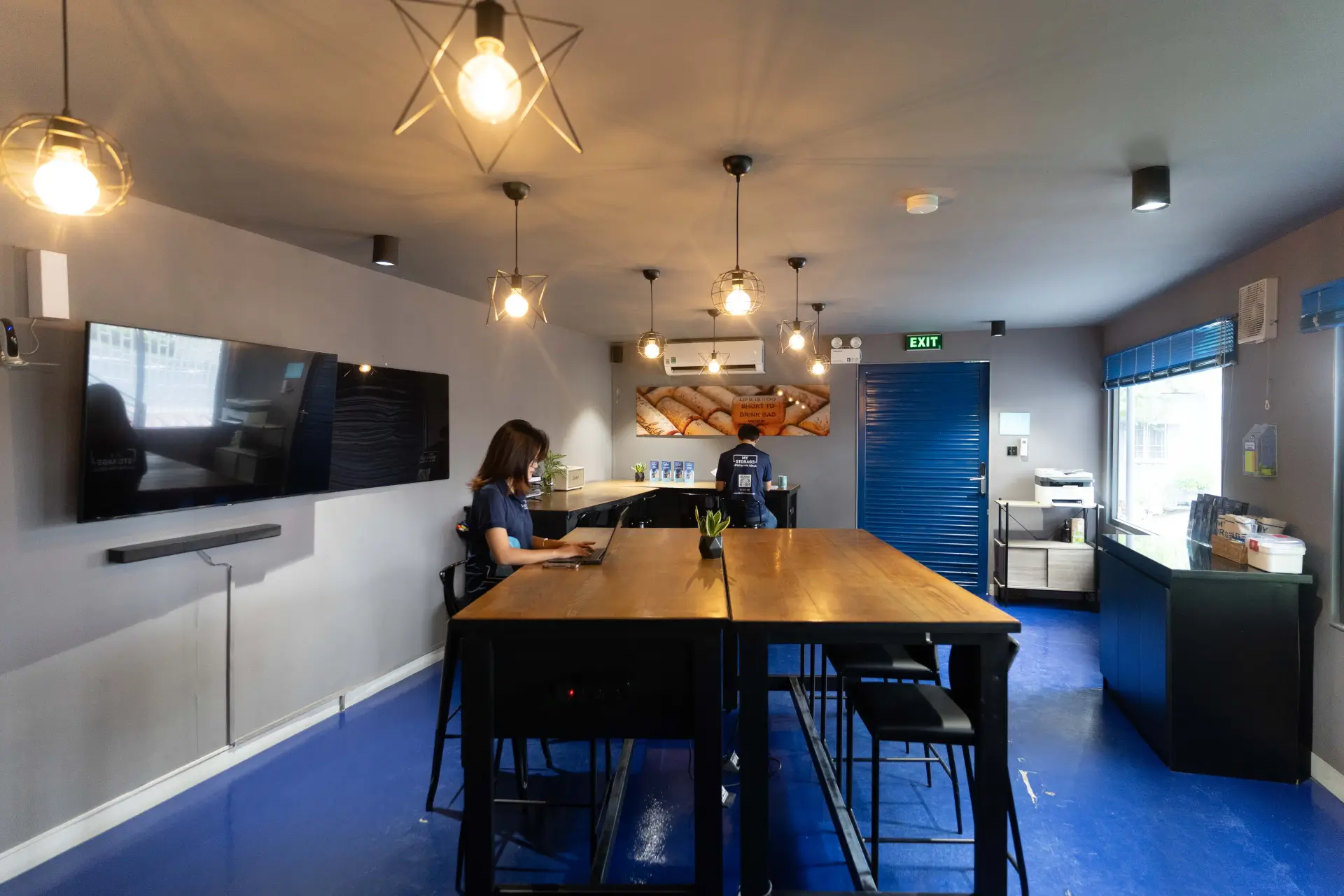
- Convenient two-in-one integration: Staff have access to quiet, air-conditioned, professional workstations to respond to customer messages, and can step just a few paces away to their private storage units to count or pack items.
- Maximize savings on operating costs: Businesses don’t have to pay for renting expensive private offices in commercial buildings, while completely separating business operations from the family living space.
- Flexible scaling: As the business grows, shop owners can easily upgrade to a larger storage unit or rent additional workspaces within the same building.
Comprehensive comparison chart of space options
The comparison chart below provides an overview to help you choose the space option that best fits your business model:
|
Comparison Criteria |
Residential Apartments |
Traditional Warehouse Rentals |
Self-storage |
Self-storage combined with a workspace |
|---|---|---|---|---|
|
Legality of Business Operations |
Violation of the Housing Law |
Fully Legal |
Fully legal |
Fully legal |
|
Quality of living space |
Severely encroached upon by commercial development |
No impact on housing |
Completely separate, spacious housing |
Completely separate, spacious housing |
|
Security and Fire Safety Infrastructure |
Residential-grade, prone to safety violations |
Depends on the factory owner |
Meets industrial fire safety standards, 24/7 surveillance |
Meets industrial fire safety standards, maximum security |
|
Storage Conditions for Goods |
Prone to mold and dust |
Hot and humid |
Humidity control and cool temperatures |
Humidity control and cool temperatures |
|
Flexibility in area size |
Fixed based on room size |
Large area, difficult to subdivide |
Highly flexible from 1 to 50 square meters |
Highly flexible for expansion needs |
|
Suitability for small shops |
Temporary solution, high risk of fines |
Too broad, a waste of money |
Very suitable and cost-effective |
Ideal choice for small teams |
Reference Price List for Storage Space Solutions in Ho Chi Minh City
To make an objective financial comparison, weighing the costs of renting a residential apartment against those of dedicated warehouse solutions is an essential step.
Below is reference price list for common types of storage spaces in the Ho Chi Minh City area, updated as of the end of 2026:
|
Spatial Layout |
Typical Usable Area |
Estimated Reference Cost (VND/month) |
Hidden Costs and Included Amenities |
|---|---|---|---|
|
2-Bedroom Condominium Unit |
60–75 square meters |
9,000,000 – 16,000,000 |
Additional building management fees, high residential electricity rates, and risk of fines |
|
Small self-managed mini storage unit |
3–8 square meters |
900,000 – 2,500,000 |
Air conditioning included, 24/7 security, hand trucks provided, no additional fees |
|
Medium-sized self-storage units |
10–25 square meters |
3,000,000 – 7,500,000 |
Flexible shelving layout, 24/7 access, protection against moisture and mold |
|
Storage space with integrated workspace |
Private storage unit with a work desk |
5,500,000 - 12,000,000 |
Fully equipped with air conditioning, drinking water, high-speed Wi-Fi, and a meeting/reception room |
Important Note: The price table above is a reference summary based on average market rates in central districts and developing areas of Ho Chi Minh City. Actual costs may vary depending on the building’s location, contract term, and promotional programs offered by the service provider.
6. Criteria for Selecting the Right Storage Space for Small Businesses
Before signing a lease for any location, business owners should develop a comprehensive set of evaluation criteria to avoid issues arising after the lease is signed.
The five key criteria that require thorough review include:
- Floor area and load capacity: Accurately assess the current quantity of inventory and account for projected growth in goods over the next 3 to 6 months, ensuring the floor can withstand the weight of heavy cargo.
- Time and convenience of accessing goods: Does the storage facility allow flexible access outside of business hours, and are the procedures for retrieving goods quick and convenient for packing staff?
- Security and Access Control Systems: System Inspection surveillance cameras cover all areas of the warehouse, the procedures for controlling the entry and exit of unauthorized persons, and the presence of a permanent security team.
- Fire safety standards and legal documentation: The leasing company must have complete fire safety inspection records from the relevant authorities, unobstructed emergency exits, and fire extinguishers that are regularly inspected.
- Flexibility to expand storage space: During peak sales seasons, does the facility have adjacent vacant warehouse bays available for immediate expansion to avoid having to split goods across multiple locations?
The bold decision to move away from using apartment units as makeshift warehouses and switch to professional storage solutions is a pivotal step that helps online shop owners and startups standardize their operations, protect their brand reputation, and confidently scale their businesses for the long term.
If you’re looking for a safe, clean storage solution that meets fire safety standards, or if you need a streamlined workspace combined with a warehouse right in the heart of Ho Chi Minh City, MyStorage at 375 Vo Nguyen Giap, Thu Duc City is here to support you. With self-storage system featuring modern humidity control, storage units in a variety of sizes, and a convenient shared workspace, MyStorage offers an optimal space solution that allows you to completely free up your home and elevate your business efficiency.
Frequently Asked Questions (FAQ) About Renting Apartments as Warehouses or Offices
Below are detailed answers to the most common questions regarding the use of apartments and alternative business space solutions.
1. Can I use a condominium unit to register for a business license?
No. According to the Housing Law and the Enterprise Law, the business registration authority will refuse to issue a business registration certificate or a business location permit if the registered address is a condominium unit intended for residential use.
2. If I only store a few sample garments in my bedroom, will I be fined?
If you only keep a few sample garments for personal use and there is no bulk packaging activity or delivery personnel coming in and out, they are considered ordinary household items and do not violate legal regulations.
3. Can an officetel unit be used as a storage space for heavy goods?
No, it is not recommended. Officetel units are primarily designed for small offices and short-term stays. Storing large quantities of heavy goods may violate the building’s load-bearing safety standards and the management board’s regulations.
4. Is it necessary to sign a long-term lease of 1 to 2 years when renting a self-storage unit?
No, it is not necessary. Most professional self-storage providers, such as MyStorage, offer flexible monthly rental plans, allowing online retailers to manage their budgets proactively and easily adjust their storage needs based on seasonal demand.
5. Do self-storage facilities offer assistance with receiving packages when the shop owner is absent?
Many premium self-storage facilities provide services to assist with receiving packages from shipping carriers, signing delivery receipts, and moving the packages to a secure area while waiting for the shop owner to arrive and count them.
6. Can I livestream sales from inside a self-storage unit?
Absolutely, if you choose medium- or large-sized units equipped with electrical outlets. The dedicated storage environment is clean, quiet, and free from noise restrictions—unlike residential apartment buildings.
7. Why is the cost of renting a self-managed warehouse per square meter more economical than renting an apartment?
Because when you rent an apartment, you have to pay for hallways, bathrooms, balconies, and household amenities that you don’t use for your goods. With a self-storage unit, however, you only pay for the actual volume and floor space used to store your goods, and you have access to air conditioning and professional security systems.
8. How can I arrange a tour of MyStorage’s warehouse-and-workspace hybrid model?
You can visit the MyStorage facility directly at 375 Vo Nguyen Giap Street, An Phu Ward, Thu Duc City, Ho Chi Minh City, or contact us through our online channels to have our team of consultants conduct an on-site assessment and help you choose the most suitable storage space.
Related articles
Article
Returned Goods Processing: Inspection, Classification and Restocking
Six-step returned goods process: RMA intake, gate receiving, quarantine, quality inspection, four grading groups and stock updates. Includes an Excel tracking template, the formulas that…
Read article
Article
Fix Excel Inventory Formula Errors and Lock Data with Data Validation
How to lock data with Data Validation to stop mistyped SKUs, read the #N/A, #VALUE!, #REF! errors and SUMIFS returning 0, protect sheets from pasted-over formulas, plus tips on barcode…
Read article
Article
What Is Cold Chain Logistics? Process, Standards and Solutions
Cold chain logistics keeps temperature and humidity within a strict range from origin to consumer. This guide covers the standard temperature bands, the four-step process, GDP and HACCP…
Read article
