
 Tiếng Việt
 한국어
한국어 日本語
日本語Article
Rent a Ready-Built Warehouse or Build Your Own? Comparing Costs and Timelines
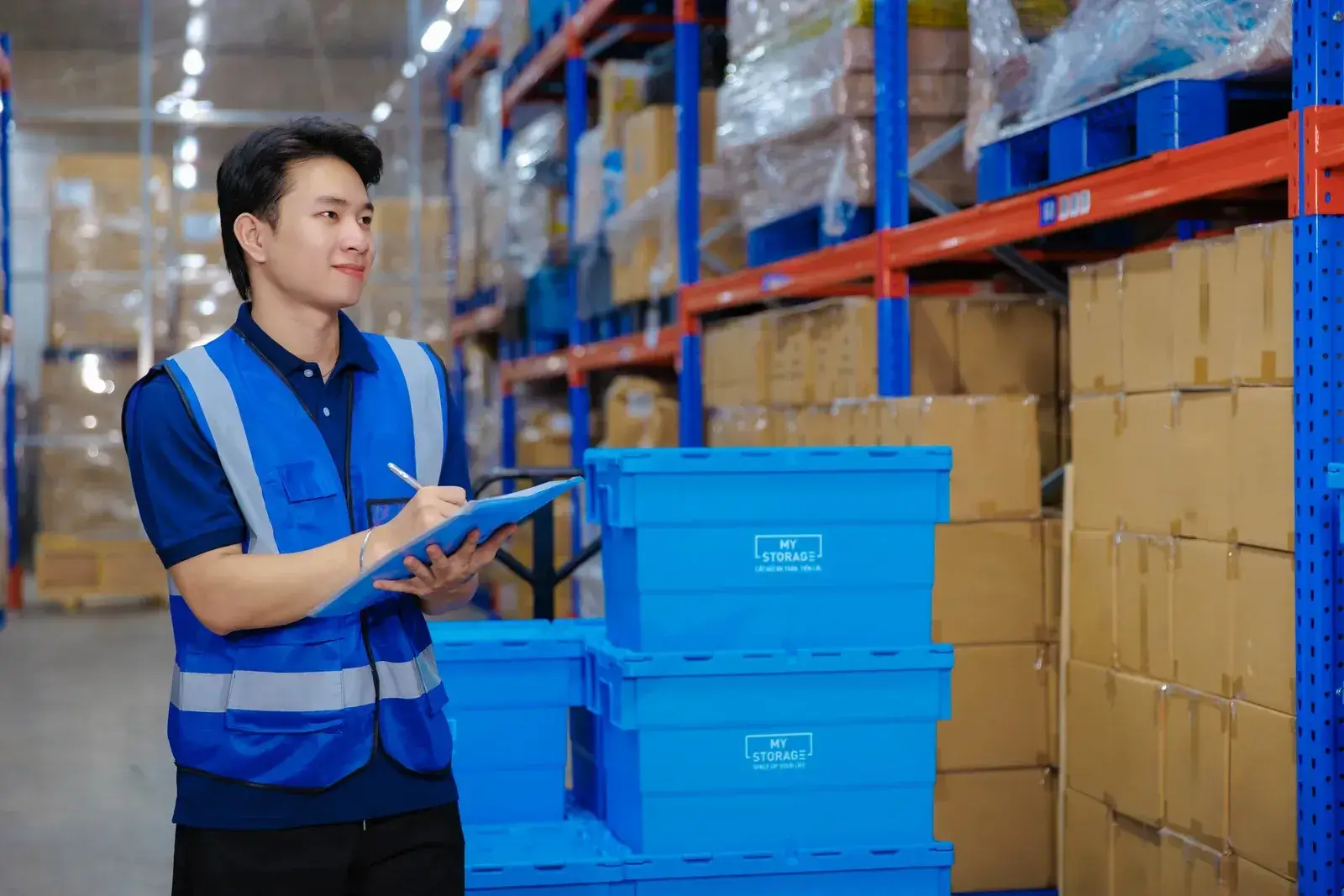
When expanding storage and distribution capacity, business leaders often face a critical strategic decision: should they rent a ready-built warehouse or invest their own capital in building one? Each option represents a fundamentally different approach to resource allocation. Renting a ready-built warehouse offers major advantages in deployment speed, reduces the pressure of upfront investment and preserves flexibility when markets change. Building a warehouse, by contrast, focuses on tailoring functionality to specific production processes, maintaining full control over the asset and serving a long-term vision of ten to twenty years.
Rather than simply comparing monthly rent with construction costs per square metre, businesses need to weigh total cost of ownership, the opportunity cost of capital and timing risks to find the most appropriate answer for their circumstances.
Renting or Building a Warehouse: Which Costs Are You Comparing?
Industrial property investment requires a comprehensive financial perspective that includes both visible direct costs and hidden expenses arising throughout the project's life cycle.
The actual cost structure of renting a ready-built warehouse
Choosing a ready-built warehouse shifts much of a company's financial model from upfront capital expenditure to recurring monthly operating expenses.
The warehouse rental budget includes:
- Base rent: A fixed fee paid monthly or quarterly based on the actual leased floor area.
- Industrial park service and infrastructure fees: Maintenance of shared lighting, perimeter security, internal roads and the park's common wastewater treatment facilities.
- Energy and utility costs: Electricity for lighting, ventilation fans or local cooling systems, billed through a separate meter.
- Warehouse fit-out costs: The budget for heavy-duty floor coatings, plasterboard partitions for the operations office and multi-tier warehouse racking systems.
- Reinstatement costs at the end of the lease: Dismantling racks, repainting and cleaning the warehouse floor to return the premises to their original condition when the lease expires.
Major cost items when a business builds its own warehouse
Building an industrial-standard warehouse requires a company to act as a professional property developer, with substantial cash outflows from the earliest stages.
Fixed capital expenditure includes:
- Land-use rights leasing costs: Industrial land sublease payments made upfront or annually, typically for a term of thirty to fifty years.
- Survey, design and project legal costs: Detailed planning, environmental impact assessments, construction drawings and building permit applications.
- Structural construction costs: Site levelling, foundation piling, erecting a prefabricated steel frame, installing an insulated metal roof and pouring a high-load reinforced concrete floor.
- Mechanical, electrical and fire protection installation costs: Transformer stations, automatic firefighting pipework, underground fire-water tanks and technical acceptance documentation under current standards.
- Outdoor handling area fit-out costs: Concreting container parking yards, installing hydraulic dock levellers at loading bays and security access gates.
The opportunity cost of upfront investment
An extremely valuable financial perspective that many managers overlook is that tying cash up in bricks and concrete deprives the business of other profitable opportunities.
To illustrate this, consider a medium-sized warehouse project requiring an initial investment of five million US dollars. If all of that money is tied up in property, the business will no longer have sufficient liquidity to:
- Purchase large quantities of goods at favourable prices to increase trading margins.
- Invest in upgraded, high-tech production equipment to double manufacturing productivity.
- Expand its sales network and fund large-scale marketing campaigns to capture market share.
Discussing this capital allocation issue in Diễn đàn Doanh nghiệp newspaper, a senior finance expert from an association of supply chain managers shared:
“The right question for the executive team is not whether building a warehouse is cheaper than renting over ten years, but whether retaining that capital for the core business could generate a return on equity far greater than the warehouse rent payable.”
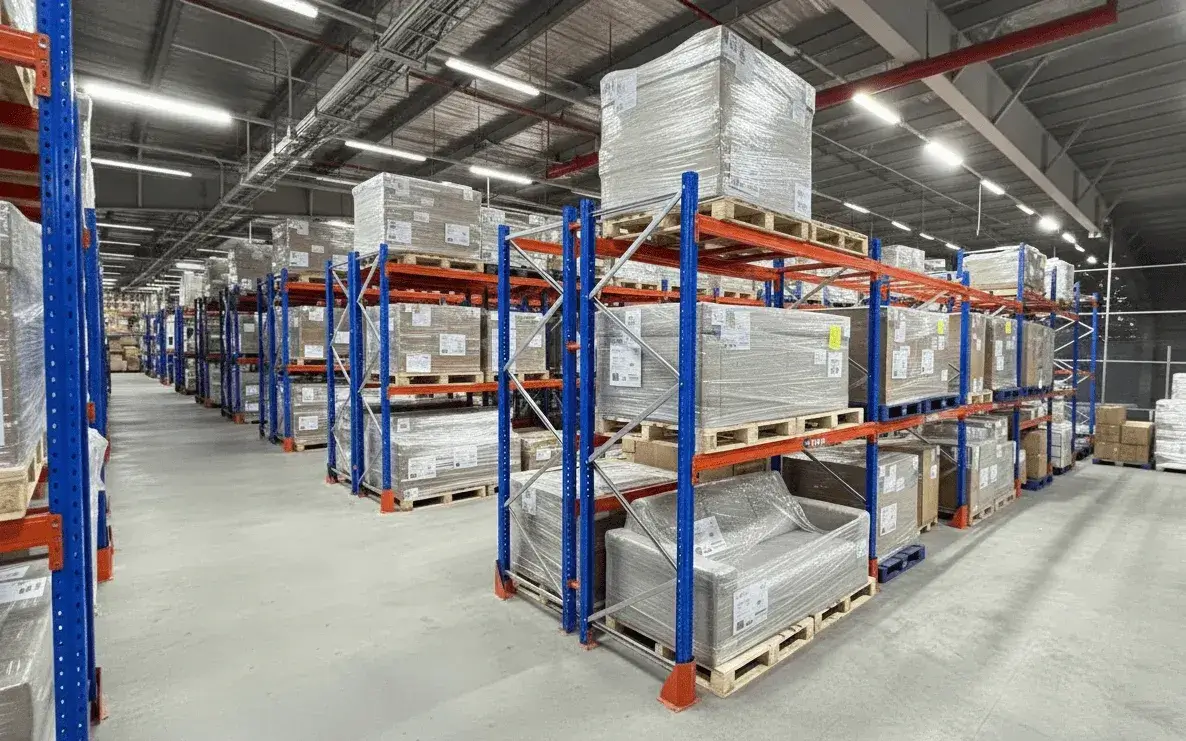
How to Calculate the Break-Even Point Between Renting and Building
The break-even point is the time when cumulative rental expenditure equals the total investment and maintenance costs of a self-built warehouse of the same size.
A formula for comparing total cost of ownership over time
For an objective comparison, businesses need to bring all cash inflows and outflows for both options onto the same time basis using a total cost of ownership (TCO) model.
The calculation can be summarised as follows:
Total rental cost over X years = Cumulative rent + Infrastructure service fees + Fit-out costs + Operating costs
Compare this with:
Total self-build cost over X years = Land costs + Construction costs + Financing interest + Cumulative maintenance costs - Residual asset value
Hypothetical case study: A logistics company needs a 5,000-square-metre warehouse for 10 years. At a market rent of approximately USD 4.5 per square metre per month, total rent over 10 years would be about USD 2.7 million, excluding rent escalation. Building on land subleased for 50 years could require an initial land and construction investment of USD 3.5–4 million. Although the business would still own a facility with a disposal value after 10 years, principal and interest repayments during the first 5 years could severely constrain its operating cash flow.
Why is “eight years of rent equals the cost of building” not enough to decide?
Many people use a simple division: total construction cost divided by annual rent. If the result is 7–8 years, they quickly conclude that building is more advantageous than renting.
However, this quick calculation overlooks several critical financial variables:
- It ignores maintenance and major repair costs: After 5–7 years in operation, an industrial building enters a period of accelerated deterioration, requiring expensive roof repairs, transformer maintenance and floor recoating.
- It ignores the risk of a change in business location: Consumer markets may shift, or new motorways may make a self-built warehouse's location inconvenient. Renting allows a business to relocate easily when its lease expires.
- It ignores the time value of money: Money spent on construction today is worth considerably more than the same amount paid gradually in rent over eight years, because that capital can generate returns.
Five financial factors that change the break-even point
The break-even point is not fixed: it can shift considerably as macroeconomic and business-specific conditions change.
The five decisive variables are:
- Local industrial land rents: Rising land rents in key provinces such as Bình Dương, Đồng Nai and Bắc Ninh can extend the self-build break-even period by several years.
- Medium- and long-term borrowing rates: Higher bank interest rates increase the financing burden of a self-build project.
- Ready-built warehouse rent escalation: Annual rental increases specified in the long-term warehouse lease directly affect cumulative rent.
- The project's actual period of use: Businesses planning to use a warehouse for more than 15 years tend to favour building over renting.
- The ability to sell or transfer the asset: The residual value of land-use rights and assets attached to the land when the company wishes to sell the project.
The Speed of Bringing a Warehouse into Operation Determines Business Opportunities
In today's highly competitive business environment, the time required to put an asset into use often matters more than a cost difference of a few percentage points.
Situations in which a business cannot wait 12–24 months
Developing a warehouse from finding land and obtaining legal approvals through construction and acceptance typically takes one to two years.
Some pivotal business situations require immediate warehouse availability:
- The relocation of orders by foreign direct investment (FDI) businesses: Multinational groups moving their supply chains into Vietnam need compliant warehouses operational within 60–90 days to meet delivery schedules for international partners.
- Securing a major exclusive distribution contract: Winning distribution rights for a global brand requires an importer to demonstrate that it already has sufficient warehouse premises.
- Surging storage demand during peak shopping seasons: Year-end promotions in e-commerce retail can require warehouse capacity to double within just a few weeks.
The hidden costs of waiting for a warehouse
The period between the initial idea and a self-built facility being ready for opening often involves substantial economic losses.
The hidden costs businesses must bear include:
- Lost sales revenue because there is not enough space to consolidate goods and expand operations.
- Paying high rents for temporary warehouses with poor storage conditions while waiting for construction to finish.
- Sharply increased internal transport costs because goods are spread across multiple small warehouses around the city.
When speed matters more than the rental rate
If the margin from selling goods or providing logistics services is much higher than the difference in rent, a business should prioritise a ready-built warehouse to capture the market before competitors.
This strategy allows businesses to make the most of opportunities while demand is strong, then plan a large self-built warehouse for the future once sales have stabilised at their new level.
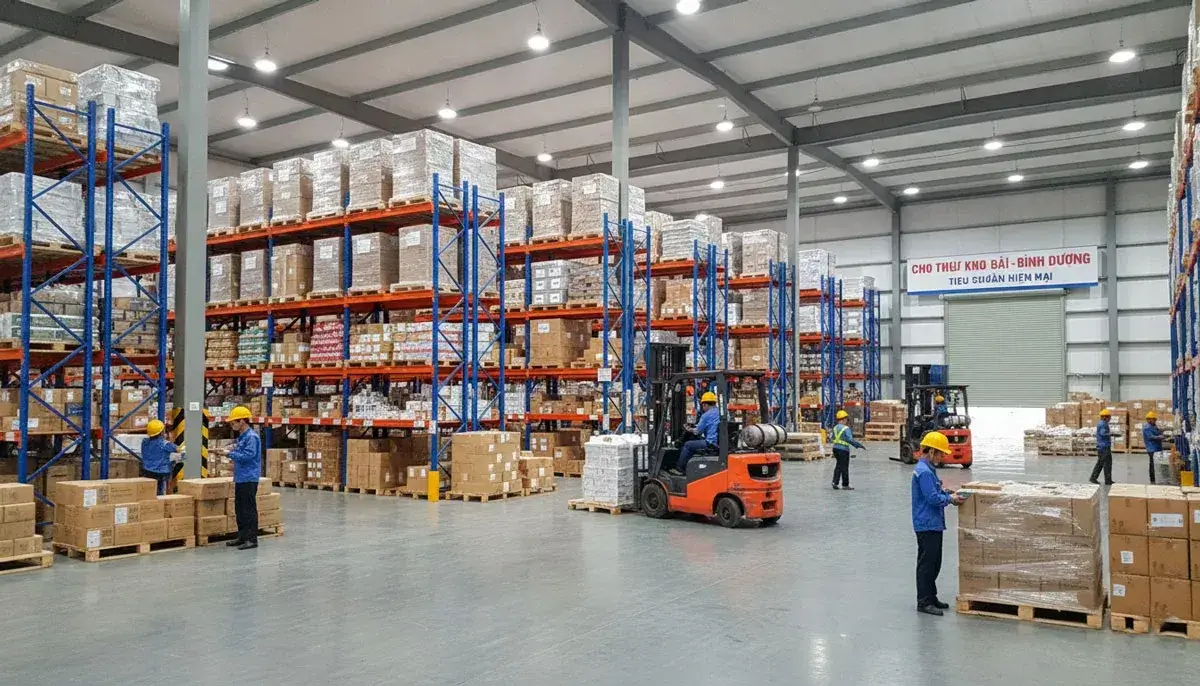
When Should You Rent, Build or Choose a Build-to-Suit Warehouse?
No single option is perfect in every situation. A smart choice depends on how well the property model fits the business strategy at each stage.
Criteria for choosing a ready-built warehouse rental
Businesses should prioritise standard ready-built warehouse projects when the following conditions apply:
- Goods need to be stored and operations started within a very short period of 30–60 days.
- There is no reliable forecast of volume or market share for the next 5–10 years.
- The business wants to focus all working capital on core production and business activities, limiting fixed capital expenditure.
- Stored goods are general merchandise and do not require building structures beyond common industrial standards.
- The business wants to retain the flexibility to relocate or expand warehouse space from year to year.
Criteria that favour investing in your own warehouse
Building a proprietary warehouse delivers the greatest economic benefit when all of the following fundamentals are in place:
- The business already owns development-ready industrial land with excellent transport connections.
- Operations have matured, storage and throughput requirements are very stable, and there is a firm plan to use the warehouse for at least 15 years.
- The production line imposes extremely heavy loads, requiring specialised foundations or exceptional building heights that available ready-built warehouses cannot accommodate.
- The business has ample equity or access to commercial borrowing at preferential long-term interest rates.
When is a build-to-suit model the optimal solution?
Build-to-suit provides a balance between the two extremes: a property developer funds and constructs a warehouse entirely to the company's technical design, and the company then signs a long-term lease of 7–10 years.
This option is particularly well suited to:
- Large specialised cold and cool warehouses: These require specialist insulated panels, anti-freezing concrete floors and high-capacity compressor systems designed together from the foundation stage.
- Highly automated distribution centres: These require automated racks tens of metres high integrated with handling robots and warehouse floors meeting international standards for absolute flatness.
- Industrial facilities meeting stringent green building standards: These serve global groups with strong environmental commitments and require rooftop solar panels and rainwater collection systems to achieve LEED certification.
A Management Checklist for Deciding Whether to Rent or Build
The quick comparison below helps managers identify the most suitable direction based on core operational criteria:
|
Practical assessment criterion |
If the answer is “Yes” |
Preferred option |
|---|---|---|
|
Time pressure for handover |
The warehouse must operate within the next 1–2 months |
Favour renting a ready-built warehouse |
|
Ability to fund upfront investment |
The aim is to optimise cash flow and minimise fixed capital expenditure |
Favour renting a ready-built warehouse |
|
Stability of goods volumes |
Space requirements could vary substantially over the next 3 years |
Favour renting a ready-built warehouse |
|
The business's existing land holdings |
Suitable, development-ready industrial land is already available |
Favour building your own warehouse |
|
Property utilisation plan |
Continuous use for 15–20 years is planned |
Favour building your own warehouse |
|
Special architectural and technical requirements |
Automated robots, deep-freeze storage or cleanrooms are required |
Favour build-to-suit (BTS) |
|
Asset management strategy |
The business wants to focus on operations rather than asset management |
Favour renting a ready-built warehouse or BTS |
Seven key questions before signing a lease or committing capital
Before making a final decision, the board should discuss and clarify these seven strategic questions:
- When must the project start operating? Establish the precise delivery deadline to determine whether a self-build can be completed in time.
- For how many years will the warehouse be used? If the period is shorter than seven years, renting is always the safest financial option.
- Does the business have development-ready industrial land? Finding land and completing land allocation procedures can delay the project by another year.
- What is the maximum capital budget available for the project? Assess how warehouse construction spending would affect the company's working capital credit limit.
- Does the warehouse require technical specifications beyond ordinary standards? Specify floor load capacity, clear height and the number of loading doors relative to the facility's size.
- Could the required area increase or decrease over the next 3–5 years? Avoid building too large and wasting capacity, or too small and quickly becoming overloaded.
- Is management's ultimate goal to use space or own an asset? Clarify whether the company's business model focuses on trade and logistics or also includes accumulating industrial property.
Indicative Cost Comparison: Renting versus Building a Warehouse in Vietnam
Vietnam industrial property reports from reputable research groups such as CBRE and JLL show clear differences in warehouse costs between the northern and southern economic hubs, based on industrial park occupancy rates.
The following table provides indicative market costs updated as of late 2026:
|
Comparison item |
Southern key economic region (Ho Chi Minh City, Bình Dương, Đồng Nai) |
Northern key economic region (Bắc Ninh, Hải Phòng, Hưng Yên) |
Financial notes |
|---|---|---|---|
|
Standard ready-built warehouse rent |
USD 4.2–5.8 / m² / month |
USD 4.0–5.2 / m² / month |
Excludes value-added tax and management fees |
|
Industrial park land rent (50-year term) |
USD 160–280 / m² / term |
USD 130–230 / m² / term |
Depends on connections to ports and motorways |
|
Standard warehouse construction investment |
USD 250–380 / m² of floor area |
USD 240–360 / m² of floor area |
Prefabricated steel frame, power-floated concrete floor and insulated metal roof |
|
Cold or automated warehouse construction investment |
USD 550–900+ / m² of floor area |
USD 520–850+ / m² of floor area |
Includes insulated panel enclosure, compressor units and specialised racking |
|
Average time to begin use |
1–2 months (ready-built) / 12–18 months (self-build) |
1–2 months (ready-built) / 12–18 months (self-build) |
Self-build timing starts when investment approval procedures begin |
Important note: These figures are indicative of the general market and are intended to help managers prepare preliminary financial models. Actual rates may vary according to each industrial park's location, project size and the specific terms negotiated in the lease or main construction contract.
Choosing between renting a ready-built warehouse and building your own is not simply a financial comparison. It is a choice about how the business responds to risk and takes advantage of market opportunities. A prudent strategy is to begin by maximising flexibility and preserving working capital for business growth, considering ownership of fixed property only once the company's position and volumes are firmly established.
If your business is in a transition phase and needs flexible, fully secure and cost-efficient goods storage in Ho Chi Minh City, MyStorage's standard-compliant warehouse network is a trusted partner. We provide self-storage, cool storage with temperature and humidity control, and professional goods storage services with flexible short- to long-term rental periods, helping you focus confidently on your core business without the burden of investing in premises.
Frequently Asked Questions About Renting or Building a Warehouse
Below are detailed answers to the questions business owners and supply chain directors most often ask when weighing these two options.
1. What are the usual minimum and maximum lease terms for a ready-built warehouse?
Industrial-standard ready-built warehouse leases typically run for 3–5 years for ordinary warehouses and may extend to 7–10 years for specialised build-to-suit projects. Some modern urban self-storage facilities also offer flexible monthly rentals for small businesses.
2. Does building your own warehouse involve legal risks relating to fire safety approvals?
The risks are substantial. Current fire safety requirements for industrial buildings are very stringent. Building without specialist advice can delay acceptance by several months or even a year, whereas reputable ready-built warehouses already have valid approval certificates.
3. Can a business install additional racking in a rented ready-built warehouse?
Yes. Tenants may install storage racks, packing equipment and internal partitions within their leased area, provided they do not alter the building's load-bearing structure and comply with its general safety rules.
4. Should small and medium-sized businesses choose build-to-suit?
It is generally unsuitable. Build-to-suit usually requires a very large minimum leased area, often 10,000 square metres or more, and a non-cancellable commitment of 7–10 years. It is therefore mainly aimed at large manufacturing groups or global logistics companies.
5. Who is responsible for maintenance costs when renting a ready-built warehouse?
The landlord normally maintains the main building structures, such as the metal roof, load-bearing frame and columns, internal roads and shared transformer station. The tenant is responsible only for maintaining equipment it has installed, such as office air conditioning, forklifts and racking.
6. What should a business do if it needs more space during the lease?
During initial lease negotiations, the business should request a right of first refusal over vacant adjacent warehouse units within the same project. This makes expansion easier without splitting goods between different locations.
7. Do banks provide loans for building a warehouse?
Yes. Commercial banks commonly finance 60%–70% of the total investment in an industrial building project over 7–10 years, provided the business has a viable business plan, transparent equity funding and security over the land-use rights and assets constructed on the land.
8. What indicates a high-quality ready-built warehouse?
A high-quality ready-built warehouse typically has standard technical specifications: a dust-proofed concrete floor with a minimum load capacity of 3–5 tonnes per square metre, clear height of 9–12 metres, automatic dock levellers at loading doors and a compliant automatic fire protection system.
9. What data should be prepared to compare renting with building?
Businesses should list their required area, goods types, inbound and outbound volumes, customer service locations and expected period of use. For each option, obtain quotations showing the same scope of work, excluded costs and handover schedule so that comparisons are made on a consistent basis.
10. Should a warehouse be selected solely on its price per square metre?
No. Two warehouses with the same rent may differ in usable space, storage height, aisles, loading doors and truck access. Compare total cost with usable capacity and the ability to support operational processes, rather than looking only at the floor-space rental rate.
11. Why should a warehouse be inspected during peak handling periods?
A peak-time visit reveals actual vehicle queues, loading bays, aisles and coordination of deliveries. These factors directly affect handling times but may not be fully apparent in drawings or during a quiet inspection.
12. What should a business do if its future space requirements are uncertain?
Develop low, base and high demand scenarios, then assess how each option accommodates them. For rented premises, clarify conditions for increasing or reducing space, notice periods and relocation costs. For a self-built warehouse, consider subdividing areas or expanding in phases.
13. What should be checked before moving goods into a new warehouse?
Compare the handed-over premises with the agreement and check electricity, lighting, warehouse doors, security systems and the storage conditions required by the goods. Also agree on goods locations, inbound and outbound flows, responsible personnel and the stocktaking plan so inventory remains traceable during the move.
14. Can a business rent a temporary warehouse while preparing to build its own?
This can be considered to maintain operations during preparation or construction. Include the costs of moving goods twice, stocktaking and downtime, and agree on extension terms for the temporary warehouse in case the new facility's handover schedule changes.
15. When should the decision to rent or build be reassessed?
Reassess when volumes, delivery routes, storage requirements or business plans change materially. A review should also take place before lease renewal or expansion investment, using actual operating data and updated quotations rather than relying solely on the original assumptions.
Related articles

Article
Can You Use an Apartment as a Warehouse or Office? Space Solutions for Online Shops and Small Businesses
Is it legal to rent an apartment as a warehouse or office? Explore the rules, risks, and suitable storage solutions for online shops and small businesses.
Read article
Article
Combining Storage Rental and Livestreaming for Online Shops: An Efficient Operating Model
Combining storage rental with a livestreaming space is a modern operating solution that allows online sellers to integrate product storage, sample preparation, live sales sessions, and…
Read article
Article
What Is IFM in Warehouse Management? Role, Services & Benefits
IFM in warehouse management brings technical maintenance, utilities and support services under one point of responsibility. Explore its scope, benefits, costs, rollout process and 16…
Read article
