
 Tiếng Việt
 한국어
한국어 日本語
日本語Article· Updated October 15, 2026
Clothing and Fabric Storage: Prevent Mold, Insects & Fading
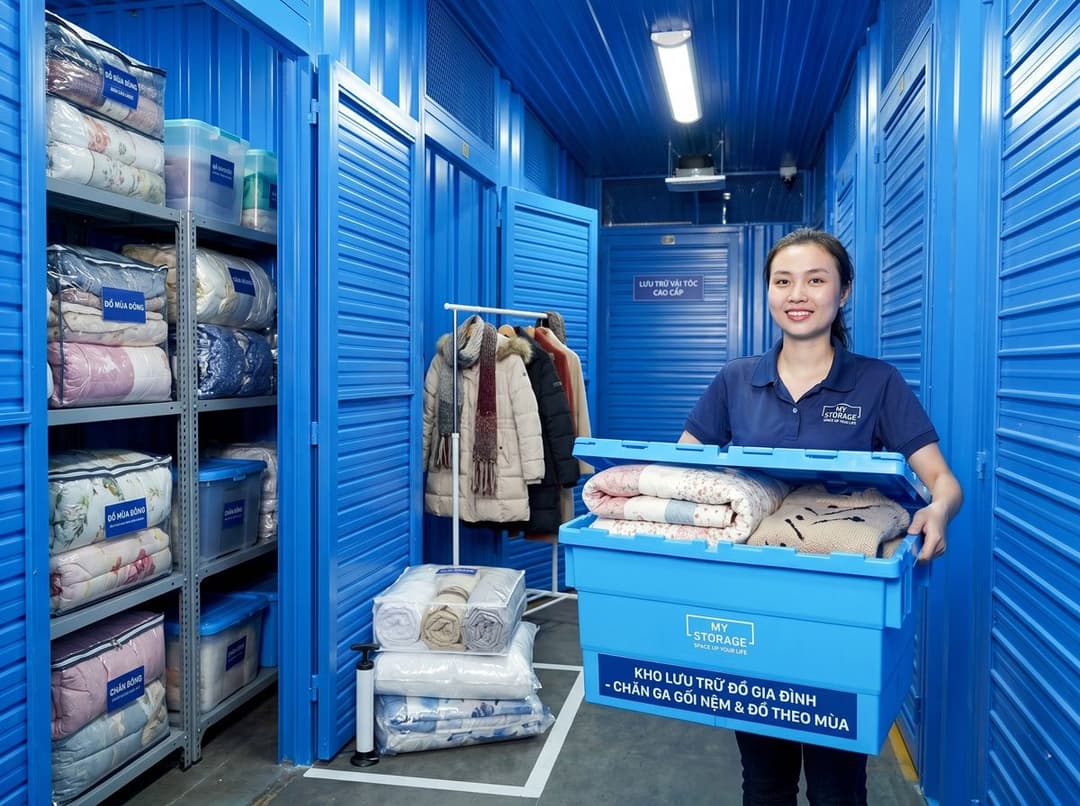
Clothing and silk storage facilities must ensure a dry environment, humidity control, and proper ventilation to prevent mold, fading, and pests. Utilizing specialized storage units helps preserve garments for the long term, maintaining their original quality while saving living or business space.
Why Do You Need Specialized Storage for Clothing and Silk Fabrics?
Clothing and silk fabrics are easily damaged by humidity, high temperatures, direct light, and insects if not stored correctly. Specialized warehouses maintain a controlled environment, protecting fabric quality and inventory value for fashion businesses, designers, and individuals with high-value clothing collections.
Fabrics and clothing are among the most sensitive goods to storage conditions, yet they are often stored most haphazardly. While pharmaceutical or electronics warehouses receive thorough environmental control investments, thousands of garments or fabric rolls worth billions of VND are still stacked in unregulated general warehouses. The consequences only surface after a few months: yellowing, mold, fabric moths, and irreversible fading.
Fabrics Are Prone to Damage in Various Ways
Not all fabrics deteriorate in the same way. Correctly understanding the damage mechanisms of each material is the first step in choosing appropriate storage conditions.
Natural fabrics such as cotton, linen, silk, and wool are particularly sensitive to humidity and insects. Natural fibers absorb moisture from the air, creating an ideal environment for mold growth when humidity exceeds 65% RH. Clothing moths (Tineola bisselliella) favor the keratin in wool and silk, and can destroy entire shipments within weeks of storage without a pest control system.
Synthetic fabrics like polyester and nylon are less sensitive to moisture but are prone to fading and deformation when exposed to continuous high temperatures. Non-air-conditioned warehouses in Ho Chi Minh City can reach 38–42°C during the dry season, enough to shrink synthetic fibers and alter product shapes after several weeks of storage.
Silk, raw silk, and premium materials are the most sensitive group of all. UV light fades silk faster than any other material. Humidity causes yellowing and loss of surface sheen. Stacking weight permanently creases materials that cannot be ironed back to their original state.
- Cotton, linen: Prone to mold and moths if humidity and temperature are uncontrolled
- Wool, silk: Clothing moths attack quickly; damage is difficult to detect early
- Silk, chiffon: Fading due to UV, yellowing due to moisture, creasing due to pressure
- Polyester, nylon: Deformation due to high temperatures, difficult to restore shape
Sensitivity to the Storage Environment
Clothing and fabrics suffer negative impacts from all environmental factors simultaneously, and these factors amplify each other in a non-linear fashion.
- Humidity is the greatest threat in Vietnam. Outdoor humidity during the rainy season in Ho Chi Minh City often reaches 80–90% RH, nearly 30 percentage points higher than the mold activation threshold (65% RH). Unregulated warehouses absorb this moisture into the internal air, creating a perfect environment for mold to grow on natural fibers within 48–72 hours when conditions are poor enough.
- High temperatures and thermal fluctuations cause two parallel problems. High temperatures accelerate all chemical reactions that degrade fabric, including dye oxidation and fiber decomposition. Large temperature fluctuations between day and night (which can reach 10–15°C in unregulated warehouses) cause fibers to expand and contract continuously, leading to loss of shape and the appearance of stubborn wrinkles on the fabric surface.
- Light, especially UV, attacks fabric dyes through a photo-oxidation mechanism. Uneven color fading is the most common consequence, particularly evident in areas of fabric directly exposed to light sources. Silk and dark-colored fabrics suffer the fastest fading in uncontrolled lighting conditions.
Storage standards for fabrics and clothing: Temperature 18–22°C, humidity 45–55% RH, no direct light, and no insects. In Vietnam, achieving these conditions requires active air conditioning and dehumidification systems; natural ventilation cannot be relied upon.
High Value Demands Commensurate Storage Conditions
Garments and fabrics are more than just ordinary goods for many businesses and individuals. They represent working capital, brand equity, and sometimes irreplaceable personal heritage.
- For fashion businesses and distributors: Clothing inventory often accounts for 30–50% of total current assets. A 500 m² fabric warehouse containing goods worth billions of VND can have its value completely wiped out just because of a month-long rainy season without a dehumidification system. The loss is not just the value of the goods, but also the time to restock and lost sales opportunities during peak seasons.
- For designers and fashion brands: Specialty fabric samples, high-end imported fabrics, and prototypes often cannot be reordered if damaged, or reordered at an unacceptable cost and time within a collection’s lifecycle.
- For individuals with collections of Ao Dai, traditional costumes, and vintage items: Silk Ao Dai, wedding attire, antique costumes, and vintage clothing have emotional and financial value that is irreplaceable if damaged. This is a group of users increasingly seeking specialized storage solutions instead of keeping them in home closets with uncontrolled risks.
| User Group | Type of Goods to Preserve | Greatest Risk if Stored Incorrectly |
|---|---|---|
| Fashion businesses | Inventory, fabric rolls | Mold and moths causing total loss of value |
| Designers | Premium fabrics, prototypes | Fading, damage that cannot be reordered |
| Apparel distributors | Large quantities of imported goods | Humidity and mold making them unsellable |
| Individuals | Ao Dai, traditional costumes, vintage | Permanent loss of emotional and financial value |
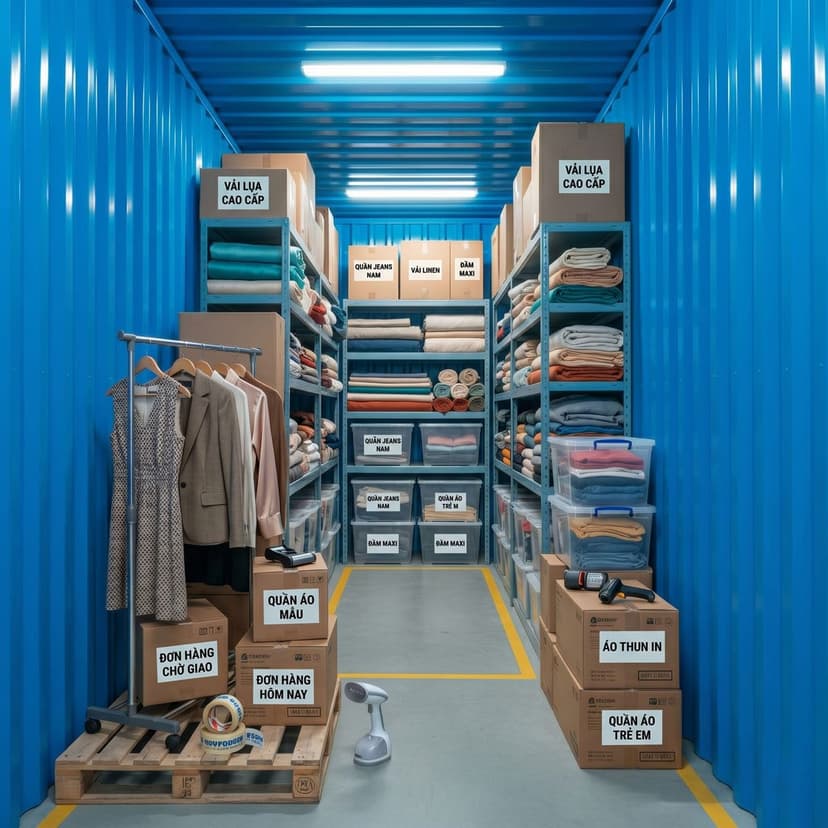
Risks of Improper Clothing Storage
Improper clothing storage can lead to moldy fabrics, difficult-to-treat odors, insect damage to fibers, faded colors, and permanently distorted product shapes. For fashion items and high-end fabrics, these damages are often irreversible and cause direct financial losses for both businesses and individuals.
Most clothing damage during storage does not occur suddenly but accumulates silently over weeks and months. By the time the problem becomes obvious, the damage is often at a level that is difficult or impossible to repair. This is why prevention through standard storage conditions is far more important than trying to fix issues after damage has occurred.
Mold, Mildew, and Odors
Mold and mildew are the most common risks and have the fastest destruction rate in Vietnam’s climate. When air humidity exceeds 65% RH and temperatures range from 25–30°C, mold spores which are always present in the air begin to activate and grow on fabric surfaces within just 48–72 hours.
Initial signs are usually a musty odor appearing before mold spots are visible on the fabric. This is the stage where fungi are growing but haven’t left visible marks. If not treated immediately, white or gray mold spots appear and eat into the fibers, leaving stains that cannot be completely removed even after washing.
- Cotton, linen, and silk fabrics absorb moisture fastest and mold earliest in high humidity conditions
- Long-term mold secretes organic acids that weaken the fiber structure, making the fabric more prone to tearing even after visible parts are cleaned
- Odors from mold penetrate deep into the fibers and are extremely difficult to eliminate completely, directly affecting the salability for fashion businesses
Maintaining warehouse humidity below 55% RH is the standard for clothing and fabric preservation. In Vietnam, achieving this requires dehumidifiers or air conditioning systems operating continuously in enclosed storage spaces.
Insects: Termites, Moths, and Cockroaches
Insects are the second danger that many underestimate until they discover a series of small holes in clothing or entire fabric rolls destroyed. Unlike mold, which can be recognized by smell, insects attack from the inside and underneath, often only detected when the damage has spread.
Clothes moths (Tineola bisselliella) cause the most severe damage to high-end garments. Their larvae feed on keratin in wool, cashmere, silk, and fur. A cashmere sweater or wool blazer can have dozens of small holes drilled into it within a few weeks of uncontrolled storage. This is particularly dangerous because larvae operate in the dark and show no external signs until the stock is opened for inspection.
- Clothes moths: Focus on protein fibers (wool, silk, cashmere, fur), leaving irreparable holes in thin fabrics
- Termites: Destroy cellulose fibers in cotton and linen, especially when combined with high humidity, attacking both storage boxes and wooden shelving
- Cockroaches: Leave stains from excretions on fabric surfaces and gnaw on cardboard and labels, creating conditions for bacteria to grow on surrounding fabrics
Preventive measures: Periodic pest inspections at least every 30 days, using sealed bags for high-end items, and locating warehouses in buildings with professional pest control systems. Once clothes moths appear in a warehouse, the entire stock must be treated and isolated to prevent spreading.
Fading and Surface Degradation
Color is one of the most important values of a garment and also the most easily destroyed by unsuitable storage conditions. Fading occurs gradually and is not immediately noticeable, but it accumulates to an unacceptable level before the product reaches the customer.
UV light is the strongest fading agent. Fabrics placed near windows, under fluorescent lights, or in warehouses with transparent roofing receiving direct sunlight will fade unevenly, creating a clear color discrepancy between the exposed and covered parts.
- Silk and dark-colored fabrics (red, dark blue, black) fade fastest when exposed to UV, requiring only a few weeks of direct light exposure to show changes
- Reactive dyes commonly used in cotton react with both UV and oxidation, causing fading through two simultaneous mechanisms
- High humidity combined with temperature accelerates the oxidation of dyes, making colors look dull and lose their vibrancy even if the fabric is not moldy
Besides fading, the fabric surface also degrades through pilling, loss of sheen (for silk and high-end materials), and the formation of white fuzz on dark fabric surfaces due to friction and exposure to dry air.
Shape Distortion
Product shape is the hardest loss to notice during storage but causes the greatest commercial damage because products cannot be sold or must be significantly discounted when distorted.
Distortion occurs through various mechanisms depending on the storage method. Improperly hung clothes suffer from stretched necks and shoulders due to gravity over many days. This is a particularly serious issue for sweaters, heavy coats, and long dresses. Hangers that are not the right size will deform the shoulder line and collar in a way that cannot be ironed flat again.
- Sweaters and cashmere must be folded flat; never hang them because the fabric’s weight permanently stretches the wool fibers vertically
- Shirts and silk dresses become permanently wrinkled when stacked in too many layers or pressed by heavy objects, as silk lacks the “memory” to recover like cotton
- Pleated trousers lose their creases and become wrinkled over time in humid warehouses, and original creases cannot be fully restored when re-ironed
- Shoes and leather accessories included with outfits warp and crack if they lack shoe trees or shapers under humid conditions and fluctuating temperatures
High temperatures and large daily thermal fluctuations cause synthetic materials like polyester and spandex to shrink unevenly, changing the fabric proportions and causing the product to no longer fit its original size after leaving the warehouse.
| Risk | Primary Cause | Most Affected Fabric Types | Is it Recoverable? |
|---|---|---|---|
| Mold & Mildew | Humidity above 65% RH | Cotton, linen, silk | No, if left for long |
| Insects | No pest control | Wool, cashmere, silk | No (permanent holes) |
| Fading | UV light, oxidation | Silk, dark-colored fabrics | No |
| Distortion | Improper hanging, heavy pressure, temperature | Wool, silk, polyester | Partially, depending on severity |
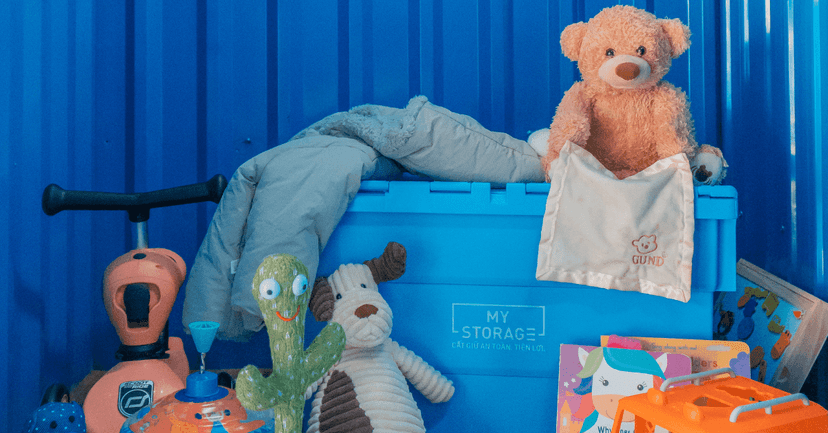
Silk Fabric Characteristics, High-End Apparel, and Suitable Warehouse Standards
Silk fabrics and high-end apparel possess delicate fiber structures, sensitive to humidity, temperature, and light, requiring strictly controlled storage environments. Standard warehouses must maintain 50–60% RH humidity, a stable temperature of 18–22°C, adequate ventilation, and pest control systems to comprehensively protect fabric quality throughout the storage period.
Each sensitive characteristic of premium fabric corresponds to a specific technical requirement of the storage facility. Understanding this connection helps business owners and individuals not only know what kind of warehouse they need but also why each standard is vital for their specific goods.
Moisture-Sensitive Fabrics → Warehouses Need Active Humidity Control
Humidity is the greatest threat to natural fabrics. Warehouses maintaining 50–60% RH using dehumidifiers or air conditioning will prevent mold, protecting the quality and scent of the fabric during storage.
Fabrics of natural origin such as silk, cotton, linen, and wool absorb moisture from the surrounding air through a hygroscopic absorption mechanism. When air humidity rises, fibers absorb water vapor, swell, and create an ideal environment for mold growth. The danger threshold starts at 65% RH, and in Vietnam, unregulated warehouses often exceed this limit during most rainy months.
The corresponding warehouse solution is not passive ventilation but active control:
- Industrial dehumidifiers maintain a stable 50–60% RH throughout, unaffected by external weather fluctuations
- Humidity sensors (hygrometers) installed in the warehouse record and alert when humidity exceeds safe thresholds
- Air conditioning systems combined with dehumidification are the most comprehensive solution, simultaneously controlling both temperature and humidity in a single system
- Acid-free sealed packaging for each high-end product creates an additional layer of local protection even if the warehouse environment is not yet perfect
Easily Wrinkled and Deformed Fabrics → Warehouses Need Standard Hanging and Folding Spaces
Silk, chiffon, and lightweight materials do not have a “recovery memory” like cotton. A crease created under pressure in a humid warehouse can become a permanent fold that cannot be fully ironed out, diminishing the product’s commercial value. For sweaters and cashmere, improper hanging permanently stretches fibers vertically.
Warehouses solve this problem with storage infrastructure suited to each material:
- Hanging systems that are long enough and properly spaced so garments are not squeezed together, preventing friction-induced wrinkling
- Flat shelves or separate compartments for sweaters, cashmere, and clothing that needs to be folded flat instead of hung
- Wrapping each product in non-woven fabric bags before stacking to reduce friction between fabric layers
- Do not stack more than 5–7 layers for thin fabrics to avoid accumulated pressure wrinkling the bottom layer
Heat-Intolerant Fabrics → Warehouses Need Stable Temperatures Below 25°C
High temperatures accelerate all chemical reactions that degrade fabric. For synthetic fabrics like polyester and spandex, temperatures above 35°C can cause fiber shrinkage and irreversible changes in product shape. For natural fabrics, high heat combined with humidity speeds up dye oxidation, causing colors to dull and lose their vibrancy.
Even more dangerous than high heat are large temperature fluctuations throughout the day. Unregulated corrugated iron roof warehouses in Ho Chi Minh City can fluctuate 15–20°C between noon and night, causing fibers to constantly expand and contract, accumulating stress that makes the fabric lose elasticity over time.
- Target temperature for high-end clothing warehouses: 18–22°C, with a daily fluctuation range of no more than ±3°C
- Inverter air conditioners consume electricity more efficiently for long-term storage spaces compared to regular units
- Ceiling and wall insulation helps maintain stable temperatures without consuming excessive electricity for continuous cooling when outdoor temperatures rise
Fabrics Need Ventilation → Warehouses Need Stagnation-Free Air Circulation
Stagnant air in closed warehouses accumulates local moisture, fabric odors, and volatile organic compounds from packaging materials. These factors combine to create an ideal environment for bacteria and mold, even if the overall warehouse humidity remains within safe limits.
Proper ventilation does not mean opening windows for the wind to blow through, but rather controlling the airflow inside the warehouse:
- Air circulation fans strategically placed to prevent stagnant air pockets from forming around goods stacked against walls
- Do not stack goods directly against solid walls; maintain a minimum distance of 30cm between goods and walls to allow air to circulate behind
- Forced ventilation systems (exhaust fans) draw filtered outside air into the warehouse and push stagnant air out periodically
Fabrics Prone to Insects → Warehouses Need Pest Control Systems
Clothes moths, termites, and cockroaches do not need special conditions to invade a warehouse. They enter via goods from outside or through small gaps in the warehouse structure. Once present, they reproduce rapidly in warm and humid conditions, destroying entire shipments within weeks without external warning signs.
- Periodic pest inspections every 30 days with a professional pest control unit
- Place fabric moth monitoring traps in warehouse corners and under shelves for early detection before spreading
- Process goods before storage: do not accept items with signs of insects, and isolate newly arrived goods for at least 7 days before moving them to the main storage area
- Use sealed, fumigated bags for high-end items, especially wool and cashmere
Summary: Fabric Characteristics and Corresponding Warehouse Solutions
| Fabric Characteristics | Risks Without Proper Warehouse | Warehouse Standards Solution |
|---|---|---|
| Natural moisture absorption | Mold, odors, yellowing | Maintain 50–60% RH, 24/7 dehumidifiers |
| Easily wrinkled, non-recovery | Hard creases, loss of commercial value | Properly spaced hanging systems, flat shelves |
| Heat intolerance | Shrinkage, fading, deformation | Temperature 18–22°C, ±3°C fluctuation |
| Needs ventilation | Bacteria, stagnant odors | Circulation fans, 30cm wall clearance |
| Prone to insects | Permanent holes, total shipment damage | Pest inspections every 30 days, sealed bags |
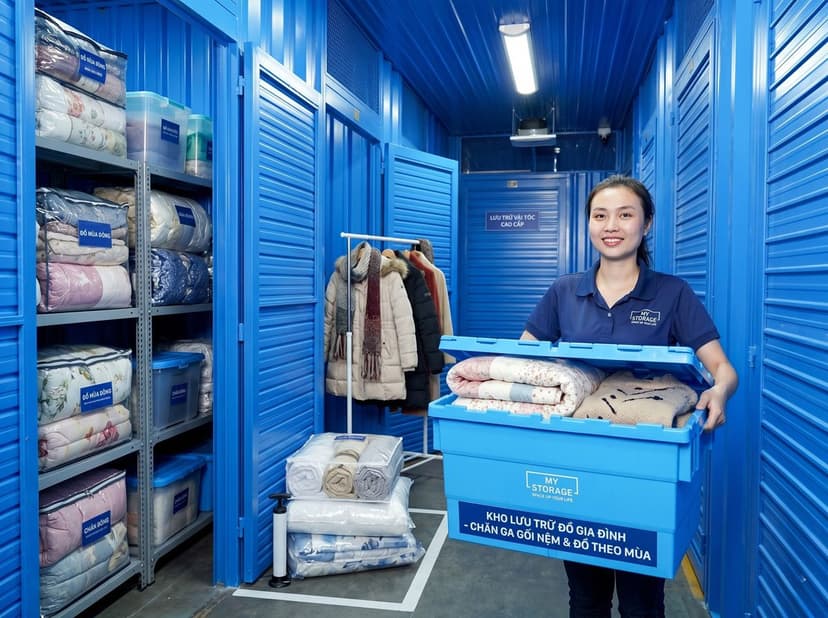
Mini Storage vs. Home Storage? Who Should Use It and Practical Benefits
Mini storage is a better choice when home space is limited, goods require humidity and temperature control, or the volume of clothing exceeds home storage capacity. It is suitable for online fashion shops, boutiques, designers, and individuals with high-value collections. Key benefits include protecting fabric quality, freeing up living space, and easier inventory management.
Mini Storage vs. Home Storage
Home storage is often the first choice because it incurs no additional costs. However, as inventory grows or materials require better preservation conditions, this option quickly shows its limitations.
| Criteria | At home | Mini storage |
|---|---|---|
| Space | Limited, shared with living space | Flexible, expands according to needs |
| Humidity control | Difficult, weather-dependent | Actively maintained at 50–60% RH |
| Temperature | Fluctuates seasonally | Stable at 18–22°C |
| Security | Risks of pests, theft | 24/7 cameras, pest control |
| Cost | No extra cost | From 500,000 VND/month |
| Suitability | Small quantities, infrequent | Large quantities, professional preservation needed |
Who Should Use Clothing Storage?
Not everyone needs a specialized warehouse. However, for the groups below, mini storage is a much more reasonable investment than the risk of damaged goods or occupied home space.
- Online fashion shops and boutiques needing clean inventory storage that is easy to audit and protects goods before delivery. A single moldy or pest-infested shipment can result in the loss of an entire batch.
- Designers and fashion brands needing to preserve high-end imported fabrics, prototypes, and seasonal collections. Specialized fabrics cannot be reordered if damaged in substandard storage.
- Individuals with collections of Ao Dai, wedding attire, or vintage items who want long-term preservation without worrying about mold, pests, or home closets lacking environmental control.
- People moving house or lacking stable storage space who need a flexible monthly temporary solution without long-term commitments.
Benefits of Using Professional Storage
Professional storage offers three specific benefit groups, each solving a problem that home storage cannot:
- Maintaining fabric and product quality: An environment controlled for humidity, temperature, and light protects colors, shapes, and fiber structures throughout the storage period. Goods leave the warehouse in the same condition as when they entered.
- Saving living and working space: Freeing up home or shop space from inventory, making room for more effective business and living activities.
- Easier inventory management: Professional classification, recording, and auditing systems help you know exactly what is in stock without having to rummage through everything every time you need an item.
When the cost of damaged goods or the cost of occupied home space exceeds the cost of renting a warehouse for 3 months, it is a signal to switch to professional storage.
Modern Storage Solutions for Clothing and Silk Fabrics
Modern storage services provide specialized temperature, humidity, and security control for clothing and silk. MyStorage offers two main solutions: climate-controlled storage with air conditioning and dehumidifiers for high-end goods requiring strict conditions, and flexible self-storage suitable for families or online shop owners. Both operate 24/7 self-service with flexible costs based on actual needs.
Not all types of clothing and fabrics require the same level of preservation. Natural silk and high-end designer items demand much stricter conditions than everyday clothes or retail inventory. MyStorage designs two distinct solutions to fit each need, avoiding paying for higher standards than necessary or, conversely, storing high-end goods in substandard conditions.
Climate-Controlled Storage with Temperature and Humidity Control
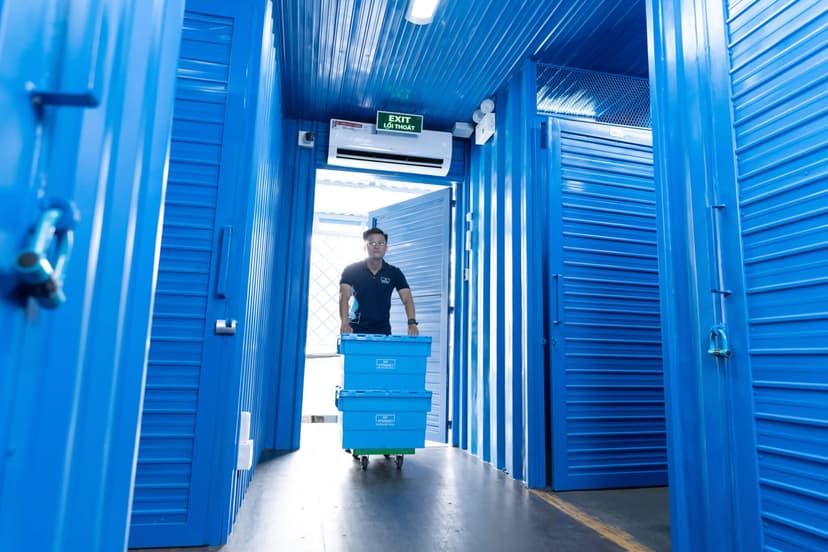
MyStorage’s climate-controlled storage units are equipped with industrial air conditioners and dehumidifiers, maintaining the most stable environment suitable for silk, high-end clothing, and high-value fashion items.
Environmental conditions actively maintained in climate-controlled storage:
- Stable temperature between 20–25°C, unaffected by external weather
- Humidity controlled at 50–60% RH, preventing mold and protecting natural fibers
- No direct light, protecting colors and fabric surfaces from UV effects
- Air filtration system reducing dust and bacteria in the storage environment
Climate-controlled storage is best suited for silk Ao Dai, designer outfits, high-end imported fabrics, wedding attire, and vintage clothing collections with emotional or financial value that cannot be recovered if damaged.
Flexible Monthly Self-Storage
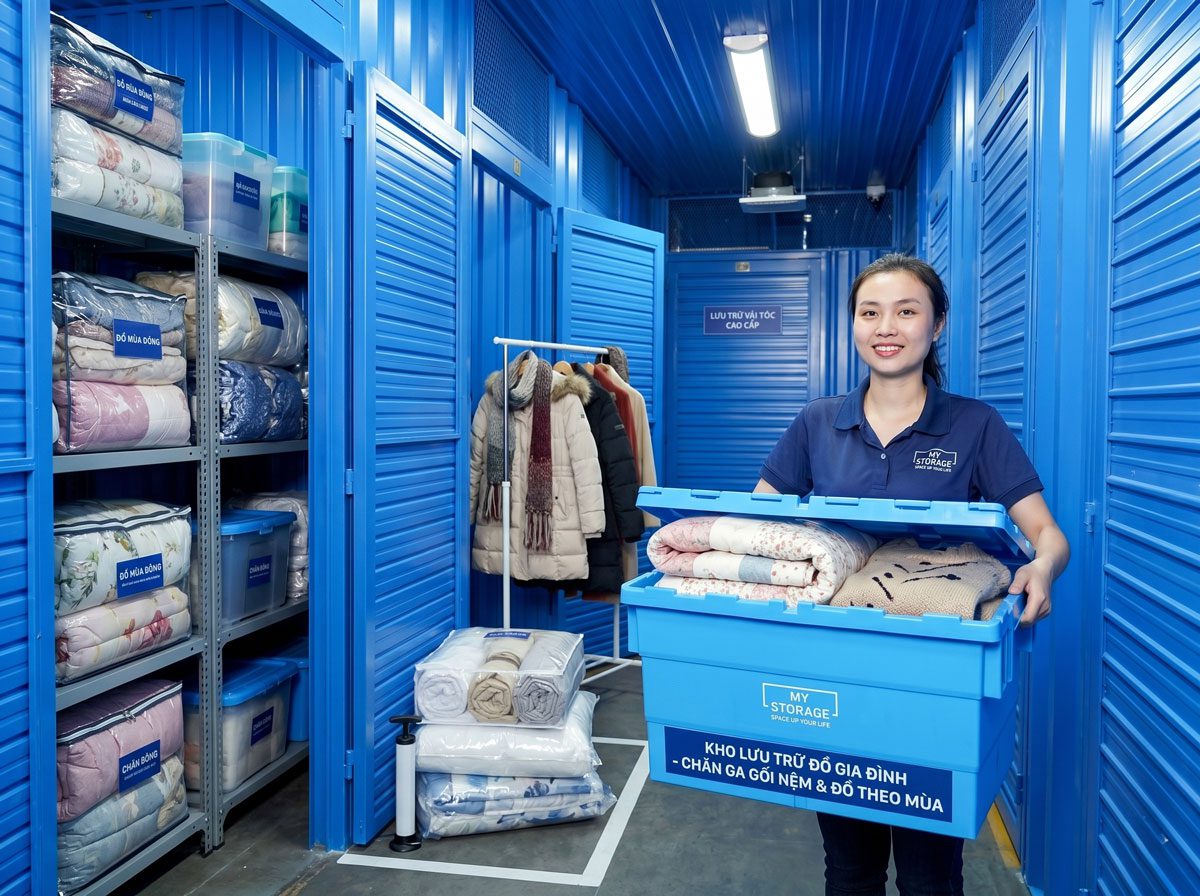
Self-storage is the ideal choice when you need more space than your home for general inventory, seasonal clothing, or personal belongings that do not require strict climate control conditions.
MyStorage self-storage operates on a fully self-service model:
- Monthly rentals with no long-term contract commitments 24/7 access via personal code, independent of business hours
- Individual locks for each unit and site-wide CCTV surveillance
- Flexible sizes ranging from a few square meters to larger spaces based on actual needs
Perfect for online fashion shops needing a consolidation point before delivery, families storing seasonal clothes, people moving house, or anyone needing temporary space without wanting to sign a long-term contract.
FAQ
Proper storage requires ensuring four factors simultaneously:
- Humidity at 50–60% RH — use a dehumidifier or air-conditioned storage; never exceed 65% RH as mold activates within 48–72 hours
- Stable temperature of 18–22°C — avoid large daily fluctuations that cause cumulative stress on fabric fibers
- Correct hanging and folding — knitwear and cashmere must be folded flat, never hung; silk should be wrapped in non-woven fabric bags before stacking
- Pest control — inspect for clothes moths and cockroaches every 30 days; quarantine new stock for 7 days before placing in the main storage area
The two solutions serve different needs. Climate-controlled storage maintains temperature at 20–25°C and humidity at 50–60% RH continuously using air conditioning and industrial dehumidifiers, suited for silk, high-end designer pieces, imported fabrics, and wedding garments that cannot be replaced if damaged. Self-storage lacks temperature control but provides 24/7 security, flexible monthly access, and suits standard inventory, seasonal clothing, and online shops needing a staging area for fast-moving stock.
Costs depend on storage type and required space. Self-storage in Ho Chi Minh City and Hanoi ranges from VND 500,000–2,500,000 per unit per month depending on size (2–50 m²). Climate-controlled storage is typically 20–40% higher due to the ongoing cost of running air conditioning and industrial dehumidifiers continuously. For fashion businesses, professional storage costs are usually significantly lower than the losses from a single batch of moldy or pest-damaged inventory.
Professional storage saves money when the true total cost of home storage is properly accounted for. Hidden home storage costs include: continuously running air conditioning and dehumidifiers, the opportunity cost of living space being occupied (equivalent rental value), and losses from goods damaged in uncontrolled conditions. Simple rule: when the cost of damaged goods or occupied home space exceeds three months of warehouse rent, professional storage is the more economical choice.
Four most common types of damage and their reversibility:
- Mold (humidity above 65% RH) — yellowing, musty odor, fiber degradation. Irreversible if left untreated
- Pests (clothes moths, termites, cockroaches) — permanent holes in wool and silk. Irreversible
- Color fading (UV light, oxidation) — dull, washed-out appearance. Irreversible
- Deformation (incorrect hanging, high temperatures) — stubborn creasing, synthetic fiber shrinkage. Partially reversible depending on severity
Silk and premium materials are far more sensitive than standard fabrics in three ways: silk fades faster than any other material when exposed to UV, with visible changes after just a few weeks of direct light exposure. Stacking pressure creates permanent creases because silk lacks the self-recovery properties of cotton. Clothes moths target keratin in wool and silk, destroying from the inside with no visible signs until damage has already spread widely. For irreplaceable items, climate-controlled storage is a minimum requirement, not an optional upgrade.
Professional clothing storage services in Ho Chi Minh City are concentrated in high-density residential and commercial areas such as District 7, Binh Thanh, District 1 and newer urban developments like Thu Duc and Phu My Hung. MyStorage provides both climate-controlled storage (temperature and humidity management) and flexible monthly self-storage in Ho Chi Minh City, suitable for individuals, online fashion shops, and boutiques needing storage from small units to larger spaces.
Vietnam’s tropical humid climate creates some of the harshest storage conditions for clothing and fabrics. Outdoor humidity during the rainy season in Ho Chi Minh City regularly reaches 80–90% RH, nearly 30 percentage points above the mold activation threshold of 65% RH. Daytime temperatures in the dry season can reach 38–42°C in uncontrolled warehouses, enough to shrink synthetic fibers and accelerate color fading. This is why uncontrolled home storage is a high-risk option in Vietnam, particularly for premium fabrics and valuable fashion inventory.
The choice depends on the type of goods being sold:
- Climate-controlled storage suits shops selling silk, premium fabrics, designer pieces, or imported goods with high value that cannot be replaced if damaged
- Self-storage suits shops with standard clothing inventory, synthetic materials, or fast-moving stock cycling within 1–3 months
- Combining both is the optimal approach for shops with mixed catalogs: premium items in climate-controlled storage, standard goods in self-storage
Three trends shaping the market through 2030: (1) Smart warehouses with IoT integration monitoring temperature, humidity, and pest activity in real time, sending automatic alerts to owners’ phones before damage occurs; (2) Strong growth in specialized storage for fashion e-commerce tracking the growth of Vietnam’s online apparel sector, forecast to reach USD 4.5 billion by 2027 (Statista); (3) Storage combined with fulfillment services allowing fashion shops to store, pack, and ship from the same location, reducing logistics costs and order processing time.
Related articles
Article
Onshore vs Offshore: Which Manufacturing Model Should Businesses Choose?
Onshore manufacturing refers to production within a company’s home country, helping to control quality, shorten delivery times, and ensure easier regulatory compliance. Offshore…
Read article
Article
How To Organize Your Home Storage Room | 10 Space-Saving Tips
Organize household storage with ten practical tips, an inventory template, safety checks and guidance on when external storage is worth considering.
Read article
Article
Secrets to Profitable Online Selling: 10 Ways to Save Costs
To sell online profitably, you not only need to increase sales but also maintain good control over operating costs. Items such as inventory, premises, packaging, shipping, and order…
Read article
