
 Tiếng Việt
 한국어
한국어 日本語
日本語Article· Updated October 15, 2026
How to Calculate the Weight of Heavy and Bulky Goods When Storing and Transporting Them
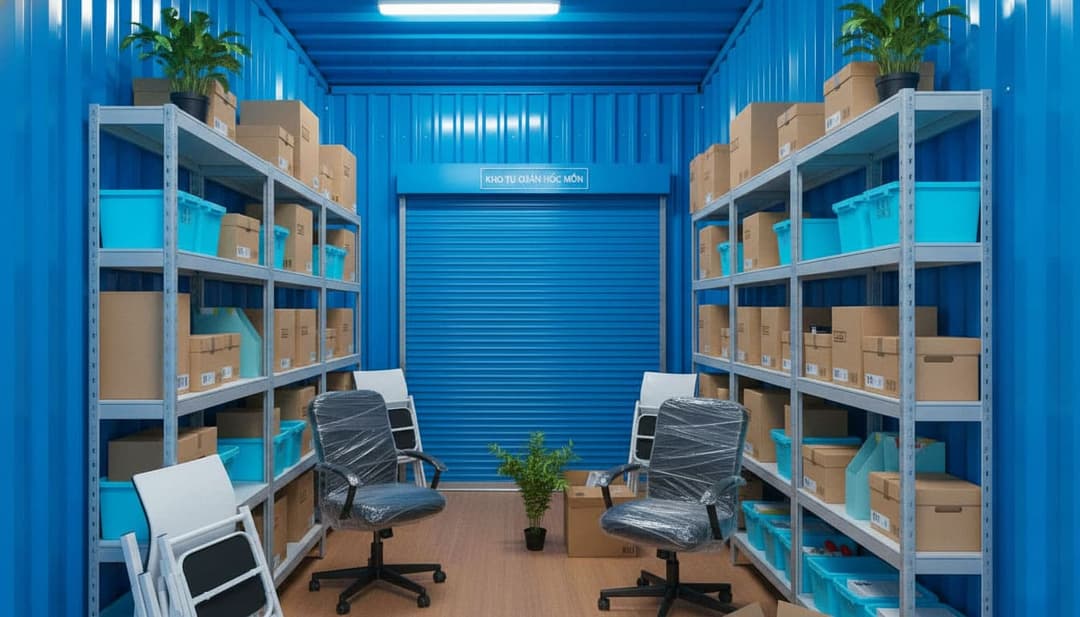
The volume of bulky goods is often calculated using volumetric weight based on dimensions (length × width × height), rather than actual weight. The common formula is: CBM = L × W × H (m), which is then converted into kg using a specific carrier’s factor to calculate storage or shipping fees.
What Are Heavy and Bulky Goods?
Bulky goods are items with large dimensions or irregular shapes that are difficult to stack and occupy significant space during storage or transport relative to their actual weight. This characteristic means that logistics costs for bulky items are typically calculated by volume (m³) instead of kilograms, requiring specialized warehouse space and transport vehicles.
Bulky goods are not necessarily heavy. A sofa might only weigh 40 kg but occupy 3 m² of warehouse floor space and require a dedicated truck for transport. A bicycle might weigh less than 15 kg but cannot be stacked or placed in a standard carton box. This is why the logistics industry categorizes these items separately rather than grouping them with standard cargo.
Identifying Characteristics of Bulky Goods
Bulky goods are identified by three main characteristics, which often appear simultaneously:
- Large dimensions in at least one direction: Bulky goods often exceed the standard size thresholds of shipping containers or warehouse pallets. In the Vietnamese logistics industry, common thresholds for classifying bulky goods are a length over 150 cm, a width over 80 cm, or a height over 100 cm in any dimension. Items exceeding these limits cannot be handled through standard warehouse processes and require dedicated storage areas.
- High volume-to-weight ratio (volumetric ratio): This is the most critical metric in bulky goods logistics. The most common conversion formula is Volumetric Weight = Length × Width × Height (cm) ÷ 5,000, resulting in an equivalent kilogram unit. When the volumetric weight exceeds the actual weight, the carrier will charge based on volume instead of weight. For bulky items, the volumetric weight is typically 2–5 times higher than the actual weight, significantly driving up shipping costs compared to compact items of the same mass.
- Irregular shapes and poor stackability: Items with uneven shapes cannot be stacked safely and fail to utilize warehouse height effectively. A pallet of small electronics can be stacked 4–5 tiers high to optimize space, whereas office chairs can only be stacked 2–3 units high before the risk of collapse arises. This results in warehouse space utilization for bulky goods being 40–60% lower than that of standard goods of the same weight.
Common Categories of Bulky Goods
- Home furniture: Sofas, beds, cabinets, tables, and bookshelves are the most common bulky items in personal and commercial consumption. These items are characterized by large sizes, inability to be fully disassembled (or time-consuming assembly), and scratch-prone surfaces requiring careful protective packaging during transport and storage.
- Large household appliances: Refrigerators, washing machines, dryers, industrial ovens, and air conditioners belong to the bulky goods group with higher actual weights than others, typically ranging from 40–120 kg. Specific requirements: storage warehouses must have floor load capacities suitable for heavy loads and use forklifts or pallet jacks for safe movement.
- Industrial machinery and equipment: CNC machines, industrial printers, construction equipment, and heavy machinery components belong to the bulky group with the highest warehouse infrastructure requirements. They require not only large areas but also floor load capacities of 5–10 tons/m², overhead cranes or high-capacity forklifts, and specialized inbound/outbound processes.
- Construction materials: Panels, steel pipes, aluminum frames, floor tiles, and prefabricated components. This group is often stored outdoors or in open warehouses, withstanding environmental conditions better but requiring large areas and specialized handling equipment.
- Bulky e-commerce goods: With Vietnam’s e-commerce growth reaching 25% per year, bulky items sold online are becoming increasingly common: bicycles, baby strollers, sports equipment, camping tents, and flat-pack furniture. This group poses the greatest challenge for both warehousing and delivery units because of small individual quantities but large sizes that do not fit standard delivery processes.
According to the JLL Vietnam Logistics Report (2024), storage costs for bulky goods are 35–55% higher than for standard goods of the same weight due to lower space utilization efficiency and the need for specialized handling equipment. This is why more businesses are seeking specialized warehouses for bulky items instead of storing them with regular cargo.
Distinguishing Bulky Goods from Standard Heavy Goods
These two concepts are often confused, but there are important differences in storage and transport requirements:
| Criteria | Standard Heavy Goods | Bulky Goods |
|---|---|---|
| Typical Examples | Steel, bricks, stone | Sofa, refrigerator, bicycle |
| Weight | High | Light to medium |
| Dimensions | Compact and stackable | Large, irregular shapes |
| Cost Basis | Kilogram | Volume (m³) |
| Warehouse Requirements | High floor load capacity | Large area, low height |
| Handling Equipment | High-capacity forklifts | Reach trucks, specialized trolleys |
| Space Utilization | High (stackable) | Low (40–60% vs. standard goods) |
Why Is Volumetric Weight Calculation Necessary?
Volumetric weight helps carriers and warehouses charge fairly based on the actual space occupied rather than just weight. The most common formula is Length × Width × Height (cm) ÷ 5,000, resulting in converted kg units. When the volumetric weight is greater than the actual weight, the cost is calculated based on the volumetric weight. This method is particularly important for bulky goods because volumetric weight is often 2–5 times higher than actual weight.
Imagine a 5-ton truck full of cotton pillows and another 5-ton truck full of steel. Both have the same payload, but the pillow truck might occupy 10–20 times the volume of the steel truck. If fees were only based on kilograms, the carrier would suffer heavy losses on light but bulky items. Volumetric weight was introduced to solve this exact problem.
Optimizing Vehicle and Warehouse Space
Truck and warehouse space are limited resources. When a vehicle is full by volume even if it hasn’t reached its weight capacity, it cannot accept more cargo. Similarly, a warehouse can be full by floor area even if the weight of the goods hasn’t reached the maximum allowable limit.
Calculating volumetric weight helps both parties plan more effectively. Carriers know exactly which vehicle is suitable for each shipment, avoiding situations where a small vehicle cannot fit the load or a large vehicle runs under capacity. Warehouses know in advance the area needed, allocating space correctly and avoiding accepting too many bulky items that exceed actual capacity.
- For transport: Bulky goods occupy vehicle space disproportionately to their weight; charging only by kg would result in “high volume, low revenue” scenarios.
- For warehousing: A pallet of heavy goods stacked 5 tiers high occupies the same floor space as a single sofa that can only be placed in 1 tier, yet the revenue from the two cases is completely different if only calculated by kg.
Avoiding Cost Leakage
Failing to apply volumetric weight is a common cause of logistics providers pricing services below actual costs without realizing it until the end-of-period summary.
This is quite common among small carriers without standard processes: accepting a 25 kg sofa and charging for 25 kg, even though the sofa occupies an entire vehicle compartment that could have held 15–20 other packages. That difference represents direct revenue lost on every trip.
- With items having a volumetric weight of 60 kg but an actual weight of 15 kg, if only 15 kg is charged, the carrier loses 75% of the potential revenue for that shipment.
- In warehouses, storing bulky goods at standard rates reduces revenue efficiency per m² of floor space by 40–60% compared to warehouses storing compact goods.
Standardizing Pricing
Volumetric weight creates a common, transparent language between shippers, carriers, and warehouses. Instead of debating why “light goods are priced high,” both parties understand that costs are based on the actual space occupied.
This serves as the foundation for logistics companies to build clear price lists, for customers to estimate costs before shipping, and for logistics contracts to avoid disputes between parties.
- International standards: IATA (International Air Transport Association) uses a factor of 6,000 for air freight. Road transport in Vietnam commonly uses a factor of 5,000. Some express logistics providers use 4,000 for small parcels.
- Application principle: Always compare actual weight and volumetric weight, taking the higher value as the basis for charging. This rule is known as “whichever is greater” and is a global industry standard.
A gaming chair measuring 80 × 70 × 120 cm with an actual weight of 18 kg. Volumetric weight = (80 × 70 × 120) ÷ 5,000 = 134.4 kg. Shipping fees will be calculated based on 134.4 kg, nearly 7 times higher than if based only on actual weight. This is why many people are surprised when receiving a shipping quote for bulky goods for the first time.
CBM, Volumetric Weight, and How to Calculate Bulky Goods Costs
CBM (Cubic Meter) is a unit for measuring cargo volume, calculated as Length × Width × Height (m). Volumetric weight is derived from CBM divided by a conversion factor depending on the transport mode (5,000–6,000 for air, 3,000–4,000 for road). Carriers and warehouses always charge based on the greater value between actual weight and volumetric weight, known as the “whichever is greater” principle.
The concepts of CBM and volumetric weight are fundamental to understanding why a light but bulky package has shipping and storage costs much higher than its actual weight suggests. By mastering this calculation, businesses can estimate costs in advance, negotiate effectively, and avoid surprises when receiving quotes.
What Is CBM and How to Calculate It
CBM (Cubic Meter) is the standard unit of volume in logistics, used to measure the actual space a package occupies in a vehicle, container, or warehouse.
Before calculating fees or comparing quotes, the first step is always to determine the CBM of the shipment, as this is the input data for all subsequent cost calculation formulas.
CBM calculation formula:
CBM = Length (m) × Width (m) × Height (m)
Practical examples:
| Package | Dimensions | CBM |
|---|---|---|
| 1 standard package | 1m × 0.5m × 0.5m | 0.25 m³ |
| 1 sofa set | 2m × 0.9m × 0.8m | 1.44 m³ |
| 1 refrigerator | 0.7m × 0.75m × 1.8m | 0.945 m³ |
| 10 small boxes (0.4×0.3×0.3m each) | 10 boxes | 0.36 m³ |
When a shipment consists of multiple packages with different sizes, calculate the CBM for each package and then sum them up to get the total shipment volume.
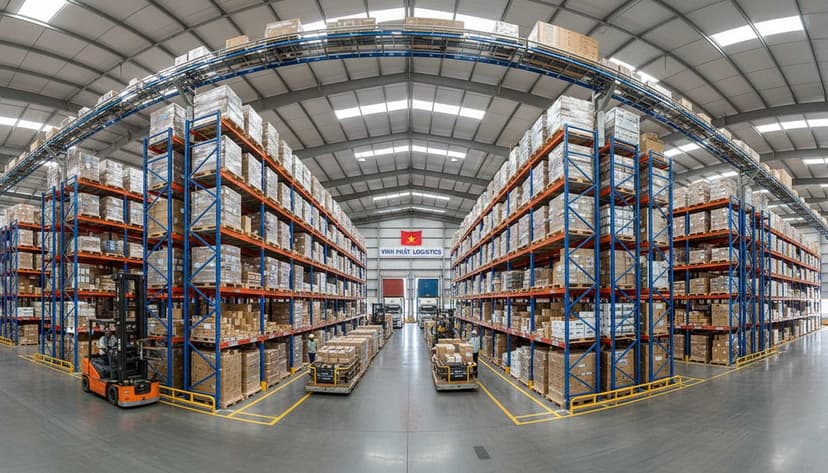
What is Volumetric Weight and How to Calculate It
Volumetric weight is the mass derived from the volume of goods, used to compare with actual weight and determine the basis for shipping or warehousing fees.
This concept arises from the fact that transportation and warehouse space have volume limits, not just weight limits. Any provider accepting lightweight goods that occupy significant volume would suffer a loss if they only charged based on actual kilograms.
Formula for calculating volumetric weight:
Volumetric weight (kg) = Length (cm) × Width (cm) × Height (cm) ÷ K-factor
Common K-factors by shipping method:
| Shipping Method | K-factor | Notes |
|---|---|---|
| Air freight | 5,000 or 6,000 | IATA regulates 6,000, some carriers use 5,000 |
| Sea freight (LCL) | 1,000,000 (calculated in tons/m³) | Conversion 1 CBM = 1 ton |
| Domestic road freight (VN) | 3,000 to 4,000 | Depending on the carrier |
| Express delivery | 4,000 to 5,000 | Depending on the service provider |
Application example:
A gaming chair measuring 80 × 70 × 120 cm, with an actual weight of 18 kg, transported by road with a K-factor = 5,000:
Volumetric weight = (80 × 70 × 120) ÷ 5,000 = 672,000 ÷ 5,000 = 134.4 kg
Shipping fees will be calculated based on 134.4 kg instead of the actual 18 kg, which is nearly 7 times higher.
Comparison: Actual Weight vs. Volumetric Weight
The core principle in bulky goods logistics is to always compare the two values and use the larger figure as the basis for charging. This principle applies consistently from transportation to warehousing.
| Type | Meaning | When applied |
|---|---|---|
| Actual weight | The real weight of the package (kg) | When goods are heavy, compact, and stackable |
| Volumetric weight | Calculated from volume, reflecting occupied space | When goods are light but bulky |
| Chargeable weight | Taking the larger of the two types above | This principle is always applied |
Illustration of the “take the larger number” rule:
Actual weight: 18 kg
Volumetric weight: 134.4 kg
→ Charged based on: 134.4 kg ✓
Actual weight: 80 kg
Volumetric weight: 45 kg
→ Charged based on: 80 kg ✓
Before signing a transportation or warehousing contract for bulky goods, always clarify which K-factor the provider is using and which formula is applied. For the same shipment, different K-factors can result in a cost difference of 20–40%, which is particularly evident for items with a high volume-to-weight ratio such as furniture, sports equipment, and large household appliances.
Common Mistakes in Weight Calculation and How to Optimize Costs
The most common mistake when calculating the weight of bulky goods is relying solely on actual weight while ignoring volume, using incorrect units of measurement, or being unaware of the carrier’s conversion factor. Businesses can optimize costs by disassembling or folding goods before packaging, optimizing packaging dimensions, and choosing a shipping method suitable for the shipment’s volume-to-weight ratio.
Knowing the formula is one thing; applying it correctly in practice is another. Most transportation and warehousing costs are miscalculated or inflated not because of market prices, but due to technical errors in measurement and goods preparation that businesses can fully control.
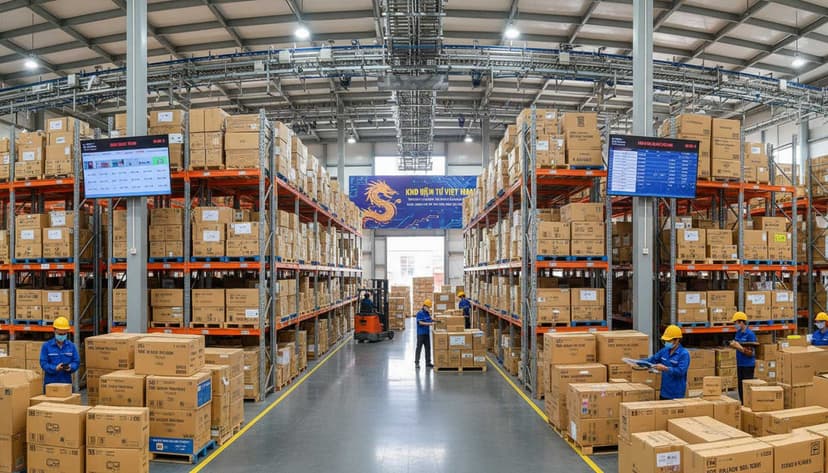
Common Mistakes When Calculating Volume
The mistakes listed below occur frequently in both new businesses and long-standing entities, especially when expanding into new product lines or shipping methods.
Not measuring actual dimensions, estimating by eye:
This is the most common mistake and causes the largest discrepancies. Estimated dimensions are often 10–20% lower than reality because measurers tend to round down and ignore protrusions like handles, bases, or packaging parts. For bulky goods, a 10 cm difference in each dimension can significantly change the CBM and lead to corresponding cost deviations.
- Always use physical measuring tools, do not estimate by eye
- Measure the outermost dimensions of the package after packing, not the product dimensions
- Measure at the widest point in each dimension, including protrusions
Confusing units between cm and m:
The CBM formula requires dimensions in meters. If measured in centimeters but you forget to divide by 100 (or divide by 1,000,000 instead of 1,000,000 when using cm³), the result can be 1,000,000 times off from reality. While this specific error is rare, confusing units between cm and m in the volumetric weight formula (e.g., using cm but dividing by 5 instead of 5,000) is a common real-world mistake.
- Standardize a single unit of measurement: if measuring in cm, use the ÷ 5,000 formula for volumetric weight
- If measuring in m, then CBM = L × W × H directly, then multiply by 1,000 to get dm³ when needed
Not knowing the K-factor of the shipping provider being used:
The K-factor varies between providers and shipping methods, creating cost differences of up to 40%. Many businesses use a default factor of 5,000 for all cases while the express delivery provider uses 4,000, or vice versa. As a result, internal quotes and actual invoices do not match.
- Clarify the K-factor before signing a contract or before each large shipment
- Save the factors of each frequently used provider for quick reference
Cost Optimization Tips for Bulky Goods
Reducing shipping and storage costs for bulky goods doesn’t necessarily require renegotiating prices with providers. In many cases, changing how goods are prepared and packed creates greater savings.
Disassemble and fold before packing:
Many types of bulky goods can significantly reduce volume if disassembled or folded before shipping. Tables and chairs can have legs removed to be stacked flat, bicycles can have wheels and handlebars removed, and flat-pack furniture is pre-designed for flat-panel transport.
- Office chairs with legs removed: volume reduced by 30–40%, CBM reduced accordingly
- Bicycles with wheels and handlebars removed: volume reduced by 50–60% compared to intact
- Stacking outdoor furniture: utilize height instead of taking up floor space
Optimize packaging to reduce empty space:
Packaging that is too large for the product creates empty space inside, increasing CBM without adding protective value. Pack tightly to the product, use flexible cushioning materials instead of large fixed-size boxes, and consider packing multiple small items into one large crate instead of several separate packages.
- Reducing empty space in the box by 20% → CBM reduced by 20% → costs reduced accordingly
- Using vacuum bags for soft goods (pillows, blankets, fabrics) can reduce volume by 60–70%
Choose the shipping method suitable for the shipment’s characteristics:
Not every method is suitable for every type of bulky item. Choosing the wrong method can cause costs to double compared to what is necessary.
| Situation | Recommended Method | Reason |
|---|---|---|
| Light goods, large volume, not urgent | Road transport with low K-factor (3,000–4,000) | Volumetric cost is lower than air freight |
| Heavy goods, medium size | Road transport based on actual kg | Actual weight is higher than volumetric weight |
| Large quantity, not urgent | Sea freight LCL or FCL | Lowest cost/CBM for bulky goods |
| Need fast delivery, compactable goods | Air freight accepting large volume | Only suitable when there are no other options |
Support Tool: MyStorage’s AI Size Estimator
Manually calculating CBM and volumetric weight for various packages is both time-consuming and prone to error, especially when a shipment contains many mixed sizes. MyStorage developed the AI Size Estimator tool to help businesses quickly estimate storage needs and costs without manual calculations.
Instead of measuring each item and entering formulas, the tool allows you to describe or input goods information, and the system automatically estimates volume, suggests the appropriate storage type, and provides a reference cost. This is a significant shortcut in the storage preparation process, particularly useful for businesses shipping bulky goods for the first time or those without experience in estimating required warehouse space.
A simple rule to save costs: Before every bulky shipment, ask three questions: can the goods be disassembled, is the packaging optimized, and is the current shipping method suitable for the shipment’s volume-to-weight ratio. Answering these three questions correctly usually saves 15–30% in logistics costs without needing to renegotiate contracts.
When to Use Storage and MyStorage’s Solutions
Specialized storage is suitable for bulky goods when businesses need to consolidate goods before distribution, lack on-site space, or need to optimize shipping costs by batch rather than per trip. MyStorage provides flexible storage solutions by m³ or pallet, combined with the AI Size Estimator tool to accurately calculate the required warehouse area before ordering.
It’s not always necessary to rent a warehouse immediately. But once the threshold is reached, not having a suitable warehouse will drive up logistics costs and disrupt operations. Two questions to answer are: when is a warehouse needed and what type of warehouse is suitable for bulky goods.
Signs That It’s Time for Storage
Many businesses delay the decision to rent a warehouse because they don’t recognize specific signals until problems accumulate enough to force action, often in an emergency. Early recognition helps you be more proactive and find better solutions instead of having to accept the first available option.
- Bulky goods are taking up production, office, or business space, reducing daily operational efficiency
- The business receives goods in large batches but distributes them gradually in small orders, needing an intermediate consolidation point for inventory management
- The cost of shipping many small trips is higher than the cost of consolidating goods at a warehouse and then shipping in periodic large batches
- Goods are frequently damaged during multiple moves due to a lack of fixed storage space
- The business is in an expansion phase, needing flexible storage space before investing in its own warehouse
When logistics costs due to a lack of warehouse (multiple trips, damaged goods, occupied space) exceed the cost of renting a warehouse for 3 months, it is a clear signal to act immediately.
MyStorage’s Flexible Storage Solutions for Bulky Goods
Bulky goods have unique characteristics that conventional warehouses might not meet: they need large floor areas, appropriate height, specialized moving equipment, and a fee structure based on actual volume rather than fixed units or lockers. MyStorage is designed to address these exact requirements.
- Storage by m³ or pallet: Instead of renting an entire storage unit with a fixed area even if the goods don’t fill it, MyStorage allows businesses to rent the exact actual volume needed. Goods are charged based on the actual m³ occupied or the number of pallets, avoiding budget waste on empty space. When demand increases, expand by m³ without needing to resign a new contract or move locations.
- Infrastructure suitable for large-sized goods: The warehouse space has appropriate height, entrances wide enough for trucks and bulky items, and a clear zoning system to easily find and retrieve goods without having to dismantle the entire warehouse each time. Climate-controlled storage conditions for humidity and temperature help furniture, equipment, and materials avoid damage during storage.
- Flexible contracts based on actual needs: Businesses can start with short-term monthly contracts, without being tied to long-term commitments when demand is still fluctuating. Suitable for businesses testing new distribution models or having seasonal goods that require flexible area adjustments.
Quick Estimation with the AI Size Estimator Tool
One of the common barriers when looking for a warehouse is not knowing how many actual m³ are needed. Incorrect estimates lead to under-renting (goods don’t fit) or over-renting (wasted costs). MyStorage solves this problem with the AI Size Estimator tool.
Instead of manually measuring each package and calculating, the tool allows you to describe or input goods information, then automatically:
- Estimates the total volume of the shipment to be stored
- Suggests the appropriate storage unit type or number of pallets
- Provides a reference cost for businesses to budget in advance

The tool is particularly useful for bulky goods because irregular shapes cause manual estimates to often deviate significantly from reality. Instead of wasting time measuring and still being unsure of the results, using the AI Size Estimator provides a quick and accurate enough estimate for decision-making.

FAQ
Two steps:
Step 1 – Calculate CBM:
CBM = Length (m) × Width (m) × Height (m)
Example: Sofa 2m × 0.9m × 0.8m = 1.44 m³
Step 2 – Calculate volumetric weight:
Volumetric weight (kg) = Length (cm) × Width (cm) × Height (cm) ÷ K
Factor K: road transport 3,000–5,000 / air freight 5,000–6,000
Then compare actual weight and volumetric weight, use whichever is greater as the billing basis. Businesses can use MyStorage’s AI Size Estimator tool for quick estimates without manual calculation.
Three most frequent mistakes:
- Estimating dimensions by eye instead of measuring physically — a 10 cm discrepancy per dimension can significantly change CBM and costs
- Confusing cm and m units in the formula — always use one consistent unit throughout the calculation
- Not asking for the K factor from the transport provider — the same shipment with different K values can create cost differences of up to 40%
Bulky goods storage is typically priced per m³/month or pallet/month, not by kg as in transport. 2024 reference rates in Vietnam: Grade-A standard warehouses range from USD 4.5–6.0/m²/month for full-area leases, or VND 80,000–200,000/m³/month for flexible storage billed on actual volume used. Bulky goods storage costs are typically 35–55% higher than standard goods of the same weight due to lower space utilization efficiency (JLL Vietnam, 2024).
Three most effective cost reduction methods without renegotiating rates:
- Disassemble or fold items before packaging — disassembling office chair legs reduces volume by 30–40%, removing bicycle wheels reduces it by 50–60%
- Optimize packaging and reduce empty space — reducing 20% of dead space in a box equals 20% less CBM and proportionally lower costs
- Choose the right transport mode — light but high-volume goods suit road transport with a lower K factor better than air freight
Applying all three measures simultaneously typically saves 15–30% on logistics costs without changing providers.
Three major risks when bulky goods are stored incorrectly:
- Mechanical damage from improper stacking or placement on insufficient load-bearing surfaces — furniture and sofas can be permanently deformed if pressure is applied at the wrong structural points
- Environmental deterioration — warehouses without humidity control cause wood to warp, metal to rust, and painted surfaces to peel over time
- Loss and mix-ups in warehouses without a classification system — large bulky items look similar when stacked, making misdelivery or inability to locate goods a genuine risk
Minimum technical standards for a bulky goods warehouse:
- Floor load capacity of at least 5 tons/m² to support heavy equipment and machinery
- Adequate clear height — minimum 6m if double-stacking bulky goods is needed
- Wide entry and loading doors for trucks and oversized items (minimum 4m clearance height)
- Fire suppression systems appropriate for the types of goods being stored
- Humidity control below 65% RH to protect wood, electronics, and fabric goods
Specialized bulky goods storage is concentrated in: Binh Duong and Long An (south) — close to Cai Mep and Cat Lai ports, ideal for import/export goods; Hanoi and Hung Yen (north) — serving furniture and equipment manufacturing and distribution chains; Greater Ho Chi Minh City (Thu Duc, Binh Thanh) — suitable for bulky goods requiring fast distribution into the urban core. Grade-A warehouse rental rates in Binh Duong range from USD 4.5–6.0/m²/month (Savills Vietnam, 2024).
The AI Size Estimator is MyStorage’s online tool that helps businesses quickly estimate the storage volume needed without manual measuring and calculation. Users describe or enter their goods information, and the tool automatically estimates total CBM, recommends suitable storage unit types or pallet counts, and provides reference pricing. Particularly useful for irregularly shaped bulky goods that are difficult to estimate accurately by eye. Access at: mystorage.ai
Small businesses don’t yet need a dedicated warehouse if their goods volume is unstable or inbound/outbound frequency is low. Instead, consider options in this order:
- Shared storage billed by m³ — pay only for volume used, no long-term commitment, suits fluctuating goods volumes
- Monthly pallet storage — suitable when bulky goods can be placed on standard pallets
- Dedicated long-term warehouse — only cost-effective when storage volume is stable and dedicated costs fall below total shared storage costs
Four trends shaping the market through 2030: (1) Specialized bulky goods warehouses growing with e-commerce demand in furniture and appliances, forecast at 18–22% CAGR from 2024–2030; (2) AI measurement tools like the AI Size Estimator becoming more widespread, reducing estimation errors and enabling automatic cost optimization; (3) Bulky last-mile delivery expanding alongside e-commerce growth in furniture and large appliances; (4) Standardization of CBM-based pricing over weight-based pricing becoming a clearer industry norm in Vietnam.
Related articles
Article
Onshore vs Offshore: Which Manufacturing Model Should Businesses Choose?
Onshore manufacturing refers to production within a company’s home country, helping to control quality, shorten delivery times, and ensure easier regulatory compliance. Offshore…
Read article

Article
How To Organize Your Home Storage Room | 10 Space-Saving Tips
Organize household storage with ten practical tips, an inventory template, safety checks and guidance on when external storage is worth considering.
Read article

Article
Secrets to Profitable Online Selling: 10 Ways to Save Costs
To sell online profitably, you not only need to increase sales but also maintain good control over operating costs. Items such as inventory, premises, packaging, shipping, and order…
Read article
