
 Tiếng Việt
 한국어
한국어 日本語
日本語Article· Updated October 15, 2026
How to Utilize Excess Space to Increase Building Revenue?
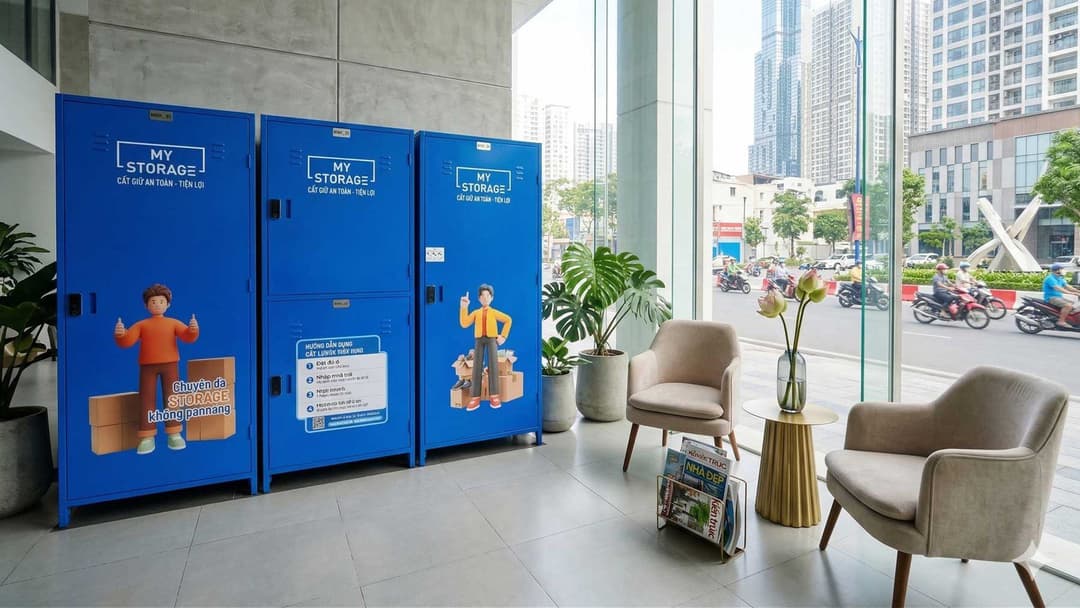
Areas such as lobbies, under staircases, or corridors within a building are often left vacant or underutilized. By leveraging these “dead spaces” with suitable models like rental lockers, building owners can generate a stable passive income stream without significant investment or structural changes to the existing building.
Partner with MyStorage: https://hyperlocal.mystorage.vn/vi
Why Do Buildings Always Have Unutilized “Vacant Spaces”?
In most office, commercial, and residential buildings, a portion of space such as lobbies, corridors, basements, rooftops, or ancillary areas is often left vacant or underutilized, leading to wasted resources and missed revenue opportunities. While this space doesn’t appear as a direct expense in financial reports, it actually incurs costs for maintenance, electricity, and management personnel, and more importantly, occupies space that could generate revenue but isn’t.
A simple principle in commercial real estate: dead space = lost revenue. Every vacant square meter in a building incurs operational costs – expenses paid with no return.
Reason 1 — Over-Designed Space from the Outset
Most vacant space in buildings isn’t due to poor management but rather design decisions made during the construction phase, creating spaces without clear practical use during operation.
- Oversized waiting areas and lobbies: Many buildings are designed with grand lobbies to create a visual impression and convey prestige, yet for 80–90% of the day, these spaces see only a few people passing through. A 200 m² lobby serving 10–15 people per hour means 200 m² is “resting” and incurring year-round costs for lighting and air conditioning.
- Corridors and circulation areas wider than standard: Building codes require a minimum corridor width of 1.2–1.8m for emergency exits, but many buildings design corridors 3–4m wide to appear more luxurious. The excess space doesn’t serve a traffic function but still incurs operational costs like every other square meter.
- Technical floors and ancillary areas not planned for reuse: Technical floors housing electrical, water, and elevator systems often occupy 5–10% of the total floor area. When equipment shrinks or is improved, the leftover space is almost never considered an exploitable resource.
- Rooftops and outdoor spaces: Flat roofs, terraces, and peripheral areas of buildings are often designed purely structurally, without considering their potential for use. In large cities, rooftops can be the most valuable real estate in a building if properly utilized.
According to a CBRE survey on office space utilization efficiency in Southeast Asia (2023), an average of 20–35% of a commercial building’s total floor area is not utilized at maximum capacity at any given time during a normal workday.
Reason 2 — Spaces Unsuitable for Traditional Business Models
Even when building owners recognize vacant space, the next step often encounters a practical barrier: these spaces are not suitable for conventional leasing methods.
- Insufficient size for traditional lease agreements: A 40 m² corridor area, a 15 m² staircase corner, or an 80 m² rooftop cannot be leased under standard office contracts, which typically require a minimum area of 50–200 m² and a term of 1–3 years. Their small size and irregular shapes place them in a “grey area,” not designed for any specific business model.
- Locations unsuitable for traditional commercial spaces: Basements, technical floors, and ancillary areas often lack natural light, have limited visibility, and low foot traffic – conditions that traditional retail or office models cannot accept, but many other business models can fully leverage.
- Intermittent usage times: Some areas are only needed at specific times of the day, such as large meeting rooms used only in the morning, or lobbies that are only busy during peak hours. Traditional monthly leasing models are unsuitable for spaces with such fluctuating demand.
Reason 3 — Overlooked Space in Daily Operations
This is the most common and also the most challenging reason to address: no one is truly accountable for vacant space.
- No budget line item for “missed opportunities”: In a building’s financial reports, electricity, maintenance, and management personnel costs for vacant space appear clearly. However, the potential revenue lost from 200 m² of vacant corridor never appears as a figure — even though it represents a real loss. Building managers are not evaluated based on utilizing vacant space, so there’s no incentive to address this issue.
- Operational inertia and the “this is ancillary” mindset: Once a space has been labeled “corridor,” “technical area,” or “waiting lounge” from its first day of use, that label tends to persist, even if conditions have changed. Building management is typically not trained to view space from a revenue optimization perspective — they are trained to operate, not to innovate new business models.
- Unclear conversion costs, uncertain benefits: Building owners often recognize the waste but don’t act because the question “how to utilize it?” lacks a clear and immediate answer. Investing in renovating a vacant space requires capital, time, and suitable business ideas, while the results are not guaranteed.
A 10-story office building in Ho Chi Minh City with 200 m² of vacant space per floor (20% of corridor and ancillary areas) is overlooking 2,000 m² of total exploitable space. At an average locker rental price of 500,000 VND/m²/month for flexible usage models, this represents 1 billion VND in potential monthly revenue being left untapped, not because it cannot be utilized, but because no one has yet found the right way to do so.
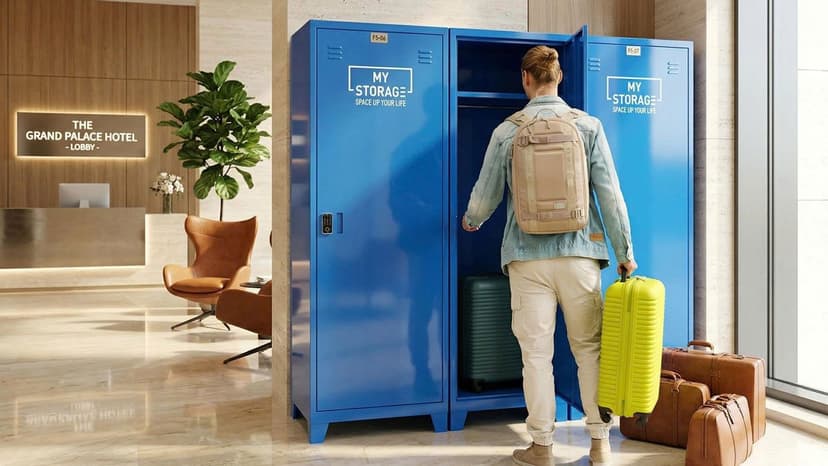
Dead Space and the Opportunities Many Building Owners Haven’t Yet Seen
The perception of “dead space = lost revenue” is rapidly changing this decade, driven by three simultaneous trends:
- Flex space and co-working models demonstrate that small, irregularly shaped spaces can be rented out by the hour or day at significantly better rates than traditional contracts if designed and operated correctly.
- The sharing economy creates a real demand for small storage spaces, goods collection points, EV charging stations, and many other non-traditional purposes right within urban buildings.
- Asset optimization pressure from investors and shareholders compels building management to view every square meter as a revenue-generating asset, not just a cost to be managed.
The question is no longer “what can this area be used for?” but rather “who needs this type of space and how much are they willing to pay?” – a completely different perspective leading to entirely different solutions.
Common “Dead Spaces” in Buildings & Shophouses
Areas such as building lobbies, under-stair spaces, corridors, and ancillary areas are often left vacant or underutilized, yet possess real revenue-generating potential if the right exploitation model is applied. The common thread among all these “dead spaces”: building owners are still paying full operating costs for them, but generating no income.
Correctly identifying wasted space is the first step to transforming dead space into a revenue stream.
Building Lobby — High Traffic, Low Utilization
The building lobby is the most paradoxical “dead space”: it has the highest foot traffic in the entire building but typically serves only one function – moving from the entrance to the elevators. This space boasts the best visibility and highest natural traffic, yet generates the least revenue.
- Actual operational characteristics: An average office building lobby in HCMC sees 200–800 people pass through daily. During an 8-hour workday, someone is present in the lobby an average of 95% of the time. However, most lobbies only feature waiting chairs, a reception desk, and building information screens. No commercial transactions occur, despite conditions being perfectly suitable for them.
- Overlooked potential: The building lobby is an ideal location for vending machines serving residents and guests, small take-away coffee counters for morning and lunch rush hours, hourly digital advertising screens, parcel lockers for building occupants, or short-term product display spaces (pop-up displays) for brands targeting office workers.
- Practical barriers: Building lobbies are often managed by building management with strict aesthetic and security regulations, making the introduction of commercial activities face more internal approval hurdles than market demand issues.
A 300 m² office building lobby in HCMC, by renting out advertising screens and installing 2–3 vending machines, could generate 15–40 million VND/month in ancillary revenue without affecting the lobby’s primary function.
Under-Stair Spaces — Forgotten Areas with Hidden Value
Under-stair spaces are among the most frequently vacant areas in Vietnamese buildings and shophouses. Averaging 3–15 m² and featuring irregular triangular or trapezoidal shapes, they are challenging enough that traditional uses are rarely considered, yet large enough for effective exploitation if the right purpose is chosen.
- Why under-stair spaces are overlooked: Irregular shapes prevent standard furniture from fitting. Heights varying from 0 to 2.4m along the stair slope exclude many uses. Natural light is absent in most cases. Building managers typically default to considering these as “storage rooms” or leaving them empty without purpose.
- Practical exploitation models: Under-stair spaces in shophouses and low-rise buildings are being successfully utilized in various ways: monthly rental personal lockers for office workers without private storage, self-managed mini-storage units for small businesses needing to store samples and marketing materials, electronic device charging corners with outlets and small shelves, or small vending machine locations serving building residents.
- Specific examples in Vietnam: Many shophouses along HCMC’s commercial arteries (Nguyen Trai, Le Van Sy, Hai Ba Trung) have converted under-stair spaces into small, enclosed storage lockers for monthly rental, priced at 500,000 – 1,500,000 VND/unit/month. With 3–5 such units, owners can generate an additional 2–7 million VND/month from space that previously yielded no income.
Under-stair spaces are most effectively converted into storage when equipped with private lockable compartments, internal LED lighting, and minimal ventilation. Renovation costs are typically under 5 million VND/unit, with a payback period of under 6 months.
Corridors and Ancillary Areas — Large Footprint, Higher Potential Than Imagined
Corridors typically account for 10–20% of the total floor area in most commercial and office buildings, yet their sole assigned function is often “passageway.” For a 1,000 m² building, this represents 100–200 m² operating at 0% revenue capacity.
Classifying corridors by exploitation potential:
- Corridors wider than 2m with high foot traffic: These corridors offer the most potential. A width of 2m or more allows for low display shelves, waiting chairs with integrated advertising screens, or vending machine placements without obstructing circulation. Good visibility from both sides creates real advertising value.
- Narrow corridors 1.2–2m serving low-traffic areas: Lower potential for direct commercial use but can be utilized for locker installations, advertising notice boards, or placement of building service equipment (water purifiers, shared pay-per-use printers).
- Ancillary areas and redundant technical spaces: Technical rooms often occupy 5–8% of the floor area, and when equipment is upgraded or consolidated, the surplus space is often left vacant indefinitely. These spaces are challenging to rent out directly for commercial purposes due to lack of light and ventilation, but are suitable for dry storage, shared rental refrigerators, or small server rooms for lease.
Why corridors are not exploited: Fire safety regulations regarding emergency exits require corridors to be clear, leading many building managements to default to “nothing can be placed in the corridor.” However, regulations only mandate that a minimum circulation width be maintained, not a complete prohibition on utilizing corridor areas wider than the standard.
A 5-story office building with a 3m wide corridor (1.8m needed for fire safety circulation) has 1.2m x total corridor length that can be legally exploited. With a total corridor length of 50m per floor, this amounts to 60 m² × 5 floors = 300 m² of untapped revenue potential throughout the entire building.
Rooftops and Terraces — The Dead Spaces with the Highest Real Estate Value
Rooftops and terraces present a curious paradox: they boast the highest real estate value (offering great views, fresh air, and noise isolation) yet have the lowest utilization rate compared to other spaces within the same building.
Why rooftops are often left unused: Common physical barriers include narrow stair access, lack of elevators, insufficient basic utilities (electricity and water), and no shelter from rain or sun. Furthermore, many landlords are concerned about waterproofing issues when people frequently access the rooftop.
Successful utilization models: Shophouse terraces in Ho Chi Minh City are being transformed into: small rooftop cafes serving building residents and external guests, hydroponic vegetable gardens offering monthly plot rentals, outdoor morning yoga and fitness spaces, locations for advertising billboards or telecommunication base stations (leased to network providers), and solar power systems generating revenue from electricity sales.
Conversion costs and revenue potential: Basic renovation of an 80 m² terrace (waterproof flooring, safety railings, partial roofing, basic electricity and water) costs approximately 50–150 million VND. A small rooftop cafe or outdoor co-working space model can generate 20–60 million VND/month, with a typical payback period of 3–8 months.
| Space Type | Common Area | Strengths | Main Barriers | Typical Utilization Model | Potential Revenue |
|---|---|---|---|---|---|
| Lobby | 30–300 m² | High traffic, good visibility | Aesthetic regulations, building management | Vending machines, advertising screens, parcel lockers | 15–40 million VND/month |
| Underneath stairs | 3–15 m² | Readily available, rarely used | Irregular shape | Mini storage, personal lockers | 2–7 million VND/month |
| Wide corridors | 50–300 m² | High foot traffic | Fire safety regulations | Display shelves, vending machines, lockers | 5–20 million VND/month |
| Ancillary/technical areas | 20–100 m² | Enclosed, dry, private | Lack of light, ventilation | Storage rooms, small server rooms | 3–15 million VND/month |
| Rooftops/terraces | 50–500 m² | Good views, isolated | Initial renovation costs | Rooftop cafes, solar panels, billboards | 20–60 million VND/month |
MyStorage Lockers — How to Turn Small Spaces into Revenue
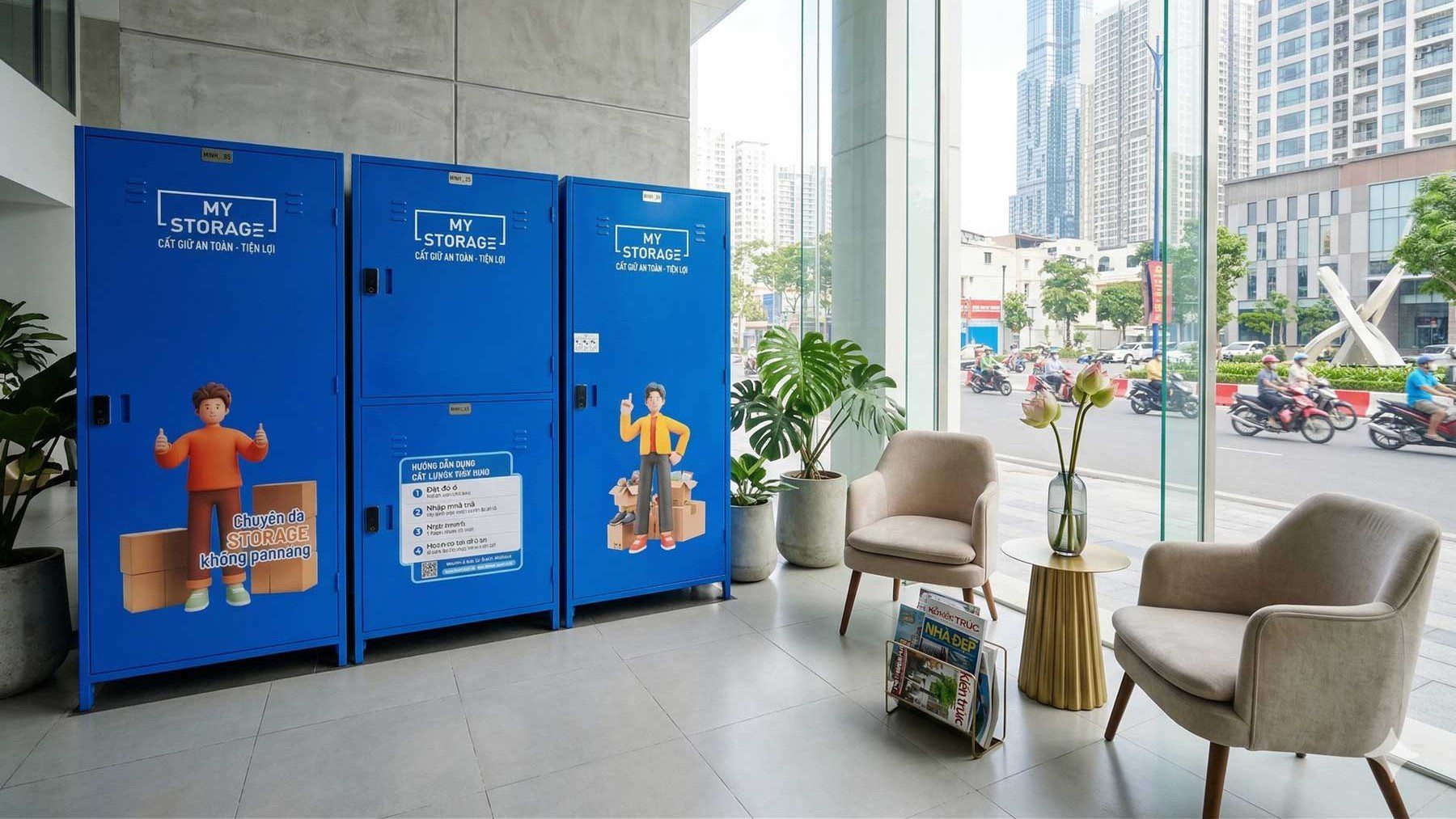
Rental lockers offer a solution for building and shophouse owners to generate stable revenue from small, unused spaces without requiring significant investment, structural changes, or operational staff. MyStorage lockers allow users to rent by the hour or day for storing belongings via a fully self-service system, enabling these “dead” spaces to automatically create a steady income stream, even without direct management.
This model is particularly well-suited for building lobbies, wide corridors, areas underneath stairs, and other small nooks that owners previously left vacant or used as temporary storage.
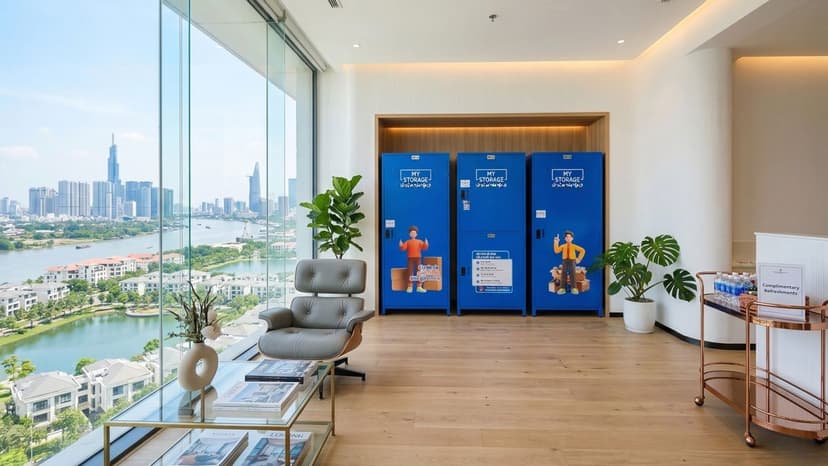
Operation Mechanism: Fully Automated, No Staff Required
The core difference between MyStorage lockers and traditional luggage storage models is the absence of direct staff involvement in transactions. The entire process, from booking a locker and payment to unlocking and returning it, is automated via an app or an integrated touchscreen on the locker unit.
User Process:
- Step 1: The user selects a locker of suitable size and duration, then completes payment via the app or by scanning a QR code directly at the locker. The system automatically generates a unique unlock code for that specific rental.
- Step 2: The locker opens automatically. The user places their belongings inside and closes the door. Items are secured by an electronic lock, accessible only with the user’s unique code.
- Step 3: When retrieving items, the user enters the code or authenticates via the app. The locker opens, and the transaction automatically concludes. The locker immediately returns to a ready state for the next renter.
No transactions require human intervention. Building owners only need to ensure power and internet connectivity for the lockers to operate, receive revenue reports, and periodically check the physical condition of the units.
Hourly and Daily Rentals: Optimizing Capacity for Each Locker
The flexible hourly and daily pricing model is the most crucial revenue optimization factor for MyStorage lockers, a complete contrast to the traditional monthly storage rental model.
- Hourly rentals: Ideal for temporary users such as casual visitors, office workers needing to store items for a few working hours, or shopping mall customers who prefer not to carry their belongings while shopping. Hourly rates are typically 3–5 times higher than the daily equivalent, maximizing revenue from high-traffic lockers.
- Daily rentals: Suitable for those needing to store items overnight or for longer than a single work shift. Daily rates generate a more stable and predictable cash flow for building owners.
Why this model is more optimal than traditional monthly rentals: A locker rented for 4 hours each day by 2–3 different users generates significantly higher revenue than the same space rented by one person for an entire month. The rotating user traffic also reduces the risk of dependence on a single customer.
A cluster of 10 medium-sized lockers in an office building lobby, with an average utilization rate of 60% per day at a price of 30,000–50,000 VND/locker/day, generates 5–9 million VND/month in revenue from a previously unused space of approximately 2–3 m².
No Upfront Costs for Building Owners
This is the most significant strategic difference in the MyStorage partnership model: building owners do not need to invest capital in purchasing lockers, installing systems, or developing software.
- How the partnership model works: MyStorage provides and installs the lockers, operating the entire technology system including the app, payment, and remote management. The building owner provides the space for the lockers and electricity for operation. Revenue is shared according to an agreed-upon ratio between both parties, with no one-sided investment obligations.
- This eliminates the biggest barrier: Previously, the most common reason building owners didn’t utilize vacant space was the question, “How much to invest, and is a return guaranteed?” The no-upfront-capital partnership model completely eliminates financial risk. If the space doesn’t generate enough user traffic, the building owner loses nothing beyond the electricity cost to operate the lockers.
Comparison with other space utilization options:
| Option | Upfront Capital | Deployment Time | Staff Required | Risk |
|---|---|---|---|---|
| Small office rental | 20–50 million VND for renovation | 1–3 months | No | Difficult to find tenants for small spaces |
| Mini cafe | 50–200 million VND | 2–6 months | Yes | Depends on operations, staff |
| Vending machine | 30–80 million VND | 2–4 weeks | No | Must buy/rent machine, manage inventory |
| MyStorage locker | 0 VND | 1–2 weeks | No | Lowest |
Most Suitable Locations for Locker Placement
Not every location within a building will generate the same level of revenue. The effectiveness of lockers directly depends on foot traffic and the natural demand for storage at that specific location.
Most effective locations:
- Office building and apartment lobby: High foot traffic, natural demand for storage from employees, visitors, and delivery personnel. These are typically the locations that generate the highest revenue per locker.
- Under staircases in shophouses and low-rise buildings: Less visibility than lobbies but effectively serves the short-term storage needs of residents and businesses within the building.
- Areas near shopping mall and supermarket entrances: Very high and recurring daily demand for storage before shopping. Mailroom/Package delivery area: Serves to store packages when recipients are not home — demand is surging with the growth of e-commerce.
Less effective locations: Technical floors, ancillary areas with no natural foot traffic, and secluded corners with low traffic — these locations require careful assessment of actual traffic before deployment.
The best location for a locker is where users already have a reason to stand there – waiting for an elevator, waiting for family, or waiting for a delivery. Lockers placed at these points don’t require marketing because the demand naturally arises from existing user behavior.
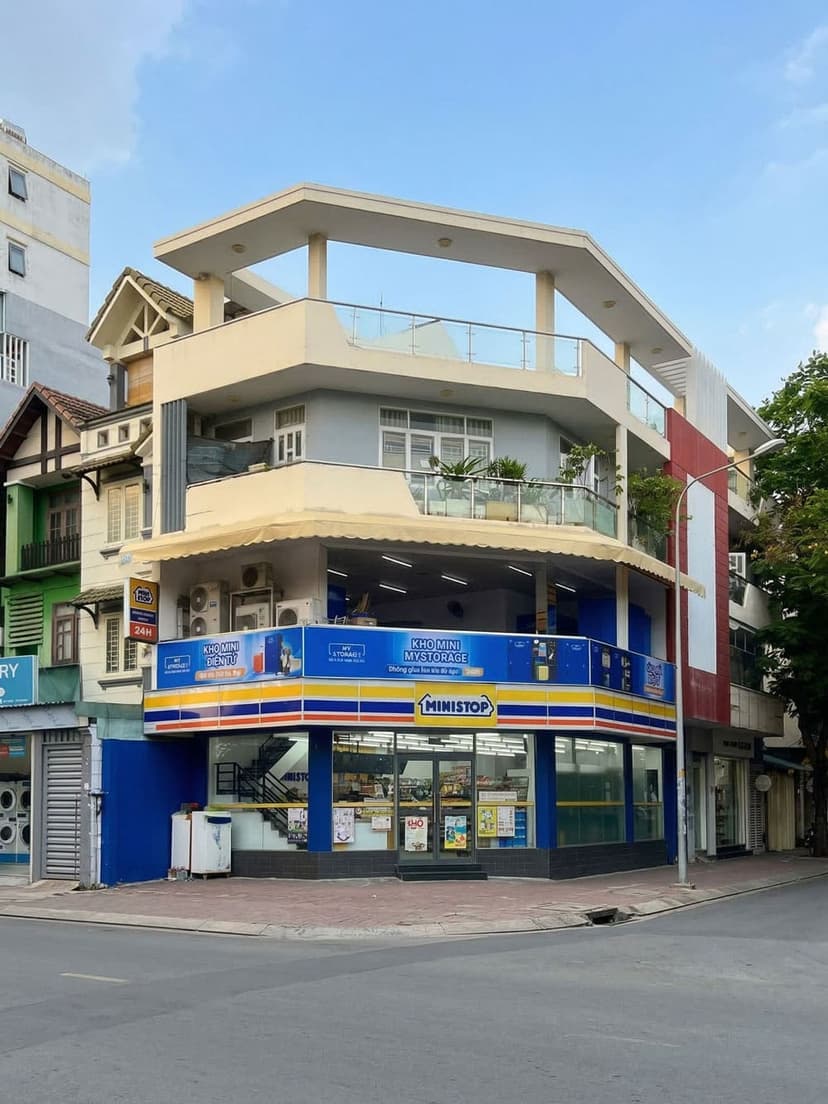
Benefits of Installing Lockers in Your Building
Installing lockers helps building owners generate passive income from small, unused spaces without complex operations, while simultaneously enhancing amenities for residents and customers. This is one of the few commercial real estate solutions that delivers all three elements simultaneously: revenue, convenience, and image, without requiring initial capital investment or structural changes to the property.
Benefit 1 — Generate Passive Income Without Direct Management
Passive income from lockers differs from other business models in one crucial aspect: building owners don’t need to do anything after installation. There are no staff to hire, no goods to stock, and no services to actively provide. Transactions occur automatically between users and the system, with funds deposited into the account regardless of working hours or anyone’s presence.
This is a characteristic that most other vacant space utilization models lack: a coffee shop needs a barista, a vending machine needs restocking, and office rentals require contract management. Self-service lockers require none of these.
Stable and predictable cash flow: User traffic in office buildings and apartment complexes often shows high daily and weekly repeatability, generating a stable revenue stream that building owners can forecast and plan financially. Unlike revenue from commercial space leases, which can fluctuate significantly when tenants change, locker revenue is distributed across many small transactions and various users, minimizing the risk of dependence on a single client.
Real-world example: A cluster of 10 locker compartments in the lobby of an office building with 300 occupants, with a usage rate of 50–70% per day, generates 4–8 million VND/month from an area of approximately 2 m² that was previously entirely vacant.
Benefit 2 — No Complex Operations Required
The biggest barrier preventing many building owners from utilizing vacant space is concern about operations: adding a service means more tasks, more staff, and more risks. Self-service lockers completely break this logic.
- What building owners DO NOT need to do: No need to recruit and manage operational staff. No need to manually process payment transactions. No need to resolve user disputes as the system fully logs every transaction. No need to adjust prices or promotions seasonally. No need to monitor inventory as there are no goods.
- What building owners ONLY need to do: Ensure stable power and internet connectivity. Periodically check the physical lockers every 1–2 weeks to ensure no mechanical damage. Receive monthly revenue reports from the system. Notify MyStorage when maintenance is needed or technical issues arise.
- Total actual management time: Less than 30 minutes per month for the building owner once the system is operating stably.
Benefit 3 — Enhance Amenities for Residents and Customers
Lockers not only generate revenue for building owners but also address a real need of building users that previously had no solution.
- For office workers: A place to store personal belongings (handbags, helmets, sports gear) during working hours without bringing them to the desk. A pick-up point for online deliveries when not in the office. Temporary storage space when changing desks or tidying up the workspace.
- For visitors and partners: People coming to the building for meetings or visits often don’t want to carry bulky luggage into meeting rooms. Lobby lockers allow items to be stored right before heading upstairs — significantly improving the guest experience and creating a more professional impression for the building.
- For apartment residents: A pick-up point for e-commerce parcels when no one is home is a growing demand driven by the rise of online shopping. Smart lockers completely solve this problem without requiring security guards or receptionists to sign for and manage parcels.
- Added effect for the building’s brand: A building with smart self-service lockers conveys a message of technology and professionalism, which many developers are seeking to differentiate their product in a competitive market.
Benefit 4 — Quick Returns, Low Risk
In an era of continuously rising building operating costs, any solution that generates revenue without increasing fixed costs is particularly valuable. Lockers meet both of these criteria.
Actual payback period: With a partnership model requiring no initial capital from the building owner, the concept of “payback period” is almost inapplicable as there is no initial investment to recover. The first revenue appears from the very first day a user utilizes a locker, typically within 1–2 weeks after installation.
Even with a model where the building owner invests in purchasing the lockers, the cost of a 10-compartment locker unit, approximately 30–60 million VND, is usually recovered within 6–12 months in locations with average or higher traffic.
Comparing ROI with other vacant space utilization options:
| Solution | Initial Capital | Payback Period | Operational Risk |
|---|---|---|---|
| Locker (partnership) | 0 VND | Immediate | Very Low |
| Locker (self-investment) | 30–60 million VND | 6–12 months | Low |
| Vending machine | 30–80 million VND | 8–18 months | Medium |
| Mini coffee shop | 50–200 million VND | 12–36 months | High |
| Small office rental | 20–50 million VND (renovation) | 6–18 months | Medium |
Comparison: Vacant vs. Utilized with Lockers
Vacant space generates no value while still incurring monthly operating costs. Installing lockers transforms that space from a “pure cost” state to a “revenue-generating asset” without adding management burden.
| Criteria | Vacant | With Lockers |
|---|---|---|
| Revenue | 0 VND | 4–15 million VND/month (depending on location) |
| Operating Costs | Lighting, area cooling | Additional ~150,000 VND/month for locker electricity |
| Staff Required | None | None |
| Capital Investment | 0 VND | 0 VND (partnership model) |
| User Amenities | None | Solves a real storage need |
| Building Image | Unchanged | Increases professionalism and modernity |
| Risk | No direct risk | Very low risk |
| Owner’s Time Required | None | Less than 30 minutes/month |
| Scalability | Not applicable | Add more compartments as demand increases |
| Flexibility | Can be used anytime | Lockers can be relocated if needed |
Conclusion from the comparison table: The “Vacant” column and the “With Lockers” column are almost diametrically opposed in every criterion beneficial to the business, while costs and risks are quite similar. The real question isn’t “should I install lockers?” but “why haven’t I installed them yet?”
A 10-story building owner with 5 potential locker locations (lobby, 2 hallways, 1 under-stair area, 1 ancillary area) could generate 20–50 million VND in passive income each month from a total area of less than 20 m² that previously generated nothing. This revenue is equivalent to leasing an additional 40–100 m² of office space, but without needing to build or renovate anything.

How to Optimize Revenue from Vacant Space?
To optimize revenue from vacant space, it’s crucial to identify high-traffic locations, choose the right size and operating model to match actual demand, and set reasonable prices to maximize utilization rates. These three factors are inseparable: a good location with incorrect pricing will see no users, correct pricing in the wrong location will go unnoticed, and inappropriate sizing will waste both space and opportunity.
Optimizing revenue from vacant space is about maximizing revenue per square meter, not maximizing the exploited area. Sometimes 3 m² in the right location generates more revenue than 30 m² in the wrong location.
Step 1 — Choose High-Traffic Spots: Where You Place It Matters More Than What You Place
Traffic is the primary and most crucial determining factor. A locker or vending machine placed in the wrong location, regardless of quality or reasonable price, will generate very little revenue simply because no one sees it or no one needs to store items at that particular spot.
How to assess actual traffic:
Count the number of people passing by the proposed location during three representative time slots: 8–9 AM (peak entry hour), 12–1 PM (mid-day entry/exit), and 5–6 PM (peak exit hour). The total number of people during these 3 hours serves as a representative traffic index for a typical workday.
Minimum traffic threshold for effective utilization:
| Space Type | Minimum Traffic/Day | Exploitation Potential |
|---|---|---|
| Office building lobby | 150+ passes | High |
| Ground floor hallway | 80+ passes | Medium-High |
| Ground floor under-stair area | 50+ passes | Medium |
| Upper floor hallway | 30+ passes | Low, needs consideration |
| Low-traffic ancillary area | Under 20 passes | Not recommended |
Two most valuable types of traffic:
- Traffic with natural stopping points: People waiting for elevators, colleagues, or meeting guests – those who naturally pause at a spot have time to notice and use nearby services. This is the highest quality traffic.
- Traffic with natural storage needs: People carrying bags, luggage, shopping items, or equipment into the building but not wanting to carry them into meetings or their workspace. Identify this user group before choosing a locker location.
Golden rule: Place lockers or space utilization equipment at points where users already stop for other reasons — not just at points where people merely pass through. An elevator waiting area is a perfect example: people standing there have 30–120 seconds to look around while waiting, making them perfectly receptive to using a service right there.
Step 2 — Optimize Size: How Much is Enough?
A common mistake when utilizing vacant space is thinking that more lockers or larger ones are always better. In reality, size does not correlate linearly with revenue — the optimal point lies in balancing actual demand and supply.
Formula for calculating optimal locker compartments:
Number of lockers to deploy = (potential daily users × estimated conversion rate) ÷ average daily turnover per compartment.
Specific example: A building with 200 employees, an estimated 15% needing storage daily = 30 uses. Each locker compartment turns over an average of 3 times/day. Optimal number of compartments = 30 ÷ 3 = 10 compartments. Deploying 20 compartments would result in a high vacancy rate, reducing revenue per compartment. Deploying 5 compartments would frequently run out of space, losing customers and creating a poor impression.
Rational compartment size distribution: Not all users need the same size. Proposed distribution for a 10-compartment unit: 4 small compartments (under 30 cm height, for phones, wallets, keys), 4 medium compartments (30–50 cm, for handbags, laptops), 2 large compartments (50–80 cm, for luggage, helmets, sports gear). This ratio reflects actual demand distribution and optimizes revenue per compartment.
Signals for adding or having enough compartments: A utilization rate consistently above 80% for several days is a clear signal to expand. A rate below 40% after 30 days of operation is a signal to re-evaluate the location or pricing strategy, not to add more compartments.
Step 3 — Set Reasonable Prices: Finding the Sweet Spot Between Revenue and Utilization Rate
Pricing hourly and daily storage services requires balancing two sometimes conflicting goals: maximizing revenue per transaction and maximizing utilization rates. Prices that are too high will attract few users. Prices that are too low will attract many users but generate insufficient revenue to cover costs.
Reference price range by segment in Vietnam 2026:
| Segment | Hourly | Daily | Notes |
|---|---|---|---|
| Class A Office Building | 10,000–20,000 VND/hour | 50,000–80,000 VND/day | High-income customers, less price-sensitive |
| Average Office Building | 5,000–10,000 VND/hour | 30,000–50,000 VND/day | Balance between affordability and frequency of use |
| Apartment, Residential Area | 3,000–8,000 VND/hour | 20,000–40,000 VND/day | Prioritize high utilization rate over price per transaction |
| Shopping Mall | 10,000–25,000 VND/hour | 60,000–100,000 VND/day | Short storage times, customers willing to pay more |
Three pricing strategies to implement:
- Dynamic pricing by time slot: Increase prices by 20–30% during peak hours (8–9 AM, 12–1 PM, 5–6 PM) and decrease prices during off-peak hours. This strategy maximizes revenue during periods of highest demand without losing customers during normal hours.
- Long-term offers: Packages like 3 hours for the price of 2, weekly, or monthly packages for frequent customers. Long-term renters generate stable and predictable revenue, reducing volatility.
- Trial pricing in the first month: Reduce prices by 30–50% during the first 2–4 weeks of operation to encourage trials and build usage habits. Users who have tried it once often return at a very high rate.
- Optimal revenue formula: Revenue = Number of compartments × Utilization rate × Average price/transaction × Number of transactions/day. Increasing any variable increases revenue, but increasing the utilization rate is often easier than increasing prices because it doesn’t require infrastructure changes, only optimizing placement and internal communication within the building.
Summary: Checklist for Optimizing Revenue from Vacant Space
CHOOSE LOCATION
- Minimum traffic of 50+ passes/day at the proposed location
- Has natural stopping points (waiting for elevator, people, vehicles)
- Good visibility from both sides, not obstructed
- Within 5m of the main entrance or elevator
OPTIMIZE SIZE
- Calculate the number of compartments based on actual traffic, not available space
- Distribute 40% small / 40% medium / 20% large compartments
- Monitor utilization rate after 30 days and adjust
- Do not expand until the utilization rate consistently exceeds 80%
SET REASONABLE PRICES
- Research comparable prices within a 2km radius
- Apply 30–50% promotional pricing during the first month of operation
- Implement dynamic pricing, 20–30% higher during peak hours
- Create weekly/monthly packages for frequent customers
- Re-evaluate prices every 3 months based on utilization data
In the era of smart real estate, every square meter of space holds immense revenue potential. MyStorage’s Hyperlocal service is not just about placing a locker; it’s a solution that helps you optimize “dead space,” significantly enhance amenities for residents, and generate sustainable passive income. Don’t let vacant space go to waste; let MyStorage help you transform your building into a modern “Smart Hub” today.
Partner with us at: https://hyperlocal.mystorage.vn/vi
FAQ
Start with 3 steps:
- Count actual traffic at the intended location during 3 peak time slots — if it reaches 50+ people per day, there’s enough potential;
- Contact MyStorage for a site assessment and locker cluster recommendation;
- Sign a partnership agreement — lockers are installed and operational within 1–2 weeks, with no investment or renovation required from the building owner.
The five most effective locations in order:
- Elevator waiting areas — people naturally pause for 30–120 seconds;
- Building lobby — highest traffic, best visibility;
- Under-stair spaces on ground floor — utilizes dead space, serves building residents;
- Parcel receiving areas — growing demand for e-commerce package storage; (5) wide ground-floor corridors — sufficient traffic without blocking fire safety routes.
With MyStorage’s partnership model, building owners pay zero upfront installation costs. MyStorage fully invests in the lockers and technology platform; building owners only provide space and electricity (approximately VND 150,000–200,000 per month for a 10-unit cluster). Revenue is shared at an agreed ratio. If building owners self-invest, a 10-unit cluster costs VND 30–60 million, with payback in 6–12 months at locations with average or higher traffic.
A 10-unit locker cluster in an office building lobby, with 50–70% daily utilization at VND 30,000–50,000 per unit per day, generates VND 4–8 million per month from approximately 2 m² of previously unused space. A building with 5 locker locations can generate VND 20–50 million per month in passive income — equivalent to renting out an additional 40–100 m² of office space without any construction or renovation.
Yes, in two ways. First, direct hidden costs: electricity, air conditioning, and maintenance for empty spaces are charged every month regardless of whether they generate any revenue. Second, opportunity costs: every unused square meter represents potential revenue abandoned daily. A 10-floor building with 200 m² of vacant space, at a flexible-use rate of VND 500,000/m²/month, is forgoing VND 1 billion in potential monthly revenue — invisible in financial reports but a genuine ongoing loss.
Yes, in two ways. First, direct hidden costs: electricity, air conditioning, and maintenance for empty spaces are charged every month regardless of whether they generate any revenue. Second, opportunity costs: every unused square meter represents potential revenue abandoned daily. A 10-floor building with 200 m² of vacant space, at a flexible-use rate of VND 500,000/m²/month, is forgoing VND 1 billion in potential monthly revenue — invisible in financial reports but a genuine ongoing loss.
Self-service lockers are most concentrated in Ho Chi Minh City and Hanoi, particularly in Grade-A office buildings in Districts 1, 3, and Binh Thanh (HCMC) and Cau Giay, Dong Da, and Ba Dinh (Hanoi). The trend is expanding into premium condominiums, shopping centers, and mixed-use developments in Tier-1 cities. Demand is rising sharply with e-commerce growth and the shift toward flexible working patterns post-COVID-19.
2024 reference rates by segment: Grade-A office buildings charge VND 50,000/hour durations and higher willingness to pay.
Four building types with the highest locker ROI: (1) office buildings of 5+ floors with over 100 regular staff — stable traffic and high demand for item storage; (2) condominiums with 100+ units — growing demand for e-commerce parcel receipt; (3) shopping centers and street-front shophouses — high footfall traffic with demand to store items before shopping; (4) mixed-use office and commercial buildings — combines both user segments. Buildings under 5 floors with fewer than 50 daily users typically lack sufficient traffic to optimize revenue.
Three major trends shaping the space through 2030: (1) AI-integrated smart lockers — self-adjusting pricing in real time based on utilization and traffic data, with automated fault detection; (2) Parcel locker boom tracking e-commerce growth — Vietnam’s e-commerce market reached USD 20.5 billion (2023) and continues growing 20–25% annually, driving demand for automated in-building package pickup points; (3) Dead space marketplace model — platforms connecting building owners with vacant space to operators wanting to deploy lockers, vending machines, or digital advertising, similar to an Airbnb model for small commercial spaces.
Related articles
Article
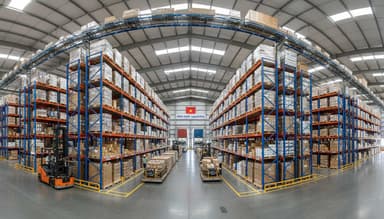
Onshore vs Offshore: Which Manufacturing Model Should Businesses Choose?
Onshore manufacturing refers to production within a company’s home country, helping to control quality, shorten delivery times, and ensure easier regulatory compliance. Offshore…
Read article
Article
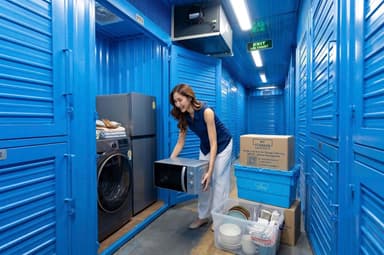
How To Organize Your Home Storage Room | 10 Space-Saving Tips
Organize household storage with ten practical tips, an inventory template, safety checks and guidance on when external storage is worth considering.
Read article

Article
Secrets to Profitable Online Selling: 10 Ways to Save Costs
To sell online profitably, you not only need to increase sales but also maintain good control over operating costs. Items such as inventory, premises, packaging, shipping, and order…
Read article
