
 Tiếng Việt
 한국어
한국어 日本語
日本語Article· Updated August 30, 2026
Event Locker Rental: A Safe Solution for Conferences, Exhibitions and Trade Shows
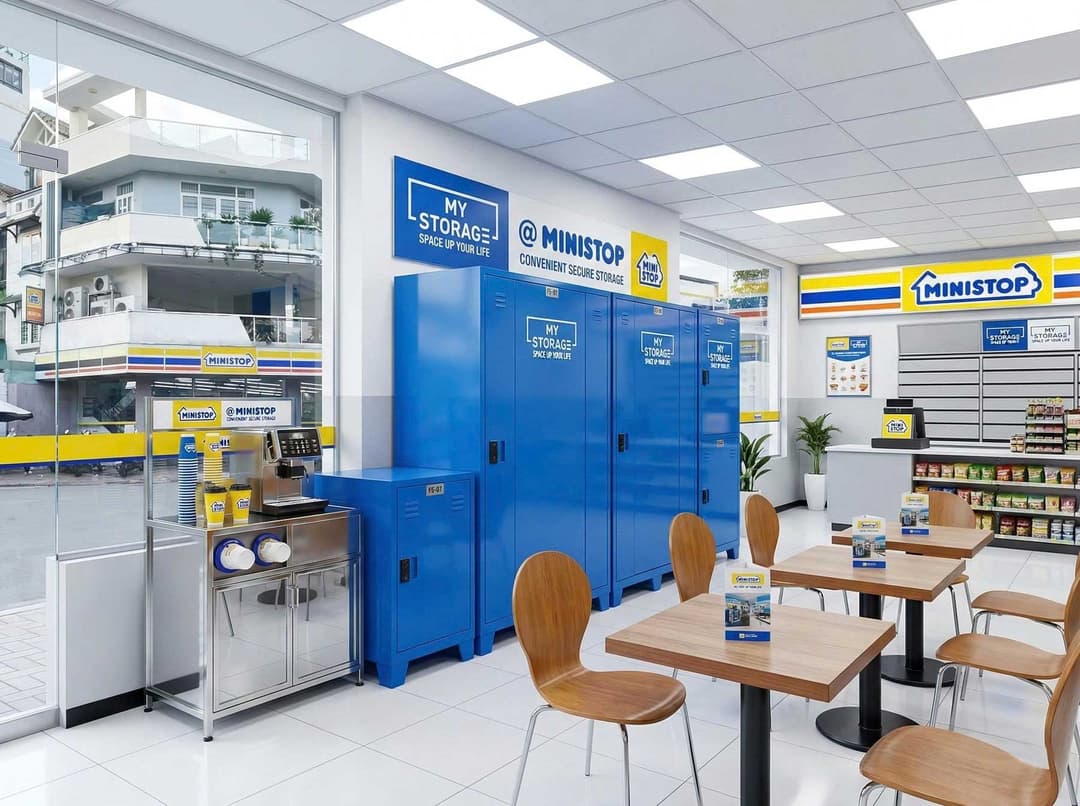
Event lockers help organizers safely manage attendees’ luggage, backpacks, laptops, gifts and personal belongings. Instead of setting up a manually operated cloakroom, many events now use locker systems to reduce staffing needs, improve the guest experience and minimize lost property.
Why Do Events Need a Professional Storage Area?
A professional storage area is more than an optional event amenity; it directly affects the overall attendee experience. When guests do not have to worry about their personal belongings, they can focus more fully on the event content and feel more satisfied with the entire program.
Attendees Bring Many Personal Belongings
People attending seminars, conferences and corporate events today often arrive directly from the office or continue traveling after the event, meaning they bring a considerable amount of personal belongings.
| Items commonly brought | Problems without storage |
|---|---|
| Laptops and work bags | They must be placed underfoot or on tables and become cumbersome when moving between sessions |
| Backpacks and large bags | They occupy adjacent seats and reduce space in the hall |
| Coats and hats | Hanging them on chairs looks untidy and makes mix-ups more likely |
| Gifts and collected materials | They accumulate throughout the event and become heavy and bulky to carry |
| Sensitive personal items | Wallets, keys and electronic devices need secure storage for extended periods |
At events lasting half a day or a full day, attendees may carry their belongings from morning until evening without a safe place to store them. This creates ongoing inconvenience that affects their ability to concentrate and participate in the program.
Reduce the Risk of Lost Property
Lost property at an event not only causes losses for attendees but also creates legal and reputational risks for the organizers.
Crowded event spaces with many points of contact are particularly prone to lost belongings. Coats accidentally taken from break rooms, laptops left on tables during lunch and wallets forgotten in workshop rooms are common at events without a well-organized storage area.A storage area with individual locks or dedicated staff creates clear accountability and significantly reduces this risk. When guests know their belongings are being kept safe, they can attend with greater peace of mind and rate the overall experience more positively.
Improve the Attendee Experience
The attendee experience is shaped by many small details, with feeling cared for and comfortable throughout the event playing an important role.
| With a storage area | Without a storage area |
|---|---|
| Guests move freely between sessions | Guests must carry their belongings whenever they move |
| They focus on the content and networking | Some of their attention is spent watching their belongings |
| They participate comfortably in interactive activities | They hesitate to participate because their belongings get in the way |
| They appreciate the organizers’ thoughtfulness | The organization feels unprofessional |
| They are willing to attend the next event | They remember the inconvenience when invited again |
Expectations for the attendee experience at corporate events and professional conferences are rising. Details such as a well-run storage area distinguish professional events from amateur ones in attendees’ eyes, especially for guests who regularly attend international events.
Keep the Event Space Tidier
A tidy event space is not only more visually appealing but also safer and more operationally efficient.
Backpacks and bags placed underfoot create obstructions in aisles and are especially dangerous during an emergency evacuation. Coats draped untidily over chairs reduce the hall’s effective capacity. Scattered belongings can make a venue feel cramped even when it is sufficiently spacious.
When all personal belongings are kept in one purpose-designed area, the main event space becomes more open, easier to photograph and more professional throughout the program.
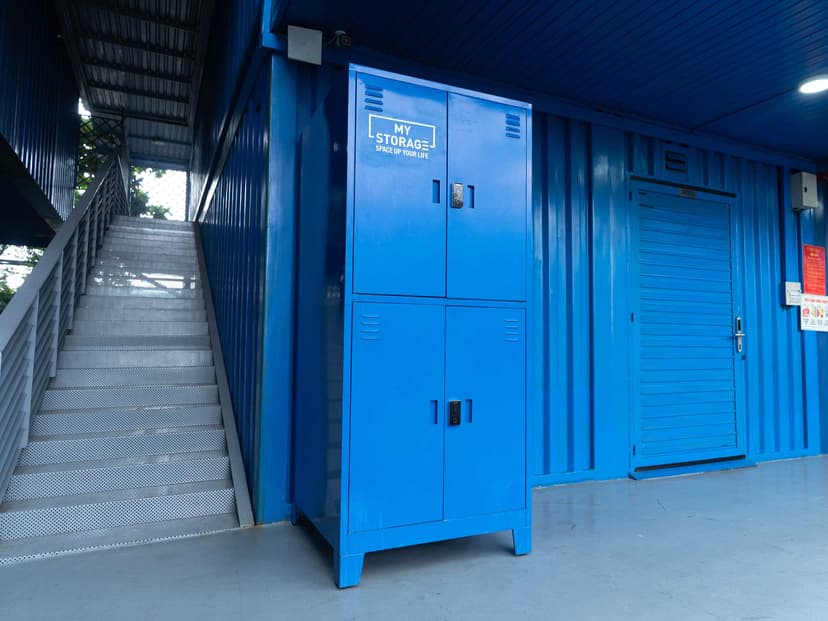
Types of Events That Should Use Storage Lockers
Any event where attendees bring personal belongings and need to move freely around the venue can benefit from a storage locker system. The following six types of events have the greatest need because of their duration, setting and audience.
Corporate Seminars
Seminar attendees often arrive directly from the office with laptops, documents and fully packed work bags. A storage area lets them participate more comfortably in discussions and networking activities without carrying their belongings all day.
Corporate seminars last from half a day to two days, with multiple parallel sessions, breaks and meals. Guests move continuously between meeting rooms and networking areas. Carrying laptops and work bags weighing 3–5 kg throughout the event causes unnecessary physical fatigue that affects the quality of their participation.
Lockers with individual locks allow guests to store all their personal belongings securely and retrieve the materials needed for each session.
Trade Exhibitions
Exhibition visitors often collect numerous documents, catalogs and gifts from booths throughout their visit. Lockers let them move easily between different areas without carrying an increasingly heavy pile of items.
Trade exhibitions usually take place in large spaces with hundreds of booths, requiring visitors to walk for hours. Items collected from the first booths become a burden that affects their experience at later ones. Lockers positioned at several points around the exhibition let visitors deposit items as they move through each area and collect everything when leaving, significantly increasing both the length and quality of their visit.
Shareholder Meetings
Shareholders attending meetings often bring important documents, recording equipment and valuable personal belongings. A professional storage area reflects the company’s thoughtful approach to organizing this important event.
A shareholder meeting is an important legal event attended by shareholders and investors, who expect a high level of professionalism throughout. A well-run storage area with dedicated staff and claim receipts conveys care and professionalism while reducing the risk of lost property in a crowded space.
Fairs and Festivals
Fair and festival attendees often stay for many hours, make multiple purchases and need to move easily between different areas. Hourly lockers allow them to enjoy themselves without carrying everything they have purchased since the beginning of the event.
At fairs and festivals, guests continually buy more items, eat and drink, and participate in entertainment. Purchases made in the first area become a burden when they want to join activities elsewhere. Families with children and older adults particularly benefit from lockers because they reduce physical fatigue and encourage guests to stay longer and spend more at the event.
Running Races and Sporting Events
Athletes and sporting event participants need somewhere to leave personal belongings while competing or taking part in activities. Secure lockers let them focus completely on their performance without worrying about the property they leave behind.
Running races, marathons and outdoor sporting events are often held across large areas where the start and finish may be far apart. Participants need to store everyday clothing, spare phones and personal belongings while competing. Secure lockers with individual locks are highly valued by participants and can influence their decision to register for the next event.
Product Launches
Product launches often combine presentations, product experiences, networking and refreshments. Guests move continuously between different areas and need their hands free to try the products.
Technology and consumer product launches often invite customers, partners and members of the press who bring cameras and professional materials. Lockers let them experience products freely with both hands, take photos and videos more easily, and move between experience stations without personal belongings getting in the way. This small detail can significantly affect the quality of content guests create during and after the event.
How Do Lockers Help Event Organizers Save Money?
Instead of investing in an expensive permanent locker system or staffing a manually operated cloakroom, event organizers can rent smart lockers for each event, pay only for the quantity actually needed and avoid long-term operating costs.
No Investment in a Permanent Locker System
Installing permanent lockers at an event venue costs 50–200 million VND depending on the quantity and quality, excluding installation, maintenance and future upgrade costs. For event organizers without a fixed venue, or whose venue changes for each program, this investment is not financially efficient.
Renting lockers for each event converts a fixed-asset investment into a flexible operating cost for each project. Organizers do not need to worry about depreciation, maintenance or lockers becoming obsolete as technology changes.
Reduce Storage-Area Staffing
A traditional staffed cloakroom requires at least 2–3 employees at each storage point, working continuously throughout the event. For an 8-hour event, staffing costs for this service range from 1–3 million VND per person, totaling 2–9 million VND solely to manage stored belongings.
Smart lockers with PIN or QR code locks operate entirely automatically. Guests store and retrieve their belongings themselves without needing regular staff assistance. Organizers need only one person to supervise the entire event area instead of dedicated personnel for the storage service.
Fast Installation and Removal
Mobile lockers are designed for fast installation and removal without specialized tools or a large technical team. Setup usually takes less than 2 hours for a bank of 10–20 lockers, making them suitable for the typically tight event preparation schedule.
| Item | Permanent lockers | Rented mobile lockers |
|---|---|---|
| Installation time | 1–3 days with technicians | 1–2 hours for self-installation or with delivery-team support |
| Installation cost | 5–20 million VND | Usually included in the rental fee |
| Removal time | Half a day to one day | 1–2 hours |
| Staffing requirements | Professional technicians | Regular event staff |
| Impact on the venue | Requires drilling into walls or permanent fixing | Does not affect the venue’s structure |
Rent Only the Quantity You Need
Storage demand varies greatly according to each event’s size and nature. A seminar for 50 people may need 20–30 compartments, while a festival for 500 people may require 150–200. Investing in permanent lockers forces organizers to plan for their largest event, creating waste at smaller events.
Renting according to actual demand keeps costs proportional to the size of each event. Organizers can increase or reduce the number of lockers for each program without being constrained by previously purchased fixed assets.
| Event size | Recommended capacity | Suitable model |
|---|---|---|
| Fewer than 50 guests | 15–25 compartments | Rent a small bank by the day |
| 50–200 guests | 40–80 compartments | Rent for the event |
| 200–500 guests | 100–150 compartments | Rent a large-event package |
| More than 500 guests | 200 compartments or more | Rent multiple banks at several locations |
The total cost of renting lockers for a one-day event with 200 guests is usually lower than the staffing cost of a manually operated cloakroom of the same size, while providing a significantly better attendee experience. It is an investment that creates clear value for organizers and guests alike.
Criteria to Consider When Renting Storage Lockers
Choosing the right locker rental provider directly affects the attendee experience and the event’s operational efficiency. The following five criteria help organizers evaluate and select the most suitable solution for each type of event.
Suitable Capacity
The lockers must accommodate the different types of belongings guests bring, from small backpacks to gym bags and thick coats.
| Compartment size | Suitable for | Recommended proportion |
|---|---|---|
| Small compartment | Wallets, phones, thin documents and keys | 20–30% of all compartments |
| Medium compartment | Laptop backpacks, medium-sized bags and folded coats | 50–60% of all compartments |
| Large compartment | Gym bags, large backpacks, thick coats and shopping bags | 20–30% of all compartments |
The required capacity can be calculated using a simple formula: 30–40% of attendees will need storage at the same time. The proportion is higher at corporate events than at festivals because guests bring more work-related belongings.
Secure Locks
The locking system determines how much attendees trust the storage service and directly affects actual usage.
| Lock type | Advantages | Disadvantages | Suitable for |
|---|---|---|---|
| Mechanical key lock | Simple and requires no electricity | Keys are easily lost and many lockers are difficult to manage | Small, low-budget events |
| PIN lock | No key required and easy to reset | Requires electricity and users may forget their code | Corporate seminars |
| QR code lock | App integration with no code to remember | Dependent on a phone and its battery | Festivals and technology events |
| Key-card lock | Fast and professional | Higher cost and requires a management system | Large conferences and premium events |
The minimum standard for a professional event is a separate lock on every compartment, access restricted to the user and a fast reset mechanism when required.
Ability to Add More Lockers
Actual storage demand at an event is often difficult to predict accurately in advance. A rental provider’s ability to supply additional lockers at short notice is important because it gives organizers the flexibility to handle unexpected demand.
Questions to ask the rental provider before signing a contract include: how many additional lockers can be supplied if needed, the minimum notice required and the extra cost of increasing the quantity beyond the original contract. A provider that keeps spare lockers available and commits to a clear response time is more reliable than one without a specific policy for this situation.
Delivery and Installation Support
Storage lockers are usually heavy and bulky, so their delivery and installation must be included in the event plan from the outset to avoid problems on the day.
| Item to confirm | Questions to ask the rental provider |
|---|---|
| Delivery | Does the provider handle delivery, or must the organizers arrange it? Which geographic areas are covered? |
| Installation | How many people and how much time are required for setup? Are there any special space requirements? |
| Power supply | Do the lockers need electricity? If so, how many outlets and what minimum capacity are required? |
| Removal | When will the lockers be collected after the event, and who is responsible for dismantling them? |
| Technical support | Will a technician remain on site throughout the event in case of a malfunction? |
Flexible Rental Periods
Event schedules are often fluid from preparation through cleanup. The locker provider must cover this entire period, not only the program’s official hours.
| Stage | Actual requirement | What to confirm with the provider |
|---|---|---|
| Pre-event setup | Lockers must arrive 2–4 hours before opening | Earliest available delivery time |
| During the event | Continuous operation and technical support when needed | Uptime commitment and incident response time |
| After the event | Guests retrieve belongings after the program ends | Lockers remain available until the last guest has collected their belongings |
| Cleanup | Removal after all guests have left | Flexible locker collection time |
When evaluating locker rental providers, prioritize those with clear policies for unexpected situations instead of relying solely on the lowest rental price. A storage-system failure during an event affects attendees’ overall impression of the entire program.
A professional storage area is a small detail that makes a major difference to the overall event experience. Attendees can move freely and participate with greater focus, organizers reduce staffing costs and the risk of lost property, and the venue becomes tidier and more professional. All these benefits come from a simple solution planned properly from the outset.
Flexible locker rental for individual events means organizers do not need to invest in fixed assets, can adjust capacity to the event’s actual size and can focus their budget on the elements that deliver the program’s core value. This approach is becoming increasingly common in professional event organization in major cities.
FAQ
Calculate based on 30–40% of attendees needing storage at the same time. Use 40% for corporate events where guests bring laptops and work bags, while 25–30% may be sufficient for festivals or entertainment events. Provide an additional 10–15% of lockers as a reserve for unexpected demand.
PIN or QR code locks are the best options because they eliminate physical key management, are easy to reset between users and create a professional, technology-forward impression for corporate guests. Key-card locks are better suited to premium conferences with larger budgets.
It depends on the type of locker. Lockers with mechanical locks require no electricity and suit venues with limited power access. Electronic lockers with screens and PIN entry need a stable power supply. Organizers should confirm the electrical requirements with the rental provider and prepare outlets with sufficient capacity before the event.
Yes, if the lockers are designed for outdoor conditions or placed under cover. Confirm their weather resistance with the rental provider, and do not place electronic lockers directly in rain or prolonged strong sunlight, as this may affect the control panel.
Place them near the main entrance so guests can store belongings as soon as they arrive, with clearly visible signs and enough surrounding space for queues without blocking the main walkway. At large events, additional locker banks should be placed near dining and break areas.
A professional rental provider should have a clear procedure: an on-site technician can override and open the locker after verifying the owner’s identity. This procedure should be agreed with the organizers in advance and clearly explained to guests when they store their belongings.
Usually 1–3 hours, depending on the number of lockers and electrical connection requirements. Ask the rental provider to arrive at least 3–4 hours before opening to allow enough time for setup, technical checks and resolving any issues before guests arrive.
Locker rental costs depend on the number of compartments, lock type, rental period and whether delivery and installation are included. Contact the provider directly for a quote based on the event’s size. In general, this costs significantly less than staffing a manually operated cloakroom of the same capacity.
Display a reminder on event screens or have the MC announce it 30 minutes before the program ends. Keep the locker area open for an additional 30–60 minutes after the main program finishes so guests have enough time to collect their belongings. The rental provider should have a procedure for unclaimed items and notify the organizers immediately after cleanup.
Technically, yes, but under normal conditions organizers should limit usage to one compartment per person to ensure enough space for every attendee. At events attended by families or groups, one large compartment can be shared by the group instead of using several separate small compartments.
Related articles
Article
Rent a Ready-Built Warehouse or Build Your Own? Comparing Costs and Timelines
When expanding storage and distribution capacity, business leaders often face a critical strategic decision: should they rent a ready-built warehouse or invest their own capital in building…
Read article

Article
Can You Use an Apartment as a Warehouse or Office? Space Solutions for Online Shops and Small Businesses
Is it legal to rent an apartment as a warehouse or office? Explore the rules, risks, and suitable storage solutions for online shops and small businesses.
Read article
Article
Combining Storage Rental and Livestreaming for Online Shops: An Efficient Operating Model
Combining storage rental with a livestreaming space is a modern operating solution that allows online sellers to integrate product storage, sample preparation, live sales sessions, and…
Read article
