
 Tiếng Việt
 한국어
 日本語
Article
Between Check-Out And Your Flight: A Day In Saigon With Luggage
On this page
To make the most of your final day in Saigon between hotel check-out and an evening flight, leave your suitcases at a secure luggage storage point in the city centre so you can explore hands-free, eat properly and head straight to Tan Son Nhat Airport without backtracking. A few hours of luggage storage in Saigon turns the gap between 11:00 and a midnight departure from dead time into the part of the trip people remember.
The check-out gap is one of the most common logistical headaches in Ho Chi Minh City. Hotels and rentals want the room by 11:00 or 12:00, while long-haul flights to Europe, North America, Australia and East Asia leave late in the evening or after midnight, which leaves 8 to 12 hours with nowhere to put your things. Morning arrivals face the same problem in reverse when a host cannot give room access until 14:00 or 15:00.
Dragging 20-kilogram cases through Saigon streets in 34°C heat drains you fast and narrows where you can go. Hotel late check-out usually costs 50% to 100% of a night, and leaving bags at a far-out hotel costs two hours of backtracking in rush hour. Store the bags well and plan the day around a few accessible stops, and the wait becomes one of the better days of the trip.
1. The Post Check-Out Dilemma In Saigon
Leaving your room hours before the flight creates a transit gap that has to be planned, because nothing about the day works until the bags have somewhere to go. Three parts of the problem are worth separating.
The Awkward Limbo Hours Before A Night Flight
The gap between a morning check-out and a midnight departure is close to half a day of unstructured time, and it catches most travellers unprepared. Four things shape it:
- The standard timeline gap: Most accommodation in Ho Chi Minh City enforces an 11:00 or 12:00 check-out so housekeeping can prepare rooms for afternoon arrivals.
- The late-night flight schedule: Long-haul flights from Tan Son Nhat (SGN) to global hubs often leave between 20:00 and 02:00, creating an 8 to 14-hour window without a private room.
- The early arrival parallel: Red-eye travellers landing at dawn have the same problem in reverse, with 6 to 8 hours to fill before a host releases the keys.
- Mental fatigue: Wandering while keeping an eye on your bags creates low-level anxiety and stops you from relaxing on the last day.
The same gap exists for people who never book a room at all, and safe luggage and suitcase storage in Ho Chi Minh City covers the longer end of it, where bags stay for days rather than an afternoon.
Why Dragging Luggage Ruins Sightseeing
Wheeled cases and large backpacks do not fit the pedestrian reality of Ho Chi Minh City, which is why the bags go into storage before anything else. Four obstacles come up every time:
- Pavement accessibility: Footpaths across District 1, District 3 and Chinatown carry parked motorbikes, low-stool coffee stalls and street trade, so pedestrians step into the road repeatedly.
- The climate: Walking in midday sun with humidity above 75% leaves you dehydrated and sweat-soaked before a long flight.
- Venues that turn bags away: The War Remnants Museum, galleries and the small cafes in old apartment buildings do not let large check-in cases into their rooms.
- Vehicle friction: Loading several heavy cases into a compact ride-hailing car every two hours adds fares and slows every short stop.
The Trap Of Backtracking For Your Bags
Leaving bags at the hotel desk looks convenient in the morning and costs you the evening, because the return trip lands in the worst traffic of the day. Four costs to weigh:
- Distance from the airport: Staying in District 2 (Thao Dien), District 7 (Phu My Hung) or Binh Thanh puts your bags 8 to 12 kilometres from the terminal.
- Peak-hour gridlock: Ho Chi Minh City traffic peaks between 16:30 and 19:00, so returning downtown to the hotel and then to Tan Son Nhat can take two hours.
- Doubled transport cost: One car from downtown to the hotel and a second from the hotel to the airport doubles the ground fare.
- Central storage instead: A locker or unit along the downtown-to-airport corridor removes the return leg entirely and lets you go straight to departures.
The same calculation applies to a transit stop rather than a departure day, and the Saigon layover guide for 6 to 12 hours with luggage works through the version where you never check into a room at all.
2. Early Check-In And Late Check-Out Costs
Paying the hotel to keep the room is the obvious answer and almost never the cheapest one, because the fee buys a room you barely use. Four points decide whether it is worth it.
Standard Hotel Check-Out Policies
Check-out times are operational deadlines rather than guidelines, and they are the same across price brackets. Three things follow from that:
- Firm morning check-out: Check-out sits between 11:00 and 12:00 at budget hostels, boutique stays and five-star hotels alike.
- Overstay penalties: Staying past check-out without agreeing it first can trigger an automatic charge or a deactivated room key.
- Housekeeping dependency: Hotels work to a tight four-hour turnaround to clean and prepare rooms before the next guests arrive at 14:00 or 15:00.
The Cost Of Hotel Late Check-Out
An official late check-out is priced as a fraction of a night, so the bill scales with your room rate rather than with the hours you use. Three tiers are typical:
- Until 18:00: Most upper-tier hotels charge 50% of the daily rate to keep the room until 18:00.
- Past 18:00: Beyond that point the charge is usually a full night, because the room can no longer be resold.
- What that means in money: On a 1,800,000 VND (≈ US$70) room, keeping it to 18:00 costs about 900,000 VND (≈ US$35), and keeping it later adds the full 1,800,000 VND.
Airbnb And Serviced Apartment Luggage Limits
Private rentals usually cannot hold bags at all, which is the part travellers discover on the morning they leave. Three reasons:
- Tight cleaning windows: Apartments turn around for 14:00 arrivals, so cleaners need the whole flat immediately.
- No storage room: Residential buildings rarely have a luggage room, and building security is not permitted to take responsibility for private bags.
- No staffed desk: Without a front desk there is nobody to hand the bags to, so external storage has to be arranged in advance.
Early Check-In Realities In 2027
Early check-in depends on the previous night selling out or not, so it is a request rather than a plan you can build a day around. Three realities:
- Availability is not guaranteed: A room is only ready early if the night before was not sold, which you cannot know until the morning itself.
- Paid early access: Many hotels sell guaranteed early check-in at a similar 50% rate, which makes it as expensive as a late check-out.
- The practical workaround: Storing bags and using a spa or a gym day pass for a shower covers the same need at a fraction of the price.
Hotels are not the only option for a few hours either: a personal mini storage unit rented by the month costs less than two nights of late check-out, which is why people on repeat trips keep one rather than paying each time.
3. A Hands-Free Day In Central Saigon
With the bags locked away, central Ho Chi Minh City becomes walkable and the day organises itself around four stops rather than around where your suitcase can go. Here is how the hours usually fall.
Morning Coffee And Cafe Hopping
Mornings belong to coffee here, and the best places are exactly the ones you cannot enter with a suitcase. Four to choose between:
- Historic cafe apartments: Climb the stairs at 42 Nguyen Hue, a nine-storey block of flats turned into coffee shops, studios and tea rooms above the pedestrian boulevard.
- Traditional drip coffee: Stop at a street corner for ca phe sua da, iced coffee with condensed milk, while the morning motorbike traffic goes past.
- Specialty roasters: District 1 and District 3 roasteries pour single-origin beans grown in Da Lat and the Central Highlands.
- Freedom of movement: Without cases blocking narrow aisles or small lifts, the hidden first-floor balconies are open to you.
Cultural Attractions And Shopping Hubs
Midday is for the indoor landmarks, which doubles as the sensible way to be out of the sun between 12:00 and 15:00. Four stops that sit close together:
- War Remnants Museum: Two hours of photography exhibits and military hardware in District 3.
- Central Post Office and Notre-Dame: The arched ceilings and old telephone booths of the late 19th-century French design.
- Ben Thanh Market and boutiques: Lacquerware, ceramics, chocolate and loose-leaf tea, browsed without a case in the aisles.
- Air-conditioned respite: Takashimaya Saigon Centre or Vincom Center for the hottest part of the afternoon.
Afternoon Spa And Shower Break
An afternoon treatment is the practical answer to showering before a long flight, which is the thing the hotel room was really for. Four reasons it works:
- Full body massage: A 90-minute treatment with hot stones, herbal compresses and deep tissue work after days of walking.
- Foot reflexology: An herbal foot bath and reflexology session, useful before hours in a plane seat.
- Shower and grooming: District 1 day spas include private showers, towels, hairdryers and toiletries with a treatment.
- Rest in the heat: A quiet, dim lounge through the hottest hours sets you up to sleep on the flight.
Evening Street Food And Dining
Evening is the last meal of the trip, and with the bags already on your route out you can sit down properly rather than eat near the terminal. Four options:
- Alleyway dining: District 3 and District 4 food alleys for fresh spring rolls, lemongrass pork skewers and banh xeo.
- Craft beer by the river: An open-air taproom over the Saigon River pouring beers brewed with passion fruit, jasmine or dragon fruit.
- Rooftop dinner: An early table at a District 1 rooftop for contemporary Vietnamese cooking as the sun goes down.
- No bag anxiety: Because the luggage is already stored on the way to the airport, dinner is not a countdown.
4. Departure Day Logistics In Ho Chi Minh City
A written timeline is what keeps the last day calm, because every decision after 16:00 depends on where the bags are and how bad the traffic is. Four parts to settle.
Hour-By-Hour Timeline For Departure Day
The schedule below is built backwards from a midnight international departure, which is the most common case in Ho Chi Minh City. Adjust each block if your flight is earlier:
- 10:30 - 11:30, pack, check out, store bags: Finish packing, check out and move the cases into a central locker or storage unit.
- 11:30 - 14:00, lunch and a walk: A noodle lunch, then the Opera House, Central Post Office and book street on foot.
- 14:00 - 16:30, museum and cafe: An air-conditioned museum or a cafe to recharge devices through the hottest hours.
- 16:30 - 18:30, spa and shower: A herbal massage, a hot shower and a change into travel clothes.
- 18:30 - 20:15, dinner and last souvenirs: An unhurried dinner downtown and any remaining coffee or snacks to take home.
- 20:15 - 21:00, collect bags and go: Pick up the luggage and take a 30 to 45-minute car to Tan Son Nhat.
- 21:00 onwards, airport: Arrive at Terminal 2 about three hours before departure for check-in and security.
Checklist For A Smooth Check-Out Day
The table below is the list to run through on the morning you check out, with the detail that tells you each item is actually handled.
A cabin case packed to open flat doubles as the day bag, which saves buying a tote you will not use again, and the ways to use a suitcase for storage set out how to divide the contents.
| Category | Action | Detail |
|---|---|---|
| Luggage drop | Book storage first | Reserve a locker or unit on your route towards the airport |
| Daypack | Pack the flight kit | Passport, boarding pass, medication, power bank, change of clothes |
| Fresh clothes | Prepare the flight outfit | Clean socks, underwear and loose layers to change into after the shower |
| Hygiene | Pre-book the shower | Confirm the afternoon massage package includes shower access |
| Transport | Set up ride-hailing | Grab or Be linked to a working international card |
| Battery | Keep devices charged | A 10,000 mAh power bank so the phone lasts until the airport ride |
| Airport buffer | Set a departure alarm | Alarm 3.5 to 4 hours before scheduled take-off |
Packing the day bag is easier when the big case was packed to open flat in the first place, and the smart packing tips for neat luggage cover how to split the contents so the bag you keep stays light.
Where To Shower Before Flying
Three places downtown give you a proper shower without a hotel room, and all of them cost less than late check-out. Pick by where you already are:
- Day spas: Established District 1 spas provide private shower suites with towels and toiletries as part of a massage package.
- Gym day passes: Central fitness centres sell single-day entry, which buys a light workout and full changing-room showers for a modest fee.
- Airport lounges: With airline status or Priority Pass, lounges in Terminal 2 have private shower rooms with hot water and toiletries.
Route Planning Back To Tan Son Nhat
The last two kilometres into the airport are the slow part, so where you store the bags decides how clean the final run is. Three things to plan around:
- The Truong Son bottleneck: The final stretch along Truong Son Street backs up during peak departure windows.
- Rush hour timing: Avoid travelling to the airport between 17:00 and 18:30; leaving around 16:30 or after 19:30 runs far smoother.
- A direct line from storage: Collecting bags from a point on the northern edge of District 1 or in Phu Nhuan gives the driver a straight run without crossing the centre.
Distance from the pickup point to the terminal decides whether the plan holds, and the luggage storage options around Tan Son Nhat sit anywhere from a few minutes to half an hour apart by car.
5. Luggage Storage Options And Costs In Saigon
Comparing the real options side by side shows why a central locker usually wins: it is the only one that costs hours rather than a night, and the only one on your way out. Three things to compare.
Hotel Concierge Versus Smart Lockers
The three realistic places to leave bags differ less in price than in how many trips they force you to make. How they compare:
Airport desks charge per piece and queue during arrival peaks, two details that change month to month, so the guide to luggage storage at Tan Son Nhat airport is worth checking the week you fly.
- Hotel bell desk: Free or cheap for registered guests, but it sends you back to the hotel before the airport, and non-guests are usually turned away.
- Airport left luggage: At the terminal, so you travel out, drop bags, come back into town and return again: four legs instead of two.
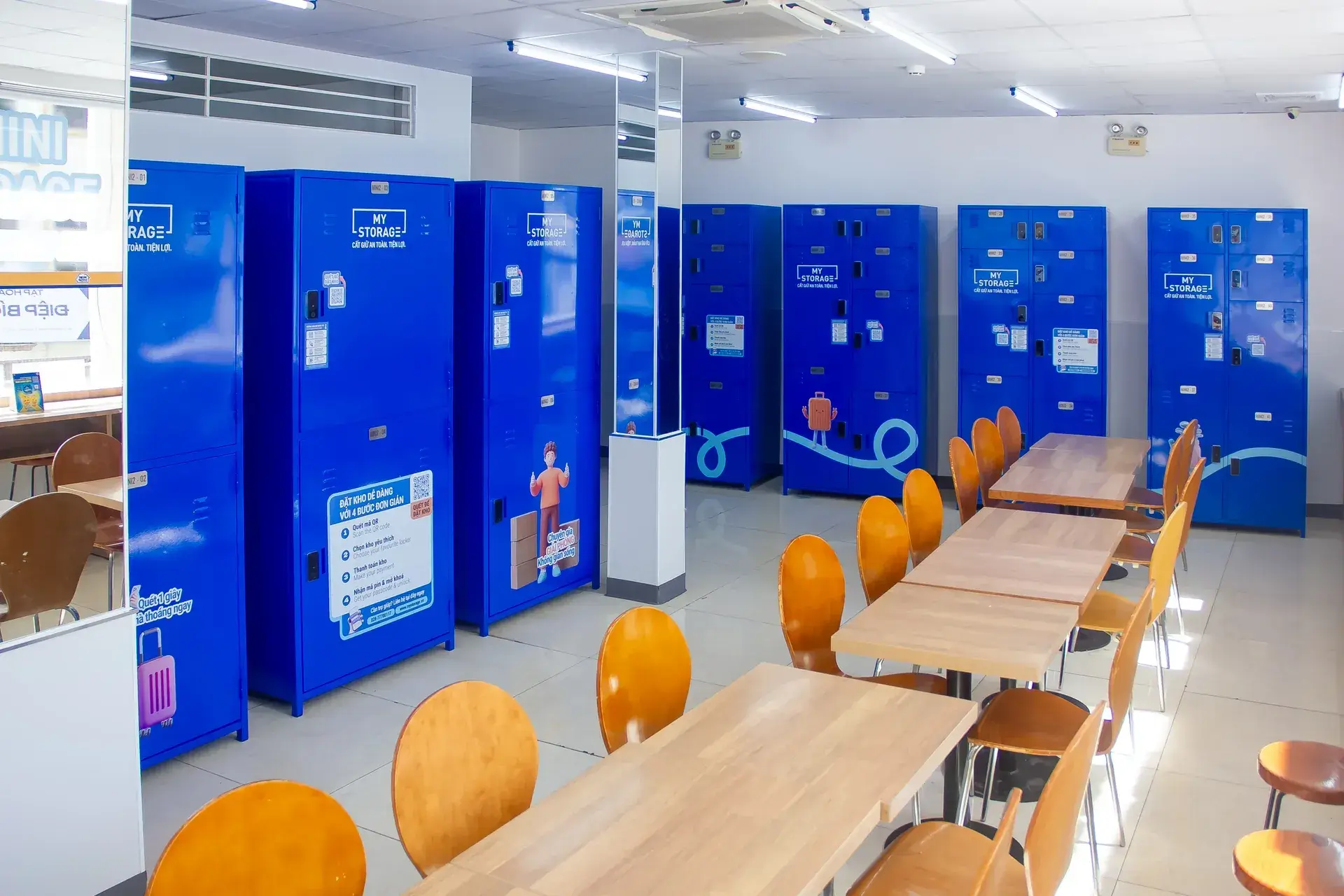
- Central smart lockers: In the districts you are already walking. Drop at 11:00, spend the day on foot, collect on the way out and take one car to the airport.
Storage is not only a departure-day problem either: travellers who keep coming back often move from hourly lockers to a monthly unit, which is the arrangement described in storage for long business trips.
Cost Comparison For Bridging The Check-Out Gap 2027
Late check-out is priced per night while storage is priced per hour or per month, so the table below puts the two on the same page for an eight-hour gap.
| Solution | Format | Capacity | Reference Price 2027 |
|---|---|---|---|
| Hotel late check-out (50%) | Room until 18:00 | A hotel room, holding all your bags | 1,200,000 - 2,500,000 VND (≈ US$47 - US$97) |
| Hotel full night extension | Room past 18:00 | A hotel room, holding all your bags | 2,000,000 - 4,500,000 VND (≈ US$78 - US$175) |
| Airport left luggage desk | Open shelving, per bag | 2 check-in suitcases (about 50 kg) | 350,000 - 550,000 VND (≈ US$14 - US$21) per half-day |
| Smart locker compartment | Private PIN-accessed locker | 1 large 28-inch suitcase plus a backpack | 40,000 - 65,000 VND (≈ US$2 - US$3) per hour |
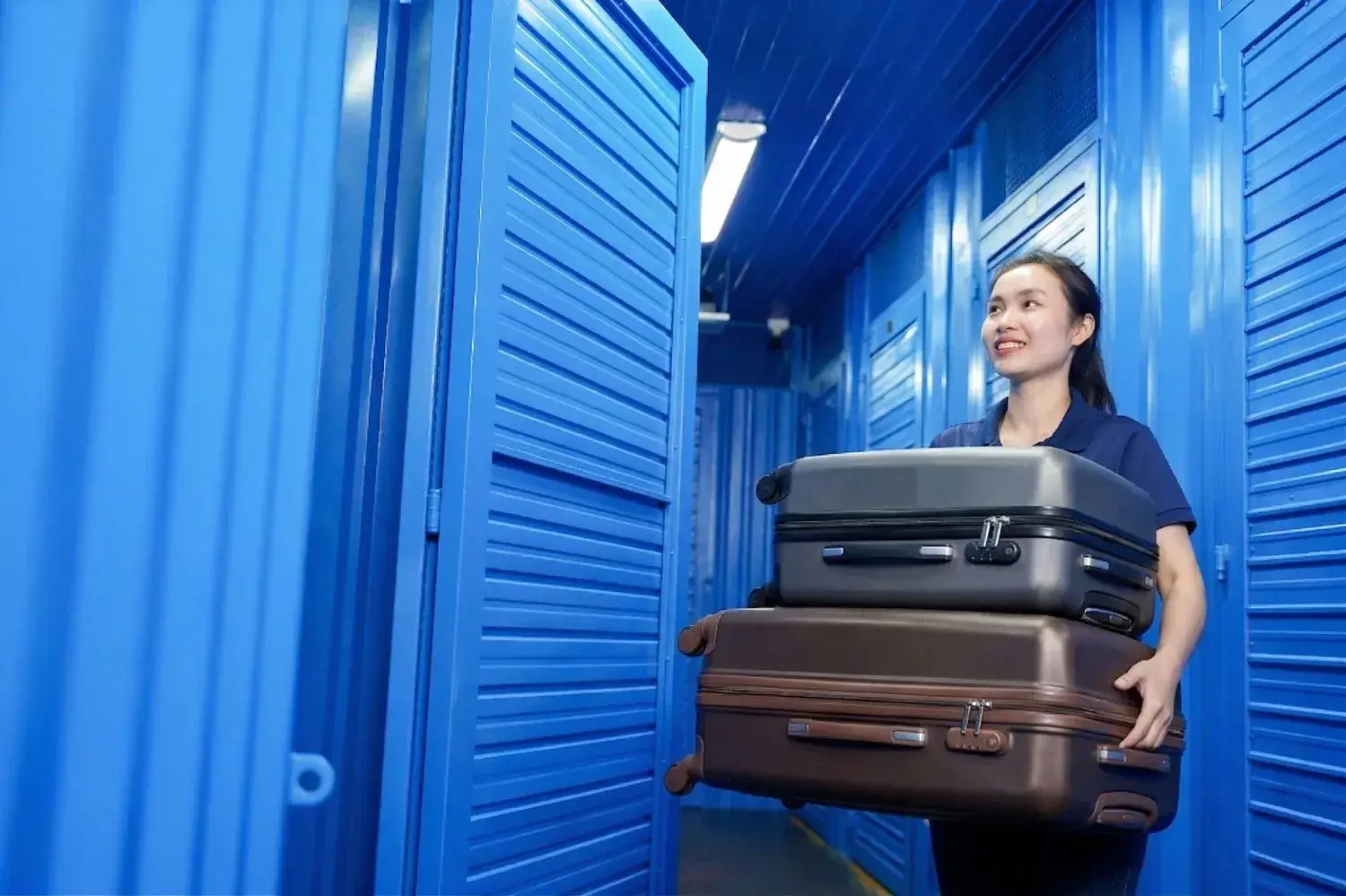
| MyStorage Mini Box unit | Private air-conditioned unit, 1 m³ to 3 m³ | 8 to 25 cartons or several large suitcases | 873,000 - 1,563,000 VND (≈ US$34 - US$61) per month |
The hotel, airport and smart locker rows are market averages across central Ho Chi Minh City in 2027 and are not MyStorage rates; they move with location, season and how long you store. The MyStorage row is a 2027 reference price for the flexible monthly plan, excluding VAT, with the 12-month plan 15% cheaper and 1 m³ holding about 8 to 10 medium cartons. VND is the billing currency and converted figures move with the exchange rate. Surcharges apply at peak times such as Tet. The price per cubic metre falls as units get larger, so when comparing mini storage rental prices in Ho Chi Minh City include anything you may add later.
Tet is the clearest example of that peak: the airport road is busy for about two weeks and lockers fill up, which is why leaving Ho Chi Minh City for Tet is a plan to make days ahead rather than on the morning itself.
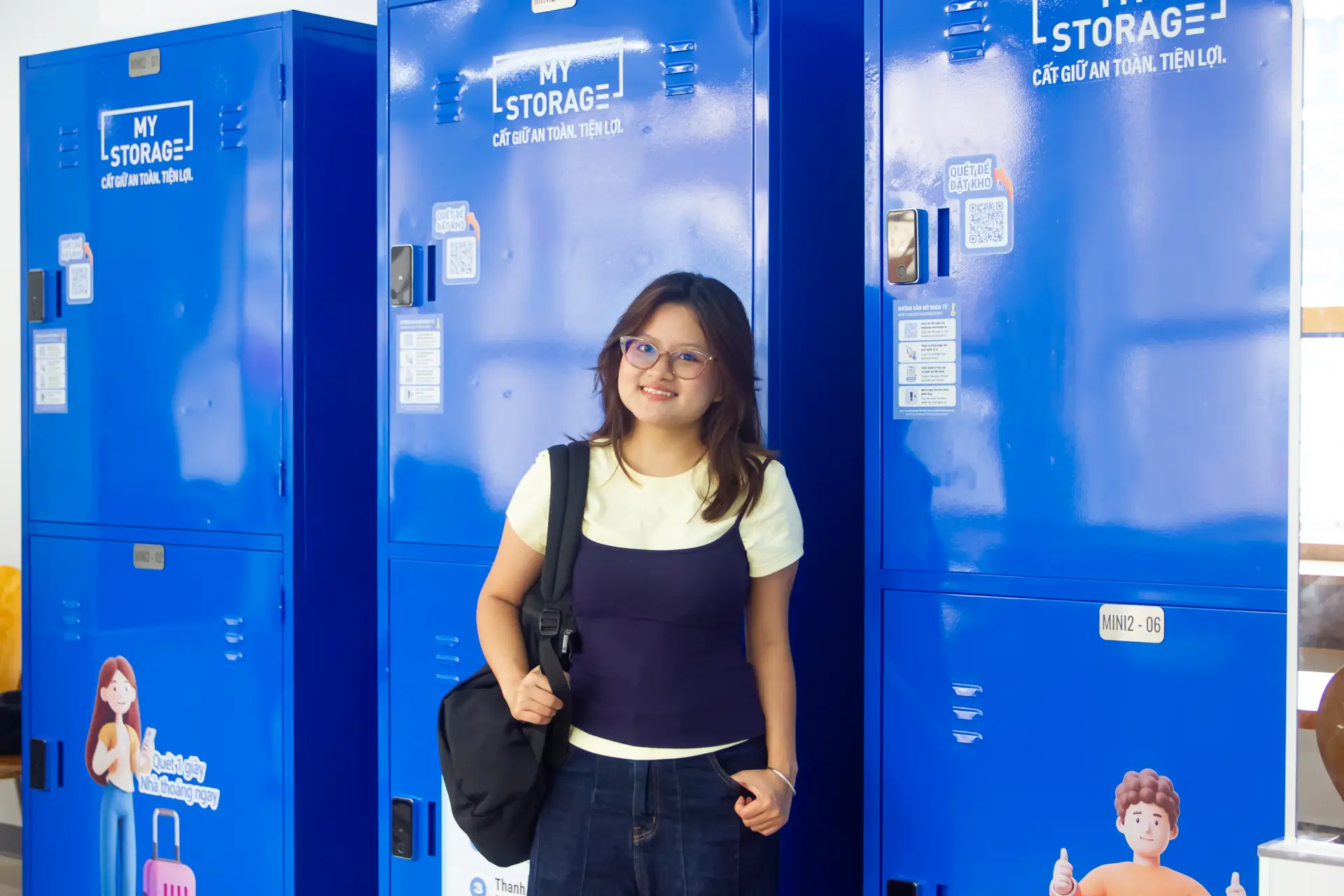
MyStorage Luggage Lockers In Saigon
Booking ahead matters most around public holidays, when both lockers and units fill. What the service gives a traveller on departure day:
Some people are not coming back at all, and what to do with belongings when leaving Vietnam handles the version where the question is months of storage rather than one afternoon.
Your last day in Saigon should be spent on food, coffee and a few landmarks rather than on a suitcase or a hotel room you are not using. A dedicated storage point gives you the freedom to move through the city and arrive at the airport without a detour.
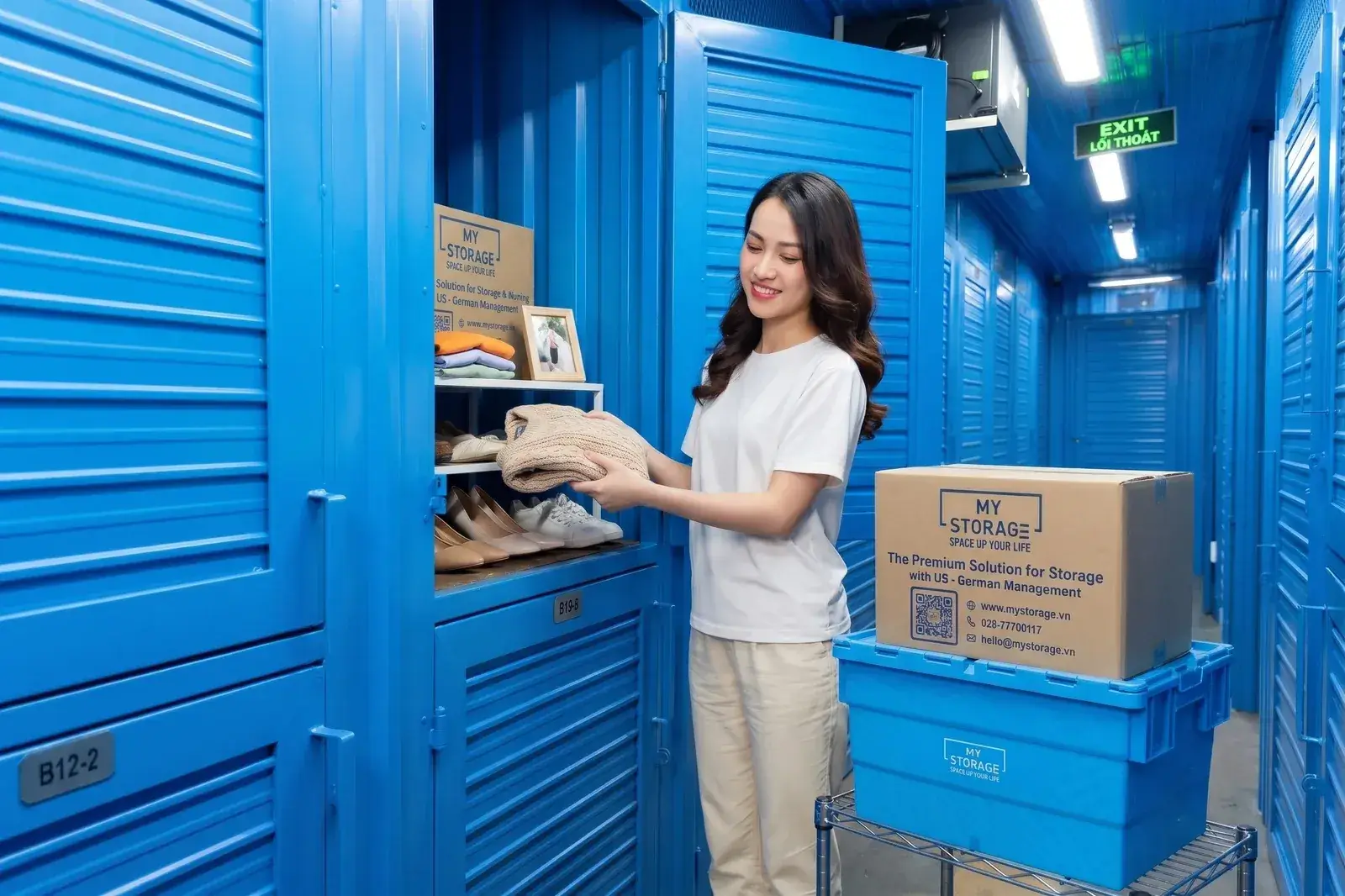
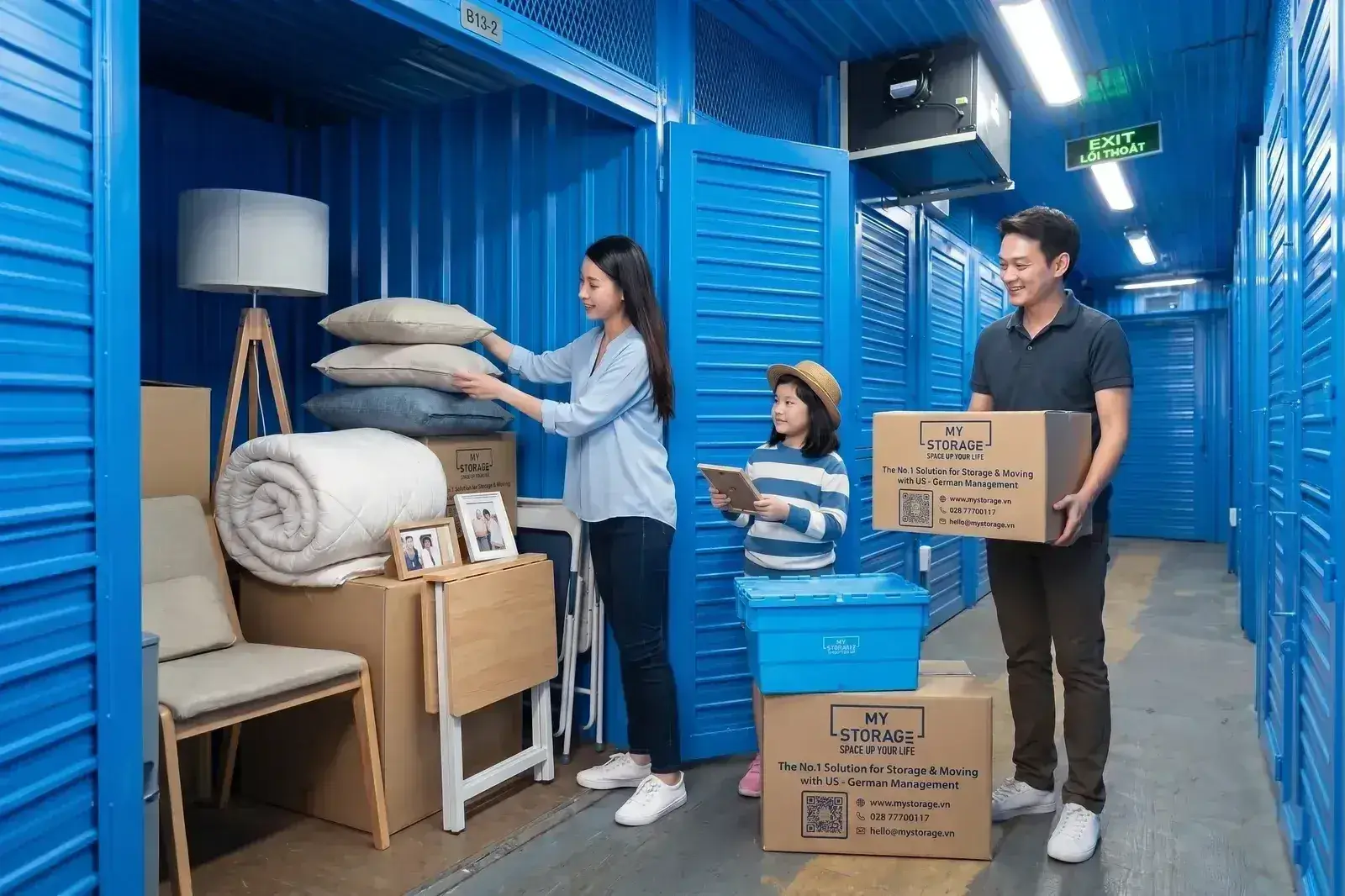
MyStorage runs air-conditioned storage facilities and smart lockers in Ho Chi Minh City with 24/7 camera monitoring, keypad access and individual private compartments. Humidity control keeps electronics, purchases, cosmetics and leather goods out of the tropical damp while you are out. You hold the access PIN, collect the bags when you are ready, and go straight to Tan Son Nhat. Travellers who stay longer than a trip usually switch to a monthly unit, and the storage guide for expats in Ho Chi Minh City explains how that works.
6. Frequently Asked Questions About Check-Out Day In Saigon
Fifteen answers on the logistics of the last day in Ho Chi Minh City, from late check-out fees to where to shower and when to leave for the airport.
What are check-out limbo hours?
Check-out limbo is the 6 to 12-hour gap between a mandatory morning hotel check-out and a late-night flight. Hotels and Airbnbs want the room by 11:00 or 12:00, while long-haul departures from Tan Son Nhat often leave between 21:00 and 02:00, so you have no room, no shower and nowhere secure for the bags. Booking storage early is what turns that gap into a usable day.
Can hotels hold luggage for free?
Most full-service hotels hold bags free for registered guests on the day they check out, but it means coming back for them. If the hotel is in Thao Dien, District 7 or Binh Thanh, that return trip costs 45 to 60 minutes in afternoon traffic plus a second fare. Guests in residential Airbnbs or serviced apartments without a staffed desk rarely have the option at all.
Do Airbnbs allow a luggage drop after check-out?
Most Airbnbs in Ho Chi Minh City cannot store luggage after check-out because cleaners need the whole flat for a 14:00 arrival. Residential buildings also lack a luggage room, and building security is not allowed to take responsibility for private bags. If you are in a rental, arrange an external locker or storage unit before the morning you leave.
How much does hotel late check-out cost?
Hotels generally charge 50% of the nightly rate to keep the room until 18:00, and a full night beyond that. On a 1,800,000 VND room that is about 900,000 VND to 18:00, and a further 1,800,000 VND past it; in five-star properties the figure easily passes 3,000,000 VND. Compared with storing bags and booking a spa with a shower, it is rarely the economical choice.
Is late check-out worth paying for?
It is worth it for families with small children who need a nap and a fixed feeding routine, and rarely worth it for solo travellers or couples. Paying half a night to store bags and take a ten-minute shower is poor value when a locker plus a massage with shower access covers both needs for less. The deciding factor is whether anyone in the group actually needs to lie down.
Where can I store luggage in Ho Chi Minh City?
You can use central smart lockers, a self-storage facility or the airport left-luggage desks, and the right one depends on where you are spending the day. Lockers and self-storage give you a private compartment, camera monitoring and PIN access. Airport desks sit away from everything you want to see, charge per piece and queue up during arrival peaks.
Should I backtrack to my hotel for my bags?
Avoid it if the hotel is far from where you are spending the day or off the line to the airport. Backtracking through the city between 16:30 and 19:00 is slow, with Nam Ky Khoi Nghia and Cong Hoa the worst of it. Leaving the bags in a central point on the downtown-to-airport corridor removes the return leg and the second fare with it.
Where can I shower downtown before a flight?
Book a treatment at a day spa, buy a gym day pass, or use an airport lounge if you have access. District 1 spas include private showers with soap, shampoo and towels when you book a 60 or 90-minute massage. Central fitness centres sell single-day entry that covers the changing rooms, and Terminal 2 lounges have shower booths for Priority Pass holders.
What should I do first after checking out?
Put the heavy bags into storage before anything else, because every other option narrows while you are still holding them. Once the cases are locked away you can walk the alleys, take a ride-hailing bike, enter museums without a bag check and sit down in cafes that have no room for a suitcase. Sightseeing first and storing later wastes the best hours of the day.
Can I work from cafes in Saigon?
Yes, Ho Chi Minh City has one of the better cafe scenes in Asia for working, with fast Wi-Fi, air conditioning and plenty of power sockets. Specialty roasteries in District 1 and District 3 are built for people sitting a few hours, which suits backing up photos or clearing email before a flight. Arriving outside the lunch rush gets you a better table.
How do I handle a rainy afternoon?
In the rainy season from May to November, put the indoor stops in the 14:00 to 17:00 window when the downpours usually fall. Rain lasts 30 to 60 minutes and comes down hard, so a museum, a shopping centre or a foot massage covers it comfortably. Keep a compact umbrella in the day bag and book cars from covered entrances. The damp matters for the bags too, and the steps for rainy season storage against damp and mould are what keep a case from smelling musty.
Are smart lockers safe in Ho Chi Minh City?
Professional lockers and self-storage are secure in a way an unattended hotel counter is not: steel compartments, PIN or app access, and continuous camera recording. The meaningful difference is that nobody else can open your compartment, while a bag behind a desk passes through several hands. Ask any provider about access logging if you are storing electronics or documents.
When should I head to the airport?
Leave central Ho Chi Minh City about 3.5 to 4 hours before an international departure. For a 23:00 flight that means being in the car by 19:00 or 19:30, which covers a 35 to 50-minute drive in evening traffic, 15 minutes to collect bags from a locker on the way, and arriving at Terminal 2 three hours ahead for check-in and security.
Can lockers fit large suitcases?
Large locker compartments take 28 to 32-inch check-in bags, usually two of them plus hand luggage, though internal dimensions vary so check them when you book. For golf bags, surfboards or anything oversized, a small walk-in self-storage unit is the practical answer, and storing sports equipment neatly shows how that gear is usually arranged inside one.
Why choose MyStorage for luggage storage in Saigon?
MyStorage gives you a private compartment rather than a space on a shared shelf, with PIN entry, continuous camera monitoring and air conditioning on the self-storage units. That climate control is what protects electronics, leather and cosmetics from tropical humidity through an afternoon. The same account covers a few hours on departure day or a monthly unit if you leave things behind, and mini cold and air-conditioned storage rental explains when the climate-controlled tier is worth the surcharge.
Related articles
Article
Saigon Layover Guide: What To Do With 6 To 12 Hours And Your Luggage
A Saigon layover of 6 to 12 hours gives you time to leave Tan Son Nhat, drop your bags in secure luggage storage and see District 1; this guide covers visa rules, airport timings, storage…
Read article
Article
Why Does Tidying Reduce Stress? The Link Between Your Living Space And Your Mind
Tidying reduces stress by clearing visual overload, cutting the cognitive load on the brain and restoring your sense of control over your living space; when the home is tidy but still…
Read article
Article
Leaving Ho Chi Minh City For Tet 2027: What To Do With Your Belongings
Before you leave Ho Chi Minh City for Tet 2027, you can lock up your rented room, put suitcases in a smart locker for a late flight, or rent a self-storage unit by the month; declutter…
Read article
