
 Tiếng Việt
 한국어
한국어 日本語
日本語Article· Updated October 15, 2026
How to Store Sports Equipment Neatly and Without Taking Up Much Space
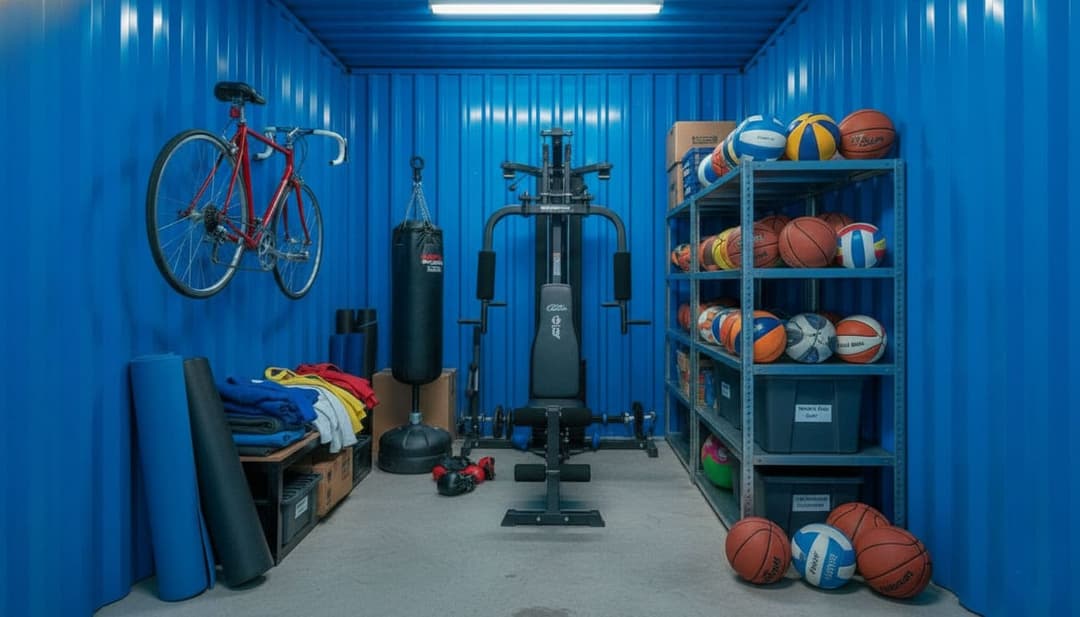
Proper storage of sports equipment helps save living space, protects gear from mold and damage, and makes it more convenient to use. Depending on whether it’s for personal, family, or business use, you can optimize by smart organization at home or by utilizing a self-storage unit with humidity control and 24/7 security.
Why Does Sports Equipment Easily Clutter Your Home?
Sports gear often comes in large sizes, is used seasonally, and is difficult to store compactly, quickly taking up living space if not properly managed.
Sports equipment is often the main culprit behind a cluttered home, especially during renovation periods when space is limited. The reasons include:
- Awkward Sizes and Shapes: Unlike clothes or books that can be neatly stacked, items like bicycles, surfboards, golf clubs, or treadmills are bulky and have asymmetrical shapes, making them very difficult to stack or utilize corner spaces efficiently.
- Seasonal and Specialized Use: Skiing equipment is only used in winter, while diving gear is for summer. These long “dormant” periods mean they occupy valuable storage space without providing regular utility.
- Strict Environmental Requirements: High-end sports equipment is often made from sensitive materials (carbon, composite, genuine leather). They cannot simply be tossed into a dark storage room but require a dry, airy environment to prevent degradation.
- “Temporary Storage” Habit: Due to irregular usage, we often have the tendency to leave items on balconies or under staircases for “convenience,” inadvertently turning these areas into makeshift storage spots that detract from aesthetics and obstruct pathways.
Your home becomes cramped, reducing family living space, creating a suffocating feeling, and posing potential risks of bumps and injuries.
What Are the Risks of Improper Sports Equipment Storage?
Incorrectly storing sports equipment can lead to mold, rust, equipment deformation, and potential safety hazards, especially in small living spaces.
If you treat sports equipment like ordinary household items during a home renovation, you might face unfortunate financial losses:
- Mold and Rust: High humidity in temporary storage environments or construction dust clinging to metal joints (weights, bicycle chains, treadmill components) leads to oxidation, reducing the equipment’s lifespan and safety.
- Deformation and Loss of Elasticity: Tennis or badminton rackets, if compressed or left in excessively hot environments, can suffer frame distortion and string loosening. High-end running shoes without proper form holders may experience sole compression and cracking of specialized adhesive layers.
- Damage to Smart Components: Many modern golf clubs, rackets, and shoes integrate IoT sensors to track performance. Storing them in magnetic or humid environments can damage these sensitive electronic circuits.
- Safety Hazards: Heavy equipment like dumbbells and exercise machines, if not securely fastened, can easily tip over, posing dangers to children and the elderly moving around storage boxes.
- Missing Accessories: Sports equipment often comes with numerous small accessories (screws, battery chargers, resistance bands). If packed haphazardly, you’ll waste a lot of time searching or have to purchase new ones when you need to use them again.
Sports Equipment Storage Solutions
If you’re currently renovating your home, implement these tips right away:
- Use Vacuum Storage Bags for Fabric Items: Bulky workout clothes and protective gear should be vacuum-sealed to save 70% of space.
- Vertical Hanging Systems: Utilize tall wall spaces to hang bicycles, rackets, or skateboards. This keeps items dry and airy while preventing them from being knocked over on the floor.
- Desiccant Bags and PE Shrink Wrap: Carefully wrap electronic sports equipment and add silica gel desiccant packets inside before boxing them up.
- Utilize Temperature-Controlled Storage Services: For expensive golf club sets or bicycles, storing them in air-conditioned mini-warehouses is a worthwhile investment to protect your assets.
- Rent a Storage Unit During Home Renovation: This helps safely preserve not only sports equipment but also many other household items and furniture. It’s especially crucial for storing electronics like TVs, speakers, computers, etc.
Comprehensive Sports Gear Storage Solutions by Need
Proper sports equipment storage helps save living space, protect gear, and optimize long-term costs. Depending on the user (individual, family, or business), the quantity of equipment, frequency of use, and asset value, everyone will require a different storage solution.
The table below summarizes popular sports equipment storage solutions available today, comparing them by space occupied, safety level, and actual reference rental costs. This aims to help readers easily choose the most suitable option without requiring extensive professional experience.
| User/Target Group | Common Sports Equipment Types | Storage Characteristics | Priority Criteria | Suitable Solution | Space Occupied | Safety Level | Reference Price (VND/month)* |
|---|---|---|---|---|---|---|---|
| Individual | Bicycles, sports shoes, dumbbells, yoga mats | Small-to-medium quantity, frequent use | Easy access, cost-effective | Home storage (hanging racks, boxes) | High | Low-Medium | 0 |
| Individual (Seasonal) | Skateboards, climbing gear, SUPs, winter sports equipment | Infrequent use, bulky | Space-saving, moisture-proof | Self-storage, small unit (1–2 m²) | Very Low | High | ~500,000 – 1,200,000 |
| Family | Children’s sports gear, balls, badminton equipment | Many types, increasing over time | Safe, easy to manage | Self-storage, small unit | Very Low | High | ~1,000,000 – 2,500,000 |
| Family | Treadmills, exercise benches, large bicycles | Bulky, high value | Space, moisture-proof | Self-storage, small unit (3–5 m²) | Very Low | High | ~1,800,000 – 3,500,000 |
| Family | Tents, camping stoves, outdoor gear | Used per trip/season | Dry, clean | Self-storage, small unit | Very Low | High | ~1,000,000 – 2,000,000 |
| Business / Club | Training equipment | Large quantity, rotational use | Management, access control | Self-storage / specialized warehouse | Very Low | High | ~3,000,000 – 6,000,000 |
| Business / Club | Competition equipment | High value, sensitive | Security, moisture-proof | Self-storage | Very Low | High | ~2,500,000 – 5,000,000 |
| Business | Inventory, rental items | Long-term storage | Flexible space | Self-storage | Very Low | High | ~3,000,000 – 7,000,000 |
| Short-term | Any sports equipment | Temporary storage | Cost-saving | Store with acquaintances | Medium | Dependent | 0 |
| Long-term | Infrequently used, high-value items | Long-term storage, infrequent access | Safe, stable | Self-storage (e.g., MyStorage) | Very Low | High | Varies by area |
* Reference prices for mini-storage units for sports equipment in Ho Chi Minh City, subject to change based on location, area, and storage conditions.
There isn’t a single “best for all” sports equipment storage solution, but rather one that best suits specific needs. If you only have a few small items that you use frequently, home storage might be sufficient. Conversely, for bulky equipment, seasonal sports gear, or high-value assets, solutions like renting a storage unit often help save space, ensure security, and provide better control over storage conditions.
In reality, many urban families and businesses opt for professional storage facilities to balance cost, flexibility, and safety, especially when living or business space is limited.
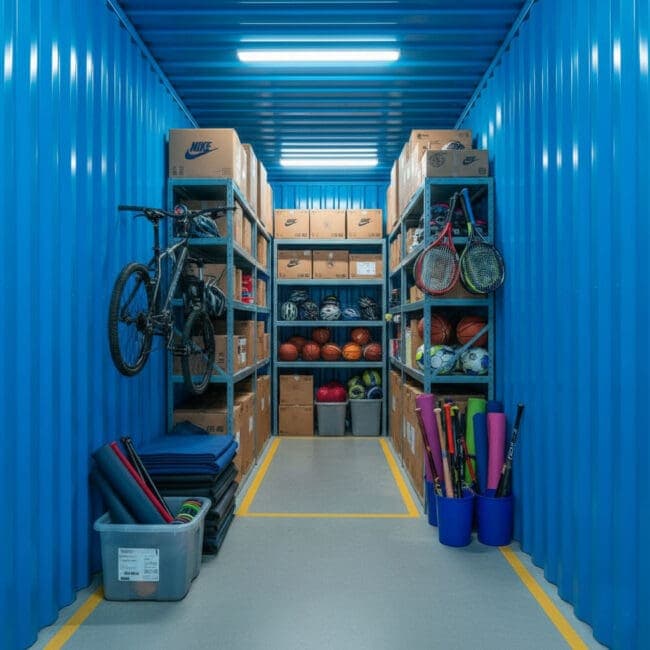
Tips for Long-Term Storage of Sports Equipment
Storing sports equipment for extended periods isn’t just about “tidying up”; it directly impacts the lifespan, safety, and usability of your gear.
Proper preparation from the outset helps prevent common risks associated with long-term storage in urban environments, such as mold, material damage, battery degradation, or lost accessories.
Key Considerations Before Storing Your Gear
- Thoroughly clean and dry: Remove sweat, mud, and rainwater to prevent mold and odors, especially for shoes, exercise mats, and protective gear.
- Remove batteries and electronic accessories: This applies to sports watches, meters, and smart fitness devices to prevent battery leakage or circuit damage.
- Pack by sport: This makes items easier to find and prevents different types of equipment from clashing or getting damaged.
- Label clearly on the outside: Note the sport, quantity, and condition for easy retrieval and inventory management.
- Conduct periodic checks: For storage exceeding 3–6 months, it’s advisable to re-inspect for early detection of mold or pests.
| Key Consideration | Main Purpose | Long-Term Benefit |
|---|---|---|
| Clean & Dry | Prevent mold, odors | Extend equipment lifespan |
| Remove batteries, electronics | Avoid battery damage, short circuits | Maintain stable equipment operation |
| Pack by sport | Easy management, retrieval | Save time when reusing |
| Clear labeling | Prevent confusion, loss | Scientific management |
| Periodic checks | Early risk detection | Reduce repair costs |
Whether storing at home or in a rented facility, adhering to these principles ensures your sports gear remains ready for use, minimizes wear and tear, and effectively protects your initial investment.
Smart sports equipment storage not only helps free up living space but also protects your assets and enhances your user experience. Depending on individual, family, or business needs, combining scientific organization with professional storage solutions will offer a sustainable, flexible, and long-term effective approach.
FAQ
You should rent a storage unit when sports equipment takes up too much space, is seasonal, or during home renovation or relocation.
Yes. Professional self-storage offers humidity control, 24/7 security, and private units, making it safe for high-value equipment.
For individuals, a 1–3 m² storage unit is usually enough for shoes, training gear, mats, or a folding bike.
Families should consider 3–5 m² units to store kids’ gear, bikes, camping equipment, and outdoor sports items.
Businesses and sports clubs use storage for training equipment, competition gear, and seasonal rental inventory.
In Ho Chi Minh City, storage prices typically range from VND 600,000 to 2,500,000 per month, depending on size and features.
Yes. Many self-storage providers offer monthly rentals, ideal for seasonal or short-term sports storage.
Yes, especially for shoes, leather gear, and electronic sports equipment to prevent mold and long-term damage.
Home storage may be free, but it often takes up living space and carries higher risks of humidity damage.
Prioritize suitable unit size, security, humidity control, and transparent pricing to optimize long-term costs.
Related articles
Article
Onshore vs Offshore: Which Manufacturing Model Should Businesses Choose?
Onshore manufacturing refers to production within a company’s home country, helping to control quality, shorten delivery times, and ensure easier regulatory compliance. Offshore…
Read article
Article
How To Organize Your Home Storage Room | 10 Space-Saving Tips
Organize household storage with ten practical tips, an inventory template, safety checks and guidance on when external storage is worth considering.
Read article

Article
Secrets to Profitable Online Selling: 10 Ways to Save Costs
To sell online profitably, you not only need to increase sales but also maintain good control over operating costs. Items such as inventory, premises, packaging, shipping, and order…
Read article
