
 Tiếng Việt
 한국어
한국어 日本語
日本語Article· Updated October 15, 2026
What is IFM? An Integrated Facilities Management Service that Optimizes Operations & Costs

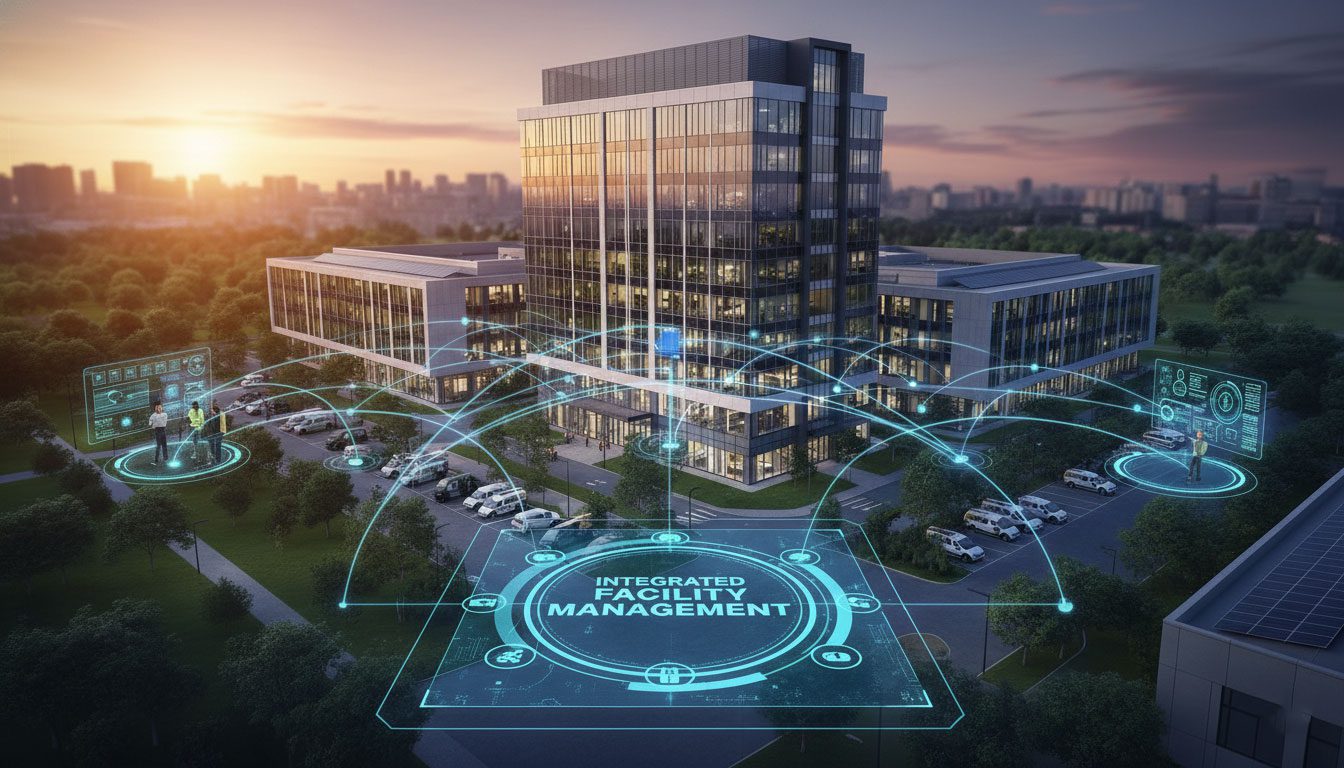
Integrated Facility Management (IFM) is a comprehensive facility management service where a single provider delivers all operational services such as maintenance, cleaning, security, and technical management within a unified system. IFM helps businesses optimize costs, enhance operational efficiency, and improve the user experience within buildings or industrial parks.
What is IFM?
IFM is a unified facility management model where all logistical and technical services (such as maintenance, cleaning, security, and energy management) are overseen by a single partner under one consolidated contract. Instead of managing individual contractors separately, IFM establishes a synchronized operational process, helping businesses optimize performance and minimize costs.
1. A Simple Definition
If we consider a building or factory as a living organism, then IFM acts as its coordinating “brain.” Instead of property owners having to deal with 10 different contractors (one for pest control, one for electrical repairs, one for security, etc.), they only need to work with a single IFM provider. This provider is responsible for the entire workplace experience and the technical condition of the infrastructure.
2. IFM vs. Traditional FM (Facility Management)
The difference lies in integration and strategic vision:
| Criterion | Traditional FM Management | Integrated IFM Management |
|---|---|---|
| Management | Fragmented, multiple points of contact. | Centralized, a single point of contact. |
| Data | Dispersed across departments. | Centralized data system (using software like CAFM, CMMS). |
| Costs | Difficult to control due to various contracts. | Optimized through economies of scale and reduced administrative costs. |
| Response | Reactive (Fix-it-when-it-breaks). | Proactive (Predictive maintenance based on data). |
3. The Role of IFM in Businesses
Implementing IFM isn’t just about cleaning or repairs; it delivers strategic value:
- Increased Asset Lifespan: Thanks to internationally standardized technical maintenance procedures, machinery and infrastructure are properly cared for, reducing rapid depreciation.
- Optimized Operational Costs: Consolidating all services gives businesses better negotiation power for pricing and reduces the need for an extensive intermediate management team.
- Improved Work Environment: When cleaning, lighting, and temperature are coordinated seamlessly, employee productivity within the building significantly increases.
- Compliance and Safety: Ensures all standards for fire prevention and fighting (PCCC), occupational safety, and environmental regulations are consistently met, minimizing legal risks for the business.
In a storage facility like MyStorage, implementing IFM means that security camera systems, humidity control, and cleaning services do not operate independently. If a humidity sensor reports a high level, the air conditioning system will automatically adjust, and technical staff will receive an immediate inspection notification – all within a single management process.
The Core Difference Between IFM and Traditional FM
The core difference lies in the systemic approach: Traditional FM manages services in isolated silos with multiple independent contractors, whereas IFM unifies all logistical and technical services into a single management system. IFM transforms the approach from “reacting to incidents” to comprehensive “strategic optimization.”
| Criterion | Traditional FM | IFM (Integrated) |
|---|---|---|
| Management Model | Fragmented (Silos): Each service (cleaning, security, electricity, etc.) is managed by a separate department or contractor. | Centralized: A single management entity is responsible for all aspects of the infrastructure. |
| Providers | Multiple entities: Businesses must sign and oversee various contracts simultaneously. | A Single Point of Contact (SPOC): Only one contract and one primary contact. |
| Operational Efficiency | Medium: Prone to errors or overlaps when coordinating between different contractors. | High: Services are synchronized, and standardized processes facilitate faster task completion. |
| Data Management | Fragmented: Information about the building’s condition is scattered, making report compilation difficult. | Unified: Utilizes centralized management software, enabling transparent real-time data tracking. |
| Vision | Reactive: Focuses on repairs when incidents occur. | Strategic: Focuses on predictive maintenance and long-term cost optimization (Proactive). |
| Cost Savings | Limited: Incurs administrative costs for managing multiple contractors and small-scale procurement. | Optimized: Reduces intermediate management personnel costs and benefits from preferential pricing due to economies of scale. |
Why Modern Businesses Prioritize IFM?
The shift from traditional FM to IFM is not merely a change in providers, but a fundamental transformation in asset management philosophy.
- Streamlined Operations: The administrative department no longer has to exhaustively coordinate between cleaning and technical teams.
- Consistent Quality: All services adhere to a single Service Level Agreement (SLA) quality standard.
- Absolute Peace of Mind: With an IFM model (like how MyStorage operates its warehouse system), asset safety is ensured by a tightly integrated chain, from security guards and cameras to environmental sensors.
Services in the IFM Model
The IFM (Integrated Facility Management) model is a comprehensive service “ecosystem,” encompassing both Hard FM (hardware technical services) and Soft FM (software utility services). Instead of operating independently, these service groups are tightly integrated to ensure seamless infrastructure operation, safety, and optimized energy costs.
Categories of Key Service Groups in IFM
The IFM model typically divides services into 5 core groups for easier management and performance measurement (KPIs):
Engineering Services
This is the “backbone” of every building and warehouse, ensuring physical systems always function optimally:
- Electrical & Lighting Systems: Maintenance of substations, backup generators, and lighting systems.
- HVAC Systems: Management of air conditioning, ventilation, and humidity control (especially crucial in warehouses like MyStorage).
- Fire Protection Systems: Regular inspection of sprinklers, fire extinguishers, and automatic fire alarm systems.
- Plumbing & Drainage Systems: Handling pipelines, pumps, and wastewater disposal.
Cleaning Services
Ensuring a consistently clean and professional working and storage environment:
- Industrial Cleaning: Regular cleaning of floors, glass, and public areas.
- Pest Control: Spraying for termites, cockroaches, and rats to protect goods and records.
- Waste Management: Sorting and disposing of waste according to environmental standards.
Security Services
Establishing a protective shield for people and assets:
- 24/7 Surveillance: Operating CCTV systems and a central control room.
- Access Control: Managing access cards, fingerprints, PINs, and visitor registration.
- Security Personnel: Direct patrols and handling emergency situations.
Landscape Management
Maintaining the aesthetic appeal and green spaces of the facility:
- Greenery Care: Pruning plants, fertilizing, and maintaining vertical gardens or the surrounding grounds.
- Environmental Enhancement: Creating relaxing spaces for employees and customers (such as co-working areas at MyStorage).
Energy Management
A strategic service aimed at reducing operating costs:
- Consumption Monitoring: Using smart sensors to measure actual electricity and water consumption.
- Optimization: Adjusting machine operation schedules during off-peak hours or implementing green energy solutions (like solar power).
When these services “come together” under the management of an IFM provider, businesses can avoid situations like: a cleaning team wetting the floor, causing an electrical short circuit, but the engineering team not being aware to address it promptly. In IFM, all information flows instantly between departments.
Benefits of IFM Services for Businesses
IFM services help businesses transition from manual operational management to a smart, integrated system, delivering 3 core values: reduced financial costs, optimized human resource productivity, and extended asset lifespan. By consolidating service points, IFM eliminates resource waste and creates a more professional, safer working/storage environment.
Cost Optimization
The most direct benefit of IFM is its ability to significantly cut costs through:
- Economies of Scale: By bundling all services (cleaning, security, engineering) with a single provider, businesses gain a stronger negotiation position compared to hiring multiple individual contractors.
- Reduced Management Costs: Saving HR costs for the administrative department by no longer having to track, control, and pay dozens of different contractors.
- Energy Savings: Professional IFM providers often leverage technology to monitor and reduce wasted electricity and water consumption.
Increased Operational Efficiency
IFM helps the business machinery run more smoothly thanks to:
- Single Point of Contact (SPOC): All incidents, from AC breakdowns to security breaches, are reported and handled through a single system, shortening response times.
- Predictive Maintenance: Instead of waiting for failures, IFM uses data for scheduled maintenance, minimizing machine and technical system “downtime.”
- Focus on Core Business: Business leaders can fully concentrate on their primary business activities instead of worrying about minor logistical issues.
System Synchronization
Synchronization is the key to IFM’s strength:
- Standardized Processes: All departments, from cleaning to engineering, operate under a unified set of quality standards (SLA) and performance indicators (KPIs).
- Centralized Data: All reports on building and warehouse status are updated on a single digital platform, enabling businesses to easily track and make data-driven decisions.
- Seamless Coordination: Eliminating blame-shifting between contractors when overlapping incidents occur (e.g., water leakage affecting electrical systems).
Improved Experience
Ultimately, IFM enhances brand value and satisfaction:
- Professional Environment: Customers and employees are always served in a clean, safe space with equipment consistently ready for use.
- Absolute Peace of Mind: Security and fire protection systems are managed by experts, reducing psychological pressure for service users.
- Increased Asset Value: An infrastructure cared for by excellent IFM services will retain higher and more sustainable real estate value over time.
At modern mini-warehouses like MyStorage, implementing IFM processes helps us maintain precise temperature and humidity down to the degree, ensuring your storage experience is always optimal while also optimizing rental prices for customers.
IFM Operating Model
The IFM (Integrated Facility Management) operating model functions as a central “operating system” where all information streams, from technical and security to cleaning, are collected and processed at a single point. Instead of manual operations, IFM leverages technology to automate processes, transitioning from a reactive incident-response model to a proactive, data-driven predictive maintenance model. The pillars of this operating model include:
Centralized Coordination Center
This is the “brain” of the entire IFM system.
- Information Reception: All service requests (Work Orders) or sensor alerts (IoT) are channeled here.
- Resource Allocation: Instead of individual teams working in isolation, the operations center allocates the most suitable skilled personnel to address issues immediately.
- Rapid Response: Minimizes waiting times between stages. For example, when a sensor reports a high temperature in a MyStorage warehouse, the operations center immediately dispatches the technical team to check the HVAC system without waiting for human detection.
Data & Dashboards
In the digital age, IFM operates based on the power of data:
- Real-time Reporting: All metrics regarding electricity and water consumption, equipment status, and work progress are visually displayed on a Dashboard.
- Predictive Analytics: AI is utilized to analyze data trends, thereby issuing maintenance alerts before actual equipment failures occur.
- Transparency: Business owners can access the system to check the operational status of their facilities anytime, from anywhere.
SLA & KPI System
This serves as the “benchmark” to ensure quality commitments within the integrated model:
- SLA (Service Level Agreement): Clearly defines standards such as: Response time for an electrical fault within 15 minutes, or warehouse humidity must always be maintained at 50-60%.
- KPI (Key Performance Indicator): Evaluates the IFM provider’s performance through specific metrics like the on-time work completion rate, user satisfaction levels, or achieved energy savings percentage.
- Continuous Improvement: Based on KPI results, the operating model is continuously optimized to eliminate redundant steps and enhance productivity.
At MyStorage, the IFM model helps us not only manage clean storage units but also silently operate a complex technical system behind them. This ensures that when you store your goods, you are not just renting a space, but an impeccably managed operational service.
Criteria for Choosing an IFM Provider
Selecting the right IFM partner isn’t just about finding someone who “does it all,” but rather finding a companion capable of transforming data into value. An ideal provider needs a balance of practical experience, a robust technological foundation, and a transparent set of SLAs (Service Level Agreements). This helps businesses eliminate operational risks and fully focus on their business growth objectives. Checklist: “Golden” Criteria for Selection
Experience and Practical Capability
Experience is measured not just in years, but in relevance to the field:
- Portfolio: Have they managed projects of similar scale and nature to your business? (For example, warehouse management requires different technical expertise than office building management).
- International Certifications: Standards such as ISO 9001 (Quality), ISO 45001 (Occupational Health & Safety), or ISO 41001 (Facility Management) are evidence of standardized work processes.
Technology Platform
In the 4.0 era, a “manual” IFM provider will quickly become obsolete:
- Management Software: Do they use systems like CAFM (Computer-Aided Facility Management) or CMMS to manage work orders and assets?
- IoT Applications: The ability to integrate smart sensors to monitor temperature, humidity, and power consumption in real-time.
- Digital Reporting: Can you view operational reports directly on your phone instead of having to read thick paper files?
Clear SLA & KPI Commitments
This is the “insurance policy” for service quality:
- Response Time: Specific regulations on how quickly the team will arrive in case of an emergency (e.g., within 15-30 minutes).
- Evaluation Metrics: Indicators such as on-time maintenance rates, employee satisfaction levels, or cost-saving percentages must be quantified.
- Transparency: The process for handling situations where KPIs are not met should be agreed upon from the outset to protect the business’s interests.
Professional Personnel Team
Machinery can be modern, but people are the ones who directly operate it:
- Technical Proficiency: Engineers and technicians must possess professional qualifications and receive regular training on new technologies.
- Soft Skills: As IFM is a service industry, the attitude and communication skills of security and cleaning staff play a crucial role in building a professional image for the business.
- Stability: A low staff turnover rate from the provider will ensure long-term operational stability at your facility.
When choosing a storage partner, you are also indirectly choosing an IFM provider. At MyStorage, we are confident in meeting the most stringent standards for monitoring technology and European-American standard management processes, giving you complete peace of mind when entrusting your assets.
FAQ
Outsourcing focuses on contracting individual tasks (like cleaning or security). IFM focuses on integrating all those services under a single management framework, taking responsibility for outcomes rather than just task completion.
IFM reduces TCO by extending asset life through predictive maintenance, cutting administrative costs in vendor management, and optimizing energy consumption via centralized monitoring systems.
IoT technology provides real-time data on equipment status (temperature, humidity, power). AI analyzes this data to provide predictive maintenance scenarios, preventing failures before they occur.
Effectiveness is measured through KPIs (Key Performance Indicators) and SLAs (Service Level Agreements), including incident response time, energy saving rates, and end-user satisfaction levels.
IFM supports the “Environmental” goal through smart waste management and energy efficiency; it supports the “Social” goal by ensuring occupational safety and a healthy work environment.
Depending on the scale, this phase usually lasts 3 to 6 months, involving asset auditing, software system setup, and staff retraining.
Since IFM has a holistic view of infrastructure, potential risks (such as electrical shorts causing fires or water leaks damaging machinery) are identified and addressed synchronously rather than in isolation.
This is a mechanism where the provider and the client share the benefits of cost savings or share the responsibility if committed performance goals are not met.
Yes, but usually in the form of “IFM Lite” or renting facilities with integrated services (like MyStorage). This allows SMEs to benefit from professional processes without investing in a massive management structure.
Related articles
Article
Onshore vs Offshore: Which Manufacturing Model Should Businesses Choose?
Onshore manufacturing refers to production within a company’s home country, helping to control quality, shorten delivery times, and ensure easier regulatory compliance. Offshore…
Read article

Article
How To Organize Your Home Storage Room | 10 Space-Saving Tips
Organize household storage with ten practical tips, an inventory template, safety checks and guidance on when external storage is worth considering.
Read article

Article
Secrets to Profitable Online Selling: 10 Ways to Save Costs
To sell online profitably, you not only need to increase sales but also maintain good control over operating costs. Items such as inventory, premises, packaging, shipping, and order…
Read article
