
 Tiếng Việt
 한국어
한국어 日本語
日本語Article· Updated September 22, 2026
Import, Export, Logistics & Warehousing Terms – English Vocabulary
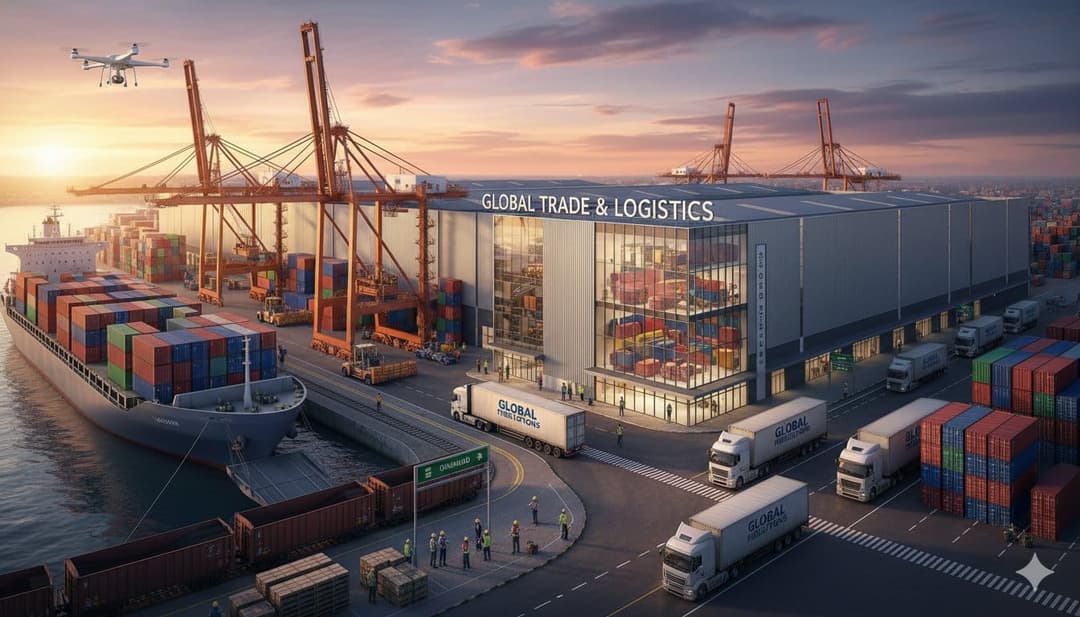
English is the common language of international trade and logistics. Correctly understanding and confidently using industry terminology is essential to successful transactions, warehouse operations and supply chain management. This article equips professionals working in import-export, logistics and warehousing with:
A core set of frequently used specialist English vocabulary.
Common English communication templates for real-world situations (negotiating freight rates, asking about shipment status and resolving incidents).
Explanations of the core meanings of important English import-export, logistics and warehousing terms, helping learners not only translate words but also understand their context and practical applications.
The Role and Importance of English in Import-Export, Logistics and Warehousing
1. The Role of English in Logistics
English is not only a means of communication but also the mandatory “technical language” of the global supply chain.
The Language of International Transactions: According to international trade reports, more than 90% of transport contracts, cargo insurance policies and customs documents (such as the Bill of Lading – B/L and Commercial Invoice) are prepared in English. It is the default language for communication among parties (shippers, consignees, shipping lines, customs authorities and banks) worldwide.
Process Standardization: Incoterms (such as FOB, CIF and DDP), port codes and cargo-handling rules are all defined in English. Misunderstanding a single term can lead to serious legal and financial disputes.
Research by the Vietnam Logistics Business Association (VLA) often emphasizes that 80% of desirable logistics jobs require English proficiency at B2 level or above because of the industry's highly international nature.
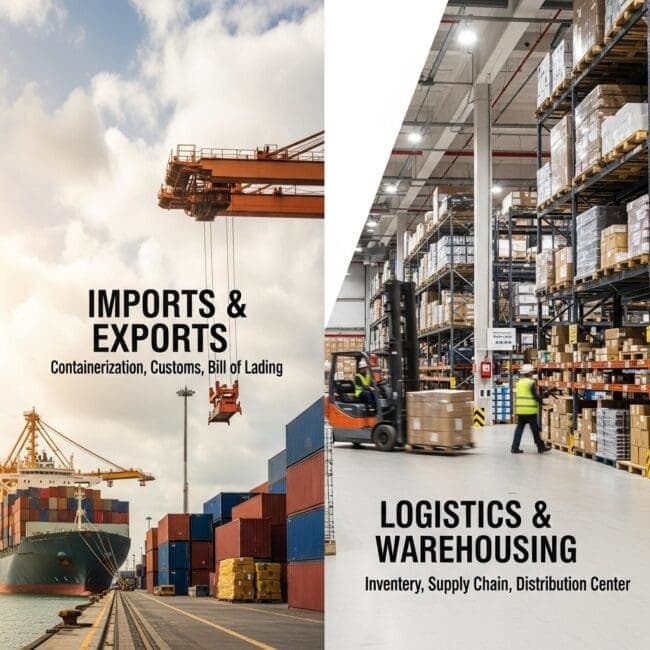
2. The Importance of Correctly Understanding Industry Terminology
Correctly understanding specialist English terminology is crucial to effective transactions and operational management:
In International Transactions (Import-Export):
- Avoiding Documentation Errors: A minor mistake when entering English information on a $B/L$ or Letter of Credit (L/C) can leave goods stranded at a port or cause a bank to reject payment.
- Effective Negotiation: A thorough understanding of Incoterms enables employees to negotiate buyer and seller responsibilities, costs and risks accurately, thereby optimizing profits.
In Operations Management (Logistics & Warehousing):
- Smart Warehouse Operations: Warehouse management systems (WMS – Warehouse Management System) and multinational ERP software use English as their primary language. Employees must understand commands such as Picking, Putaway, Cycle Count to operate warehouses efficiently.
- Safety and Procedures: Safety manuals, machinery operating instructions and warehouse 5S procedures are often written in English. Inaccurate translations can endanger employees and goods.
Specialist English Terms & Vocabulary for Import-Export, Logistics and Warehousing
International transactions & contracts
| Term | Meaning | Notes |
|---|---|---|
| Incoterms | International commercial terms | A global set of trade rules |
| EXW (Ex Works) | Delivery at the seller's premises | The buyer bears all transport costs |
| FOB (Free on Board) | Delivery on board | Common in maritime transactions |
| CIF (Cost, Insurance, Freight) | Price includes insurance & freight | The seller bears costs to the port |
| DDP (Delivered Duty Paid) | Delivery with duties paid | The seller bears full responsibility |
| FCA (Free Carrier) | Delivery to the carrier | Widely used in multimodal transport |
| DAP (Delivered at Place) | Delivery at destination | The buyer pays import duties |
| Letter of Credit (L/C) | A bank-backed payment undertaking | A common payment method |
| Commercial Invoice | A commercial billing document | Used to determine the value of goods |
| Packing List | A packing document | Lists the contents of each package |
Transport & warehousing
| Term | Meaning | Notes |
|---|---|---|
| B/L (Bill of Lading) | Sea freight transport document | The most important import-export document |
| AWB (Air Waybill) | Air freight transport document | Issued by the airline |
| LCL (Less than Container Load) | Consolidated cargo | Shares a container |
| FCL (Full Container Load) | A full container shipment | One shipper |
| 3PL (Third Party Logistics) | Third-party logistics services | Outsourced logistics |
| 4PL (Fourth Party Logistics) | Integrated logistics services | Manages the entire supply chain |
| CFS (Container Freight Station) | LCL cargo station | Loads/unloads consolidated cargo |
| Bonded Warehouse | Customs-controlled warehouse | Stores goods before customs clearance |
| Distribution Center (DC) | A distribution facility | Receives and dispatches retail goods |
| Cross-docking | Rapid cargo transfer | Reduces storage time |
| Cold Storage | A refrigerated warehouse | Preserves food and pharmaceuticals |
| Pallet / Rack System | Cargo shelving / supports | A warehouse storage system |
| Forklift | A powered lifting vehicle | Warehouse operating equipment |
| Inventory | Goods held in stock | Used in warehouse management |
| Stocktaking / Inventory Check | Counting and verifying goods | Performed periodically |
| Barcode / RFID System | Barcode / radio-frequency identification | Optimizes inventory control |
Documents & payments
| Term | Meaning | Notes |
|---|---|---|
| Shipping Instruction (SI) | Shipment instructions | Sent to the shipping line before transport |
| Delivery Order (D/O) | Authorization to release cargo | Issued by the shipping line to the consignee |
| Certificate of Origin (C/O) | Proof of a product's origin | Used to obtain preferential tariffs |
| Certificate of Quality (C/Q) | Proof of product quality | Verifies the goods |
| Certificate of Insurance | Proof of insurance coverage | Protects goods in transit |
| Proforma Invoice | A preliminary invoice | An estimate issued before shipment |
| Debit / Credit Note | A debit / credit adjustment document | Used to adjust an invoice |
Times & schedules
| Term | Meaning | Notes |
|---|---|---|
| ETA (Estimated Time of Arrival) | Expected arrival time | |
| ETD (Estimated Time of Departure) | Expected departure time | |
| ATA (Actual Time of Arrival) | Actual arrival time | |
| ATD (Actual Time of Departure) | Actual departure time | |
| Cut-off Time | Cargo submission deadline | Final deadline for delivering cargo to the vessel |
| Transit Time | Transport duration | Measured from origin to destination |
Surcharges and ancillary service terms
| Term | Meaning | Notes |
|---|---|---|
| O/F (Ocean Freight) | Sea transport charge | |
| THC (Terminal Handling Charge) | Port handling fee | |
| DOC Fee | Documentation fee | |
| CIC (Container Imbalance Charge) | Container imbalance surcharge | |
| DEM/DET (Demurrage/Detention) | Container / terminal storage charges | |
| PCS (Port Congestion Surcharge) | Port congestion surcharge | |
| BAF (Bunker Adjustment Factor) | Fuel surcharge | |
| CAF (Currency Adjustment Factor) | Currency adjustment surcharge |
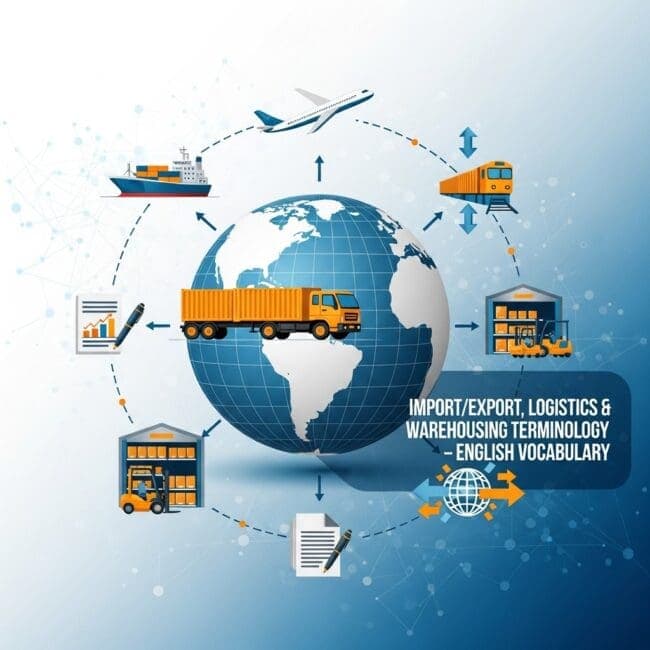
Specialist English Vocabulary
Logistics & Supply Chain
Supply chain – The network that supplies goods
Logistics – Managing the flow of goods
Distribution – Delivering goods to customers
Freight – The cost or transport of goods
Cargo – Goods being transported
Shipment – A consignment of goods
Delivery – Taking goods to their recipient
Routing – Planning the transport route
Tracking – Monitoring a shipment's journey
Supply chain visibility – Transparency across the supply chain
Lead time – Time from placing an order to delivery
Fulfillment – Completing and delivering an order
Supplier – A provider of goods or services
Procurement – Purchasing goods or services
Sourcing – Finding sources of supply
Supplier evaluation – Assessing suppliers
Purchase order (PO) – A formal order document
Contract management – Administering contracts
Request for quotation (RFQ) – A request for pricing
Negotiation – Reaching an agreement
Cost optimization – Improving cost efficiency
Total cost of ownership (TCO) – The full cost of owning an asset
Demand-supply matching – Balancing supply and demand
Capacity planning – Planning operational capacity
Production planning – Planning manufacturing activity
Master production schedule (MPS) – The overall production timetable
Work-in-progress (WIP) – Goods currently being produced
Raw materials – Inputs used in production
Finished goods – Completed products
Bill of materials (BOM) – A list of required materials
Manufacturing – Producing goods
Assembly line – A sequential production line
Quality assurance – Ensuring quality standards
Quality control (QC) – Checking product quality
Six Sigma – The 6 Sigma quality management method
Kaizen – Continuous improvement
Kanban – A card-based production scheduling system
Just-in-time (JIT) – Producing only when needed
Just-in-case – Maintaining contingency stock
Batch production – Producing goods in batches
Continuous improvement – Ongoing enhancement
Efficiency – Achieving results with minimal waste
Productivity – Output relative to inputs
KPI (Key Performance Indicator) – A key performance metric
Benchmarking – Comparing against industry standards
Optimization – Making a process as effective as possible
English Warehousing Vocabulary
Distribution center – A facility that distributes goods
Fulfillment center – A facility that completes customer orders
Cross-docking – Transferring goods directly between vehicles
Inbound – Goods entering a warehouse
Outbound – Goods leaving a warehouse
Receiving – Accepting incoming goods
Picking – Retrieving goods for an order
Packing – Preparing goods for shipment
Labeling – Attaching identification labels
Pallet – A platform for holding goods
Forklift – A powered lifting vehicle
Shelf / Rack system – Shelving used to store goods
Loading dock – An area for loading and unloading
Replenishment – Restocking goods
Put-away – Moving goods to their storage location
Inventory management – Managing goods held in stock
Cycle count – A periodic inventory count
Stocktaking – Counting and verifying inventory
Inventory accuracy – The correctness of inventory records
FIFO (First In First Out) – The oldest stock leaves first
LIFO (Last In First Out) – The newest stock leaves first
Safety stock – Reserve stock held for contingencies
Dead stock – Stock held for a long time
Overstock – Inventory exceeding requirements
WMS (Warehouse Management System) – Software for managing warehouse operations
Temperature-controlled storage – Storage with regulated temperatures
Bonded warehouse – A customs-controlled warehouse
- Chilled storage – Cool/air-conditioned storage
Dry storage – Storage for non-refrigerated goods
Hazardous goods storage – Storage for dangerous goods
Security system – A warehouse protection system
RFID system – A radio-frequency identification system
Barcode scanning – Reading barcodes electronically
Material handling – Moving and managing goods
Consolidation – Combining cargo
Deconsolidation – Separating combined cargo
English Transport & Freight Forwarding Vocabulary
Air freight – Transporting goods by air
Ocean freight – Transporting goods by sea
Land freight – Transporting goods by road
Rail freight – Transporting goods by rail
Courier – An express delivery service
Express delivery – Rapid delivery
Freight forwarder – An intermediary that arranges cargo transport
Carrier – A company that transports goods
Shipping line – A maritime transport company
Bill of Lading (B/L) – A sea freight transport document
Airway bill (AWB) – An air freight transport document
Delivery order (D/O) – Authorization to release cargo
Container – A standardized cargo box
20-foot / 40-foot container – A container measuring 20/40 feet
Reefer container – A refrigerated container
Demurrage – A charge for keeping a container too long
Detention – A charge for holding equipment outside the terminal
Port congestion surcharge (PCS) – A fee for port congestion
BAF (Bunker Adjustment Factor) – A fuel surcharge
CAF (Currency Adjustment Factor) – A currency adjustment surcharge
Transit time – The duration of transport
Lead time – The time required for delivery
Routing – Planning the transport route
Tracking number – A code used to track a shipment
Customs clearance – Completing customs formalities
Incoterms – International commercial terms
EXW, FOB, CIF, DDP – Delivery terms
Freight cost – The cost of transporting goods
Insurance certificate – Proof of cargo insurance
Loading / unloading – Putting goods on / taking goods off
Multimodal transport – Transport using multiple modes
Last-mile delivery – The final stage of delivery
Reverse logistics – Managing returned goods
3PL (Third Party Logistics) – Outsourced logistics services
4PL (Fourth Party Logistics) – Integrated logistics management
Freight consolidation – Combining cargo for transport
Drop-off point – A location where goods are delivered
Pickup location – A location where goods are collected
Tracking system – A system for monitoring shipments
English Demand Forecasting & Planning Vocabulary
Demand forecasting – Predicting future demand
Forecast accuracy – How closely a forecast matches actual results
Demand variability – Changes in demand over time
Time series analysis – Analyzing time-ordered data
Causal forecasting – Forecasting based on causal factors
Simulation – Modeling potential outcomes
Seasonality – Recurring seasonal patterns
Trend analysis – Examining patterns and trends
Historical data – Data from past periods
Data analytics – Examining data for insights
Predictive model – A model used to forecast outcomes
Forecast error – The difference between forecast and actual results
Sales projection – An estimate of future sales
English Risk Management Vocabulary
Risk management – Identifying and managing risks
Supply chain disruption – An interruption to the supply chain
Demand fluctuation – Changes in demand
Price volatility – Rapid or unpredictable price changes
Risk identification – Recognizing potential risks
Risk assessment – Evaluating risks
Risk mitigation – Reducing the impact of risks
Contingency planning – Preparing backup plans
Crisis management – Managing emergencies or disruptions
Supplier risk – Risk arising from suppliers
Operational risk – Risk arising from operations
Financial risk – Risk of financial loss
Forecast inaccuracy – A forecast that differs from actual results
Business continuity plan (BCP) – A plan for maintaining operations
Supply Chain Software & Technology
ERP (Enterprise Resource Planning) – Planning and managing enterprise resources
CRM (Customer Relationship Management) – Managing customer relationships
WMS (Warehouse Management System) – Managing warehouse operations
TMS (Transportation Management System) – Managing transport operations
SCM (Supply Chain Management software) – Software for managing supply chains
IoT (Internet of Things) – A network of connected physical devices
AI-based optimization – Optimization powered by AI
Automation – Using technology to perform processes automatically
Robotics – Using robots in operations
Cloud logistics – Logistics powered by cloud computing
Blockchain in logistics – Applying blockchain technology to logistics
Predictive analytics – Using data to predict outcomes
Digital twin – A virtual replica of a physical asset or process
GPS tracking – Monitoring locations with GPS
EDI (Electronic Data Interchange) – Exchanging business data electronically
Common English Phrases & Sentence Templates
Exchanging order and shipment information
Please confirm the ETA of the shipment. – Please verify the shipment's expected arrival time.
The goods have been dispatched. – The goods have been sent.
We are preparing customs clearance. – We are completing the customs procedures.
The cargo is delayed due to port congestion. – The goods are late because the port is congested.
Please send us the packing list and invoice. – Please provide the packing document and invoice.
We are consolidating shipments to reduce cost. – We are combining shipments to lower costs.
Our warehouse operates 24/7 for inbound and outbound. – Our warehouse receives and dispatches goods around the clock.
The shipment is under inspection by customs. – Customs is inspecting the shipment.
The cargo has arrived at the destination port. – The goods have reached the destination port.
We’ll arrange delivery to your warehouse tomorrow. – We will deliver the goods to your warehouse tomorrow.
Warehousing & goods storage
Inventory level is running low. – The quantity of stock is decreasing.
Please check the stock availability. – Please verify whether the goods are in stock.
The goods are stored in a bonded warehouse. – The goods are kept in a customs-controlled warehouse.
We need to rearrange the storage layout. – We need to reorganize the warehouse layout.
Please make sure all items are properly labeled. – Please ensure every item has the correct label.
The forklift is out of service today. – The forklift is not operating today.
The warehouse temperature is maintained at 5°C for cold storage. – The temperature is kept at 5°C for refrigerated goods.
The pallets must not exceed 1.5 meters in height. – Pallets may not be taller than 1.5 meters.
Please double-check the inventory list before loading. – Please verify the stock list again before loading the goods.
All damaged goods should be reported immediately. – Any damaged items must be reported at once.
Delivery & transport
The driver will contact you before arrival. – The driver will get in touch before arriving.
Please prepare the loading area for the truck. – Please ready the area where the truck will be loaded.
The delivery truck is stuck in traffic. – The truck carrying the goods is caught in congestion.
We’ll use a 2-ton truck for this shipment. – We will transport this shipment in a 2-ton truck.
The goods need to be loaded onto container number ABC123. – The goods must be placed in container ABC123.
The shipment was rerouted due to bad weather. – The shipment's route was changed because of poor weather.
The trucking fee will depend on the distance and load. – The transport charge is based on the journey and cargo weight.
Please provide the delivery note (POD) after completion. – Please supply proof of delivery once the job is complete.
The driver reported that one box was missing. – The driver said that one carton could not be found.
We’re scheduling the next shipment for next Monday. – We are planning the next consignment for Monday.
Documents, payments & procedures
Please issue the commercial invoice. – Please prepare and release the commercial billing document.
The original Bill of Lading will be sent by courier. – The original transport document will be delivered by express service.
We will send you the shipping documents for verification. – We will provide the transport documents for you to check.
The Letter of Credit has been confirmed by the bank. – The bank has verified the payment undertaking.
Customs requires additional documents for clearance. – The customs authority needs more paperwork before releasing the goods.
Please check if the HS code is correct. – Please verify the product classification code.
The payment term is 30 days after shipment. – Payment is due 30 days after the goods are shipped.
We have attached the invoice and packing list for your reference. – The billing and packing documents are attached for review.
Please confirm the consignee’s address. – Please verify the delivery recipient's address.
We need your confirmation before releasing the goods. – We require your approval before handing over the shipment.
Communication, customer service & issue resolution
Thank you for your prompt response. – Thank you for replying quickly.
We apologize for the delay in delivery. – We are sorry that the goods arrived late.
We’re doing our best to resolve the issue. – We are making every effort to fix the problem.
Please let us know your preferred delivery time. – Please tell us when you would like the goods delivered.
We’ll update you once the shipment is dispatched. – We will notify you when the goods have been sent.
Could you please share the tracking number? – Could you send us the shipment tracking code?
Please ensure the goods are well packed to avoid damage. – Please pack the items securely so they are not damaged.
Your shipment has successfully been delivered. – Your goods have reached their destination.
We’ll schedule a pickup at your convenience. – We will collect the goods at a time that suits you.
Thank you for choosing our logistics services. – We appreciate your trust in our logistics services.
How to Learn & Apply Specialist Logistics English Effectively
1. Methods for Memorizing and Organizing Knowledge
| Method | Detailed Description | Application Notes |
| Learn by Practical Topic | Do not learn isolated words. Instead, learn phrases associated with a specific process (for example, study B/L, Customs Declaration, L/C together when learning the customs-clearance process). | Divide the material into modules: Sea Freight, Customs, Warehouse Management, International Payments. |
| Use Memorization Tools (Flashcards) | Use applications such as Quizlet or Anki to create flashcard sets. In particular, use Spaced Repetition to optimize long-term retention. | Schedule $3-5$ review sessions each week. Learn only $10-15$ new words/phrases each day. |
| Learn by Analyzing Documents | Print real documents (contracts, B/Ls and commercial invoices) and circle/highlight the terminology. Write sentences using those terms directly on the documents. | This method helps you understand the vocabulary's legal and operational context. |
2. Practice the Language in Daily Work
| Method | Detailed Description | Benefits |
| Practice Writing Professional Logistics Emails | Write transactional emails (requesting freight rates, confirming vessel schedules and resolving cargo incidents) using the industry phrases you have learned (e.g., ETA, Cut-off Time, Transshipment). | Builds confidence and demonstrates professionalism in international transactions. |
| Write Internal Operations Reports in English | Develop the habit of writing inventory reports (Inventory Report) and risk reports (Risk Assessment) in English, using terms such as SKU, Cycle Count, Safety Stock. | Prepares you to work with WMS/ERP systems and communicate with overseas managers/partners. |
| Practice with Real Case Studies | Analyze past operational situations (for example: cargo incurring Demurrage/Detention or Incoterms disputes). Practice explaining the issue and proposing solutions in English. | Improves critical-thinking and problem-solving communication skills. |
3. Build an Internal Terminology System
Standardize Terminology: Build a shared English – Vietnamese Glossary for the company's entire Logistics/SCM team. This ensures that every employee understands and uses the same terms, preventing internal misunderstandings.
Consult International Standards: Regularly update and compare your glossary with terminology from reputable organizations such as the ICC (International Chamber of Commerce) for Incoterms and definitions from major shipping lines.
Mastering logistics, import-export and warehousing terminology and English helps you work more professionally in a global environment. Proactively update and regularly practice your vocabulary to communicate more effectively and expand your career opportunities in modern logistics.
Related articles
Article
Rent a Ready-Built Warehouse or Build Your Own? Comparing Costs and Timelines
When expanding storage and distribution capacity, business leaders often face a critical strategic decision: should they rent a ready-built warehouse or invest their own capital in building…
Read article

Article
Can You Use an Apartment as a Warehouse or Office? Space Solutions for Online Shops and Small Businesses
Is it legal to rent an apartment as a warehouse or office? Explore the rules, risks, and suitable storage solutions for online shops and small businesses.
Read article

Article
Combining Storage Rental and Livestreaming for Online Shops: An Efficient Operating Model
Combining storage rental with a livestreaming space is a modern operating solution that allows online sellers to integrate product storage, sample preparation, live sales sessions, and…
Read article
