
 Tiếng Việt
 한국어
한국어 日本語
日本語Article· Updated October 15, 2026
Logistics & Warehousing Associations in Vietnam and Internationally
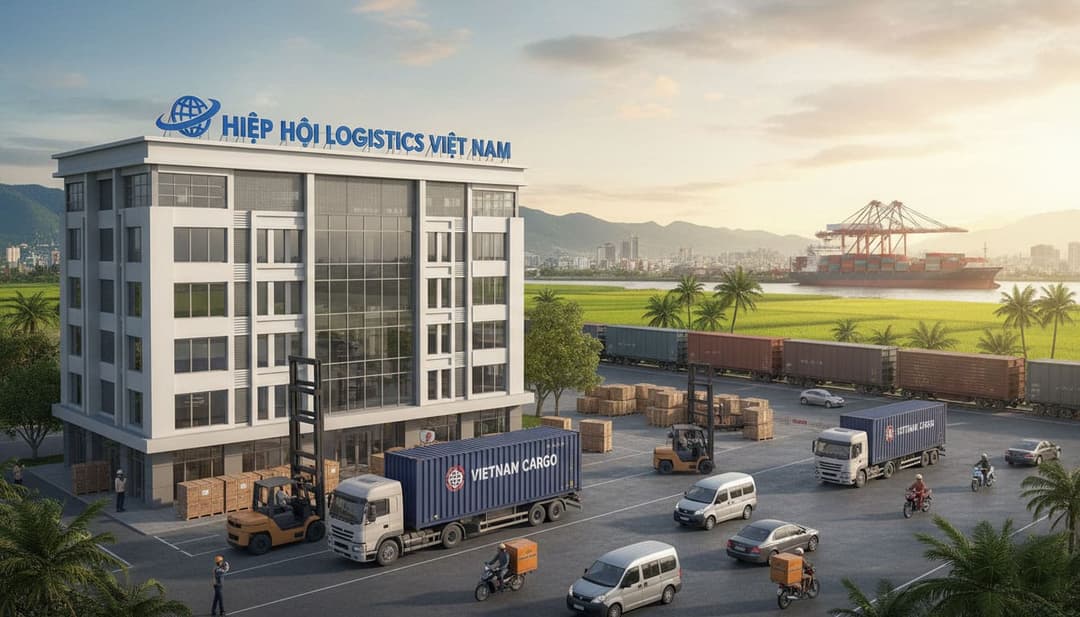
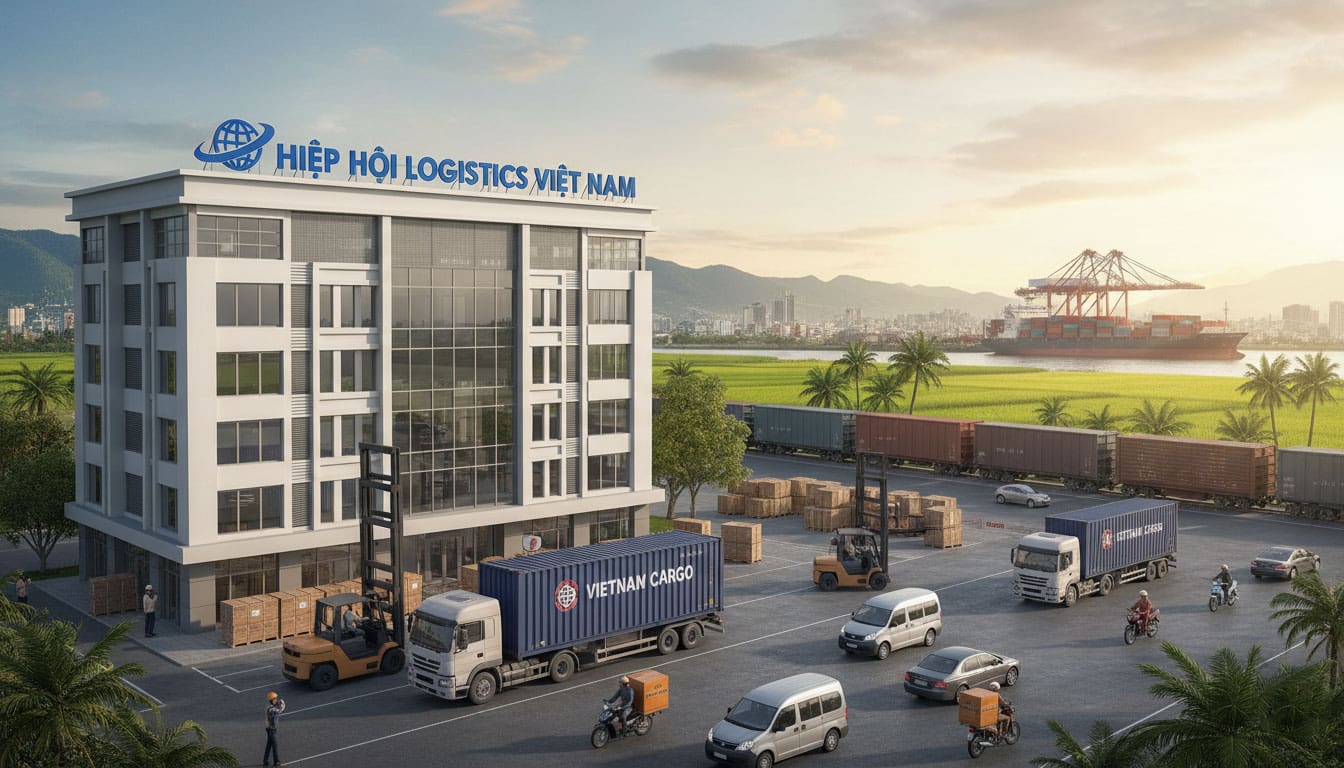
Logistics and warehousing associations play a crucial role in connecting businesses, standardizing operations, updating policies, and fostering the development of the logistics and warehousing industry in individual countries and regions.
In Vietnam, associations such as VLA, VCCI, and FIATA Vietnam serve as reputable references for warehousing, transportation, and goods storage businesses. Globally, international logistics associations help businesses access global standards, technological trends, and cross-border partner networks.
Definition of Logistics and Warehousing Associations
A logistics and warehousing association is a non-profit professional organization comprising businesses, experts, and organizations operating in the fields of transportation, freight forwarding, warehouse leasing, and supply chain management.
The core objectives of these associations are to protect the legitimate interests of their members, promote industry development by standardizing practices, and create a networking platform between businesses and the government or international markets.
Role in the Supply Chain
Joining a logistics and warehousing association brings direct benefits to businesses, especially in enhancing brand credibility and expanding B2B business opportunities. Businesses gain easier access to major clients, receive early updates on standards for warehouse safety, cargo insurance, and fire prevention and fighting (PCCC), and grasp market trends before they become widespread. These are crucial factors that help warehousing businesses operate sustainably and compete in the long term.
These associations act as a “link,” connecting disparate components within the supply chain into a unified system:
1. Representing the Voice of Businesses
Associations serve as a bridge for policy feedback. When there are changes in tax laws, infrastructure fees, or import/export regulations, the association advocates on behalf of businesses, submitting recommendations to regulatory bodies to ensure a fair business environment and optimize costs.
2. Standardize Warehouse Operations
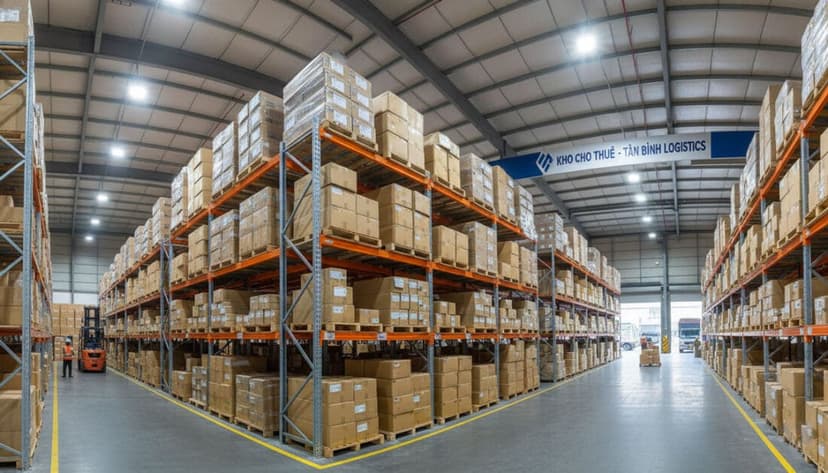
For the logistics industry to achieve high efficiency, synchronization is essential. Associations play a crucial role in establishing or disseminating technical standards such as:
- Standard Pallet Dimensions.
- Occupational Safety and Fire Prevention Procedures in Warehouses.
- Application of Barcode Systems and Warehouse Management Technology (WMS).
3. Connecting Policy – Legal – Market
- Policy: Rapidly update businesses on new circulars and decrees.
- Legal: Provide legal consultation support, resolve international trade disputes (e.g., Incoterms clauses).
- Market: Organize forums and trade fairs for businesses to find partners and expand their global supply network.
Distinguishing Types of Associations
Despite significant overlap, associations are typically categorized based on their specialized scope of operations:
| Criteria | Logistics Association | Warehousing Association | Transport – Integrated Supply Chain Association |
|---|---|---|---|
| Focus Area | Freight forwarding services, customs procedures, cargo coordination. | Storage management, handling, distribution at warehouses and logistics centers. | Encompasses the entire flow of goods from raw materials to end consumers. |
| Key Function | Optimizing goods flow. | Optimizing space and goods preservation (Storage). | Optimizing the entire system and end-to-end risk management. |
| Member Profile | Forwarding companies, customs agents, multimodal transport providers. | Warehouse owners, businesses supplying lifting equipment, shelving. | Manufacturing corporations, retailers, 3PL/4PL providers. |
Note: In Vietnam, VLA (Vietnam Logistics Business Association) is the leading organization covering most of the above aspects, while narrower specialized associations often focus on specific modes of transport (waterway, road).
The Role of Logistics Associations for Warehousing Businesses
Logistics associations act as both a “navigator” and a “shield,” helping warehousing businesses not only survive but also thrive sustainably in a fiercely competitive environment. Here are the specific benefits an association provides:
1. Legal Support and Policy Updates
Regulations concerning logistics and warehousing frequently change to align with international practices. Associations assist businesses by:
- Rapid Updates: Timely grasp new decrees on land use planning, fire prevention and fighting (PCCC) standards, and customs procedures at bonded warehouses.
- Protecting Interests: Represent businesses in challenging unreasonable policies, helping reduce administrative barriers and optimize compliance costs.
2. Training and Professional Certification
Human resources are a key factor in modern warehouse operations. Associations provide:
- Standardized Programs: Training courses on Warehouse Management, dangerous goods safety, and specialized equipment operation.
- Reputable Certifications: Issue internationally recognized professional certifications (such as FIATA, IATA), helping businesses affirm their capabilities and credibility with global clients.
3. Partner Connection and Network Expansion (Networking)
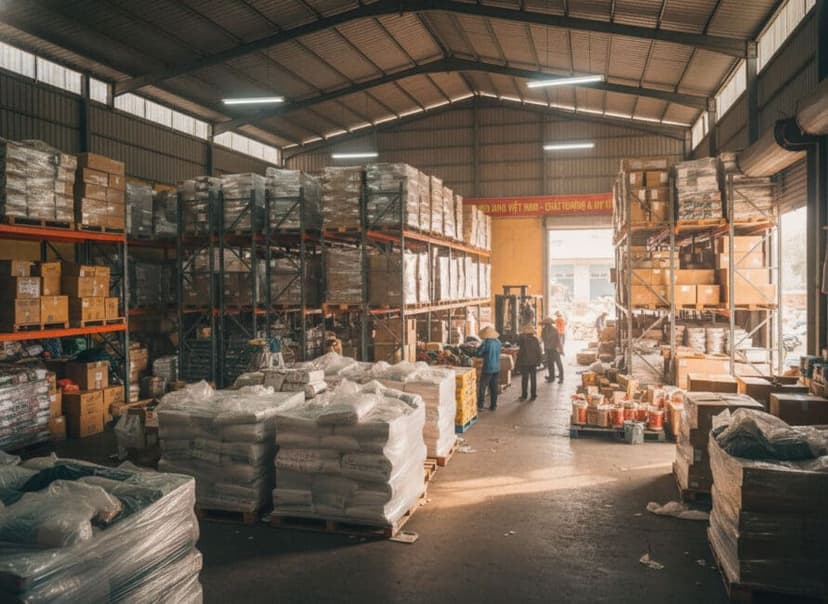
The association fosters a multi-faceted connection ecosystem, helping to optimize warehouse capacity:
- Warehouse Owners – Logistics Businesses: Collaborating to provide comprehensive (3PL/4PL) services to customers.
- B2B Connections: Directly linking entities in need of warehouse space (manufacturers, retailers) with suitable warehousing businesses based on location and specific cargo requirements.
4. Updating Trends and New Technologies
To avoid falling behind, the association serves as a hub for knowledge transfer on pioneering trends:
- Smart Warehousing & Automation: Introducing Robotic solutions (AMR/AGV), automated sorting systems, and Warehouse Management Software (WMS) to boost productivity by 200-300%.
- ESG & Green Logistics: Guiding businesses in transitioning to sustainable warehousing (installing rooftop solar power, using recycled packaging, optimizing vehicle flows to reduce CO2 emissions).
- Digital Transformation: Supporting the application of AI and Big Data for accurate demand forecasting and inventory management.
Logistics & Warehousing Associations in Vietnam
1. Vietnam Logistics Business Association (VLA)
This is the leading national association, representing over 700 logistics businesses in Vietnam.
- Scope of Operations: Nationwide, and an official member of international organizations such as FIATA and AFFA.
- Membership: Includes 3PL, 4PL businesses, customs agents, transportation companies, and especially large-scale warehouse operators.
- Role for Warehousing Businesses: VLA plays a crucial role in standardizing warehouse documentation and contributing to the development of national-level logistics hub master plans.
2. Vietnam Chamber of Commerce and Industry (VCCI)
VCCI is a national organization that gathers and represents the business community and business associations in Vietnam.
- Policy & Legal Connections: VCCI is the strongest entity in protecting business interests against changes in legislation.
- Role in Logistics: Supporting warehousing and logistics businesses with Certificate of Origin (C/O) procedures, and providing legal consultation for disputes in warehouse lease agreements and international shipping.
3. FIATA Vietnam (Chapter/Representative)
Although FIATA is an international organization, FIATA’s activities in Vietnam (often through VLA) bring tangible value:
- International Linkages: Helping Vietnamese businesses access a network of agents in over 150 countries.
- Operational Standards: Implementing specialized training programs like the FIATA Diploma, enabling warehouse personnel to master global standard cargo handling procedures.
Reputable International Logistics & Warehousing Associations
If you’re seeking the highest standards in supply chain management, these three organizations are indispensable:
1. FIATA (International Federation of Freight Forwarders Associations)
Dubbed the “Architect of Global Transport,” FIATA establishes common rules for the worldwide logistics industry.
Scale: Represents approximately 40,000 logistics companies in over 150 countries.
Key Feature: Renowned for its standardized documents, such as the FWR (FIATA Warehouse Receipt) – a warehouse receipt with high international legal validity.
2. CSCMP (Council of Supply Chain Management Professionals)
The world’s leading organization for supply chain research and education.
Strength: Offers prestigious certifications like SCPro™, with a deep focus on strategic thinking in warehouse management and inventory optimization.
Role: Serves as a hub for the latest reports on the global logistics landscape (Annual State of Logistics Report).
3. IWLA (International Warehouse Logistics Association)
This is the most specialized organization dedicated exclusively to the warehousing industry.
- Specialization: Fully focused on third-party logistics (3PL) providers.
- Safety & Operational Standards: IWLA establishes standards for food safety in warehouses, hazardous goods storage, and provides model warehouse lease agreements to mitigate risks for warehouse owners.
Which Association Should Warehousing Businesses Join?
Warehousing businesses should select an association based on their business model and operational scope. If operating primarily domestically, Vietnamese logistics and trade associations can help businesses stay updated on legal regulations, connect with B2B clients, and standardize operations. Conversely, businesses aiming for international expansion or working with FDI clients should consider joining global logistics associations to access international standards and cross-border partner networks.
| Type of Warehousing Business | Actual Needs | Recommended Association | Priority Scope | Key Benefits of Participation |
|---|---|---|---|---|
| Self-operated warehouse business | Stable operations, legal compliance, warehouse safety standards | VLA, VCCI | Domestic |
|
| Storage warehouse rental unit | Increase reputation, access corporate tenants | VLA, VCCI, relevant industry associations | Domestic |
|
| Integrated logistics business | Supply chain connectivity, network expansion | VLA, FIATA Vietnam, FIATA | Domestic + International |
|
| Mini warehouse – self-storage startup | Build market trust, learn standard models | VLA, logistics & warehousing community | Domestic |
|
| Warehouse business with international expansion plans | Standardize according to global standards | FIATA, IWLA, CSCMP | International |
|
| Warehouse business serving high-value goods | Safety, insurance, strict standards | Specialized logistics associations | Domestic + International |
|
Future Development Trends for Logistics & Warehousing Associations
The 2026–2030 period marks a significant turning point as the logistics industry shifts strongly from relying solely on physical infrastructure scale to embracing knowledge and technology. According to Vietnam’s recently approved Logistics Services Development Strategy for 2025–2035, associations are guiding businesses along four main trends:
1. Popularizing “Smart Warehouses”
By 2026, warehouses will no longer be passive storage facilities but rather “smart coordination centers.”
AS/RS Systems and Robots: Associations (such as VLA) are promoting the application of Automated Storage and Retrieval Systems (AS/RS) and Autonomous Mobile Robots (AMR/AGV). These systems help boost operational productivity by 200–300%.
Dark Warehouses: The trend of fully automated 24/7 operations, requiring no light or direct human intervention, is being piloted by “major players” within the associations at national-level logistics centers.
2. AI and Data in Goods Flow Management
Artificial Intelligence (AI) has transitioned from experimental technology to a mandatory standard in Warehouse Management Systems (WMS).
Predictive Analytics: AI enables businesses to shift from a “reactive” to a “proactive” stance by analyzing market data, weather, and consumer trends to accurately forecast storage demand, thereby reducing excess inventory by 20–30%.
Super Employees: AI technology, combined with Augmented Reality (AR) glasses and smart wearables, empowers warehouse staff to make precise decisions on-site, optimizing picking routes within the warehouse.
3. Green Logistics and ESG Implementation
This is a “make-or-break” condition for Vietnamese warehousing businesses to participate in global supply chains.
Net-Zero Goal: The national strategy aims for the logistics sector to significantly reduce emissions by 2030.
Specific Actions:
- Install rooftop solar panels for energy self-sufficiency.
- Utilize electric forklifts and low-emission transport equipment.
- Implement transparent ESG (Environmental – Social – Governance) reporting to attract contracts from demanding markets like Europe and the US.
4. ASEAN Regional Association Linkages (AFFA & AFFA 2026)
The connectivity among associations is no longer confined to national borders but extends across the entire region.
AFFA Network: The ASEAN Federation of Forwarders Associations (AFFA) is actively promoting synchronized digital transformation among member states. This facilitates seamless cross-border goods data flow, reducing waiting times at customs checkpoints.
Standardization of Digital Documents: Moving towards common platforms for electronic documents (e-AWB, e-BL) across the entire ASEAN bloc, which helps save administrative costs and enhance transparency.
| Indicator | 2030 Target |
|---|---|
| Contribution to GDP | 6% – 8% |
| Growth Rate | 12% – 15%/year |
| Percentage of Businesses Undergoing Digital Transformation | 80% |
| Logistics Costs/GDP | Reduced to 12% – 15% |
| Global LPI Ranking | Among the top 40 leading countries |
FAQ
Joining an association helps businesses protect their legal rights, stay updated on the latest policies, participate in specialized training, and expand their global partner network
The Vietnam Logistics Business Association (VLA) is the leading organization representing the voice of Vietnam’s logistics industry internationally.
Yes. Associations like VLA or FIATA regularly organize training courses for international certifications in warehouse management, operational safety, and digital transformation.
This is a globally recognized logistics professional certification. It proves that personnel and businesses meet international standards for operational processes and documentation.
Absolutely. Associations often offer flexible membership tiers and special support programs to help SMEs access technology and larger markets
Associations provide “Green Logistics” standards, guiding businesses in solar power installation, route optimization to reduce emissions, and sustainability reporting
You can search directly in the Member Directory on the official websites of associations such as VLA, FIATA, or VCCI
IWLA focuses specifically on third-party warehousing (3PL), storage safety standards, and handling techniques, rather than general transportation
The association acts as a mediator and provides legal advice based on industry codes of conduct and standard contract templates.
Focusing on implementing electronic documents (e-Docs), cloud data connectivity among members, and applying AI in regional supply chain forecasting.
Related articles
Article
Onshore vs Offshore: Which Manufacturing Model Should Businesses Choose?
Onshore manufacturing refers to production within a company’s home country, helping to control quality, shorten delivery times, and ensure easier regulatory compliance. Offshore…
Read article

Article
How To Organize Your Home Storage Room | 10 Space-Saving Tips
Organize household storage with ten practical tips, an inventory template, safety checks and guidance on when external storage is worth considering.
Read article

Article
Secrets to Profitable Online Selling: 10 Ways to Save Costs
To sell online profitably, you not only need to increase sales but also maintain good control over operating costs. Items such as inventory, premises, packaging, shipping, and order…
Read article
