
 Tiếng Việt
 한국어
한국어 日本語
日本語Article· Updated October 15, 2026
What is ESG? The role and benefits in sustainable development of businesses
Growth rates, investment totals, customer percentages and business benefits in the original discussion below have not all been verified against their source, year and survey scope. Do not treat them as current figures or guaranteed outcomes. ESG is not a universal certification; applicable obligations depend on the business, market and specific requirements.
ESG is not just a set of non-financial evaluation criteria; it is a comprehensive business philosophy that balances economic interests with environmental and social responsibilities, aimed at creating long-term value. Here, we explore what is ESG, its role, and its benefits in fostering sustainable business practices.
What is ESG?
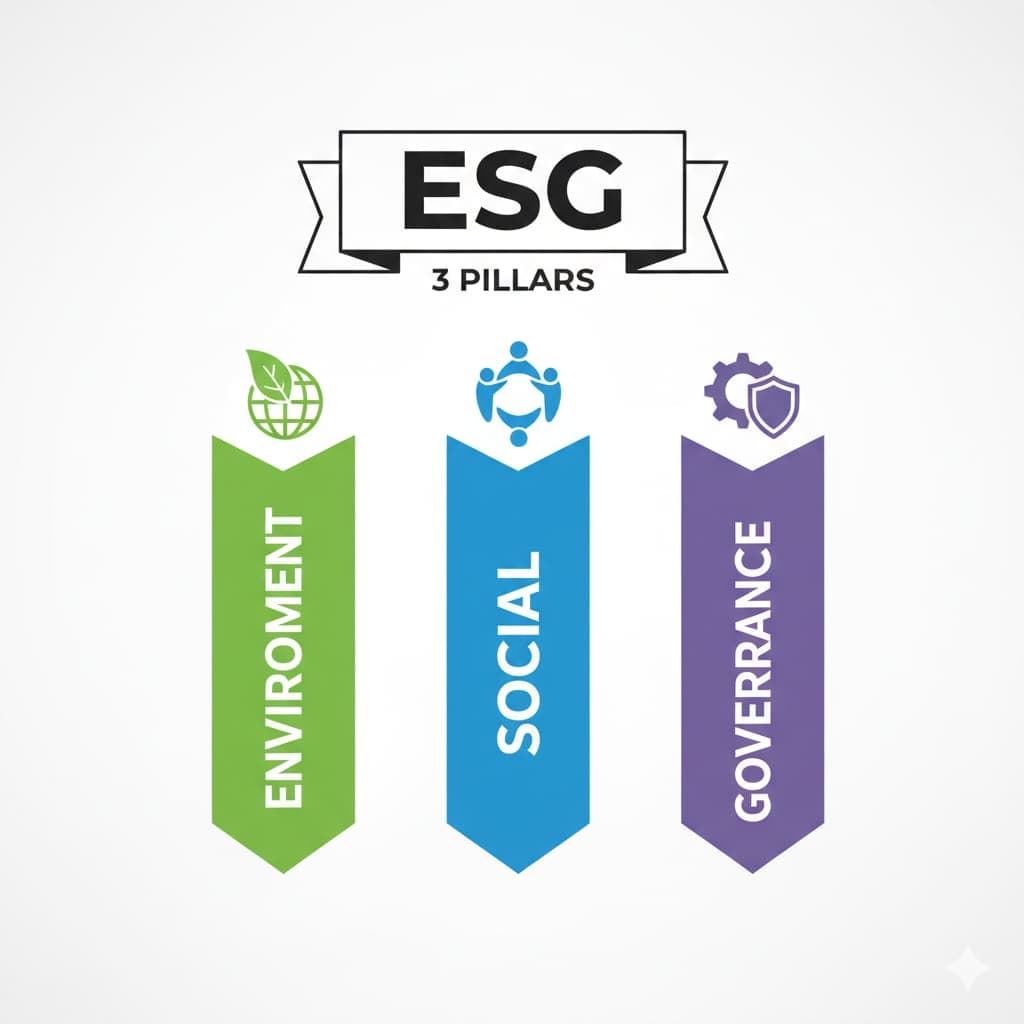
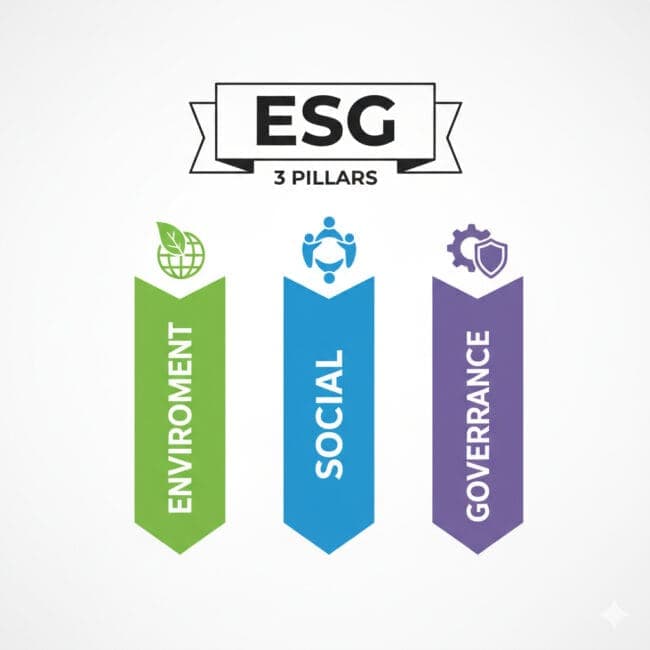
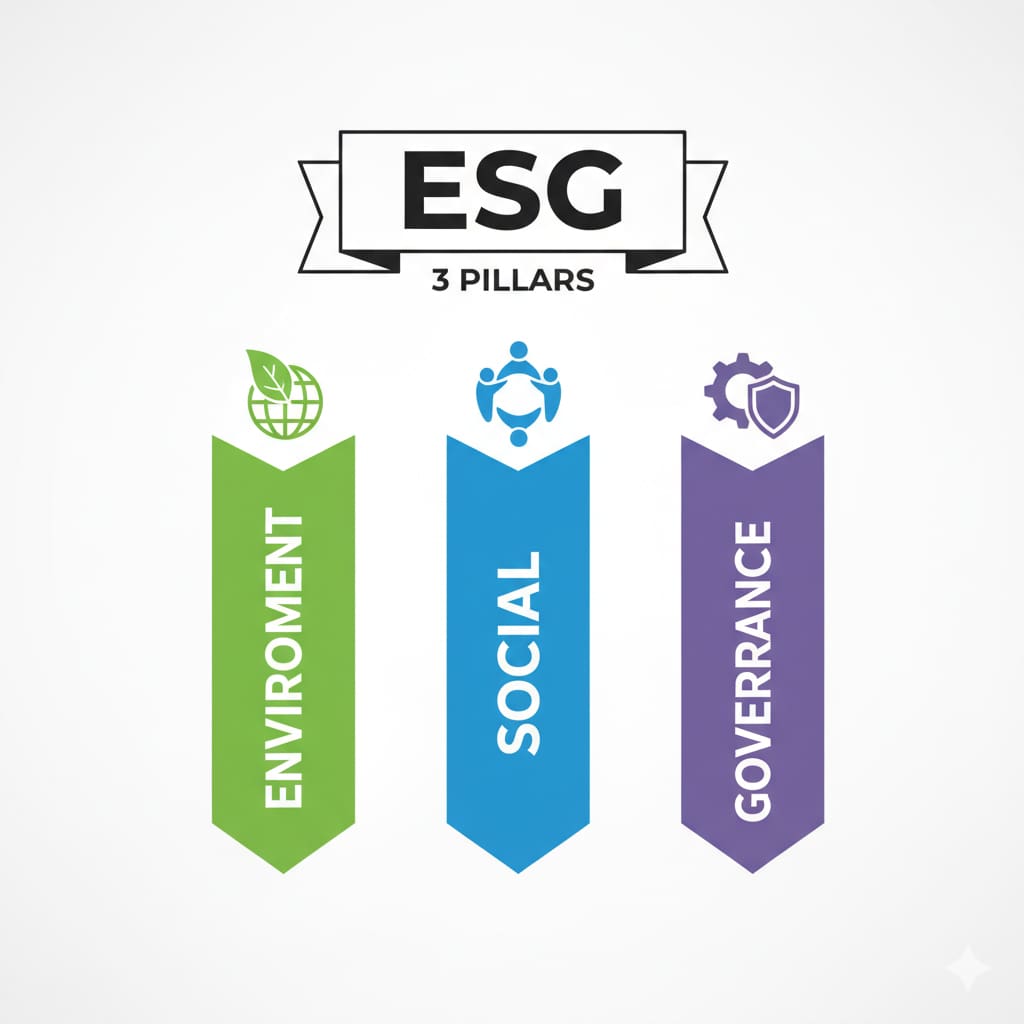
ESG stands for three English terms: Environmental, Social, and Governance. This set of standards is used to assess a company’s level of sustainable development and its responsibilities towards the environment, society, and internal governance principles.
Origin and History of ESG
The concept of ESG originated from “Responsible Investment,” initiated by the United Nations in 2004 to encourage financial institutions to consider sustainability factors alongside profitability.
The Three Pillars of ESG
Environmental (E): Evaluates how a company manages and mitigates its environmental impact, including carbon emissions, energy usage, natural resource management, waste production, and pollution.
Social (S): Examines the company’s relationships with employees, customers, suppliers, and the community, encompassing labor rights, equality, social contributions, and community welfare.
Governance (G): Refers to the governance structure, business ethics, transparency, accountability, and anti-corruption measures within the company.
ESG standards are increasingly vital in helping companies achieve sustainable development, build trust with investors, and engage positively with the community. By adhering to these principles, businesses can enhance their reputation, attract investment, and contribute to a sustainable future.
The Strategic Importance of ESG
1. Meeting International Investor Demands
Mandatory Investment Standards: ESG has become a decisive factor in investment decisions, serving as a measure of a company’s risk resilience and long-term sustainable financial growth.
Enormous ESG Capital Scale: The global assets associated with ESG are projected to reach $53 trillion by 2025, accounting for over one-third of total global investment assets. Companies with low ESG scores find it increasingly difficult to access international investment funds.
Superior Performance: Research indicates that ESG-focused investment funds often outperform traditional funds.
2. Compliance with New Policies and Regulations
- Pressure for International Integration: Vietnamese businesses, especially FDI and export companies, face significant pressure to comply with ESG regulations from international partners, such as the EU Taxonomy and the Corporate Sustainability Reporting Directive (CSRD). Non-compliance could lead to trade barriers.
- Vietnam’s Legal Framework: Vietnam is gradually enhancing its legal framework regarding ESG. The 2020 Environmental Protection Law details responsibilities for emission reduction and waste management.
- Decree No. 06/2022/ND-CP mandates large emitters to conduct greenhouse gas inventories and develop emission reduction plans starting in 2023.
- The State Securities Commission encourages and requires listed companies to integrate sustainable development and ESG content into their annual reports.
- Resolution 68-NQ/TW (issued in May 2025) directs the government to support interest rates and encourage credit institutions to reduce rates for private enterprises undertaking green and circular projects and adopting ESG standards.
3. Enhancing Competitive Advantage and Brand Reputation
- Companies with strong ESG strategies are viewed more favorably, creating significant competitive advantages in the market.
- According to Nielsen surveys, 66% of consumers are willing to pay more for products from companies with clear ESG strategies.
- Illustrative Examples: Companies like Microsoft aim to be carbon negative by 2030, and Patagonia is renowned for its sustainability commitment, both of which have established strong customer loyalty and brand reputation.
4. Attracting and Retaining Talent
- The Gen Z and Millennial workforce, a crucial segment, is particularly interested in social and environmental goals when choosing where to work.
- According to Deloitte Insights (2023), 40% of Millennial and Gen Z employees prefer to work for companies with strong sustainability certifications.
- A study by Harvard Business Review shows that companies with robust sustainability programs can attract top talent at a rate 25% higher than those without.
- ESG commitments also help reduce turnover rates; organizations with clear ESG goals experience up to a 30% lower employee turnover.
The Role and Benefits of ESG in Business Operations and Governance
ESG (Environmental, Social, Governance) is not only a global trend but also a guiding principle that helps businesses make sustainable decisions, identify long-term risks, and enhance competitive capacity. Integrating ESG into the overall strategy—from product design, supplier selection, and marketing to internal operations—enables companies to optimize operations, enhance transparency, and build trust with investors, partners, and consumers. Regular ESG reporting serves as a “passport” for easier capital raising and international collaboration.
In Vietnam, large companies such as Vinamilk, Nestlé, and Unilever have issued annual ESG reports, and stock exchanges like HOSE and HNX will begin requiring sustainability reports from 2025, underscoring the importance of ESG in modern governance.
| Role/Significance | Specific Benefits | Illustration/Practice |
|---|---|---|
| Guiding Sustainable Decision-Making | Identifying and managing long-term risks (environmental, social, legal) | Vinamilk proactively mitigates climate change risks in its supply chain. |
| Integration into Overall Strategy | Designing “green” products, selecting sustainable suppliers, optimizing operations | Unilever commits to 100% recycled plastic and energy savings. |
| Enhancing Transparency & Trust | ESG reports facilitate easier capital raising and international cooperation | Companies listed on HOSE and HNX will be required to report from 2025. |
| Increasing Brand Value | A “green” image and corporate social responsibility attract consumers | Nestlé promotes its “No Plastic Waste” campaign. |
| Optimizing Operations & Reducing Costs | Energy savings, recycling, and digitalization help reduce long-term costs | Vinamilk saves billions annually through digital transformation and energy efficiency. |
| Easier Capital Mobilization | Priority access to ESG investment funds and “green” banks | IFC and Dragon Capital prioritize companies with transparent ESG reports. |
| Better Risk Management | Early detection of legal, environmental, and social risks | FDI companies require suppliers in Vietnam to comply with ESG standards. |
| Attracting & Retaining Talent | Employees, especially younger generations, prefer companies with clear social responsibility | 69% of young workers prefer companies with sustainable values (Gallup, 2023). |
ESG not only enhances a company’s competitiveness and operational efficiency but also serves as a key factor in risk management, brand development, and sustainable international integration.
Benefits of ESG for Investors and Financial Markets
ESG as a Tool for Long-Term Business Health Assessment
Investors increasingly use ESG criteria to evaluate the health, sustainability, and risk resilience of businesses. Companies that meet ESG standards typically:
- Have a more comprehensive risk management strategy.
- Encounter fewer legal issues or environmental and social scandals.
- Are rated as “safe” and sustainable for long-term investment.
High ESG Scores: Lower Risks and Sustainable Profits
- Research from PwC and McKinsey indicates that companies with high ESG scores generally have capital costs that are 10-20% lower than their industry peers that do not comply with ESG.
- These companies also tend to maintain more stable business performance over the long term, with less impact from market fluctuations or social and environmental crises.
Growth of Global ESG Investment Funds
- Major funds like BlackRock, Vanguard, and Dragon Capital have built portfolios based on ESG criteria.
- Bloomberg Intelligence forecasts that global ESG fund assets could reach $53 trillion by 2025, accounting for over one-third of total assets under management worldwide.
In Vietnam: An Increasingly Prominent ESG Trend
- Large investment funds such as Dragon Capital and VinaCapital are beginning to require Vietnamese companies to publish transparent ESG reports as a condition for financing or inclusion in investment portfolios.
- Stock exchanges like HOSE and HNX are also set to implement sustainability reporting standards starting in 2025.
In conclusion, ESG not only represents a competitive advantage for businesses but also serves as a critical filter for investors seeking safer, more sustainable long-term investments, while contributing to the development of a transparent and sustainable financial market.
| Key Benefit | Explanation & Example |
|---|---|
| Assess corporate health and long-term prospects | Investors use ESG criteria to evaluate environmental, social, and governance risks, allowing for more informed and sustainable investment decisions. |
| Reduce risks and enhance portfolio resilience | Companies with strong ESG performance are less likely to face scandals, regulatory fines, or market volatility. |
| Lower cost of capital | Firms with high ESG scores often enjoy 10–20% lower borrowing costs, according to McKinsey and PwC studies. |
| Attract major institutional investors | Global funds such as BlackRock and Dragon Capital prioritize transparent ESG disclosures when selecting investments. |
| Stay ahead of the sustainable finance trend | The total value of global ESG assets is projected to reach USD 53 trillion by 2025 (Bloomberg Intelligence). |
| Promote transparency and market integrity | Mandatory ESG disclosures help create a healthier, more transparent, and accountable financial market. |
ESG is not only a competitive advantage for businesses but also a key filter for investors seeking safer and more sustainable long-term investments. It plays a vital role in fostering a transparent and resilient financial ecosystem.
Step-by-Step ESG Implementation Roadmap for Businesses
Step 1: Assess the Current Status
Objective: Understand your company’s current position compared to ESG standards and identify key risks and opportunities.
| Focus Area | Assessment Scope | Data to Collect |
|---|---|---|
| Environment (E) | Energy and water usage, total greenhouse gas emissions, waste management and recycling rate, exposure to climate risks (e.g., flooding, drought). | Utility bills, GHG inventory reports, waste treatment records, climate risk assessment. |
| Social (S) | Working conditions, occupational safety (OSHA recordable rate), gender and ethnic diversity, employee turnover, community and supply chain ethics. | Workplace incident reports, HR diversity data, employee satisfaction surveys, labor and anti-discrimination policies. |
| Governance (G) | Board structure (independence, diversity), anti-corruption policies, transparency in financial/non-financial reporting, code of ethics. | Organization chart, board member list, whistleblowing policy, board meeting frequency. |
Form an internal ESG task force or hire an independent consultant to benchmark data against international standards such as GRI, SASB, and TCFD.
Step 2: Identify Material ESG Priorities
Objective: Focus on ESG issues that have the most significant impact on business operations and stakeholders (investors, customers, and the community).
Approach: Using a Materiality Matrix
List potential ESG issues from Step 1 and relevant industry standards.
Assess external impact: importance to stakeholders (e.g., investors prioritize Governance; customers value Environmental and Social factors).
Assess business impact: degree of influence on business value and operations (e.g., supply chain risks due to climate change).
Set key focus areas: choose 3–5 material topics (e.g., in textiles: “Water and chemical management,” “Safe working conditions,” “Supply chain transparency”).
Align with SDGs: ensure goals contribute to specific UN Sustainable Development Goals.
Step 3: Develop an ESG Action Plan and Track Progress with KPIs
Objective: Turn material ESG priorities into measurable, actionable goals.
SMART Framework: Goals should be Specific, Measurable, Achievable, Relevant, and Time-bound.
| Pillar | SMART Goal (Example) | KPI (Measurement) |
|---|---|---|
| E | Reduce total carbon emissions (Scope 1 & 2) by 15% over three years (2026–2028). | CO₂e emissions (tons) per million USD in revenue. |
| S | Train 100% of employees on business ethics and workplace safety by the end of 2027. | Training completion rate; Lost-Time Injury Rate (LTIR). |
| G | Increase independent board members to 40% by the end of 2026. | Percentage of independent directors on the board. |
Resource Allocation:
Assign responsibility, allocate budget, and integrate ESG goals into daily business operations across departments.
Step 4: Disclose ESG Reports Transparently and Regularly
Objective: Communicate ESG progress, results, and commitments to stakeholders effectively.
Reporting Frameworks:
GRI (Global Reporting Initiative): Focuses on sustainability impacts.
SASB (Sustainability Accounting Standards Board): Industry-specific financial materiality.
TCFD (Task Force on Climate-related Financial Disclosures): Climate-related risks and opportunities.
Frequency & Format:
Publish annual ESG or Sustainability Reports (standalone or integrated with annual reports).
Use both quantitative data (KPIs) and qualitative insights (case studies, policies) for a complete picture.
Consider independent auditing for key ESG indicators to enhance credibility.
Continuous Improvement:
Gather feedback from investors, clients, and communities to refine future ESG goals and raise performance standards.
ESG is no longer a “nice-to-have” but a strategic necessity for sustainable business growth.
By embedding Environmental, Social, and Governance principles into core operations, companies can:
Comply with new global regulations,
Attract capital and top talent,
Mitigate long-term risks, and
Build a lasting competitive edge in the modern economy.
Ultimately, ESG integration helps businesses create shared value for shareholders, stakeholders, and society as a whole.
Mystorage has launched a clothing donation campaign at the charity closet at 375 Vo Nguyen Giap, District 2. This is a continuous activity that demonstrates Mystorage’s commitment and concern for environmental sustainability.
Practical guidance: implementation and verification
ESG examines environmental, social and governance issues in business operations. Beyond revenue, it asks who is affected, how resources are used and how related risks are managed. Start with material issues, reliable data and clear responsibility rather than a long list of promises.
Understanding E, S and G in practice
| Pillar | Issues | Warehouse data examples |
|---|---|---|
| Environment | Energy, water, emissions, waste and materials | Metered electricity, transport fuel, packaging by type |
| Social | Health, safety, working conditions, customers and communities | Training, incidents, near misses and customer feedback |
| Governance | Decision-making, ethics, controls and transparency | Data approval, complaints procedures and supplier criteria |
Indicators need a scope and calculation method. Lower electricity use may reflect improved equipment, but also fewer goods or shorter operating hours. Explain the context before attributing results to an initiative.
What problems can ESG help address?
- Identify abnormal consumption, safety incidents and recurring complaints early.
- Compare operating choices using cost, impact and quality requirements.
- Prepare evidence when partners ask about labour conditions, energy or supplier management.
- Track long-term improvement through baselines, targets and accountable owners.
ESG does not automatically guarantee cheaper credit, increased sales or a fixed saving. Outcomes depend on execution, business conditions and each partner’s criteria.
ESG, CSR and certification are different
Corporate social responsibility concerns responsible conduct towards a company’s impacts. ESG helps organise, manage and communicate information across three issue areas. CSR can be measured, while ESG also uses qualitative policies and oversight information. Comparing CSR and ESG in the same situation clarifies their relationship.
No single “ESG certificate” guarantees compliance with all requirements. Management-system and green-building certificates cover specific scopes. Check the scope and validity of warehouse certifications rather than relying on logos.
Start with the data already available
- Define the facility, activity or company boundary, reporting period and exclusions.
- Listen to customers, staff, suppliers and communities.
- Prioritise material issues by impact, risk and ability to act.
- Build a baseline from invoices, logs and records; distinguish measurements, estimates and missing data.
- Set achievable targets with indicators, owners, deadlines and budgets.
- Reconcile information before publication and disclose limitations and unmet targets.
A starter ESG tracking template
| Issue | Initial indicator | Evidence and owner |
|---|---|---|
| Electricity | Total kWh and kWh per suitable activity unit | Invoices/meters; operations |
| Packaging | Recorded quantities generated and reused | Material and handover records; warehouse |
| Workplace safety | Incidents, near misses and corrective actions | Reports/logs; safety lead |
| Service quality | Complaints resolved within agreed deadlines | Feedback register; customer service |
| Data transparency | Share of indicators with a source and reviewer | Evidence register; responsible manager |
This is a starting template, not a mandatory set for every business. ESG implementation in logistics and warehousing provides more detailed KPI formulas and supplier checks.
Choose a reporting framework for its purpose
GRI Standards support reporting on impacts on the economy, environment and people. Select a framework according to the audience, applicable requirements and verifiable data—not by listing standards to imply compliance. Disclosure obligations depend on law, market, business type and contract; check current scope with the appropriate specialists before calling a requirement mandatory.
Avoid unsupported ESG claims
Do not use one community activity to represent all of E, S and G, present estimates as measurements, or publish reductions without a baseline and production context. A concise report with sources and limitations is more useful than uncheckable green claims.
Frequently asked questions
1. What does ESG stand for?
Environmental, Social and Governance: three groups of issues used to consider a business’s impacts and related management.
2. Is ESG mandatory for every business?
Not as one universal requirement. Obligations depend on law, market, business type, disclosures and contracts. Verify the specific scope.
3. Can small businesses implement ESG?
Yes. Begin with relevant issues and available records, assign responsibility and expand as data quality improves.
4. Does charity alone demonstrate good ESG performance?
No. Community support does not replace environmental controls, responsible employment or effective governance.
5. What should ESG reports say when data is missing?
Disclose gaps, estimates and limitations instead of treating missing information as zero. Explain how the data will be improved.
6. What is an ESG baseline?
Data for a chosen reference period. Record the facility, time, method and activity scope so later comparisons use equivalent information.
7. How many KPIs should a small business start with?
Choose a small group of material indicators that can be collected consistently. Data quality, ownership and usefulness matter more than quantity.
8. Who is responsible for ESG figures?
Assign a data owner and reviewer for each indicator. Operations supply records; the coordinator retains sources, formulas and update schedules.
9. How can electricity be measured in shared storage?
Prefer a separate meter. If allocation is necessary, explain the basis, total consumption and uncertainty; do not present allocation as direct measurement.
10. Does lower electricity consumption always mean improvement?
No. It may reflect fewer goods or shorter hours. Review total consumption and an appropriate activity-based measure without compromising storage conditions.
11. Does outsourced storage matter for ESG?
Yes. Handling and storage can affect supply-chain risks. An ESG checklist for logistics and warehousing helps request relevant evidence.
12. Is a certificate enough evidence on its own?
No. Check the legal entity, facility, scope and validity, together with operating records and actual results.
13. Does ESG include workplace safety?
Yes. Working conditions, training, incidents and corrective action are relevant social issues. No recorded incidents alone does not prove complete safety.
14. How can KPI calculations stay consistent?
Define each indicator’s formula, unit, source and boundary. Document methodological changes and compare only data on a common basis.
15. How does green logistics differ from ESG?
Green logistics focuses on environmental impacts of transport and storage; ESG also covers social and governance issues. Green logistics can be part of an ESG programme.
16. How often should ESG KPIs be reviewed?
Match the frequency to data availability and volatility. Operational indicators may be reviewed monthly and consolidated periodically, using consistent comparison periods.
17. Can one energy-saving project justify calling the company green?
Not by itself. State measured results, comparison periods and conditions for that project without generalising to all environmental impacts.
18. Where should warehouse improvements start?
Identify losses, damage and inconsistent processes. Clear warehouse operating procedures provide a basis for verifiable records and improvements.
Related articles

Article
Onshore vs Offshore: Which Manufacturing Model Should Businesses Choose?
Onshore manufacturing refers to production within a company’s home country, helping to control quality, shorten delivery times, and ensure easier regulatory compliance. Offshore…
Read article

Article
How To Organize Your Home Storage Room | 10 Space-Saving Tips
Organize household storage with ten practical tips, an inventory template, safety checks and guidance on when external storage is worth considering.
Read article

Article
Secrets to Profitable Online Selling: 10 Ways to Save Costs
To sell online profitably, you not only need to increase sales but also maintain good control over operating costs. Items such as inventory, premises, packaging, shipping, and order…
Read article
