
 Tiếng Việt
 한국어
한국어 日本語
日本語Article
Where to Store Livestream Products When Home Space Is Limited?
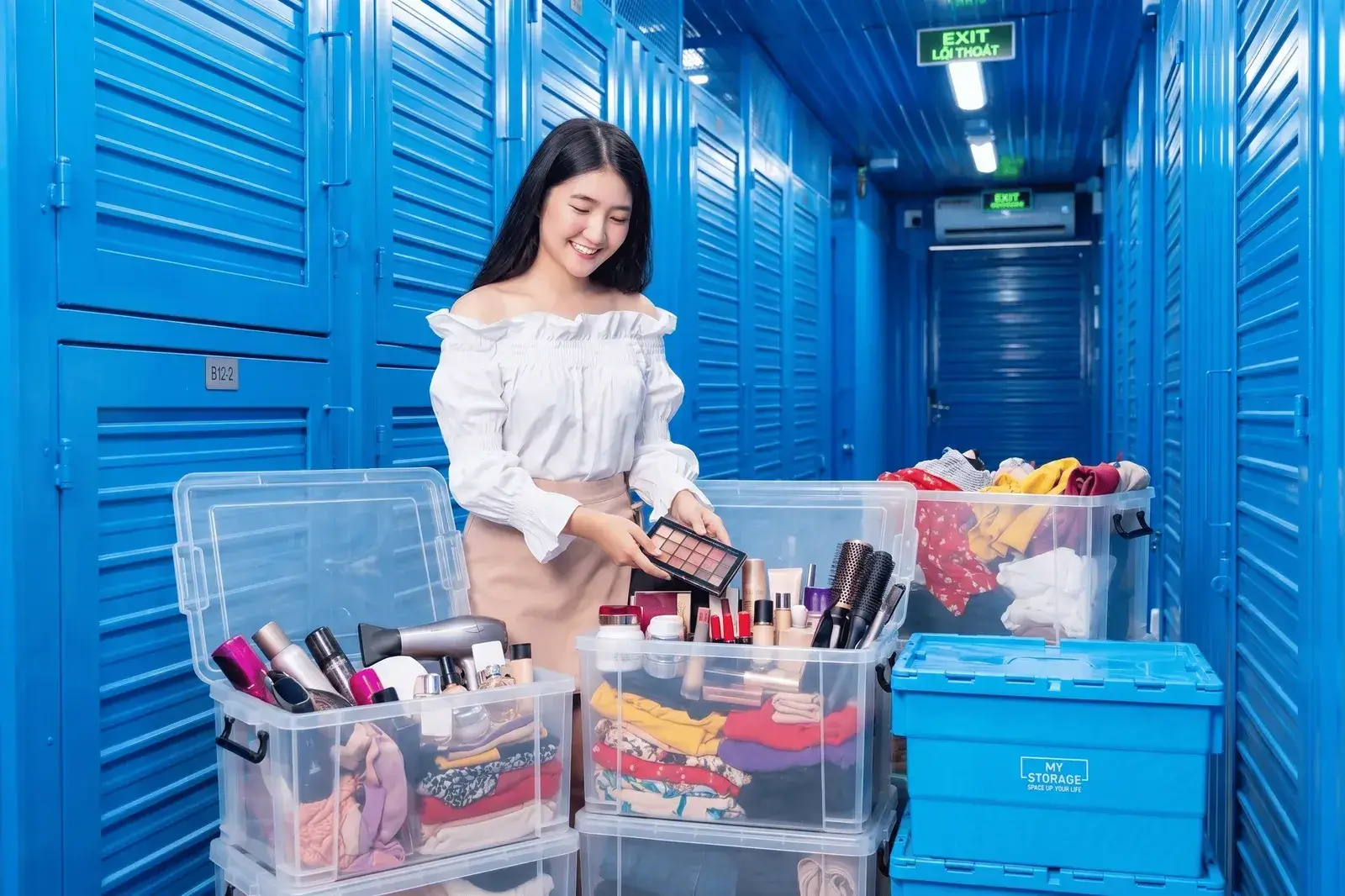
Selling through livestreams requires sellers to prepare a diverse range of product samples, substantial reserve stock ready for orders, and plenty of packing materials such as cartons, bubble wrap, and packing tape. When business on TikTok Shop or Shopee takes off, newly arrived parcels can quickly spill from the living room and bedroom onto the balcony. This not only reduces the family’s living space but also makes the livestream corner cramped and cluttered, slowing down picking and order fulfilment.
Finding a way to store livestream inventory that frees up room at home while keeping samples easy to retrieve before going live and orders quick to pack and dispatch is a strategic challenge for shop owners who want to sustain sales growth.
1. Why Do Livestream Sellers Need Dedicated Storage Space?
Livestream sellers need a separate storage area to distinguish clearly between on-camera samples, retail inventory, and packing supplies, rather than letting stock encroach on family living space. As product volumes grow, a dedicated place to keep goods can shorten pre-broadcast preparation, reduce picking mistakes, and keep the filming area clean and professional in customers’ eyes.
Common Problems with Storing Livestream Products at Home
Turning the home into an improvised warehouse soon creates bottlenecks that interfere with day-to-day business.
Common issues include:
- Living space is taken over: Cartons stacked to the ceiling block windows, narrow walkways, and turn the living room into a cluttered staging area.
- Samples and saleable stock get mixed together: Sellers may not know which items have been opened for demonstrations and which are new and boxed for customers, leading to used items being shipped by mistake.
- Products take too long to find when needed: When a viewer asks to see a different colour or size close up, the seller may have to rummage through multiple boxes, interrupting the shopping experience.
- The livestream backdrop suffers: Messy cartons behind the host can appear on screen, undermining the brand’s credibility and professionalism.
When Does Livestream Inventory Exceed What You Can Store at Home?
Sellers often confuse a shortage of physical space with poor organizing skills. Recognizing when the home is genuinely overloaded helps you respond in time.
Consider a new storage solution when you notice these signs:
- The number of SKUs and variants rises sharply: The catalogue grows to dozens or hundreds of distinct items, beyond what cupboards at home can hold.
- You need to stock up before major sales: You have to hold a large quantity ahead of double-digit shopping days, mid-month campaigns, or year-end holidays to secure better wholesale prices from manufacturers.
- Orders surge after each livestream: After a session closes hundreds of orders, parcels waiting to be packed cover the floor and leave family members with nowhere to walk.
- Work and home life no longer feel separate: You feel continually stressed because you are always surrounded by dusty cartons and the smell of packing tape.
2. How to Organize and Manage Livestream Inventory in a Small Home
To make the most of limited storage at home, group products by purpose, use wall height with shelving, and separate the livestream set from the packing area. Label each shelf location and update stock figures after every session to keep goods organized without disrupting everyday home life.
Classify Goods by Their Purpose
Grouping goods by function as soon as they are unloaded makes picking products for a livestream and packing orders more orderly.
Keep these four groups separate:
- Samples for product demonstrations: Gather representative items, neatly pressed or cleaned, and arrange them on a mobile rack beside the livestream table.
- Sale-ready and reserve stock: Keep products with their original tags and cartons, organized by SKU so staff can pick and pack them easily.
- Orders confirmed and awaiting handover: Place these in a fixed area near the entrance and sort them by carrier for quick collection by couriers.
- Returns or technically defective goods: Put them in a separate, clearly labelled container for inspection or return to the supplier; never mix them with new saleable stock.
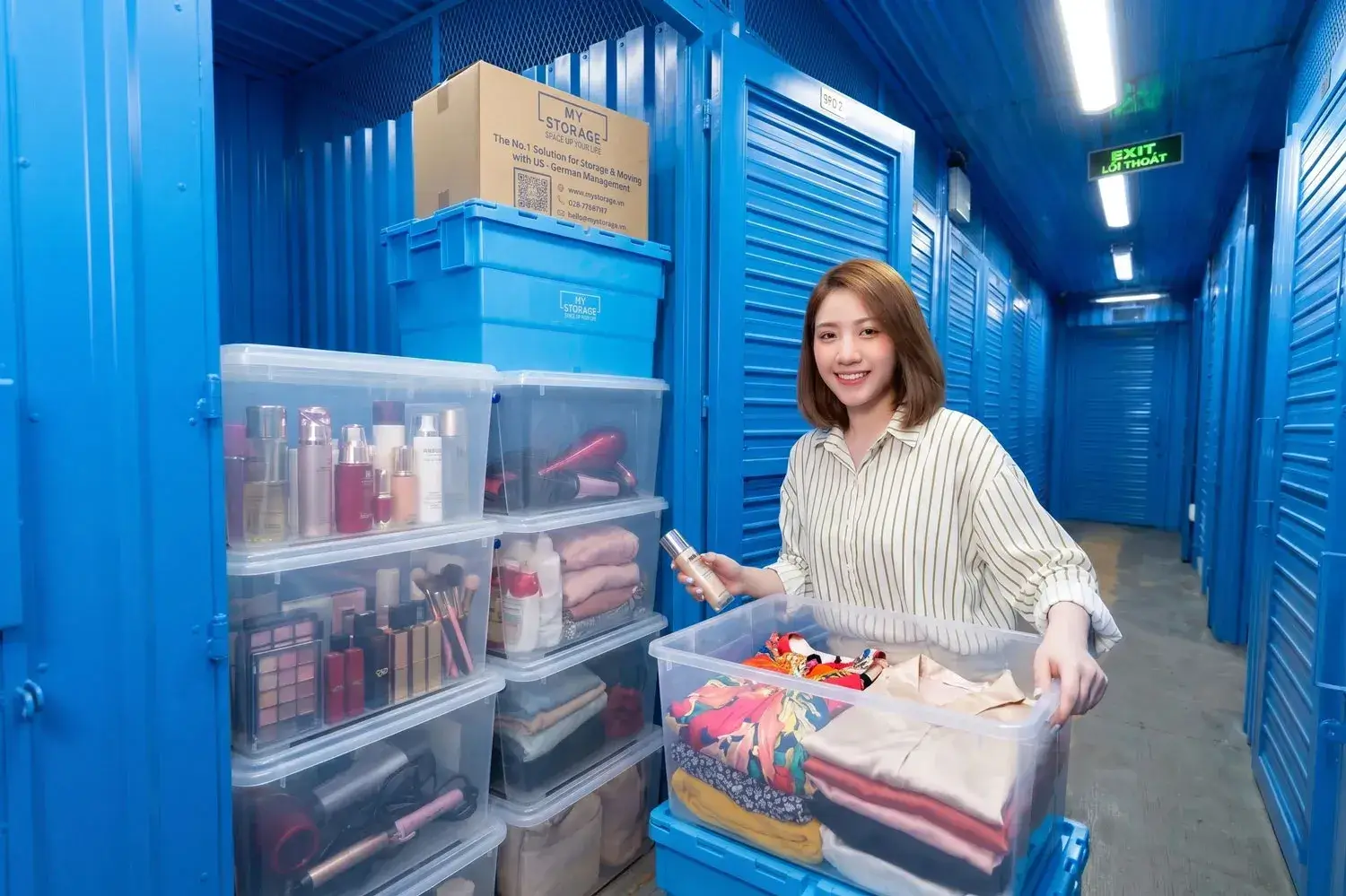
Keep samples, sale-ready inventory, and returns in clearly separated groups.
Use Vertical Space and Standardize Product Locations
Instead of letting cartons spread across the floor, make use of the vertical space from floor to ceiling to increase capacity.
Ways to optimize a small area include:
- Install adjustable multi-tier steel shelving so the spacing fits the size of each type of container.
- Assign a location code to each shelf level and place large, clear product labels along the front edge for easy identification.
- Keep bestsellers and frequently used samples around chest height; place heavy or slow-moving items on the lowest shelves.
- Follow safety rules: do not cover electrical outlets, block walkways, or place goods too close to ceiling fans or lights.
Separate Storage from the Livestream Set
A tidy, clean filming area with professional lighting is essential for retaining viewers and improving conversion.
Keep these points in mind when arranging the broadcast area:
- Use a curtain or movable partition to fully separate the filming area from the cartons behind it.
- Bring only the samples planned for that day’s livestream into the filming area.
- Place a small side table outside the camera’s view so an assistant can pass samples to the host smoothly.
Use a Spreadsheet or Inventory Management Tool
All your organizing efforts can be undermined if you do not know the actual quantity left after each livestream.
Lean inventory management principles:
- Create a detailed tracker with SKU, colour, size, quantity received, quantity sold, and actual quantity remaining.
- Reserve or lock stock during the broadcast to avoid selling more than is available at home.
- Conduct a rotating count once a week to spot discrepancies caused by packing errors early.
You can also read more about scientific warehouse organization methods to apply location coding and systematic stock rotation.
3. Should You Store Livestream Inventory at Home or Rent a Separate Storage Unit?
Home storage can work when you are just starting out, have few SKUs, and handle fewer than 20 orders a day without disrupting family life. But when stock expands and packing takes over your living space, renting an external self-storage unit can free up your home, provide an air-conditioned environment for goods, and support business growth.
When Should You Continue Storing Goods at Home?
You can make use of the space you already have and save money if these conditions apply:
- Each delivery contains only a few small cartons that can easily fit in one corner of a room.
- Your home has a separate spare room or unused mezzanine that does not affect other household members.
- You livestream only once or twice a week and the number of orders after each session is manageable.
When Should You Move Inventory Out of the Home?
Holding on to home storage after the business has grown can cause more losses than the rent you are trying to save.
Move stock to an external facility when:
- Goods are taking over walkways, the dining room, and bedrooms, increasing fire risk because cartons are combustible.
- Packers and couriers come and go frequently, making noise and reducing the family’s quiet and privacy.
- You want to add more SKUs or hold larger wholesale quantities, but your home cannot be expanded.
- Goods become mouldy, dusty, or damaged because the home lacks suitable air-conditioning and humidity control.
Comparison: Home Storage vs. Renting a Private Unit
The comparison below looks at economic and operational factors for the two options:
|
Comparison criterion |
Storing goods at home |
Renting a private self-storage unit |
|---|---|---|
|
Premises rental cost |
No additional storage rent |
Monthly rent based on the space used |
|
Quality of living space |
Goods and packaging encroach heavily on the home |
The home stays clean, airy, and spacious |
|
Control over inventory |
Convenient when stock is limited |
High; you manage your own private unit |
|
Access time and flexibility |
On-site at any time |
Depends on the facility’s location and opening hours |
|
Ability to scale |
Completely limited by the size of the home |
Flexible; you may upgrade to a larger unit |
|
Storage conditions |
Hot and prone to damp during the rainy season |
Private units have AC and temperature control; confirm suitable humidity conditions for your products |
Do Not Compare Rent Only with a Cost of Zero
Many sellers assume that keeping goods at home costs nothing, while renting an external unit adds a monthly expense.
In reality, the business case should also account for these hidden storage costs:
- Wasted value of residential space: You may be paying rent or carrying the cost of an expensive home just to store dusty parcels.
- Costs of shipping the wrong order: A cluttered setup can cause staff to pick the wrong SKU, leading to two-way return shipping and the risk of a one-star review.
- Lost sales opportunities: When your home is full, you may avoid buying attractive wholesale lots and miss the best moment to grow revenue during major campaigns.
4. Which Type of Storage Should You Choose for Livestream Inventory?
Choose a storage model according to your product characteristics, how often you need to retrieve samples, and the shop’s order volume. Self-storage is a strong option for shop owners who need a private space, control over arranging goods, and access in line with the facility’s hours and rules. Shared-rack warehousing may suit large cartons that are moved infrequently, while a large fulfilment centre may fit sellers who want to outsource packing and shipping entirely.
Self-Storage: A Practical Option When You Need Direct Access and Control
Self-storage provides independent storage units with their own lockable doors, giving renters privacy and greater control.
Advantages for livestream sellers include:
- You can arrange goods on shelves as you prefer and move SKUs around for different livestream plans.
- You can visit to pick up samples to take home for a broadcast, or bring newly arrived parcels to the unit, subject to agreed access hours and handling procedures.
- The units are clean and equipped with air-conditioning and temperature control to support storage of clothing, cosmetics, and household goods; check the unit’s conditions against each product’s storage instructions.
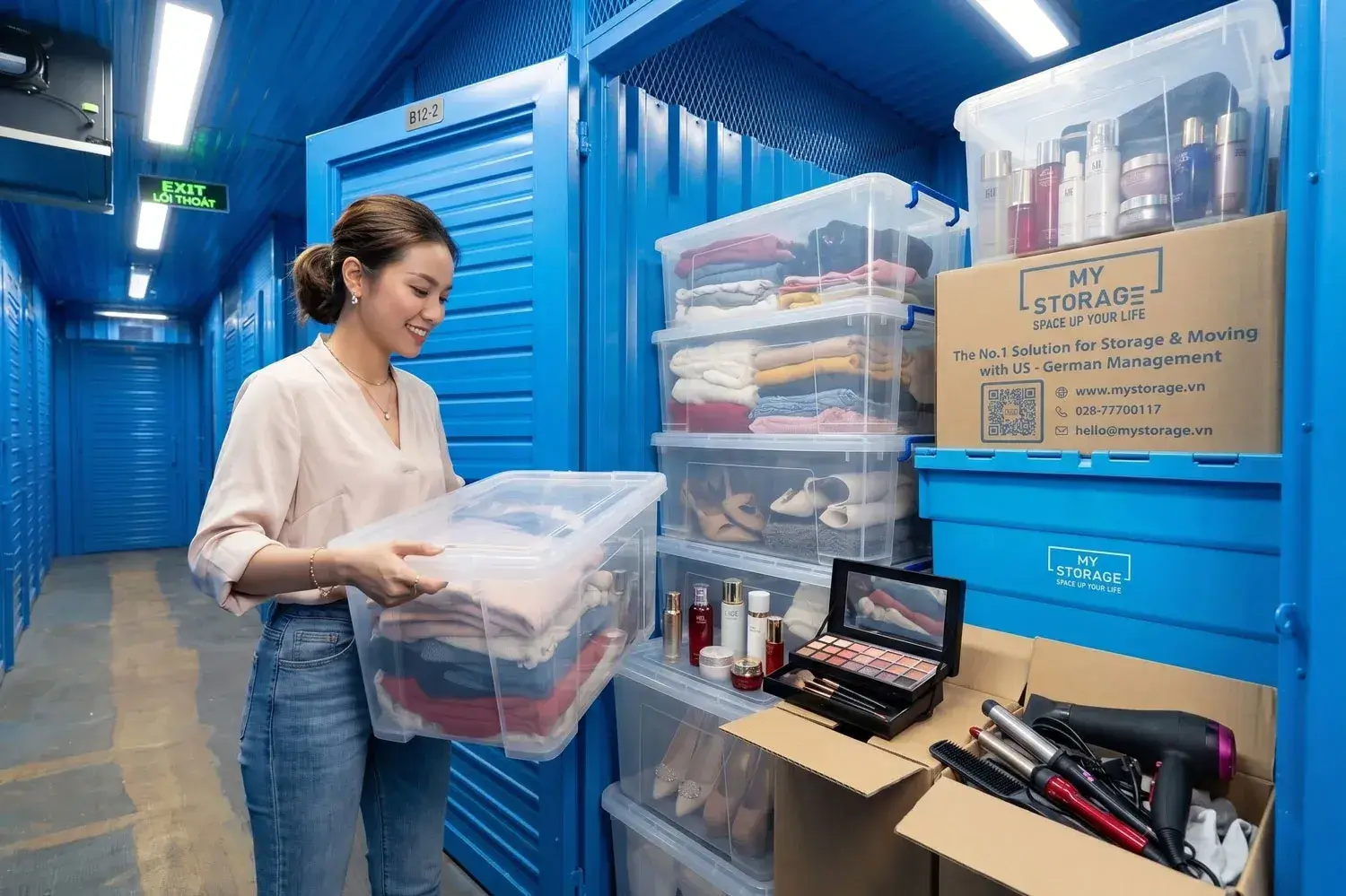
Choose storage conditions that are suitable for the products and confirm any requirements not specified in the rental option.
Shared-Rack Warehousing: Consider It for Centralized Storage
Shared-rack warehousing means renting shelf positions or floor space in a larger warehouse operated by a logistics provider.
Characteristics of this model:
- Warehouse staff receive your goods and place them on shared racks alongside goods belonging to other businesses.
- It can suit large reserve shipments that rarely need to be broken down and picked item by item.
- A major limitation is that you cannot enter and rearrange goods at will. Each retrieval requires a request and depends on the warehouse team’s working hours.
Large Warehouses or Professional Fulfilment Centres
When your business reaches thousands of orders a day, packing every parcel yourself can become an overwhelming burden.
A full order fulfilment model works as follows:
- The provider handles all stages: receiving goods from the port, shelving, printing order slips, picking, packing, and handing parcels to the courier.
- Shop owners can leave demanding manual work behind and focus their time on creating content and closing sales on live.
- The downside is that end-to-end service can be relatively expensive and may require a high monthly minimum order volume.
Important Checks Before Signing a Storage Agreement
Before choosing any storage facility, visit and carefully check these five key factors:
- Location and transport: The warehouse should be near home or convenient to reach so that collecting samples before a livestream does not take too long.
- Access hours and convenience: Ask whether access is allowed outside office hours or at night, and whether the entrance is wide enough for a truck to stop and load.
- Temperature and humidity: Check for air-conditioning or industrial ventilation, roof leaks, and the risk of floor flooding during the rainy season.
- Security and fire safety: Check camera coverage of the aisles, whether security is on duty 24/7, and whether the automatic fire alarm system has the required approval.
- Contract flexibility: Ask whether you can rent month to month and upgrade to a larger area during peak season.
5. MyStorage’s Flexible Storage Solution for Livestream Sellers
MyStorage offers modern self-storage in Ho Chi Minh City, with independent lockable units and AC with temperature control so livestream sellers can organize their goods. Unit sizes, current availability, and monthly rental terms must be confirmed at each facility. This can help you separate business stock from your home without assuming that you need to rent a long-term commercial premises.
Small Storage Units for Lean Livestream Shops
Instead of taking on the cost of an entire house or an oversized factory space, sellers can start with room suited to their actual inventory.
Benefits of choosing a compact unit:
- Start with a unit sized for your actual inventory; measure cartons and account for shelving and working aisles before confirming availability.
- If you need a packing worktable inside the unit, first confirm with the facility which activities are permitted, whether power is available, and what safety rules apply.
- You can ask to move to a larger unit as the business grows; a transfer within the same facility depends on vacancy and contract terms.
Benefits of Choosing MyStorage Self-Storage in Ho Chi Minh City
MyStorage’s self-storage system is designed to meet the needs of modern online sellers:
- Air-conditioned space with temperature control: Self-storage is a private unit with AC and temperature control. For clothing or sensitive cosmetics, also confirm humidity conditions and follow the product’s storage instructions; no measure can eliminate every risk of damage.
- Management of your own private unit: Customers use an independent unit with its own lock. Confirm camera coverage, access controls, and security support at the facility you plan to use.
- Handling support: Ask in advance about vehicle stopping areas, trolleys, lifts if needed, usage limits, and extra fees; do not assume every facility offers all amenities free of charge.
- Access as agreed: For a facility such as 375 Vo Nguyen Giap, confirm access hours, collection schedules, and receiving procedures before choosing a unit; do not assume night-time or 24/7 access.
Use a private unit to separate business inventory from your living area.
Indicative Costs for Storing Livestream Inventory in Ho Chi Minh City
For financial planning, shop owners can compare the cost of buying storage supplies for home use with the cost of renting self-storage below. The supply prices are estimates for budgeting in this article and have not been confirmed as current quotations; service prices must be quoted separately based on actual needs:
|
Cost item |
Charging method |
Estimated indicative price (VND) |
Features and value |
|---|---|---|---|
|
Assembled slotted-angle steel shelving at home (4–5 tiers) |
One-time purchase |
650,000–1,250,000 per set |
Holds light goods but still takes up floor space at home |
|
Lidded industrial plastic container |
One-time purchase |
80,000–180,000 per container |
Protects samples from dust and can be stacked |
|
Mini self-storage unit |
Monthly rental based on unit size |
Confirm the quotation by facility and availability |
A private unit with AC and temperature control helps move goods out of bedrooms and living rooms |
|
Medium self-storage unit |
Monthly rental based on unit size |
Confirm the quotation by facility and availability |
Capacity depends on product size, shelving, and aisles; the facility must approve any packing table |
|
Door-to-warehouse collection service |
By service package or transport quotation |
Confirm the service scope and fees before booking |
Valet storage is shared storage with all-inclusive pickup and delivery, charged by volume used; transport for self-storage must be agreed separately |
Important note: Supply prices in the table are for preliminary budgeting only and are not official MyStorage quotations. Actual storage rental prices depend on the service type, location, unit size or volume used, rental term, and confirmed promotions. Valet storage may be offered with or without AC; temperature and humidity controls depend on the selected option and are not the same as self-storage.
Separating business inventory from family living space is a milestone in the growth of a professional seller. When your home is tidy and airy again and goods are stored in a suitable environment, you can approach livestreams with a clearer mind, attract viewers, and build sales.
If cartons are filling your home and you are looking for a clean, air-conditioned self-storage unit in Ho Chi Minh City, MyStorage’s self-storage facilities can help. Estimate how much inventory you need to move and contact the MyStorage team to discuss a unit size suited to your online shop.
Frequently Asked Questions (FAQ) About Livestream Inventory Storage
Here are concise answers to practical questions online shop owners often ask when looking for off-site inventory storage.
1. Do I have to commit to a one- or two-year self-storage contract?
Not necessarily. Ask about a monthly rental plan that fits your sales cycle, and check the minimum term, deposit, notice period for vacating, deposit-refund conditions, and unit-size change fees. Do not assume you can change unit size or leave without additional charges.
2. Can I access my storage unit at night to collect goods?
This depends on the facility’s access hours and rules. For the 375 Vo Nguyen Giap location, confirm collection hours, how to register for after-hours access, and entry procedures before scheduling a night livestream; do not assume 24/7 access.
3. Could fashion products and cosmetics in self-storage be damaged by rodents or mould?
There is still a risk if goods are already damp, packaging is unsuitable, or storage conditions do not meet product requirements. MyStorage self-storage has AC and temperature control; confirm humidity conditions, pest-control measures, and goods-inspection schedules as well. Valet storage has options with or without AC, so choose the right option rather than assuming the same conditions for every storage service.
4. If I do not have a truck, can MyStorage collect goods from my home?
MyStorage offers valet storage, a shared-storage service with all-inclusive pickup and delivery charged by the actual volume used. If you choose a private self-storage unit, ask separately about transportation, handling, supplies, and packing so you know exactly what the quotation includes. Do not assume every package includes packing at home and delivery into a private unit.
5. Am I allowed to livestream sales directly from a self-storage unit?
Do not assume this is permitted. Before renting, confirm with the facility whether filming or livestreaming is allowed, along with requirements for electricity, internet access, noise, the number of people, and safety. If the facility does not allow it, keep the livestream set at home and use the unit only for storage and sample collection.
6. Can TikTok Shop or Shopee couriers enter the storage facility to collect orders?
Agree in advance on collection times, the handover point, authorized people, and driver-access procedures. Prepare parcels and a handover list. Do not assume couriers may enter a private unit or that every facility has parking, shelter, and daily collection slots.
7. What size unit should I rent to start with?
You cannot determine the right size from SKU count alone. Measure cartons, estimate the total volume at peak inventory, account for shelves, stacking limits, and access aisles, then ask the facility to recommend a suitable unit that is available. If you need a worktable, confirm that it is permitted before calculating the required area.
8. How can I tour MyStorage units before renting?
Contact MyStorage through the details on its official website to arrange a visit to a suitable facility. If you want to see the 375 Vo Nguyen Giap facility, confirm the address, visitor schedule, and available unit types before going. Bring a list and measurements of your cartons for a more useful consultation.
9. Which goods should I keep at home, and which should I move to storage?
Keep at home samples for upcoming livestreams, enough stock to fulfil orders between replenishments, and packing supplies you need immediately. Move reserve goods that are not needed urgently to storage, and record quantities at each location and replenishment dates. Base the amount kept at home on actual sales velocity, travel time, and collection arrangements—not only on SKU count.
10. How can I avoid overselling when I livestream and sell on several marketplaces?
Use one shared inventory tracker for each SKU and variant, separating saleable stock from samples, defective items, and stock reserved for orders. Update or reserve stock as orders are confirmed; when an order is cancelled, return quantities to available stock only after checking its status. After each session, reconcile confirmed orders with physical stock before reopening listings.
11. Should returned goods go straight back onto the new-stock shelf?
No. Set returns aside in an inspection area and record the order code, return reason, and packaging condition. Return an item to saleable inventory only after confirming it is the correct product, has all accessories, and meets your shop’s resale standards. Isolate defective, leaking, or damp items to protect goods in good condition.
12. How should a livestream cosmetics shop track batches and expiry dates?
Track product codes, batch numbers, expiry dates, and label storage requirements; arrange goods so that the earliest-expiring batch is dispatched first, following FEFO. Do not mix opened samples with factory-sealed products. When choosing cosmetics storage, compare the selected option’s temperature and humidity conditions with the manufacturer’s instructions rather than relying only on whether the facility has AC.
13. How can I prepare stock for a double-digit sale day without overcrowding my home?
Forecast demand using actual sales and cancellation rates from similar campaigns, stagger inbound deliveries, and set reserve quantities for each bestseller. You can use seasonal inventory storage for reserve stock while keeping samples and goods for near-term dispatch separate. Agree on replenishment times, receivers, and delivery windows before the campaign to avoid shortages during a livestream.
14. What charges should I ask about besides monthly rent?
Ask about the deposit, tax, transport, handling, packing supplies, insurance if applicable, after-hours handover charges, and the conditions for vacating or changing unit size. For valet storage, confirm what pickup and delivery include and how chargeable volume is measured; for self-storage, request a quotation for the private unit. Compare total storage costs over the same term and for the same needs, not just the starting price.
15. How can I move goods from home to storage without interrupting livestream sales?
List cartons by SKU, photograph their condition, and count them before moving. Keep samples and the stock needed for the next session separate. Move goods by group, reconcile quantities on arrival, and update the new locations in your tracker. Add off-site stock to your collection schedule only after testing how long it takes to locate and hand over goods.
Related articles
Article
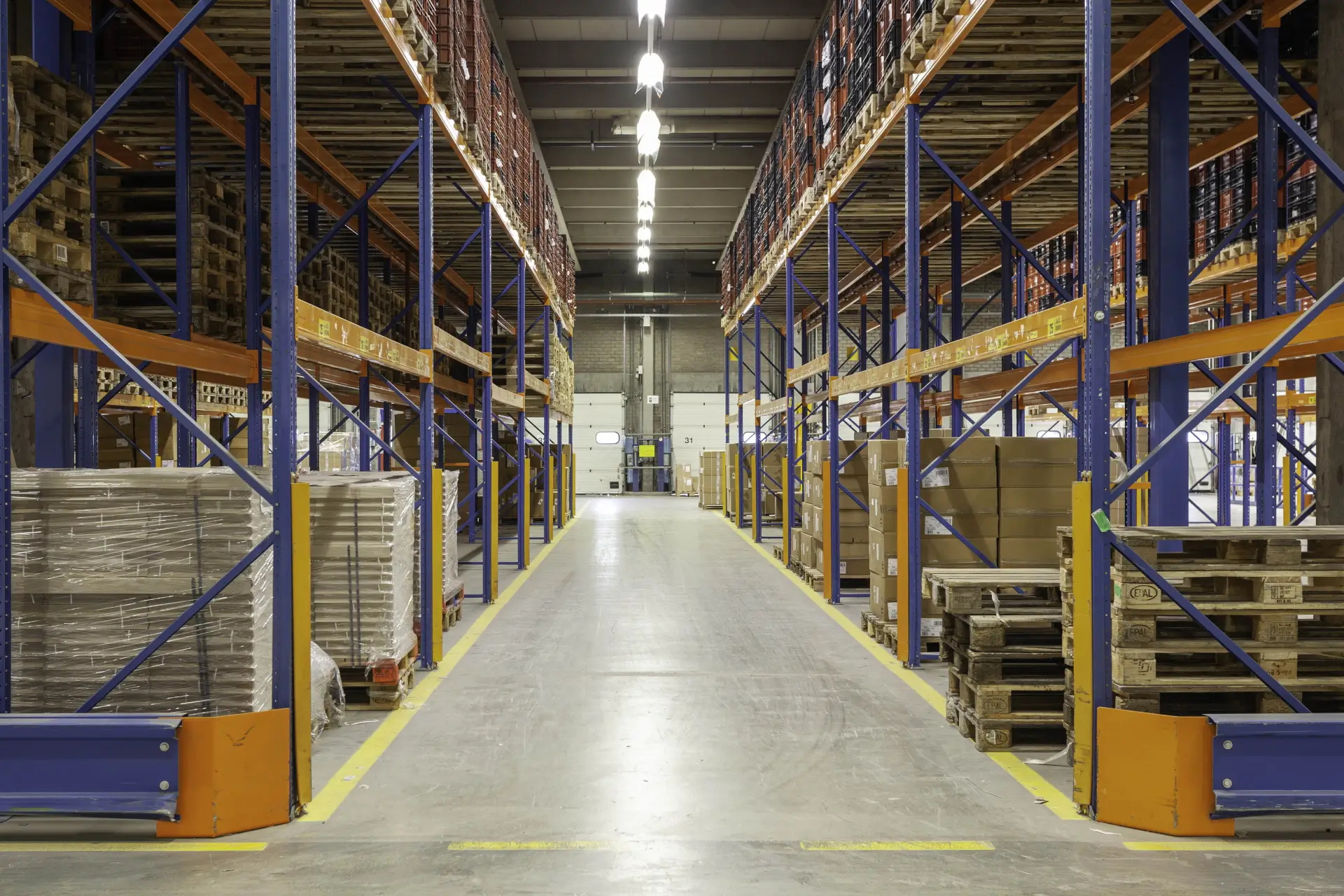
How to Organize a Warehouse for Efficient Management
A practical guide to SKU classification, racking, location labels, FIFO, FEFO and 5S, with five warehouse KPIs, reference equipment costs and eight FAQs.
Read article
Article
IoT in Warehouse Management: Temperature, Humidity & Security
Explore IoT in warehouse management, from temperature and humidity sensors to security alerts and WMS integration. Learn about system components, implementation steps, indicative costs and…
Read article
Article
Rent a Ready-Built Warehouse or Build Your Own? Comparing Costs and Timelines
When expanding storage and distribution capacity, business leaders often face a critical strategic decision: should they rent a ready-built warehouse or invest their own capital in building…
Read article
