
 Tiếng Việt
 한국어
한국어 日本語
日本語Article· Updated October 15, 2026
Listed and UPCoM-Registered Port, Warehousing and Logistics Companies in Vietnam
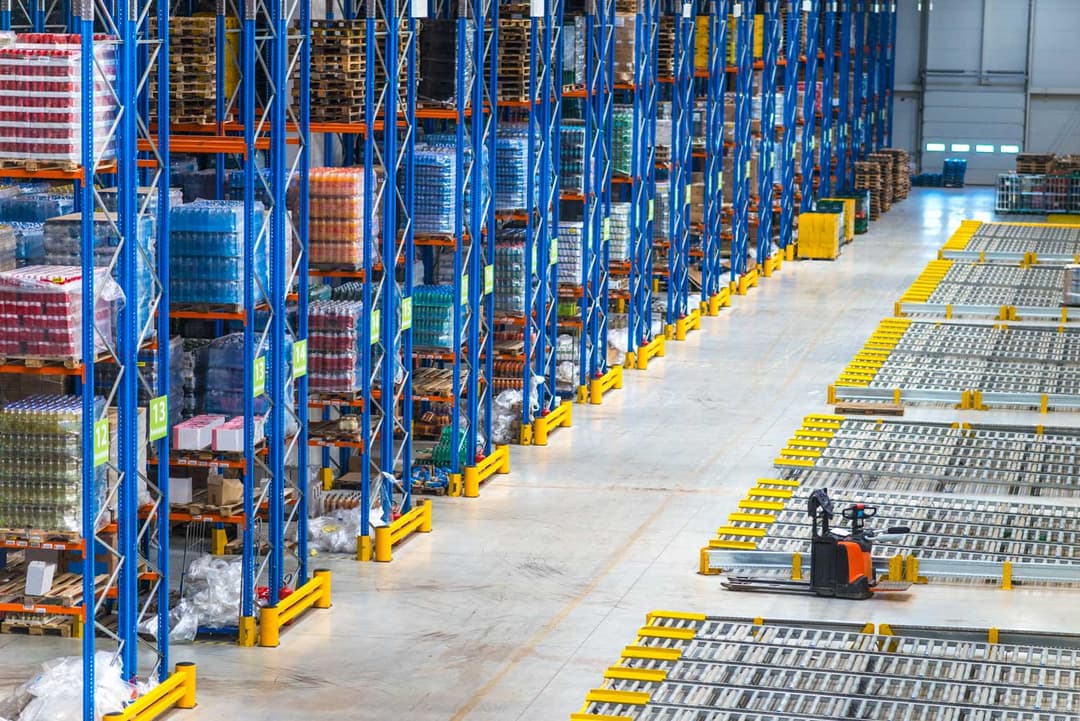
Warehousing and logistics companies on Vietnam’s stock market operate across different fields: port operations, shipping, freight forwarding, storage, distribution and delivery. Logistics-related stocks should therefore not all be treated as one group of businesses with identical operating drivers.
This article brings together 16 stock codes for reference, distinguishes companies listed on HOSE and HNX from those registered for trading on UPCoM, and reviews the market through the first half of 2026 (1H2026). It is not an exhaustive industry list, a service-quality ranking or a recommendation to buy or sell shares.
Reviewed on 12 October 2026. Market figures cover January–June 2026 only. Articles published in early July 2026 are used to report that period; third-quarter figures and full-year forecasts are not mixed into the overview.
Listed and UPCoM-registered warehousing and logistics companies in Vietnam
The table prioritizes stock codes, company names, trading venues and principal activities. “Logistics” covers many services, so read the activity column before comparing businesses.
| Code | Company | Trading venue | Principal activities / relevant scope | Reference source |
|---|---|---|---|---|
| GMD | Gemadept Joint Stock Company | HOSE | Port operations and logistics | Gemadept |
| VSC | Vietnam Container Shipping Joint Stock Corporation (Viconship) | HOSE | Ports, warehousing, depots and logistics services | VSDC |
| HAH | Hai An Transport and Stevedoring Joint Stock Company | HOSE | Container shipping and port operations | State Securities Commission of Vietnam |
| TMS | Transimex Corporation | HOSE | Freight forwarding, ICDs, warehousing and distribution | VSDC |
| TCL | Tan Cang Logistics and Stevedoring Joint Stock Company | HOSE | Container handling, warehousing and logistics services | Tan Cang Logistics |
| STG | Southern Logistics Joint Stock Company (Sotrans) | HOSE | Warehousing, freight forwarding and transport | Sotrans |
| VTP | Viettel Post Joint Stock Corporation | HOSE | Postal, delivery and logistics services | VSDC |
| MVN | Vietnam Maritime Corporation – JSC (VIMC) | UPCoM | Shipping, seaports and logistics | HNX |
| PHP | Port of Hai Phong Joint Stock Company | UPCoM | Port operations and cargo handling | HNX |
| DVP | Dinh Vu Port Investment and Development Joint Stock Company | HOSE | Port operations, cargo handling and storage | VSDC – DVP |
| CLL | Cat Lai Port Joint Stock Company | HOSE | Port services, container handling and warehousing | VSDC – CLL |
| PDN | Dong Nai Port Joint Stock Company | HOSE | Port operations, cargo handling and warehousing services | VSDC – PDN |
| QNP | Quy Nhon Port Joint Stock Company | HOSE | Seaport services, cargo handling and storage | VSDC – QNP |
| CDN | Da Nang Port Joint Stock Company | HNX | Port operations, cargo handling and warehousing services | HNX – CDN |
| SGP | Saigon Port Joint Stock Company | UPCoM | Port operations and services related to cargo moving through ports | HNX – SGP |
| PET | Petrovietnam General Services Joint Stock Corporation (PETROSETCO) | HOSE | Diversified business with a strong distribution and services presence; not a pure-play logistics company | PETROSETCO |
UPCoM note: MVN, PHP and SGP are shown as registered for trading on UPCoM, not as HOSE-listed stocks. Under HNX’s trading-registration guidance, UPCoM serves securities of unlisted public companies. Check the exchange again when using this list at a later date, as trading status may change.
Ports, container shipping and supporting logistics services
The added port stocks are DVP (Dinh Vu Port), CLL (Cat Lai Port), PDN (Dong Nai Port), QNP (Quy Nhon Port), CDN (Da Nang Port) and SGP (Saigon Port). DVP, CLL, PDN and QNP are listed on HOSE; CDN is listed on HNX; SGP is registered for trading on UPCoM. These businesses operate ports and related services and should be distinguished from companies primarily engaged in shipping or parcel delivery. CLL specifically refers to Cat Lai Port Joint Stock Company, not the entire port-operating system of Saigon Newport Corporation.
- GMD, VSC: operate ports and logistics services. When choosing a partner, identify the actual port, depot, warehouse or subsidiary providing the service rather than relying only on the group name.
- HAH: is associated with container shipping and port operations. Check routes, sailing schedules and connectivity against your actual needs.
- MVN, PHP: are closely connected to port systems and maritime activities. MVN’s scope extends beyond a single port, while PHP is associated with the Port of Hai Phong.
- TCL: operates cargo handling, warehousing and logistics services. Distinguish the company with the TCL stock code from the entire Tan Cang ecosystem.
Freight forwarding, warehousing, delivery and related businesses
- TMS, STG: are relevant to the freight-forwarding, warehousing and transport group. Although both use warehousing and logistics terminology, their networks, warehouse types, distribution capabilities and contract scope may differ.
- VTP: has a prominent presence in postal, delivery and logistics services. Parcel delivery needs are not the same as renting an entire warehouse or operating a port.
- PET: remains in the related-business category rather than being classified as a pure-play logistics company. Its diversified distribution and service activities make direct comparisons with port or shipping companies potentially misleading.
If you are looking for a local provider rather than researching the stock market, consult the list of logistics companies in Ho Chi Minh City and check each provider’s service scope.
Distinguish business models before comparing companies
The following grouping is based on operating activities for ease of reference, not an official GICS classification. A company may participate in several groups; consult its own disclosures to assess the contribution of each business segment.
| Activity group | Typical services | Key distinction |
|---|---|---|
| Ports and cargo handling | Receiving and handling cargo and containers, plus port services | Port capabilities are not equivalent to delivery capabilities to the final recipient. |
| Shipping and container transport | Scheduled transport connecting ports and customers | Depends on routes, schedules, capacity utilization and operating costs. |
| Freight forwarding, warehousing and distribution | Arranging transport, storage, cargo processing and distribution | Clarify whether the provider only rents space or also handles goods. |
| Postal and parcel delivery | Receiving, sorting, moving and delivering parcels | Focus on coverage, delivery times, returns and reconciliation. |
| Distribution and diversified services | Distribution businesses with supporting services | Do not assume all company revenue comes from logistics. |
1PL–5PL describe service models, not stock rankings
The terms 1PL–5PL describe how logistics activities are organized or outsourced. They cannot establish which listed company is better. For example, third-party logistics (3PL) services often involve outsourcing operational stages; the 4PL logistics coordination model has a different management and coordination scope. Check the actual contract rather than relying only on a marketing label.
Similarly, the cross-docking process focuses on moving goods through a transfer point rather than long-term storage. These differences directly affect space, staffing and cargo-processing time requirements.

Vietnam logistics market overview through 1H2026
To understand logistics demand, consider merchandise trade, transport, production and implemented investment together. The following table summarizes figures published by VnEconomy on 6 July 2026. Growth rates are year-on-year comparisons with 2025, except for the share indicator.
| Indicator | First-half 2026 result | How to interpret it for logistics | News source |
|---|---|---|---|
| Total merchandise import and export value | US$549.69 billion; up 27.1% | Measures trade in value terms, not tonnes of cargo or container numbers. | VnEconomy: trade in 1H2026 |
| Volume of freight transported | Approximately 1.62 billion tonnes; up 13.2% | Reflects transport activity across the economy, not logistics industry revenue. | VnEconomy: transport in 1H2026 |
| Road transport share | 73.7% of freight volume transported | Shows the important role of road connections in organizing cargo flows. | VnEconomy: transport mix |
| Index of Industrial Production (IIP) | Up 10.8%; manufacturing up 11.4% | Provides context for demand to transport raw materials and finished goods and to store inventory. | VnEconomy: industrial production |
| Implemented FDI | Estimated US$13.03 billion; up 11.2% | Represents implemented capital, not registered capital or contracted warehouse demand. | VnEconomy: FDI in 1H2026 |
What do these signals mean for warehouse demand?
These indicators suggest that production and cargo flows provide a demand base for transport, freight forwarding and warehousing. This is an interpretation of macroeconomic data, not evidence that every warehouse type, location or business is growing at the same rate.
Higher trade value can reflect cargo quantities, product mix and selling prices. Implemented FDI also does not directly reveal the warehouse area required. These rates should therefore not be converted into warehouse-rent or stock-return forecasts without separate supporting data.
Factors to keep monitoring
When assessing an individual provider, check capacity utilization, customer mix, operating costs, capital needs and service scope. Market growth does not automatically offset investment costs or ensure the performance of each project.
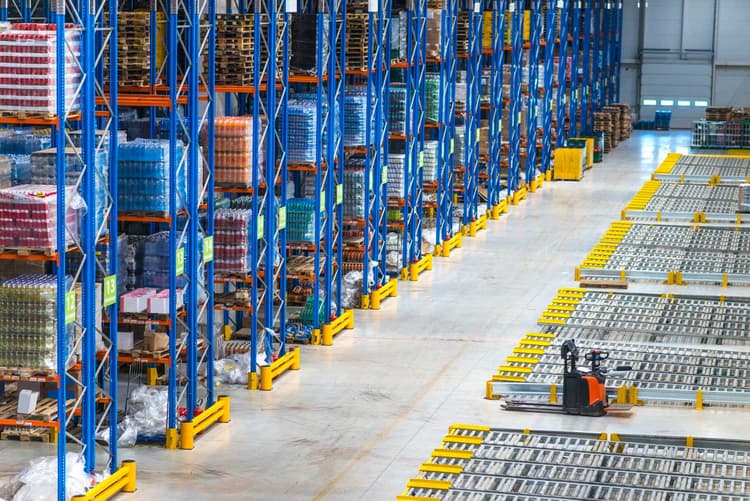
Operationally, ESG criteria in logistics and warehousing should be assessed through measurable evidence rather than slogans alone. Practices in green logistics, such as efficient energy use or sensible transport planning, need to be assessed against the facility’s actual conditions.
How to use the list and what to check
A stock-market company list is only a starting point. Logistics customers and stock researchers need different sets of information; listing status does not replace a service-quality assessment.
| Purpose | Information to check | What to avoid |
|---|---|---|
| Company research | Legal entity name, stock code, trading venue and actual activities | Confusing a stock code with a brand or the entire corporate ecosystem. |
| Finding a warehousing and logistics partner | Service locations, accepted goods, inbound and outbound procedures, responsibilities and contract terms | Selecting a provider solely because it is listed or appears in this directory. |
| Comparing services | Work scope, pricing method, processing times, service targets and incident handling | Treating space-only rental prices and full-service storage prices as identical products. |
| Stock research | Latest disclosures, business mix, cash flow, debt and company-specific risks | Inferring profitability from macroeconomic growth or promotional material. |
For businesses seeking warehouses or outsourced operations
Before requesting a quote, define the volume or area needed, storage duration, inbound and outbound frequency and preservation requirements. When comparing warehouse rental costs in Ho Chi Minh City, compare equivalent service scopes and clarify additional charges rather than simply choosing the lowest number.
If you need help storing and collecting or delivering belongings, consider MyStorage’s full-service storage and confirm what the quote includes. Do not assume storage services include port operations, international transport or the entire logistics chain.
For quality requirements, check the scope, issuing body and validity of warehouse industry certifications. If you also outsource facility management, distinguish IFM in warehouse management from inventory management or order processing.
Data scope and methodology
Stock codes and company information are checked against HNX, VSDC, the State Securities Commission and company disclosure pages. Sources in each row allow readers to verify the information. Activity grouping is an editorial presentation, not an exchange ranking.
The market section uses publicly available economic reporting covering 1H2026, not company financial statements to compare revenue, profit or market capitalization. The article does not assess fair stock values or replace investment advice. Statements about warehouse-demand implications are presented as interpretation, separate from source figures.
Frequently asked questions (FAQ)
Which stock codes are related to warehousing and logistics?
The article covers GMD, VSC, HAH, TMS, TCL, STG, VTP, MVN, PHP, DVP, CLL, PDN, QNP, CDN and SGP across ports, transport, warehousing and delivery. PET is described separately as a diversified business. This is not an exhaustive list or a recommended investment portfolio.
Is PHP traded on HOSE or UPCoM?
PHP, the stock code of Port of Hai Phong Joint Stock Company, is found on HNX’s UPCoM system, not HOSE. Check HNX’s securities page when using the information at a later date.
Is MVN a HOSE-listed stock?
No. In this list, MVN of Vietnam Maritime Corporation – JSC is registered for trading on UPCoM. Not all publicly traded shares should be described as HOSE-listed stocks.
What is Viettel Post’s stock code and trading venue?
Viettel Post Joint Stock Corporation uses the code VTP and trades on HOSE. Its delivery and logistics activities should be distinguished from a space-only warehouse rental model.
Why is PET not considered a pure-play logistics company?
PETROSETCO operates across multiple sectors, including distribution and various services. Its entire operations or revenue should not be treated as logistics, nor should it be compared directly with port companies without recognizing this difference.
Does being listed mean a company offers better warehouse services?
That conclusion cannot be drawn. Provider selection should depend on the serving facility, preservation requirements, procedures, handling capabilities and specific contract. Stock trading status does not guarantee suitability for every customer.
Are 1PL–5PL used to rank companies in the table?
No. These are concepts for organizing logistics services, not quality scores or stock rankings. Read the actual service scope before assigning a model to a company.
What period does the market data cover?
The overview is limited to the first six months of 2026. Source articles published on 6 July 2026 summarize January–June; third-quarter data is not used to describe 1H2026.
Does higher trade necessarily mean higher warehouse rents?
Not necessarily. Trade value is a monetary measure; rents also depend on supply, location, warehouse type, preservation standards and contract terms. Separate warehouse rental market data is needed to reach conclusions about prices.
Can this list be used to decide which shares to buy?
Do not base investment decisions on this article alone. It supports company research and understanding of business differences; it does not analyze valuation, risk tolerance or the reader’s financial circumstances.
Related articles
Article
Onshore vs Offshore: Which Manufacturing Model Should Businesses Choose?
Onshore manufacturing refers to production within a company’s home country, helping to control quality, shorten delivery times, and ensure easier regulatory compliance. Offshore…
Read article

Article
How To Organize Your Home Storage Room | 10 Space-Saving Tips
Organize household storage with ten practical tips, an inventory template, safety checks and guidance on when external storage is worth considering.
Read article

Article
Secrets to Profitable Online Selling: 10 Ways to Save Costs
To sell online profitably, you not only need to increase sales but also maintain good control over operating costs. Items such as inventory, premises, packaging, shipping, and order…
Read article
