
 Tiếng Việt
 한국어
한국어 日本語
日本語Article· Updated October 22, 2026
What Is IFM in Warehouse Management? Role, Services & Benefits
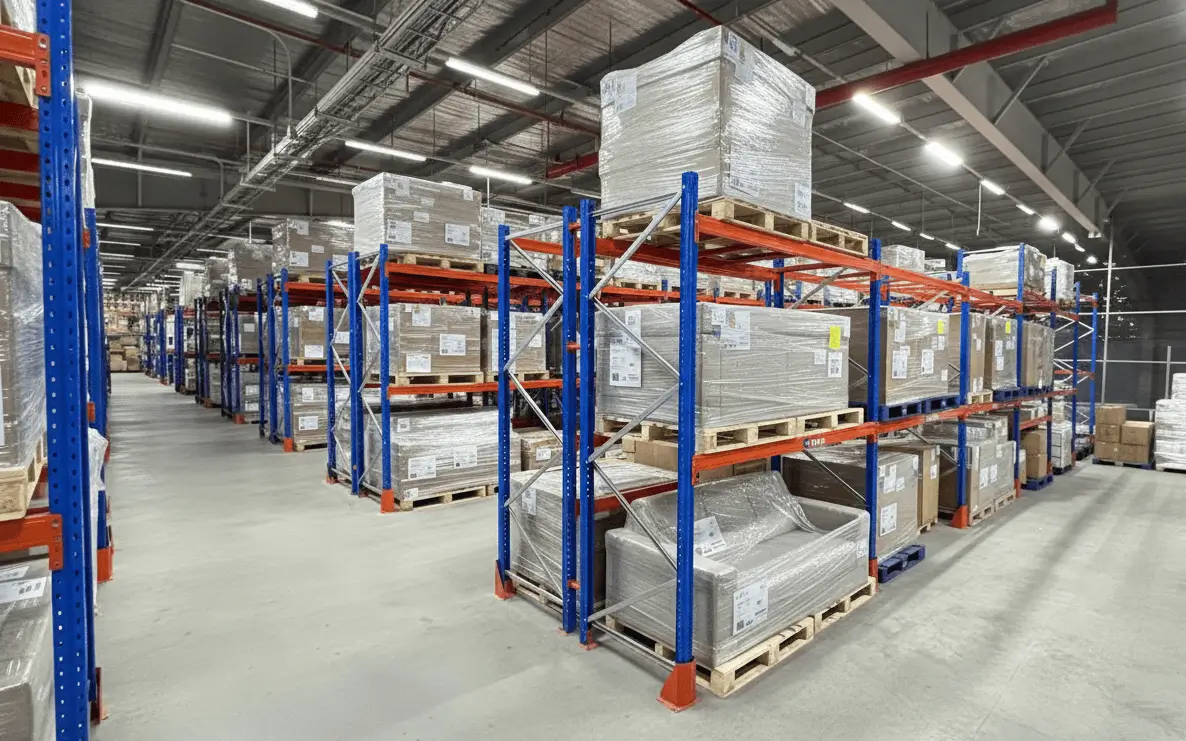
On this page
Integrated Facility Management (IFM) in a warehouse environment is a model that consolidates all technical maintenance, utility operation, and ancillary services under a single management entity. Instead of working individually with dozens of contractors for electrical maintenance, cleaning services, security, or fire safety system maintenance, businesses utilize a dedicated partner to coordinate the entire infrastructure.
Before delving into the details, it's important to clarify a key professional distinction: IFM does not replace warehouse management systems (WMS) and does not directly manage inventory flow. IFM's core objective is to create and maintain a secure, seamless, and technically sound physical infrastructure that enables loading, storage, and order processing operations to run at maximum efficiency without unintended disruptions.
1. What is IFM in Warehouse Management? How does it differ from conventional warehouse management?
In the logistics sector, the Integrated Facilities Management (IFM) model acts as a robust framework, responsible for the overall health of the building and the technical systems serving the supply chain .
The concept of integrated facility management in warehouses.
To properly understand the nature of IFM, businesses need to view warehouses not just as places to store goods, but as complex technical systems requiring synchronized operation.
According to the International Facilities Management Association (IFMA), IFM is an integrated approach to people, space, processes, and technology aimed at improving the quality of life and productivity of core operations. In the context of warehouses and distribution centers, this model transforms the operational structure from fragmented, multi-contractor systems to a centralized structure:
- Traditional model: Businesses independently contact and manage separate contractors for electrical and mechanical systems, air conditioning maintenance, security services, industrial cleaning teams, and fire safety inspections.
- The IFM model: All of these services are consolidated under a single coordinating unit, accompanied by a common performance evaluation index and a unified reporting channel.
The Scope of Facilities Managed Within the Warehouse.
The physical infrastructure within a standard warehouse comprises multiple technical layers that require regular maintenance and close monitoring.
The scope of management by the IFM unit at the warehouse typically covers the following key areas:
- Building infrastructure: Power supply system, transformer substation, backup generator, water supply and drainage system, and industrial lighting.
- Mechanical and air conditioning systems: Ventilation and cooling equipment, industrial refrigeration systems for specialized cold storage or refrigerated warehouses.
- Fire protection system: Automatic sprinkler system, smoke alarm system, portable fire extinguishers, fire pumps, and legally required safety inspection records.
- Cargo receiving and loading infrastructure: High-speed roller doors, automatic lifting platforms at the loading and unloading docks, and warehouse enclosure structures.
- Environmental support services: Security patrols, access control, industrial floor cleaning, waste collection and disposal, and pest control.
Comparison Between IFM and Warehouse Operations Management
Many managers often wonder about the differences between the responsibilities of an IFM team and a traditional warehouse operations team.
The detailed comparison table below clarifies the division of responsibilities between the two areas to avoid duplication or omission of tasks:
|
Comparison criteria |
Integrated Facilities Management (IFM) |
Warehouse Operations Management |
|---|---|---|
|
Target audience |
Facilities, technical systems, and working environment |
Goods, storage location, order processing personnel |
|
Main software system |
Maintenance Management Software (CMMS, CAFM) |
Warehouse management systems (WMS, ERP) |
|
Electromechanical and cooling systems |
Directly perform maintenance, servicing, and troubleshooting. |
Exploit and use the system, and report any unusual activity. |
|
Fire safety |
Equipment management, periodic inspections, technical drills. |
Comply with loading and unloading regulations and maintain safe distances from emergency exits. |
|
Import, export, and goods selection process |
Do not interfere with the cargo handling process. |
Directly plan, manage, and execute import and export procedures. |
|
Core objectives |
Minimize physical infrastructure downtime. |
Optimize inventory accuracy and order fulfillment speed. |
Distinguish Between an Integrated IFM Model and a Model That Leases Multiple Services Individually.
A common misconception is that signing contracts for multiple individual services simultaneously is equivalent to implementing the IFM model.
The fundamental difference lies not in the number of services outsourced, but in the level of collaboration and management philosophy:
- Lack of coordination: When contracting individually, each contractor is only concerned with their own scope of work. The air conditioning maintenance unit is not responsible if dust from the warehouse area affects the heat exchanger, while the cleaning team is unaware of the maintenance schedule and cannot coordinate.
- Single point of responsibility: In the IFM model, the management unit has the overall picture and is responsible for the final outcome through a clearly defined service level contract, thereby completely eliminating the possibility of shirking responsibility when problems arise.
2. Common IFM Service Groups in Warehouses
Depending on the storage needs—whether it's a conventional warehouse, an e-commerce warehouse , or a high-standard cold storage facility —the IFM service portfolio will be flexibly refined based on two main pillars.
Infrastructure Technical Services Group
The technical services team focuses on hardware ecosystems to ensure the warehouse remains in a stable and absolutely safe operating condition.
The core components include:
- Maintenance of the power distribution system: Regularly inspect medium and low voltage switchgear, grounding systems, and lightning protection systems, and use thermal imaging to detect early signs of overheating that could cause short circuits and fires.
- Maintenance of cooling and ventilation systems: Measure airflow, clean filters, inspect compressors, and periodically recharge refrigerant for warehouses storing temperature-sensitive goods.
- Cargo handling area maintenance : Maintenance of hydraulic lifts, loading/unloading doors, air cushion systems to prevent heat loss, and internal traffic signal lighting systems.
- Planned preventative maintenance: Schedule regular inspections before equipment failure occurs, minimizing costly unscheduled repairs.
Operating Environment Support Services Group
Besides technical infrastructure, a clean operating environment and strict security are mandatory conditions to prevent goods from being lost or damaged.
Support services include:
- Security and access control: Professional security personnel are stationed at control gates, managing the visitor pass issuance process, monitoring surveillance cameras 24/7, and inspecting vehicles entering and exiting the premises.
- Industrial floor cleaning in warehouses : Using specialized floor scrubbers to clean fine dust and forklift engine oil and grease, keeping walkways clear and meeting workplace safety standards.
- Pest and insect control: Set up insect traps and rodent bait stations around the warehouse perimeter and periodically spray pesticides according to safety standards to avoid affecting goods.
- Waste collection management: Sorting of damaged wooden pallets, waste plastic shrink wrap, household waste, and handling of hazardous waste in accordance with current environmental standards.
Energy Management and Environmental Protection
Electricity costs for lighting and cooling systems account for a very large proportion of the overall operating costs of any modern warehouse.
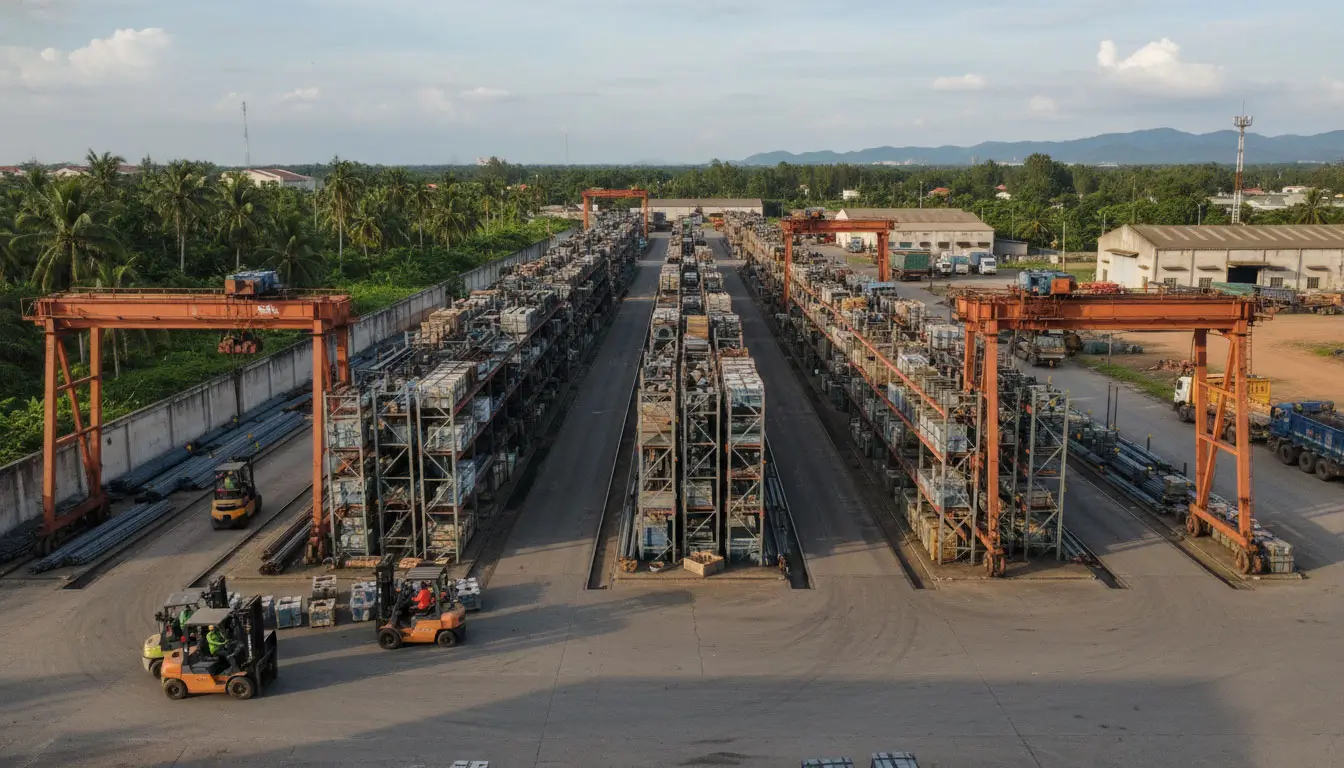
Professional IFM units will implement technical solutions to reduce energy consumption:
- Optimize the load profile: Allocate the operating time of high-energy consuming equipment outside of peak hours to reduce electricity production costs.
- Energy-saving technology transition: Replace industrial light bulbs with smart lighting systems equipped with motion sensors in low-traffic areas.
- Supporting the sustainable development roadmap: Collecting greenhouse gas emission data from electricity consumption, assisting businesses in meeting green building certifications and sustainable environmental goals.
Workplace Safety and Compliance With Fire Safety Regulations.
Warehouses are environments with a very high risk of fire, explosions, and workplace accidents due to the high density of stored goods and the constant movement of vehicles.
Legal compliance activities include:
- Fire safety equipment monitoring: Measure fire hydrant pressure, conduct weekly test runs of pumps, and check the expiration dates of powder and carbon dioxide fire extinguishers.
- Prepare and finalize safety acceptance documents: Update the facility safety inspection log, and prepare all necessary legal documents for periodic inspections by relevant authorities.
- Emergency response and training: Train warehouse staff in escape skills, fire hose usage, and coordinated action when evacuation signals are given.
3. Benefits of IFM for Warehouse Operations
The implementation of integrated facilities management solutions has brought about a significant shift from a passive, incident-response approach to a proactive approach to operational quality control.
Minimize Warehouse Downtime.
Downtime, or the time lost, at e-commerce fulfillment centers or cold storage facilities can result in extremely significant financial losses.
A market study from industrial real estate firm JLL indicates that incidents related to sudden power outages or cooling system failures account for over 40% of on-site supply chain disruptions in warehouses lacking standardized maintenance procedures. The IFM model effectively addresses this risk:
- Standardize the process for responding to technical emergencies within 15 to 30 minutes of receiving the information.
- Implementing predictive maintenance through modern testing equipment allows for early detection of bearing failures and refrigerant leaks before the machine shuts down.
Recognizing the importance of maintaining continuous warehouse infrastructure, industrial real estate research experts from CBRE emphasized this point in their supply chain report:
"In the era of express delivery, warehouses are no longer passive goods collection points but high-intensity, technologically advanced centers. Every hour of disruption to the infrastructure at the distribution center not only halts delivery flows but also directly erodes brand reputation in the eyes of partners."
Optimizing Facility Operating Costs.
Consolidating multiple individual contracts under a single supplier creates significant economies of scale for business owners.
According to a survey by the International Facilities Management Association (IFMA), organizations that transition from decentralized management to an integrated IFM model record average savings of 15% to 25% on total facility operating costs after two years of implementation.
- Reduced administrative costs: The purchasing and accounting departments only need to manage a single contract and reconcile one service invoice per month, instead of dozens of separate departments.
- Cost savings on supplies: IFM has the ability to negotiate wholesale purchases of light bulbs, replacement parts, and cleaning chemicals at much more favorable prices than a business would have to buy them individually.
Increase the Lifespan of Assets and Structures.
Industrial equipment, if not properly maintained, will deteriorate very quickly under dusty conditions and heavy loads in the warehouse.
IFM's in-depth asset lifecycle management process delivers sustainable results:
- The entire repair history and maintenance cycle of each pump, ventilation fan, and hydraulic lift gate are stored in specialized software.
- Replacing worn-out components as recommended by the manufacturer prevents a small malfunction from leading to the destruction of an entire expensive machine.
Control Safety Risks and Enhance Brand Reputation.
A warehouse fire or shelving collapse not only causes damage to goods but also damages the company's reputation and can lead to criminal liability.
IFM has established a strict safety control barrier system:
- All work at height and welding procedures that generate sparks require a safety permit and the presence of a dedicated supervisor.
- Our facilities consistently meet international standards such as ISO 41001 for facilities management, enabling us to easily pass rigorous audits by our global clients and partners.
4. IFM Implementation Process in Warehouses
To successfully transition to the IFM model, businesses need to follow a structured five-step process, ensuring that daily import and export operations are not disrupted .
Current situation survey → Scope design → Agree on SLA/KPI → Execute work order → Report on improvements
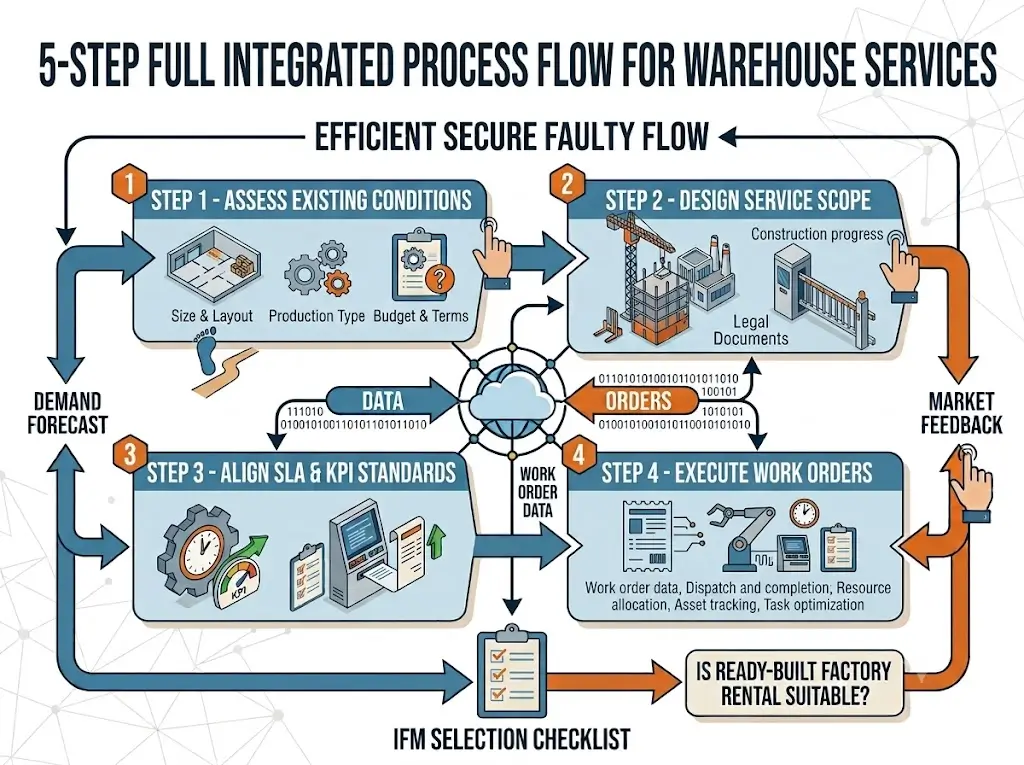
Step 1: Survey and Assess the Current State of Facilities.
The initial phase requires a comprehensive physical health inventory of the warehouse to accurately identify technical bottlenecks.
The IFM engineering team will conduct a review of the following items:
- Inspect the structural integrity of the floor, roofing, rainwater drainage system, and any cracks or subsidence.
- Conduct a complete inventory of all electromechanical assets, review past maintenance records, and measure the actual technical parameters of core equipment.
- Review the validity of existing fire safety approval documents and utility contracts.
Step 2: Determine the Scope of Services That Fit Your Budget.
Each type of warehouse will have a different priority level for each group of infrastructure services.
IFM and its partners jointly categorize service portfolios by importance level:
- Mandatory essentials: Electrical system maintenance, fire protection system maintenance, perimeter security.
- Routine operations team: Warehouse floor cleaning, pest control, maintenance of loading and unloading platforms.
- Advanced Optimization Team: Energy saving management, installation of automatic temperature sensors, 24/7 on-site technical maintenance service.
Step 3: Establish Service Quality Commitment Indicators.
A transparent IFM contract always includes clear quantitative indicators to measure the actual performance of the service provider.
Key performance indicators (KPIs) that are commonly applied include:
- Initial incident response time: Maximum 15 minutes for serious incidents that could halt the goods receiving and dispatching line.
- Preventive maintenance completion rate: Achieve a minimum of 98% of the planned work for the month.
- Workplace safety index: No workplace safety incidents or fires caused by subjective errors in maintenance work.
Step 4: Implement the Process for Receiving and Processing Work Orders.
All requests for repairs or facility support are digitized to track progress transparently.
The standard troubleshooting flow is as follows:
- Warehouse staff scan the QR code to report issues or submit requests through the management software system.
- The system automatically categorizes the urgency level and dispatches work orders to the nearest specialist technician.
- The technician handles the troubleshooting, takes acceptance photos, updates the consumable materials inventory, and submits the work order for the warehouse manager to assess the quality.
Step 5: Regular Reporting and Continuous Performance Improvement
The value of IFM lies not only in fixing problems that have already occurred, but also in its ability to analyze data to prevent recurring problems.
The monthly report will answer key management questions:
- Which equipment incurred the highest repair costs during the period, and what was the root cause?
- Is electricity consumption trending upwards or downwards compared to the same period last year, and what technical solutions have been effective?
- The financial plan anticipates a major asset replacement within the next 6 to 12 months to ensure the business proactively manages its cash flow.
5. What Factors Affect the Cost of IFM Warehousing Services?
The cost of IFM services for warehousing is not a fixed price per square meter for all cases, but is based on a combination of floor space size, complexity of technical systems, and the actual scope of services.
The cost of outsourcing IFM services is influenced by the following key factors:
- Floor area and storage height: Warehouses with an area of 10,000 square meters or more, or multi-story warehouses with automated racking systems, require specialized aerial work platforms for maintenance at height, resulting in higher engineering costs.
- Warehouse type: Conventional goods storage warehouses have significantly lower facility management costs compared to deep-freeze warehouses or pharmaceutical warehouses that meet Good Storage Practice (GSP) standards.
- On-site staffing level: Businesses requiring a technical team to be on duty 24/7 at the warehouse will incur higher costs compared to a model where technicians patrol or provide support on a scheduled basis combined with emergency response.
Below is a common market-based budget framework for standard warehouses as of Q3 2026:
|
Warehouse size |
Typical service scope |
Estimated reference cost range (VND/month) |
|---|---|---|
|
Small warehouse (1,000 - 3,000 m²) |
Regular maintenance of electrical and mechanical systems, fire safety inspections, weekly cleaning, and gate security. |
25,000,000 - 50,000,000 |
|
Medium-sized warehouse (3,000 - 10,000 m²) |
Technician responsible for pest control, floor scrubber operation, and raised floor maintenance. |
50,000,000 - 120,000,000 |
|
Large distribution center (> 10,000 m²) |
24/7 technical support team, multi-layered security, energy optimization. |
120,000,000 - 300,000,000+ |
Important Note: The above price list is for reference only and is intended to help businesses create a preliminary budget. Actual prices may vary depending on the condition of the equipment, the age of the structure, and specific troubleshooting timelines required in the contract.
6. When Should Businesses Consider Hiring IFM Services?
Not every warehouse needs to implement the IFM model immediately; the transition should be carefully considered based on the scale and complexity of operations.
Businesses should consider using professional IFM services when they encounter the following signs:
- Warehouse management teams are overwhelmed with maintenance: Warehouse managers spend too much time dealing with broken light bulbs, malfunctioning pumps, or dealing with inspection teams instead of focusing on the flow of goods.
- Frequent operational downtime occurs: Electrical short circuits and malfunctioning roller doors happen repeatedly, causing congestion for trucks waiting to load goods and resulting in late-shipment penalty fees.
- Maintenance costs are fragmented and difficult to control: Businesses receive too many small invoices from different local contractors, but the quality of work does not improve.
- Storage of high-value or sensitive goods: Electronic components, pharmaceuticals, and frozen foods require a strict temperature and security environment that does not allow for any technical errors.
The adoption of integrated infrastructure management solutions is gradually becoming a mandatory standard for logistics and retail businesses aiming to build a sustainable, secure, and cost-effective supply chain. When infrastructure is entrusted to a professional partner, the operations team can fully focus on their core mission: improving order processing speed and delivering an excellent customer experience.
If your business is looking for a secure warehousing solution, or needs advice on technically sound self-managed warehouse space , MyStorage's warehousing system in Ho Chi Minh City is always ready to provide flexible storage solutions with 24/7 security, humidity control, and environmental management that meet international standards.
Frequently Asked Questions (FAQ) About IFM in Warehouse Management
Below is a summary of concise answers, focusing on the practical concerns of supply chain managers when learning about this model.
1. Can the IFM service replace a WMS warehouse management system?
No. IFM only manages the building's infrastructure and equipment, while WMS manages goods, inventory codes, and order processing procedures.
2. Will outsourcing warehouse management increase overall warehouse operating costs?
In the short term, the cost of a lump-sum contract may seem more obvious, but in the long term, this model saves 15% to 25% by minimizing equipment downtime and optimizing procurement costs.
3. Is IFM responsible for maintaining the forklifts in the warehouse?
Typically, forklifts fall under the management of the warehouse operations team or the lifting equipment supplier. However, if both parties agree to include this in the service contract, IFM can still undertake the management and maintenance of this forklift fleet.
4. Is the fire safety system in the warehouse inspected by IFM or the police?
IFM is responsible for regular maintenance, technical inspections, and preparation of valid documentation. Periodic safety inspections and certifications remain the responsibility of the Fire and Rescue Police Department, as per legal regulations.
5. Is it advisable to use IFM services for small warehouses under 1,000 square meters?
For areas under 1,000 square meters, hiring a full-service IFM (Integrated Maintenance Management) unit may not be cost-effective. Businesses should only consider hiring basic routine maintenance packages or individual services as needed.
6. How does the IFM unit handle emergency breakdowns at night?
Professional IFM contracts always include a 24/7 emergency response clause with a commitment to arrive at the site within 30 to 60 minutes to resolve issues and ensure the safety of goods.
7. How does IFM support businesses in obtaining green building certification for their warehouses?
IFM assists in measuring electricity and water consumption, optimizing lighting and cooling systems, and establishing waste management processes that meet the stringent assessment criteria of LEED or Lotus certifications.
8. What preparations does a business need to make before inviting IFM to conduct a survey?
Businesses need to prepare as-built drawings of the site plan, electrical and plumbing system diagrams, a list of existing machinery and assets, fire safety documents, and a summary of maintenance costs incurred in the last 12 months.
9. How does IFM coordinate with WMS in warehouse operations?
WMS tracks goods and orders; IFM tracks infrastructure and equipment status and maintenance requirements. Both parties can share incident information and maintenance schedules to allow warehouse teams to proactively adjust their shipping and receiving plans, but responsibilities need to be clearly defined in the coordination process.
10. Which items should businesses prioritize when starting to implement IFM?
Risk assessment and incident history should be conducted first, then prioritizing systems that directly impact safety or operational continuity, such as electricity, fire protection, loading and unloading doors, and environmental control equipment. The scope of priority should be appropriate for each warehouse and the type of goods being stored.
11. Is it necessary to station IFM personnel permanently at the warehouse?
Not all warehouses require permanent technical staff. Businesses can choose an on-site team for routine inspections or on-demand support, depending on the warehouse size, equipment complexity, operating hours, and risk level in case of incidents.
12. What metrics should be included in the SLA for IFM services?
The SLA should specify the timeframe for receiving and responding to incidents, priority-based resolution deadlines, scheduled maintenance completion rates, acceptance methods, and reporting frequency. The metrics should include measurement methods, responsible parties, and exceptions agreed upon by both parties.
13. How does IFM help control electricity consumption in the warehouse?
The IFM unit can monitor electricity usage data, check the operating schedule of lighting and cooling systems, detect abnormal equipment operation, and recommend maintenance or adjustments. The savings should be compared with actual data before and after implementation.
14. Can a business with multiple warehouses manage IFM centrally?
It is possible to standardize reporting channels, asset catalogs, and incident response procedures across multiple warehouses. However, maintenance plans, staffing, and priorities still need to be adjusted according to the equipment, product types, and operating conditions of each location.
15. What should businesses check when choosing an IFM supplier?
The contract should consider technical capabilities, the scope of services performed directly or through subcontractors, incident response procedures, maintenance record keeping methods, and KPI measurement methods. It should clearly define responsibilities, excluded items, and coordination with the warehouse operations team.
16. What documents should be handed over when changing IFM providers?
Both parties should review asset lists, drawings and technical documentation, maintenance history, outstanding issues, upcoming inspection schedules, relevant service contracts, and system access rights. A clear handover record ensures uninterrupted operation during the transition.
Related articles
Article
What Is Cold Chain Logistics? Process, Standards and Solutions
Cold chain logistics keeps temperature and humidity within a strict range from origin to consumer. This guide covers the standard temperature bands, the four-step process, GDP and HACCP…
Read article

Article
What Is Cycle Counting? How to Run It Without Stopping Sales
Cycle counting means counting part of your stock on a repeating schedule instead of closing the warehouse for a full count. This guide covers ABC classification, how to schedule counts, a…
Read article

Article
What Is a WMS? Functions, Benefits and How to Choose a Warehouse Management System
A WMS is warehouse management software that digitises the flow of goods from receiving and location assignment to real-time stock control, picking and dispatch. This guide covers its core…
Read article
