 Tiếng Việt
 한국어
한국어 日本語
日本語Article· Updated October 16, 2026
What Is a Parcel Delivery Locker? An Automated Delivery Solution for Apartments and Businesses
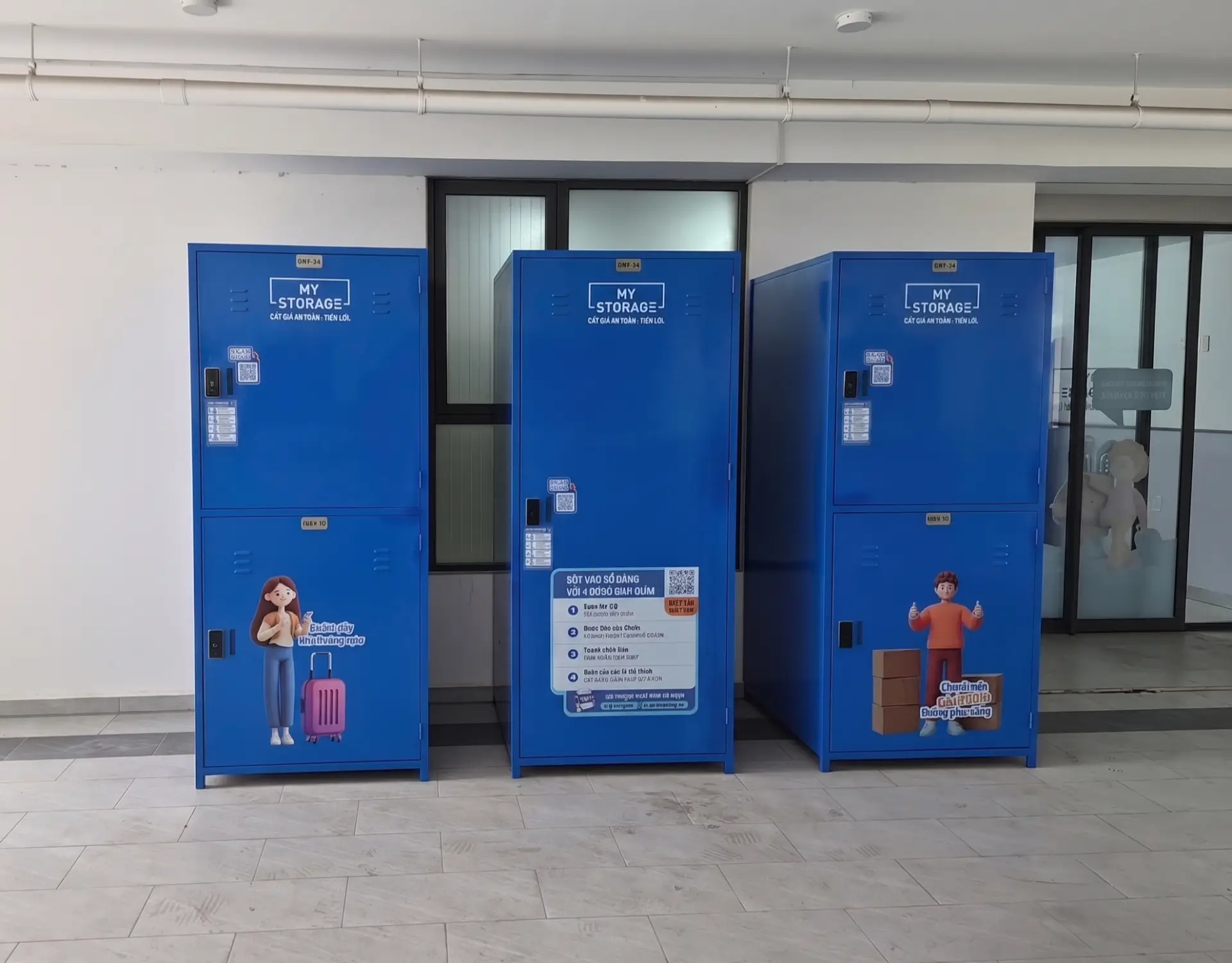
MyStorage Smart Locker Offer: 20% Off
All locker sizes · All rental durations · All smart locker locations
Locker rental from just VND 40,000/hour. Discount applied automatically when booking · 28 September–20 October 2026.
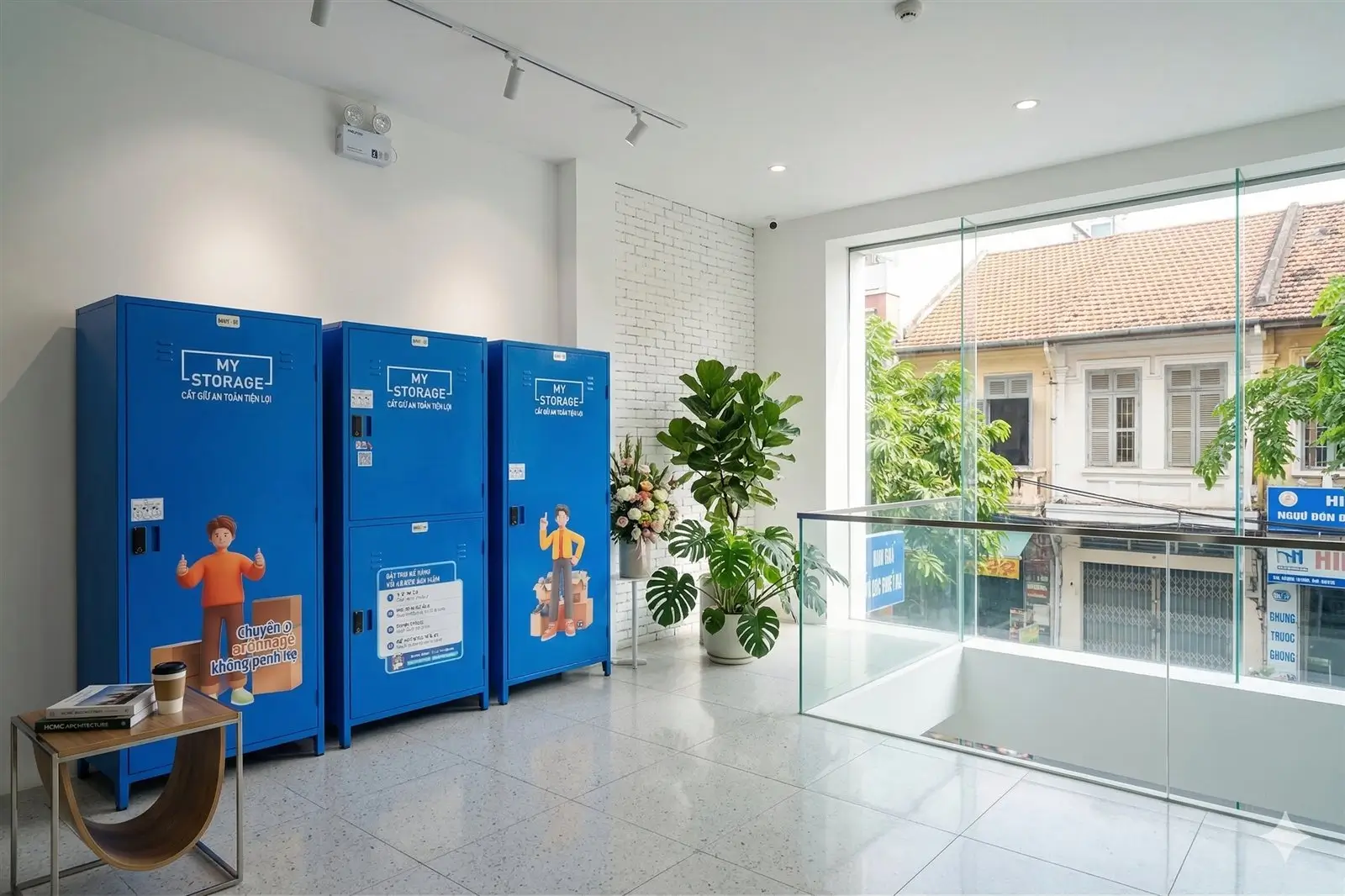
A parcel delivery locker is a smart storage system that lets couriers place parcels in a designated compartment while recipients collect them using a PIN, QR code, barcode or another configured authentication method. It automates handoffs, reduces waiting, keeps parcels from piling up in lobbies and supports more effective order management. These lockers can be installed in apartments, offices, businesses, schools, supermarkets and parcel pickup locations.
1. What Is a Parcel Delivery Locker and How Does It Work?
A parcel delivery locker combines electronic locks, authentication devices and management software to support parcel drop-off and pickup without requiring a face-to-face handoff. The courier puts a parcel in the assigned compartment, the system records the transaction and sends pickup details to the recipient, who then authenticates to open the correct compartment.
How Is a Delivery Locker Different from a Regular Locker?
Although both are lockable storage systems, delivery lockers and regular lockers serve different purposes, as the comparison below shows.
|
Criteria |
Regular locker |
Delivery locker |
|---|---|---|
|
Purpose |
Personal belongings storage |
Parcel drop-off and pickup |
|
Users |
Owner or authorized user |
Courier and recipient |
|
Authentication |
Key, numeric code, RFID, etc. |
QR code, PIN, barcode, facial recognition, etc. |
|
Management |
May be manual |
Transactions managed by software |
|
Notifications |
Usually none |
Automatic notifications can be integrated |
|
Applications |
Gyms, schools and offices |
Apartments, offices, retail and logistics |
Components of a Parcel Delivery Locker
A complete delivery locker system typically includes:
- A master station that controls the system
- Expansion modules containing locker compartments
- An electronic lock for each compartment
- A touchscreen for user interaction
- A QR-code or barcode scanner
- An RFID reader, depending on the configuration
- Central management software
- Network and power infrastructure
Many smart locker systems use a master station connected to expansion modules, with equipment such as a touchscreen, barcode scanner and RFID reader depending on the installation configuration.
How Parcel Delivery Through a Locker Works
A typical locker delivery transaction follows these steps:
- The courier receives the delivery information.
- The courier brings the parcel to the locker area.
- The courier authenticates and opens the compartment assigned by the system.
- The parcel is placed inside.
- The system records the deposit transaction.
- The recipient receives a parcel notification.
- The recipient authenticates with the system.
- The recipient opens the corresponding compartment and collects the parcel.
This is a common process used by many smart locker systems for apartment deliveries.
2. What Problems Do Parcel Delivery Lockers Solve?
Delivery lockers address common challenges when parcel volumes rise: recipients may be away, couriers may have to wait or retry delivery, parcels can accumulate at reception, and delivery status can be difficult to track. A self-service model lets recipients collect parcels on their own schedule and reduces manual work for operators.
Couriers Do Not Have to Wait for Recipients
In a traditional handoff, a courier often calls the recipient and waits before completing delivery. With a delivery locker, the courier deposits the parcel, the system sends a notification, and the recipient collects it when convenient.
Less Work for Reception and Property Management
This benefit is particularly clear in places that receive many parcels each day, such as:
- Apartment buildings with many residents
- Office buildings
- Mixed-use complexes with multiple amenities
- Schools
- Businesses with many employees
Less Parcel Congestion in Lobbies
Without lockers, parcels often pile up in lobbies or at reception, creating problems such as:
- Parcels left temporarily on counters and taking up space
- Insufficient room when delivery volumes rise
- Difficulty sorting parcels by resident or employee
- Difficulty tracking who has collected a parcel
- A cluttered appearance in shared lobby areas
Reducing lobby congestion and management workload is also commonly cited by smart locker providers as a key benefit for apartment buildings.
Recipients Can Collect Parcels on Their Own Schedule
With delivery lockers, recipients do not have to be present when the courier arrives, wait for a second delivery attempt, accept every parcel in person or rely entirely on reception opening hours.
More Transparent Delivery Management
With supporting software, operators can track and manage information more clearly, including:
- When a parcel was placed in each compartment
- Which compartments are currently in use
- The recipient associated with each transaction
- The status of each compartment
- When a compartment was opened and the parcel collected
Many smart locker systems are described as recording deposits, pickups, opening and closing times, and compartment status in their management software.
3. Where Are Parcel Delivery Lockers Used?
Delivery lockers can be installed wherever parcel volumes and demand for self-service pickup are high, including apartments, offices, schools, supermarkets, shopping centers and parcel pickup points. Compartment counts and sizes, as well as authentication methods, can be tailored to each operating model.
Parcel Delivery Lockers for Apartments
This is one of the most common applications: parcels are placed in a delivery locker in the apartment lobby, and residents collect them when convenient. This can address several issues at once:
- Parcels no longer pile up in the lobby
- Couriers do not have to wait
- Residents can collect parcels after returning
- Reception staff do not have to accept every parcel on residents’ behalf
Parcel Delivery Lockers for Offices
This model suits office buildings, coworking spaces and businesses with many employees. In addition to personal parcels, office lockers can also be used to:
- Receive employees’ personal orders
- Circulate internal documents
- Hand off files between departments
- Distribute office supplies
Lockers for Supermarkets and Retail
In retail, a delivery locker is commonly used as follows: a customer orders online, the retailer prepares the order and places it in a locker, the system sends a notification, and the customer collects it using an authentication code. Many supermarket and retail chains use this model to let customers choose when to pick up orders instead of waiting at a counter.
Lockers for Schools
In education settings, delivery lockers can support needs such as:
- Receiving students’ personal parcels
- Distributing learning materials
- Handing off school supplies
- Sending and receiving personal items on campus
Lockers for Businesses and Industrial Parks
In addition to receiving external deliveries, businesses and industrial parks can use delivery lockers for internal purposes:
- Receiving production supplies
- Distributing documents between departments
- Handing off work equipment
- Transferring goods internally between shifts
Lockers for Pickup Points and Logistics
Within the e-commerce supply chain, delivery lockers can serve as automated pickup points that support last-mile delivery. Similar to public parcel collection points, customers collect orders using an authentication code without requiring a courier to deliver to their door. This can save time and cost for both carriers and recipients.
4. What Technologies Do Parcel Delivery Lockers Use?
Depending on their configuration, delivery lockers can use PINs, QR codes, barcodes, RFID or facial recognition for authentication. Management software can also track compartment status and deposit and pickup transactions, automating the process instead of relying on keys or manual steps.
PINs and One-Time Codes
- Easy to implement without complex equipment
- Recipients do not need to carry a key or access card
- A unique code can be issued for each transaction to improve security
QR Codes and Barcodes
The recipient receives a code and scans it with a scanner or phone. The system verifies it and then automatically opens the compartment.
RFID
RFID is often suitable for a fixed group of regular users, such as apartment residents, company employees, members of a program or service, and other frequent users.
Facial Recognition
Facial authentication may suit projects with stricter identity verification requirements, a touch-free experience or tighter control over system access.
Many smart locker systems now support facial recognition, barcodes and PINs. Some configurations can also use RFID or QR codes, depending on deployment needs.
Locker Management Software
Software supplied with a system often supports day-to-day management, including:
- Users and access permissions
- Compartment-by-compartment status
- Real-time usage status
- Parcel deposit and pickup history
- Automatic recipient notifications
5. How Should You Choose a Parcel Delivery Locker?
Businesses and operators should assess delivery demand, user and parcel volumes, parcel sizes, installation location, authentication methods, software management and the ability to expand. Choosing only by compartment count or equipment price may overlook important operating needs.
- Estimate users and order volume: assess the number of residents or employees, daily parcel volume, peak periods, courier traffic and the share of parcels that remain in lockers for a long time.
- Choose compartment sizes: select a system with multiple sizes, from envelope and small-box compartments to larger parcel compartments.
- Assess software and management: look for an intuitive dashboard, compartment management, transaction history, access control, notifications, report exports and remote management.
- Survey the installation site: consider space, power, network access, approach routes, surveillance cameras, weather cover and actual usage flows.
- Plan for expansion: prioritize a system that can add modules as demand grows instead of requiring a complete replacement.
Choose an Authentication Technology That Fits
|
Technology |
Suitable for |
|---|---|
|
PIN or one-time code |
Occasional, individual deliveries |
|
QR code or barcode |
E-commerce and pickup points |
|
RFID |
Regular, fixed user groups |
|
Facial recognition |
Projects requiring stricter authentication |
|
Multiple methods combined |
Large systems serving diverse user groups |
6. Indicative Costs of Parcel Delivery Lockers
Whether to buy or rent a locker system depends on the number of compartments, authentication technology, management software and provider. The table below is an initial guide before a site survey and a detailed quote based on the actual configuration.
|
System scale |
Indicative characteristics |
Indicative cost range |
|---|---|---|
|
Small system |
Fewer than 20 compartments; suitable for a small apartment building or office |
Several tens of millions to under VND 150 million for basic hardware and software |
|
Medium system |
20–50 compartments; suitable for a medium-sized apartment building or office tower |
About VND 150–350 million depending on authentication technology and expansion modules |
|
Large system |
More than 50 compartments and multiple modules; suitable for a large complex |
From about VND 350 million, depending on customization |
|
Management software |
May be priced as a separate subscription, depending on features |
Several million to tens of millions of VND per month |
|
Installation and periodic maintenance |
Depends on system scale and installation area |
Quoted separately under the service agreement |
These are broad market estimates at the time of writing, not an official quote from any specific provider. Equipment is customized by authentication technology, compartment count, component brands and software requirements, so prices can vary substantially. Before investing, businesses and property managers should survey the site, compare reputable providers and request a quote based on scale, user count and desired technology.
A parcel delivery locker is more than a storage device; it is part of a building’s or business’s delivery operations. Selecting the right scale, authentication technology and management software from the outset can support stable operations and make future expansion easier as e-commerce demand grows.
Frequently Asked Questions About Parcel Delivery Lockers
1. How does a parcel delivery locker work?
The courier authenticates, puts the parcel in the assigned compartment and closes it. The system records the transaction and sends a notification; the recipient uses a PIN, QR code or another issued method to open the correct compartment and collect the parcel.
2. Does an apartment building still need reception staff to accept parcels?
Not necessarily. Couriers can place parcels directly in a compartment and residents can collect them when convenient. Management should still have a process for oversized parcels, overdue pickups or exceptional situations.
3. How can recipients open the locker?
Depending on configuration, a system may support PINs, one-time codes, QR codes, barcodes, RFID or facial recognition. Choose a method that suits the users and security requirements.
4. Can parcel lockers be installed outdoors?
They can if the equipment and site are designed for outdoor conditions. Assess water resistance, shelter, power, network connectivity, direct sunlight, surveillance and maintenance access.
5. How many locker compartments should an apartment building install?
The number depends on apartment count, daily parcel volume, peak periods, storage duration and the share of larger parcels. Survey actual operations and allow for future expansion.
6. Does the system automatically notify recipients?
Many systems can notify recipients when a parcel is deposited, but the channel depends on the software and deployment configuration. Confirm this feature with the provider.
7. Can compartments be added after installation?
Yes, if the system uses a master station with expansion modules. Clarify expansion capability, maximum compartment count and software requirements during selection.
8. What costs are usually included in implementation?
Costs may include lockers and electronic locks, the control station, authentication devices, software, connectivity, shipping, installation, training, maintenance and integration customization.
9. How is delivery data stored?
Software typically records deposit and pickup times, compartment status and opening history. Storage methods, retention periods, access permissions and privacy policies depend on the provider.
10. What maintenance do parcel delivery lockers need?
Periodically inspect locks, hinges, doors, power, screens, scanners, network connectivity and software. Maintenance frequency depends on usage intensity and the provider’s recommendations.
Related articles

Article
How to Manage Inventory for a Home-Based Online Shop
A practical guide to inventory management for a home-based online shop: standardise SKU codes, build an inbound-outbound-balance sheet, cycle count your stock, organise with FIFO and FEFO…
Read article
Article
Logistics and Industrial Real Estate: How They Connect, Market Trends and Opportunities
How logistics and industrial real estate depend on each other: types of premises, how location and warehouse design drive cost, Vietnam market trends, and choosing the right space.
Read article
Article
Where to Store Your Vehicle and Belongings During a Long Trip
How to sort your belongings, prepare a motorbike or car, and choose where to store everything during a long trip: keep it at home, leave it with family, or rent self-storage.
Read article
