
 Tiếng Việt
 한국어
한국어 日本語
日本語Article· Updated October 15, 2026
ESG in Logistics and Warehousing: Criteria, KPIs and an Implementation Checklist
Statements in the original content about mandatory ESG, LEED as a contract condition, bid-scoring percentages, solar power at every new warehouse or preferential interest rates are not universal rules. Check the specific tender, contract, project and lending program. There is no single “ESG certificate” that satisfies every requirement, and this article does not verify that MyStorage holds the certificates or operating specifications used as examples.
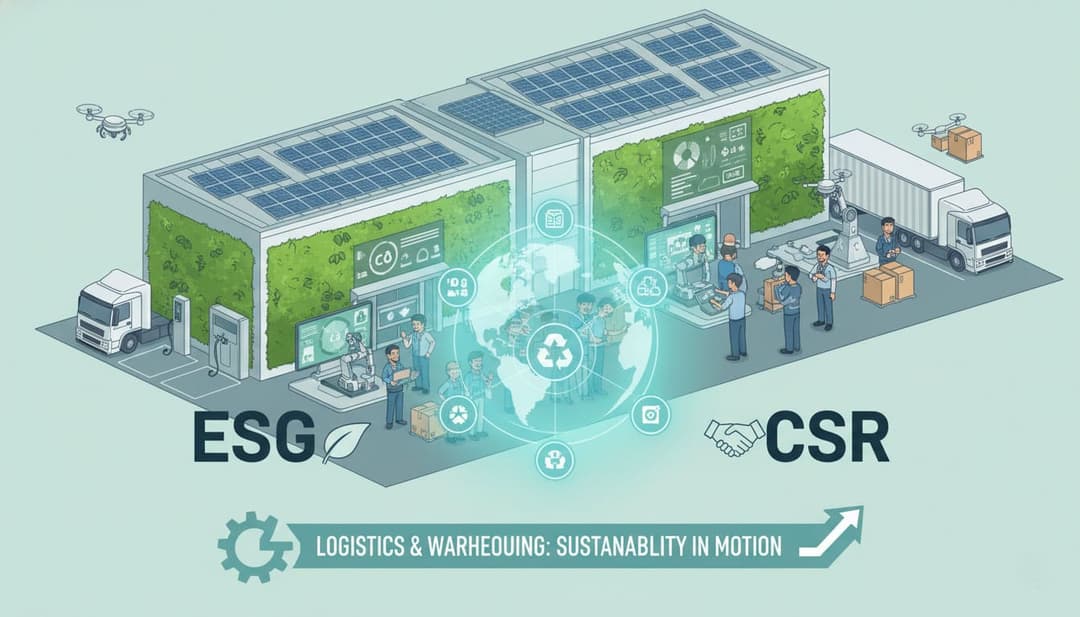
ESG and CSR in the logistics and warehousing industry are no longer merely formal activities but have become mandatory operational standards, especially for businesses serving B2B, FDI clients, and global supply chains. Adopting ESG helps logistics companies reduce energy costs, ensure legal compliance, enhance brand reputation, and increase their ability to secure long-term contracts with domestic and international partners.
How do ESG and CSR differ in the logistics & warehousing industry?
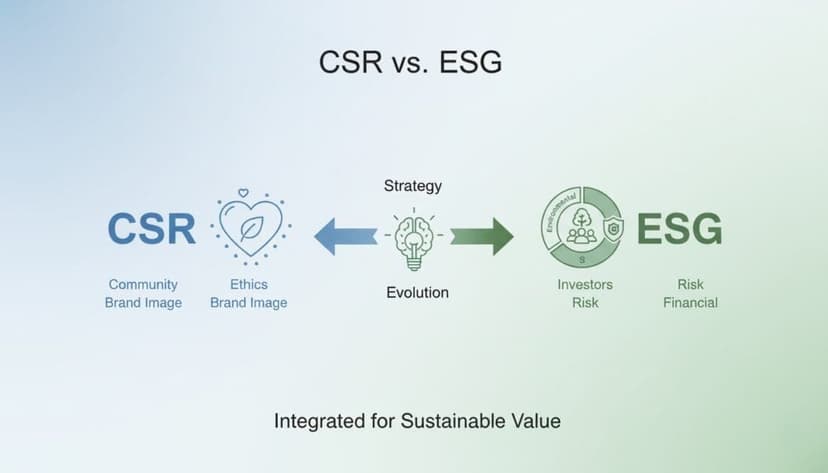
ESG is a set of criteria measuring performance in Environmental, Social, and Governance aspects, acting as a quantitative “metric” that helps investors and partners assess a business’s sustainability. Meanwhile, CSR (Corporate Social Responsibility) leans towards ethical values and voluntary activities aimed at building brand image.
In the logistics and warehousing industry, ESG is mandatory and measurable (e.g., carbon emissions per package), while CSR typically plays a supportive role in building corporate image and culture through community activities.
1. Definition of ESG (Environmental – Social – Governance)
ESG is a governance framework that helps logistics businesses operate sustainably through 3 pillars:
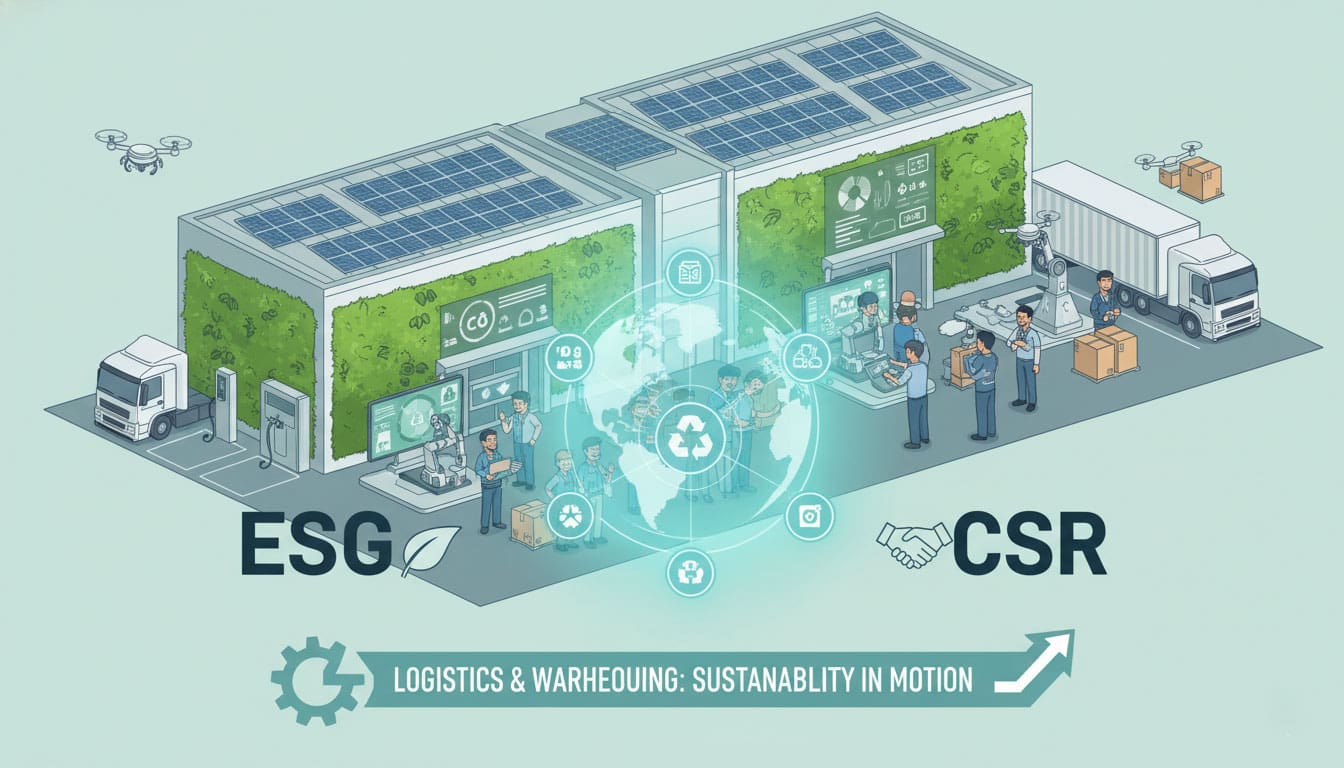
- Environmental: Focuses on reducing the carbon footprint. Example: Using electric vehicles (EVs), installing rooftop solar panels on warehouses, optimizing routes to reduce fuel consumption.
- Social: Focuses on relationships with people. Example: Ensuring occupational safety for warehouse staff, providing welfare benefits for long-haul drivers, diversifying the workforce.
- Governance: Focuses on transparency and business ethics. Example: Publishing regular emissions reports, combating corruption in customs clearance processes, strictly complying with international laws.
2. Definition of CSR
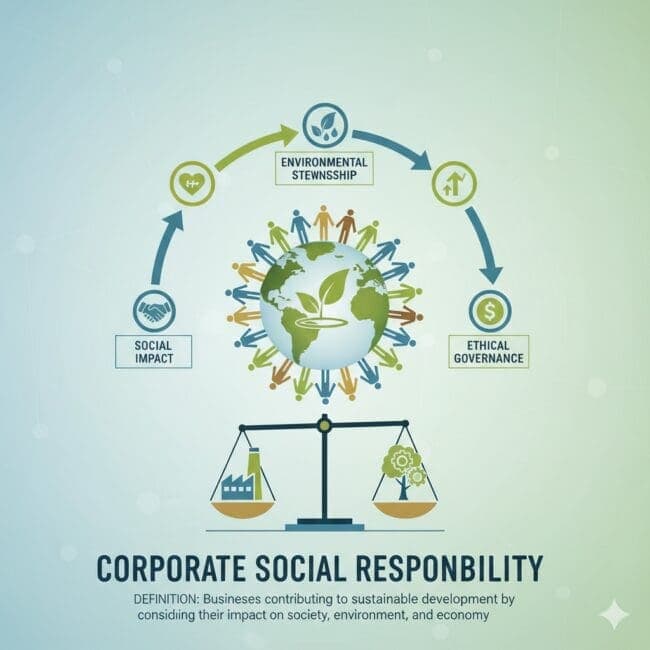
CSR is a business model that helps companies be self-aware of their impact on society. These are “inspiring” activities that build trust.
Example in Logistics: Granting scholarships to drivers’ children, providing free relief goods to disaster-stricken areas, or organizing a “Green Transport” day to raise community awareness.
3. Comparison Table: ESG vs CSR in Warehouse & Logistics Operations
| Criteria | CSR (Corporate Social Responsibility) | ESG (Environmental – Social – Governance) |
|---|---|---|
| Nature | Voluntary, ethical. | Mandatory (by regulation/partner requirements). |
| Measurement | Difficult to quantify, often told through stories/images. | Quantified by metrics (KPIs, sensor data, financial reports). |
| Target Audience | Community, employees, customers. | Investors, regulatory bodies, supply chain partners. |
| In Logistics | Donating ambulances, planting trees at warehouses. | Transitioning to LEED-certified warehouses, measuring CO2 emissions per km. |
| Vision | Building brand reputation and trust. | Ensuring competitiveness and survival in the green supply chain. |
4. Why is ESG “replacing” traditional CSR?
By 2026, CSR alone will no longer be sufficient to vouch for a reputable logistics company. ESG is becoming a top priority because:
- International market requirements: Partners in the EU or US now require transport companies to have ESG certifications to sign long-term contracts.
- Financial pressure: Banks prioritize low-interest loans for warehousing businesses with good ESG scores (Green Finance).
- Technological support: The explosion of AI and IoT allows for precise measurement of indicators (warehouse temperature, energy consumption), transforming the “vague” commitments of CSR into the “speaking numbers” of ESG.
If CSR is a company’s “promise” for a better world, then ESG is the “proof” that the company is truly acting and operating effectively.
Why Has ESG Become a Mandatory Standard in the Logistics & Warehousing Industry?
The logistics and warehousing sector is currently one of the industries facing the most significant ESG pressure. This is because it acts as a massive energy consumer, generates high CO₂ emissions, and carries numerous potential occupational safety risks.
Today, multinational corporations (MNCs), major investment funds, and FDI clients no longer view ESG as merely a “bonus point.” They consider it a prerequisite: failing to meet ESG standards means being unable to enter their supply chains.
Looking ahead to 2026, if you operate a warehouse without an ESG report, you’re not just being “outdated”; you’re effectively closing the door on participating in the global marketplace.
1. Pressure from FDI Clients & Global Supply Chains
Giants like Apple, Samsung, and Nike have all committed to achieving Net Zero (zero net emissions). However, the majority of their emissions fall under Scope 3 (indirect emissions from their supply chains and transportation).
- Chain Reaction: To achieve their green goals, these corporations are compelled to “push” their logistics service providers (3PL/4PL) towards greening their operations.
- Green Certifications: If your warehouse doesn’t meet LEED standards or lacks a smart energy management system, you’ll be disqualified from the partner list right from the “get-go.”
2. Stringent Requirements from Banks and Investment Funds
Capital flow into the logistics sector is currently shifting strongly towards Green Credit.
- Preferential interest rates: Banks are willing to reduce loan interest rates for projects building smart warehouses and automated warehouses that utilize renewable energy.
- Investment barriers: International venture capital funds and pension funds now have strict regulations: They only invest in companies with an ESG score of “Good” or higher to mitigate future legal and reputational risks.
3. Legal Regulations & International Standards
Vietnamese and international governments have shifted from “encouraging” to “mandating”:
- Carbon Border Adjustment Mechanism (CBAM): Goods exported to the EU must report emissions during transportation and storage.
- Net Zero 2050 Roadmap: In Vietnam, regulations on greenhouse gas inventory are gradually being applied to large logistics enterprises. Compliance is no longer an option, but a legal responsibility.
4. ESG: The “Supplier Shortlist” Condition
In warehouse service bidding sessions for 2026, the scoring criteria have completely changed:
| Traditional Criteria | Modern ESG Criteria (Shortlist) |
|---|---|
| Cheapest rental price | Optimal cost coupled with an emission reduction roadmap |
| Large warehouse area | Energy efficiency per m² |
| Convenient location | Integration of EV charging stations & Rooftop solar power |
| Long-standing experience | Transparent reporting on employee safety and welfare |
ESG acts like a “passport.” You might have the most modern warehouse facilities, but if you cannot demonstrate sustainability, you will lose contracts to smaller but “greener” competitors.
ESG in Warehouse Operations: What Should Businesses Do?
ESG in warehousing focuses on three pillars: Minimizing energy consumption (Environmental), enhancing occupational safety (Social), and transparent operational processes (Governance).
To begin, businesses should focus on practical solutions such as: Installing rooftop solar power, using motion-sensor LED lighting, tightening warehouse fire prevention and fighting procedures, and digitizing operational reports to ensure accuracy and transparency.
1. E – Environmental: Greening Warehouse Infrastructure
The Environmental pillar often yields the most direct financial benefits through operational cost savings.
- Rooftop Solar Power: Utilize large roof areas to install solar panels. In Vietnam in 2026, this not only helps reduce electricity bills but may also allow for selling surplus electricity (depending on the mechanism) or earning carbon credits.
- Energy-saving equipment: Replace 100% of lighting with motion-sensor LED lights (only illuminate when occupied). Use electric forklifts instead of diesel forklifts to reduce noise and emissions in enclosed warehouses.
- Packaging Waste Management: Implement a “Circular Logistics” model, encouraging the use of recycled plastic pallets, containers, and bio-based PE shrink wrap.
2. S – Social: Focus on People and Safety
In warehousing, people are the most valuable asset. A positive working environment will reduce staff turnover and errors.
- Workplace safety is paramount: Ensure full provision of Personal Protective Equipment (PPE) and conduct regular training sessions on forklift operation and goods arrangement. Install natural ventilation systems or smart cooling solutions to maintain a comfortable temperature for warehouse staff.
- Standardized Fire Protection System: Invest in modern automatic fire alarm and suppression systems. This is a “make-or-break” standard for gaining trust from insurance companies and clients storing high-value goods.
- Protecting Customer Assets: Utilize 24/7 AI-powered camera surveillance systems and biometric access control to ensure goods are not lost or damaged.
3. G – Governance: Transparent and Standardized Management
Effective governance helps businesses mitigate legal risks and build absolute trust with partners.
- Standard Operating Procedures (SOPs): Every operation, from inbound receiving and packaging to outbound shipping, must follow clear procedures and be recorded in the Warehouse Management System (WMS).
- Contract & Cost Transparency: Implement Blockchain technology or automated invoicing software so customers can track storage costs in real-time, with no hidden fees.
- Internal ESG Audits and Reporting: Establish specific Key Performance Indicators (KPIs) (e.g., electricity consumption per m², number of workplace accidents per year) and publish these reports for stakeholders.
Don’t try to do everything at once. Start by digitizing processes (G) to gather data, then optimize energy (E) to see immediate economic benefits, and finally, perfect the working environment (S).
ESG in Logistics, Transportation, and Supply Chains
In transportation logistics, ESG focuses on optimizing resource efficiency (fuel, time), minimizing carbon footprints, and ensuring humane operations.
Businesses that successfully implement ESG often integrate AI technology to manage fleets, calculate warehouse sizes, monitor real-time emissions, and build a strict safety culture to protect both drivers and goods.
Practical Implementation Content:
- Optimizing Transportation & Routes: Utilizing AI algorithms to plan deliveries, reduce deadhead miles, and optimize vehicle load capacity.
- Reducing CO₂ Emissions: Gradually transitioning to electric vehicle (EV) fleets or using biofuels. Installing sensor systems to monitor fuel consumption per kilometer.
- Traffic Safety & Human Well-being: Implementing journey monitoring systems and collision warning systems (ADAS) to protect drivers. Strictly regulating rest periods to prevent fatigue.
- Tracking & Reporting Technology: Using digital platforms to automate the collection of emission data (Scope 1, 2, 3), making ESG reports transparent and ready for international audits.
CSR in the Logistics & Warehousing Industry: What is its role?
CSR still serves as the “soul” of a business, helping to build internal cohesion and trust with local communities.
However, by 2026, CSR will no longer be about isolated charitable activities. It will only be truly effective when it acts as a “satellite” supporting the core ESG system, shifting from “giving what you have” to “being responsible for what you do.”
Practical Implementation Content:
- Internal CSR: Beyond just salaries and bonuses, this includes career development paths, digital skills training for warehouse staff so they aren’t replaced by robots. Providing mental health care for long-haul drivers.
- Community CSR: Supporting local transportation infrastructure where warehouses are located, providing free transportation services for disaster relief or medical campaigns.
- CSR vs ESG – Avoiding “Greenwashing”: Businesses need to avoid using small charitable activities (CSR) to mask environmental issues or poor governance (ESG). A tree-planting campaign becomes meaningless if the vehicle fleet still emits black smoke beyond regulated limits.
Below is a comparison and combination table to give you an overall perspective for applying it to your business:
| Pillar | ESG Factors (System & Standards) | CSR Activities (People & Community) | Value Delivered |
|---|---|---|---|
| Environment (E) | Investing in EVs, optimizing routes with AI, installing solar panels on warehouse roofs. | Organizing “Green Transport” day, launching a plastic reduction movement in packaging. | Reduced fuel costs, achieving international green certifications. |
| Social (S) | ISO-certified occupational safety systems, comprehensive professional insurance. | Supporting education for employees’ children, emergency relief using the company’s transport network. | Increased employee retention, building a reputable brand. |
| Governance (G) | Transparent supply chains with Blockchain, anti-corruption in customs clearance. | Business ethics training, building a culture of integrity internally. | Reduced legal risks, easier access to preferential loans. |
| Measurement | By specific data (Liters of fuel/km, tons of CO₂, accident rate). | By employee satisfaction, feedback from the community and society. | Sustainable development and long-term prosperity. |
Real Benefits for Logistics & Warehousing Businesses Adopting ESG
Adopting ESG helps logistics businesses not only optimize profits by reducing operational costs but also opens up opportunities to win multi-million dollar contracts from multinational corporations.
In reality, companies that meet ESG standards have a distinct advantage in accessing low-interest loans, securing favorable insurance rates, and becoming the top preferred partners for FDI clients seeking sustainable supply chains.
1. Long-term Cost Savings
ESG encourages businesses to find smarter ways of working, thereby cutting intangible waste:
- Energy Optimization: Switching to sensor-controlled LED lighting systems and rooftop solar power can reduce monthly electricity costs by 20-40%.
- Reduced Fuel Costs: Using AI to optimize transportation routes not only reduces emissions but also saves significant amounts of fuel and minimizes vehicle wear and tear.
- Automation Systems: Reduces human errors, thereby lowering costs associated with handling returns or compensating for damages.
2. Increased Likelihood of Winning B2B Tenders
In 2026 tender processes, major corporations (such as Apple, Samsung, Unilever) often allocate 15-30% of the total score to sustainability criteria.
- Making the Shortlist: Without a carbon emission report or a commitment to labor safety, your business might be eliminated immediately during the application stage.
- Long-term Contracts: Partners prioritize long-term agreements with logistics service providers that have a clear ESG roadmap to ensure stability for their entire supply chain.
3. Easier International Expansion and Access to Capital
ESG is the common language of the global financial market:
- Green Finance: Banks now offer preferential loan packages with interest rates 1-2% lower for businesses with green-certified warehousing/transportation projects.
- Overcoming Legal Barriers: Meeting ESG standards helps businesses easily comply with stringent regulations when expanding into EU or US markets (such as the CBAM mechanism – carbon tax).
4. Enhanced Business Value and Brand Reputation
- Attracting Talent: Gen Z and Alpha generations prioritize working for companies with social responsibility and a safe, transparent work environment.
- Risk Mitigation: A robust governance (G) process helps businesses avoid legal troubles, corruption, and media incidents, thereby maintaining stock value or company valuation.
Many businesses worry about high initial ESG investment costs. However, considering current energy cost charts and stringent demands from FDI clients, not adopting ESG is, in fact, the most expensive “cost” a business will have to bear.
ESG & Green Warehousing: The Future Trend in Vietnam and the Region
Green warehousing and sustainable logistics are now the “dual standards” for Vietnamese businesses to retain foreign capital. Areas such as Ho Chi Minh City, Binh Duong, Long An, Dong Nai, and in the North, Hai Phong, Bac Ninh, are leading this race.
In the near future, ESG will create a significant divide: on one side, leading businesses with smart, energy-efficient warehouse ecosystems; on the other, outdated traditional warehouses gradually being phased out of the global supply chain.
1. “Greening” Warehousing Trends in Vietnam 2026
The market is shifting from “storage warehouses” to “smart logistics centers” with the following characteristics:
- Green Certification is Mandatory: Standards like LEED (US) or LOTUS (Vietnam) are becoming primary requirements in long-term warehouse lease contracts.
- Rooftop Solar Power: Nearly 100% of new warehouses built from 2024-2025 will integrate solar power systems to self-supply operational energy and reduce Scope 2 emissions.
- Digital Twin Technology: Helps simulate warehouse operations to optimize forklift travel distances, thereby reducing electricity consumption and increasing labor safety.
2. Most Rapidly Developing Regions
FDI capital flowing into Vietnam is prioritizing localities with synchronized green logistics infrastructure:
| Region | Trend Characteristics | Typical Centers |
|---|---|---|
| Southern Vietnam | Focus on green e-commerce warehouses, energy-efficient cold storage for agricultural exports. | Binh Duong (Bau Bang), Long An (Can Giuoc), Ho Chi Minh City (Cu Chi). |
| Northern Vietnam | Warehouses serving electronic component and electric vehicle supply chains, with stringent governance (G) requirements. | Hai Phong (Dinh Vu), Bac Ninh (Yen Phong), Quang Ninh. |
| Central Vietnam | Logistics warehouses serving green seaports and renewable energy. | Da Nang (Lien Chieu), Binh Thuan. |
3. Role of Investors and Tenants
This transformation doesn’t stem from mere voluntarism but from “pincer” pressure:
- Investors: Investment funds like Warburg Pincus, GLP, or BW Industrial now only inject capital into green-certified projects to meet requirements from international financial institutions.
- Tenants: “Giants” like Apple, Lego, or Samsung only lease warehouses from providers capable of reporting monthly emission metrics. If your warehouse isn’t “green,” you simply won’t have clients.
- Government: Vietnam’s regulations on greenhouse gas inventory and carbon emission reduction roadmap are creating a legal framework that compels businesses to transform if they want to avoid environmental taxes/fees.
Don’t wait until you’re “forced” to implement ESG. In Vietnam today, investing in green warehouses is like buying a business class ticket for the future: initial costs might be higher, but you’ll be “prioritized” to move faster and further in the global value chain.
Putting ESG into day-to-day warehouse operations
ESG in logistics and warehousing needs verifiable operating practices and records: how electricity and fuel are recorded, goods protected, workers trained in safety and responsibility assigned when something goes wrong. This is a more practical starting point than simply calling a facility “green”. The indicators and pilot plan below are management tools, not a universal legal checklist.
How ESG and CSR support logistics
The environmental, social and governance pillars help businesses assess daily risks and impacts. CSR concerns responsibilities to stakeholders, not just community projects. Understanding the distinction between CSR and ESG prevents a charitable initiative from being confused with an entire management system.
A competitive advantage, where achieved, comes from reliable service and evidence relevant to customer needs. Neither an “ESG certificate” for every contract nor preferential interest rates or rent from holding a certificate can be assumed.
Priorities at an individual warehouse
| Area | Practical issues | First actions |
|---|---|---|
| Environment | Electricity, fuel, packaging, waste and damaged goods | Check meters, delivery routes, material sorting and causes of damage. |
| Social | Handling, forklifts, walkways, training and customer feedback | Separate traffic flows, review handling practices, record incidents and near misses. |
| Governance | Responsibilities, inventory records, contractors, complaints and data | Assign access rights, agree procedures, reconcile records and resolve discrepancies. |
For transport and resource use, measurable green logistics measures can help target an actual problem. Identify the source of waste before investing in something merely described as green.
Reference ESG KPIs for logistics and warehousing
| KPI and calculation | Data source | Frequency / owner | Interpretation |
|---|---|---|---|
| Total kWh and kWh per unit of activity | Meters, bills and throughput | Monthly / operations | Use an appropriate denominator, such as pallet-days, consistently across periods. |
| Fuel: litres per trip or tonne-km | Fuel slips, routes and actual loads | Monthly / transport | Record vehicle type, route and load factor. |
| Packaging reuse: reused amount / tracked packaging × 100% | Material records and reuse-cycle logs | Monthly / warehouse | Use kilograms or units consistently; do not count each reuse as a new item. |
| Damage rate: damaged units / handled units × 100% | Incident reports and inbound/outbound records | Monthly / quality | Separate causes before assigning responsibility. |
| Safety: incidents, near misses and open corrective actions | Logs and corrective-action records | Weekly review / safety lead | More reports can reflect better reporting; do not incentivize concealment. |
| Complaints closed on time / complaints due × 100% | Feedback register and agreed deadlines | Monthly / customer service | Closure needs defined criteria, not merely a changed status. |
| Indicators with adequate evidence / published indicators × 100% | Evidence register and reviewer | Each reporting period / management | Identify estimated data separately. |
Electricity consumption is not the same as emissions. Conversion to CO₂e requires a suitable factor, its source and year, and a defined boundary. The GHG Protocol Corporate Standard provides guidance for organizational inventories; a few electricity bills are not a complete inventory.
Compare warehouse utilization, weather, operating hours and goods mix across periods. Lower electricity use when throughput falls does not prove greater efficiency; activity-based indicators should be presented alongside total consumption.
Checklist for assessing a warehouse provider
- Facility: confirm the service address, contracting entity and subcontracted work.
- Goods: verify accepted items, exclusions and required storage conditions.
- Certificate scope: obtain a valid copy and check legal entity, address and scope using this warehouse certification checklist.
- Storage conditions: agree the areas covered, temperature or humidity limits, measurement and response to excursions.
- Operations: review receipt, location recording, dispatch and reconciliation against an inbound–storage–outbound workflow.
- Safety: request facility-specific documents, access and handling instructions, and an incident contact.
- Data and contracts: agree shared data, reconciliation schedules, compensation responsibilities, insurance limits and extra charges.
For a building marketed as green, check which part is covered by LEED, EDGE or LOTUS. Building certification does not replace operating records or goods-specific storage conditions.
A 30–60–90-day pilot plan
| Suggested stage | Work | Verifiable output |
|---|---|---|
| Days 1–30 | Select one site, review data and consult staff and customers. | Risk register, baseline, 3–5 priority indicators and named owners. |
| Days 31–60 | Trial one change: equipment schedules, delivery consolidation or packaging controls. | Trial log, costs, service quality and deviations. |
| Days 61–90 | Compare against the baseline, explain changes and decide what to retain or adjust. | A short report with methods, evidence, limitations and next steps. |
This is a work-planning example, not a promise to obtain certification in 90 days. Set targets after establishing the baseline and available resources.
Applying the checklist when discussing MyStorage services
When considering storage with goods-management support, provide the item list, quantity, duration and retrieval frequency. Obtain written confirmation of the facility, work scope, storage conditions and available reporting data.
Do not assume that every MyStorage location has identical certifications, security, cameras, air conditioning or humidity control. Confirm each feature for the specific facility and package. Community activities should be distinguished from certification and operational performance.
A concise, evidence-based report
Include the reporting period and scope, KPI definitions, data sources, results against baseline, reasons for changes, corrective actions and reviewer. Publish only substantiated information; describe missing information as follow-up work rather than replace it with promises.
Frequently asked questions
1. What is ESG in logistics?
ESG in logistics is a framework used to measure the sustainability and ethical impact of transportation and supply chain companies across three pillars: Environmental, Social, and Governance. It quantifies sustainability performance beyond traditional financial metrics.
2. How does ESG differ from CSR in the logistics industry?
While CSR in the logistics industry often refers to voluntary philanthropic activities to build brand image, ESG is a mandatory, measurable framework (e.g., CO2 emission metrics) used for reporting to investors and partners.
CSR is not limited to philanthropy and can also be measured; ESG is not automatically mandatory for every business.
3. Why is green warehousing in Vietnam becoming a trend?
Green warehousing in Vietnam is surging due to pressure from FDI corporations and the Government’s Net Zero 2050 commitment. These facilities help reduce energy costs, optimize operations, and serve as a prerequisite for international contracts.
Contract requirements depend on the partner; not every international contract requires a green warehouse.
4. What are the benefits of sustainable logistics for businesses?
Sustainable logistics helps businesses save fuel costs, enhance competitive positioning in B2B bidding, and gain easier access to “green credit” with preferential interest rates.
Access to credit and interest rates depend on the borrower, lender and specific program; implementing ESG alone guarantees neither.
5. What does ESG warehousing focus on?
ESG warehousing focuses on installing rooftop solar panels, using energy-efficient automation (E), ensuring occupational safety (S), and transparentizing management data via WMS software (G).
6. What are common certifications for green warehouses?
In Vietnam, the two most popular certifications for green warehouses are LEED (USA) and LOTUS (Vietnam). These standards strictly evaluate energy, water efficiency, and construction materials.
LEED and LOTUS are relevant systems, but this article does not provide data to substantiate a popularity ranking. EDGE is another green building assessment system.
7. Can SMEs implement ESG in logistics?
Absolutely. Small businesses can start by optimizing routes to reduce fuel, using recycled packaging, and digitizing documents to reduce paper waste—fundamental yet effective steps of ESG in logistics.
8. What is Scope 3 in sustainable logistics?
Scope 3 refers to indirect emissions occurring in a company’s value chain, including outsourced transportation. It is the most challenging to control but often represents the largest portion of a sustainable logistics strategy.
The share of Scope 3 depends on the business model and inventory boundary; it is not always the largest category.
9. How to reduce the carbon footprint in warehousing?
Businesses can upgrade to sensor-based LED lighting, use electric forklifts, and utilize natural ventilation. These are key solutions for realizing the green warehousing Vietnam model.
10. How does ESG affect fundraising for logistics firms?
Investors now prioritize funding companies with strong ESG warehousing metrics to mitigate risk. A transparent ESG profile helps businesses enhance their valuation and credibility in the financial market.
Not every fund invests solely on strong ESG indicators. Investment decisions involve multiple criteria and individual due diligence.
11. Where should a small warehouse start with ESG?
Choose one facility and a few material issues, such as electricity, packaging, safety and complaints. Establish data sources and owners before expanding.
12. Is ISO certification enough to meet ESG requirements?
No. Certification applies only to its assessed scope. Relevant issues and evidence for the actual operation still need to be examined.
13. Can emissions be calculated from electricity costs alone?
Do not substitute spending for electricity consumption. Use kWh, an appropriate emission factor, the reporting period and calculation boundary. This remains only one part of an inventory.
14. Must a provider share all internal data?
No. Agree the data required for the assessment, access rights, confidentiality and reporting periods, avoiding unrelated information.
15. Does an improved KPI guarantee lower costs?
No. Consider investment, operating costs, service quality and changes in throughput to evaluate the overall result.
16. What evidence should be retained when evaluating a warehouse provider?
Keep the service scope, facility records, inbound and outbound recording procedures, incident handling and periodic data. Check warehouse certificate scopes rather than record certificate names alone.
17. Can humidity control be an operating KPI?
Yes, where goods require specific conditions and suitable recording equipment is available. Track the duration of excursions and corrective action. Understanding humidity control in storage helps define requirements with the operator.
18. Does full-service storage make data collection easier?
It depends on the service and reporting agreement. When considering full-service storage, ask which receipt, dispatch, stock and incident records are provided rather than assume every package includes ESG reporting.
Related articles
Article
Onshore vs Offshore: Which Manufacturing Model Should Businesses Choose?
Onshore manufacturing refers to production within a company’s home country, helping to control quality, shorten delivery times, and ensure easier regulatory compliance. Offshore…
Read article

Article
How To Organize Your Home Storage Room | 10 Space-Saving Tips
Organize household storage with ten practical tips, an inventory template, safety checks and guidance on when external storage is worth considering.
Read article

Article
Secrets to Profitable Online Selling: 10 Ways to Save Costs
To sell online profitably, you not only need to increase sales but also maintain good control over operating costs. Items such as inventory, premises, packaging, shipping, and order…
Read article
