
 Tiếng Việt
 한국어
한국어 日本語
日本語Article
Where to Store Your Vehicle and Belongings During a Long Trip
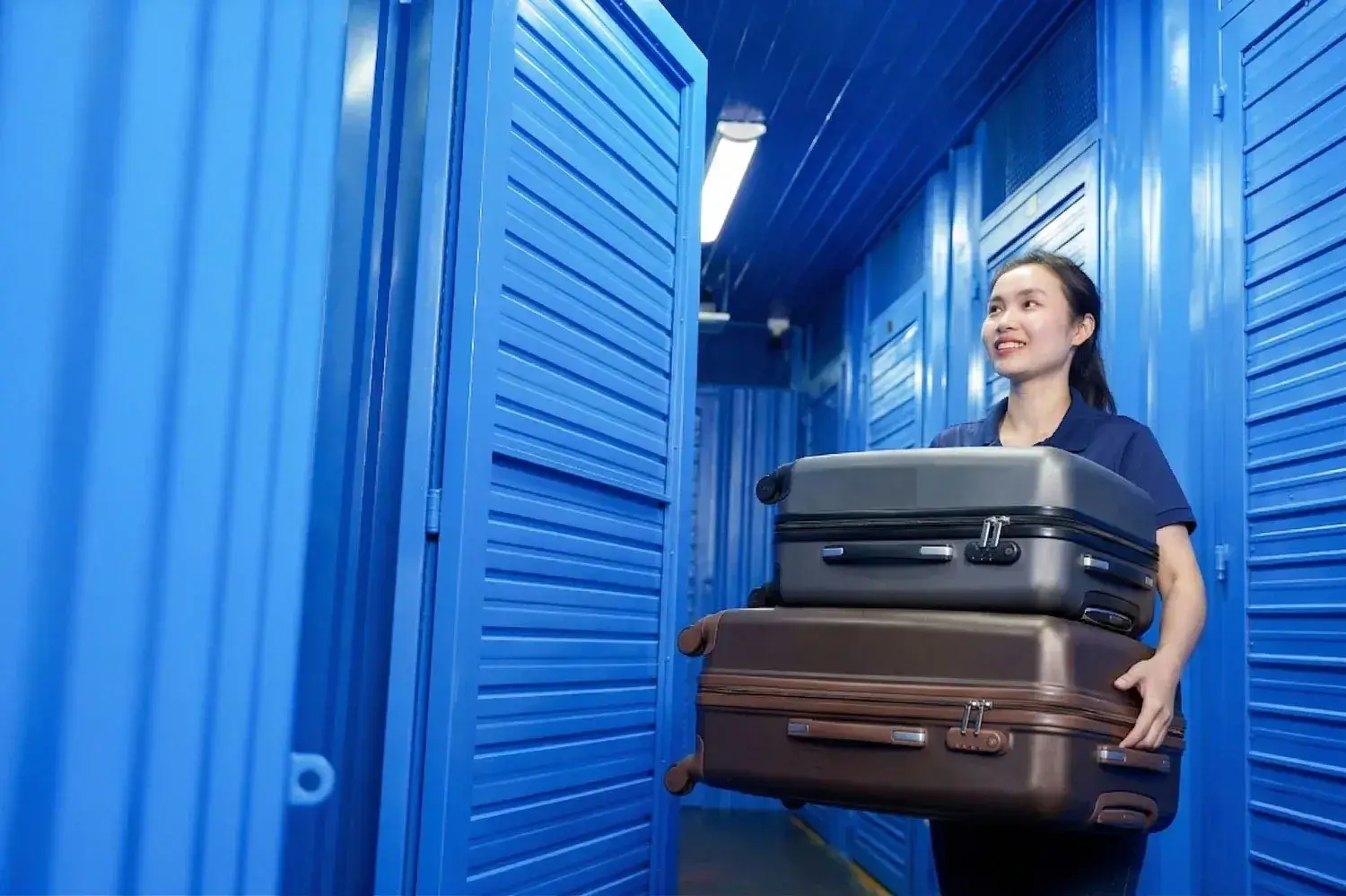
When you plan a trip that lasts several weeks or a few months, booking flights and mapping out an itinerary is only half the job. Many travellers end up worrying about everything they are leaving behind: whether the motorbike battery will be flat after sitting idle, whether clothes and furniture will grow mould through the rainy season, and whether an empty home is exposed to break-ins or an electrical fault. If you rent a small room or a compact apartment, clearing space before departure day becomes even more urgent.
A trip only really begins once you feel settled about the home behind you. This guide walks through how to sort your belongings properly, how to prepare a vehicle that will sit unused, and the safest, most flexible ways to store your things while you are away, including self-storage in Ho Chi Minh City, for the whole time you are gone.
1. What to Prepare at Home Before a Long Trip
Before a long trip, take stock of everything you own, draw a clear line between what travels with you and what stays, and go carefully through the electrical and plumbing systems to remove any fire risk. For valuables, or for bulky items crowding a small rented room, a thorough clean-out or moving part of your things into professional storage protects them from damp and lets you enjoy the holiday with a clear head.
Sorting your belongings before departure
Grouping your things by purpose one to two weeks before departure keeps you from scrambling at the last minute or leaving something important behind.
There are three groups worth separating clearly:
- Items that travel with you: Passport, ID card, bank cards, cash, clothing suited to the climate at your destination, personal medication and the electronics you cannot do without.
- Items that stay at home: Tables and chairs, bulky appliances such as the fridge, washing machine and mattress, plus everyday household items you will not need on the road.
- High-value items and sensitive documents: Property papers, business contracts, fine jewellery, personal computers holding important data, and artwork that temperature and humidity can damage.
Checking and securing the house before you leave
Electrical faults such as overloading or a short circuit are among the most common causes of house fires, and the risk is far harder to catch in time when nobody has been home for weeks.
Run through these safety checks before you lock up:
- Cut off every risky power source: Unplug electronics, switch off the breaker for any area you are not using (leave only the supply for a security camera, if you have one) and close the gas valve tightly.
- Shut the main water valve: Close the main valve feeding the house so a burst underground pipe or a dripping sink tap cannot flood your belongings and soak through to the ceiling below.
- Clear out all food and rubbish: Empty the fridge of fresh food if you plan to cut the power, take out every bin in the kitchen and scrub the sink so nothing attracts rodents or cockroaches.
- Check every door and window latch: Lock the front door with a cut-resistant lock, and secure windows, vents and curtains to keep rain out and to stop anyone seeing inside.
- Ask someone you trust to keep an eye on things: Leave a spare key with a relative or a trusted landlord so they can check on the place or deal with an emergency in the area quickly.
When should you move some belongings out of the house?
Keeping everything inside a house that stays locked for months is not always the best option, especially in a humid tropical climate.
It is worth moving things out when:
- Your apartment or rented room is simply too small: A room under 20 square metres has little airflow. When belongings sit piled up for weeks with nobody opening a window or running a fan, black mould can appear on clothes and mattresses unless you follow proper rainy-season storage to prevent damp and mould.
- You plan to give up the room and save on rent: If the trip runs three to six months, paying rent purely to store your things is a significant waste; giving up the room and renting storage instead of keeping things at home saves a meaningful amount.
- You want to sublet the apartment while you are away: If you intend to rent your apartment to travellers while you are gone, putting every personal item and private document somewhere safe is a basic requirement.
2. Where Should You Keep a Motorbike or Car During a Long Trip?
A motorbike or car that will sit unused for weeks needs a dry parking spot, covered against direct sun, and clear of anywhere that floods during high tides or heavy rain. Before leaving a vehicle at a long-stay car park or in an apartment basement, work through the technical steps: disconnect the battery, wash the dirt off the frame, inflate the tyres and fit a proper cover, so the vehicle is ready to ride the day you return.
Using a professional long-stay parking facility
If there is no safe parking where you live, or your landlord will not allow a vehicle to sit for weeks, a paid parking facility is the most practical answer.
What to check before choosing a long-stay car park:
- Inspect the infrastructure carefully: Favour car parks with a solid roof, a raised concrete floor, fire extinguishers on hand and CCTV running 24/7.
- Ask about their long-stay policy: Many public car parks only take vehicles by the day, and impose heavy penalties or tow vehicles left beyond the agreed period without prior registration.
- Be clear about liability: Ask the operator to record the vehicle's existing scratches in writing when you hand it over, and clarify what compensation applies if there is a fire, flooding or a missing part.
Leaving the vehicle in an apartment basement or at your residence
Parking where you live is convenient, but it means following the building management's rules closely.
What to do before leaving a vehicle at your residence:
- Notify building management in writing, or register your absence with them, so security does not flag your vehicle as abandoned.
- Park neatly inside a marked bay. Never block a shared walkway, the foot of a stairwell or a fire hose cabinet in the basement.
- Ask a neighbour you trust, or a security guard, to glance at the vehicle occasionally for a flat tyre, an oil leak, or damage from another vehicle.
Technical steps for storing a vehicle you will not use
A motorbike or car left standing for a long time without preparation is prone to a dead battery, cracked tyres, chewed wiring and a rusting fuel tank.
Work through these steps before you leave:
- Clean the whole vehicle: Wash off mud and grease around the chassis and lubricate the motorbike chain to slow metal oxidation in humid air.
- Handle the battery properly: On a motorbike, disconnect the negative terminal or remove the battery entirely and keep it somewhere dry to avoid self-discharge; on a car, a dedicated battery cut-off switch works well.
- Protect the tyres: Inflate tyres about 10% to 15% above the standard pressure and put a motorbike on its centre stand to take weight off the tyres and prevent flat spots where they meet the ground.
- Protect the fuel system: Fill the tank so there is less air inside, which stops moisture condensing and rusting the inside of a metal tank.
- Use a breathable dust cover: Use a fabric cover that lets moisture escape, keeping dust and insects out of the engine cavities. Avoid a sealed plastic sheet, which traps condensation and stains the paintwork.
3. Where Should Household Items Go When You Are Away for Weeks or Months?
On a long trip you can keep things at home if the house is spacious and dry, leave a couple of boxes with family if the volume is small, or rent a self-storage unit when you want to clear the place out entirely and stop paying rent. Each option has its merits; the right one depends on what your belongings are worth, the weather, and how much professional protection they really need.
Keeping things at home when the space is safe and dry
If you own a solid house or a high-floor apartment with no flood risk, keeping your belongings where they are is the cheapest option.
How to protect belongings in a house that stays shut for weeks:
- Raise everything off the floor: Boxes, books and electronics should sit on high shelving or plastic pallets, at least 20 centimetres off the floor, in case a water pipe leaks.
- Vacuum-seal bedding and clothing: Vacuum bags cut the volume by about 70% and keep mould, insects and musty smells out of the fabric through the humid months.
- Put dehumidifier boxes inside closed wooden cabinets: Place silica-gel dehumidifier boxes inside wardrobes, shoe cabinets and filing cabinets to hold humidity at a safe level for leather and wood.
You can also read our guides on how to protect books, records and documents from damp and mould and how to protect wooden furniture during the rainy season for the standard humidity thresholds for each sensitive material.
Advice from the MyStorage team: Before you lock the door, photograph the contents of each box and write them down, then label the side of the box so you can find things later. Pack a desiccant with clothes and bedding, and keep them off the floor. If you are putting things into storage, leave your contract details and the facility's contact information with someone you trust, so they can help while you are far away.
Leaving things with family or friends
Leaving things with someone close to you suits small volumes: one or two suitcases, or a few compact personal boxes.
How to do this considerately:
- Pack neatly, seal the boxes and write your name and phone number on the outside so you are not cluttering someone else's home.
- Agree clearly on when you will collect everything, so the arrangement does not drag on from months into years and disrupt their household.
- Bring a thoughtful thank-you gift, or offer to cover a small share of the electricity bill, to show you respect the favour.
Renting a dedicated storage unit
Once you are storing dozens of boxes, along with a fridge, washing machine, mattress and motorbike, a professional storage facility becomes the best answer.
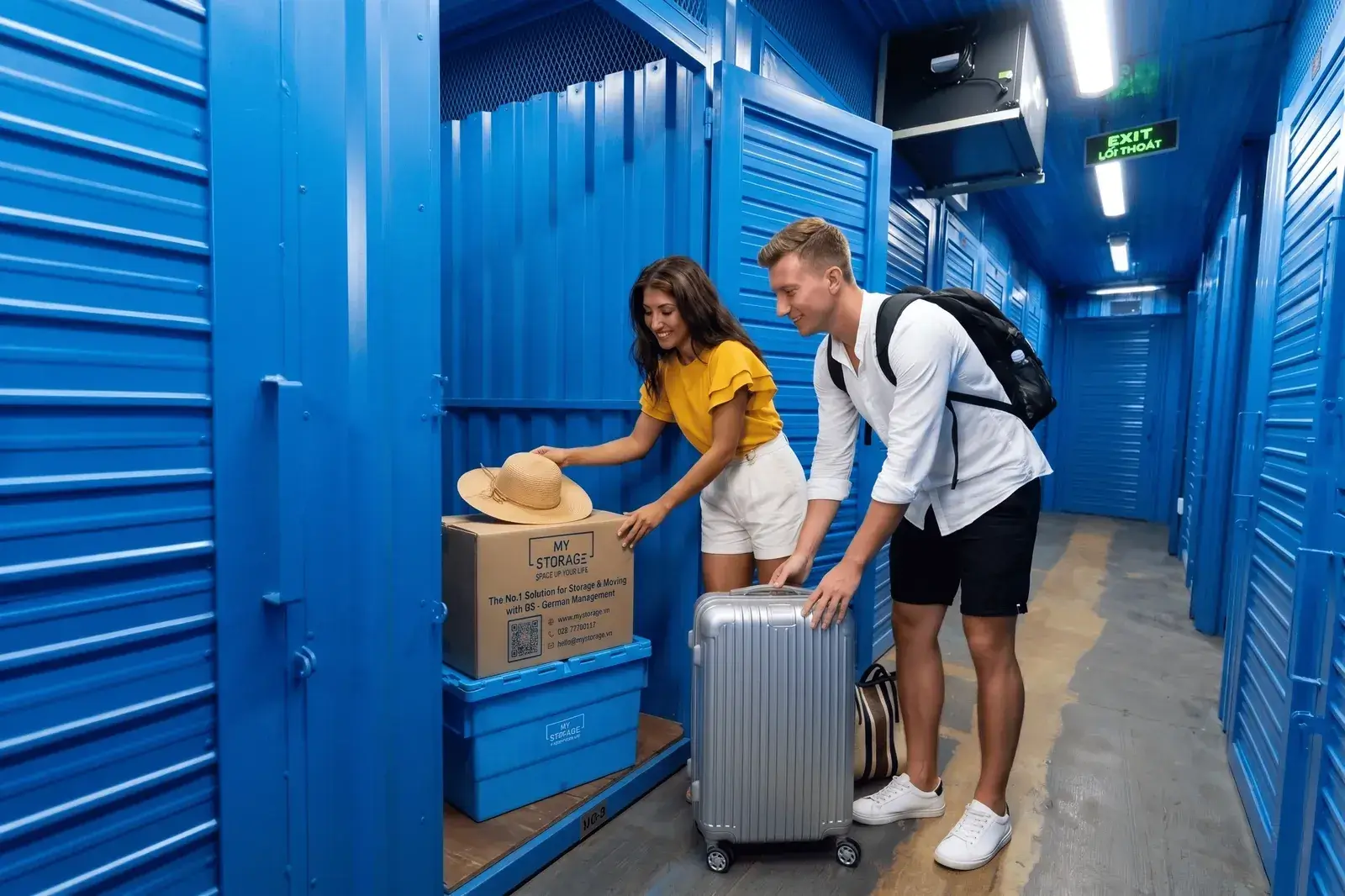
Why external storage is worth it:
- You can give up the room or apartment you are renting and save millions of dong in rent every month you are on the road.
- Everything sits in a dry, air-conditioned storage unit with humidity control to international standards, so nothing grows mould or deteriorates.
- CCTV running 24/7 and professional security mean there is no real risk of loss or theft.
Items to think twice about before putting them in storage
Storage facilities are secure, but both the law and facility rules put certain things off limits inside a storage unit.
What does not belong in storage:
- Cash, gold, gemstones and original identity documents: A passport, ID card, land title or anything else easily converted to cash belongs in a bank safe deposit box or on your person.
- Flammable materials and hazardous chemicals: Mini fire extinguishers, pressurised spray cans, petrol, large lithium batteries and flammable chemical solvents.
- Fresh food and anything with a short shelf life: Any food that can smell, spoil or draw rodents into the unit.
4. Keep Things at Home or Rent Storage for a Long Trip?
Choosing between keeping your things at home and moving them into self-storage comes down to comparing what you currently pay in rent with the cost of a dedicated unit. If your trip runs longer than two months and your rent is high, giving up the place and putting everything into storage frees up a substantial sum for the trip itself.
A full comparison of the three storage options
The table below sets out the criteria worth weighing before you decide:
|
Criteria |
Keeping things where you live |
Leaving them with family or friends |
Renting external self-storage |
|---|---|---|---|
|
Monthly cost |
You still pay full rent and electricity |
Free, or the cost of a thank-you gift |
A reasonable fee based on actual volume |
|
Storage space |
Fixed by the size of your current room |
Very limited, depends on their spare space |
From 1 m³ to 30 m², to suit your needs |
|
Security |
Moderate; theft and electrical faults are a worry |
Depends how careful the other person is |
Very high, with 24/7 CCTV and security staff |
|
Temperature and humidity |
Hot and damp through a long rainy season |
Depends on conditions in their home |
Cool, air-conditioned rooms with humidity control |
|
Access to your things |
Come and go freely, if you keep the room |
Arrange a time first; risk of being a nuisance |
Visit the facility freely on your own schedule |
|
Savings |
Worst option if the trip runs for months |
Very good, but not for large volumes |
Excellent value for a long trip |
A checklist for choosing a storage provider before departure
To keep your belongings fully protected and avoid any contract dispute, work through these checks:
- Estimate the volume accurately: Count the number of standard cardboard boxes you need so the team can recommend the storage unit size that fits best, with no wasted space.
- Verify the storage conditions yourself: Visit in person to see whether the facility genuinely has air conditioning, whether the walls show damp, and whether the security and fire-safety systems meet approved standards.
- Read the mini-storage rental contract terms: Check the rules on the deposit and the auto-renewal fee schedule in case your trip runs longer than planned.
- Photograph and inventory everything before sealing the boxes: Write a detailed list of what is in each numbered box so checking against it later is quick.

Working out the cost across your whole time away
For a trip lasting several months, keeping a rented room purely to store things usually costs far more than giving it up and renting a unit that is just big enough. Compare the total across the whole period you are away, rather than looking only at the monthly figure.
An illustration for a three-month trip (the rent and transport figures are hypothetical; substitute your own):
- Keeping the rented room: Average room rent in Ho Chi Minh City is around 5,500,000 VND a month. Over three months that is 16,500,000 VND, spent on an empty room where your belongings gather dust.
- Giving up the room and using self-storage: Self-storage costs for a 6 cubic metre unit run about 1,500,000 VND a month, so three months comes to 4,500,000 VND. Add roughly 1,500,000 VND for a van to move things both ways and the total is 6,000,000 VND.
- Net saving: You keep 10,500,000 VND in your account to spend on food and places to stay at your destination.
5. Flexible Storage Solutions from MyStorage While You Are Away
The smart self-storage network from MyStorage in Ho Chi Minh City offers professional storage for personal and household belongings, lifting the worry about your possessions so you can pick up a backpack and go. With dry, air-conditioned units in a range of sizes, continuous CCTV monitoring and flexible month-by-month contracts, MyStorage keeps your things as safe as they would be at home.
When does self-storage make the most sense?
The MyStorage self-storage model fits these situations particularly well:
- Independent travellers, people riding the length of Vietnam, or anyone studying abroad for a few weeks to a few years who wants to give up a rented apartment and save money (see also how to store your things when studying abroad).
- Professionals and office staff posted on long assignments in other provinces or overseas who need storage for a long business trip.
- Families using a long holiday to repair or renovate the house, who need furniture storage while the work is done to keep dust and paint off their things.
- People in small apartments who want to clear out seasonal items such as winter coats, large suitcases or sports gear, the kind of household items worth putting in storage to free up space at home.
How to size a unit so you are not overpaying
To avoid paying for space you will not use, apply this rough volume guide:
- Mini unit (1 to 3 m³): Fits 8 to 15 standard cardboard boxes, comfortably holding one person's clothes, shoes, books and small household items.
- Medium unit (4 to 8 m³): Enough for the contents of a one-bedroom apartment, including a folded mattress, flat-packed furniture, a mini fridge and roughly 25 to 30 personal boxes.
- Large unit (over 10 m³): Room for all the bulky furniture from a two-bedroom family apartment.
Professional personal storage from MyStorage in Ho Chi Minh City
MyStorage is proud to bring storage solutions built to international standards to Ho Chi Minh City:
- Units with temperature and humidity control, 24/7: Every unit at the 375 Vo Nguyen Giap facility (head office, Thu Duc City) and at our other MyStorage locations stays below 25°C with humidity steady under 60%, keeping leather, wooden furniture and books free of mould.
- Approved security and fire-safety systems: High-resolution cameras covering every corner, automatic fire alarms and security staff on site 24/7 keep your belongings fully protected.
- Convenient home collection: If you are too busy packing for the trip, the MyStorage team will bring boxes to your door, help pack, load the van and move everything safely into your unit as part of our full-service storage.
Reference Costs for Vehicle Parking and Storage in Ho Chi Minh City
To give you an overview and make it easier to budget for the trip ahead, here is a summary of reference market rates in Ho Chi Minh City as of late 2026:
|
Storage service |
Billing basis |
Estimated reference price (VND) |
Operating notes |
|---|---|---|---|
|
Long-stay motorbike parking, covered |
Per month |
250,000 - 450,000 / month |
Guard on duty, CCTV, raised dry location |
|
Long-stay car parking, car park or basement |
Per month |
1,200,000 - 2,500,000 / month |
Depends on a 4-seater versus a 7-seat SUV |
|
MyStorage mini unit (1 - 3 m³) |
Per month |
450,000 - 950,000 / month |
Suits clothes, documents and small household items |
|
MyStorage medium unit (4 - 8 m³) |
Per month |
1,200,000 - 2,400,000 / month |
Air-conditioned, humidity controlled, fits furniture |
|
Home collection by van into storage |
Per trip |
350,000 - 650,000 / trip |
Full loading support, saves the owner time |
Please note: the prices above are compiled from typical rates at paid car parks and self-storage facilities in Ho Chi Minh City to help you budget. Actual storage rental costs vary with the district, whether it is central or suburban, the size of the vehicle, and the length of the contract.
A long trip is a chance to widen your horizons, recharge and experience something new. Do not let a nagging worry about an idle motorbike or boxes piled up at home follow you around for the whole journey. Sort your belongings deliberately and choose proper storage, and your home stays protected and ready to welcome you back in good order.
If you are planning a long trip and looking for safe, clean storage at a sensible price in Ho Chi Minh City, the smart self-storage network from MyStorage is ready to help. Talk to the MyStorage advisory team to work out the unit size that fits, and set off on your adventure with peace of mind.
This article was written by the MyStorage team, drawing on our experience running storage services in Ho Chi Minh City; last updated October 2026. Prices here are indicative only. Please check the current price list or contact MyStorage for an accurate quote.
Frequently Asked Questions About Storing a Vehicle and Belongings During a Long Trip
Below are short answers to the questions that come up most often from people preparing to be away for a long time and looking for a way to protect their belongings.
1. Will a motorbike battery fail if the bike sits unused for two to three months?
It very likely will if you do not disconnect the negative terminal. Electronic immobilisers and the clock keep drawing a small current continuously, which flattens the battery after three to four weeks and can degrade it beyond recovery.
2. Is it safe to leave a motorbike in an apartment basement for several months?
It can be, provided the building has a guard on duty and the basement has no history of flooding. You still need to register with building management in advance, use a good lock, disconnect the battery and fit a breathable dust cover so neighbouring vehicles do not scratch the paint.
3. Will electronics such as a computer or TV suffer from damp in a house that stays shut?
Circuit boards are very vulnerable to short circuits as humidity rises through the rainy season. If you keep them at home, wrap electronics in several sealed plastic layers with a few large desiccant packs, or better still, move them into a self-storage unit with continuous air conditioning and humidity control.
4. Does MyStorage self-storage accept motorbikes?
That depends on the fire-safety rules at each specific facility. Because motor vehicles carry fuel, a facility has to meet strict fire-safety conditions. Contact a MyStorage advisor directly and they will point you to the most suitable location.
5. How do I extend the rental if the trip runs longer than expected?
Easily. Payment and contract renewal at MyStorage are handled online: send a note by email or through the mobile app and pay by bank transfer, with no need to visit the facility in person.
6. Can I authorise a friend to collect some of my things while I am away?
Yes. Send MyStorage written authorisation, or confirm by email from your own address, and provide the ID details of the person you are authorising so staff can verify them before opening the unit.
7. Why is it a bad idea to seal a rented room completely while you are away?
A damp room shut tight becomes an airless environment where mould and bacteria thrive, rotting fabrics and creating a strong, stubborn smell that is hard to clear when you return.
8. Does MyStorage deliver cardboard boxes and protective wrapping to my home?
Yes. MyStorage supplies complete professional packing materials, including cardboard boxes in several sizes, rolls of bubble wrap, stretch film and quality tape, delivered to your door before packing day.
Related articles

Article
Where to Store Livestream Products When Home Space Is Limited?
Learn how online sellers can store livestream inventory when home space is limited: organize samples and stock, manage orders, compare home storage with renting a private unit, review…
Read article
Article
How to Organize a Warehouse for Efficient Management
A practical guide to SKU classification, racking, location labels, FIFO, FEFO and 5S, with five warehouse KPIs, reference equipment costs and eight FAQs.
Read article
Article
IoT in Warehouse Management: Temperature, Humidity & Security
Explore IoT in warehouse management, from temperature and humidity sensors to security alerts and WMS integration. Learn about system components, implementation steps, indicative costs and…
Read article
