
 Tiếng Việt
 한국어
 日本語
Article
Expat Gear Storage In Ho Chi Minh City: Surfboards And Diving Gear 2027

On this page
Expat gear storage in Ho Chi Minh City solves a daily problem: fitting bulky surfboards and scuba equipment into a compact apartment while protecting sensitive materials from tropical humidity. A climate-controlled self-storage unit keeps salt-exposed wetsuits, regulators and fibreglass boards safe from mould and delamination between weekend escapes to Mui Ne, Nha Trang or Phu Quoc.
This guide covers why HCMC apartments and condo rules force the issue, how to prepare boards and dive gear before storage, which unit size fits an 8-foot board, what Vietnamese fire safety rules ban, and 2027 reference pricing. Expats weighing the broader picture will find the complete guide to storage for expats in Ho Chi Minh City useful alongside this gear-specific guide.
Why Expats In HCMC Need Climate-Controlled Gear Storage
Living in Ho Chi Minh City brings space, climate and building-management constraints that make air-conditioned gear storage close to essential for anyone owning surfboards and scuba equipment. High year-round humidity and strict condo rules turn apartments into cramped, damp environments that quietly ruin expensive outdoor gear over a single rainy season.
The three pressures below compound each other. A board that cannot live indoors ends up on a balcony, where heat and moisture do the most damage, and the building management eventually asks for it to be moved anyway.
Space Pressure In Thao Dien And Phu My Hung Apartments
Studios and one or two-bedroom apartments in Thao Dien, Thu Thiem, Binh Thanh and District 7 rarely include a store room, and most buildings prohibit leaving long boards in shared corridors or the basement car park. A 9-foot longboard needs more clear length than a typical hallway, so the only indoor options are the balcony or the living room.
Laying out a small apartment around bulky gear is its own exercise, and storage ideas for a studio apartment under 40m² covers the dead space most tenants miss, while making a two-bedroom apartment feel spacious applies the same logic to family units in An Phu and Phu My Hung.
Tropical Humidity And What It Does To Gear
Indoor humidity in Ho Chi Minh City regularly passes 70% during the rainy season, and that is the level where neoprene wetsuits, BCD bladders and nylon bags start growing mildew. Epoxy and polyester resin on a board are not immune either: sustained heat on a west-facing balcony softens the laminate and can lift it from the foam core, which shows up as delamination bubbles.
Keeping relative humidity near 50% is the practical target for mixed sports gear, and the role of a dehumidifier in storage explains why 60% is the line where fabric and paper begin to spoil. Rainy-season routines for the rest of a household are covered in rainy-season storage for household belongings.
Weekend Trips And Summer Home Leave
Expats in HCMC fly out of Tan Son Nhat to Phu Quoc, Nha Trang, Con Dao or Bali several times a year, and many take one or two months of home leave over summer. Leaving a full kit in an air-conditioned unit for those weeks costs less than the apartment space it occupies and removes the risk of coming back to mould on a wetsuit.
Luggage follows the same pattern between trips, which safe luggage and suitcase storage in HCMC sets out by duration. Anyone leaving Vietnam for good faces a larger version of the same decision, handled in what to do with your belongings when leaving Vietnam.
Preparing Surfboards And Diving Gear For HCMC Storage
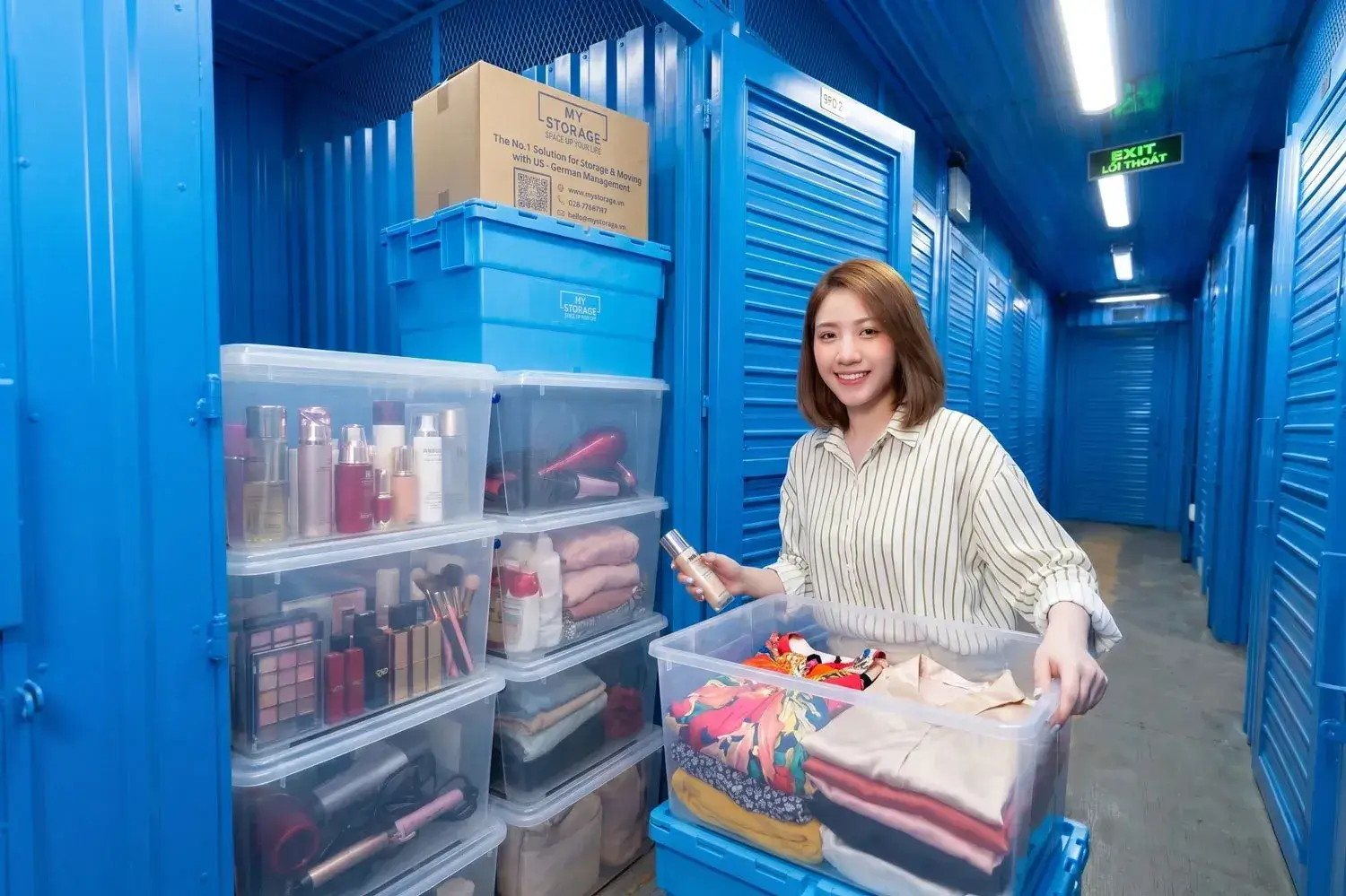
Preparing boards and scuba gear before they go into a Ho Chi Minh City storage unit comes down to three steps: thorough freshwater rinsing, complete drying in the shade, and breathable padding rather than sealed plastic. Trapping even a little saltwater or moisture inside a zipped bag accelerates corrosion and mildew in this climate, often within weeks rather than months.
Salt is the part most people underestimate. Dried salt crystals pull moisture out of the air and hold it against rubber and metal, so a kit that feels dry on the surface can still be corroding inside its bag.
Prepping Surfboards And Paddleboards For Storage
Strip off all surf wax, rinse the ocean salt away with fresh water, and dry the board completely before storing it upright or on edge inside a padded reflective bag. Wax is the first job because it melts at HCMC temperatures, runs into the bag lining and collects grit that scratches the deck the next time the board moves.
- Remove wax and rinse: scrape the deck, rinse with fresh water and let the board dry fully in the shade before bagging it.
- Take off fins and leash: removing fins prevents bent tabs and pressure dings, and a coiled leash left attached can leave permanent marks on the rail.
- Store upright or on edge: never stack weight on the deck; a board resting flat under boxes develops pressure dents in the foam core.
Inflatable paddleboards behave differently: they do best rolled loosely rather than folded hard on the same crease, with the valve left open so trapped air can escape as temperature changes.
Cleaning Scuba And Freediving Gear Before Storage
Soak regulators, BCDs and wetsuits in clean fresh water to dissolve salt crystals, then air-dry them on wide hangers out of direct sunlight. Rushing this step is the single most common reason dive gear comes out of storage with corroded metal and a mildew smell that never fully washes out.
- Flush the BCD bladder: rinse the inside with fresh water, drain it, then leave a little air in so the inner walls do not stick together.
- Cap the regulator: fit the dust cap before rinsing so no water enters the first stage, and never store hoses with tight kinks.
- Hang wetsuits on wide hangers: thin wire hangers stretch the shoulders permanently; a broad plastic hanger keeps the neoprene in shape.
- Dry out of the sun: UV degrades neoprene and rubber faster than storage does, so shade-dry everything completely.
Dive computers, torches and camera housings are the electronics in the kit, and storing electronics safely covers battery removal and cable handling for items left for a season.
Prohibited Items And Fire Safety Compliance
Self-storage facilities in Ho Chi Minh City prohibit pressurised scuba tanks, camping gas canisters and flammable solvents under Vietnamese fire safety rules. A dive cylinder is only accepted when it has been fully depressurised with the valve opened, and you should confirm that in advance with the facility rather than turning up with a tank in the car.
- Pressurised cylinders: scuba tanks with any remaining pressure, and camping gas canisters of any size, are not accepted.
- Fuels and solvents: petrol, alcohol stove fuel, resin solvents and aerosol cans under pressure stay out.
- Damaged lithium-ion batteries: swollen or leaking packs from dive torches and scooters are a fire risk and must not be stored.
- Wet gear: anything still damp will grow mould inside a closed unit and can affect neighbouring units.
Fire protection, access control and cameras are part of how a facility manages that risk, which warehouse security systems breaks down layer by layer. What a facility will and will not compensate for is a separate question, covered in whether you need insurance when storing goods.
Choosing The Right Unit Size For Bulky Expat Gear
Choosing a gear storage unit in Ho Chi Minh City depends on the length of your longest board and the volume of your dive crates, and in practice runs from 1 m³ lockers up to rooms of 5 m³ to 7 m³. Measuring the board against the doorway clearance matters as much as the floor area, because a unit with enough volume can still be impossible to load.
One cubic metre holds roughly 8 to 10 medium cartons, which is the easiest way to convert a pile of dive crates into a unit size before you visit a facility.
Compact Lockers For Diving And Travel Gear
An air-conditioned locker of 1 m³ to 2 m³ holds a full scuba set, freediving fins and a weekend backpack, which is roughly 8 to 20 medium cartons or two large dive totes. This size suits divers, freedivers and hikers who do not own a long board, and it is the cheapest way to get gear out of the apartment.
Short-term needs are different again: event locker rental covers hourly and daily lockers for a dive trip or a competition weekend, and how a smart locker works explains the self-service side for anyone who prefers no counter at all.
Walk-In Units For Surfboards And SUPs
A climate-controlled room of 5 m³ to 7 m³, comparable to a generous walk-in closet, takes several 6 to 9-foot boards alongside dive bins and seasonal luggage. The useful measurement is diagonal clearance: a 9-foot board is about 2.75 m long, so it needs either a wall longer than that or enough diagonal and ceiling height to stand at an angle.
- Measure the longest board first, then check both the internal diagonal and the door opening of the unit.
- Stand boards on their tail against a side wall rather than laying them flat under other gear.
- Add light shelving to use the vertical space above the boards for plastic bins of dive kit.
Converting between the units quoted by different facilities is a common snag, and how many square metres 5x5 and 10x10 feet units are gives the conversion, while renting storage by m³ or m² explains why the same gear can produce different invoices.
Benefits Of 24/7 Air-Conditioned Storage
Continuous air conditioning stabilises temperature and lowers relative humidity, which is what prevents rubber cracking, metal oxidation and fibreglass delamination. The point is not cold air but stability: gear fails fastest where temperature swings daily between a hot afternoon balcony and a cooler night, because each cycle moves moisture in and out of the materials.
Leather dive bags and camera straps are the most sensitive items in a mixed kit, and safe handbag and leather goods storage sets out the conditions they need. Wooden items and furniture in the same unit have their own requirements, described in protecting wooden furniture during the rainy season.
Comparing Expat Storage Options And Pricing In 2027
Expats in Ho Chi Minh City can weigh climate-controlled self-storage against apartment space and a traditional local warehouse on four points: humidity protection, English-language support, security, and contract flexibility. Dedicated self-storage is the only one of the three that normally offers transparent month-to-month terms without a commercial lease. The 2027 reference figures below are quoted in VND with approximate dollar conversions.
The comparison below is about fit rather than price alone. A spare room costs nothing until a wetsuit is ruined, and a traditional warehouse is cheap per square metre but rarely designed for one tenant collecting a board on a Saturday morning.
Self-Storage, Apartment Space Or Local Warehouse
The three options differ most on humidity control and on who holds the key. A self-storage unit gives you a private lock and a stable environment, an apartment balcony gives neither, and a traditional warehouse usually stores your goods alongside other cargo under staff supervision rather than your own access. Those differences decide the outcome for salt-exposed gear.
| Criterion | Climate-controlled self-storage | Apartment balcony or spare room | Local traditional warehouse |
|---|---|---|---|
| Humidity and heat protection | Air conditioning runs 24/7, humidity kept stable | None; balconies are the hottest, dampest spot | Varies, often no climate control |
| English support and clear contracts | English-speaking staff and month-to-month terms | Not applicable | Often Vietnamese-only paperwork and commercial leases |
| Security and private lock | Personal PIN, CCTV, only you open the unit | Shared corridors, building rules apply | Staff-managed access, goods stored with other cargo |
| Flexible monthly terms | Rent by the month, scale up or down | Free but takes living space | Usually longer commitments and larger minimum areas |
Business tenants face a different version of the same comparison, which business storage in Ho Chi Minh City lays out by goods type, while using an apartment as a warehouse or office covers the legal side of keeping volume at home.
Reference Pricing For Gear Storage In 2027
Four factors set the monthly figure: unit size, whether the unit is air-conditioned, how long you commit, and which facility you choose. As a 2027 reference, a Mini Box of 1 m³ to 3 m³ runs 873,000 to 1,563,000 VND (≈ US$34 to US$61) a month, and a Standard S room of 5 m³ to 7 m³ runs 1,796,000 to 2,886,000 VND (≈ US$70 to US$112), both excluding VAT.
The 12-month plan is 15% cheaper than flexible monthly terms, payment is in VND and exchange rates move, so ask the facility for a current quote before budgeting. How those rates are built up is broken down in how mini storage prices are calculated.
Pre-Storage Checklist For Expat Gear
Run this checklist the day before you load the unit, not on the morning itself, because drying is the step that needs time. It groups the work into desalinisation and drying, board and gear protection, fire safety compliance, and unit setup, with the standard each item has to meet. Each row names the action and the standard it has to meet before the unit door closes.
| Category | Action item | Standard met |
|---|---|---|
| Desalinisation and drying | Rinse boards, wetsuits, BCDs and regulators in fresh water, then shade-dry | Nothing damp to the touch, inside or out, before bagging |
| Board and gear protection | Remove wax, fins and leash; bag boards in padded covers; hang wetsuits on wide hangers | Boards upright or on edge, no weight on the deck |
| Fire safety compliance | Fully depressurise dive cylinders with valves open; remove fuels, aerosols and damaged batteries | Confirmed in advance with facility staff |
| Unit setup | Plan diagonal clearance for the longest board, add light shelving, keep an aisle | Longest board stands without touching the door frame |
Keeping Gear Out Of The Apartment Year-Round
Separating bulky sports gear from living space is what makes a compact Saigon apartment workable: the boards stay in one place, the apartment stays usable, and trips start by collecting a kit that is already dry and packed. For most expats the unit only needs to hold the gear that is out of season at any given moment.
Seasonal rotation is the habit that makes this cheap, and seasonal warehousing describes how to move groups of gear in and out rather than renting for peak volume all year. Fishing and camping kit follows the same cycle, as storage for fishing, camping and outdoor sports gear sets out.
Gear Storage At MyStorage For Expats In HCMC
For expats living in Ho Chi Minh City, MyStorage offers air-conditioned self-storage units that suit surfboards, diving equipment and personal luggage between trips. Units start at 1 m³, roughly 8 to 10 medium cartons, which is enough for a full dive set, and scale up to rooms that take several boards:
- Air-conditioned units 24/7 hold temperature and humidity steady for neoprene, fibreglass and metal fittings.
- CCTV monitors the unit area for the whole rental period.
- Personal PIN is issued to each customer, so only you open your unit.
- 24/7 access fits early flights out of Tan Son Nhat and late returns from the coast.
- Units from 1 m³, so you rent only the gear that is out of season rather than a year-round maximum.
- Workspace at 375 Vo Nguyen Giap for startups and online sellers who store stock and pack orders on site.
MyStorage has two self-storage facilities, 375 Vo Nguyen Giap and An Phu Sports Park; the locker points are drop-off spots for small items, not storage facilities. English-speaking support, month-to-month terms and pickup and delivery are available, and the two things worth confirming before you book are the door clearance for boards over 8 feet and the facility rule on depressurised dive cylinders.
Frequently Asked Questions About Expat Gear Storage In HCMC
These 15 questions cover the practical details expats ask before renting a unit for boards and dive gear in Ho Chi Minh City, from unit sizing and fire safety rules to access hours and pricing.
Why Do Surfboards Need Air-Conditioned Storage In HCMC?
Sustained heat and humidity soften the resin laminate on a board and can lift it from the foam core, which appears as delamination bubbles. Indoor humidity in Ho Chi Minh City often passes 70% in the rainy season, and a west-facing balcony adds daily temperature swings on top. An air-conditioned unit holds both stable, which is what actually protects the laminate.
Can Expats Store Scuba Tanks In Self-Storage?
Only if the cylinder is completely depressurised with the valve open, and only after the facility confirms it. Vietnamese fire safety rules prohibit pressurised cylinders in storage units, and that includes camping gas canisters of any size. Ask the facility before you arrive rather than turning up with a tank and being turned away at the door.
What Unit Size Fits An 8-Foot Surfboard?
An 8-foot board is about 2.44 m long, so it needs a unit with a wall or diagonal clearance longer than that, plus a door opening it can pass through. A room of 5 m³ to 7 m³ usually works and leaves space for dive bins beside the boards. Measure your longest board first, because volume alone does not tell you whether it will load.
How Do I Prevent Mould On Wetsuits?
Rinse the suit in fresh water to dissolve salt, dry it completely in the shade on a wide hanger, and store it in a breathable cover rather than a sealed plastic bag. Salt left in the neoprene pulls moisture from the air, so a suit that feels dry can still grow mildew. Keeping the unit near 50% relative humidity does the rest.
Is English Support Available At HCMC Storage Facilities?
Dedicated self-storage operators generally provide English-speaking staff and English contracts, which is one of the main differences from a traditional local warehouse where paperwork is often Vietnamese-only. Confirm it when you enquire, and ask whether the contract itself, not just the conversation, is available in English before signing.
Can I Access My Gear Before Early Flights?
Facilities with 24/7 access let you collect a board or dive kit before a dawn flight, which matters when the trip starts at Tan Son Nhat at 6 a.m. Check whether access is genuinely 24/7 or limited to office hours, since the two models look similar in marketing but differ sharply in practice for weekend travellers.
How Much Does Expat Gear Storage Cost In 2027?
As a 2027 reference, a 1 m³ to 3 m³ Mini Box runs 873,000 to 1,563,000 VND (≈ US$34 to US$61) a month and a 5 m³ to 7 m³ Standard S room runs 1,796,000 to 2,886,000 VND (≈ US$70 to US$112), both excluding VAT. A 12-month plan is 15% cheaper than flexible terms. Payment is in VND and rates move, so request a current quote.
Should I Remove Surf Wax Before Storing Boards?
Yes. Wax melts at Ho Chi Minh City temperatures, runs into the board bag lining and collects grit that scratches the deck when the board next moves. Scraping the deck takes a few minutes and avoids a sticky, dirty layer you would otherwise have to strip off before the next surf trip anyway.
What Items Are Banned In Vietnam Storage Units?
Pressurised cylinders, camping gas canisters, petrol and alcohol stove fuel, resin solvents, aerosols under pressure, and swollen or leaking lithium-ion batteries are all prohibited. Damp gear is a practical ban too, since mould spreads inside a closed unit. Facilities apply these rules under Vietnamese fire safety regulations and check at intake.
How Should I Store Scuba Regulators Long-Term?
Fit the dust cap before rinsing so no water enters the first stage, soak the regulator in clean fresh water, then dry it fully in the shade. Store it coiled loosely in a padded bag with no tight kinks in the hoses, in a unit where humidity stays stable. Tight coils and residual salt are what damage hoses over a long layup.
Can I Rent Storage During Summer Home Leave?
Month-to-month self-storage suits a one or two-month home leave because you pay for the period you need rather than signing a commercial lease. Prepare the gear as you would for long-term storage, since two humid months are long enough for mould, and confirm whether payment can be made remotely while you are away.
Do Storage Facilities Offer Pickup And Delivery?
Some operators, MyStorage included, provide pickup and delivery so a board or dive crate is collected from your apartment and returned on schedule. It is most useful when you have no vehicle able to carry a 9-foot board. Ask how long-item handling is charged, as oversized goods are sometimes quoted separately from standard boxes.
Are Inflatable Paddleboards Safe In Climate-Controlled Units?
Yes, and they store better than hard boards because they take no laminate damage. Roll them loosely rather than folding on the same hard crease, leave the valve open so trapped air can move as temperature changes, and make sure the board is fully dry inside before rolling. A stable unit removes the heat cycles that age the PVC.
Can Expats Share A Storage Unit Together?
Splitting a unit between dive buddies is common, but access control is the issue: a single PIN means both parties can open the unit, so agree in writing who stores what and who pays. Check whether the facility allows a second authorised user on the contract, since insurance and liability usually follow the named tenant.
Where Are Expat-Friendly Storage Facilities Located In Saigon?
MyStorage operates two self-storage facilities, 375 Vo Nguyen Giap and An Phu Sports Park, both convenient to the An Phu, Thao Dien and Thu Thiem areas where most expat tenants live. Smart locker points around the city cover small items. For a district-level view, the Phu Nhuan storage guide compares another central area.
Prices are 2027 reference figures excluding VAT, quoted in VND with approximate US dollar conversions; exchange rates and facility terms change, so confirm with the facility before booking. Prohibited-item rules follow Vietnamese fire safety regulations and are applied by each facility.
Related articles
Article
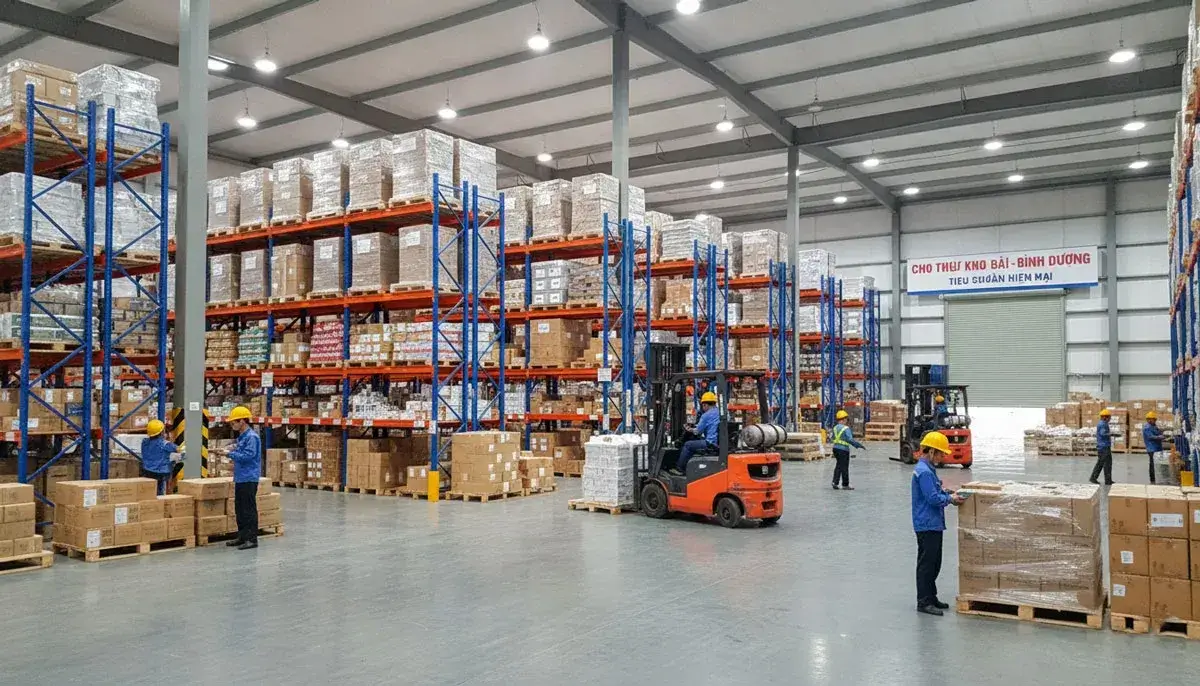
Logistics Trends For 2027: Automation, AI And Green Warehouses
Logistics trends for 2027 rest on three pillars: warehouse automation, AI for demand forecasting and green warehouses meeting ESG standards. Small and mid-sized businesses should…
Read article
Article
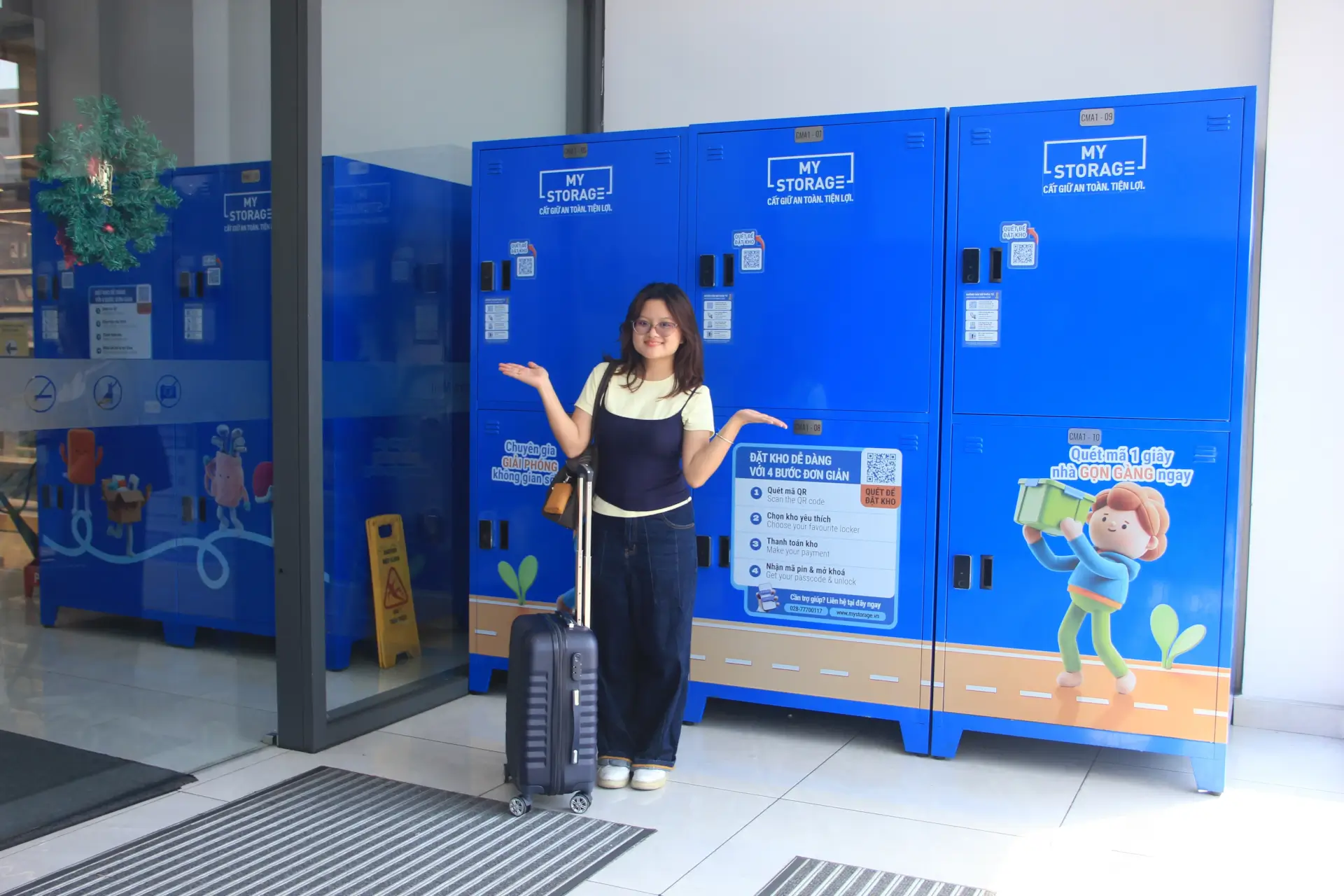
How Many Clothes Do You Need For A 7-Day Trip? How To Pack Light 2027
How many clothes do you need for a 7-day trip? The 4-2-7 formula (4 tops, 2 bottoms, 7 sets of underwear and socks) keeps your suitcase light, with a full packing list, fabric and colour…
Read article
Article
Moving To HCMC: Where Your Shipment Goes Before You Have An Apartment 2027
Moving to Ho Chi Minh City before the lease is signed? This guide follows an international shipment from Cat Lai Port and Tan Son Nhat through customs clearance into storage-in-transit…
Read article
