
 Tiếng Việt
 한국어
한국어 日本語
日本語Article· Updated October 13, 2026
Business Storage in Ho Chi Minh City: Choosing the Right Warehouse and Managing Costs
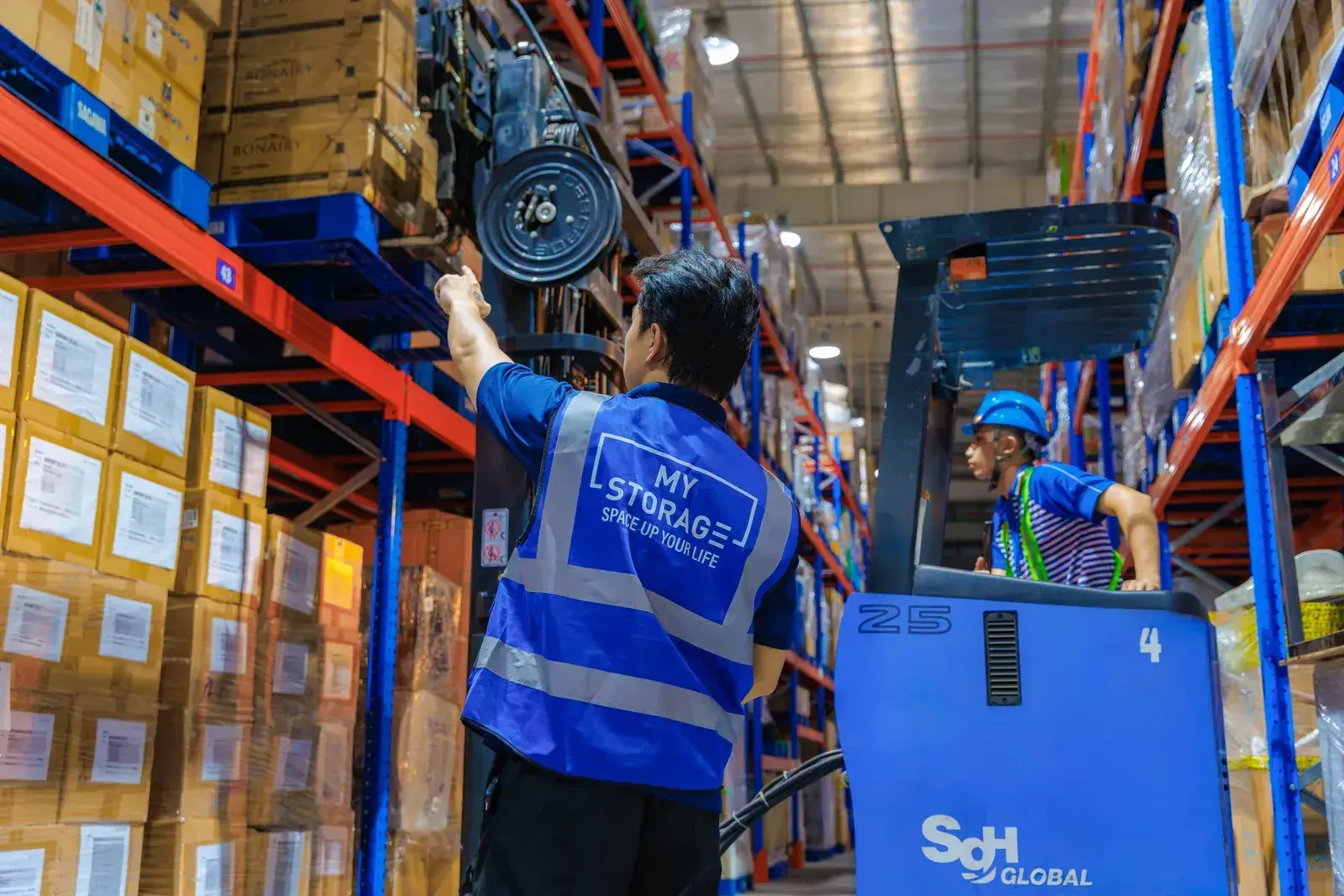
Quick answer: Business storage in Ho Chi Minh City should be chosen based on the type of goods, stock volume and frequency of stock movements. Consider an industrial warehouse for large loads requiring suitable infrastructure, self-storage for a private unit, or valet storage for an all-inclusive pickup-and-delivery service. Compare total costs and check storage conditions, handover procedures and contract terms before renting.
An online shop may need to pick individual SKUs every day, a business receiving palletized goods needs vehicle access and handling equipment, while an office storing records may prioritize preservation and retrieval in batches. All three are searching for “warehouse rental in Ho Chi Minh City,” but they should not receive the same solution simply because their goods occupy a similar amount of space.
An easily overlooked part of renting storage is the work behind the storage space: who receives the goods, who counts them, how long retrieval takes, how transport is charged, and what evidence is used if items are missing or damaged. A quotation stating only the monthly rent cannot answer these questions.
This article helps you choose between an industrial warehouse, a private self-storage unit and valet storage based on your goods, volume, movement frequency and available staff. It provides comparison tables, a method for calculating total costs, a site-survey checklist and questions to settle before moving goods. If you intend to manufacture products or install a production line, you need premises approved for that purpose; do not assume a storage service can accommodate it.
Industrial Warehouses, Workshops, Self-Storage and Valet Storage: The Differences
Industrial warehouses are used to store and move goods; workshops support production within their permitted use. Self-storage provides a private unit for each customer, while valet storage uses shared space, includes pickup and delivery, and is billed by the volume used. MyStorage self-storage includes air conditioning and temperature control; valet options may have or not have air conditioning, depending on the package.
“Business storage” describes the customers using a service, not a single operating model. Depending on their stock volume and staffing, businesses may need an industrial warehouse, rent a private self-storage unit or use shared storage.
| Type | How it is used | What to confirm |
|---|---|---|
| Industrial warehouse | Storing bulk or palletized goods, or organizing inbound and outbound operations to suit the business. | Floor loading, clearance height, vehicle access, loading areas, fire protection and accepted goods. |
| Workshop or factory premises | Premises for suitable manufacturing, processing or production-line installation. | Permitted use, equipment power supply, environmental requirements, fire protection and production-specific conditions. |
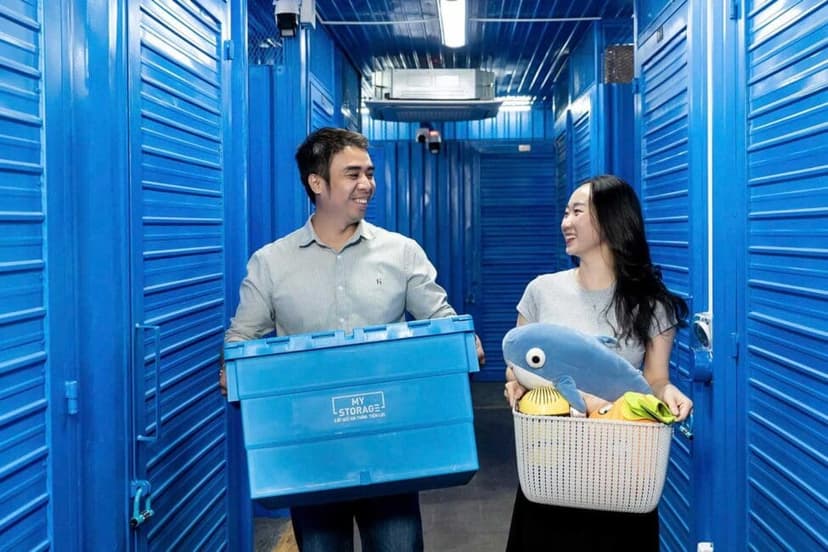
| Self-storage | A private unit for each customer, who arranges and manages their own belongings under the access rules. This model is still relatively new in Vietnam. | MyStorage self-storage includes AC and temperature control; confirm the unit size, access hours and rules of the specific facility. |
| Valet / shared storage | An all-inclusive pickup-and-delivery service, charged according to the volume actually used. | Options are available with or without AC; temperature and humidity control depend on the storage option. Confirm the retrieval-request procedure and service scope. |
| Auto locker | Centrally located lockers with flexible hourly rental. | Compartment size and suitable items; not a substitute for a business warehouse or workshop. |
For ordinary storage needs, you can explore self-storage services or business storage solutions. Goods requiring cold storage, on-site production or container-truck access need a separate assessment; these capabilities cannot be inferred from “air-conditioned storage.”
Choose Storage Based on Your Goods and Operations
Choose storage by comparing five factors: the characteristics of your goods, peak stock levels, retrieval frequency, storage requirements and available staff. Consider self-storage if you need to manage a private space, or valet storage if you need the provider to collect and return your items. Large pallet loads and production activities require separate checks of infrastructure and permitted use.
Define your needs before asking for a price
List your goods, package dimensions, pallet count or estimated volume, weight and expected storage period. Then specify movement frequency, order volume, who handles retrieval and the required storage conditions. For seasonal goods, include both normal and peak stock levels in your quotation request.
| Practical need | Option to investigate | Key question |
|---|---|---|
| A private unit, self-organized storage and independent retrieval | Self-storage | What size is sufficient, and does the access schedule suit you? |
| No staff to transport goods or manage storage space | Valet storage | What does pickup and delivery include, how is it scheduled, and how is volume calculated? |
| Online sales with frequent goods movements | Storage suitable for sales operations or a service with an agreed order-handling scope | Are picking, packing, counting and carrier handover supported, and are charges per order or per visit? |
| Large pallet loads, heavy goods or large vehicles | An industrial warehouse with suitable infrastructure | Are the vehicle routes, floor loading, handling equipment and receiving hours suitable? |
| Machinery installation and production | Workshop premises with an appropriate permitted use | Is the planned activity allowed, and are the technical requirements met? |
Online shops should also review the requirements for warehouse rental for online selling rather than choosing only a space large enough to hold stock. Storage does not automatically include every fulfillment activity; specify the work and processing times in the agreement.
Estimate capacity from a package inventory, not just floor area
For boxed goods, record the external dimensions and quantity of each package group. Geometric volume is length × width × height, with all measurements in metres. This is input for a quotation, not automatically the billable volume or floor area you need to rent.
Illustrative example, not a quotation: 40 boxes measuring 0.6 × 0.4 × 0.4 m each have a total geometric volume of 3.84 m³. This does not account for stacking limits, working space, pallets or the provider’s measurement and billing method. A private unit needs retrieval aisles; for valet storage, ask how volume is measured and updated when goods are added or removed.
Identify fragile, non-stackable, heavy, frequently retrieved and separately stored packages. Sending photographs with the inventory helps the provider propose a layout more clearly than asking “roughly how many square metres do I need?” Do not treat the example above as a guarantee that any particular storage type will fit every 3.84 m³ shipment.
Estimate Storage Size with SmartSize AI
You can upload photographs of the items you want to store to the tool below for a volume estimate. AI results are estimates and must be checked against package dimensions, stacking possibilities and the actual storage arrangement. Upload only images you have permission to use, and avoid exposing personal information or sensitive documents.
If the tool does not display, open the AI storage-size calculator in a new tab.
Send a complete quotation request from the outset
| Information to send the provider | Useful details to include |
|---|---|
| Goods | Product categories, packaging specifications, package/pallet count, weight and storage restrictions. |
| Stock levels | Current quantity, expected peak and when stock will increase or decrease. |
| Inbound and outbound movements | Visits per week or month; whole-package retrieval or individual SKUs; counting requirements. |
| Transport | Pickup/delivery points, expected vehicle type, access conditions and labour support needed. |
| Term and responsibilities | Start date, rental period, authorized retrieval requesters and how handovers are confirmed. |
Ask for storage, transport, goods handling and optional services to be listed separately. If your requirements are uncertain, request two scenarios: a normal month and a peak month. This shows the business how costs may vary before it decides.
Choose size and location around your operating routes
Even a unit large enough for the goods needs access and working space if customers manage it themselves. Consult the mini-storage size guide and compare it with your actual package count, stacking plan and retrieval needs; do not estimate solely from the floor area currently occupied by belongings at home.
For location, consider both the supplier-to-warehouse route and the warehouse-to-delivery route. Central storage may suit smaller trips; a more distant warehouse only helps if the savings offset transport costs and time. Check actual routes, parking, loading access and vehicle restrictions at each facility.
Calculate Total Storage Costs Instead of Comparing Unit Prices Alone
Total storage costs should include storage fees, transport, goods handling and additional services, without counting items already included in a package twice. Compare quotes using the same stock volume, rental period and number of stock movements; track refundable deposits separately in your cash flow.
Two quotations are meaningful only when they cover the same service type, goods volume and rental period. A rate per m² measures area, while a rate per m³ measures volume; do not compare the two figures and conclude which is cheaper without correctly matching your needs and the service scope.
Items to include in a quotation-comparison table
Estimated total cost = storage fees + applicable transport, handling and additional-service charges for the selected option. Do not add charges already included in the package. Separate refundable deposits from usage costs, but include them in the cash you need to prepare.
| Cost category | Details to compare |
|---|---|
| Storage fees | Billable area or volume; minimum usage; rental term; VAT; price-adjustment and expansion/reduction rules. |
| Goods movements and handling | Loading/unloading, picking, counting, packing and stock reports; charging unit and processing time. |
| Transport and materials | Routes, trip count, labour, boxes and packing materials; what pickup and delivery already include and what costs extra. |
| Usage conditions | Receiving hours, out-of-hours requests, insurance or compensation responsibilities, accepted goods and termination procedures. |
| Initial payments | Deposits, advance payments and refund conditions; do not incorporate refundable amounts into the monthly rental rate. |
You can use the Ho Chi Minh City storage-cost reference guide to prepare a budget, then request a quotation for your specific goods inventory. For smaller storage needs, review mini-storage rental prices separately and check included services before comparing.
Check Storage Prices for Your Needs
Select your storage type, volume and temperature option on the pricing page. Displayed prices apply to the tool’s selections and conditions; they are not quotations for manufacturing premises or every type of industrial warehouse. For special goods, transport or additional handling, confirm the service scope before booking.
How to assess a “low-cost” option
Use the same scenario for each provider: average stock, peak stock, inbound/outbound movements and monthly collection/delivery trips. Ask them to specify inclusions, exclusions and change conditions. This reveals whether a low quote covers only the storage space or genuinely suits the whole operation.
Do not reduce rent by choosing storage conditions below your goods’ requirements. Damage, delayed deliveries and operational disruption may cost more than the savings. For MyStorage valet storage, confirm whether the selected option includes AC and its corresponding environmental controls.

Warehouse Survey and Contract Review Checklist
Before signing, check capacity, vehicle access and loading arrangements, storage conditions, security, fire safety and on-site receiving and retrieval procedures. Confirm the service scope, additional charges, access rights, counting procedures and responsibility for incidents in writing. Check both documentation and actual conditions rather than relying on advertising alone.
A site visit helps compare service descriptions with conditions at the facility. Use the same checklist for each option, adding requirements specific to your goods.
| Item | What to check | Evidence to request |
|---|---|---|
| Goods and capacity | Package dimensions, weight, pallet count or volume; arrangement and access aisles. | A layout plan and confirmation of accepted goods. |
| Goods movements and handovers | Frequency, waiting time, retrieval schedule, handover point and responsible person. | Receiving/return procedures and the work included in the quotation. |
| Access infrastructure | Vehicle routes, entrance, loading area, lifting facilities if needed, floor loading and supporting equipment. | A site assessment against the planned vehicles and goods. |
| Storage conditions | Ventilation, package-specific AC, temperature/humidity requirements, cleanliness and pest control. | Specifications or commitments for the selected option; procedures for abnormal conditions. |
| Security and fire protection | Access permissions, cameras, alarms, escape routes and on-site fire-protection equipment. | Relevant facility documentation and inspection/response procedures. |
| Responsibilities and costs | Insurance/compensation, out-of-hours fees, VAT, deposits, inventory checks and rental termination. | Written terms, fee schedules and handover records. |
What to settle in writing
The contract or service agreement should clearly define the space used, term, payment method, access rights, restricted goods, support scope and incident responsibilities. Special requirements concerning sensitive goods, equipment or operating schedules must be confirmed before moving goods.
Cameras do not replace fire protection, and air-conditioned storage is not the same as cold storage. Businesses should not assume every facility accepts containers, permits production or has identical operating hours simply because it belongs to the same network.
Prepare handover and inventory records from the first shipment
Before moving goods in, assign package or pallet identifiers and agree on the counting scope: sealed packages only or a detailed check inside. These imply different responsibilities; receiving the correct number of boxes does not automatically mean the provider has verified every product inside.
- Photograph packaging condition and any existing damage before handover.
- List package counts, item codes where applicable, and the sender and recipient.
- Record discrepancies or exceptions in the handover report instead of discussing them only verbally.
- Agree who may request retrieval, which request channel to use and how completion is confirmed.
- Keep reports, photographs and goods-receipt/dispatch records for inventory checks or rental termination.
For private self-storage, customers must maintain their own inventory and arrangement. For valet storage, agree on the provider’s receiving, storage and return procedures. A management system does not replace a clear agreement about data and each party’s responsibilities.
Market Context and Trends Affecting Storage Decisions
Relevant trends include e-commerce, changing living space, storage requirements, technology adoption and a wider range of storage models. For renters, the practical priorities are flexibility to increase or reduce capacity, pickup and delivery speed, and actual service quality. Industrial market data cannot replace a quote or confirmation of availability at an individual facility.
Market trends are supporting information after needs, costs and operating conditions have been defined. Overall market transaction volumes are not evidence that a particular provider handles every type of goods or has space available when you need it.
Distinguish industrial-warehouse data from small-storage needs
According to CBRE’s Ho Chi Minh City Q2 2025 report, leasing transactions during the period were driven by logistics and e-commerce. Absorption in the first half of 2025 reached approximately 300,000 m² of ready-built warehouses and 400,000 m² of ready-built factories.
Source: CBRE Vietnam – Ho Chi Minh City Real Estate Market Update Q2 2025, published on 27 August 2025. These are historical industrial-property figures, not the latest 2026 data, mini-storage prices or MyStorage operating figures.
Five trends and their practical implications for tenants
| Trend | What to consider when choosing storage |
|---|---|
| E-commerce | Seasonal stock and order-handling frequency make flexibility, retrieval and handovers more important than simply renting a fixed area. |
| Urbanization and changes of residence | Space at home is limited, while relocation or business needs may change. Consider the rental term and access to your belongings. |
| Prioritizing storage quality | Alongside price, consider security, cleanliness and actual environmental conditions; choose according to your goods, not general marketing descriptions. |
| Technology adoption | Scheduling, payment and information tracking can support operations. Ask which functions are actually offered, what data customers can access and who responds to problems. |
| A choice of service models | Compare industrial warehouses, self-storage and valet storage against the same needs; competition alone proves neither quality nor a provider’s claim to the lowest price. |
For smaller needs, comparing renting storage with keeping things at home can help determine when to move goods out of living space. As requirements grow, prioritize suitable expansion options and predictable movement costs.
When Should You Consider MyStorage Storage Solutions?
MyStorage is worth investigating when you need a private self-storage unit or a full-service solution for goods and belongings that meet its acceptance policy. These services should not be interpreted as a promise of manufacturing premises, cold storage or container infrastructure at every location.
Choose the right service and location
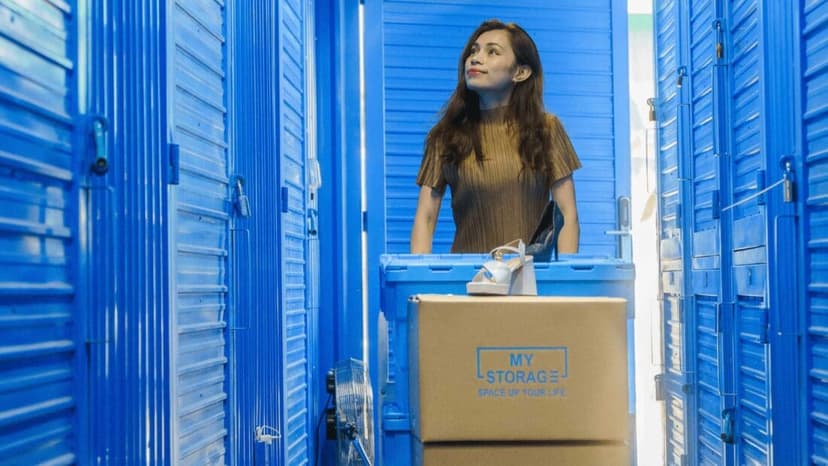
Self-storage provides a private customer unit with AC and temperature control. With full-service valet storage with pickup and delivery, goods are stored in a shared warehouse and charged by the volume used; confirm the AC or non-AC option according to your needs. Centrally located auto lockers suit flexible hourly storage, not a replacement for business warehouse operations.
Compare MyStorage storage locations with your travel routes rather than assuming every site offers the same storage type. The facility at 375 Võ Nguyên Giáp is one option to investigate, but capacity, packages, access rights and goods acceptance must be confirmed directly.
Five criteria for assessing suitability
- Location: convenient for actual collection and delivery routes, not merely close on a map.
- Storage conditions and security: suitable for the goods, the selected AC option and the facility’s commitments.
- Capacity: sufficient for stock volume, arrangement and seasonal changes.
- Operational support: an agreed contact person, handover process and processing times.
- Packing: choose materials appropriate to the goods; you can consult MyStorage cardboard boxes while confirming which materials and labour are included in the package.
Before deciding, send your goods inventory and operating requirements to obtain a specific proposal. If you need production space, special load capacity, cold storage or large-vehicle access to the warehouse, request separate confirmation; choose only when the actual conditions meet your requirements.
Frequently Asked Questions
What should I send to get a realistic storage quotation?
Send your goods inventory, package or pallet count, external dimensions, weight, storage requirements and expected duration. Add movement frequency, collection/delivery addresses and support needed, such as loading, counting or packing. For seasonal stock, provide both normal and peak quantities.
Ask for storage fees, package inclusions and potential extras to be separated. Clarify VAT, deposits and refund conditions. A “from … per month” figure is not a substitute for a quotation for your specific shipment.
How do I know whether central or more distant storage is better value?
Compare the same operating month: storage fees, pickup/delivery trips, labour costs and waiting time. Test the route or check vehicle access at the planned times; proximity on a map does not necessarily mean convenient loading.
If you are assessing District 6 or warehouse rental options in District 8, check the exact address, permitted vehicles and handover point. Do not assume uniform prices or amenities across an entire district.
What should I ask before signing if I do not know how long I will need storage?
Ask about the minimum term, renewal method, termination notice, expansion/reduction options and treatment of advance payments. Request written deposit-refund conditions, move-out charges and obligations to clear and return a private unit.
If only your immediate needs are known, request two rental-term options for comparison. Do not assume every monthly service allows immediate cancellation or a full refund of prepaid amounts.
Should an online shop dispatching daily orders choose self-storage or valet storage?
Self-storage suits customers who need a private unit and control over arranging and managing goods; check access rights and permitted activities. Valet storage includes pickup and delivery and is billed by volume used, but its retrieval-request process needs to be clarified.
For individual daily orders, confirm SKU-level picking, packing, counting and returns handling, along with request cut-off times and charges. If both parties agree, test a small inbound/outbound batch and assess it before transferring all stock. This is a suggested check, not a promise that every MyStorage package includes all fulfillment services.
How can I meaningfully check security and fire protection during a visit?
Ask the person in charge to explain access procedures, camera coverage, incident reporting and the contact receiving reports. Observe aisles, escape routes and goods arrangement in the area you would use; ask for documentation, inspection schedules and facility-appropriate responsibilities.
Do not merely ask “are there cameras?” or rely on a photograph of a fire extinguisher. Requirements specific to goods and buildings should be confirmed with qualified specialists; advertising does not replace examining actual documentation.
Is renting always cheaper than building or setting up my own warehouse?
No. Compare the same usage period and operating scale: initial investment, premises costs, staffing, maintenance responsibilities under the contract, transport and expansion or relocation costs. Track refundable deposits separately in cash-flow planning.
Renting may reduce initial investment, but its long-term advantage depends on whether demand is stable or variable. Prepare at least normal and peak-use scenarios instead of judging solely by the first month’s rent.
What should I confirm for temperature- or humidity-sensitive goods?
Provide the manufacturer’s storage requirements or the goods’ documentation. Ask whether the option includes AC, the environmental-control scope, monitoring methods and responses to abnormal readings. If you need records for comparison, agree in advance on their availability.
MyStorage self-storage includes AC and temperature control. Valet options may have or not have AC, with temperature and humidity control depending on the option. Do not assume one temperature/humidity threshold applies across the network; air-conditioned storage is not cold storage.
What if packages are missing or packaging is damaged at handover?
Record discrepancies immediately in the handover report, photograph packaging, retain package identifiers and compare receipt/dispatch records. Notify the agreed contact and request acknowledgment. If the cause is unclear, describe what happened rather than deciding which party is at fault.
Before renting, ask about notification deadlines, required evidence, counting scope and liability/insurance terms. Compensation depends on the agreement and actual circumstances; do not assume every declared value is automatically insured in full.
Can splitting stock across several small warehouses make delivery faster and cheaper?
It may shorten some routes but increase transfers, inventory checks and stock discrepancies between sites. Compare multiple-site costs, minimum stock at each site and replenishment trips with a single centralized warehouse.
If operations permit, you can first trial one product group or delivery area. Use the same measures for processing time, stockout frequency and total cost; do not measure only shorter delivery distances.
Can I install machinery, manufacture or process products in self-storage?
Do not assume so. Explain the activity, equipment, materials and power requirements to the provider before renting. Storage space is not automatically approved as a workshop; accepting goods does not mean permitting on-site production.
For production needs, check appropriate premises and relevant technical requirements with a suitable provider. Bring equipment or materials in only after the permitted use is confirmed, not on the basis of the broad term “warehouse/workshop” in advertising.
Related articles
Article
Onshore vs Offshore: Which Manufacturing Model Should Businesses Choose?
Onshore manufacturing refers to production within a company’s home country, helping to control quality, shorten delivery times, and ensure easier regulatory compliance. Offshore…
Read article
Article
How To Organize Your Home Storage Room | 10 Space-Saving Tips
Organize household storage with ten practical tips, an inventory template, safety checks and guidance on when external storage is worth considering.
Read article

Article
Secrets to Profitable Online Selling: 10 Ways to Save Costs
To sell online profitably, you not only need to increase sales but also maintain good control over operating costs. Items such as inventory, premises, packaging, shipping, and order…
Read article
