
 Tiếng Việt
 한국어
 日本語
Article
What Is Cold Chain Logistics? Process, Standards and Solutions
On this page
Cold chain logistics is a specialised system for managing, storing, handling and transporting goods in which temperature and humidity are held continuously within a strict standard range, from the point of origin to the consumer. It is vital for stopping microorganisms developing, preserving the potency of medicines in full and keeping the nutritional value of fresh food intact.
With agricultural and seafood exports and food e-commerce growing at speed, building a sound cold chain has become a core competitive advantage. This article examines what cold chain logistics really is, how a closed-loop process runs, the international standards that apply, and the most effective ways to optimise operating costs. It is a specialised link within the wider picture of logistics and supply chain management.
1. What Is Cold Chain Logistics and What Does It Do?
Cold chain logistics is a chain of activities combining refrigerated storage infrastructure, vehicles with cooling units, temperature sensors and professional handling procedures, so that sensitive goods never see a temperature swing. Unlike ordinary logistics, a single break of a few dozen minutes can ruin an entire consignment of costly vaccines or degrade a shipment of produce bound for export.
The Difference Between Cold Chain Logistics, Cold Storage and Cold Chain Management
These three terms are often confused in the market, yet their scope is entirely different:
- Cold chain logistics: Focused directly on physical movement, covering storage, handling, transport and distribution of goods in a temperature-controlled environment.
- Cold storage: Purely the fixed physical infrastructure (a building, a storage room) fitted with refrigeration compressors to hold goods at one defined location. See cold storage and cool storage rental for a picture of this model.
- Cold chain management: The broadest concept of the three, covering strategic planning, supplier management, standardising SOPs, training staff, quality control and risk management across the product's whole life cycle.
The Industries That Must Use a Cold Chain
Any product with a biological structure or chemical composition that changes at ambient temperature needs a cold chain:
- Produce and fresh fruit: Vegetables and fruit need rapid cooling after harvest to slow cellular respiration and extend natural ripening time.
- Fresh food and seafood: Fresh meat and poultry, and fish caught offshore, need deep freezing to halt the bacteria that cause spoilage.
- Healthcare and biopharmaceuticals: Vaccines, serums, blood products, antibiotics and diagnostic biologicals need an exact temperature range so their proteins do not denature.
- Cosmetics and specialist raw materials: Organic preservative-free cosmetics, natural essential oils, laboratory chemicals and probiotic cultures used in food production. The full list is in which goods should be kept in cool storage.
Standard Storage Temperature Ranges
Each product group has its own biological temperature threshold, so the cold chain has to be divided into matching storage zones:
| Storage class | Standard temperature range | Typical products |
|---|---|---|
| Deep frozen | -28°C to -25°C | Ice cream, premium seafood for export, medical biological samples. |
| Frozen | -20°C to -16°C | Frozen beef and pork, prepared foods, butter and dairy for long-term storage. |
| Chilled | 2°C to 8°C | Vaccines, biological medicines, fresh milk, cold cuts, temperate vegetables. |
| Controlled room | 15°C to 25°C | Ordinary pharmaceuticals, cosmetics, supplements, fine wine. |
Figures from the Food and Agriculture Organization of the United Nations (FAO):
A lack of complete cold chain infrastructure is the direct reason more than 25% to 35% of agricultural and seafood output in developing countries is damaged or spoiled before it reaches the consumer. Investing properly in cold chain logistics reduces write-offs and protects the economic value of exports.
2. The Closed-Loop Cold Chain Process
A proper cold chain runs on absolute continuity: goods stay inside an enclosed temperature envelope from procurement and preparation through to last-mile handover. Any lapse at the loading bay or while waiting for a vehicle can cause thermal shock and sharply reduce a product's shelf life.
Step 1: Receive and Establish the Standard Temperature
The first stage determines how accurate the whole storage cycle will be:
- Check the core temperature: Use an infrared thermometer or a dedicated probe to measure the real temperature at the centre of the package before signing the receiving record.
- Inspect packaging and expiry: Make sure cartons are not dented or torn and show no signs of melt water, which would mean the temperature had already been broken.
- Pre-cooling: Move freshly harvested produce straight into a rapid-cooling room to bring field heat down to the optimal storage threshold before packing it away.
Step 2: Store and Sort in the Cold Room
Inside the cold room, managing the flow of cold air determines how even the quality will be:
- Arrange for air circulation: Goods on a pallet must sit at least 15cm off the floor and 30cm from the wall, and must never be stacked high enough to block the outlet of the industrial evaporator.
- Apply FEFO strictly: Dispatch the batches with the shortest remaining shelf life first (First Expired, First Out) to minimise the risk of expired stock. This ties in closely with cycle counting to catch items nearing expiry early.
- The ante-room: All sorting and labelling must happen in a buffer room held at 10°C to 12°C, so warm humid air from outside never flows straight into the freezer.
Step 3: Controlled Transport and Transfer
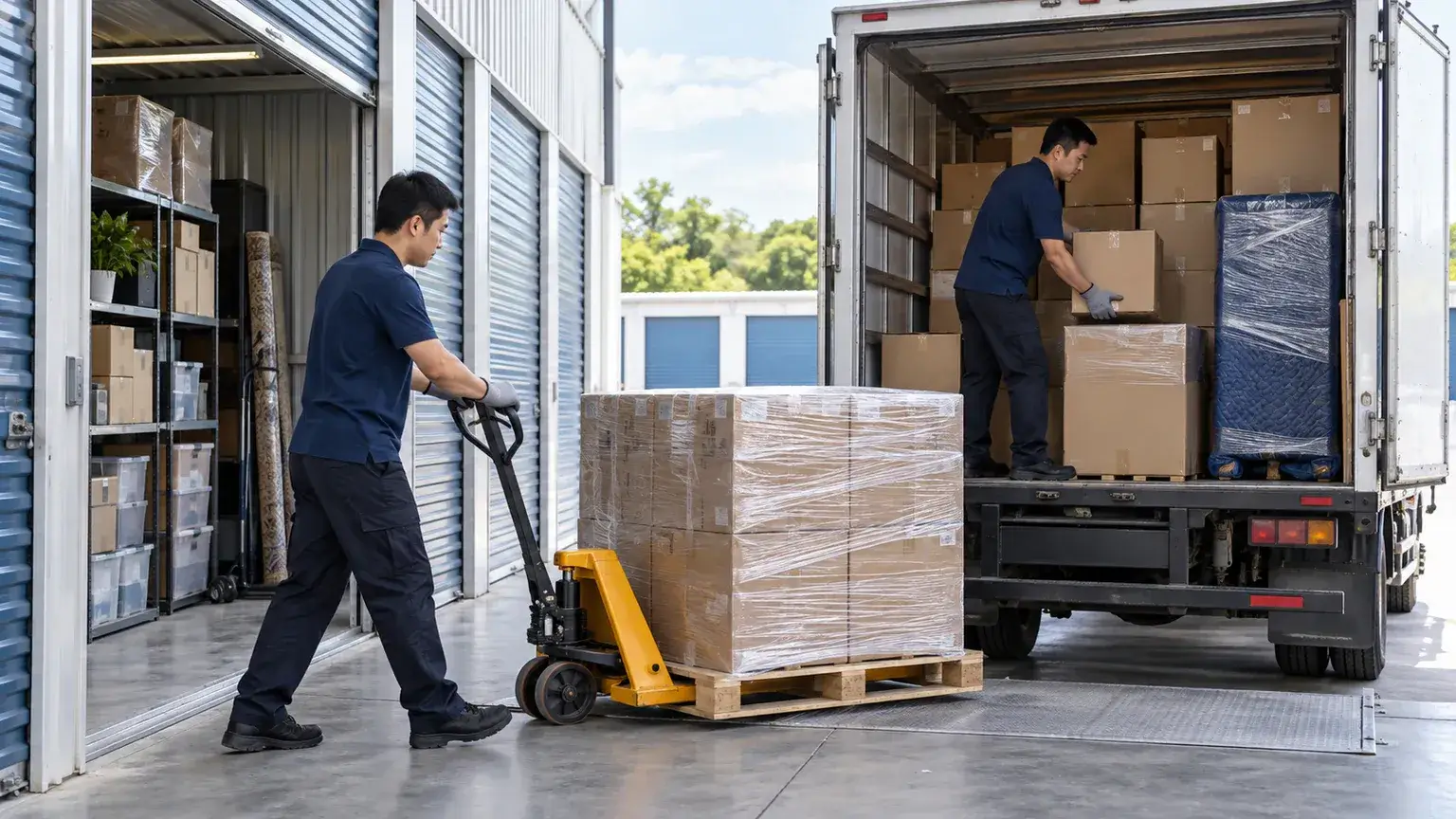
Transport carries the most risk, because the weather outside acts on the load directly:
- Pre-cooling the vehicle: Run the truck's refrigeration unit for at least 30 to 45 minutes so the body reaches the required temperature before the warehouse door opens.
- Loading through a dock shelter: The truck backs tight against the rubber seal of the dispatch door, preventing any heat loss and keeping insects out.
- Minimise door-open time: Drivers and delivery staff must keep the number and length of door openings to a minimum across a multi-stop route.
Step 4: Last-Mile Delivery and Data Reconciliation
Complete the order with transparent evidence of how it was kept:
- Check the goods at the delivery point: The recipient and the carrier check the seal, the temperature shown on the vehicle gauge and the condition of the product.
- Hand over the journey temperature data: Export the continuous temperature chart from the recording device to reconcile against the delivery acceptance record.
- Trigger the incident procedure: If the temperature exceeded the tolerance, the consignment must be quarantined on record and passed to quality assurance (QA) for independent assessment.
All four steps should be written down as a standard alongside the seven-step standard warehouse operating process so every department follows them.
3. Technology and Standards in the Cold Chain
Industrial progress has turned the cold chain from a purely mechanical process into an intelligent system that monitors itself and warns early. Integrating wireless sensors and holding international good distribution certification is the passport a business needs to get its products into modern retail chains and global markets.
Common Temperature Monitoring Technologies
Technology moves a business from dealing with consequences to preventing breaks before they happen:
- Standalone data loggers: A compact device placed inside each carton, automatically recording a minute-by-minute temperature chart and exporting a report over USB.
- IoT sensors: Transmitting temperature and humidity continuously by radio to a cloud server, so managers can watch the state of the warehouse remotely in real time. How IoT sensors in warehouse management work is described in detail in a separate article.
- Instant automatic alerts: When the temperature in a store or a vehicle crosses the safe threshold, the system immediately sends an SMS, sounds an alarm and emails the technical team on duty 24/7.
- GPS with door sensors: Tracking the truck's exact position on a digital map and spotting straight away when a driver switches the cooling unit off to save fuel, or leaves the door open too long.
GDP, HACCP and ISO 22000 Quality Standards
Each industry group falls under its own demanding quality framework:
- GDP (Good Distribution Practice): Good distribution practice for medicines, issued by the Ministry of Health (Circular 03/2018/TT-BYT), mandatory across the whole storage and transport chain for pharmaceuticals and vaccines.
- HACCP hazard analysis: Identifying the critical control points (CCP) in the cold food storage chain to prevent cross-contamination and food poisoning.
- ISO 22000: A comprehensive food safety management system integrating HACCP principles with modern business management processes.
What to Do When the Temperature Goes Out of Range
When a technical fault pushes the temperature beyond the allowed limit, act on a five-step procedure:
- Step 1: Quarantine the consignment at once: Apply a warning label and move the goods into a compliant backup storage bay; under no circumstances release them to the market.
- Step 2: Record how long the deviation lasted: Establish exactly how many minutes the consignment was exposed and what the highest temperature recorded was.
- Step 3: Consult the technical guidance: Check the manufacturer's product stability data to judge whether that temperature damaged the potency of the medicine or the structure of the food.
- Step 4: Independent quality testing: Send random samples to a laboratory for microbiological and physico-chemical testing before deciding to destroy the batch or continue using it.
- Step 5: Record and prevent: Write up an investigation into the technical cause (compressor failure, blown fuse, human error) and update the preventive maintenance plan.
4. Cost Structure and Risk Management
Running cold chain logistics typically costs 30% to 80% more than dry logistics, mainly because of electricity consumption, the depreciation of expensive equipment and quality control costs. Understanding the cost structure and the performance indicators lets a business balance product safety against financial efficiency.
What Makes Up Cold Chain Costs
A cash flow analysis of cold chain operations covers these specific cost items:
- Electricity and fuel: The largest share, covering power for industrial condensers running 24/7 and diesel for the independent refrigeration units on trucks (such as Thermo King or Carrier).
- Depreciation of specialist infrastructure: Investment in PIR/PU insulated panels 100mm to 150mm thick, high-speed roller doors and dedicated compressors. This has to be allowed for from the warehouse design stage.
- Consumable insulation materials: EPS foam boxes, insulating bubble film, gel ice packs and dry ice for packing last-mile parcels.
- Calibration and maintenance: Periodic verification of temperature probe accuracy, recharging refrigerant and routine servicing of the standby generator.
Common Risks That Break the Cold Chain
The most frequent incidents threatening the safety of a cold supply chain:
- Sudden mains power loss: A power cut where the standby generator does not cut in automatically within 60 seconds.
- Compressor failure in transit: A refrigerated truck whose cooling unit fails in the midday summer heat on the motorway, with no recovery vehicle available in time.
- Thermal shock at the warehouse door: Unloading outdoors in hot sun without a buffer room, or loading for hours on end, so surface temperatures climb sharply.
- Errors from uncalibrated instruments: A temperature sensor reading 2°C to 3°C away from the real figure, leaving operators complacent and the fault undetected. The whole monitoring system, including warehouse security and alerts, needs periodic verification.
KPIs for Measuring Operational Performance
Quantify how well the cold chain performs through core measurable indicators:
- Thermal compliance rate: The percentage of total time the goods stayed entirely within the permitted range throughout storage and transport (the standard target is above 99.5%).
- Damage and spoilage rate: The percentage of goods value destroyed or downgraded because of temperature variation, against total value handled.
- OTIF (On-Time In-Full and In-Spec): The percentage of orders delivered to the customer on time, complete, and meeting the handover temperature standard in full.
5. Criteria for Choosing the Right Cold Chain Solution
Deciding whether to fund your own cold store or outsource to a third-party logistics provider (3PL) is a strategic question for manufacturers and distributors. Choosing the right model calls for a full assessment of volume, risk management capability and where the product sits in its market life cycle.
Building Your Own Versus Outsourcing
The comparison below sets out the strengths and weaknesses of the two approaches:
| Criteria | Building your own cold store | Outsourcing to a cold chain 3PL |
|---|---|---|
| Upfront investment | Extremely large, capital tied up in land and machinery. | Very low, turning fixed costs into variable costs. |
| Operational control | Direct and total, with the whole process in your hands. | Dependent on the partner's service level agreement (SLA). |
| Ability to scale capacity | Very hard to expand quickly at peak season. | Extremely flexible, renting extra volume by season. |
| Maintenance costs and risk | The business carries all the technical risk. | The service provider is responsible for maintenance. |
| Who it suits | Large groups with enormous, stable volumes. | SMEs, startups and e-commerce sellers. |
For goods that swing sharply with the season, outsourcing also allows the area to flex, the way seasonal storage works.
A Checklist for Assessing a Cold Chain Provider
When negotiating with a cold store or refrigerated transport provider, go through these points carefully:
- Whether the provider holds valid GDP, HACCP or ISO 22000 certification.
- Whether the temperature sensors are verified periodically by an independent metrology body.
- Whether the site has a standby generator covering 100% of load automatically.
- Whether customers get real-time access to temperature data.
- Whether compensation is set out clearly, based on the actual value of the goods, if the temperature chain breaks.
Market Trends for the Cold Chain in Vietnam
According to market research from the financial firms FiinGroup and Cushman & Wakefield:
The cold chain logistics market in Vietnam is growing strongly at an average of 12% to 14% a year, and is expected to reach hundreds of millions of US dollars. The main drivers are the digital shift in retail, the boom in online fresh food delivery, and free trade agreements (EVFTA, CPTPP) pushing exports of seafood and tropical fruit into Europe and the United States.
The notable trend now is the arrival of highly automated cold logistics centres, using handling robots in deep-freeze environments and building networks of satellite warehouses close to large cities such as Ho Chi Minh City and Hanoi to serve two-hour delivery.
Cool Storage Solutions for Specific Goods
It is worth drawing a clear line between industrial cold stores serving frozen food and cool storage solutions for household goods and premium consumer products:
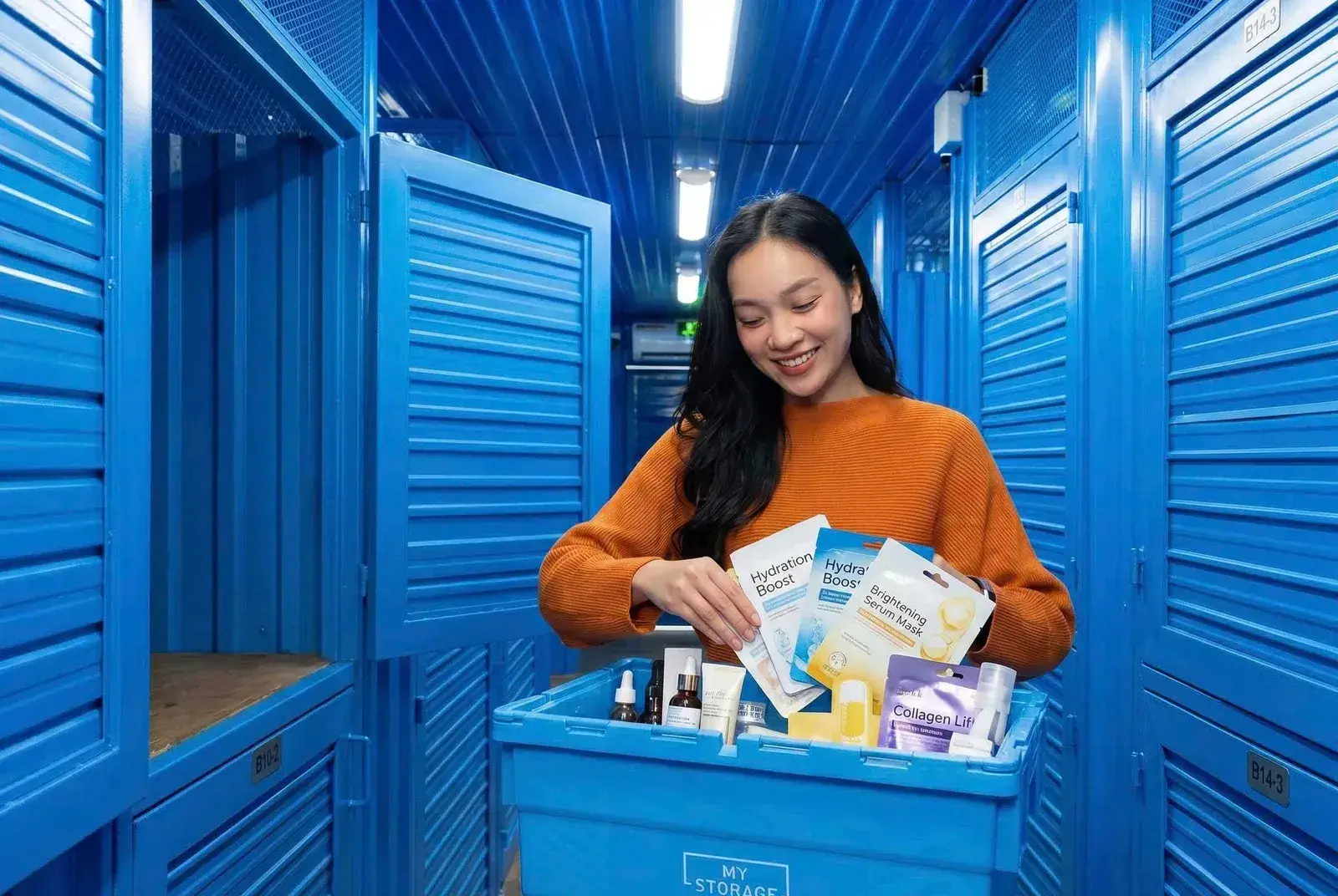
Businesses selling premium cosmetics, boxed supplements, nuts or sensitive electronics usually do not need a -20°C freezer; they need a clean storage room holding a steady cool temperature of 18°C to 25°C with humidity controlled below 60%.
For this segment, air-conditioned self-storage solutions such as MyStorage in Ho Chi Minh City are the most economical and convenient alternative, letting online shops and small businesses keep goods completely safe without carrying the heavy running costs of a dedicated industrial cold store. It is also how many online cosmetics shops keep their stock. Preview the mini storage sizes to picture the capacity.
Not sure how many cubic metres the goods you need to move into cool storage come to? Photograph your packages and let MyStorage's AI Size Estimator work it out for you:
Reference Prices for Cold Logistics Services
Below are reference prices for temperature-controlled storage and refrigerated transport in the southern Vietnamese market:
| Type of service | Charging basis | Reference price | Typical technical characteristics |
|---|---|---|---|
| Industrial freezer storage | Per pallet / month | 450,000 – 650,000 VND / pallet / month | Held at -20°C to -18°C; handling and lifting charged separately. |
| Chilled food storage | Per pallet / month | 380,000 – 520,000 VND / pallet / month | 2°C to 8°C; for milk, vaccines and vegetables for export. |
| Refrigerated truck transport (1 – 2.5 tonnes) | Per trip within Ho Chi Minh City | 800,000 – 1,600,000 VND / trip | Insulated body with a dedicated cooling unit and GPS temperature monitoring. |
| Air-conditioned self-storage (MyStorage) | Private room (6 – 15 m² unit) | 2,800,000 – 6,500,000 VND / month | Air conditioning 24/7 (<25°C, humidity <60%); ideal for cosmetics and dry food. |
Please note: the prices above are indicative for the Ho Chi Minh City market in late 2026. Actual costs vary with the temperature range required, daily throughput and any value-added service terms. See also storage costs in Ho Chi Minh City for comparison.
Pick a storage type, size and temperature option to see today's MyStorage price instantly and book with an offer:
Completing the Cold Chain to Compete Better
Cold chain logistics is not simply a transport service with a cooling unit; it is the firmest commitment a business can make to quality, safety and the reputation of its brand. A cold chain designed properly, run as a closed loop and monitored with transparent data removes the risk of damage, preserves the nutritional value of the product in full and opens the door to international markets.
Always start by understanding the biology of the product, choosing the right storage temperature range and working with providers that have both the technical capability and the quality certification. If you are torn between handling storage yourself and outsourcing, the article on renting storage versus storing it yourself helps balance the total cost.
If your business sells cosmetics, packaged dry food or high-value products and needs a properly air-conditioned cool storage space holding a steady temperature below 25°C in Ho Chi Minh City, get in touch with MyStorage for advice on the room size that fits best. The list of facilities is on the locations page.
Frequently Asked Questions About Cold Chain Logistics
What is cold chain logistics and how does it differ from ordinary dry logistics?
Cold chain logistics requires the whole storage and transport process to hold a tightly controlled temperature and humidity range continuously, while dry logistics only needs shelter from rain and sun with no temperature control.
How does cold chain logistics differ from cold storage?
A cold store is just a fixed stopping point for holding goods in a refrigerated room, while cold chain logistics covers the whole process of transport, handling, storage and distribution from producer to consumer.
Which industries must use a cold supply chain?
They include seafood for export, fresh and frozen meat, post-harvest produce, biopharmaceuticals, vaccines and temperature-sensitive cosmetics.
What is the most common storage temperature range for vaccines?
Most ordinary vaccines require chilled storage from 2°C to 8°C under Good Distribution Practice (GDP), and must not be allowed to freeze.
How do WMS and TMS support cold chain operations?
WMS manages storage locations under first-expired-first-out (FEFO) and controls the temperature of each bay, while a TMS optimises vehicle routes, tracks the temperature of the truck body and locates vehicles in real time.
How much more does cold chain operation cost than dry goods?
Cold chain logistics typically costs 30% to 80% more than ordinary dry goods, because of the electricity and fuel used for cooling and the depreciation of expensive insulating materials.
What is the procedure when the power fails at a cold store?
The standby generator must start automatically within 60 seconds; at the same time every door must be kept firmly shut to hold the cold inside, and the duty engineering team alerted urgently.
Should a small business build its own cold store?
A small business should not build its own cold store, because the upfront investment is very large and the maintenance burden heavy; outsourcing to a cold logistics provider or using air-conditioned self-storage is far cheaper and more flexible.
How can you tell whether a driver has switched off the cooling unit to save fuel?
Fit an independent temperature sensor linked to GPS that sends data straight back to the control room; if the body temperature climbs during the journey, the system raises an alert immediately.
Is the GDP standard mandatory for pharmaceutical logistics in Vietnam?
Yes. Under Circular 03/2018/TT-BYT from the Ministry of Health, every business storing, distributing or transporting medicines and vaccines in Vietnam must be assessed and certified to GDP.
How do gel ice packs and dry ice differ for cold packing?
Gel packs hold a cool 2°C to 8°C, are safe and can be reused many times, while dry ice is CO2 at -78.5°C, used for deep-frozen goods but needing care because it can cause cold burns and asphyxiation.
Does MyStorage self-storage hold frozen seafood?
No. MyStorage provides air-conditioned cool storage holding 18°C to 25°C, ideal for cosmetics, premium dry food, leather goods and electronics; the facility does not accept fresh meat and fish or -20°C frozen goods.
How long can fresh produce be kept in cool storage?
It depends on the fruit: dragon fruit or bananas keep for three to four weeks at 12°C to 14°C, while apples or grapes keep for two to three months at 0°C to 2°C with humidity controlled at 90%.
What is thermal shock and how do you prevent it?
Thermal shock is a sudden change in the temperature of goods between hot and cold environments; prevent it by always loading through an intermediate ante-room and using insulated covers when moving goods outdoors.
Why should goods never block the evaporator outlet in a cold room?
Blocking the air outlet obstructs the convection of cold air, so the temperature cannot spread evenly through the room, creating hot spots that spoil goods in the far corners.
Related articles
Article
What Is Cycle Counting? How to Run It Without Stopping Sales
Cycle counting means counting part of your stock on a repeating schedule instead of closing the warehouse for a full count. This guide covers ABC classification, how to schedule counts, a…
Read article
Article
What Is a WMS? Functions, Benefits and How to Choose a Warehouse Management System
A WMS is warehouse management software that digitises the flow of goods from receiving and location assignment to real-time stock control, picking and dispatch. This guide covers its core…
Read article
Article
Warehouse Storage Pallets: Choosing, Stacking and Optimising Space
A guide to warehouse pallets: comparing wood, plastic and metal, ISO 6780 size standards, the difference between static, dynamic and racking load, brick-bond stacking rules, warehouse…
Read article
