
 Tiếng Việt
 한국어
 日本語
Article
What to Pack for a Three-Day Trip: A Light Luggage Checklist
On this page
A three-day, two-night trip calls for 3 main outfits, 1 spare set, underwear, travel-size toiletries and your ID documents. Pack to a minimalist rule and everything fits in a 20-inch cabin case or a travel backpack, with no bulk and no excess baggage fee. For the things left at home before a longer trip, you can put them in MyStorage self-storage in Ho Chi Minh City.
1. What to Pack for Three Days and Two Nights
For a three-day trip you need 3 daytime outfits, 1 set of sleepwear, 1 spare set, enough underwear for the days away, a mini toiletry kit and your ID. Favour pieces in the same colour family so they mix and match, decant cosmetics into bottles under 100 ml, and charge the power bank so the whole lot fits a 7 kg carry-on.
Clothing and essential accessories
Choose clothes against the actual day-by-day plan, in the spirit of keeping only what you will really use:
- 3 main outfits: comfortable sets that suit each activity, whether walking around town, taking photos or sitting down to dinner.
- 1 light spare set: for rain, spilled food or a change of clothes mid-journey.
- Underwear and socks: 3 to 4 sets of breathable cotton underwear and 2 to 3 pairs of clean socks for the days away.
- 1 set of light sleepwear: silk or soft cotton that folds down into a corner of the case.
- A versatile jacket: a thin windbreaker or light cardigan shields you from sun by day and keeps you warm when the temperature drops at night.
- Footwear: wear comfortable trainers on the journey and pack one pair of sandals or soft slides for walking around.
Toiletries and personal care
Keep toiletries together in a waterproof pouch so nothing leaks onto your clothes:
- Toothbrush and toothpaste: hotels provide them, but your own soft-bristle brush is more hygienic and more comfortable.
- Decanted shampoo, body wash and face wash: use 50 ml to 100 ml bottles, enough for three days and within airline rules.
- Sunscreen and moisturiser: the two products that protect your skin against strong sun and the change in humidity at your destination.
- Small face towel and a mini comb: lets you freshen up on the road or at a rest stop without relying on hotel towels.
- Basic make-up: just the compact items, such as a lipstick, a stick foundation or cushion, and a brow pencil.
Documents and money
Documents are the most important thing you carry and should always be kept in a secure, easy-to-reach pocket:
- ID card or passport: the original, still valid, is required for airport check-in and hotel check-in.
- Driving licence: essential if you plan to rent a motorbike or a car at your destination.
- Tickets and booking codes: save the photo or QR code on your phone and print a paper copy in case the battery dies.
- Bank cards and cash: an ATM or Visa card for most payments plus roughly 1 to 2 million VND in small notes for incidentals.
- Travel insurance: save the emergency hotline and policy number if the trip involves adventure sports.
Electronics and a small first-aid kit
Staying contactable and staying well are the two things that keep a short trip on track:
- Phone and fast-charging cable: for maps, photos and contacting the places you have booked.
- Power bank of 10,000 to 20,000 mAh: must travel in your carry-on, and keeps the phone alive through a long day out.
- Headphones: for music or a film on the plane or coach.
- Personal medicine pouch: paracetamol, digestive enzymes, motion-sickness tablets, antihistamines and a few plasters.
| Category | What to take for three days |
|---|---|
| Clothing | 3 main outfits, 1 spare set, 1 set of sleepwear, 4 pairs of underwear |
| Toiletries and skincare | Decanted bottles under 100 ml, sunscreen, toothbrush |
| Documents and money | ID card or passport, driving licence, cash, bank card |
| Devices | Phone, charging cable, power bank in carry-on |
| Health and accessories | Motion-sickness tablets, digestive enzymes, sunglasses, wet-item bag |
2. Packing Lists by Type of Trip
Each destination and style of travel calls for different kit. Rather than packing the same case every time, adapting the list to the trip makes every item you carry earn its place.
Summer beach trip
A three-day beach trip needs breathable, quick-drying and water-resistant items:
- Swimwear: 1 or 2 sets, plus a light cover-up or kimono for sun protection.
- Sunglasses and a wide-brimmed hat: protect your eyes and face from strong UV, and photograph well.
- Non-slip flip-flops: easy on the sand and unharmed by salt water.
- Waterproof phone pouch: essential if you want photos or video while swimming or on a boat.
- Aloe vera gel: soothes and rehydrates skin after hours in the sun and sea.
Mountains and nature
For Da Lat, Sa Pa or a campsite, clothing needs warmth and durability:
- Trainers with good grip: trekking shoes or deep-tread running shoes protect your ankles on rocky trails.
- Windbreaker or ultralight down jacket: highland temperatures drop quickly after dark.
- Stretchy long trousers and long sleeves: guard against scratches and insects on forest trails.
- Insulated water bottle: warm water or ginger tea helps keep your body temperature steady on a climb.
- Insect repellent: a must against bites and skin reactions.
City breaks
Exploring Hanoi, Ho Chi Minh City or Da Nang favours style and practicality:
- Smart casual outfits: jeans, a polo shirt or a simple dress, smart enough for a museum and comfortable for a café.
- Comfortable sneakers: a city day means thousands of steps, and good shoes save your feet.
- Crossbody bag: keeps phone and wallet close, leaving your hands free and deterring pickpockets.
- Folding umbrella: for the sudden downpours of a tropical city.
Business and leisure combined
If one working day meets two days off, the case needs a clear divide:
- 1 smart work outfit: a wrinkle-resistant shirt with trousers or a pencil skirt for meeting clients.
- Laptop and work accessories: computer, mouse, charger and pen in their own padded sleeve.
- Documents or contracts: flat in a hard folder in a separate compartment so clothes do not crease them.
- Casual clothes: change into a T-shirt and shorts the moment the meeting ends.
| Type of trip | What to add |
|---|---|
| Beach | Swimwear, sunglasses, wide-brimmed hat, waterproof pouch |
| Highlands | Windbreaker, grippy trekking shoes, insect repellent |
| City | Comfortable sneakers, crossbody bag, folding umbrella |
| Business trip | Wrinkle-resistant shirt, laptop, document folder |
3. Packing a Case for Three Days Without the Bulk
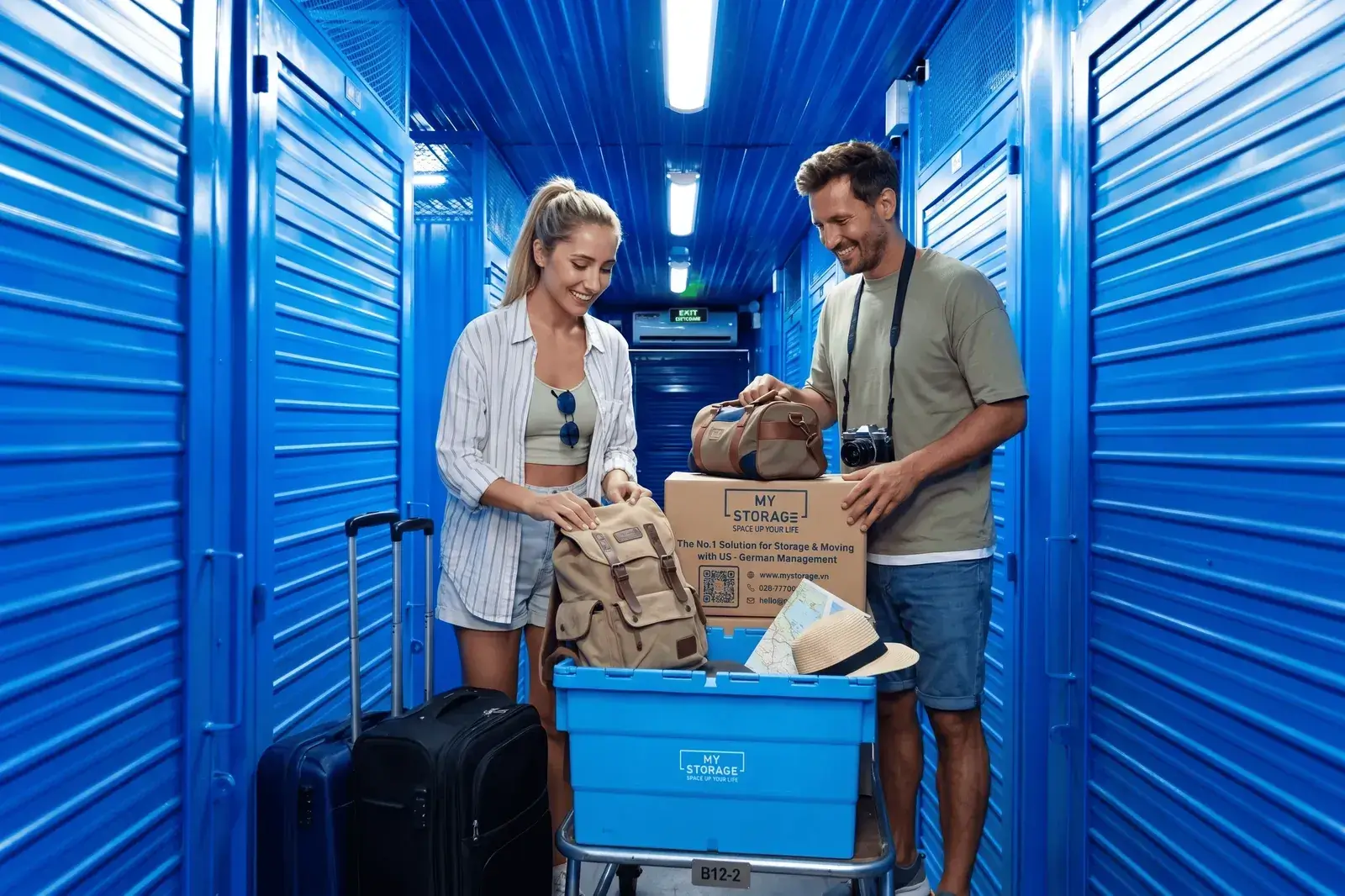
Packing well is less about how big the case is and more about technique, plus the willingness to leave things out. Sound folding methods use every gap, stop clothes creasing and spare your arms on the journey.
Choosing a case or backpack to match your transport
The bag you choose decides how mobile you are for the whole trip:
- 20-inch case (cabin size): around 56 x 36 x 23 cm, the ideal companion for three days. It goes straight into the cabin, so you skip the wait at the baggage belt.
- 30 to 40 litre travel backpack: perfect for budget travel or constant motorbike journeys. Multiple compartments spread the weight across both shoulders and leave your hands free.
- Soft duffel bag: suits short road trips with family because it squeezes into a car boot without rigid corners.
Capsule dressing
A capsule wardrobe is how you look good for three days on the smallest number of garments:
- Stick to neutrals: white, black, beige, grey or denim blue mix and match without clashing.
- One pair of trousers to two or three tops: jeans or an A-line skirt work with a T-shirt by day and a smarter top at dinner.
- Wear your bulkiest pieces: put the jacket, jeans and trainers on for the journey itself to take weight out of the case.
Rolling and packing cubes
Much like the thinking behind the Marie Kondo method of tidying, breaking luggage into separate blocks brings real order:
- Ranger rolling: instead of folding flat, rolling T-shirts, sleepwear and shorts tightly removes hard creases and cuts the volume they take by up to 40%.
- Packing cubes: three separate bags, one for main clothing, one for underwear and socks, one for electronics and accessories. You lift out the one you need without disturbing the rest.
- Heavy items by the wheels: put shoes and liquids at the base of the case so the centre of gravity sits low and it does not tip over.
- Use the inside of shoes: rolled socks or sealed cosmetic bottles inside the shoes keep their shape and save space.
What to leave at home
To keep the case under 7 kg, be firm about striking these off:
- Full-size cosmetics: a 500 ml shampoo bottle for three days is heavy and risks bursting over everything.
- Hairdryer or iron: almost every hotel and homestay has a hairdryer; call ahead to confirm rather than packing one.
- Too many shoes: three or four pairs for three days is the single biggest waste of space; one pair for walking and one pair of flats is enough.
- Thick books: use a Kindle or a reading app on the phone and save the weight.
4. Points to Check Before a Short Trip
Packing is not only about putting things in a bag; it also touches personal safety and airline rules. Knowing the security checks that apply saves you trouble at the airport and keeps the journey smooth.
Check the forecast and the plan
Looking at the weather first lets you drop what you will not need and add what you might:
- Check the forecast three days out: highs, lows and the chance of rain tell you whether the jacket should be thick or thin.
- Match clothes to the places you will visit: if temples are on the itinerary, bring at least one long-sleeved outfit covering the knees.
- Resist last-minute additions: stuffing in two or three extra outfits the night before is rarely worth it; you almost never wear them.
Current carry-on rules
Flying with Vietnam Airlines, Vietjet Air or Bamboo Airways means sticking to strict limits:
- Weight and dimensions: free carry-on is typically 7 kg to 12 kg depending on fare class, with maximum dimensions of 56 x 36 x 23 cm.
- Liquids: each container must be 100 ml or less, with a total of no more than 1 litre, all inside one clear zip bag for screening.
- Power banks in carry-on only: all lithium power banks under 100 Wh (or up to 160 Wh with airline approval) must travel in the cabin, never in checked baggage, because of fire risk in the hold.
- Banned items: long-pointed nail scissors, fruit knives, gas lighters and sharp metal objects are confiscated from carry-on.
| Item | Rule to remember |
|---|---|
| Weight | 7 kg to 12 kg depending on the airline |
| Dimensions | Maximum 56 x 36 x 23 cm, a 20-inch cabin case |
| Liquids | Under 100 ml per container, 1,000 ml in total, in a zip bag |
| Power banks | Carry-on only, under 100 Wh or about 20,000 mAh |
| Knives and scissors | Banned from carry-on entirely |
A waterproof bag for wet and dirty clothes
Keeping the case clean after each day protects the clean clothes still in it:
- Two or three zip bags: collect worn underwear and dirty clothes each day; a sealed bag stops odours spreading through the case.
- A waterproof bag for swimwear: swimwear is rarely dry before the flight home, so roll it into a waterproof bag and keep damp away from electronics.
- Freshen the case: a small lavender sachet or a bag of dried coffee grounds in a corner keeps the inside smelling clean.
Final safety checks before leaving home
Ten minutes checking the house before you lock up lets you enjoy the trip with a clear head:
- Check what is on you: money, phone, ID, house keys.
- Switch off what you can: unplug the water heater, TV and computer, and close the gas valve to remove any fire risk.
- Lock windows and doors: close windows against sudden rain and lock the main door properly.
- Leave the place tidy: a neat room is a much better homecoming after three days on the road.
If you are leaving valuables behind for a longer trip, consider putting household items and luggage into storage rather than leaving a rented room full.
5. Managing and Storing Luggage While You Travel
One of the biggest nuisances on a short trip is the gap between landing and hotel check-in. Knowing the flexible options for leaving luggage lets you wander and eat without dragging a heavy case around.
Arriving before check-in time
Hotels usually open check-in at 2 pm, while morning flights land at 8 or 9 am:
- Free storage at reception: most hotels of two stars and above hold luggage free before check-in and after check-out.
- Take the luggage tag: check that the tag carries your name and phone number, and photograph the case so it is easy to identify later.
- Take out what you need first: keep phone, wallet, sunscreen and sunglasses in a small crossbody bag before handing the case over.
Lockers and luggage services while you explore
If your plans take you away from the hotel, public storage points are the smart answer:
- Smart lockers at airports and stations: major transport hubs now have electronic lockers secured by QR code or face recognition, rentable by the hour at reasonable rates.
- Luggage storage services for travellers: apps partner with convenience stores and central cafés so you can drop a bag after a few taps.
- Travel unencumbered: free of the case, you can rent a motorbike through the food alleys or walk the riverside without worrying about your bag.
Protecting what you leave at home
For people who travel often for work and anyone with a habit of going away, the valuables left behind matter too:
- Keep high-value items in a safe: property papers and jewellery belong in a sturdy safe or a dedicated secure locker.
- Longer absences: if you are giving up a rented room to travel and work across the country, see where to leave a motorbike and household items on a long trip.
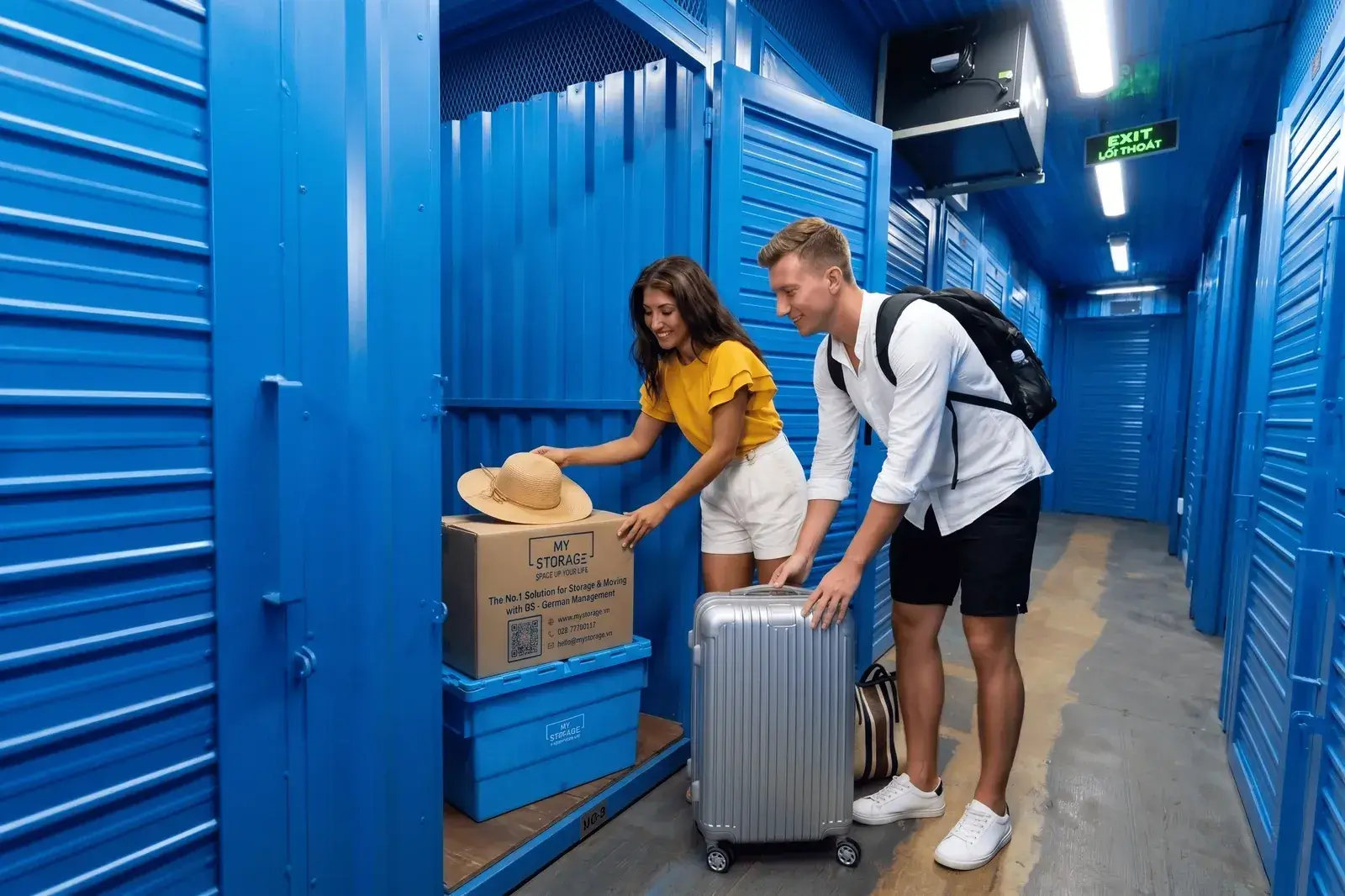
- Personal self-storage: a 1 m³ unit (about 8 to 10 medium cartons, or 2 to 4 cabin cases) with climate-controlled storage keeps belongings safe while you are away.
Storage and a desk at the 375 Vo Nguyen Giap site
The 375 Vo Nguyen Giap site (An Khanh, Thu Duc City) has a workspace area as well as self-storage units. If your trip mixes work and leisure, you can leave cases and stock in your unit, handle work or pack orders on the spot before heading to the airport, instead of going home for your things and doubling back.
Full checklist for three days and two nights
The summary table below helps you run through every item before you zip the case:
| Group | Items | Suggested quantity | Packing note |
|---|---|---|---|
| Main clothing | T-shirts, shirts, jeans, skirts, dresses | 3 outfits | Rolled, inside a packing cube |
| Secondary clothing | Sleepwear, light jacket, underwear, socks | 1 set of sleepwear, 4 pairs of underwear, 3 pairs of socks | Tuck into gaps or inside shoes |
| Toiletries | Toothbrush, toothpaste, body wash, shampoo | Mini bottles under 100 ml | In a waterproof zip bag |
| Skincare | Sunscreen, moisturiser, lipstick, cushion | 1 basic set | In a separate padded pocket |
| Documents | ID or passport, driving licence, booking codes | 1 original of each | Always in the crossbody bag on you |
| Electronics | Phone, charging cable, headphones, power bank | 1 set | Power bank must be carry-on |
| First aid | Motion sickness, digestion, fever, plasters | 1 pack of each | In an outer pocket for quick access |
| Outdoor accessories | Sunglasses, hat, folding umbrella, sandals | 1 of each | Sandals at the base, umbrella in a side pocket |
Not sure how many cubic metres the things at home need? Use the AI estimator below:
6. Reference Prices for Luggage and Household Storage
To help travellers keep belongings safe while away, smart lockers and mini self-storage offer flexible rental packages. Below are 2027 reference prices in the main tourist cities, Ho Chi Minh City, Hanoi and Da Nang:
| Service | Unit size | What it holds | Reference price (VND) |
|---|---|---|---|
| Smart locker by the hour | Size M (45 x 35 x 50 cm) | One travel backpack or one 20-inch cabin case | 20,000 - 30,000 / hour |
| Smart locker for the day | Size L (85 x 50 x 50 cm) | One large 24-inch case or two cabin cases | 80,000 - 150,000 / day |
| Hotel or agency luggage holding | Per standard item | Per case or backpack, same-day | 50,000 - 70,000 / item / day |
| Mini self-storage 1 m³ | 1 m³ (about 8 to 10 medium cartons, or 2 to 4 cabin cases) | Suits belongings left during a trip or a long work posting | 1,136,000 – 1,256,000 / month |
| Family self-storage 3 m³ to 5 m³ | 3 m³ to 5 m³ (about 25 to 40 boxes, or the contents of a rented room) | Suits a move or furniture stored before a long trip | 1,869,000 – 2,790,000 / month |
These are reference prices for 2027 and vary with location, promotions and the extra services each operator includes.
For longer storage you can check the exact price for your size with the tool below:
7. Light Luggage for a Better Trip
A good trip is not measured by how many outfits you brought, but by the experiences and the ease of the journey. Apply a minimalist rule, choose versatile clothes and pack methodically, and you lose the bulk that slows you down.
If you are preparing for a longer trip and need somewhere safe for your belongings in Ho Chi Minh City, MyStorage self-storage has climate-controlled units running 24/7, layered camera surveillance and flexible monthly rental. See the MyStorage locations in Ho Chi Minh City to pick the nearest site, or contact MyStorage for advice on the right unit.
8. Frequently Asked Questions About Packing for Three Days
The questions travellers ask most often when packing for three days and two nights:
How many outfits should I pack for three days and two nights?
Three main daytime outfits, one light spare set and one set of sleepwear. Choose pieces in the same colour family so you can mix tops and bottoms for several looks without carrying more.
What size case fits in the cabin for a three-day trip?
A 20-inch case, roughly 56 x 36 x 23 cm, is ideal. It meets the carry-on standard of domestic airlines, so you avoid checked baggage fees and the wait at the belt.
Do I need a case for three days, or is a backpack better?
Not necessarily a case. For motorbike travel or constant movement across rough terrain, a 35-litre backpack is easier. If you fly to one fixed resort, a wheeled cabin case keeps clothes flatter.
What should I definitely not pack for three days?
Full-size 500 ml shampoo and body wash, a bulky hairdryer, an iron, more than two pairs of shoes and thick books. They take half the case and are rarely used because hotels provide them.
What are the current rules on liquids and cosmetics on domestic flights?
Liquids in carry-on must be in containers of 100 ml or less, with a total of no more than 1 litre. All the containers go inside one clear zip bag so security can screen them easily.
Can a power bank go in checked baggage?
No, because of the fire risk when pressure changes in the hold. Every power bank under 20,000 mAh (about 100 Wh) must travel in the cabin with you.
How do I pack clothes so they do not crease?
Roll T-shirts and shorts tightly, ranger style. For shirts and dresses that crease easily, lay a thin plastic sheet between the folds and place them on the top layer so heavier items do not press them.
Where can I leave luggage if the hotel will not hold it before check-in?
Look for smart locker systems at airports and railway stations, or use the luggage apps that partner with cafés and convenience stores in the centre to store your case by the hour.
What shoes should I bring for three days?
At most two pairs: comfortable sneakers for walking and travelling, plus a pair of strappy sandals or soft slides for the beach or around the hotel.
Do I need to bring a hairdryer and an iron?
No. Nearly every hotel and homestay provides a hairdryer in the room or at reception. For light creases, hang clothes in the bathroom while running hot water and the steam will relax them.
What basic medicines should I pack for three days?
Keep it small: a few paracetamol tablets, probiotics, motion-sickness tablets, an antihistamine for food allergies, and four or five plasters for blisters.
How do I stop wet swimwear from making the case smell?
Carry two or three waterproof zip bags. Wring out swimwear, roll it tightly and seal it in the bag; the waterproof layer contains the damp and the smell, protecting electronics and dry clothes around it.
Is travel insurance worth it for a three-day trip?
Very much so, especially if the trip involves diving, kayaking, climbing or a flight. Domestic travel insurance for three days costs only 20,000 to 50,000 VND but covers delays, lost luggage and accidents.
What should I do to keep my home safe while away for three days?
Before leaving, unplug all electrical appliances, close the gas valve, latch the windows and lock the main door. Important documents and valuables belong in a safe, or in a self-storage unit if you are away often.
Are hourly smart lockers safe and convenient?
Yes. They use electronic locks with an OTP or QR code sent to your phone, and locker areas have continuous camera surveillance and tamper alarms, so you can leave a case and explore freely.
Related articles
Article
Toy Storage for Retailers and Online Sellers: Sorting, Protection and Stock Control
How to set up toy storage for a shop or online seller: sort by product group and age range, protect plastic, plush, wooden and electronic toys from damage, track stock by SKU, choose the…
Read article

Article
Accounting and Medical Record Retention Under Vietnamese Law
Retention periods for accounting records (5 years, 10 years or permanent under Decree 174/2016/ND-CP) and medical records (10, 20 or 30 years under Circular 33/2025/TT-BYT), how to build a…
Read article
Article
How to Declutter Your Home With the Marie Kondo Method: 6 Effective Steps
A guide to decluttering your home with the Marie Kondo (KonMari) method in 6 steps: gather belongings by the 5 categories, keep only what sparks joy, fold clothes vertically, organise each…
Read article
