
 Tiếng Việt
 한국어
한국어 日本語
日本語Article· Updated October 21, 2026
What Are Lockers? Uses, Types, and How to Choose the Right One
On this page
MyStorage Smart Locker Offer: 11% Off
Any size - Any duration - Ministop D7, D1, D9 and Centre Mall D6
Locker rental from just VND 40,000/hour. Discount applied automatically when you book at booking.mystorage.vn, no code needed · 21/10 - 11/11/26.
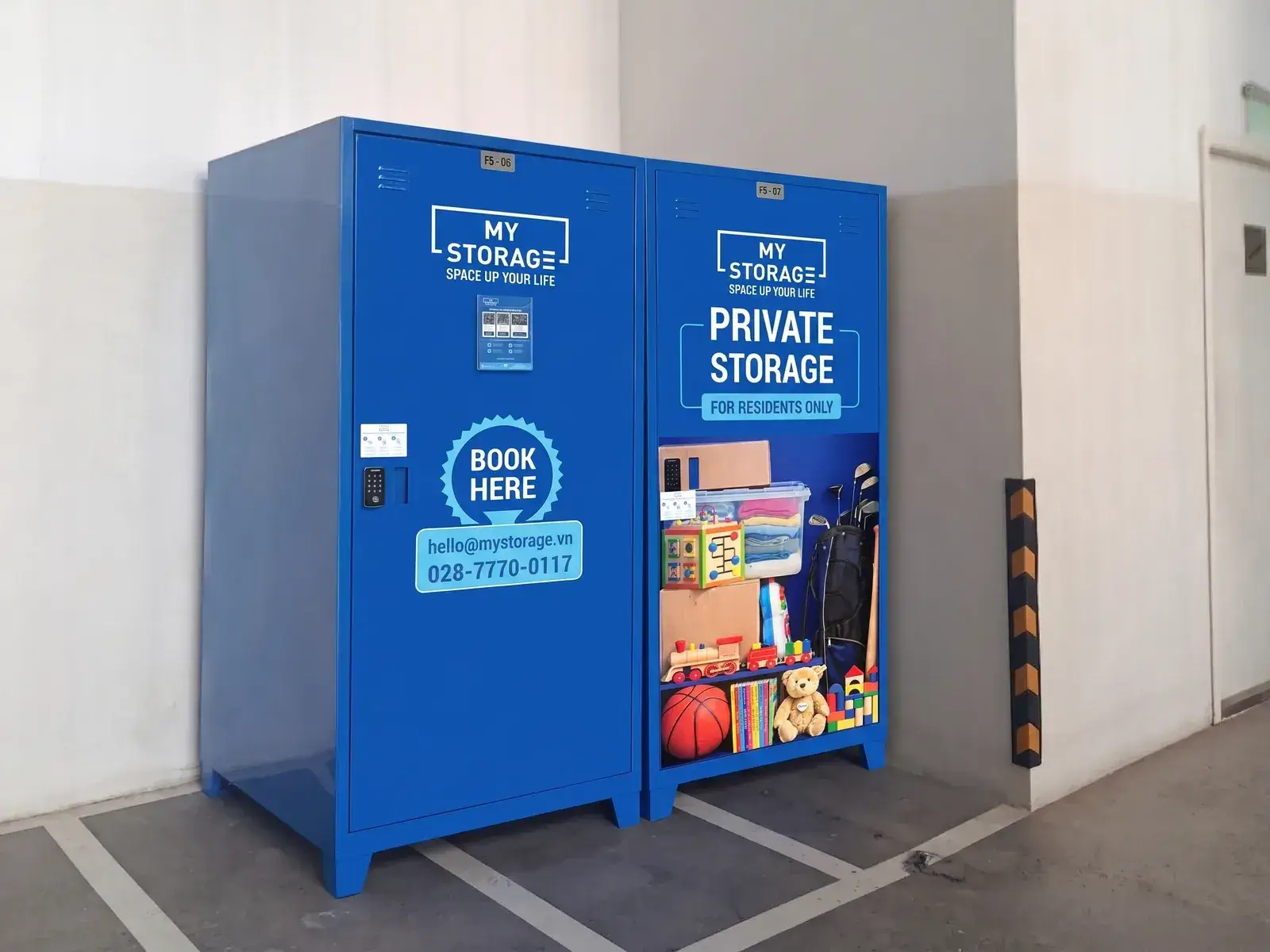
A locker unit is a system comprising multiple separate compartments, each equipped with a lock, allowing users to store personal belongings, luggage, or essential items. Lockers reduce the burden of carrying items while on the move, keep shared spaces tidy, and facilitate the management of multiple users' belongings in a single location. If a few compartments no longer hold everything, storage rental in Ho Chi Minh City offers another way to make room without adding a new cabinet at home.
Lockers are currently used in offices, apartment complexes, gyms, schools, factories, shopping malls, hotels, and at events. The suitable type of locker depends on the items to be stored, the number of users, the storage duration, the installation location, and the operator's support services. Comparing storage services by the amount of belongings and the time you need them stored can help you decide whether a locker or a larger space is the better fit.
What is a locker?
A locker is a storage system with multiple independent compartments, usually featuring individual locks for each one. Users can store their belongings for a specific period without sharing space with others. Locking mechanisms can include traditional keys, combination locks, PINs, QR codes, RFID, or electronic locks, depending on management needs and user experience preferences. For a stay of only a few hours, understanding how hourly storage lockers work makes the process clearer, from choosing a compartment to collecting your belongings.
Basic structure of a locker unit
A locker unit typically consists of:
- Locker body:The main frame that provides structural stability.
- Locker doors:Each compartment has its own door for depositing and retrieving items.
- Storage compartments:Available in various sizes to accommodate different types of items.
- Locks:Can be mechanical or electronic.
- Handle and compartment number:Facilitates user operation and compartment identification.
- Ventilation slots:Useful for storing clothes, shoes, or workout gear.
- Management system:May include a display screen, QR code, access card, or usage instructions.
How do lockers differ from standard storage cabinets?
|
Criteria |
Locker |
Standard storage cabinet |
|---|---|---|
|
Users |
Multiple users; each has a separate compartment |
Usually a single person or a family |
|
Structure |
Multiple separate compartments |
Few compartments or no clear division |
|
Lock |
Each compartment has its own lock |
May lack locks or share a common lock |
|
Purpose |
Storing items on a per-turn, hourly, or fixed-duration basis |
Long-term storage |
|
Management |
Easy to number compartments, assign access rights, and track usage |
Less suitable for large numbers of users |
Why do lockers typically have multiple compartments?
A multi-compartment design allows a single area to serve many people. For instance, an office with dozens of employees does not need to dedicate a large room solely to storing bags, uniforms, and personal items. Instead, lockers facilitate organized storage and reduce clutter on desks, at reception counters, or in walkways. Choosing only the space you need also avoids paying for capacity that rarely gets used.
What are lockers used for?
Lockers provide secure, private storage space, allowing users to store items temporarily or utilize the unit as a dedicated personal compartment. Depending on the location and operational setup, lockers can serve a variety of needs, ranging from short-term luggage storage to long-term item management for employees or residents. If the main task is looking after a suitcase before check-in or while sightseeing, compare the options for luggage storage against your itinerary.
- Daily personal item storage:Backpacks, handbags, laptops, jackets, footwear, helmets, and personal belongings can be neatly stored in individual compartments. Users do not need to carry multiple items while working, exercising, or sightseeing.
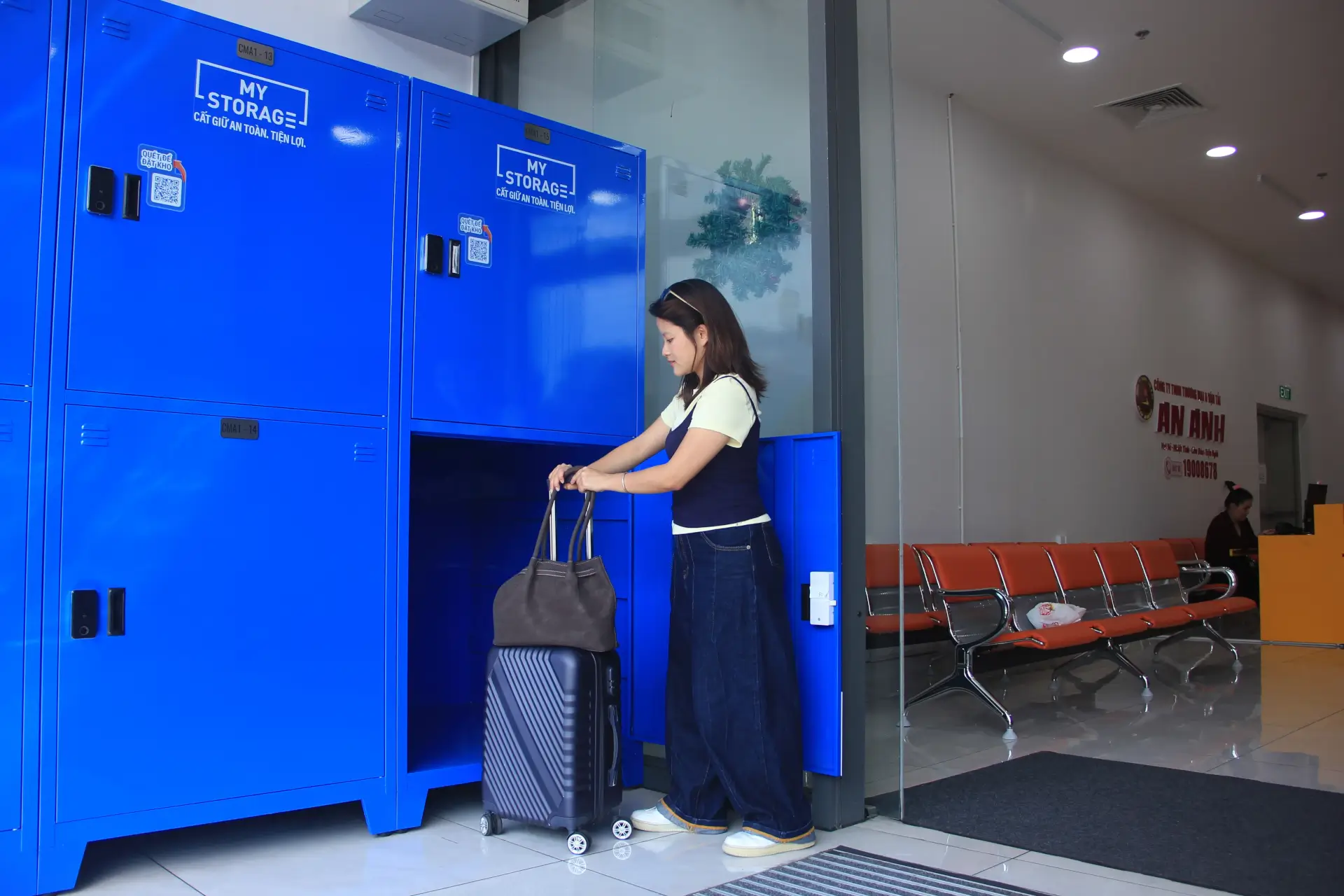
- Luggage storage for travelers:Serviceluggage storagevia lockers is suitable for small suitcases, travel bags, and items requiring short-term storage. This is a convenient option for users who cannot yet check in, are waiting for their next trip, or wish to shop hands-free.
- Dedicated compartments for employees:In offices, factories, and coworking spaces, employees can use lockers to store backpacks, uniforms, work equipment, or a change of clothes. This arrangement keeps the workspace tidy and prevents personal items from cluttering desks or walkways.
- Serving residents and visitors at commercial locations:Lockers in apartment complexes, convenience stores, or shopping malls allow residents and visitors to store parcels, shopping bags, or personal items in an easily accessible location.
- Serving gyms, schools, and events:Practitioners can store clothes and sports bags; Pupils and students have a place to keep their books; Guests attending the conference or exhibition can send backpacks and bags during the program.
- Record keeping and small goods:Small businesses, online stores or sales teams can use lockers for documents, product samples, light supplies and small boxes. For large quantities or bulky items,enterprise warehouseorself-storagewould be more suitable.
Before using a locker, check its dimensions, rental period, unlocking method and support arrangements. The total cost should reflect the rental period and the number of collection trips.
Where are lockers used?
Lockers can be deployed in locations where many people need to store personal items or need centralized management of items. Apartments, offices, gyms, schools, factories, hotels, shopping malls and event centers are common environments. Each place should clearly determine the type of consignment, frequency of use and storage time before choosing the type of cabinet. Journey times and collection arrangements matter as much as proximity on a map.
|
Location |
Popular demand |
|---|---|
|
Apartment |
Parcels, deliveries, and residents' belongings |
|
Office |
Backpacks, laptops, handbags, personal items |
|
Gym |
Clothes, shoes, gym bags, personal belongings |
|
School |
Books, backpacks, school supplies |
|
Factory |
Uniforms, personal items, and items before and after shifts |
|
Shopping center |
Handbags, luggage, shopping bags |
|
Hotel |
Baggage before check-in time or after check-out time |
|
Events |
Backpacks, handbags, and personal items of guests |
|
Shophouse |
Facilities for sending items to customers |
|
Co-working space |
Personal items and work tools |
- Lockers for apartments: Parcel storage can make daily life easier for residents while reducing pressure on reception. Building managers should set clear storage time limits, notification procedures and arrangements for uncollected items.
- Lockers for shophouses: Customers can leave shopping bags or small pieces of luggage while they browse. Place the lockers where they are easy to see, with concise instructions and help available when needed.
- Lockers for office workers: Employees may need somewhere to keep laptops, gym bags, a change of clothes or other personal belongings during the day. Hourly rental suits flexible schedules and plans to exercise or meet clients after work.
- Lockers for events: At conferences, exhibitions and fairs, lockers work best near the entrance, with clear signs and support during busy periods. Guests can leave backpacks, documents and bags while taking part in the programme.
Popular types of lockers
Lockers are often classified by material, design and locking technology. No one type is always better than the others; The appropriate choice depends on the usage environment, the type of items to be stored, the frequency of use and how the operator supports the user. With lockers for apartment buildings, for example, durability and the way residents share the system often matter more than a long list of features.
|
Cabinet type |
Features and advantages |
Fits |
Points to note |
|---|---|---|---|
|
Iron locker |
Solid structure, high durability, easy to arrange multiple compartments and manage by number |
Offices, factories, schools and places with many users |
Check the paint layer, moisture resistance and maintenance schedule |
|
Plastic locker |
Light weight, easy to clean, suitable for areas that need to be cleaned regularly |
Gyms, schools and environments with high humidity |
Check the load of each compartment and the durability of the material |
|
Stainless steel locker |
Surface is durable, easy to clean and suitable for environments with specific operating requirements |
Areas that require frequent cleaning or require high surface durability |
Costs are usually higher; Need to check stainless steel quality and maintenance plan |
|
Wooden Locker |
Aesthetic, easy to synchronize with interior design and create a sense of neatness |
Offices, hotels, showrooms |
Need to pay attention to humidity, frequency of use and maintenance |
|
Smart locker |
Manage permissions to open cabinets with PIN, QR, RFID or electronic lock; Limit manual key handover |
Apartments, offices, events and drop-off points |
Needs power, stable connection, clear instructions and technical support |
Locker Lock Types
Lockers can use key locks, digital locks, PIN, QR, RFID or fingerprint. The right type of lock depends on the number of users, frequency of use, security needs and on-site support. An effective locking system needs to be easy to use for guests, clear to managers, and have a solution in case the code is forgotten, the key is lost, or the cabinet cannot be opened. For travellers, keeping the access code private and checking that the door has locked are also part of storing a suitcase safely.
|
Lock type |
Usage and advantages |
Fits |
Points to note |
|---|---|---|---|
|
Key lock |
Simple to use, each person holds a key for the assigned compartment |
Fixed employees or users by day, week or month |
Need procedures for handover, recovery and handling when keys are lost |
|
Digital lock |
Open with a serial number, no need to bring a physical key |
Office, gym and frequent users |
Must have instructions on how to install or change the code and support if you forget the code |
|
Electronic PIN lock |
The right to open cabinets can change per person or per turn |
Deposit points and environments with many rotating users |
Need a power source and backup plan when the device fails |
|
QR lock |
User scans the code with the phone to authenticate and open the compartment |
Cargo delivery service, events and shopping centers |
Depends on phone, connection and on-site instructions |
|
RFID lock |
Authentication with available card or bracelet |
Businesses, factories, schools and gyms |
Need to manage cards, assign permissions and handle card loss |
|
Fingerprint lock |
Open cabinets with biometrics, no key or card needed |
Fixed user group needs quick action |
Need to check physical identification capabilities and appropriate data management procedures |
Compare different types of lockers
There is no one type of locker that fits all needs. Iron lockers are often suitable when durability and number of compartments are a priority; Plastic lockers are suitable for places that need regular cleaning; Wooden lockers are suitable for spaces that focus on aesthetics; Smart lockers are suitable for places with many users. Comparisons should be made by delivery type, user behavior, operating costs, and actual support capabilities.
|
Cabinet type |
Advantages |
Limitations to consider |
Fits |
|---|---|---|---|
|
Iron locker |
Durable, popular, easy to arrange with many compartments |
Can be heavy, need to pay attention to moisture protection |
Offices, factories, schools |
|
Plastic locker |
Lightweight, easy to clean |
Durability depends on material quality |
Gym, school, humid area |
|
Wooden Locker |
Aesthetic, easy to synchronize interior |
Need to pay attention to the environment and maintenance |
Offices, hotels, showrooms |
|
Stainless steel locker |
Durable surface, suitable for specific environments |
Costs are usually higher |
Areas that need regular cleaning |
|
Smart locker |
Limited key management, can be managed in turns |
Needs electricity, connection and operating support |
Apartments, offices, events, storage locations |
Experience from testing before deployment
A locker system may be suitable on the drawing board but inconvenient in practice. For example, the cabinet is placed too high, making it difficult for users to operate, the cabinet door opens blocking the path, or the instructions are too long, causing customers to have to ask staff. It's a good idea to test the drop-off and pick-up process with a representative group of users before rolling it out broadly to spot areas that need tweaking. A trial is particularly useful for event storage lockers, where many guests will use the system for the first time and need to get through it quickly.
What size locker is suitable?
Locker size should be chosen according to the type of items to be sent, time of use and number of users. With MyStorage locker, guests can consider 1 CBM compartment for personal items and small suitcases, or 2 CBM compartments when they need more space for luggage, gym bags or more items. Actual sizes may vary by location. Once the likely volume is clear, compare storage prices by size to see whether the extra space is worth it for your belongings and budget.
Locker 1 CBM
Locker 1 CBM is suitable for the need to send personal items during the day or store small quantities of items, such as:
- Backpacks and bags
- Laptop and accessories
- Helmet
- Change of clothes
- Small suitcase
- Some small cartons
This size is often suitable for working people who need to store their gym bags after work, people going shopping or people traveling during the day but don't want to carry a lot of things. A location along your usual route makes repeated collections easier.
Locker 2 CBM
Locker 2 CBM is suitable when users have more items or need to store larger items, for example:
- Medium sized suitcase
- Sports bag
- Large backpack with clothes and shoes
- Many shopping bags
- Personal belongings box
- Small goods need temporary storage
This is an option worth considering when 1 CBM compartment is not enough to hold things. Users should estimate the size of the largest item before arriving to avoid having to change compartments after starting to use. Once one suitcase becomes several boxes and household items, family storage for household goods and luggage may be more suitable than simply choosing a larger locker.
How to choose the right size
|
Storage needs |
Suggested size |
|---|---|
|
Phones, wallets, small accessories |
Small compartment |
|
Backpacks, handbags, laptops, helmets |
Locker 1 CBM |
|
Small suitcase, gym bag, change of clothes |
Locker 1 CBM or 2 CBM |
|
Medium sized suitcase, many bags, small carton |
Locker 2 CBM |
|
Many suitcases or furniture |
Self-storage instead of locker |
If you need to store a lot of items for a long time, a locker may not be the most suitable choice. MyStorage has larger self-storage units, from 1 m³ to 23 m³, for suitcases, boxes, files or household items. With self-storage, consider how you will arrange the items and how often you need them, then check the access conditions before renting.
Where is MyStorage locker available?
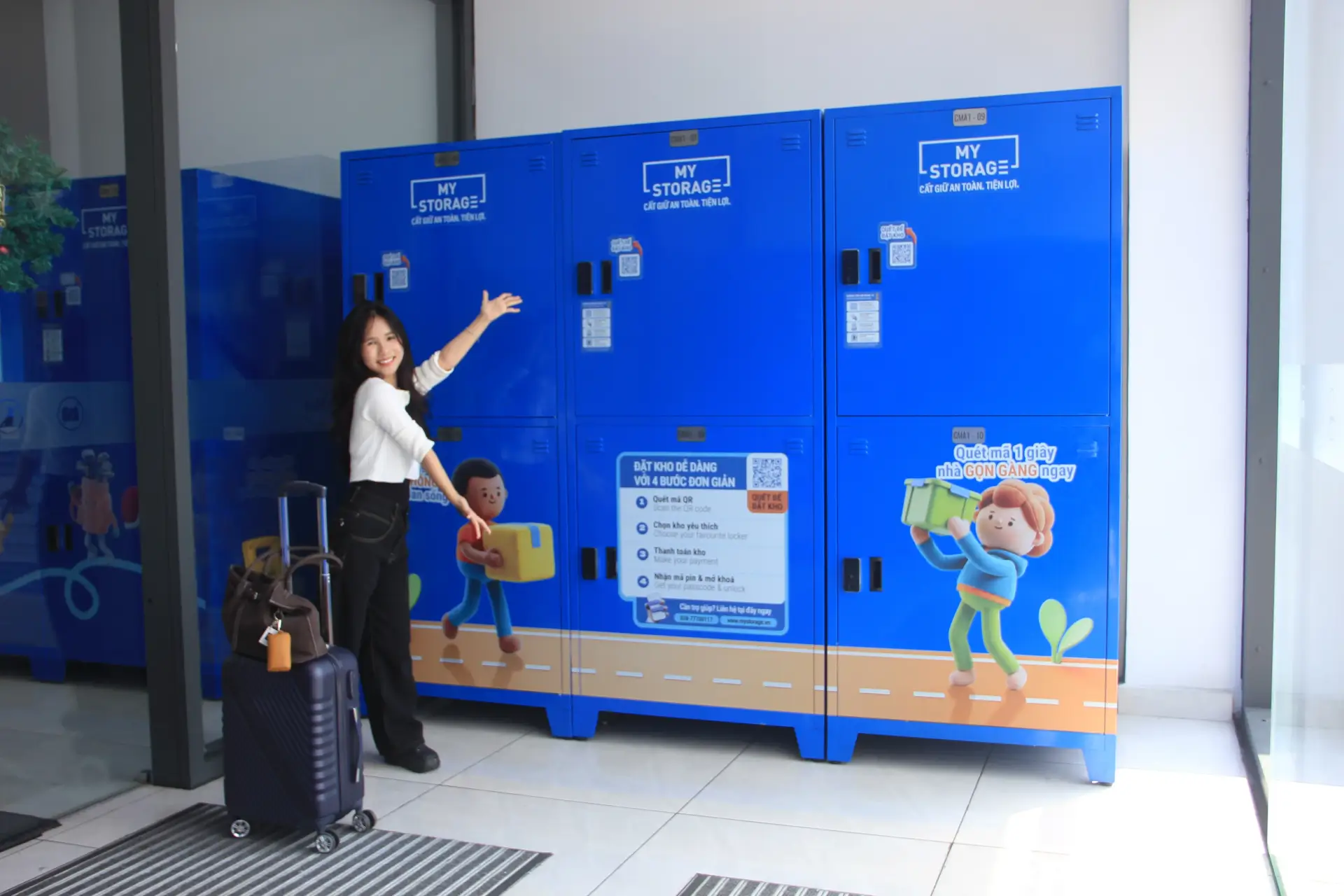
MyStorage lockers are located at several locations in Ho Chi Minh City so that users can deposit and pick up items near where they live, work or travel. Locker locations are concentrated in District 1, District 6, District 7 and City. Thu Duc. Cabinet type, size and usage may vary by facility, so users should check information before arriving. Compare MyStorage locations with your everyday route and check the details of the individual site before travelling there.
|
Area |
Location |
|---|---|
|
District 1 |
Inside Ministop, 79 Tran Khac Chan, Tan Dinh ward |
|
District 6 |
InsideCenter Mall, 1466 Vo Van Kiet, Binh Tien ward |
|
District 7 |
InsideMinistop Tran Trong Cung, Tan Thuan Dong ward |
|
City. Thu Duc |
Q2 Thao Dien, basement parking F5, Thao Dien ward |
|
City. Thu Duc |
Inside Ministop MT Eastmark City, 39A Street 149C, Long Truong Ward |
These locker locations are suitable for storing backpacks, suitcases, handbags, personal items or small boxes. Locker at Ministop Tran Trong Cung, District 7 has flexible storage format by hour, day or month. Choosing a location close to the travel schedule makes sending and picking up items more convenient.
The closest point on a map is not always the easiest to use. Allow for your usual route, somewhere to stop and the times you can collect your belongings.
How to Choose a Locker That Fits Your Needs
The right locker is not the one with the most features, but the one that meets the right items to be stored, the number of users and the ability to operate at the location. Before choosing, determine the time to send items, how to open the locker, who will assist in case of problems and your budget. These factors determine whether users find lockers convenient or not.
|
Demand |
Suggested options |
|---|---|
|
Employees use fixed cabinets every day |
Locker with multiple compartments, key lock, digital lock or RFID |
|
Customers send items within a few hours |
Smart locker, QR or PIN by turn |
|
Gym customers store their gym bags and clothes |
Medium or large compartment, easy to clean material |
|
Tourists check in their luggage |
Large compartment, clear sending and receiving process |
|
Apartments receive parcels |
Locker has a turn-based management mechanism |
|
The event has a large number of visitors |
The cabinet is easy to navigate and has a plan to support peak hours |
Determine the type of item and storage period.List the items you will store regularly, the size of the largest item and the time you need to use the cabinet. Backpacks, laptops or helmets have different requirements than suitcases, cartons or business goods. If sending only for a few hours or days, a convenient location should be prioritized; With long-term needs, additional attention should be paid to durability, ventilation and storage conditions. If your trip revolves around the airport, include travel and collection time in the decision rather than choosing on compartment size alone.
Choose size according to actual item.You should not choose a compartment that is too small, causing items to be squeezed tightly or difficult to remove, but there is also no need to pay extra for a lot of unused space. A 1 CBM locker is usually suitable for personal items and small suitcases, while a 2 CBM locker is more convenient for medium-sized suitcases, sports bags or multiple small boxes. When in doubt, measure the largest item and compare it to the inside size of the compartment.
Choose lock type and access rights.Key lock is suitable for fixed users and the process is simple. Digital locks help limit the need to carry keys, while PIN, QR or RFID are convenient when many people use them in rotation. No matter which type you choose, you need to know clearly what to do when you forget the code, lose the key, run out of battery or the cabinet cannot be opened.
Evaluate cabinet placement and usage experience.Locker should be located near where the user lives, works or travels, and has a path wide enough to put suitcases and boxes in. For offices, schools or events, it is necessary to estimate the number of users during peak hours to avoid lack of compartments or congestion in the opening area. For frequent collections, deciding which warehouse area can reduce travel costs matters alongside the price of the compartment itself.
Check service and storage conditions.Before renting, please read the terms of use, renewal fees, items that cannot be sent, storage responsibilities, and support channels. For documents, electronic devices or items sensitive to temperature and humidity, you should ask clearly about the conditionswarehouse with air conditioningand the environment at the locker location. Do not leave cash, original documents or high-value assets if the terms of service do not allow it. Temperature- or humidity-sensitive items need separate consideration; an ordinary locker should not be assumed to provide the same conditions as air-conditioned storage.
Finally, the best choice is a locker that is large enough for the items to be stored, has a convenient location and clear usage procedures. If needs change over time, prioritize a service that allows flexible resizing or renewal. If arranging drop-off and collection yourself is difficult, compare full-service storage and clarify the support you need before deciding.
Frequently asked questions about lockers
Lockers are often searched for when users need to understand the concept, choose a size or find a suitable place to store items. The answers below explain the most basic points before using or deploying lockers. For each specific location, you should still check the instructions for use, compartment sizes and storage terms at the time of placing the cabinet.
What is a locker?
A locker is a cabinet system with many separate compartments, each compartment usually has a lock for users to store personal items or necessary items.
What are lockers usually used for?
Locker can store backpacks, handbags, laptops, clothes, shoes, helmets, gym equipment, luggage or documents, depending on the size of the locker.
Are lockers safe?
The level of security depends on the type of lock, how to manage access rights, installation location and support procedures in case of problems. Users should read the regulations carefully before sending items and do not leave cash, important documents or high-value assets if the service conditions are unclear.
Should I choose a key lock or an electronic lock?
Key lock is suitable for simple needs and fixed users. Electronic, PIN, QR or RFID locks are suitable when there are multiple users on rotation and need to reduce physical key management.
Can the locker compartment hold suitcases?
Some large compartments can accommodate medium-sized suitcases. With MyStorage locker, 1 CBM compartment is suitable for small suitcases, while 2 CBM compartments are suitable when more space is needed. Users should check the actual size before ordering.
What is smart locker?
Smart locker is a locker that uses technology to manage access to the locker, usually via PIN code, QR, RFID or electronic system instead of just using mechanical locks.
Are lockers suitable for offices?
Yes. Locker helps employees store personal items, backpacks, laptops or changes of clothes, making the work space tidier.
Are lockers suitable for events?
Yes. Locker is suitable for seminars, exhibitions and fairs when guests need to store backpacks, bags or personal items while participating in the program.
Lockers are a flexible storage solution for many needs, from storing personal items during the day to deploying utilities for offices, apartments and events. To choose the right type of cabinet, determine the type of items to be stored, number of users, storage time, space conditions, compartment size and appropriate lock type.
If you need to send items short-term, please refer to ithourly locker serviceto choose the option that suits your schedule.
Related articles
Article
What Is Cold Chain Logistics? Process, Standards and Solutions
Cold chain logistics keeps temperature and humidity within a strict range from origin to consumer. This guide covers the standard temperature bands, the four-step process, GDP and HACCP…
Read article
Article
What Is Cycle Counting? How to Run It Without Stopping Sales
Cycle counting means counting part of your stock on a repeating schedule instead of closing the warehouse for a full count. This guide covers ABC classification, how to schedule counts, a…
Read article
Article
What Is a WMS? Functions, Benefits and How to Choose a Warehouse Management System
A WMS is warehouse management software that digitises the flow of goods from receiving and location assignment to real-time stock control, picking and dispatch. This guide covers its core…
Read article
