
 Tiếng Việt
 한국어
 日本語
Article
Storing Children’s Toys, Strollers And Everyday Items: A Tidy Apartment 2027
On this page
To end the clutter in an apartment with a small child for good, parents should use the toy rotation method, hang the stroller upright, and move bulky items from each stage of the baby’s life into family storage outside the home for long-term keeping.
Raising a small child in an urban apartment in Ho Chi Minh City or Hanoi is a journey full of happiness but also a stressful space crisis. From the day the baby arrives, the family’s living area seems to shrink by half. The living room turns into a play zone strewn with plush toys, Lego pieces and push-along cars; the front door is blocked by a half-folded stroller; the balcony fills with cots, high chairs and plastic baths; and the bedroom is crammed with nappies, formula and newborn clothes that no longer fit but that parents are reluctant to give away while they wait for a second baby.
Prolonged clutter not only spoils the look of the apartment but also creates a dangerous tripping hazard for small children and adds to parents’ tiredness and irritability after stressful working hours. In 2027, with scientific home-organising methods and smart outside-storage options, you can win back a tidy, safe home for your child without paying to move into a bigger apartment. Before looking outside the home, the way to optimise space and storage in a small apartment helps you use the walls, the space under furniture and the corners inside your own home first.
1. The Storage Pressure Of Children’s Belongings
The explosion of childcare equipment and oversized toys is the number-one reason apartment space becomes overloaded.
The Storage Crisis Of Children’s Belongings
A child’s belongings change from month to month, from a rocker and anti-reflux pillow as a newborn to a high chair at 6 months and a walker at 1 year, far faster than an urban apartment can absorb. Add gifts from grandparents and friends and toys with awkward shapes that do not stack, and a home with a small child is overloaded within months. Three main causes:
- The pace of change by month of age: Newborns need a baby rocker, a bottle warmer and an anti-reflux pillow; 6-month-olds need a high chair and a foam mat; 1-year-olds need a walker and a rocking horse; preschoolers need a drawing table, a balance bike and hundreds of educational toys.
- Relatives and parents stockpiling: Grandparents and friends keep giving gifts at the first-month party, birthdays and Children’s Day, and parents tend to keep buying so their child does not fall behind peers.
- Bulky toys that do not stack: Unlike a grown-up’s books or clothes, which fold flat, children’s toys such as dollhouses, race tracks and spring riders have asymmetrical shapes and take over the living-room floor.
Rockers, bouncers and heaters used for only a few months or a season are best moved on when the occasion ends, and seasonal storage is where this group should go once the season passes.
Strollers Taking Over The Apartment Hallway
A stroller is the bulkiest item yet has to sit in the most convenient spot in the home. A folded stroller already takes more than half of an apartment hallway that is only 1.1m to 1.4m wide, mud and dust stick to the wheels after every outing, and adding a travel stroller or a 3-wheel bike for an older child turns the entrance into a mini car park. Three common problems:
- A blocked entrance hall: An apartment hallway is usually only 1.1m to 1.4m wide; even a folded stroller takes more than half the passage, getting in the way of shoes and opening the front door.
- Dirty wheels: After a trip to the park or the supermarket the wheels carry dust, soil and bacteria from the street; bringing the stroller straight in without a dedicated spot dirties the child’s play mat.
- A growing number of vehicles: Many families own a large pram-style stroller for a newborn, a compact travel stroller and a 3-wheel bike for an older child, turning the balcony or the entrance into a mini car park.
A hallway of 1.1m to 1.4m still has room for a floor-to-ceiling shoe cabinet, and the types of home storage cabinets tells you which hold heavy loads and which suit only light items.
Clutter And Your Child’s Safety
Toys scattered on the floor, strollers and boxes raise the risk of tripping when a baby is learning to crawl and walk, and small pieces that fall under the sofa can be picked up and swallowed. A floor taken over by belongings also takes away safe space to run about, and parents who come home to a messy room get irritable more easily. Three main hazards:
- The risk of falls and choking: Babies learning to crawl and walk trip easily on toy pieces scattered over the floor, and small parts dropped under the sofa carry a dangerous choking risk if the child picks them up and swallows them.
- Less room for gross-motor play: When the living-room floor is taken over by boxes and a stroller, a child loses the safe space to run and crawl, which affects natural physical development and balance reflexes.
- Higher stress for parents: Coming home after a tiring day to a scene like a battlefield makes parents prone to irritation and lowers the quality of time spent with their child.
The scene of a battlefield after work is a constant source of parental stress, and the article on tidying and storage that reduces stress explains why visual clutter makes the body find it harder to relax.
2. Principles For Sorting Children’s Toys
Applying space-organising principles drawn from educational psychology clears out belongings thoroughly and keeps order for the long term.
The Toy Rotation Method
Toy rotation means displaying only 6 to 8 toys on a low shelf, putting the rest in labelled boxes and swapping groups every 1 to 2 weeks, which cuts about 70% of what is out on the floor while every toy still feels new to your child. It also helps a child concentrate more deeply on each toy instead of skimming through a heap. Three steps:
- Limit what is on display at once: Instead of pouring all 50 toys out around the house, put out only 6 to 8 varied toys (1 building toy, 1 role-play toy, 1 active toy, 1 book) on a low shelf at your child’s eye level.
- Store most of them in boxes: Divide the remaining toys among clear plastic boxes with labels and keep them closed in a cupboard or move them into a storage unit.
- Rotate regularly every week or two: Every 1 to 2 weeks, take back the old group and bring out a new one; your child will feel as excited as if given brand-new toys and concentrate more deeply on each item.
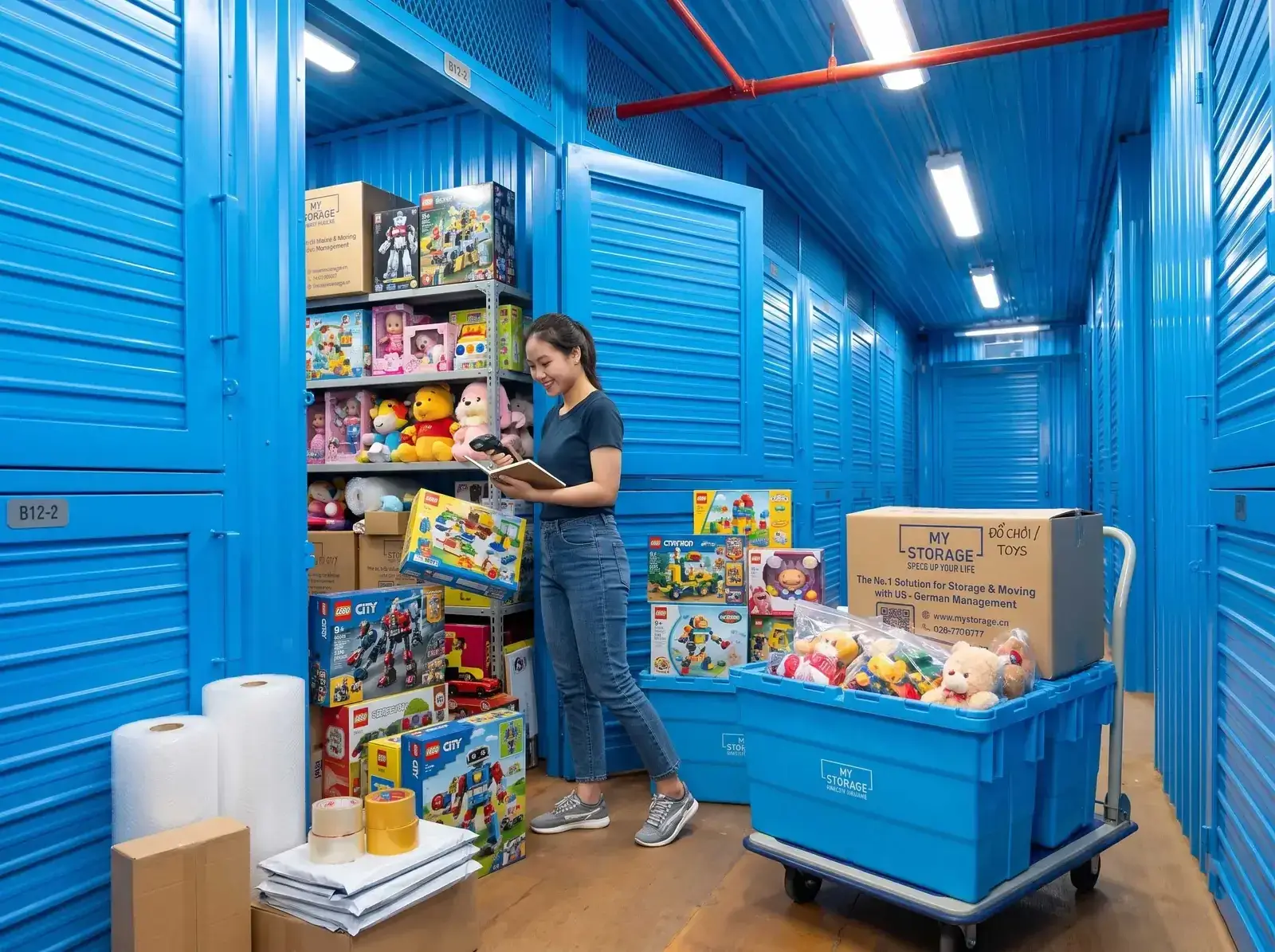
The boxes of toys not yet due for rotation are the first thing to move out of the home, and toy storage for children is the place set aside for exactly this group once the cupboards at home are full.
Sorting Belongings By Age Stage
Splitting your child’s things into three groups by developmental stage, in use now, outgrown and kept for the future, tells you straight away which items must stay within reach and which should move out. Only the in-use group needs to stay at home; the other two take up space while nobody touches them for months. Three groups to define:
- Group 1 - In active use (Active Gear): Matches your child’s current age; place it in the most convenient spot so your child can fetch and put it away every day.
- Group 2 - Outgrown gear: Newborn cots, rockers, round walkers and baby baths that your child has completely passed but which still hold their full value.
- Group 3 - Gear kept for the future (Future Gear): Clothes gifted in advance for 2 years from now, an encyclopaedia set and a two-wheeled bike that cannot be used in the next 6 months.
The outgrown group and the kept-for-the-future group are the two least touched in the home, and family items worth putting into storage lists other things in the same situation to send in one trip.
The One-Touch Toy Tidy-Up Rule
One-touch tidying means your child only has to drop toys into the right open-mouthed basket, so the whole family finishes in about 3 minutes each evening. Dropping complicated lids, giving each group of toys its own basket and accepting that the home is a free play space by day are the three things that keep order in the long run. Three principles:
- Ditch complicated lidded boxes: Young children lack the patience for clasps; use open-mouthed rattan baskets or soft fabric bins so your child just drops toys in.
- One address for each group of items: Make the rule clear: plush toys go in the blue basket, cars in the yellow basket, picture books on the timber shelf; simple labelling helps your child’s brain remember where things go.
- Do not aim for perfect tidiness: Accept that by day the home is your child’s free play space; as long as everything is back in its basket before bedtime, the apartment is clean.
The one-touch habit also belongs to the family of familiar decluttering methods, and popular decluttering and storage methods compares KonMari, the 4-box method and 20/20 so a family can pick what suits it.
Teaching Children To Tidy Their Own Toys
The easiest way to get a child to tidy toys is to turn it into a race to a 3-minute song, combined with a shelf no higher than 80cm so a 2-year-old can fetch and put things away alone. Praising a specific action rather than praising in general helps a child build a sense of responsibility early. Three approaches:
- Set up a tidy-up song: Play a familiar upbeat track of 3 minutes and race together to see who puts more toys in the basket before the song ends.
- Shelves within your child’s reach: A toy shelf should be no higher than 80cm; this lets even a 2-year-old pick the toy they like and put it back without adult help.
- Praise the specific effort: Praising a specific action such as “I’m so happy you put your teddy bear back in its own house” helps your child build a sense of responsibility and tidiness from toddlerhood.
An evening when your child tidies without being chased is also a way to ease stress for the whole family, and tidying and storage that reduces stress explains why being tidy lets the body relax more easily.
3. How To Arrange And Store Toys In An Apartment
Smart storage products and the use of dead space can tidy hundreds of toys in the blink of an eye.
Using Soft Fabric Baskets To Store Toys
Soft fabric bins and natural wicker baskets are the safest, best-looking and most child-friendly way to store toys because they have no sharp edges, are light enough for a child to carry and large enough to hold both plush toys and plastic balls; a basket 40cm across already gathers most of the living-room toys. Beige or light grey tones also hide the bright colours inside. Three reasons:
- Safe because there are no sharp corners: Soft felt bins and woven rattan baskets have no sharp edges, so a child who trips and falls on one is not injured or bruised.
- Large capacity and very light: A wicker basket 40cm in diameter can swallow all the plush toys and plastic balls in the living room; a child can carry it by the handle around the house.
- Blends with the living room: Neutral tones such as beige, light grey and cream hide the bright colours of the toys inside and keep the apartment looking tidy and minimal.
The basket also holds baby clothes that no longer fit, and if you keep them for a later baby, clothing and fabric storage against mould explains how to wash and dry them thoroughly before putting them away.
Placing Toy Shelves At Eye Level
Open step shelves or cube shelves at your child’s eye level are the modern educational way to store toys, with each cube holding only 1 to 2 items so your child can see and fetch things without tipping out a whole chest. A front-facing bookshelf only 10cm deep also sparks your child’s interest in reading. Three principles for placing them:
- The educational display principle (Montessori Shelf): Instead of piling toys into one deep chest where your child has to rummage and breaks things, set each toy on its own airy cube; put only 1 to 2 items in each.
- A front-facing bookshelf: Young children who cannot read yet recognise books by pictures; a shallow 10cm wall ledge showing the full bright covers will spark your child’s love of reading many times over.
- Built-in pull-out drawers in the shelf frame: The bottom cubes can take sliding plastic trays for toys with many small parts such as beads or modelling clay.
A cube shelf is only one of many cabinet types for a home with small children, and the types of home storage cabinets tells you which hold heavy loads and which suit only light items.
Labelling Toy Boxes With Pictures
Using pictures instead of words helps preschool children sort toys correctly on their own: photograph your toys, print them in colour and laminate them onto each basket, and from 18 months a child can match the picture to put the toy car in the car basket. Picture labels also let grandparents, helpers and guests know where things go without asking. Three ways:
- Print colour photos of the toy groups: Photograph the pile of cars, dolls, wooden blocks and balloons, print them in colour, laminate them in soft plastic and stick them on the front of each matching basket.
- Building logical sorting: A child from 18 months old can already observe and compare pictures; your child will happily look for the basket with the car picture to put their car in.
- One system for the whole family: Picture labels let grandparents, the helper or visiting guests know exactly where your child’s things go without asking the owner again.
Using Under-Bed Space For Household Items
The spaces under a bed, under a sofa and along the side of a cot are wasted gaps that can hold wide toys that are hard to put on shelves, such as foam puzzle mats, a big board game, train tracks or large plush toys. A sofa base of 12cm to 15cm, or a side drawer under the bed 60cm deep, is already enough for this group. Three places to use:
- Plastic runners under the sofa: Use the 12cm to 15cm under-sofa gap for wheeled plastic trays; it is perfect for hiding foam puzzle mats, a big board game or a train track.
- Under-bed drawers: A bed with deep side drawers 60cm deep holds all the large plush toys, folded ball-pit tents and your child’s play mattress, away from dust.
- A hanging pocket on the cot or sofa: Hook a multi-pocket fabric organiser on the side of the cot or the arm of the sofa for wet wipes, a thermometer, nappy cream and picture books read before bed.
The space under a bed in a small apartment can add 1.5 m³ to 2 m³ of storage, and storage ideas for a studio apartment under 40m² shows how to use more of the floor-to-ceiling cabinets and wall shelves too.
4. Storage Solutions For Strollers And Cots
Handling bulky equipment with dedicated accessories frees the hallway completely and protects your things from mould.
Hanging The Stroller Behind A Door
Hanging a folded stroller on a pair of rubber-coated U-shaped steel hooks behind the door means it takes only about 25cm of depth and gives the whole entrance floor back for walking and cleaning. The hooks carry 20kg to 30kg, with a shallow plastic tray beneath to catch soil from the wheels. Three details to do:
- High-load metal hooks: Fit a pair of rubber-coated U-shaped steel hooks rated for 20kg to 30kg on the wall or hang them over the top of the door; fold the stroller and hang the handle on the wall.
- Free up the entrance floor: A stroller fixed against the wall takes only 25cm of depth in the air, giving back a clear hallway for walking and cleaning.
- A tray to catch wheel dust below: Put a shallow plastic tray under the hanging stroller to catch all the soil that falls off the wheels after a trip outside and keep the tiles clean.
Cleaning Stroller Mattresses Against Mould
To keep a stroller mattress and a high chair from going mouldy in a climate where humidity often runs above 80%, take the mattress off, wash it with a gentle detergent, dry it fully in the sun and only then put it away, ideally in a vacuum bag with silica gel sachets. The folding joints and wheel axles also need an anti-rust spray before long storage. Three steps:
- Remove all the fabric mattress parts: Wash the stroller mattress, canopy and safety straps with an organic detergent gentle on your baby’s skin; dry them thoroughly in natural sunlight to kill bacteria and mould.
- Seal in vacuum storage bags: For a newborn stroller that your child has outgrown but that you want to keep for a later baby, take the mattress off and put it in a purpose-made vacuum bag with a few silica gel sachets.
- Oil the metal joints: Spray anti-rust solution into the spring folding joints and steel wheel axles before packing for long storage so they do not seize.
The rainy season is when fabric mattresses and safety straps go mouldy fastest, and storing belongings against damp and mould in the rainy season sets out the steps for keeping things dry through weeks of constant high humidity.
Dismantling A Wooden Cot To Store It Compactly
Dismantling a wooden cot into flat slats, bundling them and wrapping them in 3 to 5 layers of PE film cuts the volume by up to 85%; the bundle is only about 15cm to 20cm thick and slips into the gap between the wardrobe and the wall. Put the screws in a zip bag taped firmly to the slats so nothing goes missing when you rebuild it. Three steps:
- Remove each slat and the base board: Use an Allen key to take out all the screws and bolts of the wooden cot; gather the screws and bolts into a small zip bag and tape it firmly to a cot slat so nothing is lost.
- Wrap the surface in PE film: Stack the timber slats into a neat bundle and wrap 3 to 5 layers of PE shrink film around it to prevent paint scratches and guard against termites.
- Use the gap behind the wardrobe: The dismantled cot bundle is only about 15cm to 20cm thick and slides easily and discreetly into the gap between the wardrobe and the wall.
Cot timber stored for a long time in a damp climate warps easily, and storing wooden furniture in the rainy season explains how to damp-proof each type of timber surface before putting it away.
Checklist For Storing Baby Gear
Five bulky groups, strollers, wooden cots, high chairs, electronic toys and newborn clothes, all need cleaning, dismantling or folding and proper packing before long-term storage; electronic toys in particular must have their batteries removed and be kept at below 60% humidity. The table below lists the cleaning requirement, the packing method and the ideal storage place for each group.
| Item Group | Cleaning Requirement | Standard Packing Method | Ideal Storage Place |
|---|---|---|---|
| Baby stroller | Wash the wheels, wash and dry the fabric mattress, oil the axles | Fold, cover with a dust bag or hang on a wall hook | A hook behind the entrance door or family storage |
| Wooden cot | Wipe off dust with a damp cloth, spray timber anti-mould | Take apart each slat, put the screws in a zip bag, wrap in PE film | Upright in a gap beside a cabinet or in a dedicated storage unit |
| Plastic high chair | Wash off grease and food, take off the tray and fabric straps | Take off the steel legs, nest the plastic trays inside each other | Top shelf of a floor-to-ceiling cabinet or a storage unit |
| Electronic toys | Remove all the batteries from the device | Wrap the screen in bubble wrap against shock, put in a carton | A dry, ventilated place with humidity below 60% |
| Newborn clothes | Wash with antibacterial fabric softener, dry completely | Sort by month of age, vacuum into compression bags | A fabric box under the bed or MyStorage family storage |
Newborn clothes sorted by month are the group most prone to mould in the table, and clothing and fabric storage against mould explains how to wash, dry and bag them before storing.
5. Extending Your Space With Family Storage
When the apartment can no longer absorb the belongings built up through your child’s first years, renting family storage is the most sensible answer.
The Paradox Of Keeping Gear For A Second Baby
Many families live cramped for 3 to 5 years just to keep gear for the next child, while a set of stroller, cot, double breast pump, car seat and steriliser costs 25,000,000 to 50,000,000 VND (≈ US$971 to US$1,942) new, so selling it cheaply and buying again is a waste. Keeping it in a 65m² apartment takes 4m² to 6m² of floor and it easily spoils from damp. Three costs to bear:
- The value of children’s assets is large: A combo of a premium stroller, an oak cot, a double electric breast pump, a car seat and a bottle steriliser costs 25,000,000 to 50,000,000 VND (≈ US$971 to US$1,942) new; selling it off cheaply and buying it again later is a heavy financial waste.
- The cost of the living space you give up: Keeping all this gear in a 65m² apartment takes 4m² to 6m² of bedroom or balcony floor; at a Ho Chi Minh City rent of 15,000,000 VND (≈ US$583) a month in 2027, you are paying about 900,000 to 1,400,000 VND (≈ US$35 to US$54) a month just to store things you are not using.
- Risk of damage from poor storage: Gear kept on a balcony or under the bed in a hot, humid climate easily suffers mould eating the stroller fabric, rats gnawing the breast-pump cable and termites ruining the wooden cot.
Compared with 900,000 to 1,400,000 VND (≈ US$35 to US$54) in rent given to space for storing things, mini storage rental prices by volume start at 873,000 VND (≈ US$34) a month for a unit of 1 m³ to 3 m³.
When Should A Family Rent Outside Storage?
A family should rent outside family storage when expecting another baby and wanting to keep the first baby’s things, when an apartment under 70m² has no room left to breathe, or when seasonal and sports items need a safe place. What all three cases share is that rarely used things are taking the place of everyday items. Three situations:
- A family preparing for another baby: You want to keep your first baby’s cot, stroller and expensive toys for a second baby 2 to 4 years later but the home has no room to breathe.
- An apartment under 70m²: You want the living room to stay roomy for guests and your child to have space to crawl without things in the way.
- Sports gear and seasonal items: You need a safe place for floor fans, winter quilts, travel suitcases, a Christmas tree and dozens of boxes of family keepsakes.
Heaters, quilts and suitcases used only seasonally are the easiest group to send away because you take them out on a fixed schedule, and seasonal storage shows how to rotate them through the year.
Balance bikes, 3-wheel bikes and sports gear take the most room once your child is bigger, and storing sports equipment neatly tells you which to stand, hang or lay flat.
Renovation also forces your child’s room to be cleared, and storing belongings during a home renovation sets out which groups need sealing and which should leave the house altogether.
Family Storage Price List 2027
Renting a family storage unit in Ho Chi Minh City in 2027 has a reference price of 873,000 to 1,563,000 VND (≈ US$34 to US$61) a month for a Mini Box unit of 1 m³ to 3 m³ (1 m³ holds about 8 to 10 medium cartons), rising with unit volume. The 12-month plan is 15% cheaper and prices exclude VAT. The table below gives the rent of each unit type.
| Unit Type | Equivalent Volume | Real Capacity For Children’s And Family Items | Reference Price (VND/Month) |
|---|---|---|---|
| Mini Box | 1 m³ to 3 m³ | Holds 8 to 25 cartons, for example 1 folded stroller, 1 high chair, 2 large suitcases and 10 boxes of toys | 873,000 to 1,563,000 VND (≈ US$34 to US$61) |
| Standard S | 5 m³ to 7 m³ | Holds 40 to 70 boxes, for example a whole dismantled wooden cot, 2 strollers, a child’s bike, a heater and 30 boxes | 1,796,000 to 2,886,000 VND (≈ US$70 to US$112) |
| Family M | From 10 m³ | Holds 80 to 150 boxes, for example all of a child’s room furniture, mattresses and household equipment during a renovation | 3,533,000 to 3,905,000 VND (≈ US$137 to US$152) |
| Air conditioning 24/7 | By unit volume rented | Held at 20°C - 24°C continuously (limits mould in stroller mattresses and fabric) | About 30% - 40% above the standard unit |
The table above gives 2027 reference prices of MyStorage family storage in Ho Chi Minh City for the flexible monthly plan, excluding VAT; the 12-month plan is 15% cheaper and 1 m³ holds about 8 to 10 medium cartons. The actual cost changes with unit size, location and contract length. VND is the billing currency and converted figures move with the exchange rate. The price per cubic metre falls as units get larger, so when comparing mini storage rental prices by volume, include whatever you expect to add for your second baby.
For the same pile of belongings, charging by cubic metre or by square metre produces a different invoice, and storage priced by m³ versus m² puts both on the same basis.
MyStorage Family Storage For Your Baby’s Things
MyStorage family storage rents private units by the month from 1 m³ so parents can move the stroller, cot, toys not yet due for rotation and gear kept for a second baby out of the apartment while keeping everything the family owns. Units have air conditioning 24/7, CCTV, a personal PIN and 24/7 access.
Keeping an apartment tidy does not mean parents have to give up things tied to each of their child’s first steps. Choosing professional family storage outside the home is a sensible, economical way to extend your living space, giving your child room to play freely while the family’s belongings are kept intact.
MyStorage family storage in Ho Chi Minh City rents private self-storage units by the month. Each unit gives you:
- Air conditioning 24/7: The unit controls humidity and temperature around the clock, keeping the stroller, wooden cot, electronic toys and suitcases away from dust and mould.
- Multi-layer CCTV: Cameras cover the aisles and the facility is monitored continuously.
- A personal PIN: You hold your own code, the unit has its own lock, and nobody else can open it.
- 24/7 access: Self-storage tenants collect their things on their own schedule, with no need to book a staff member.
- Units from 1 m³: Start small and scale up as your child moves through each stage, paying only for the volume you actually use.
- Free transport: MyStorage collects and delivers to your door, so busy parents do not have to haul strollers, cots and boxes of toys themselves.
- Workspace at 375 Võ Nguyên Giáp: This site has a workspace for startups and online sellers, so you can store stock and pack orders on the spot.
Prices by unit size are set out in personal mini storage rental, and you can work out your own cost with the tool below.
6. Frequently Asked Questions About Storing Toys And Children’s Things
Fifteen practical answers on arranging and storing toys, strollers and children’s things for a tidy apartment.
How often should you tidy your child’s toys?
The ideal rhythm is a quick 3-minute tidy with your child each evening and a toy rotation every 2 weeks. A quick tidy before bedtime keeps the apartment in order by morning, while rotating (putting away the old group and bringing out the group from storage) keeps your child from getting bored, trains deep concentration and stops toys spreading across the floor.
What is the toy rotation method?
Toy rotation means putting out only 6 to 8 toys on a low shelf and storing the rest in sealed storage to swap on a schedule. It rests on the Montessori idea that faced with too many choices a small child gets overloaded, plays with each item for seconds and throws things around. With a modest number of toys, children use their imagination, value each one and tidy up on their own.
Where should you keep a baby stroller?
The best spot in an apartment is folded and hung on a U-shaped wall hook behind the front door or hidden in a built-in shoe cabinet. Hanging the stroller frees hallway floor and removes an obstacle at the door. If the apartment has a floor-to-ceiling shoe cabinet, you can design a vertical compartment without shelves about 1m high to push the stroller straight in and close the door, keeping it clean and separating wheel dirt.
What should you do with your child’s old toys?
Old toys should go into three groups: give to relatives or charity, sell in parents’ groups, and put into storage. Good plastic toys your child is bored of can be cleaned and donated to a children’s home or sold within the apartment residents’ group. Expensive building sets or keepsake toys you want to keep for a later baby go into vacuum zip bags, and family items worth putting into storage lists other things to send in the same trip.
How do you teach a child to tidy toys by themselves?
The secret is to turn tidying into a race to music, using open-mouthed baskets and shelves at your child’s eye level. Play a lively song and race to see who puts things away faster before it ends. Stick pictures of a car or a doll on each basket so a 2-year-old knows what goes where. Do not shout or turn tidying into a punishment, which plants a dislike of tidiness in a child’s mind.
Where do you keep a wooden cot you are not using?
An unused wooden cot should be taken apart slat by slat, the screws put in a zip bag taped to the frame, then slid behind the wardrobe or sent to outside storage. An assembled cot takes up to 1.2 cubic metres of bedroom, but taken apart into flat panels it is only about 15cm thick. If the wardrobe gap is full, an air-conditioned family storage unit keeps the timber from warping, going mouldy or being eaten by termites over the years.
How do you protect a stroller from mould?
To stop a stroller mattress, high chair and plush toys going mouldy, wash them, dry them completely and seal them in a vacuum bag with a desiccant sachet. Tropical humidity in an apartment during the rainy season easily breeds black mould and house-dust mites on felt fabric, causing respiratory allergies in small children. Squeezing the air out of the bag isolates moisture, and the steps for storing belongings against damp and mould in the rainy season keep the mattress clean when you take it out again.
What kind of toy shelf should you buy?
Choose a versatile cube shelf under 80cm high, combined with pastel sliding plastic trays and a front-facing bookshelf. A cube shelf of 2 or 3 tiers lets your child reach every cube without fear of it tipping over. Its edges must be smoothly rounded and engineered timber should meet a formaldehyde-free safety standard to protect a small child’s breathing.
Should you keep gear for a second baby?
Yes, if it is expensive gear still in good condition, such as a stroller, cot or car seat, but it must be kept somewhere dry. Buying all the newborn gear again for a second baby can cost 25,000,000 to 50,000,000 VND (≈ US$971 to US$1,942), so keeping the old gear saves a lot. Instead of piling it on the balcony to dirty the home, you can move it into MyStorage family storage from 873,000 VND (≈ US$34) a month to keep its quality.
Where should you keep a child’s shoes?
Keep your child’s shoes in a multi-pocket fabric organiser behind the door or in a low pull-out shoe shelf within reach. Children grow fast and own many kinds, such as first walkers, sandals, rain boots and sports shoes. A fabric organiser behind the front door uses vertical wall, with a pocket for each pair that keeps shoes in shape and trains your child to put their own shoes on before going out.
How do you keep nappy and formula items tidy?
The tidiest answer is a 3-tier rolling spa trolley that gathers nappies, wipes and bottles in one place. The metal 3-tier cart rolls easily from the bedroom to the living room or bathroom depending on where you change your baby. The top tier holds nappies and wipes, the middle tier nappy cream, massage oil and cotton buds, and the bottom tier muslin cloths and clean clothes. When not in use, push the cart into the corner behind the door and the room is tidy at once.
Can you raise a small child in a studio apartment?
A studio can raise a small child through the first 1 to 2 years if parents pare down belongings and use multi-purpose furniture. Choose a hydraulic lift bed that hides things underneath, a cot attached beside the parents’ bed and a wall-mounted folding table. Avoid bulky gear such as round walkers or slides indoors. Out-of-season toys and a spare stroller should go to a personal storage unit outside, and storage ideas for a studio apartment under 40m² suggests more ways to use space under the bed and floor-to-ceiling cabinets.
Is renting outside storage expensive?
Renting family storage is much cheaper than moving to a bigger apartment, with a Mini Box unit at a reference price from 873,000 VND (≈ US$34) a month. Paying an extra 3,000,000 to 5,000,000 VND (≈ US$117 to US$194) a month to move to a 2-bedroom apartment just to have more room for things costs far more than paying 873,000 to 1,563,000 VND (≈ US$34 to US$61) for an air-conditioned storage unit with CCTV outside, a much more efficient economic choice.
Can a mini storage unit hold a cot?
Yes, a Mini Box unit of 1 m³ to 3 m³ can hold a dismantled wooden cot, 2 strollers and dozens of boxes of toys. The unit lets you stand the cot slats upright and stack cartons of toys high to use the unit’s height. You still have room for the parents’ travel suitcases, a winter heater and other family items you rarely touch.
Why choose MyStorage family storage?
MyStorage rents private self-storage units with air conditioning 24/7, multi-layer CCTV, a personal PIN and free transport in Ho Chi Minh City. Units hold a temperature of 20°C to 24°C and stable humidity, helping limit mould that spoils stroller mattresses, wooden cots and your baby’s electronic toys. Access on your own schedule and door-to-door collection ease the load on busy parents, and household goods storage shows which groups of items to send first.
Related articles
Article
Storage Ideas For A Studio Apartment Under 40m²: Making The Most Of Your Space 2027
To make the most of the storage space in a studio apartment under 40m², use the vertical axis with floor-to-ceiling wardrobes, choose multi-purpose furniture and move rarely used belongings…
Read article
Article
What Is A Shared Warehouse? Structure, Process And How It Works
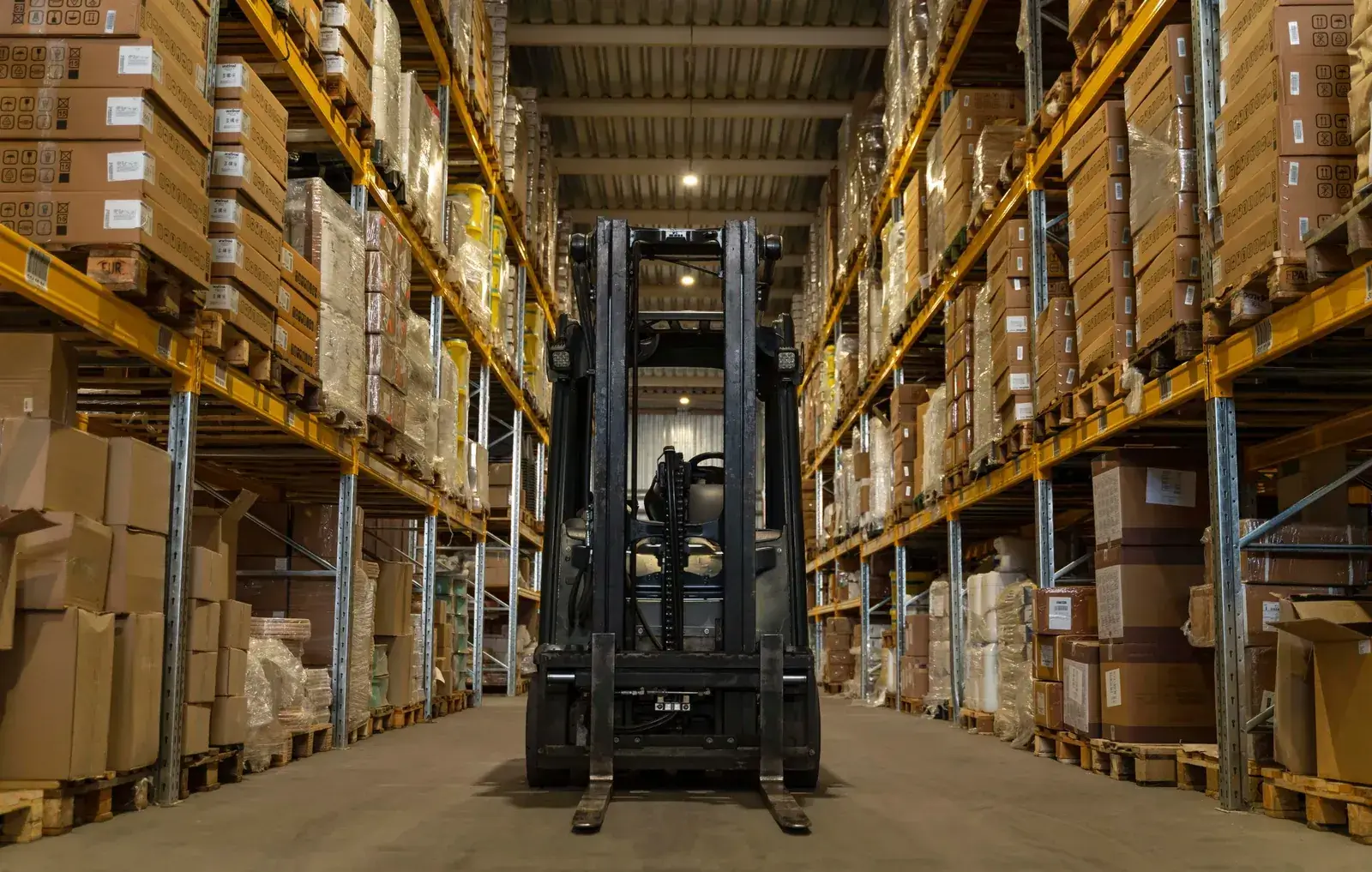
A shared warehouse is a storage model in which several businesses share the space, handling equipment and operating staff of one standard facility, which optimises cost compared with…
Read article

Article
Between Check-Out And Your Flight: What To Do In Saigon With Luggage
Between a noon hotel check-out and an evening flight, a 24/7 smart locker, an air-conditioned self-storage unit or free door-to-door delivery gets the bags off your hands so you can tour…
Read article
