
 Tiếng Việt
 한국어
 日本語
Article
Do Packing Cubes Really Make A Suitcase Tidier? How To Use Them And Store Luggage 2027

On this page
Packing cubes are heavily marketed as the accessory that frees up space in your suitcase. But do they really make a case tidier and save room, or do they just add weight? This article looks at how they work, compares compression cubes with ordinary ones, sets out a sensible packing method, and covers luggage and suitcase storage in Ho Chi Minh City in 2027.
1. What Packing Cubes Actually Are
Packing cubes are zipped fabric boxes that sort and shape clothing inside a suitcase; they organise what you pack rather than directly cutting the weight of your luggage. When clothes go into a case loose, the gaps between layers are wasted. Packing cubes turn soft items into square blocks that stack and pad neatly, stay easy to find and shift far less on a long journey.
What Is A Travel Packing Cube?
A travel packing cube is a soft fabric box with a zip running around it, designed to split the inside of a suitcase into several independent compartments. They first appeared among international backpackers and have since become a packing standard for business travellers and holidaymakers alike in 2027. Instead of unpacking a whole case to find one T-shirt, you simply pull out the cube holding it.
Ultralight materials such as ripstop nylon, water-resistant coated polyester and breathable mesh mean cubes add little weight. A set usually has 3 to 6 sizes, from extra-large for winter coats, through medium for jeans and shirts, down to small ones for underwear, socks and personal electronics.
How Packing Cubes Are Built
A standard packing cube is made up of a soft shaping frame, a durable two-way zip, a carry handle and a breathable mesh panel on top. The mesh does two jobs: it lets moisture out of the fabric naturally, and it lets you see what is inside without unzipping every cube.
The piping around the edges is usually reinforced so the box keeps its shape even when it is not full. The zip is the critical part; premium ranges use YKK zips that resist fabric jams and take the strain when thick clothing is pressed into the corners.
The zip is also the first thing to fail on fabric bags in general, so store them somewhere dry; the principle in storing wooden furniture through the rainy season is the same, namely dry the surface before sealing anything away.
Types Of Travel Luggage Bags
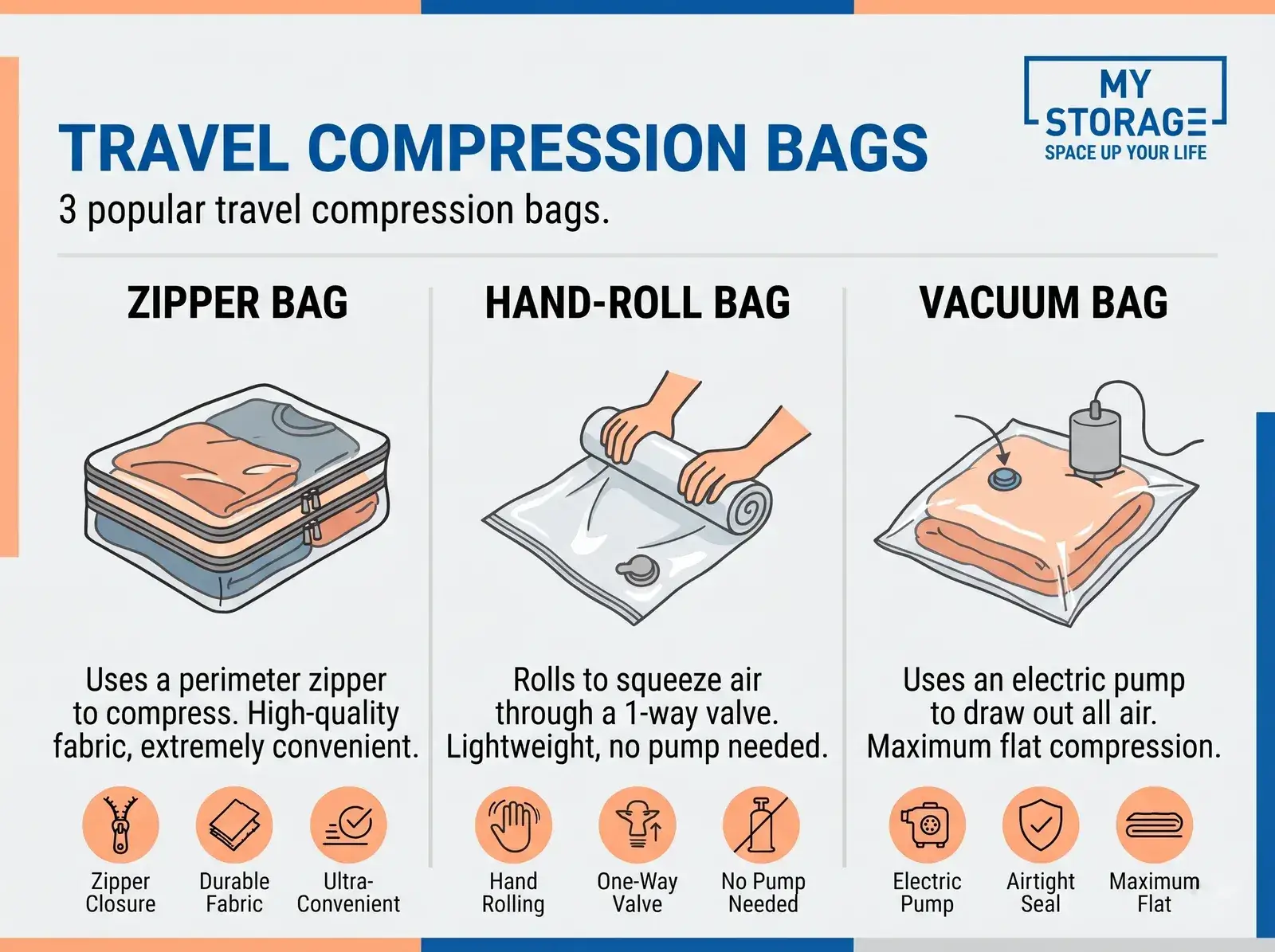
The market splits travel bags into three main groups: standard fabric cubes, two-zip mechanical compression cubes and vacuum bags. Each group has its own material structure and purpose depending on the trip and the kind of clothing you carry.
Standard fabric cubes focus on order, separating clean from dirty clothes and keeping garments flat. Compression cubes add a secondary zip that squeezes out excess air. Vacuum bags use a one-way valve or a hand pump and suit bulky warm items such as down jackets, though they crease fabric badly.
This grouping is also where smart ways to pack clothes in a suitcase begins: pick the type of bag first, then choose whether to roll or fold each garment.
2. Do Packing Cubes Really Make A Suitcase Tidier?
Packing cubes genuinely make a case tidier and better organised, both visually and practically, but only purpose-made compression cubes actually reduce the physical volume of a pile of clothes. Many people assume that simply putting clothes into fabric cubes doubles what a case holds. In reality, volume and mass are conserved; an ordinary cube only gathers loose folds into a fixed block.
How Cubes Affect Suitcase Volume
An ordinary packing cube does not shrink the fabric itself, but it does remove the dead space inside the case. Packed loose, the gaps between folded edges, the rounded corners of the base and the channel around the retractable handle all sit empty. Square blocks fill those cubic centimetres properly.
Compression cubes with a secondary zip are different: the air trapped between fluffy fibres such as wool, fleece and down is squeezed out. Measurements in 2027 show the same quantity of jumpers can lose 25% to 40% of its volume, freeing real space for souvenirs or gifts.
Managing Your Belongings While Travelling
The biggest benefit of packing cubes is orderly control of your belongings, which shortens packing time and takes the stress out of clearing a hotel room. You no longer turn the whole case upside down to find a phone charger or a swimsuit. Each category sits in its own box, marked by a label or a colour.
And if airport security asks you to open your case, you avoid having underwear or personal items spread out in front of a queue. Officers can check cube by cube without wrecking the structure you spent an hour building.
Splitting items into blocks also makes it easier to leave bags somewhere before check-in, for instance when using a parcel and delivery locker at a convenient point in the city.
The Weight Problem When Using Cubes
The downside of a very tidy case is the risk of going over the checked baggage allowance. When compression leaves space free, travellers tend to add things they do not need. The cube set itself adds 200 to 500 grams to the total weight.
So keep two ideas apart: saving volume and saving weight. Compression does not make clothing a gram lighter; it turns a fluffy pile into a denser, heavier block. Always weigh the case on a handheld scale before leaving for the airport to avoid expensive excess charges.
How Effective Are Cubes In Practice?
Taken together, travellers’ experience suggests packing cubes are about 90% effective at organisation and about 30% effective at saving real volume. For a short 2 to 3 day trip with light summer clothes, an expensive compression set is not really necessary.
For trips of 7 days or more, winter travel in cold countries, or itineraries that move city to city, cubes are hard to replace. Packing in minutes and keeping clean clothes apart from worn ones is worth far more than the price, especially on multi-leg journeys such as storing luggage during a Saigon layover, where you open and close the case several times a day.
3. Compression Cubes Versus Ordinary Packing Cubes
The core difference is the compression zip and what it can do for thick fabrics. Knowing how each type behaves helps you buy the right set for your budget and for the kind of trip you actually take in 2027.
Features Of Dedicated Compression Cubes
A dedicated compression cube has a double zip system: one to close the main opening and a second compression zip that runs around the body. Once the cube is full and the main zip closed, you press down and pull the second zip, which draws the two faces together and forces excess air out through the seams or a vent.
The fabric has to resist high tearing forces, typically 210D Oxford nylon or ripstop with double reinforced seams. The compression zip needs large, strong teeth so it does not burst under constant pressure during a flight.
Advantages Of Ordinary Fabric Cubes
Ordinary fabric cubes win on weight, price, airflow through the mesh and long zip life. With no mechanical compression to withstand, standard cubes rarely suffer broken zips or split seams. The wide mesh keeps clothing ventilated, which matters in a hot, humid climate.
They also protect fabric structure better. Expensive items such as silk dresses, fine shirts and light blazers do not come out with the hard creases that heavy compression leaves. At home the same principle of airflow and shape holds in clothing and textile storage that prevents mould.
Detailed Comparison Of Bag Types
The three types differ in mechanism, volume reduction, creasing risk and weight, so each suits a different kind of trip. The table below puts six technical criteria side by side so you can narrow the choice before comparing prices.
| Criterion | Standard Fabric Packing Cubes | Two-Zip Compression Cubes | Valve Vacuum Bags |
|---|---|---|---|
| Mechanism | Single standard zip | Double zip, mechanical compression around the body | One-way valve forcing air out |
| Volume reduction | 0% to 10% (shape only) | 20% to 40% (air squeezed out) | 50% to 70% (air drawn out) |
| Creasing risk | Low, folds stay flat | Moderate on fluffy cotton | Very high, deep creases hard to iron |
| Accessory weight | Very light (150g to 250g a set) | Moderate (300g to 500g a set) | Heavier, plastic film and pump |
| Durability | Very high, seams rarely fail | High with a good zip | Film tears and valves leak easily |
| Best use | Summer clothes, shirts, underwear | Jumpers, hoodies, winter travel | Bedding, oversized down jackets |
When Should You Choose Compression Cubes?
Choose compression when travelling in winter, carrying jumpers and fleeces, or when you are allowed only one piece of cabin baggage. On low-cost carriers with strict cabin dimensions, compression is what lets you fit bulky warm clothes without paying a gate fee.
If instead you fly with a comfortable 23kg to 32kg checked allowance, traditional thin fabric cubes are the smarter buy. They split clothes by day and keep evening wear ready to use the moment you open the case. Thick coats and cold-weather clothes used only a few weeks a year are better off in seasonal storage than taking permanent space in a wardrobe.
4. How To Pack A Suitcase With Packing Cubes
Technique decides about 70% of the space you actually save with packing cubes. However expensive the set, if you ball clothes up and stuff them in, the case will still bulge and look chaotic. What follows is a four-step routine used by people who travel often.
Rolling Clothes Into Packing Cubes
The Ranger Roll is the most effective way to maximise what each cube holds. Instead of folding flat, smooth the fabric, fold both sides inward and roll tightly from collar to hem.
This gives three advantages: it removes the tube-shaped gaps inside the fabric, turns each garment into a firm cylinder that sits against the next like a row of logs, and avoids the horizontal creases that show when you wear the item. Laid flat or stood upright in a cube, those rolls let you see everything at a glance.
Smart Folding For Travel Clothes
For trousers, formal shirts or structured jackets, interleaved flat folding protects the lines of the garment best. Use a large cube and put a thin board or a soft document folder in the middle as a folding guide.
Fold each shirt to the width of the cube and stack them gently. Avoid pressing hard on stiff collars. Put this cube in the top layer of the case so the weight of the others does not flatten the shape in the hold.
Sorting Items Into Separate Cubes
The golden rule of suitcase organisation is to sort by function or by day. Rather than mixing everything into one large cube, split your things into six clear groups:
- Large cube 1: thick coats, jumpers or outdoor trousers.
- Medium cube 2: T-shirts, short-sleeved shirts and daytime shorts.
- Medium cube 3: sleepwear, swimwear and a quick-dry towel.
- Small cube 4: underwear, socks, gloves and scarves rolled tight.
- Small cube 5: charging cables, a power bank, adapters and travel plugs.
- Separate cube 6: a waterproof nylon bag for dirty laundry so odours do not reach clean clothes.
The same habit of grouping by function is how sports equipment storage works when you travel with running shoes, swim gear or a badminton racket.
Optimising Space Inside The Suitcase
Fit the cubes into the case like Tetris so every hollow around the frame is used. The base has raised metal handle rails that form channels; fill those with rolled socks or a long accessory pouch before placing larger cubes on top.
Put the heaviest, largest compression cubes at the bottom near the wheels. Keeping the centre of gravity low stops the case tipping over on uneven pavements. Lighter cubes and things you need quickly, such as toiletries or a light jacket, go at the top near the handle.
The same logic of dividing space and using height applies at home, where storage that optimises a small apartment helps you pack a wardrobe the way you pack a case, and storage ideas for a studio apartment under 40m² goes further into under-bed space and floor-to-ceiling cabinets.
5. Storing Suitcases After The Trip
Once you are home, finding space for bulky cases and a pile of travel accessories in a small apartment is a familiar headache. A 28 or 30 inch case can take over a corner of the bedroom or fill the bottom of a wardrobe. Moving them out of the home frees usable floor space in 2027.
Bulky Suitcases Taking Up Floor Space
An empty suitcase occupies a large fixed volume yet is used only a handful of days a year. A family of four typically owns 3 to 5 cases. Left on the floor between trips they look untidy, collect dust and make an ideal home for insects and rodents.
Pushed into a wardrobe, they take space that daily clothes need. In Vietnam’s humid weather, leather or fabric cases left in a dark corner easily grow mould, yellow and smell, which shortens the life of an expensive shell. The damp-proofing steps in storing belongings through the rainy season apply directly to cases and backpacks left for months.
Storing Travel Bags In Self-Storage
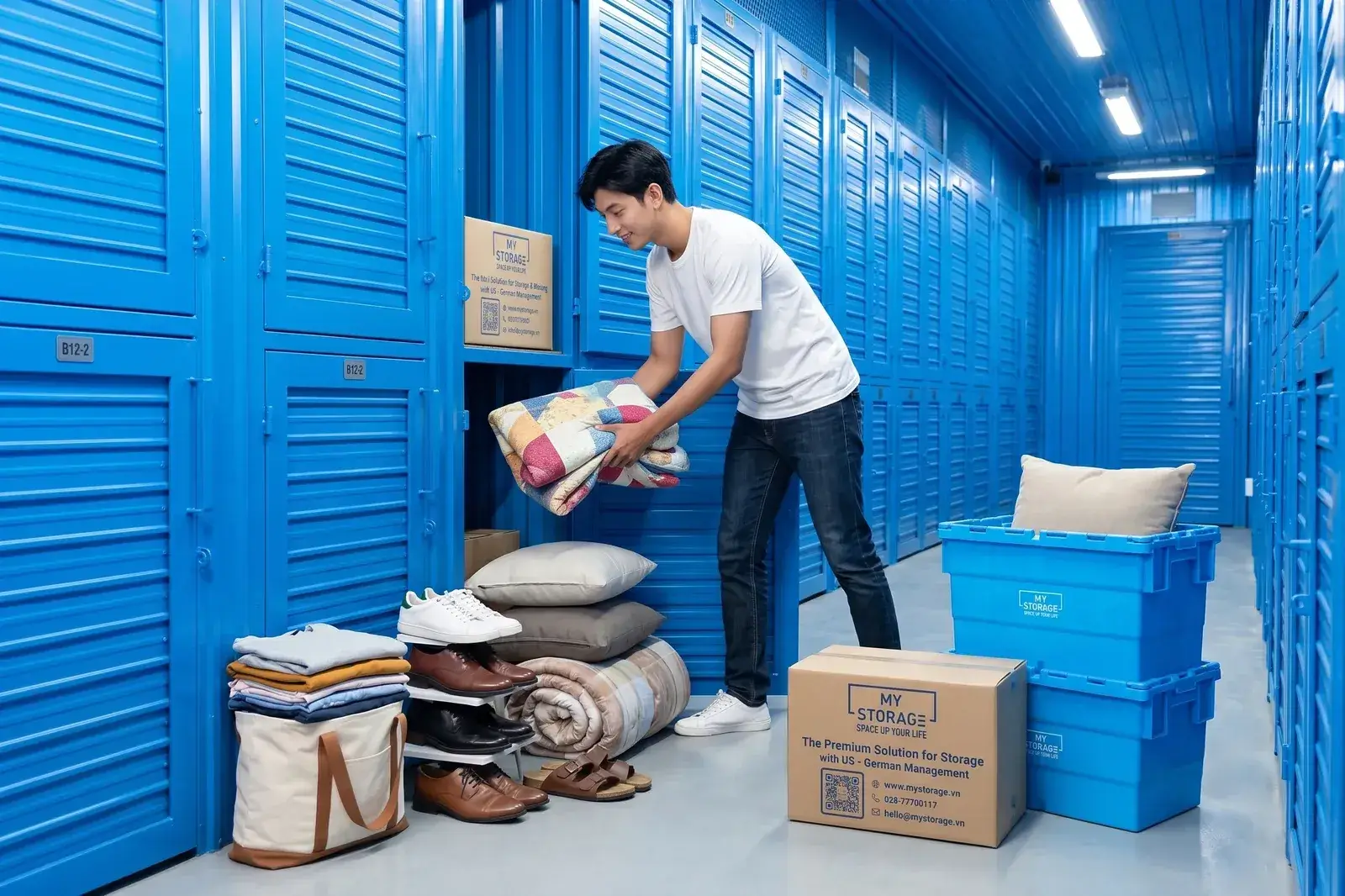
Keeping cases and camping gear in a MyStorage self-storage unit frees the living space in your apartment entirely. Instead of turning a bedroom into a luggage store, you can move empty cases, tents, sleeping bags and the whole packing cube set into a personal mini storage unit with air conditioning controlling temperature and humidity 24/7.
MyStorage household goods and luggage storage for families comes in several sizes, from a locker for personal items to private units from 1 m³. Each customer holds their own access code, comes and goes flexibly, and the facility is covered by multi-layer CCTV. Free transport brings a vehicle to your door and returns the items when you plan the next trip.
For students or people on long assignments, storage for students and people studying abroad lists the groups of items worth leaving behind for a term rather than flying them back and forth.
Luggage Storage Prices In 2027
The fee depends on the volume of the unit and the contract length, so a single cabin case and a family’s camping kit cost very different amounts. The table converts each package into what it actually holds; prices are 2027 references excluding VAT, and the 12-month plan is 15% cheaper.
| Storage Package | Volume And What It Holds | 2027 Reference Price | Who It Suits |
|---|---|---|---|
| Ministop smart locker | Holds 1 cabin case (20 inch) or a large travel backpack | Charged by the hour or by the day | Travellers leaving bags for a few hours |
| Mini Box unit, 1 m³ to 3 m³ | Holds 2 to 5 large 28 inch cases plus camping gear | 873,000 to 1,563,000 VND (≈ US$34 to US$61) a month | Single people and small studio apartments |
| Standard S unit, 5 m³ to 7 m³ | Holds 8 to 12 large cases, a tent, golf clubs and a folding bike | 1,796,000 to 2,886,000 VND (≈ US$70 to US$112) a month | Small families storing all their luggage and toys |
| Family unit from 10 m³ | Holds the whole family’s luggage, furniture in transit and a spare mattress | 3,533,000 to 3,905,000 VND (≈ US$137 to US$152) a month | Families renovating or with a lot of large luggage |
| Free door-to-door transport | Collection and delivery at your door by appointment | Free under each rental package’s policy | Busy customers without a vehicle for bulky cases |
These are 2027 reference prices for the flexible monthly plan, excluding VAT; 1 m³ holds about 8 to 10 medium cartons. If you are weighing pricing by volume against pricing by floor area, storage priced by m³ versus m² puts both on the same basis, and how mini storage prices are calculated breaks down each component of the rate.
Storing Suitcases And Travel Gear With MyStorage
MyStorage rents private self-storage units by the month from 1 m³ in Ho Chi Minh City, enough for empty cases, a tent and the family’s packing cube sets. Each unit gives you:
- Air conditioning 24/7: temperature and humidity controlled continuously, limiting mould on leather cases and winter clothes.
- CCTV: multi-layer cameras covering the aisles and the storage area.
- A personal PIN: you hold your own code, the unit has its own lock and nobody else can open it.
- 24/7 access: tenants collect their things on their own schedule, with no need to book a staff member.
- Units from 1 m³: start small and expand as your belongings grow, paying only for the volume you use.
- Free transport: MyStorage collects and delivers to your door, so you never haul bulky cases yourself.
- Workspace at 375 Võ Nguyên Giáp: this site has a workspace for startups and online sellers, so you can store goods and work on the spot.
Your apartment then holds only what you use day to day, while the travel luggage waits in the unit until the next trip.
Leaving Luggage At A Smart Locker
A 24/7 Ministop smart locker is the light option for the gap between hotel checkout and a late flight. If you check out at noon but fly at midnight, you do not have to drag a heavy case through every café and shopping centre.
Book through the app and leave the case in a smart locker at a Ministop store in Ho Chi Minh City. The door opens with a contactless QR code, cameras watch the bank of lockers and air conditioning runs continuously, so you are free to explore Saigon street food. How to plan that gap is set out in storing luggage between checkout and your flight, while luggage storage points near Tan Son Nhat lists drop-off spots on the way to the airport.
6. Frequently Asked Questions About Packing Cubes
Fifteen practical answers on choosing, using and storing packing cubes, and on leaving your luggage once the trip is over.
Do Packing Cubes Reduce Suitcase Weight?
No. Packing cubes do not reduce the real weight of a case and in fact add 200g to 500g for the fabric itself. Many people assume a case is lighter because everything looks so neat, but clothes rolled tightly inside keep exactly the same mass. If you use the saved space to add more garments, you will easily go over your airline’s baggage allowance.
Should You Roll Or Fold Into Packing Cubes?
Rolling beats flat folding for everyday clothes in packing cubes. Rolling pushes out the air between layers, lets you fit more into the same area and avoids the hard creases that show on jersey fabric. Keep flat folding for formal shirts, suit trousers and evening dresses that need to hold their shape.
Compression Cubes Or Vacuum Bags?
Compression cubes use a secondary zip to squeeze air out mechanically, while vacuum bags need a pump or a one-way valve to draw the air out completely. Vacuum bags cut volume by up to 70%, which suits heavy down jackets or blankets, but they crease clothing badly and the plastic edges tear easily. Compression cubes last for hundreds of uses and treat fabric far more gently.
Do Packing Cubes Crease Clothes?
If you roll properly and do not overstuff them, clothes inside crease less than they would loose in a case. Held firmly in a block, garments do not shift, twist or rub against each other when the case is thrown about in the hold. With compression cubes packed too tightly, however, the mechanical pressure can leave deep creases in 100% cotton or natural linen.
How Many Cubes Does One Suitcase Need?
A standard 20 inch cabin case usually needs 3 to 4 small and medium cubes, while a 28 inch checked case needs 5 to 7. A good mix for a 5-day trip is one large cube for trousers and a jacket, two medium ones for T-shirts and sleepwear, one small one for underwear and socks, and a waterproof pouch for toiletries. Avoid buying too many large cubes, which are hard to fit into the corners.
Which Packing Cube Material Lasts Longest?
Ripstop nylon or tear-resistant polyester with a light waterproof coating is the most durable material available. These fabrics stay very light, resist dust, wipe clean when marked and take high tension at the seams. Prefer sets with genuine YKK zips, since the zip is always the first part to fail on cheap travel bags.
Are Packing Cubes Useful For Business Trips?
Very much so, because they let a business traveller stay presentable and avoid rummaging through a case in front of a client. Keep meeting clothes in one flat crease-resistant cube, hotel clothes in another and all cables, tablet and documents in a tech pouch. Moving between hotels, you can repack everything in about three minutes.
How Do You Clean Packing Cubes?
The best method is hand washing in warm water with diluted soap, or wiping the fabric with a damp cloth and a little disinfectant alcohol. Do not put cubes through a fast spin cycle, as the centrifugal force can damage the flexible piping and fray the mesh edge. Dry them in a shaded, airy spot, away from direct sun that makes fibres brittle and melts the waterproof coating.
Do Compression Cubes Damage Suitcase Zips?
No. Compression cubes actually protect a case zip from the strain of clothes bulging upward. With everything compressed into square blocks, the lid closes gently and you no longer have to sit on it to pull the zip across. That keeps the frame and main zip of an expensive case in good condition for years.
Can You Use Packing Cubes In A Backpack?
Yes, and cubes are exactly what lets backpackers organise a pack vertically. Because packs are usually top-loading, packing loose means pulling everything out to reach something at the bottom. Cubes let you stack blocks in order of priority and pull out the one you need without destroying the structure.
How Do You Choose Cube Sizes For A Case?
Measure the internal dimensions of your case before buying a combo set. Prefer sets with mixed sizes (S, M, L) rather than identical cubes. The medium size, around 35x25cm, is the most versatile: it fits the width of a cabin case and sits two abreast inside a large checked case.
Is It Safe To Carry Liquids In Packing Cubes?
Do not put liquid cosmetics in an ordinary fabric cube; use a dedicated waterproof toiletry bag. Even with a light waterproof coating, a spill can seep through the seams and the zip and ruin all your clean clothes. Decant shampoo and shower gel into travel bottles under 100ml with double-locking caps, then put them in a sealed TPU zip bag before packing.
How Should You Store Cubes Between Trips?
The most space-efficient way is to nest the smaller cubes inside the largest one like Russian dolls and zip it shut. That single block then sits neatly in the mesh pocket of the case itself. Add a small silica gel sachet to stop mould forming during the months when the case is idle, and the role of dehumidifiers in storage explains why humidity is the deciding factor.
How Long Will A Ministop Locker Hold A Case?
The 24/7 Ministop smart locker is built for short-term storage, from a few hours up to about 48 hours. The system charges by flexible time blocks, which suits anyone who needs to drop bags quickly before a meal, a walk or a hotel check-in. For a week or several months, move to MyStorage self-storage for a better rate, and renting a locker by the hour for office workers explains how hourly pricing works.
How Does Self-Storage Keep Suitcases?
MyStorage self-storage keeps suitcases and personal belongings in separate units with air conditioning controlling temperature and humidity 24/7. Each customer has their own key or security code and can come to check or collect items at any time. The controlled environment limits mould and damage to leather cases, tents and winter clothes even when they are stored across several seasons.
Related articles

Article
Storing Children’s Toys, Strollers And Everyday Items: A Tidy Apartment 2027
To keep an apartment with a small child tidy, parents should rotate toys, hang the stroller upright behind a door and move bulky items from each stage of the baby’s life into family storage…
Read article
Article
Storage Ideas For A Studio Apartment Under 40m²: Making The Most Of Your Space 2027
To make the most of the storage space in a studio apartment under 40m², use the vertical axis with floor-to-ceiling wardrobes, choose multi-purpose furniture and move rarely used belongings…
Read article
Article
What Is A Shared Warehouse? Structure, Process And How It Works
A shared warehouse is a storage model in which several businesses share the space, handling equipment and operating staff of one standard facility, which optimises cost compared with…
Read article
