
 Tiếng Việt
 한국어
 日本語
Article
Toy Storage for Retailers and Online Sellers: Sorting, Protection and Stock Control
On this page
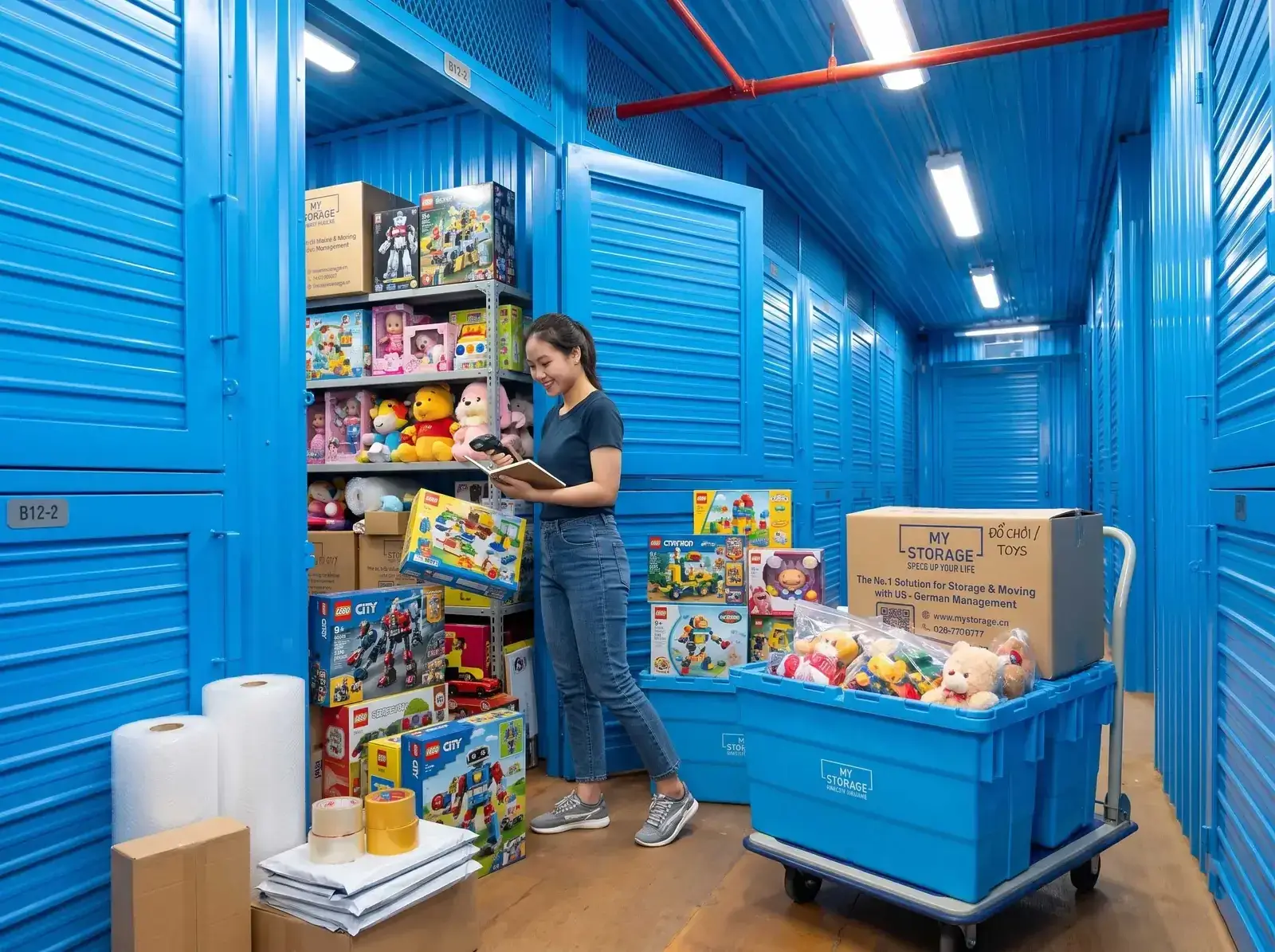
A toy storage setup means sorting stock by product group, age range and brand, holding temperature and humidity steady so boxes stay intact, and tracking inventory by SKU. For an online shop or retailer whose stock has taken over the house, renting a unit at MyStorage self-storage in Ho Chi Minh City from 1 m³ (about 8 to 10 medium cartons) frees up living space while keeping goods safe.
1. Why Toy Retail Needs Dedicated Storage
Toys look easy to store until volume grows. A shop carrying a few hundred SKUs quickly runs into four problems that cost real money.
What Makes Toy Stock Difficult
- Huge SKU variety: hundreds of codes across colours, characters and age ranges.
- Fragile retail packaging: printed boxes dent and tear easily, and a damaged box loses much of its resale value.
- Small loose parts: screws, blocks and accessories go missing between moves.
- Sensitive to the environment: damp ruins fabric and wood, while heat deforms plastic and damages batteries.
The Real Cost of Storing at Home
- Living space disappears: cartons block corridors and turn the living room into a warehouse.
- Slow picking: finding one building set at the bottom of a pile takes minutes instead of seconds, rather than organising stock by fixed locations.
- Damaged goods: stacking too high crushes boxes; buyers who want gift-ready packaging reject them.
- No room to scale: when orders spike during peak season sales and Tet, there is nowhere to put the extra stock.
2. Sorting and Arranging Toy Stock
Good toy storage starts with a classification scheme you can hold to, not with buying more shelving.
Classify by Group, Age and Brand
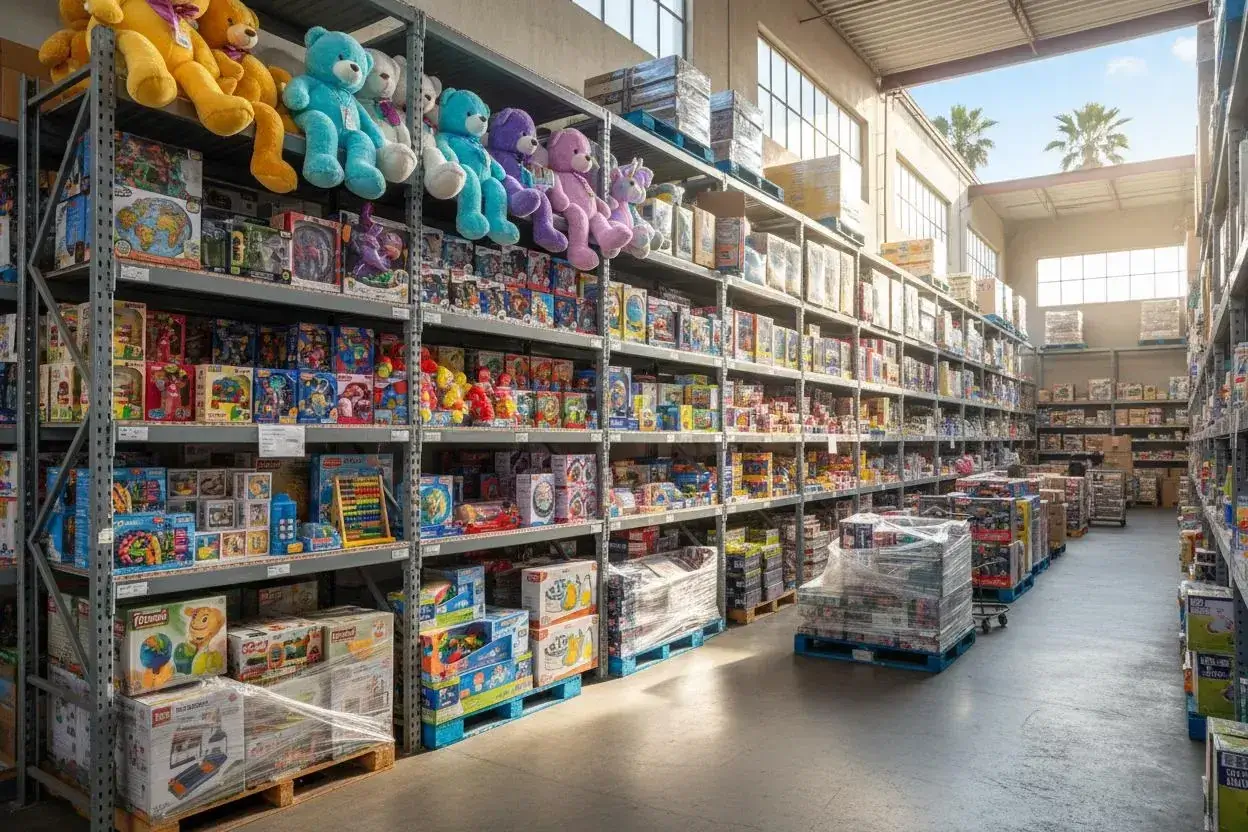
- By product group: building sets, dolls and plush, educational toys, electronic and remote-control toys, outdoor play equipment.
- By age range: 0–3, 3–6, 6+, which matches how customers search and how you pick for orders.
- By brand: keep one manufacturer together on a run of shelving, following the principle of zoning a warehouse by area, so restocking and stocktakes stay quick.
Shelf Layout and Storage Zones
- Inbound and inspection zone: check new deliveries, verify CR conformity stamps and apply SKU labels before anything goes on a shelf.
- Fast-moving zone: keep best sellers nearest the packing table.
- Bulky items: ride-on toys, rocking animals and slides go on the floor or on low pallet racking.
- Returns quarantine: a separate corner so returned units never mix back into sellable stock before they are checked.
- Packing and dispatch: next to the exit, with enough light and camera coverage for order verification.
Labelling and Barcodes
- Print a barcode or QR code on the outer box and pair it with an inventory spreadsheet so every movement is recorded.
- Write the location code on the shelf edge, not only in the system, so a new staff member can find stock without asking.
- Keep one labelling convention across the whole store; mixing conventions is what causes miscounts later.
3. Protecting Toys by Material
Different materials fail in different ways. The table below sets out the conditions each group needs.
| Material | Temperature | Maximum Humidity | Packaging Requirement |
|---|---|---|---|
| Plastic and building blocks | Below 30°C | 70% | Keep out of direct sunlight to prevent fading and warping |
| Plush and fabric toys | 22–28°C | 60% | Sealed PE bags with desiccant |
| Wooden toys | 25–28°C | 55% | Away from damp floors and walls |
| Electronics and battery toys | 20–28°C | 50% | Batteries removed and stored separately |
Plastic Toys and Building Sets
- Keep them out of direct sun, which fades colours and warps thin parts.
- Limit stacking to three cartons high where boxes are thin, so printed packaging does not crease.
- For large volumes, pack retail boxes inside a five-ply master carton with foam corner protection.
Plush Toys and Fabric
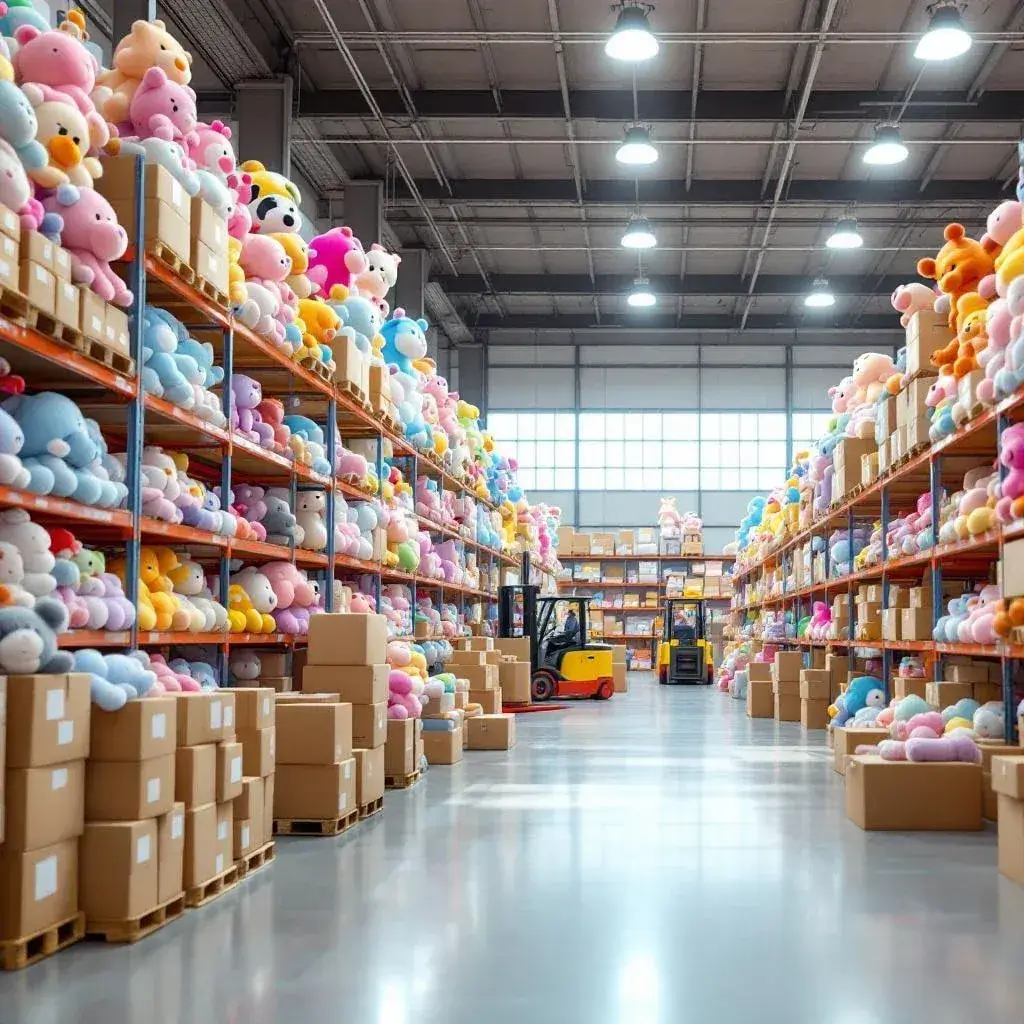
- Bag each piece in sealed plastic and keep room humidity below 60% to prevent mould and fading in fabric.
- Never store plush directly on the floor; damp travels up through concrete.
- Check bags every few months in the rainy season and replace spent desiccant.
Wooden and Electronic Toys
- Wood swells and splits in damp air, so keep it clear of exterior walls.
- Remove batteries before storage; a leaking cell ruins the toy and anything next to it.
- Give remote-control and electronic items a dry zone with physical barriers and access control in place, since these are the highest-value items in most toy shops.
4. Inventory Control by SKU
Classification keeps the shelves tidy; SKU control keeps the numbers honest. Without it, a toy shop oversells on marketplaces and loses money on stock that quietly goes out of fashion.
Building an SKU System That Works
- Give every variant its own code: product, colour, size and age range, not one code for a whole family of items.
- Keep the consistency between your books and the physical count on the shelves — reconcile at a fixed interval rather than only when something goes wrong.
- Record every inbound and outbound movement the same day; a backlog of unrecorded movements is what makes a stocktake take a week.
- Flag slow movers early. Trend toys and seasonal stock can earn well in a short window, then sit for a year if you miss the turn.
Handling Returns
Marketplace toy returns are frequent, often because a box arrived dented. Follow a returns processing workflow: quarantine the item, check the contents against the original SKU, decide whether it can be resold as new, repacked or written off, and only then put it back into sellable stock.
5. Choosing the Right Storage Model
Three models suit toy retailers at different stages. The right one depends on order volume and how much you handle goods yourself.
| Storage Model | Who It Suits | Advantages | Limitations |
|---|---|---|---|
| At home | Under 50 orders a month | No rental cost, goods always to hand | Takes over living space, no climate control, no room to grow |
| Self-storage | Small and mid-sized shops, seasonal volume | Private locked unit, air conditioning, monthly flexibility, 24/7 access | You handle picking and packing yourself |
| Fulfilment service | High, steady order volume | Provider picks, packs and ships | Higher cost per order, less direct control of stock |
When to Move Out of the House
- Stock regularly blocks corridors or takes over a bedroom.
- Orders swing sharply between normal weeks and campaign weeks, so you need space you can scale up and down.
- You sell on marketplaces where a late dispatch damages your shop rating, and a dedicated e-commerce storage space would let you pick faster.
- You are holding stock that needs stable temperature, which a home room cannot provide.
Not sure how many cubic metres your shop needs? Use the AI estimator below:
6. Reference Prices for Toy Storage
The table below gives reference monthly costs for renting air-conditioned self-storage in Ho Chi Minh City in 2027:
| Unit Type | Volume / Area | Estimated Cost (VND/month) | Suitable For |
|---|---|---|---|
| Mini unit | 1 – 3 m³ | 1,136,000 – 2,065,000 | A small online shop, roughly 8 to 25 cartons |
| Small unit | 4 – 8 m³ | 2,524,000 – 4,200,000 | A growing shop with several hundred SKUs |
| Medium unit | 9 – 15 m³ | 4,500,000 – 7,000,000 | A retailer holding seasonal stock |
| Large unit | 16 – 30 m³ | 7,500,000 – 13,000,000 | A distributor or multi-store operation |
| Cold-room surcharge | Any size | Add 20% – 25% | Stock needing tighter temperature control |
Note: these are reference figures for the Ho Chi Minh City market in 2027. Actual cost depends on volume, rental term and the service each provider includes. Check the mini storage sizes or use the tool below for an exact price.
7. Flexible Storage Space for Toy Shops
A well-organised storage system is what lets a toy retailer grow without the house filling up. Sort by group and age, protect each material properly, track SKUs honestly, and pick the storage model that matches your current volume rather than the one you hope to need next year.
If you are looking for somewhere safe and air-conditioned to hold stock in Ho Chi Minh City with month-to-month flexibility, MyStorage self-storage suits the seasonal rhythm of toy retail. Each unit has its own lock, layered security, 24/7 access and a loading area that makes receiving a new shipment or consolidating marketplace orders straightforward.
Storage and a Desk at the 375 Vo Nguyen Giap Site
The 375 Vo Nguyen Giap site (An Khanh, Thu Duc City) has a workspace area alongside the self-storage units, aimed at startups and online sellers. You can sit and process orders, answer customers, then take stock out of your unit and pack it on the spot instead of hauling goods home and back out to the carrier. For a toy shop this pays off in peak season: retail boxes stay intact in cool storage, temporary staff have somewhere to pick orders, and checking, labelling and handover to the carrier all happen in one place.
See the MyStorage locations in Ho Chi Minh City to pick the nearest site, or contact MyStorage for advice on the right unit for your toy shop.
8. Frequently Asked Questions About Toy Storage
Does a small online toy shop need external storage?
Not at first. Once stock starts blocking corridors or taking a bedroom, renting a unit in the right size outside the home frees up living space and protects the goods better than a spare room does.
What temperature and humidity should toys be kept at?
As a general rule, keep the room below 30°C and humidity under 60% to 70% depending on material. Plush and fabric need the tightest humidity control, electronics the tightest temperature control.
How should plush toys be stored so they don't grow mould?
Bag each piece in sealed plastic with desiccant, keep them off the floor, hold humidity below 60% and inspect the bags during the rainy season.
Can battery toys be stored with the batteries inside?
No. Remove the batteries before storage. A leaking cell damages the toy's contacts and can ruin neighbouring stock.
How high can toy boxes be stacked?
Where retail boxes are thin, stack no more than three high. Printed packaging creases under load, and a creased box is hard to sell as a gift item.
How do you stop retail packaging from being damaged in storage?
Pack retail boxes inside a five-ply master carton with foam corners, keep aisles wide enough to carry items without knocking them, and never slide boxes across a rough floor.
What is an SKU and why does a toy shop need one per variant?
An SKU is the unique code for one specific variant: product, colour, size and age range. Toys come in many near-identical variants, so one code per family of items leads directly to picking errors and overselling.
How often should a toy shop count stock?
Count fast-moving items weekly and run a full count monthly, more often before and after a sales campaign.
What should be done with returned toys?
Quarantine the item, check the contents against the original SKU, then decide whether to resell as new, repack or write off. See the returns processing workflow for the full sequence.
How should seasonal toy stock be handled?
Buy early, store in a unit you can scale, and set a cut-off date after which unsold seasonal stock is discounted rather than carried for a year. Renting seasonal space is cheaper than carrying dead stock for a year.
Is self-storage secure enough for valuable toy stock?
Units have individual locks, camera coverage, motion sensors and personal access codes. For high-value electronic toys, keep them in the part of the unit furthest from the door and record serial numbers.
What fire safety applies to a toy storage area?
Toys burn readily, so a storage area needs portable extinguishers that meet warehouse fire safety standards, no-smoking signage, and electrical cabling run in protective conduit.
Can an online toy shop store goods and pack orders in the same place?
Yes, and that is usually the cheapest setup. The 375 Vo Nguyen Giap site offers self-storage units together with a workspace area, so stock, order processing and packing happen under one roof.
Does MyStorage accept goods on your behalf?
Full-service storage includes receiving shipments from carriers; with a standard self-storage unit you handle deliveries yourself during your own visits.
How much does air-conditioned toy storage cost per month?
A 1 to 3 m³ air-conditioned unit runs about 1,136,000 to 2,065,000 VND a month, which suits a small online shop holding roughly 8 to 25 cartons. Larger units scale from there; check the exact figure with the price tool above before booking.
Related articles

Article
Accounting and Medical Record Retention Under Vietnamese Law
Retention periods for accounting records (5 years, 10 years or permanent under Decree 174/2016/ND-CP) and medical records (10, 20 or 30 years under Circular 33/2025/TT-BYT), how to build a…
Read article
Article
How to Declutter Your Home With the Marie Kondo Method: 6 Effective Steps
A guide to decluttering your home with the Marie Kondo (KonMari) method in 6 steps: gather belongings by the 5 categories, keep only what sparks joy, fold clothes vertically, organise each…
Read article
Article
Warehouse Jobs in Vietnam: Roles, Requirements, Salaries and Career Paths
Look up 15 warehouse jobs in Vietnam: duties, education, certificates, years of experience, 2027 reference salaries by level and career paths from warehouse worker to storekeeper…
Read article
