
 Tiếng Việt
 한국어
 日本語
Article
What Is A Shared Warehouse? Structure, Process And How It Works
On this page
A shared warehouse is a storage model in which several businesses share the space, handling equipment and operating staff of one standard warehouse facility, cutting costs by 30% to 45% compared with renting a warehouse of your own. The model sits within the services run by a third party, so understanding 3PL and third-party warehousing is the foundation for the rest of this guide.
With industrial property and logistics labour costs rising continuously in large cities such as Ho Chi Minh City and Hanoi, the shared warehouse model has become the preferred solution for e-commerce businesses, retailers and small to mid-sized distributors. Instead of signing a 3 to 5-year lease on a building and carrying the cost of racking, forklifts and management software, a business can flexibly use the floor area or the volume that matches the stock it actually holds at any point in the year.
Having several owners store goods under one roof does require strict identification, tight inbound and outbound control and transparent IT systems. This guide covers the nature, floor layout, 5-step operating process, capacity allocation methods and service rates of the shared warehouse model in 2027.
1. What Is A Shared Warehouse?
A shared warehouse is a professional warehousing facility run by a logistics operator that lets several businesses share storage space and supporting infrastructure to optimise their budgets.
The Nature Of The Shared Warehouse Model
The nature of a shared warehouse lies in flexible area and shared operating resources, which is how fixed costs get divided among many owners. Four characteristics define it:
- Shared space and resources: Rather than one business carrying all the rent, lighting, security and fire-protection maintenance, those fixed costs are spread across everyone storing there.
- Independent goods identification: Even inside a single hall of several thousand square metres, every consignment has its own Location ID and Customer Code, so nothing is lost or mixed up.
- The operator carries the expertise: The warehouse provides the whole package, from warehouse keepers and handling labour to forklifts and software, so the business keeps a lean team and focuses on selling.
- Flexible seasonal terms: A business expands its area for the year-end peak and shrinks it in the quiet season without being locked into a rigid property lease.
What Shared Storage Means
Shared storage is the plain-language name for what the industry calls a Shared Warehouse or Multi-client Warehouse, the same multi-customer storage model. Three distinctions are worth making:
- The same concept: In the Vietnamese supply chain industry, shared warehouse and shared storage are used interchangeably for the same service model.
- Different from a public warehouse: A traditional public warehouse often rents raw space with basic paperwork, while a modern shared warehouse comes with standard racking, CCTV and management software.
- Extending into a distribution network: Many logistics operators build networks of satellite shared warehouses at traffic gateways, so stock can sit across several districts and shorten last-mile delivery.
Shared Warehouse Versus Renting Your Own Space
The biggest difference is who invests and who operates: renting space means you handle everything, while renting shared storage means paying for the space and services you actually use. Three points of comparison:
- Traditional warehouse lease: The business leases a whole plot or empty building, then buys racking and forklifts, applies for fire-safety approval, hires security and carries the loss when something goes missing.
- Shared storage service: The business pays only for the space it uses by pallet, cubic metre or square metre; security, building insurance, equipment maintenance and operations belong to the provider.
- CapEx versus OpEx: A shared warehouse converts the upfront infrastructure investment into a monthly operating cost that moves with your volume.
For a business weighing the two routes, warehouse and factory space for rent in Ho Chi Minh City goes deeper into choosing by stock volume and cash flow.
A Day Of Shared Warehouse Operations
A typical operating day shows how three different owners keep complete independence over their goods and their data. It runs like this:
- Three businesses receive stock: Business A (fashion), Business B (imported homeware) and Business C (organic cosmetics) all send trucks to unload at 09:00.
- Receiving at the dock: Warehouse staff use forklifts to lift pallets off each truck, scan the delivery note barcode and move the goods into the inbound staging area.
- Smart location routing: The software sends A’s fashion goods to dry level-3 selective racking, B’s heavy homeware to ground-level heavy-duty racking and C’s cosmetics into the 22°C temperature-controlled zone.
- Instant stock reporting: Just 15 minutes after unloading, all three companies receive a stock movement notification on the online portal.
2. Shared Warehouse Structure And Layout
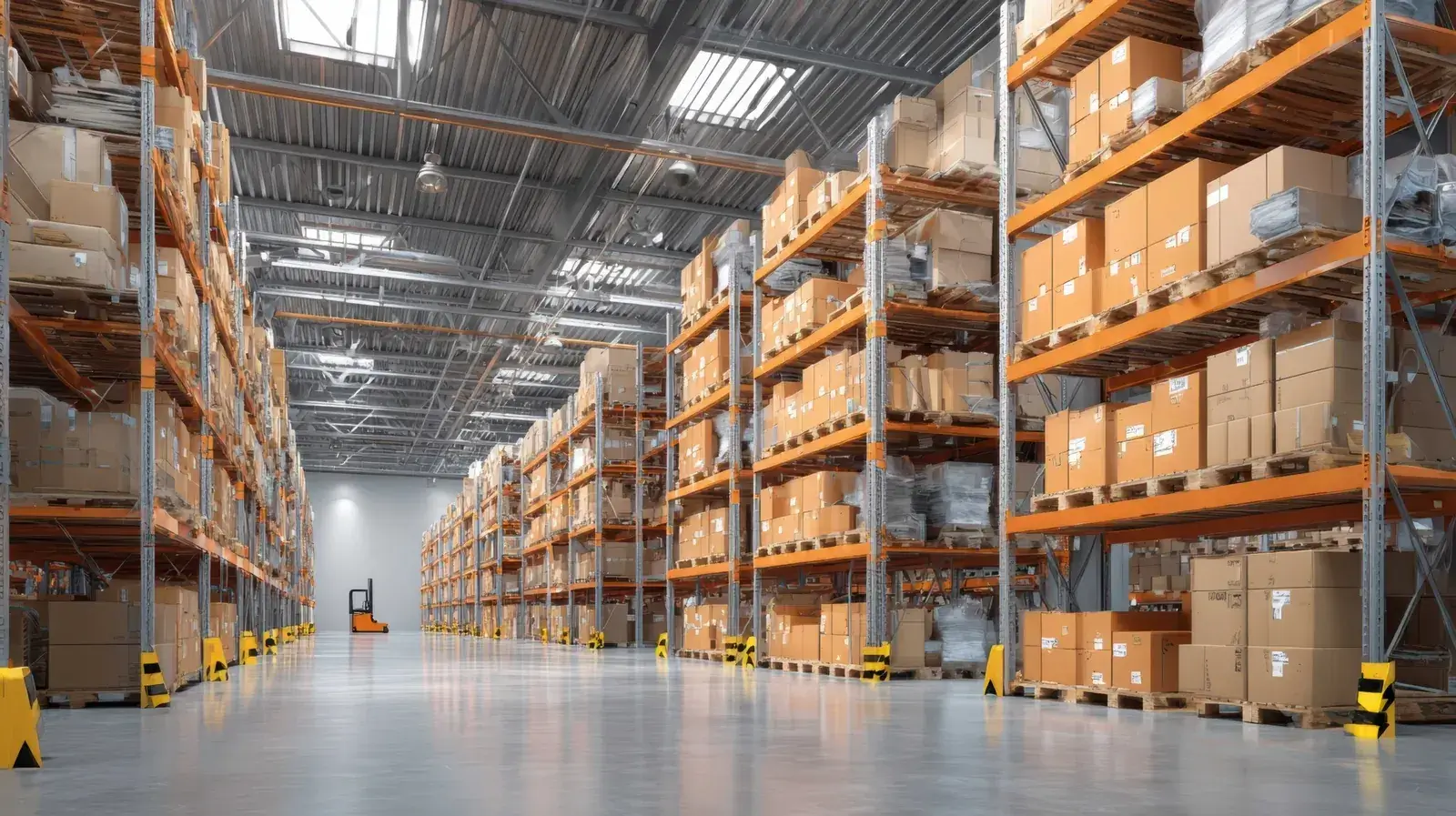
A standard shared warehouse is divided into functional zones that follow the flow of goods, from the inbound door to the outbound door. The five parts below form the skeleton of every shared storage facility.
The Goods Receiving Area
Receiving is the gateway that checks quality and quantity before goods enter the storage system, so any discrepancy has to be caught right there. Three main elements:
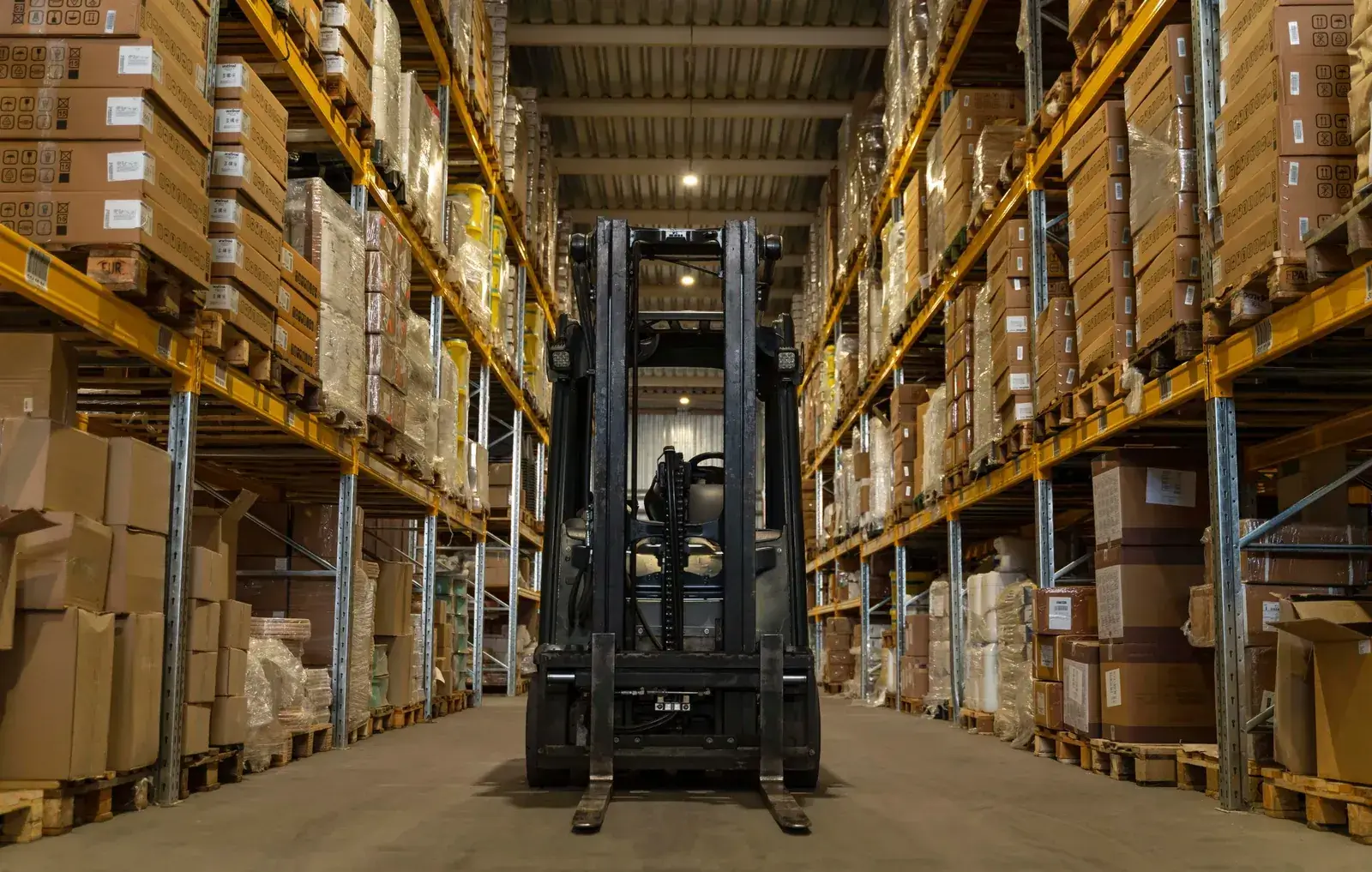
- Loading docks: Dock levellers connect trucks and containers to the warehouse floor, speeding up unloading and limiting impact damage.
- Staging area: An area of open floor for breaking down pallets, checking packaging, matching paperwork and applying secondary identification labels.
- Exception handling area: Where dented, wet or short-shipped consignments are set aside for a report before anyone decides to accept or return them.
The Racked Storage Area
Storage takes up most of the warehouse floor and is divided by rack type to suit each group of goods, because load and picking frequency differ. Three common layouts:
- Multi-level selective racking: The most common type, giving direct access to every pallet, which suits warehouses with many SKUs and high turnover.
- Ground-level heavy goods: Homeware and heavy raw materials sit close to the floor to reduce handling risk and protect the rack structure.
- Temperature-controlled zone: Part of the warehouse is partitioned off at 20°C to 24°C for cosmetics, dry food and electronics; the principle matches mini cold and air-conditioned storage rental at industrial scale.
The Packing And Dispatch Area
Packing decides order throughput and error rates, so it sits next to the outbound door to shorten the distance goods travel. Three main parts:
- Packing benches and scales: Where staff re-check the product code, add protective padding, box the order and weigh it so the waybill prints correctly.
- Carrier marshalling area: Packed orders are grouped by courier or by truck route for a fast handover.
- Returns handling area: Where failed deliveries arrive; sorting and putting them back into stock is covered in the returns handling process in the warehouse.
IT Infrastructure And WMS Software
Warehouse management software is what lets one facility serve dozens of owners without mixing anything up, because every movement is tied to identification data. Three components:
- Warehouse management software: The system records stock in real time for each customer; what it does and how to choose one is set out in WMS warehouse management systems.
- Handheld barcode scanners: Every receive, put-away, pick and dispatch has to be scanned, creating an electronic log for reconciliation when something goes wrong.
- Customer portal: Owners log in to see stock, movement history and reports without calling the warehouse keeper.
Capacity Allocation In A Shared Warehouse
Capacity in a shared warehouse is sold in three different units, and picking the right one decides your monthly cost. Three models:
- By pallet position: Each pallet is a separate billing unit, which suits uniform goods that stack stably; choosing and loading pallets is covered in pallets for warehouse storage.
- By cubic metre: Charged on the volume actually occupied, which suits mixed sizes; working out CBM per consignment is covered in CBM for goods in storage.
- By square metre of floor: The business rents a floor area and arranges it itself; the trade-offs are compared in storage priced by m³ versus m².
3. How Shared Storage Operations Run
Shared storage runs on a closed 5-step cycle, from the truck arriving at the dock to the consignment leaving, so each owner’s assets are managed independently. The five steps are as follows.
Receiving And Counting Inbound Goods
The opening step sets the transparency on quantity and condition between owner and operator, so every discrepancy has to be recorded in writing on the spot. Three actions:
- Checking the paperwork: The warehouse keeper matches the electronic inbound order against the driver’s delivery note and checks the seal on the trailer.
- Unloading and visual inspection: Inspection staff check the outer cartons and raise a report if packaging is dented, wet or torn.
- Detailed counting: Staff count the actual consignments or scan each product barcode and cross-check against the purchase order in the software before signing off.
Assigning An Identified Location
Every consignment is given a specific rack coordinate as it comes in, so there is no such thing as leaving it somewhere and sorting it out later. Three steps:
- Generating the put-away label: The software creates a batch identifier made up of customer code, SKU, lot number, receipt date and the destination rack coordinate.
- Placement by turnover: Fast-moving goods go on low levels near the outbound door, heavy goods on the floor, and slow or light goods on the upper levels.
- Confirmation by scanner: The forklift driver scans the location barcode on the rack beam and the code on the consignment to close the put-away task.
Stock Control On The WMS
Stock data updates in real time, so the business owner keeps control of their assets remotely without being at the warehouse. Three mechanisms:
- Automatic movement reports: Every receipt, dispatch and internal move is logged electronically; the customer can open the report on the portal at any time.
- Expiry control: The system flags lots nearing expiry or sitting too long; the dispatch order by expiry date is covered in FIFO and FEFO in warehouse management.
- Cycle counting: Staff count area by area every day without closing the warehouse; how it is run is set out in cycle counting in the warehouse, and stock accuracy usually passes 99.5%.
Packing, Dispatch And Handover
The outbound process runs against a service level agreement with the customer, so each step is measured in minutes. Four actions:
- Receiving the electronic dispatch order: The customer pushes the order from their sales software into the shared warehouse WMS.
- Creating the pick list: The system optimises the picker’s route so the whole order is gathered in the shortest time.
- Double barcode check and packing: Goods are scanned a second time at the packing bench to rule out mis-picks, then padded and boxed.
- Signing the carrier handover: The labelled consignment is handed to the transport provider and the electronic signature closes the cycle.
4 Logistics Services Built Into A Shared Warehouse
A modern shared warehouse sells operations rather than just floor space, so the value-added services usually decide which provider you pick. Four groups:
- Handling and loading: Manual labour or forklifts to unload containers, build pallets and wrap them in stretch film.
- Labelling and value-added packing (VAS): Vietnamese secondary labels for imported goods, gift bundles and repackaging for a marketing campaign.
- E-commerce order fulfilment: Taking orders from the marketplaces, printing waybills, packing to each platform’s standard and handing over to the courier; this model is analysed separately in fulfillment warehouses for e-commerce.
- Reverse logistics: Receiving failed deliveries, checking condition, returning intact goods to stock and reporting on damaged ones.
When goods only pass through the warehouse to be re-routed rather than stored, the model is quite different, namely cross-docking in the warehouse.
4. Goods Suited To A Shared Warehouse
Not every category can go into shared storage, so knowing what is compatible avoids damage and refused deliveries. The four groups below give the full picture.
Consumer And Retail Goods
Fast-moving consumer goods and homeware hold the largest share of shared warehouses because they are packed to standard and undemanding on conditions. Three characteristics:
- Standard packaging: Homeware, cookware, plastics and bottled toiletries usually come in square cartons that stack neatly on high selective racking.
- Ambient storage: This group only needs a dry warehouse with an insulated roof, epoxy-coated concrete floor and good airflow.
- High turnover: Distributors can split deliveries to supermarkets and dealers across the city every day without paying for central floor space.
E-commerce Goods
Online retailers use a shared warehouse as a fulfilment centre, because they carry many SKUs but little stock of each. Three advantages:
- Many SKUs, thin stock: A fashion or accessories shop carries hundreds to thousands of SKUs with only a few dozen units each.
- Cost control through small rack bays: A shop rents only 10 to 50 bays and scales with its buying cycle; the self-managed route for online sellers is covered in storage for online and e-commerce sellers.
- Taking the pressure off home: Moving stock into shared storage stops the home becoming a warehouse and gives access to a professional packing team; keeping the numbers straight while selling from home is covered in stock and storage control when selling online from home.
Palletised Distribution Goods
Manufacturers and importers of raw materials prefer pallet storage for the speed of handling and the accuracy of counting. Three reasons:
- Standardised transport format: Plastic pellets, industrial packaging, textile yarn and electrical equipment are fixed onto heavy-duty wooden or plastic pallets.
- Lower handling cost: A forklift clears a 40-foot container in 30 to 45 minutes and puts the pallets straight onto identified rack levels.
- Whole-unit stock control: Each pallet is an independent licence plate number (LPN), so counting is accurate without opening every carton.
Goods With Special Conditions
A shared warehouse turns away the groups below because of the risk they pose to other owners’ goods, mainly fire, temperature or smell. Four groups are usually refused:
- Chemicals and hazardous materials: Paint, flammable solvents, gas cylinders and corrosives need a dedicated warehouse with fire walls, spill containment and separate permits.
- Deep-frozen goods (-18°C to -25°C): Fresh food and frozen meat need a dedicated cold store and are not combined with dry goods; classification by temperature is covered in cold and chilled storage rental.
- Very high-value goods: Gold, gemstones and artworks need a steel-lined vault with infrared sensors and dedicated security.
- Strong-smelling goods: Fish sauce, organic fertiliser and raw rubber will taint fashion or food consignments belonging to other owners unless sealed in dedicated packaging.
Shared Warehouse Due Diligence Checklist
The table below sets out 5 core criteria to inspect on site before signing a shared warehouse contract, with the risk of skipping each one.
| Item To Review | Technical Standard | Risk If It Fails | How To Verify |
|---|---|---|---|
| Permits and fire safety | Valid fire-safety approval certificate and warehouse operating licence | Operations suspended, goods sealed without warning | Must be checked |
| Floor and roof | Reinforced concrete floor over 3 tonnes/m², epoxy coating, insulated leak-free roof | Floor subsidence collapsing racks, damp damaging packaging | Site survey |
| Software systems | A WMS in use with real-time stock data | Stock discrepancies, losses, mis-picked orders | Ask for a demo |
| Security | CCTV on 100% of aisles, 30 days of footage, security on site 24/7 | Theft with no way to assign responsibility | Inspect the camera room |
| Compensation policy | Contract states the limits and process for loss or damage | You carry the financial loss after breakage or fire | Read the clauses closely |
5. Shared Warehouse Costs And Selection Criteria
Shared warehouse rates depend on how you occupy the space, how often stock moves and what conditions it needs, so two businesses with the same area can see very different invoices. The four parts below are enough to budget with.
What Makes Up The Rate
The unit price is driven by the nature of the product and the services attached, not only by floor area. Four factors:
- How the space is occupied: Per square metre usually carries a higher unit price but gives you free rein; per pallet or per cubic metre means paying only for what you actually use.
- Transaction frequency: Long-term static stock is priced well below e-commerce goods moving in and out every day.
- Environmental requirements: A chilled room held at 20°C to 24°C runs air conditioning continuously, so the rate is usually 25% to 40% above ambient storage.
- Location of the facility: A warehouse near the centre with no daytime truck ban costs more than one on the outer ring road.
Charges Beyond The Storage Rate
Total storage cost usually runs 20% to 40% above the headline space rate because of the services attached, so budget on total cost of ownership. Four common charges:
- Handling at the dock: Paid for labour or forklifts unloading from the truck or loading out, charged per consignment, tonne or pallet.
- Management and software fees: Some providers charge a fixed monthly amount for the WMS account, identification labels and periodic stock reports.
- Value-added work: Secondary labels on imports, stretch-wrapping pallets, air-cushion padding and re-boxing damaged cartons.
- Truck waiting charges: Incurred when a container or partner truck stays in the yard beyond the free time allowed.
Shared Storage Reference Rates 2027
The table below shows market rates in Ho Chi Minh City in 2027 for standard shared warehousing, broken down by each charging method.
| Service | Charging Unit | Capacity / Specification | Reference Rate 2027 |
|---|---|---|---|
| Ambient pallet storage | Per pallet per day | 1.0m x 1.2m x 1.5m (around 500 - 800 kg of goods) | 12,000 VND (≈ US$0.47) - 18,000 VND (≈ US$0.70) |
| Air-conditioned pallet storage | Per pallet per day | 1.0m x 1.2m x 1.5m (held at 20°C - 24°C, 24/7) | 20,000 VND (≈ US$0.78) - 28,000 VND (≈ US$1.09) |
| Storage by cubic metre | Per m³ per month | 1 m³ holds about 8 to 10 medium cartons | 180,000 VND (≈ US$6.99) - 260,000 VND (≈ US$10.10) |
| Storage by square metre | Per m² per month | Actual floor area occupied, stacking height 2.5m to 3m | 140,000 VND (≈ US$5.44) - 210,000 VND (≈ US$8.16) |
| Forklift handling | Per lift | Lowering a pallet from a truck or lifting one onto it | 25,000 VND (≈ US$0.97) - 40,000 VND (≈ US$1.55) per pallet |
| Manual handling | Per tonne or consignment | Loose goods handled manually without pallets | 60,000 VND (≈ US$2.33) - 90,000 VND (≈ US$3.50) per tonne |
These are average market rates for third-party shared warehousing in Vietnam in 2027 and are not MyStorage service rates. Actual unit prices change with committed monthly volume, contract length and how complex the picking is. VND is the billing currency and the converted figures move with the exchange rate. When comparing against a private self-managed unit, storage priced by m³ versus m² converts the two methods onto the same basis.
Facility Standards To Check
Warehouse infrastructure has to be seen in person, because photos and brochures do not show a cracked floor or a damp wall base. Three things to inspect:
- Load-bearing floor: The floor should be monolithic concrete, polished flat and epoxy-coated; avoid warehouses showing cracked slabs or damp at the base of the walls.
- Fire-safety standards: Check the sprinkler heads, the reserve water tank, clear emergency exits and the fire-safety acceptance file issued by the authorities.
- Ventilation and insulation: The roof needs bubble-foil or glass-wool insulation plus turbine vents so the warehouse does not turn into an oven at midday.
The Operator’s Service Capability
Long-term service quality comes down to people and contract commitments rather than how new the building is. Three criteria:
- Warehouse team competence: Keepers and handlers need safety training and fluency with barcode scanners; the roles and requirements are set out in warehouse job positions.
- Service level agreement (SLA): The contract must state the processing time for a dispatch order, for example an order pushed before 11:00 must leave the warehouse that afternoon.
- Complaint handling process: The operator needs a reconciliation process, readiness to pull camera footage when a loss is suspected, and a clear goods insurance policy.
MyStorage Self-Storage As The Complement
A shared warehouse optimises cost but leaves you depending on a warehouse keeper; self-storage gives you a private unit with your own lock and access whenever you want. The two models complement each other rather than replace each other.
Shared warehousing is a good stepping stone for a business cutting property costs and keeping its team lean. If your business needs more independence, with a private compartment, your own lock and free access to your goods without going through a warehouse keeper, self-storage is the natural complement.
MyStorage runs self-storage facilities in Ho Chi Minh City for online shop owners, small and mid-sized businesses and offices that need to keep documents, samples or high-value equipment. What each unit gives you:
- Air-conditioned units 24/7: Temperature and humidity are controlled around the clock, which protects documents, electronics and samples from the tropical damp.
- Multi-layer security: CCTV covers every aisle, entry runs on a personal PIN code and the facility is monitored continuously.
- Flexible access: You hold the access code and come and go on your own schedule, without booking a warehouse keeper.
- Units from 1 m³: Sizes start small and scale up, so you pay only for the volume you actually use.
- Workspace at 375 Võ Nguyên Giáp: The site has a workspace for startups and online sellers, so you can store stock and pack orders on the spot.
Rates for each unit size are set out in personal mini storage rental, and you can work out your own cost with the tool below.
6. Frequently Asked Questions About Shared Warehouses
Fifteen answers to the most common questions about the shared warehouse model and shared storage services in Vietnam, from the concept to pricing and the rental process.
What is a shared warehouse?
A shared warehouse is a professional warehousing facility that lets several businesses share storage space and operating infrastructure under one operator. Instead of leasing a whole building and carrying the construction, security and forklift costs alone, each owner rents only the area or volume it needs. Every customer’s goods are identified by location in the warehouse management software.
What does shared storage mean?
Shared storage is the plain term for the Shared Warehouse model and means the same service. The name points at the sharing of infrastructure and resources: forklifts, high-bay racking, security cameras, fire-protection equipment and the warehouse team all serve several clients, which cuts idle capacity and lowers the cost of storage.
Are a shared warehouse and shared storage the same thing?
Yes, they are two ways of describing the same multi-client storage service. Some providers say shared warehouse to stress that several companies sit in one building, while supply chain technology firms say shared storage to evoke the sharing economy. Both keep each owner’s data managed independently.
What is a shared warehouse called in English?
In international logistics the model is called a Shared Warehouse or a Multi-client Warehouse. Depending on the scope of service it is also called a Public Warehouse when the emphasis is on the public storage service, or a 3PL Warehouse when the operator provides the full third-party chain of storage, handling, stock control and distribution.
How does a shared storage facility operate?
Shared storage runs a 5-step cycle: receiving, counting and reconciliation, assigning an identified location, stock control on the WMS and dispatch with handover. When goods arrive, staff count them and apply a batch identification label, and a forklift puts them on the exact rack coordinate the software assigns. Every movement updates in real time on the online system.
How are each business’s goods kept separate?
Goods are kept separate by barcode or QR identification and by rack location in the WMS. Each customer has an independent customer code; when a carton or pallet comes in, the software links the product code to that customer code and to a specific coordinate in the warehouse. Staff can only act when the handheld scanner matches the two.
Is a shared warehouse charged by square metre or cubic metre?
Shared warehouses apply all three flexibly: by square metre, by cubic metre or by pallet position, depending on the nature of the goods. If goods are boxed in mixed sizes or stack well, charging by cubic metre or by pallet works out cheaper. For bulky goods that cannot stack, or when you need your own floor area to arrange, per square metre suits better.
Is a deposit required for shared storage?
Most shared warehouse providers ask for a deposit of 1 to 2 months of the service fee. It secures performance of the contract, covers service charges incurred in the final month and compensates damage to the warehouse infrastructure. The deposit is returned once both sides close the contract and reconcile the account.
Does a shared warehouse count stock regularly?
Yes, standard shared warehouses run cycle counting weekly or monthly. Rather than stopping all operations for a year-end count, the WMS picks areas or SKUs at random for staff to count daily. The count report goes to the owner by email or through the online portal.
Is WMS software compulsory in shared storage?
In practice it is, because without a WMS it is very easy to make errors, mis-pick orders and lose track of figures across thousands of SKUs belonging to dozens of businesses. Modern WMS platforms also connect by API to the business’s own sales software such as KiotViet, Sapo, Haravan or MISA, automating order push and stock deduction.
Does a shared warehouse take pallet storage?
Yes, pallet storage is the most common method in industrial shared warehouses. Selective racking is built to standard pallet dimensions (1,000 x 1,200 mm or 1,100 x 1,100 mm) with a load of 800 to 1,500 kg per position. It makes the most of the ceiling height, protects goods from floor damp and shortens handling time with forklifts.
Does shared storage include handling services?
Yes, almost every shared storage provider has handling crews and forklifts on site. The customer does not need to hire outside labour or send staff to load goods. Handling is charged under the tariff agreed in the contract, by pallet lifted or by tonne and consignment for manual work.
Does a shared warehouse offer packing services?
Many shared warehouses include order fulfilment covering packing, labelling and carrier handover. When a retail order comes in from a marketplace or social channel, warehouse staff pick from the rack, add protective padding, box it in a standard carton, print the waybill and hand it to the courier at the dock.
Which goods do not suit a shared warehouse?
Hazardous and flammable chemicals, deep-frozen goods, strongly scented goods and illegal items are all unsuitable. Because the space is shared between several owners, the operator applies strict safety controls to protect everyone’s assets. Goods needing dedicated freezing or carrying a fire risk have to go to a specialised facility with its own permits.
What should you prepare before renting a shared warehouse?
Before making contact, know your packaging format, volume or pallet count, movement frequency and storage conditions. Specifically the length, width and height of your cartons, the weight per consignment, the total SKU count, the expected daily dispatch volume and whether the goods need air conditioning. Accurate data lets the provider recommend the right capacity model and quote realistically.
Related articles

Article
Storage Ideas For A Studio Apartment Under 40m²: Making The Most Of Your Space 2027
To make the most of the storage space in a studio apartment under 40m², use the vertical axis with floor-to-ceiling wardrobes, choose multi-purpose furniture and move rarely used belongings…
Read article

Article
Between Check-Out And Your Flight: What To Do In Saigon With Luggage
Between a noon hotel check-out and an evening flight, a 24/7 smart locker, an air-conditioned self-storage unit or free door-to-door delivery gets the bags off your hands so you can tour…
Read article
Article
Saigon Layover Guide: What To Do With 6 To 12 Hours And Your Luggage
A Saigon layover of 6 to 12 hours gives you time to leave Tan Son Nhat, drop your bags in secure luggage storage and see District 1; this guide covers visa rules, airport timings, storage…
Read article
