
 Tiếng Việt
 한국어
 日本語
Article
First 30 Days In Ho Chi Minh City: An Arrival Checklist For Expats 2027
On this page
A practical moving-to-Vietnam checklist for your first 30 days in Ho Chi Minh City puts visa compliance, a local SIM, temporary residence registration, apartment hunting and banking in the right order. Pairing pre-departure paperwork with week-by-week arrival milestones helps expats avoid administrative delays, manage extra luggage, and settle into Saigon life without improvising.
The guide below runs from the documents you legalise before boarding to the bank account you open in week four, and it covers the gap most people forget: where suitcases and early shipments sit while you are still house hunting. Expats weighing that part in advance will find the complete guide to storage for expats in Ho Chi Minh City a useful companion.
Pre-Departure Tasks Before Landing In Ho Chi Minh City
Completing document legalisation, visa approval and shipping plans while still abroad prevents costly bottlenecks in your first 30 days. Paperwork handled before boarding means smoother immigration clearance and faster onboarding with employers and landlords, because the stamps you cannot get in Vietnam are the ones that hold everything up. Four to six weeks is the realistic lead time.
Most relocation delays start at home, not after landing. Starting the administrative sequence 4 to 6 weeks before departure gives a reliable buffer, and the order rarely changes:
- Document authentication in your home country, which takes the longest and gates everything else.
- Visa approval letter from your employer or sponsor once the documents are in hand.
- Temporary housing booking for the first 14 to 30 days, before you commit to a lease.
- Flight and arrival planned so your shipment does not land before you do.
Legalising Documents For A Vietnam Work Permit
Expats must authenticate university degrees, criminal background checks and marriage certificates in their home country before arriving in Vietnam. Under Vietnam’s labour regulations for foreign workers, foreign-issued documents need consular legalisation to be valid for a Work Permit and Temporary Residence Card, and doing it remotely from Saigon is slow and expensive.
- Criminal background check: a national police clearance issued within the last 6 months of your submission date.
- Academic and work credentials: original university degrees plus employment verification letters confirming relevant experience.
- Consular legalisation: documents authenticated by your home country’s Ministry of Foreign Affairs and legalised by the Vietnamese Embassy or Consulate before you fly.
Booking Temporary Housing And Airport Transfer
Securing a serviced apartment or hotel for your first 14 to 30 days gives you time to inspect long-term rentals in person. Signing a 12-month lease remotely often produces surprises about street noise, construction next door or building management rules that no listing photo shows. Two to four weeks of temporary housing is the usual compromise between cost and certainty.
- Short-term stay: book a central serviced apartment in District 1, Binh Thanh or Thao Dien to test your daily commute before committing.
- Airport arrival: pre-book a pickup or use the official Grab lane at Tan Son Nhat (SGN) rather than unlicensed taxis.
- Backup payment: carry two international cards with low foreign transaction fees plus a small amount of crisp USD or VND cash.
Planning Luggage And Personal Shipment Timing
Coordinating air luggage with the sea freight schedule stops your belongings arriving before you have a permanent apartment. Shipping timelines fluctuate and customs clearance can release boxes days or weeks before your condo move-in date, which is exactly when a hotel room becomes a warehouse. Sea freight to Vietnam commonly takes several weeks, so plan the gap rather than hope it closes.
That gap is the most common reason new arrivals need a unit in week one, and where your shipment goes before you have an apartment walks through the whole sequence from port to door. For suitcases alone, safe luggage and suitcase storage in Ho Chi Minh City compares options by how long you need them held.
- Separate essentials from bulk: pack 30 days of work attire, medication and adapters in checked luggage.
- Plan for the storage gap: if sea freight or extra suitcases land early, arrange temporary storage in advance instead of paying port demurrage or crowding a hotel room.

Week 1 Checklist: Essential Admin After Landing
Your first seven days in Ho Chi Minh City should focus on local connectivity, cash access, police residence registration and basic mobility. Those four foundations unlock food delivery, ride-hailing and legal compliance, and each one is blocked until the previous is done: no SIM means no bank OTP, no registration means no bank account.
Buying A Vietnamese SIM Card And Data Plan
A registered local SIM from Viettel, Vinaphone or Mobifone gives you reliable 4G and 5G data plus a Vietnamese number for local apps. That number is what receives bank OTP codes, delivery driver calls and ride-hailing verification, so it comes before almost everything else on the list. Registration takes minutes at a carrier store with your passport in hand.
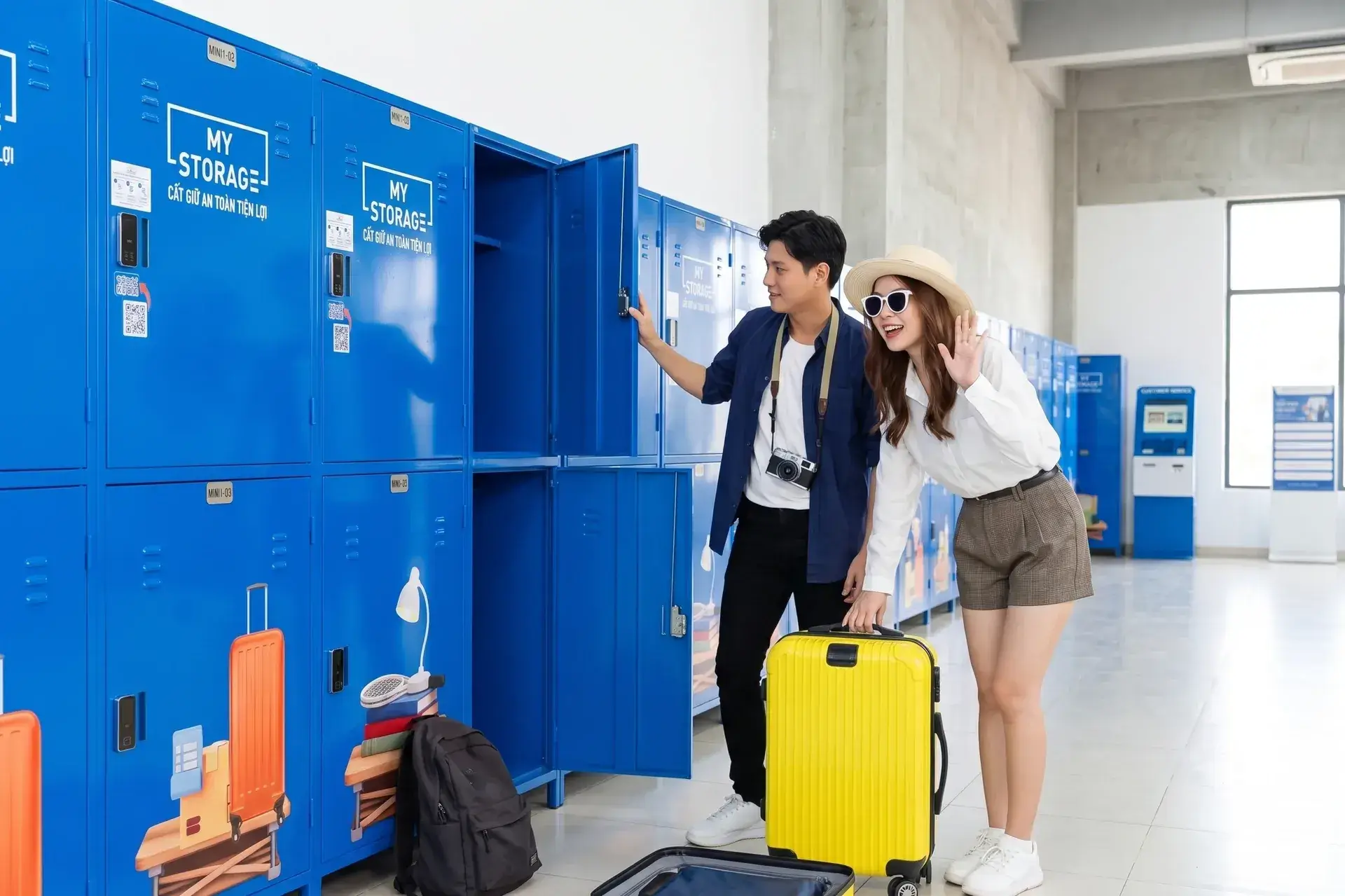
Some arrival errands need both hands free, and hourly locker rental is the short-term version of storage for a day of apartment viewings, while how a smart locker works explains the self-service process end to end.
- Official registration: bring your original passport to a carrier store or authorised airport kiosk so the SIM is registered in your name.
- Network choice: Viettel generally has the widest nationwide coverage, while Vinaphone and Mobifone also perform strongly across urban Ho Chi Minh City.
Registering Temporary Residence With Ward Police
Vietnamese immigration law requires foreign nationals to register temporary residence with local ward police within 24 hours of arrival. Under the Law on Entry, Exit, Transit and Residence of Foreigners in Vietnam, your hotel, serviced apartment or landlord declares the stay online through the immigration portal or in person at the ward police station.
- Request proof: always ask your host or landlord for a digital screenshot or stamped copy of the temporary residence confirmation.
- Keep it for later: you will need that confirmation when opening a Vietnamese bank account and applying for your Temporary Residence Card.
Setting Up Grab, Cash And Daily Transport
Installing Grab, Xanh SM and Zalo alongside withdrawing your first Vietnamese Dong covers transport and communication across the city. Digital convenience is high in Ho Chi Minh City, but local apps dominate daily life and most landlords and building managers will contact you on Zalo rather than email. All three apps work in English and take a foreign card at sign-up.
Parcels start arriving before you have a doorman who knows you, and parcel delivery lockers cover the drop-off points around the city for anything you order in week one.
- Essential apps: Grab and Xanh SM for cars and motorbikes, Zalo for messaging landlords and service providers, Google Maps for navigation.
- Cash and payments: withdraw VND from ATMs with clear fee structures, then switch to VietQR bank transfers once your local account is active, since they are accepted almost everywhere.
Week 2 Checklist: Housing And Expat Storage In Saigon
Week two is the window to tour expat neighbourhoods, negotiate lease terms and arrange storage for surplus luggage or an early shipment. Inspecting units during both rush hour and the evening quiet tells you more about traffic, lighting and neighbourhood atmosphere than any viewing arranged at a convenient midday hour.
Choosing The Right HCMC Expat Neighbourhood
Choosing between Thao Dien, Thu Thiem, Phu My Hung and Binh Thanh comes down to your commute, school proximity and preferred pace. Each area has a distinct rhythm, and while expats use familiar district names, you should verify the official current ward and administrative address before signing any legal contract.
Whichever area you pick, apartment sizes are smaller than most new arrivals expect, and storage ideas for a studio apartment under 40m² points out the dead space worth using before you rent anything extra. Family units face the same squeeze, which storage for a two-bedroom apartment addresses room by room.
- Thao Dien and An Phu in Thu Duc City: popular with international teachers, families and remote workers for walkable cafes, international schools and green space.
- Phu My Hung in District 7: wide sidewalks, planned residential complexes, international hospitals and a quieter, family-friendly feel.
- Binh Thanh and District 1: best for corporate expats who want fast access to central business towers, high-rise condominiums and nightlife; nearby central wards are covered in the Phu Nhuan storage guide if you want a unit close to the office.
Reviewing Lease Contracts And Security Deposits
Standard residential leases in Ho Chi Minh City ask for a two-month security deposit, one month of rent in advance and clear clauses on utilities. Never transfer a deposit before reviewing a bilingual English-Vietnamese contract and verifying the landlord’s ownership documents, because recovering money afterwards is far harder than checking first.
Furnished apartments rarely have enough closet space for a full shipment, and smart storage for small apartments shows which rooms give space back first.
- Inventory list: document every piece of furniture, appliance and existing wall scratch with dated photos attached to the lease.
- Hidden costs: clarify whether rent includes building management fees, internet, drinking water and periodic air-conditioning maintenance.
- Termination terms: confirm the notice period for early termination, and any diplomatic clause if your assignment changes.
Using A Passport For Self-Storage Contracts In HCMC
Expats without a Vietnamese Citizen ID can sign a self-storage contract in Ho Chi Minh City with a valid passport and entry visa. That removes a real hurdle for new arrivals who need space immediately, in the weeks between a temporary hotel and a permanent apartment, and it is why storage is usually available before a bank account is.
One cubic metre holds about 8 to 10 medium cartons, which is the quickest way to translate a pile of boxes into a unit size, and storage priced by m³ versus m² explains why the same goods produce different invoices. For a quick conversion from imperial quotes, how many square metres 5x5 and 10x10 feet units are gives the figures.
- Simple documentation: unlike utility accounts or commercial leases that ask for a CCCD or TRC, reputable facilities accept your original passport for identity verification and signing.
- Right capacity: a 1 m³ to 3 m³ unit holds roughly 8 to 30 medium boxes or several large suitcases, enough for surplus luggage and seasonal clothes, while a 5 m³ to 7 m³ room takes the belongings and small furniture of a one-bedroom apartment, while long items such as boards and dive kit need the door clearance set out in expat gear storage for surfboards and diving gear.
Facilities differ on fire protection, cameras and access control, the three layers warehouse security systems breaks down, and what a facility does or does not compensate for is set out in whether you need insurance when storing goods.
Weeks 3 And 4: Banking, Healthcare And Work Permit
In weeks three and four, expats open a Vietnamese bank account, confirm international health insurance and finalise Work Permit or TRC filings. These milestones move you from short-term visitor to established resident, and each depends on documents collected in the first two weeks rather than anything new. None of the three can start before the paperwork from weeks one and two is in hand.
Opening A Local Bank Account As An Expat
Opening a VND account requires your passport, a valid long-term visa or TRC, a labour contract and temporary residence confirmation. Most banks in Vietnam will not open full-featured accounts for holders of short-term tourist visas, so the visa category you arrive on decides how soon this step is possible. Bring originals as well as copies, since branches differ on what they will accept.
- Expat-friendly banking: look for banks with a full English mobile app, smooth VietQR scanning and clear international wire procedures.
- Repatriating income: keep copies of your labour contract, tax receipts and payslips, since Vietnamese banking rules require proof of legally taxed income to transfer salary abroad.
Registering With International Clinics And Insurance
Mapping nearby international hospitals and confirming direct-billing coverage is what makes emergency care fast rather than frantic. Doing it before you are ill takes an hour; doing it during an emergency costs time you do not have, and most private hospitals in the city bill at international rates. Save the hotline and the nearest address in your phone, not in a folder at home.
Laptops, monitors and camera gear often sit in storage while you settle in, and storing electronics safely covers battery removal and cable handling for a month or more in a unit.
- Health checkups: if you need a medical certificate for your Work Permit, use a hospital officially authorised to screen foreign workers.
- Insurance verification: confirm whether your policy covers outpatient visits, inpatient care and medical evacuation, and save the 24/7 emergency hotline in your phone.
Managing Work Permit And TRC Timelines
Submitting your health check, legalised documents and employer sponsorship paperwork early keeps the Work Permit and Temporary Residence Card on schedule. Processing time depends on document completeness and local labour authority queues, so the variable you control is how complete the file is when it goes in. A complete file moves faster than an early but incomplete one.
Winter clothes from your home country are dead weight most of the year here, and seasonal storage describes rotating them in and out instead of renting for peak volume all year.
- Track visa expiry: watch your initial business or entry visa expiration date closely to avoid overstay penalties.
- Employer coordination: stay in contact with HR or your relocation agency so every translation and notarisation is finished ahead of deadlines.
Master 30-Day Relocation Checklist And 2027 Budget
Putting pre-arrival and first-month tasks into one master checklist is what keeps legal deadlines from slipping. The table below tracks each milestone from departure through your first month on the ground, with the document or standard that proves it is done, so nothing is marked complete on memory alone. Mark each row only when the document in the third column exists.
| Timeline | Action item | Standard met or document required |
|---|---|---|
| Pre-departure | Legalise degree, police check and civil records | Consular legalisation stamps completed abroad |
| Pre-departure | Book 14 to 30 days of temporary accommodation | Confirmed hotel or serviced apartment reservation |
| Week 1 admin | Buy and register a local Vietnamese SIM | Original passport registered with the carrier |
| Week 1 admin | Verify temporary residence police registration | Digital or stamped confirmation from host or landlord |
| Week 2 housing | Tour neighbourhoods and sign a bilingual lease | Bilingual contract, photo inventory, two-month deposit |
| Week 2 storage | Rent a temporary unit for early boxes or luggage | Valid passport accepted in place of a CCCD |
| Weeks 3 to 4 banking | Open a local VND account with VietQR access | Passport, valid long-term visa, labour contract |
| Weeks 3 to 4 health | Complete Work Permit health check and insurance | Authorised hospital certificate, policy card |
Four Cost Categories In A 2027 Setup Budget
Budget by category rather than by a single monthly figure, because the first month carries one-off costs that never repeat. Housing deposits dominate, administrative fees depend on who pays them, and storage only appears if your shipment and your lease fall out of step. The four categories to plan for:
The rainy season starts before most new arrivals expect it, and rainy-season storage for belongings explains why humidity above 70% is the real threat to anything left in a spare room, with the role of a dehumidifier in storage covering the 60% threshold.
- Housing upfront costs: two months of security deposit plus the first month of rent, alongside any building management fee.
- Administrative and legal fees: translation, notarisation, authorised medical checkups and TRC issuance, often covered by the employer depending on your contract.
- Daily setup essentials: SIM data plans, first groceries, ride-hailing top-ups and household items a furnished apartment leaves out.
- Flexible storage: only if extra suitcases or early shipments need somewhere to sit while the lease is pending.
Reference Storage Pricing For 2027
Storage is the one line in the setup budget that scales with how long your lease is delayed, so it is worth pricing before you arrive. As a 2027 reference, a Mini Box of 1 m³ to 3 m³ runs 873,000 to 1,563,000 VND (≈ US$34 to US$61) a month and a Standard S room of 5 m³ to 7 m³ runs 1,796,000 to 2,886,000 VND (≈ US$70 to US$112), both excluding VAT.
The 12-month plan is 15% cheaper than flexible monthly terms, payment is in VND and exchange rates move, so ask the facility for a current quote based on your exact dates. How the rate is built up is broken down in how mini storage prices are calculated.
| Unit | Volume | 2027 reference price per month | Typical contents |
|---|---|---|---|
| Locker | Under 1 m³ | Charged by the hour or the day | Hand luggage, a backpack, documents |
| Mini Box | 1 m³ to 3 m³ | 873,000 to 1,563,000 VND (≈ US$34 to US$61) | 8 to 30 medium boxes, several large suitcases, seasonal clothes |
| Standard S | 5 m³ to 7 m³ | 1,796,000 to 2,886,000 VND (≈ US$70 to US$112) | One-bedroom shipment with small furniture |
MyStorage Storage Solutions For New Arrivals
MyStorage runs several storage products rather than one, and the right one depends on how often you need to reach your things. Units run from 1 to 23 m³ with 24/7 access, and a valid passport is accepted in place of a Vietnamese Citizen ID, so storage is available in your first week while a bank account is not.
The five services below cover the situations new arrivals actually hit, from a few hours between viewings to a full sea-freight shipment waiting on a lease:
- Self storage units from 1 to 23 m³, air-conditioned at 23 to 25°C, with 24/7 access, your own passcode, fingerprint, key or padlock, and a co-working space to re-pack and sort: see self storage units.
- Full-service storage with pickup and delivery to a shared shelf-space warehouse, where you pay only for the space used, get 2 free storage tubs per CBM and request items back when you need them: see full service storage.
- Luggage storage by the hour, day or month in District 1, District 2 and District 7, from 54,000 VND an hour, for the gaps between viewings, check-out and a late flight: see luggage storage in HCMC.
- Air-conditioned storage holding 23 to 25°C for clothes, electronics, leather and paper through the rainy season: see air-conditioned storage.
- Document storage for business records and business storage with B2B fulfilment and a customer workspace, for anyone arriving to open a company rather than to take a job: see document storage and business storage.
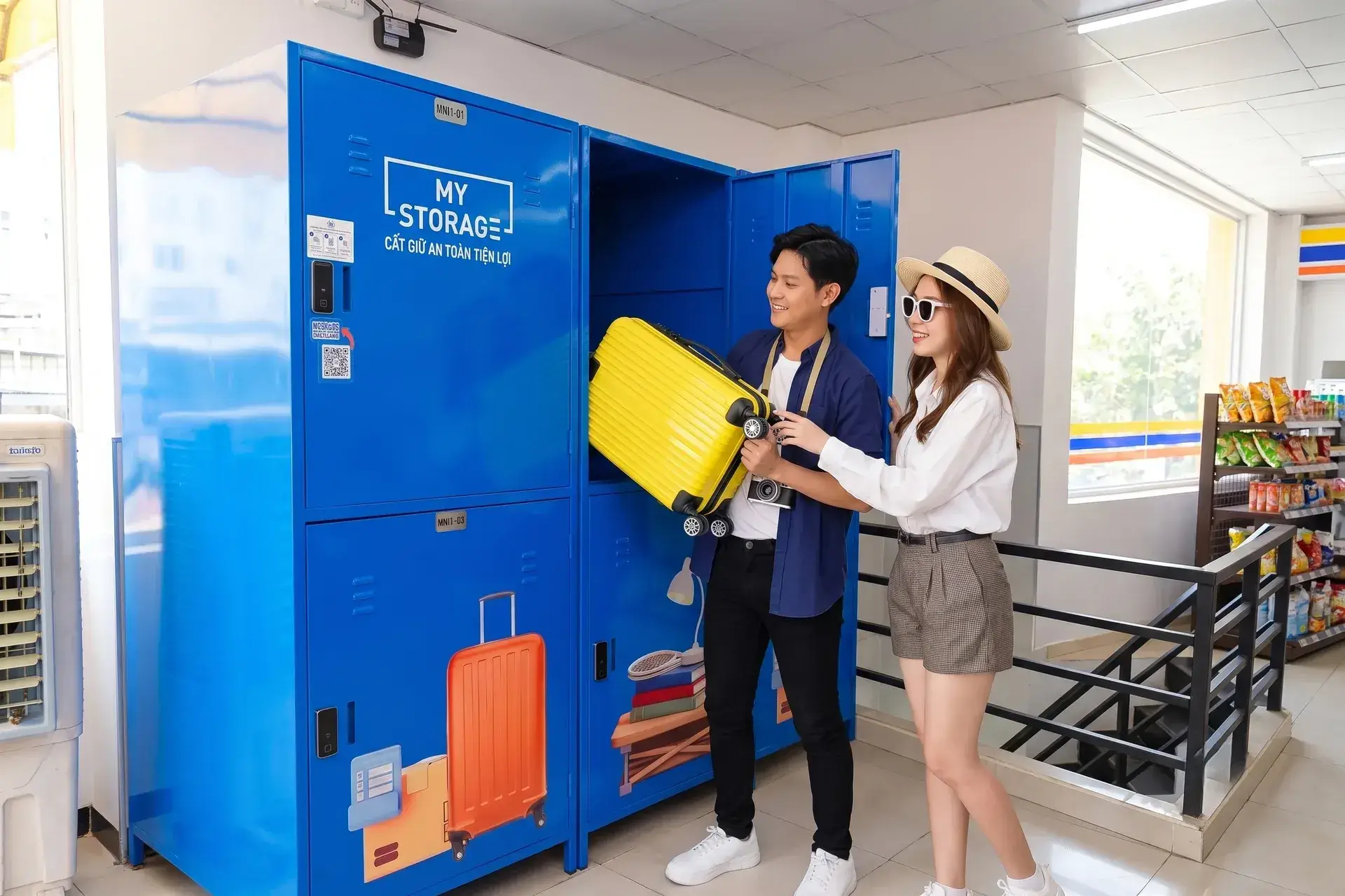
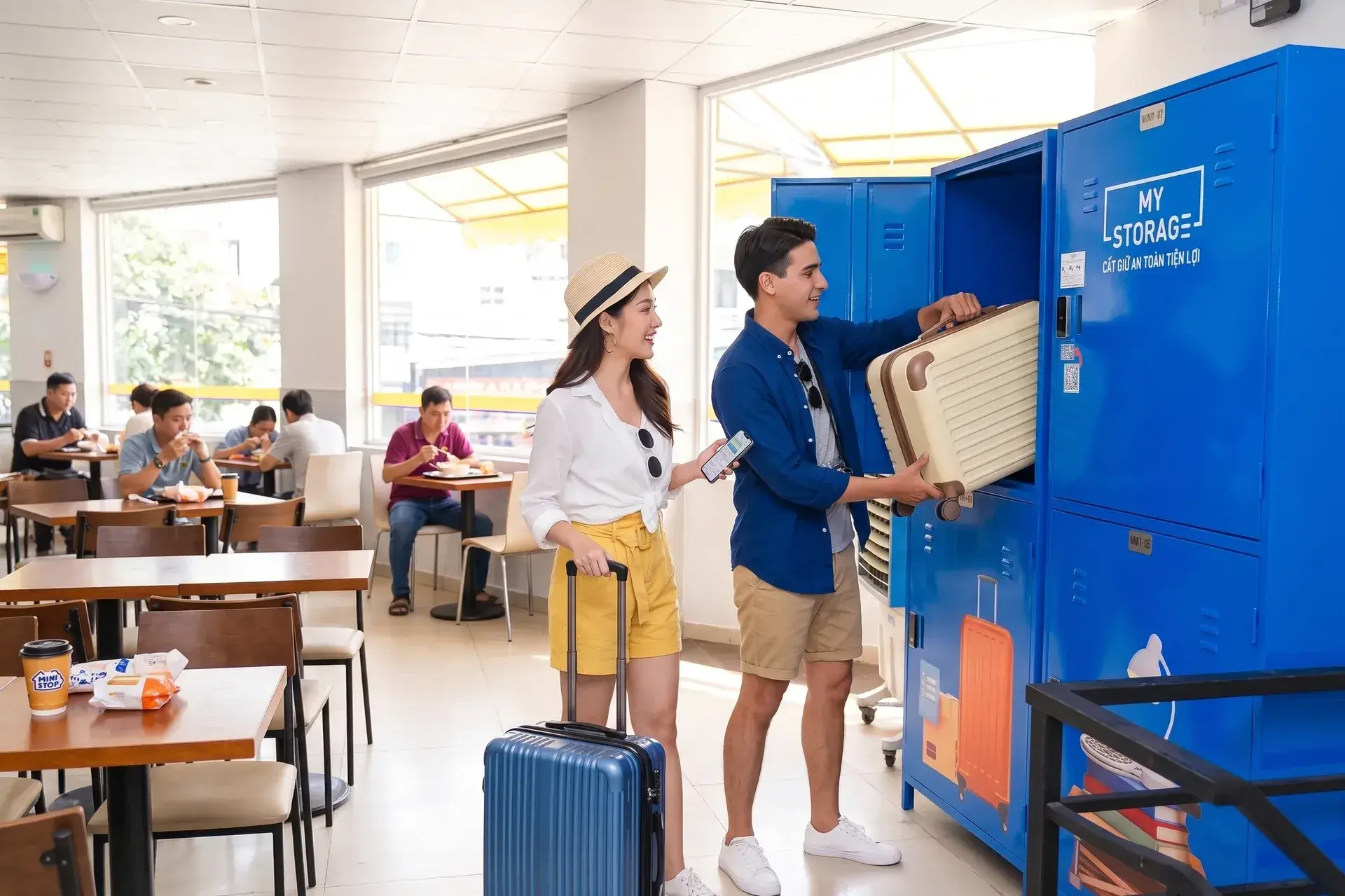
Two self-storage facilities serve the city, 375 Vo Nguyen Giap near Rach Chiec Metro and An Phu Sports Park, with the workspace at 375 Vo Nguyen Giap open to startups and online sellers who store stock and pack orders on site. The Ministop and Centre Mall points are smart-locker sites for small items and short drop-offs, not storage facilities.
Specialist options exist for the things a household move drags along, including bicycles through bike storage and furniture storage, plus house moving if the shipment has to be collected and delivered rather than dropped off. Terms are month to month, so nothing commits you to a commercial lease.
Expats who move stock rather than household goods face a different brief, which business storage in Ho Chi Minh City sets out by goods type, and using an apartment as a warehouse covers the legal side of keeping volume at home.
Frequently Asked Questions About Moving To HCMC
These 15 questions cover the legal, practical and logistical points expats raise most often when planning the first 30 days in Ho Chi Minh City, from document legalisation and police registration to storage, banking and driving.
What Documents Are Needed Before Moving To Vietnam?
You need a passport with at least 6 months of validity, an approved visa, and legalised Work Permit documents. University degrees, criminal background checks and employment verification letters should be authenticated and consular-legalised in your home country before departure, because completing that process remotely from Vietnam is slow and expensive.
Can Expats Rent Storage Using Only A Passport?
Yes. Expats can sign a self-storage contract in Ho Chi Minh City with a valid passport instead of a Vietnamese Citizen ID. You do not need to wait for a Temporary Residence Card to rent a private locker or storage room, which makes storage one of the few services available in your first week.
How Soon Must Expats Register Temporary Residence?
Temporary residence must be registered with local ward police within 24 hours of arriving at your accommodation. Hotels and serviced apartments handle this automatically at check-in, while a private landlord submits your passport details online or at the ward police station immediately after you move in.
Can I Open A Bank Account On A Tourist Visa?
Most Vietnamese banks do not open full local accounts for foreign nationals on short-term tourist visas. For an account with full VietQR and international transfer features, banks typically require a long-term visa such as a business or work visa, or a Temporary Residence Card, alongside a signed labour contract.
How Much Deposit Do Saigon Apartments Require?
Twelve-month residential leases in Ho Chi Minh City typically require a security deposit equal to two months of rent, plus the first month in advance. Shorter leases of 3 to 6 months can sometimes be negotiated to a one-month deposit, though the monthly rate is usually slightly higher in exchange.
Which SIM Card Works Best In Ho Chi Minh City?
Viettel, Vinaphone and Mobifone all provide strong 4G and 5G coverage across Ho Chi Minh City. Viettel is widely favoured by expats who travel often to coastal destinations or rural provinces, while all three offer affordable monthly data packages once the SIM is registered with your passport.
Where Should I Store Luggage Before Finding Housing?
A private self-storage unit is the most flexible option for extra suitcases or boxes while house hunting. Hotel luggage rooms hold bags for hours or days; a month-to-month unit keeps belongings secure and accessible until your lease begins, and a 1 m³ to 3 m³ unit covers most arrival luggage.
How Long Does A Vietnam Work Permit Take?
A Vietnam Work Permit typically takes 4 to 8 weeks once all legalised documents and local health checks are submitted. Timelines vary with your employer’s quota approval status and whether any foreign document needs additional translation or notarisation, so submit a complete file rather than a fast one.
Which HCMC Neighbourhoods Suit New Expats?
Thao Dien, Thu Thiem, Phu My Hung, Binh Thanh and District 1 are the usual shortlist. The right fit depends on your workplace, whether you need international schools nearby, and whether you prefer a walkable community or high-rise convenience. Verify the official ward name before signing, since district names in daily use are not always the administrative ones.
Do I Need International Health Insurance In Saigon?
Comprehensive international health insurance is strongly recommended. Local public hospitals are affordable, but international clinics and private hospitals with English-speaking doctors charge international rates, so direct-billing cover is what prevents a large upfront payment in an emergency.
Is Cash Or QR Payment Better In HCMC?
Both are useful, though VietQR bank transfers have become the dominant cashless method across Ho Chi Minh City. Carry small Vietnamese Dong notes during your first week for street food and local markets, then move to VietQR once your local bank account is active.
Can I Ship Household Goods Before Getting A TRC?
Shipping household goods before you hold a valid Work Permit or TRC can complicate customs clearance and duty exemptions. Consult a licensed international moving company before dispatching sea freight, and note that goods not yet cleared through customs cannot be moved into a standard self-storage facility.
What Storage Unit Size Fits Relocation Boxes?
A 1 m³ to 3 m³ unit fits roughly 8 to 30 medium boxes, while a 5 m³ to 7 m³ room takes a larger household shipment with small furniture. Measure your largest item and count your boxes before booking, because volume alone does not tell you whether a wardrobe or bike will pass the door.
Are International Driving Permits Valid In Vietnam?
Only International Driving Permits issued under the 1968 Vienna Convention are recognised in Vietnam, and they must match the exact vehicle class. Permits issued under the 1949 Geneva Convention, including standard US and Australian IDPs, are not valid; long-term residents usually convert their home licence once they hold a TRC.
What Apps Do New Expats Need In Saigon?
Download Grab, Xanh SM, Zalo, Google Maps and Google Translate before or immediately after landing. Grab and Xanh SM handle daily transport and food delivery, while Zalo is the primary messaging platform used by landlords, building managers and local businesses across Vietnam.
Storage prices are 2027 reference figures excluding VAT, quoted in VND with approximate US dollar conversions; exchange rates and facility terms change, so confirm before booking. Visa, work permit and residence requirements follow Vietnamese law and can be amended, so verify current rules with your employer, a licensed agency or the immigration authority.
Related articles
Article
Expat Gear Storage In Ho Chi Minh City: Surfboards And Diving Gear 2027
Expat gear storage in Ho Chi Minh City solves the problem of fitting bulky surfboards and scuba equipment into a compact apartment while protecting them from tropical humidity. A…
Read article
Article
Logistics Trends For 2027: Automation, AI And Green Warehouses
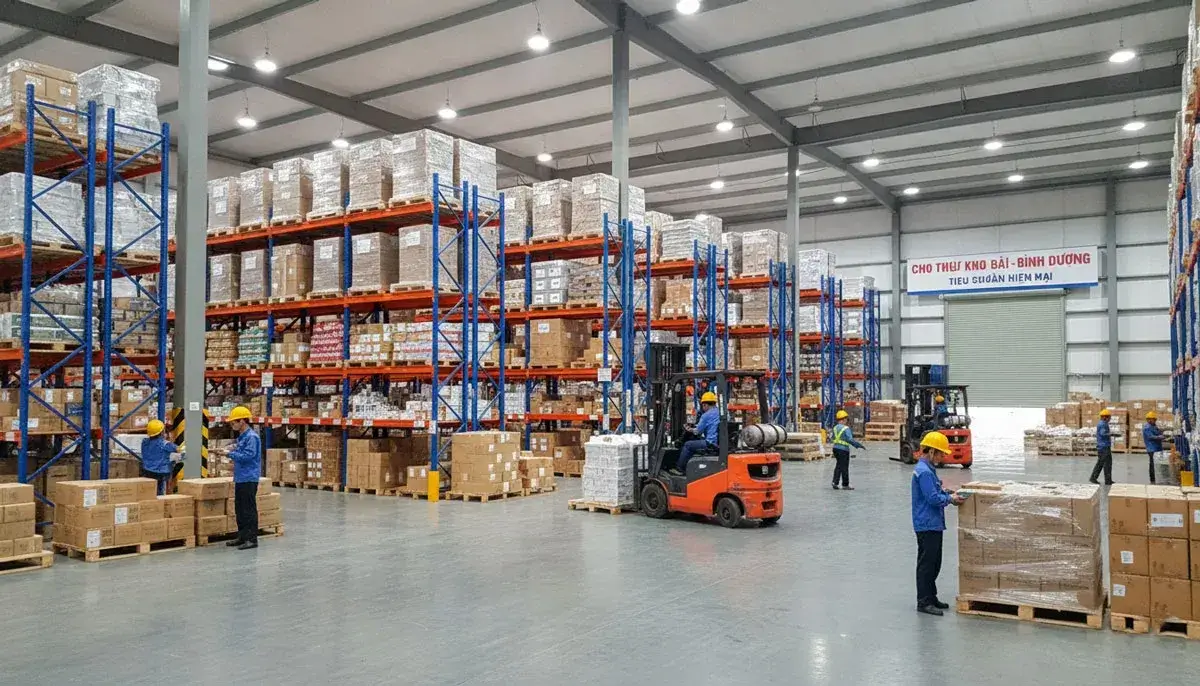
Logistics trends for 2027 rest on three pillars: warehouse automation, AI for demand forecasting and green warehouses meeting ESG standards. Small and mid-sized businesses should…
Read article
Article
How Many Clothes Do You Need For A 7-Day Trip? How To Pack Light 2027
How many clothes do you need for a 7-day trip? The 4-2-7 formula (4 tops, 2 bottoms, 7 sets of underwear and socks) keeps your suitcase light, with a full packing list, fabric and colour…
Read article
