
 Tiếng Việt
 한국어
한국어 日本語
日本語Article
Logistics and Industrial Real Estate: How They Connect, Market Trends and Opportunities
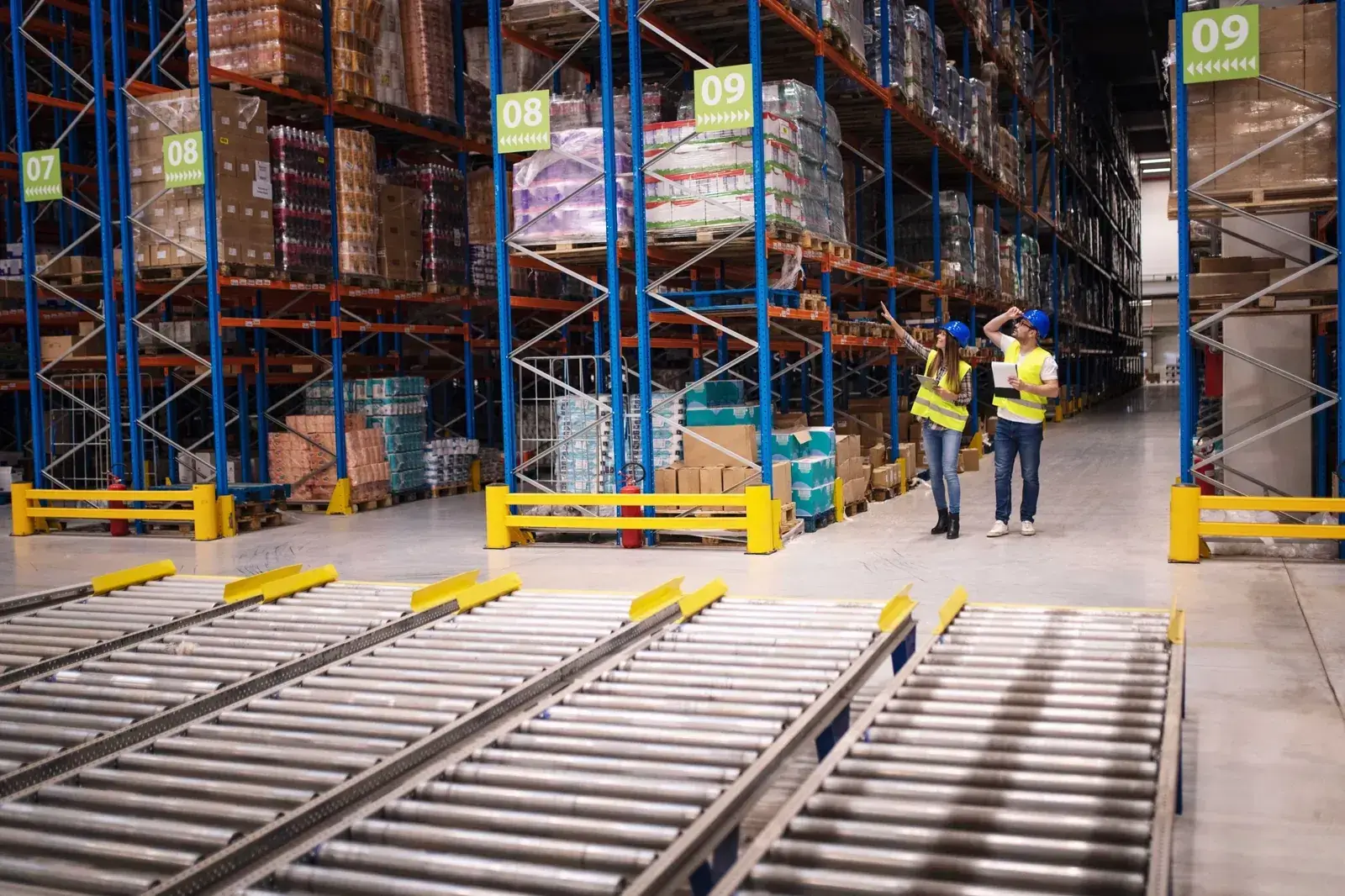
In a modern economy the supply chain works like the bloodstream of the whole market, and industrial real estate is the skeleton that determines how well that bloodstream performs. The boom in high-tech manufacturing, the global reshuffling of supply chains and the rapid growth of e-commerce have redefined what industrial space is for.
Industrial real estate today is no longer limited to raw land inside industrial parks or traditional factory buildings. It now extends to smart storage space, modern distribution centres and networks of last-mile delivery hubs. Understanding how logistics and industrial real estate depend on each other helps a business choose premises correctly, control operating costs and move early on opportunities to grow in the Vietnamese market.
1. What Are Logistics and Industrial Real Estate?
Logistics is the planning, organisation and control of the movement and storage of goods, materials and related information from the point of origin to the end consumer. Industrial real estate is the group of assets and premises that directly serve production, processing, warehousing and distribution within the supply chain. The two are tightly linked, because every logistics activity needs premises with the right location, technical standards and layout to run continuously and efficiently.
Core logistics activities
Logistics covers a product's entire journey through several links in the chain, so that goods arrive in the right place, at the right time, at an optimal cost:
- Transport and freight forwarding: Coordinating the movement of materials and finished goods by road, sea, air and rail, including customs procedures and shipping documents.
- Warehousing, inventory management and goods handling: Receiving goods into the warehouse, classifying stock into A, B and C groups, storing them in suitable conditions, counting inventory in real time, and picking and packing when an order comes in.
- Distribution and transhipment: Gathering goods from several suppliers, consolidating orders through cross-docking, and routing them to dealers, supermarkets or consumers through a network of central and satellite warehouses.
- Managing supply-chain information flow: Using IT systems such as warehouse management software (WMS) and enterprise resource planning (ERP) to track inventory data and warehouse operating schedules end to end.
Types of industrial real estate
The industrial property market today offers a range of premises, each suited to a particular kind of business:
- Industrial land and build-to-suit factories: Plots with basic technical infrastructure already in place inside an industrial park, suited to large corporations that want a long lease and will build a plant around their own production line.
- Ready-built warehouses and factories: Standardised premises completed by the developer, with roof, flooring, load-bearing structure and shared amenities, so a business can move in and start operating straight away. See also ready-built warehouse pricing and sizes.
- Logistics warehouses, distribution centres and transhipment hubs: Purpose-built warehouse clusters with high ceilings, modern loading doors with dock levellers and generous truck yards, built for high-volume goods movement.
- Cold storage and specialised facilities: Warehouse space with strict temperature and humidity control, serving fresh food, agricultural exports, pharmaceuticals and cosmetics. See our cold storage rental service for details.
Telling the two apart
The two terms are often used interchangeably, but their scope and how they operate differ clearly:
Industrial real estate is the broader concept, covering land, production factories, export processing zones, assembly facilities and technical support works such as substations and wastewater treatment areas. The main purpose of traditional industrial property is to create the conditions for turning raw materials into finished goods.
Logistics real estate, by contrast, is a specialised branch of industrial real estate focused on storage, order fulfilment and the movement of goods through distribution. Its emphasis is not on making products but on inventory turnover, connection to the transport network and maximising storage space by volume. Our analysis of whether warehouses count as industrial or commercial property explains how this classification works in the Vietnamese market.
2. How Real Estate Affects Logistics
Location, technical design standards and the size of warehouse premises directly determine delivery times, how safe the goods are, and how much a supply chain can flex. A warehouse that meets proper standards does more than streamline loading and storage: it is a strategic link connecting raw-material regions, production sites and the consumer market.
Warehouse location and infrastructure links
Location is the single biggest factor in how competitive a business can be at delivery and fleet coordination:
- Warehouses near seaports, airports and expressways: Shorten container haulage, cut road tolls and avoid urban congestion. This matters most for importers and exporters.
- Suburban warehouses close to the consumer market: Substantially cut the time it takes to reach target customers, supporting same-day or even same-hour delivery. Our guide on which district to rent a warehouse in Ho Chi Minh City helps you balance rent against delivery distance.
- A direct effect on fuel costs and vehicle hours: A warehouse in a poorly connected location keeps vehicles on the road longer, raising fuel consumption and adding to fleet depreciation costs.
Warehouse design and operating performance
The architecture and technical specification of an industrial warehouse have a deep effect on labour productivity and storage capacity:
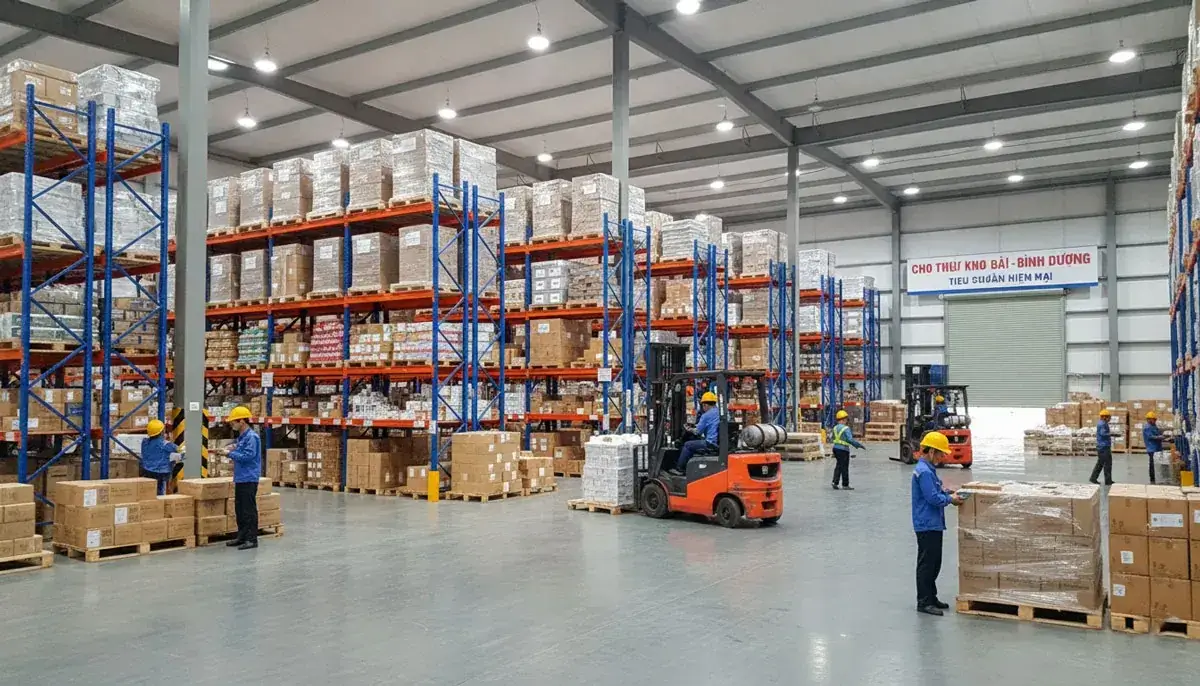
- Clear height and floor loading: A modern warehouse typically has 9m to 14m of clear height and a floor load of 3 to 5 tonnes/m², allowing multi-tier racking systems (selective racking, drive-in racking) that maximise storage volume on the same floor area.
- Dock levellers and truck turning yards: Enough loading doors, fitted with dock levellers, let trucks and containers dock easily and cut unloading time from several hours to tens of minutes. The layout principles are set out in our guide to designing an efficient warehouse.
- Storage conditions and fire safety: Premises that meet standards for insulation and natural ventilation, with an automatic suppression system such as sprinklers that meets warehouse fire-safety standards, keep goods safe and satisfy the legal conditions for insuring them.
The effect on total cost
Many businesses looking for a warehouse focus only on the rent per square metre, which leads to serious budgeting mistakes:
International supply-chain cost analyses put warehouse rent at only around 10% to 15% of total logistics cost, while transport accounts for 45% to 55%, with labour and inventory handling making up the rest.
If a business rents a very cheap warehouse in a remote spot, on roads with frequent truck bans or in poor condition, total transport cost and late deliveries will climb far beyond whatever was saved on rent. Choosing industrial property is therefore a question of optimising total cost of ownership and logistics operation, not of comparing headline rents.
3. Market Trends in Vietnam
Vietnam's industrial and logistics property market is going through a significant shift, driven by foreign direct investment (FDI), the e-commerce boom and major progress on national transport infrastructure. The market is no longer a race for floor area alone; it has moved clearly towards warehouse quality, smart technology and sustainability standards.
Demand for modern ready-built warehouses
Domestic and international businesses increasingly prefer high-quality ready-built warehouses (RBW):
- Faster entry to market: Instead of 12 to 24 months to obtain permits and construct a new warehouse, a business can be operating within 2 to 4 weeks of signing a ready-built lease.
- Lower upfront capital: There is no need to lock enormous fixed capital into land and construction, which frees up cash for growing the business, buying equipment and developing products.
- Infrastructure built to international standards: Reputable logistics property developers design warehouses that meet ISO standards and green building certifications (such as LEED or LOTUS), with smart CCTV systems and dust-resistant epoxy floors built for industrial storage.
Infrastructure and the shift in warehousing
Determined government investment in key transport projects is redrawing the logistics map across Vietnam's main economic regions:
In the south, Ring Road 3 and Ring Road 4 around Ho Chi Minh City, the Ben Luc - Long Thanh expressway and the Long Thanh International Airport project are pushing warehousing out of the city centre towards satellite areas such as Binh Duong, Dong Nai, Long An and Ba Ria - Vung Tau. Many businesses have already begun renting warehouse space in Binh Duong near VSIP 1 industrial park to get ahead of the trend.
The shift brings a double advantage: access to much larger plots at more reasonable rents, while keeping smooth connections to the Cai Mep - Thi Vai deep-water port cluster and the Ho Chi Minh City consumer market.
Demand from e-commerce
Online shopping behaviour demands ever shorter order processing times, which puts real pressure on warehouse networks:
- The rise of last-mile delivery hubs: E-commerce businesses and delivery firms need small transhipment spaces deep inside or close to the urban ring to support express delivery within 2 to 4 hours. This is also the focus of our article on e-logistics and how it is developing in Vietnam.
- Flexible, seasonal order handling: Big promotions such as year-end mega sales or Tet produce order volumes 5 to 10 times higher than normal, so seasonal warehousing has to be able to expand storage area and set up packing zones at short notice.
- Automation technology: Modern e-commerce distribution centres integrate high-speed automatic parcel sorters, picking robots and inventory software that tracks stock precisely by SKU.
Market indicators worth tracking
When assessing an opportunity to invest in or rent industrial and logistics property in Vietnam, supply-chain managers should keep an eye on a few key indicators:
- Cumulative and new supply: Total warehouse and factory area available for lease in each area, plus the supply expected to be handed over in coming quarters.
- Occupancy rate and net absorption: The percentage of warehouse area already leased, and the volume of new space the market absorbs over a given period.
- Average rent and lease terms: Rent per square metre per month (excluding VAT and management fees), together with terms on annual escalation and the minimum lease period.
4. Logistics Warehouse or Factory: Which Should You Choose?
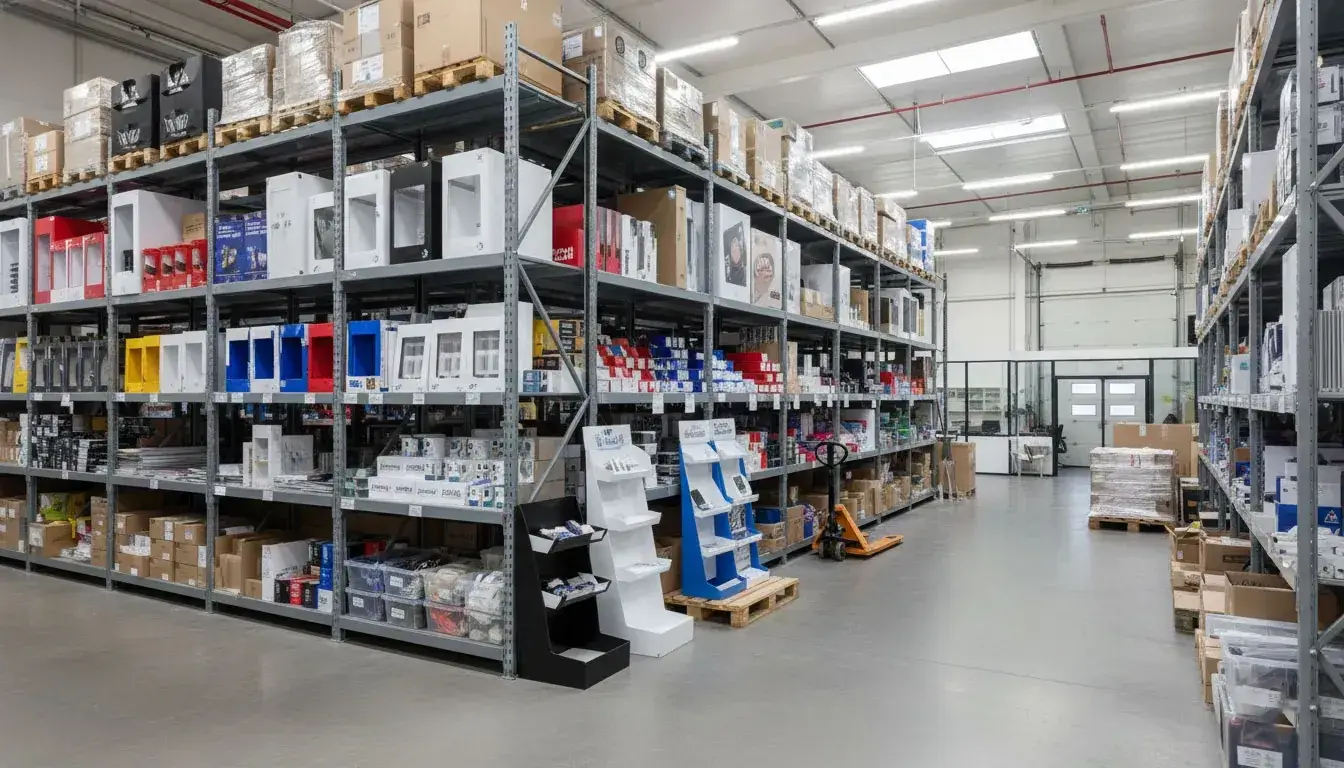
Choosing between a logistics warehouse and an industrial factory depends fundamentally on whether your business moves and distributes goods or manufactures them. Picking premises with the wrong function wastes money on rent and fit-out, and can expose the business to legal risk around investment licences, environmental standards and fire safety.
When to rent a logistics warehouse
A business should look for purpose-built logistics warehouse space in these situations:
- The business works in trade, retail, import-export or provides third-party logistics (3PL) services and needs space for goods, materials and finished products.
- The business needs space to sort, label, repack and consolidate orders before distributing them to market.
- The business wants to optimise inventory turnover with modern warehouse standards, high ceilings for tall racking and a generous truck yard.
When to rent a factory
An industrial factory is the only option when the core activity requires specific production conditions:
- The business carries out manufacturing, processing, machining, assembly of mechanical or electronic components, or processing of agricultural, forestry and fishery products.
- Operations require high-capacity three-phase power, large-scale water supply and drainage, compressed air systems and an industrial wastewater treatment plant that meets discharge standards.
- The project must satisfy strict legal conditions on environmental impact assessment (EIA), fire-safety approval and acceptance for production facilities, and registration of production objectives on the Investment Registration Certificate (IRC). The full sequence is set out in our factory rental process, from legal steps to operations.
Comparing the three types of premises
The table below gives an overview of how the three common models differ:
|
Criteria |
Standard logistics warehouse |
Industrial factory |
Self-storage |
|---|---|---|---|
|
Main purpose |
Storing, protecting, packing and moving goods through distribution. |
Manufacturing, fabrication, machining and assembly of finished goods. |
Storing online-shop stock, office records and personal belongings. |
|
Typical size |
From 500 m² to tens of thousands of m² in distribution clusters. |
Usually 1,000 m² to 20,000+ m² to house production lines. |
Highly flexible, from 1 m³ mini units to rooms of 10 - 50 m². |
|
What happens on site |
Loading, racking, stock counting, order picking and dispatch. |
Running machinery and production lines, with workers on shift. |
Customers organise their own space, lock their own room, pack and come and go freely. |
|
Typical lease term |
Usually 2 to 5 years or more, to keep the supply chain stable. |
Usually 3 to 10 years, given the fixed investment in installed machinery. |
Very flexible: weekly, monthly or yearly. |
|
Who it suits |
Retailers, importers and exporters, supermarket chains, 3PL companies. |
Manufacturers, component makers, FDI processing businesses. |
Online shops, startups, household businesses, offices needing more space. |
Checklist before signing a lease
To minimise problems after moving in, a business should carry out thorough due diligence on the following:
- Land-use purpose and legal permits: Check the owner's title documents carefully, make sure the land is approved for warehousing or industrial production, and confirm it is not subject to disputed planning.
- Fire-safety acceptance records: Check the fire-safety acceptance report issued by the police fire authority, so the warehouse is not suspended for falling short on safety.
- Road infrastructure and load limits: Survey the actual truck route, the hours when trucks are banned on that road, overpass clearance and the turning radius for containers at the warehouse gate.
- Costs beyond the rent: Clarify industrial park management fees, shared security costs, whether electricity and water are metered separately or charged at commercial rates, and routine maintenance fees.
- Handover and reinstatement terms: Agree the condition at handover (floor, walls, roof, roller doors), the rules on installing racking, and who is responsible for reinstating the premises at the end of the lease.
5. Storage Solutions for Small Businesses
Not every business is large enough, or holds enough stock, to lease an entire industrial warehouse of hundreds or thousands of square metres. For the tens of thousands of online shops, commerce startups and small businesses in Vietnam's major cities, self-storage and flexible storage have emerged as the perfect complement to traditional warehouse property.
The drawbacks of storing stock at home or in the office
Many household businesses and small companies start out using the living room, a bedroom or a corner of the office as a stockroom, which brings several problems:
- Living and working space gets taken over: Stock, cardboard boxes and packing materials pile up, reducing usable space, making the place feel cramped and undermining both quality of life and the company's professional image.
- Risk of loss and difficulty counting stock: As the number of SKUs grows, stacking goods without proper racking leads to damp, insect damage, or items going missing just when a customer order needs filling.
- Risk of breaking the law: Under Vietnam's 2023 Housing Law, using an apartment for business purposes or as a store for bulky goods is prohibited. It carries a fire risk and heavy administrative penalties.
When does self-storage make sense?
Self-storage is the best answer for a business in these practical situations:
- The business needs more room for stock, old accounting records or event equipment, but does not want to move office.
- An online seller needs clean storage with air conditioning for sensitive goods such as cosmetics, supplements, fine leather goods or electronics.
- The business wants flexible control of its budget: move up to a larger room during peak shopping seasons, then scale back in normal months to save money.
MyStorage: smart self-storage for SMEs
To solve the space problem for individuals and small businesses in Ho Chi Minh City, MyStorage offers a modern self-storage model with several operational advantages:
Unlike traditional industrial warehouses, which sit far from the centre and require large leased areas, MyStorage offers storage in a range of unit sizes, from small units of a few cubic metres through to private rooms, in Thu Duc City and at other conveniently located MyStorage facilities across Ho Chi Minh City.
- Close temperature and humidity control: Our air-conditioned storage holds a steady temperature below 25°C and humidity under 60%, protecting cosmetics, dry foods, luxury goods and electronic components from deterioration.
- Multi-layer security, 24/7: The facility has CCTV and access control covering every aisle, personal PIN codes or key cards, security staff on site and an automatic fire alarm system built to standard.
- Full support services: MyStorage offers door-to-door collection and delivery, loading assistance and professional packing materials, saving sellers a great deal of operating time.
- Shared workspace: Desk space and high-speed Wi-Fi on site let shop owners manage stock, pack orders and handle their business in one place.
Where this service fits:
MyStorage self-storage is not meant to replace large production factories or the multi-thousand-square-metre logistics centres run by multinational groups. It is a smart supplementary space solution that gives small and medium businesses and multi-channel sellers access to quality warehousing infrastructure, at a cost that flexes with actual need.
Reference Warehouse Rental Prices
To help businesses budget, the table below sets out the range of rents for industrial warehouse space and flexible storage solutions in Ho Chi Minh City and neighbouring provinces:
|
Type of premises |
Minimum area |
Reference price |
Typical operating characteristics |
|---|---|---|---|
|
Ready-built industrial warehouse (RBW) |
From 500 – 1,000 m² |
USD 4.5 – 6.0 / m² / month (roughly VND 115,000 – 155,000 /m²) |
Usually in Binh Duong, Long An, Dong Nai; 2 – 5 year leases; suits larger businesses. |
|
Ready-built factory (RBF) |
From 1,000 m² |
USD 4.8 – 6.5 / m² / month (roughly VND 125,000 – 165,000 /m²) |
High-capacity substation, wastewater treatment; long leases; for processing and manufacturing. |
|
Inner-city transhipment warehouse |
From 100 – 300 m² |
VND 140,000 – 220,000 / m² / month |
Close to the centre, access for small trucks; supports last-mile distribution but often lacks full infrastructure. |
|
Mini self-storage unit |
From 1 – 10 m³ (locker unit) |
VND 800,000 – 2,000,000 / month |
Own lock, CCTV; suits records, personal items and sample stock. |
|
Private air-conditioned self-storage room |
From 6 – 30 m² |
VND 3,500,000 – 12,000,000 / month |
Air conditioning 24/7, humidity control, self-access; ideal for cosmetics shops and high-value goods. |
Please note: these prices are indicative, compiled from the southern Vietnam market in late 2026. Actual warehouse rents vary with the specific location, storage height, floor loading, any value-added services and the committed lease term.
Getting the Premises Right to Lift Your Operation
Logistics and industrial real estate are inseparable in building a competitive edge. A sound premises strategy is not simply about finding shelter for goods; it balances rent, how fast goods move, customer convenience and room to grow.
Whether you are a corporation looking for a large distribution centre or an online retail brand looking for safe air-conditioned storage, accurately assessing storage volume, inbound and outbound flow and the quality of management is what protects your capital and improves the service you offer.
If your business needs smart storage, goods kept in properly air-conditioned conditions and flexible space in Ho Chi Minh City, talk to the MyStorage team for a volume assessment and advice on the best storage option.
This article was written by the MyStorage team, drawing on our experience running storage services in Ho Chi Minh City; last updated October 2026. The prices and market figures given here are indicative at the time of writing.
Frequently Asked Questions
How does logistics real estate differ from traditional industrial real estate?
Traditional industrial real estate covers all the land and infrastructure serving mechanical manufacturing, textiles or processing. Logistics real estate, by contrast, focuses on storage, order fulfilment, loading and the distribution of goods through the supply chain.
Why does warehouse location matter more than the rent per square metre?
Warehouse rent usually accounts for only about 10% to 15% of total logistics cost, while transport accounts for more than 50%. A cheap warehouse in a poorly connected location raises fuel costs, lengthens delivery times and lowers the quality of service to customers.
Should small businesses and online shops rent an industrial warehouse?
Small businesses usually do not need one: their stock is not large enough to fill the minimum area (often 500 m² and up), and long leases of 3 to 5 years are hard to commit to. Flexible self-storage models, from a few cubic metres to a few dozen square metres, are more economical.
Which technical factors matter most when assessing a logistics warehouse?
The leading factors are the clear height of the warehouse ceiling (ideally 9m to 14m), floor load capacity (at least 3 to 5 tonnes/m²), the number of loading doors fitted with dock levellers, and an automatic fire-suppression system with the required approvals.
How can self-storage help an e-commerce business?
Self-storage offers secure space with continuous air conditioning to protect sensitive products such as cosmetics, leather goods and supplements. It also lets sellers come and go freely to pick and pack, rent flexibly by the month and expand quickly when the peak selling season arrives.
What is the most notable trend in Vietnamese logistics real estate right now?
The clearest trend is the strong shift towards green-certified ready-built warehouses (such as LEED), the use of smart automation and monitoring technology (IoT, WMS), and the expansion of satellite warehouse networks along ring roads and expressways connecting to seaports and international airports. See also our article on green logistics.
What legal points should I check before signing a warehouse lease?
Check whether the land-use purpose has been approved by the authorities for warehousing, check the construction permit and the fire-safety acceptance report from the police, and set out clearly what you are allowed to alter, including installing racking inside the warehouse.
Are goods stored in self-storage insured?
Professional self-storage operators such as MyStorage build their facilities to full fire-safety standards with multi-layer security, and offer liability insurance policies or help customers take out goods insurance based on the value they declare.
Related articles

Article
Where to Store Your Vehicle and Belongings During a Long Trip
How to sort your belongings, prepare a motorbike or car, and choose where to store everything during a long trip: keep it at home, leave it with family, or rent self-storage.
Read article

Article
Where to Store Livestream Products When Home Space Is Limited?
Learn how online sellers can store livestream inventory when home space is limited: organize samples and stock, manage orders, compare home storage with renting a private unit, review…
Read article
Article
How to Organize a Warehouse for Efficient Management
A practical guide to SKU classification, racking, location labels, FIFO, FEFO and 5S, with five warehouse KPIs, reference equipment costs and eight FAQs.
Read article
